
The global EV Truck market is estimated at 1.48 billion dollars at set to reach 15 billion dollars by 2027
EV industry in a nutshell
EV or Electric Vehicles are electric motor-run vehicles that use either rechargeable batteries or hydrogen-powered batteries, as compared to the traditional vehicles that use petrol, diesel or gasoline to run their engines. They range from bikes, cars to commercial vehicles like trains, buses, planes, taxis and even industrial vehicles. The market for EVs and EV Fleet Management services is on the rise all across the globe primarily due to their increasing affordability and availability.
How is the EV industry benefiting?
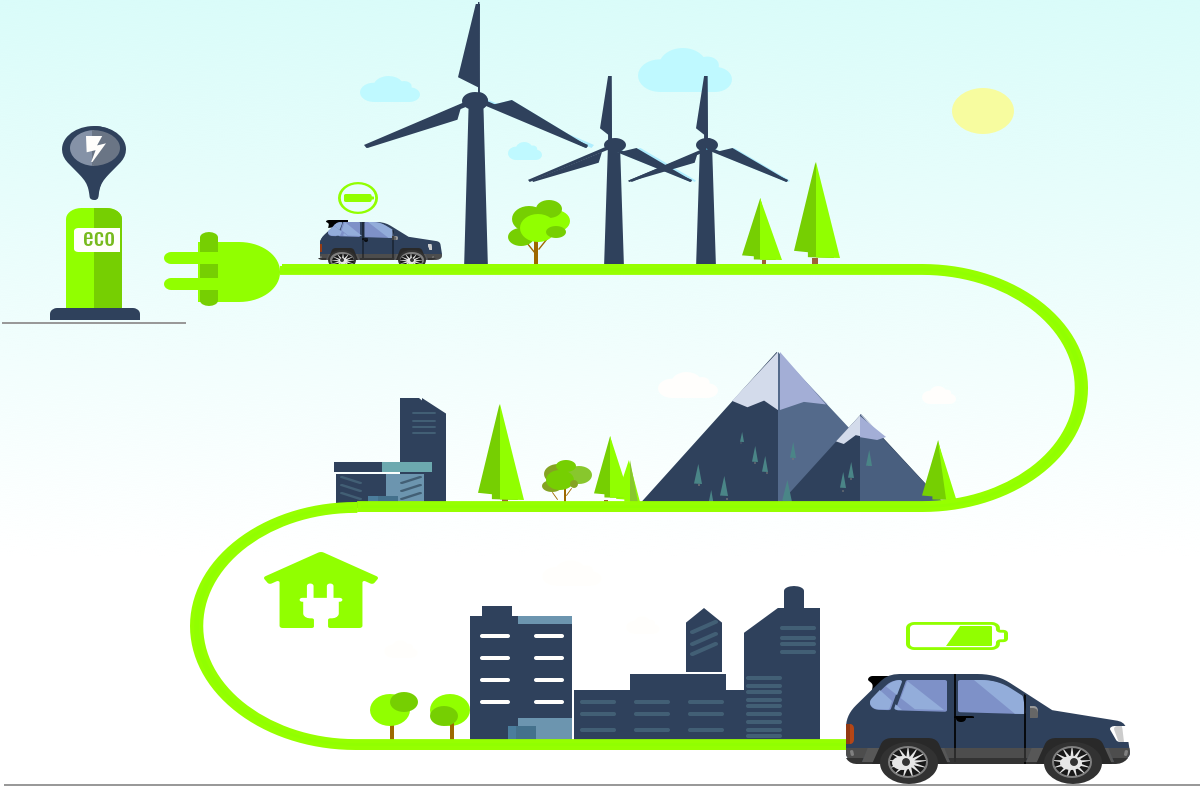
Governments and manufacturers around the world are pushing to accelerate EV adoption for transport and logistics
Governments around the world are pushing for a shift from these traditional vehicles to modern electric vehicles to cut their carbon emissions in the wake of the growing threat of climate change. The push towards EVs comes primarily from governments in the form of:
- Capital Investments in increasing and improving infrastructure for EV charging stations.
- Incentives offered to automobile manufacturers, which include corporate tax cuts, industrial land for manufacturing, government contracts, direct investment, etc., for increasing EV production.
- Regulations and Policies to promote EVs by incorporating EVs in public transport vehicles.
- Direct benefits and subsidies to consumers and corporates for purchasing EV vehicles.
- Production commitments from global automakers like Volvo, Tata, Mercedes, Boeing, among others.
How is Fleet Management Impacted by the adoption of EV Fleet?
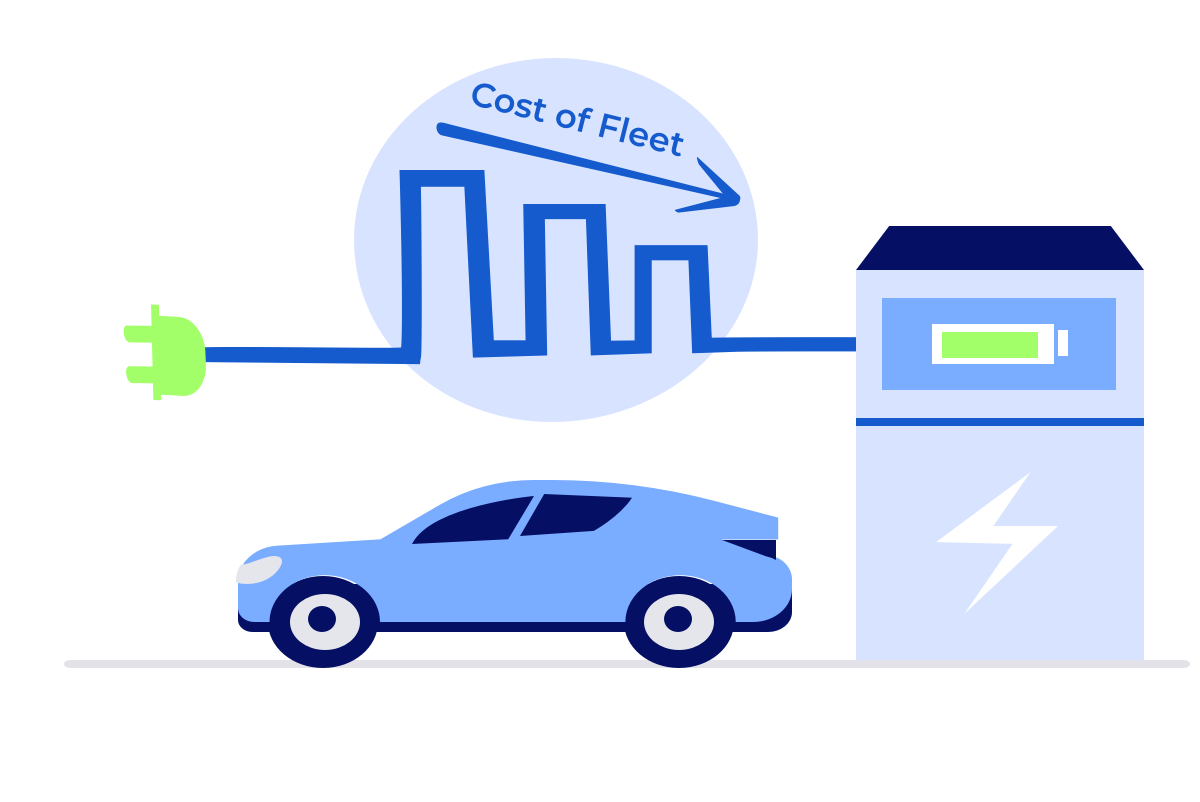
EVs can significantly bring down the cost of operating Fleets
As the demand for commercial EVs grows further and more commercial EVs are being used for business, we hope to see a mix of EV fleets only or a mix of electric and fuel-run fleets.
Only EV fleets have been gaining popularity in the light vehicle segment and taxis around the world, with heavy commercial vehicles like trucks, planes and airport taxing vehicles still mostly in the trial phase with few notable exceptions. The following companies have adopted electric-only fleets or mixed fleets.
- BluSmart Mobility:
BluSmart Mobility is an e-taxi startup based out of Gurugram, India, which runs a fleet of over 300 EV taxis in the Delhi-NCR region. Instead of being a taxi-aggregator, it leases and operates EVs from top automakers like Mahindra & Tata Motors using smart Fleet Management Software solutions optimized for EV vehicles. - Uber Green:
Uber Green is the EV Taxi fleet operating in countries like the US & UK offering subsidies to drivers to upgrade to an electric vehicle. Uber Green is integrated with Uber’s fleet management system managing both fuel-based and EV taxis. It's also offering subsidies on purchase by drivers of EV vehicles as well as offering higher surcharge per ride to drivers to incentivize them to switch to EVs. - Lithium Urban Technologies:
India’s first all-electric commercial taxi fleet, Lithium Urban Technologies provides EV employee transport services to companies across India. Rapidly increasing presence across India, they implement latest technologies like GIS, for efficient fleet management of their fleet.
Similar initiatives across India and the world like Ola-Mahindra partnership EV taxi fleet are pushing the limits in what EVs and technology-based fleet management can achieve and how it can bring the cost of doing business significantly down while also cutting down carbon emission to 0.
What are the current problems faced in EV Fleet Management and how can they be managed?
The EV technology is still in early-stages and thus offer less mileage and lacks wide charging infrastructure
The most significant problem with EVs has been the infrastructure for charging and the range the batteries offer. Since the technology is still in early stages of development it cannot go toe-to-toe with fuel-based vehicles when it comes to the best value for money. But the good news is the subsidies offered and the huge amount of investment in Research & Development means the technology is rapidly catching up with the market. Regardless, let’s look at the problems faced in EV fleet management and how we can fix it.
The slow rate of charging can result in a lot of time lost on the road
Commercial Fleet drivers in India drive heavily loaded trucks anywhere between 300-500 kilometres, driving 14-15 hours a day. The charging time ranges from 6-8 hours to charge the vehicle to a maximum and this results in a lot of time being lost.
Lack of vehicle maintenance infrastructure can leave drivers stuck with their vehicles
Charging and maintenance infrastructures are one of the biggest challenges when adopting EV fleets. India and even most developed countries lack maintenance and charging stations across major highways and roads, which can lead to drivers being stranded in remote regions with discharged vehicles and no charging stations.
Current EV trucks and pickups offer low mileage making it difficult to adopt for large fleet operations in logistics
In fleet management, the mileage is calculated as cost per mile for EVs. The distance vehicle covers per kilowatt-hours (KWh) of electricity. The average EV trucks offer an average range of 200-250 km. In comparison to fuel-based trucks, these are very low since most logistics operations require much more range.
Drivers maybe unwilling to unlearn fuel-based truck systems to learn the EV systems
Drivers and companies may hesitate to adopt EVs in their fleet due to the hassle of learning EV systems and functions compared to fuel-based vehicles whose systems most companies and drivers are familiar with for years. Training drivers and people is an additional cost for fleet management companies which increases the fixed cost in adding EV vehicles to their fleet.
Fleet Management Software and Systems need to be revamped to include EV metrics
Current Fleet Management Softwares and telematic systems are optimized for fuel-based vehicles only. Fleet Management service providers need to be re-engineered to provide EV metrics like charge state, vehicle health, drain rate, etc. Vehicle maintenance systems need to be redesigned to incorporate EVs which are different from fuel-based vehicles.
What does the future of EV Fleet Management look like?
EV Fleet Management offers great business opportunities
Although the technology is still in the early stages, fleet management companies in various industries can benefit from using EVs in their fleet. Government initiatives and other subsidies offer huge upsides in getting into fleet management businesses for certain industries like
- Public transport services like Taxi, Buses
- Light load intra-city logistics
- Delivery services like food, groceries
- Two and three-wheeler rickshaws
among others, which can be high-return businesses due to the reduced cost of investment and operation due to EV technology.
Early adopters of Tech-based Fleet Management systems can win big with rising demand
Since EVs are relatively new to fleet management, there is a huge market for fleet management software companies who can offer software and systems for EV fleet management which the current fleet management systems lack.
Features like:
- Energy Monitoring systems for EV vehicles in the fleet to know the number of active vehicles and charging vehicles at any point.
- Charge Point navigation systems for on-road EVs to navigate to in case they require charging.
- Vehicle Maintenance systems need to be optimized for EVs to monitor and maintain vehicle performance.
- EV Range systems to predict maximum range a vehicle can cover without compromising speed and performance.
Many other fleet management software features need to be optimized to adapt to both fuel-run and EV vehicles in case of hybrid vehicles or a fleet made up of both fuel-run vehicles and EVs.
Fixed Cost and Operational Cost assessment can make or break your business
Fixed Cost vs Operational Cost for EV Fleet Management
Cost is one of the most important factors when considering EV fleets. Although EVs are more expensive than their fuel-run counterparts, government subsidies and incentives can significantly reduce the fixed cost investments required to adopt EV Fleets.
However, to make businesses economically viable long term cost including operational cost need to be assessed and only if makes economic sense in the long run, businesses should invest in EV Fleet Management The EV industry is set for a major push as the demand for the sustainable and emission-free world grows.
Frequently Asked Questions
What is EV fleet management, and why is it becoming essential for logistics companies?
EV fleet management is the process of planning, monitoring, operating, maintaining, and optimizing electric commercial vehicles using fleet management software, telematics, GPS tracking, battery analytics, and charging management tools. Unlike conventional fleet management, EV fleet management focuses on battery health, charging schedules, energy consumption, route optimization, regenerative braking performance, charging station availability, and vehicle range prediction. Businesses rely on these insights to maximize uptime while reducing operational costs.
With India's rapid adoption of electric mobility, businesses in Delhi, Delhi NCR, Gurgaon, Mumbai, Bengaluru, Pune, and other major cities are investing in EV fleets for last-mile delivery, employee transportation, FMCG distribution, cold chain logistics, and e-commerce operations. Government initiatives, lower operating costs, and sustainability goals are encouraging companies to replace diesel vehicles with electric alternatives.
Modern EV fleet management software combines GPS tracking, predictive maintenance, driver behaviour monitoring, charging analytics, geofencing, and intelligent dispatching into one platform. Fleet managers can monitor battery state of charge, estimate remaining driving range, locate nearby charging stations, schedule preventive maintenance, and improve route efficiency from a single dashboard.
As commercial EV adoption continues to grow across India, investing in intelligent EV fleet management helps organizations improve asset utilization, reduce energy costs, enhance driver productivity, lower emissions, and build more resilient transportation operations. For businesses preparing for fleet electrification, effective EV fleet management is becoming a strategic necessity rather than an optional technology.
How does EV fleet management software improve operational efficiency and reduce fleet costs?
EV fleet management software improves operational efficiency by giving businesses complete visibility into their electric vehicles, drivers, charging infrastructure, maintenance schedules, and energy consumption. Instead of relying on manual planning, fleet managers receive real-time information that helps them make faster and more accurate operational decisions throughout the day.
One of the biggest advantages is intelligent route planning based on vehicle battery range, charging availability, traffic conditions, payload, and delivery priorities. This minimizes unnecessary charging stops while maximizing daily vehicle utilization. The software also tracks battery degradation, predicts maintenance requirements, monitors regenerative braking efficiency, and sends alerts before potential failures occur.
Businesses operating fleets in Delhi NCR, Gurgaon, Mumbai, Bengaluru, and Pune often manage hundreds of daily trips. By using EV fleet management software, companies can reduce idle time, improve delivery accuracy, lower maintenance expenses, optimize charging schedules during off-peak electricity tariffs, and extend battery life.
Operational savings generally come from reduced fuel expenditure, lower maintenance costs, fewer breakdowns, improved driver productivity, better route optimization, and increased vehicle availability. Companies also gain sustainability reporting, carbon emission tracking, and fleet performance dashboards that support ESG initiatives and regulatory compliance. Together, these capabilities help logistics operators achieve higher productivity while maintaining predictable operating costs over the long term.
Which industries benefit the most from EV fleet management in India?
Several industries across India are rapidly adopting EV fleet management to improve operational efficiency while reducing transportation costs and emissions. Last-mile delivery companies, courier services, FMCG distributors, retail chains, food delivery platforms, pharmaceutical logistics providers, passenger transportation operators, municipal services, and e-commerce businesses are among the biggest beneficiaries.
Cities such as Delhi, Gurgaon, Mumbai, Bengaluru, Chennai, Hyderabad, and Pune have experienced significant growth in commercial EV adoption because these urban areas support high daily trip volumes, relatively shorter driving distances, and expanding charging infrastructure. Businesses operating within city limits can maximize vehicle utilization while minimizing energy expenses using intelligent route planning and charging optimization.
Fleet management software is especially valuable for organizations managing mixed fleets consisting of both electric and fuel-powered vehicles. Centralized dashboards allow operators to monitor battery status, charging schedules, driver behaviour, maintenance requirements, energy efficiency, and trip performance simultaneously. This simplifies day-to-day fleet operations while improving planning accuracy.
Industries involved in cold chain logistics, warehouse distribution, retail replenishment, construction support vehicles, employee transportation, and public transit can also leverage EV fleet management to reduce operating expenses and improve sustainability performance. As electric commercial vehicles become more capable and charging networks continue expanding throughout India, more businesses are expected to transition toward smart EV fleet management platforms to improve competitiveness and long-term operational efficiency.
What is the average cost of implementing EV fleet management software in India?
The cost of implementing EV fleet management software in India depends on fleet size, deployment model, hardware requirements, telematics integration, reporting features, and customization needs. Small businesses operating 10–30 vehicles generally spend between ₹500 and ₹2,500 per vehicle per month for cloud-based software subscriptions. Medium and enterprise fleets with advanced analytics, AI-powered route optimization, predictive maintenance, battery health monitoring, driver safety modules, and API integrations may invest significantly more depending on operational complexity.
Businesses in Delhi, Gurgaon, Mumbai, Bengaluru, and Pune should also consider one-time implementation expenses such as GPS devices, IoT sensors, battery monitoring hardware, installation charges, training, and ERP or transport management system integrations. Some providers bundle these services into monthly subscription plans, while others charge separately for deployment and customization.
Although the initial investment may appear higher than conventional fleet tracking solutions, EV fleet management software helps businesses recover costs through lower electricity expenses, optimized charging schedules, reduced maintenance, improved battery life, higher vehicle utilization, and fewer operational disruptions. Companies managing delivery fleets, employee transport, FMCG distribution, or logistics operations often experience measurable savings by reducing idle time, minimizing energy wastage, and improving route planning.
When comparing pricing, businesses should evaluate the overall return on investment rather than selecting software solely based on subscription cost. Features such as charging management, battery analytics, predictive maintenance, AI-powered reporting, and integration with existing logistics systems often deliver significantly greater long-term value than entry-level tracking solutions.
Which are the best EV fleet management software solutions for businesses in India?
The best EV fleet management software is one that aligns with your fleet size, operational goals, charging infrastructure, and reporting requirements. Modern platforms typically combine GPS vehicle tracking, battery monitoring, charging analytics, predictive maintenance, driver behaviour analysis, route optimization, trip planning, and real-time fleet visibility within a single dashboard.
Businesses operating in Delhi NCR, Gurgaon, Mumbai, Bengaluru, Pune, Chennai, and Hyderabad often prioritize software that supports both conventional and electric fleets because many organizations are transitioning gradually rather than replacing every vehicle simultaneously. Solutions capable of managing hybrid fleets provide greater operational flexibility and simplify long-term electrification strategies.
When evaluating the best EV fleet management software, look for features such as battery health monitoring, charging station recommendations, state-of-charge alerts, range prediction, geofencing, maintenance scheduling, energy consumption reports, mobile applications, cloud accessibility, API integrations, compliance reporting, and customizable dashboards. AI-powered analytics can further improve decision-making by identifying inefficient routes, excessive energy consumption, and maintenance risks before they become costly problems.
Rather than choosing software based solely on popularity, businesses should assess implementation support, scalability, data accuracy, customer service, security standards, integration capabilities, and total cost of ownership. A solution that grows alongside your business will provide greater long-term operational value while helping maximize fleet productivity, reduce operating costs, and support sustainability goals.
How are businesses in Delhi, Gurgaon, and Mumbai using EV fleet management to improve logistics operations?
Businesses across Delhi, Delhi NCR, Gurgaon, and Mumbai are increasingly adopting EV fleet management as part of broader sustainability and operational efficiency initiatives. These metropolitan regions experience heavy traffic congestion, dense delivery networks, and rising fuel costs, making electric commercial vehicles an attractive option for urban logistics. Fleet management software enables organizations to optimize routes, monitor battery usage, reduce idle time, and improve vehicle availability despite challenging traffic conditions.
E-commerce companies, courier providers, food delivery services, FMCG distributors, pharmaceutical logistics firms, and employee transportation operators are among the leading adopters. Fleet managers use real-time dashboards to monitor charging status, assign vehicles based on battery range, identify nearby charging stations, and ensure deliveries remain on schedule throughout the day. Predictive maintenance features also help minimize unexpected breakdowns and extend battery lifespan.
Gurgaon has become a major hub for technology companies and logistics startups investing in EV-enabled transportation, while Delhi continues expanding public charging infrastructure and clean mobility initiatives. Mumbai's dense commercial districts benefit from optimized delivery planning that reduces travel distances and improves fleet utilization. Similar adoption trends are also emerging in Bengaluru and Pune as organizations modernize their transportation operations.
By combining telematics, AI-powered analytics, and intelligent fleet planning, businesses operating in these cities can lower operating costs, improve customer service, enhance driver productivity, reduce emissions, and build scalable logistics networks capable of supporting future growth in electric mobility.
What challenges do businesses face when managing electric vehicle fleets, and how can they overcome them?
While electric fleets offer lower operating costs and environmental benefits, businesses also face several operational challenges during adoption. Common concerns include limited charging infrastructure, range anxiety, battery degradation, charging downtime, high upfront vehicle costs, driver training, and integrating EVs with existing fleet management processes. Without proper planning, these factors can reduce fleet utilization and affect delivery schedules.
Fleet management software helps overcome these challenges by providing real-time battery monitoring, charging station mapping, intelligent route optimization, predictive maintenance, and energy consumption analytics. Fleet managers can schedule charging during off-peak electricity hours, allocate vehicles based on battery availability, and receive alerts before battery health or vehicle performance begins to decline.
Organizations operating across Delhi NCR, Gurgaon, Mumbai, Bengaluru, and Pune often deploy mixed fleets containing both electric and diesel vehicles. Modern EV fleet management platforms simplify operations by allowing businesses to monitor every vehicle through one centralized dashboard while generating reports on utilization, charging patterns, maintenance, and sustainability performance.
Companies should also invest in driver education, charging infrastructure planning, and phased fleet electrification instead of replacing every vehicle simultaneously. By combining advanced software, telematics, and data-driven decision-making, businesses can reduce operational risks, improve vehicle uptime, extend battery life, and maximize the long-term return on investment from their EV fleet.
What features should businesses look for in top EV fleet management software?
The top EV fleet management software should provide much more than basic GPS tracking. Businesses should look for platforms that offer battery health monitoring, real-time vehicle tracking, intelligent charging management, predictive maintenance, driver behaviour analysis, AI-powered route optimization, geofencing, trip history, maintenance scheduling, reporting dashboards, and cloud accessibility. These capabilities help maximize fleet efficiency while reducing operational costs.
Companies managing fleets across India, especially in Delhi, Gurgaon, Mumbai, Bengaluru, and Pune, should also prioritize software that supports mixed fleets consisting of electric and fuel-powered vehicles. This flexibility allows organizations to transition toward electrification without disrupting existing logistics operations.
Integration is another critical consideration. The software should connect easily with ERP systems, warehouse management software, transport management systems, charging infrastructure, accounting platforms, and IoT devices. Mobile applications for fleet managers and drivers further improve communication and operational visibility throughout the day.
Additional capabilities such as customizable reports, sustainability dashboards, carbon emission tracking, automated alerts, API support, role-based access, and enterprise-grade security make the platform more valuable for growing businesses. Rather than selecting software based solely on price, organizations should evaluate scalability, customer support, implementation assistance, data accuracy, and long-term return on investment. Choosing a comprehensive EV fleet management platform enables businesses to improve productivity while preparing for future transportation technologies and expanding electric vehicle adoption.
What does the future of EV fleet management look like in India?
The future of EV fleet management in India is expected to be driven by rapid advancements in electric vehicle technology, battery innovation, artificial intelligence, connected telematics, and expanding charging infrastructure. As government policies continue supporting sustainable transportation and businesses focus on reducing operating costs, commercial EV adoption is likely to accelerate across logistics, passenger transport, construction, retail distribution, and last-mile delivery.
Cities such as Delhi, Delhi NCR, Gurgaon, Mumbai, Bengaluru, Pune, Hyderabad, and Chennai are already witnessing increased investment in public charging infrastructure and electric commercial fleets. Fleet operators are moving beyond simple GPS tracking toward intelligent platforms capable of predicting battery performance, optimizing charging schedules, recommending energy-efficient routes, automating maintenance planning, and improving driver safety through AI-powered analytics.
Future EV fleet management solutions will increasingly integrate with smart grids, renewable energy systems, warehouse automation, transport management software, and Internet of Things (IoT) devices. Businesses will gain deeper operational visibility through predictive analytics, digital twins, automated reporting, and real-time fleet optimization, enabling faster decision-making and improved customer service.
Organizations that begin investing in EV fleet management today will be better positioned to reduce long-term transportation costs, improve operational resilience, achieve sustainability targets, and remain competitive as electric mobility becomes a standard component of India's logistics ecosystem. Intelligent fleet management software will play a central role in helping businesses successfully transition toward cleaner, more efficient, and data-driven transportation operations.