
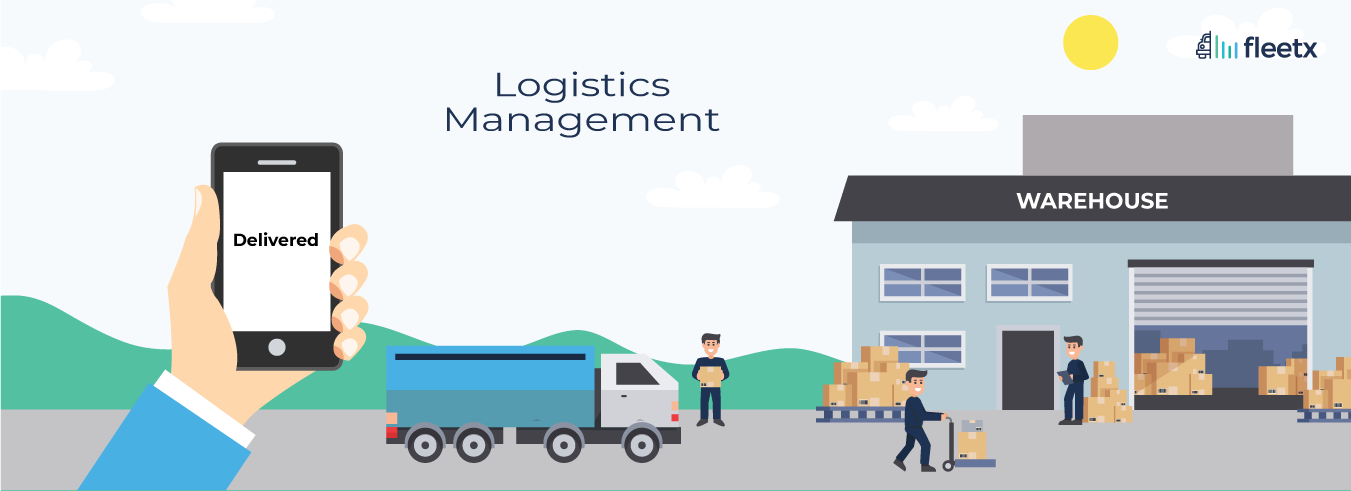
What is Logistics Management Software?
Logistics management system is the science of obtaining, producing, and distributing products in the proper place and in proper quantities, and to meet customer demand through proper planning and implementation of the goods and services from origin to destination. Logistics management Software is a rapidly evolving business discipline that involves order management, processing, warehousing, transportation, materials handling, and packaging all of which should be integrated throughout a network of facilities.
Logistics Management Software is the key to success in a logistics business or in supply chain management. With a proper logistics management system and technology, the logistics business can witness higher growth through streamlined logistics processes. Here, we have mentioned some crucial tips to manage the logistics business more effectively than before.
Problems Faced in Logistics Management Systems Nowadays
In the present scenario of global economics, logistics plays a key role in facilitating trade and business operations,
However, the complex business model and growing client demand pose a challenge in streamlining logistics management
To ensure optimal results, the logistics manager must first identify the top challenges faced today and resolve them
Here are the problems the logistics industry is facing Today-
Cutting Transportation Costs- Growing fuel prices, increasing wages and peaking inflation all work in tandem to increase transportation costs.
Manpower Management- Managing the employees and assigning them last-mile deliveries can be a daunting task for a manager to shun this inadequacy, logistics management software should come into first place.
How Logistics Management Software Works
A logistics management software platform acts as a centralized system that connects transportation operations, warehouse management, inventory tracking, fleet management, order fulfilment, and customer communication into a single digital ecosystem.
When an order is created, the software automatically plans shipments, allocates vehicles, optimizes routes, and tracks deliveries in real time. Modern logistics management systems use GPS tracking, telematics, AI-powered route optimization, and predictive analytics to improve operational efficiency.
The typical workflow includes:
- Order creation
- Shipment planning
- Vehicle allocation
- Route optimization
- Real-time tracking
- Proof of delivery
- Analytics and reporting
By automating these processes, businesses can reduce transportation costs, improve on-time deliveries, and increase customer satisfaction.
Industries such as e-commerce, manufacturing, FMCG, retail, pharmaceuticals, and third-party logistics providers increasingly rely on logistics software to manage complex supply chains across India.
Logistics Management Software Pricing in India
One of the most common questions businesses ask is:
How much does logistics management software cost in India?
The answer depends on several factors:
Typical pricing ranges in India:
Small Businesses
- ₹10,000–₹50,000/month
Suitable for: - Small transporters
- Local logistics companies
- Regional distributors
Mid-Sized Logistics Companies
- ₹50,000–₹2,00,000/month
Suitable for: - Growing fleets
- Multi-city operations
- Regional supply chains
Large Enterprises
- ₹2,00,000+/month
Suitable for: - Enterprise logistics operations
- Nationwide distribution networks
- Large-scale manufacturing organizations
Organizations should focus on total ROI rather than subscription costs alone because logistics software often reduces transportation expenses, fuel costs, delays, and administrative overhead.
5 Tips for Efficient Logistics Management Software
1. Proper Planning and Coordination 2. Adopt to Logistics Management Software
3. Transportation Management
4. Value Relations
5. Warehouse Management
1. Proper Planning and Coordination
Efficient logistics management software starts with proper planning and coordination of all the resources available, such as procuring the goods, storage facilities, and product delivery to the required location. Other than this, the transportation, time management, and the associated cost are also a parameter which needs to be pre-planned. The main purpose of planning and coordination is to attain maximum work in the least possible time with high productivity, which aims to maximize the business profit.
2. Adopt to Logistics Management Software
Technology plays a major role in increasing the efficiency of any organization. It has a vital role in the optimization of logistics business with high efficiency and smooth operation. There is logistics management software that can be deployed in the improving the supply chain process. The logistics software can be integrated to provide timely updates regarding the movement of goods, expected time to reach, and the best route possible, etc. With the Smart Vehicle Tracking System, the fleet manager and the client get the update regarding:
- Goods that are dispatched from the supplier, and the expected time to reach
- Real-time movement tracking
- Delivery of the goods at the destination
With the software and automation, the logistics business can save a considerable amount of time because manual intervention is reduced, which also improves operational efficiency.
3. Transportation Management
Transportation cost is always a concern for fleet owners, as it costs the most in a logistics business; it includes fuel consumption cost, driver cost, asset maintenance costs, etc. A logistics management software must be deployed to decrease the expenses of the logistics firm, and at the same time, it can be revamped for faster delivery of the products. Some factors should be considered for efficient transportation management software :
- The delivery route must be the shortest possible route, which saves both time and money on fuel consumption.
- Packaging should be done in such a way that it occupies less volume but ensures the safety of the products inside it.
4. Value Relations
Clients and team are essential for any organization to run. So, it’s important to make a healthier relationship with every individual who is contributing to an organization. Starting from the delivery guy to the warehouse manager or fleet owners, everyone's coordination is required to run a smooth business.
Make better coordination with clients and healthy relations with them, also provide regular training to your employees so as to keep them updated regarding the latest advancements and trends in your business, and this helps them to communicate with the client effectively.
5. Warehouse Management
Warehouse management is the control of the day-to-day operations of a warehouse, such as the shipping, receiving, put-away and picking of goods. Effective logistics management software is incomplete without proper warehouse management. The logistics firm should aim to develop the warehouse inventory so that there is minimal wastage of goods. Storage capacity should be enough to store all the products, and temperature sensors must be installed to keep dairy items at the required temperature.
The logistics maintenance software must be implemented to check the inventory available as per the demands, and sequencing the products is necessary because there should be no delay while locating the product as soon as possible when the order is placed. The warehouse staff should be well-trained for the warehouse operations.
Benefits of Logistics Management Software
With the Logistics Management system, you can simplify your workflow and improve the efficacy of your supply chain and 3PL ecosystem.
An efficient logistics management software can bring added accuracy to data compilation and compliance by automating the process of projecting different services to different customers
Its Benefits Include-
- Streamline Transportation Mechanism
- Faster Delivery of the Consignment
- Minimize Human Errors Through Predictive Analysis.
- Automates Processes which are Complex to perform
- Reduce Logistics and shipping costs.
We are the leading Logistics Management software company in India, which is currently solving pain points in the logistics industry through AI and Machine Learning.
Follow these basic tips to make logistics management more efficient and install the latest logistics management system to outdo your competitors, and also make your operation smooth and more productive.
Why Logistics Companies in Delhi NCR, Gurgaon, Mumbai, Bengaluru, and Pune Are Investing in Logistics Software
India's major logistics hubs face increasing pressure to improve delivery speed, shipment visibility, and operational efficiency.
Delhi NCR
Delhi NCR serves as one of India's largest logistics corridors. Businesses managing interstate transportation rely on logistics software for fleet visibility, route optimization, and transportation planning.
Gurugram
Gurgaon hosts numerous logistics companies, e-commerce fulfilment centres, and transportation providers. Logistics management software helps businesses handle high shipment volumes while improving customer service and reducing transportation costs.
Mumbai
Mumbai's dense urban infrastructure creates significant delivery challenges. Route optimization and real-time tracking help logistics operators improve last-mile delivery performance.
Bengaluru
Bengaluru's rapidly growing eCommerce and technology sectors require highly efficient supply chain operations. Logistics software helps companies improve warehouse coordination and delivery management.
Pune
Pune's manufacturing ecosystem depends on the timely movement of raw materials and finished goods. Logistics software provides supply chain visibility and helps reduce transportation bottlenecks.
Businesses operating across these cities increasingly deploy transportation management software, fleet management software, and warehouse management systems to remain competitive.
Frequently Asked Questions About Logistics Management Software
What is logistics management software and how does it improve supply chain operations?
Logistics management software is a digital platform that helps businesses manage transportation, warehousing, inventory, fleet operations, order fulfillment, and delivery tracking from a single system. It improves supply chain operations by providing real-time visibility into shipments, inventory movement, vehicle locations, and delivery performance. Businesses can automate dispatch planning, route optimization, proof of delivery, and reporting processes that are traditionally handled manually. For companies operating across India, logistics software reduces delays, minimizes transportation costs, and improves customer satisfaction. Modern logistics management systems also integrate with ERP, accounting, warehouse management, and transportation management software, allowing organizations to make data-driven decisions and improve operational efficiency across the entire supply chain network.
Why is logistics management software important for businesses in India?
India's logistics ecosystem involves complex transportation networks, multiple distribution centers, varying infrastructure conditions, and rapidly growing customer expectations. Logistics management software helps businesses gain end-to-end visibility across these operations. It enables organizations to monitor fleet movement, optimize delivery routes, manage warehouse inventory, and track shipments in real time. Companies in manufacturing, retail, FMCG, eCommerce, pharmaceuticals, and third-party logistics rely on logistics software to improve productivity and reduce operational inefficiencies. As India's logistics sector continues to expand, businesses that adopt modern logistics management platforms are better positioned to reduce transportation costs, improve delivery performance, and maintain competitiveness in both domestic and international markets.
What are the key features of the best logistics management software?
The best logistics management software typically includes transportation management, fleet tracking, warehouse management, route optimization, inventory visibility, shipment monitoring, proof of delivery, analytics dashboards, and automated reporting. Advanced solutions may also include artificial intelligence, predictive analytics, GPS tracking, fuel monitoring, driver performance analysis, and demand forecasting capabilities. Businesses should prioritize software that provides real-time visibility, integrates easily with existing systems, and scales with operational growth. The most effective logistics software simplifies decision-making by centralizing data from transportation, warehousing, and supply chain activities. This allows managers to identify bottlenecks quickly, improve resource utilization, and enhance customer service through better operational control.
How does transportation management software differ from logistics management software?
Transportation management software primarily focuses on planning, executing, and optimizing freight movement. It helps businesses manage carrier selection, route planning, shipment tracking, freight auditing, and transportation costs. Logistics management software is broader in scope and includes transportation management as one component. It also covers warehouse operations, inventory management, order processing, supply chain visibility, fleet monitoring, and customer communication. Businesses looking for complete operational visibility often choose logistics management software because it provides a unified platform that connects transportation, warehousing, and distribution functions. This comprehensive approach helps organizations improve efficiency across the entire supply chain rather than focusing only on transportation activities.
How much does logistics management software cost in India?
The cost of logistics management software in India depends on several factors, including fleet size, number of users, warehouse locations, shipment volume, and required features. Small businesses typically invest between ₹10,000 and ₹50,000 per month for cloud-based solutions. Mid-sized logistics companies may spend ₹50,000 to ₹2 lakh per month, while enterprise organizations often invest significantly more for advanced capabilities and custom integrations. Additional expenses may include implementation, training, hardware, telematics devices, and integration services. Businesses should evaluate software based on return on investment rather than subscription costs alone because logistics automation often delivers savings through improved route planning, reduced fuel consumption, higher asset utilization, and lower administrative overhead.
What factors affect logistics software pricing and implementation costs?
Logistics software pricing is influenced by the number of vehicles, users, warehouses, shipments, integrations, and advanced features required. Companies operating nationwide generally require more sophisticated systems than businesses serving local markets. Implementation costs may include onboarding, data migration, ERP integration, employee training, customization, and deployment support. Businesses implementing route optimization, fleet telematics, warehouse management, and advanced analytics modules often face higher initial costs but achieve greater long-term efficiency gains. Cloud-based logistics software generally offers lower upfront investment compared to on-premise systems. Organizations should carefully assess operational requirements, scalability needs, and expected business growth before selecting a logistics management solution to ensure optimal value from their investment.
Which industries benefit the most from logistics management software?
Logistics management software provides value across numerous industries, including manufacturing, retail, eCommerce, FMCG, pharmaceuticals, automotive, construction, chemicals, and third-party logistics services. Manufacturing companies use logistics software to manage raw material transportation and finished goods distribution. Retailers improve inventory visibility and delivery performance. eCommerce businesses rely on logistics software for order fulfillment and last-mile delivery optimization. Pharmaceutical companies benefit from shipment tracking and compliance monitoring. Third-party logistics providers use centralized logistics platforms to manage multiple clients efficiently. Regardless of industry, organizations that depend on transportation, warehousing, and inventory movement can improve operational efficiency, reduce costs, and enhance customer satisfaction through effective logistics management software implementation.
What is the best logistics management software for small businesses?
The best logistics management software for small businesses is one that balances affordability, scalability, and operational functionality. Small businesses should prioritize features such as shipment tracking, route optimization, inventory management, fleet visibility, automated reporting, and customer communication tools. Cloud-based platforms are particularly attractive because they require lower upfront investment and can scale as operations grow. Small logistics providers, distributors, and transport companies often benefit from software that reduces manual processes while improving delivery accuracy and operational visibility. Choosing a solution that integrates with accounting systems, ERP platforms, and customer management tools can further enhance efficiency and support long-term business growth.
How does route optimization software reduce transportation costs?
Route optimization software uses algorithms, mapping technology, GPS data, and traffic intelligence to identify the most efficient delivery routes. By minimizing travel distance, reducing idle time, and avoiding congestion, businesses can significantly lower fuel consumption and vehicle operating expenses. Route optimization also improves driver productivity by helping dispatchers assign deliveries more efficiently. Organizations benefit from faster deliveries, improved customer satisfaction, and better vehicle utilization. For companies managing large fleets or last-mile delivery operations, route optimization can generate substantial cost savings while increasing delivery capacity. Modern logistics management platforms often include route optimization as a core feature because transportation costs represent one of the largest logistics expenses.
How does fleet management software integrate with logistics management systems?
Fleet management software complements logistics management systems by providing real-time visibility into vehicle performance, driver behavior, fuel usage, maintenance schedules, and location tracking. When integrated, businesses gain a unified view of transportation operations and supply chain activities. Fleet managers can monitor vehicle health, optimize utilization, reduce downtime, and improve driver productivity while logistics teams coordinate shipments and deliveries more effectively. Integration also supports predictive maintenance, automated alerts, route planning, and operational reporting. Organizations that combine fleet management software with logistics management software often achieve better transportation efficiency, reduced operational costs, improved compliance, and enhanced service quality across their delivery networks.
What role does warehouse management play in logistics management software?
Warehouse management is a critical component of logistics management software because it directly affects inventory accuracy, order fulfillment speed, and customer satisfaction. Warehouse management capabilities help businesses track stock levels, optimize storage locations, manage picking and packing processes, and monitor inbound and outbound inventory movement. By integrating warehouse operations with transportation and distribution functions, organizations gain better visibility across the supply chain. This integration reduces inventory discrepancies, improves order accuracy, and accelerates fulfillment processes. Businesses operating multiple warehouses can coordinate inventory transfers more efficiently and ensure products are available where demand exists, improving overall supply chain performance and reducing operational costs.
How does logistics management software improve customer satisfaction?
Customer satisfaction improves when businesses provide accurate delivery timelines, real-time shipment visibility, and reliable service performance. Logistics management software enables organizations to track shipments continuously, communicate delivery updates automatically, and resolve issues proactively. Customers benefit from greater transparency throughout the order fulfillment process. Businesses can reduce delivery delays through route optimization and better resource allocation while ensuring faster responses to customer inquiries. Proof of delivery systems and automated notifications further enhance trust and accountability. By improving operational efficiency and service consistency, logistics software helps companies strengthen customer relationships, increase retention rates, and build a competitive advantage in increasingly demanding markets.