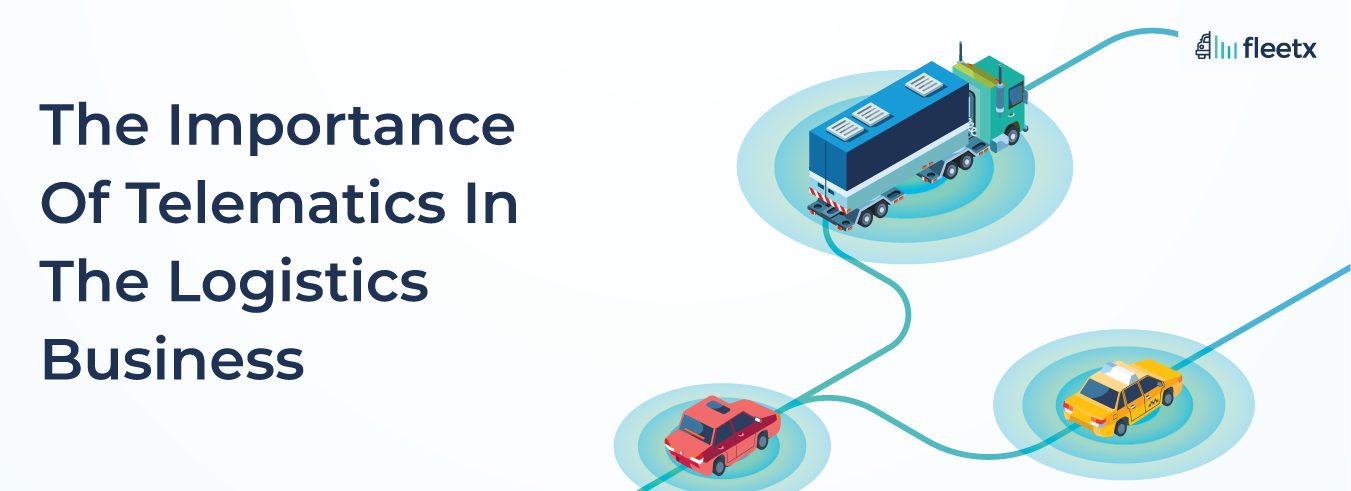
The telematics we know of today are primarily used to refer to telematic solutions which are used in the logistics industry. Telematic devices are installed in commercial fleet vehicles. These devices then collect various types of raw data. These telematic devices primarily capture data from the vehicle and this data is then sent to the management software companies like Fleetx, where this data is then processed further into a more readable format.
On-board devices are primarily used for live tracking of the shipments. This proves to be a very useful and valuable function considering the unorganized nature of Indian railways. Apart from the dangerous roads, there are numerous other unfortunate risks that indian truck drivers have to tackle while on the road. Such devices make it easier and remotely safer for the entire fleet if there is active remote tracking.
Unforeseen vehicle breakdowns are never a favourable turn of events. Indian highways and roadways are very unpredictable and it is always advisable to have remote help for all your fleet troubles while in transit. The risk factor is also high because usually the vehicles are transporting high-value goods. Telematic devices capture the engine data and can even predict engine breakdown well in advance. This will not only make the driver’s job easy but will also ensure a timely delivery which will only further help great client relations.
Oftentimes, we witness massive accidents on the highways involving big trucks. For a big vehicle to get into an accident, the momentum of the vehicle plays a massive role in defining the extent of damage caused in the unfortunate accident. Indian truck drivers tend to drive fast on empty roads, leading to big accidents. It should be noted that it is not always the fault of the truck driver, and it could be a result of other vehicles driving rashly on the road. Yet, it is always a good idea to be cautious and to avoid accidents. On-board devices can actively track the velocity of the vehicle and take necessary action.
Such cautious behaviour can help avoid unnecessary mishaps which can lead to costly insurance feuds and cleanup drives for the roads. Usually the cleanups are only required in case the cargo’s shipment has been compromised and is a mess.
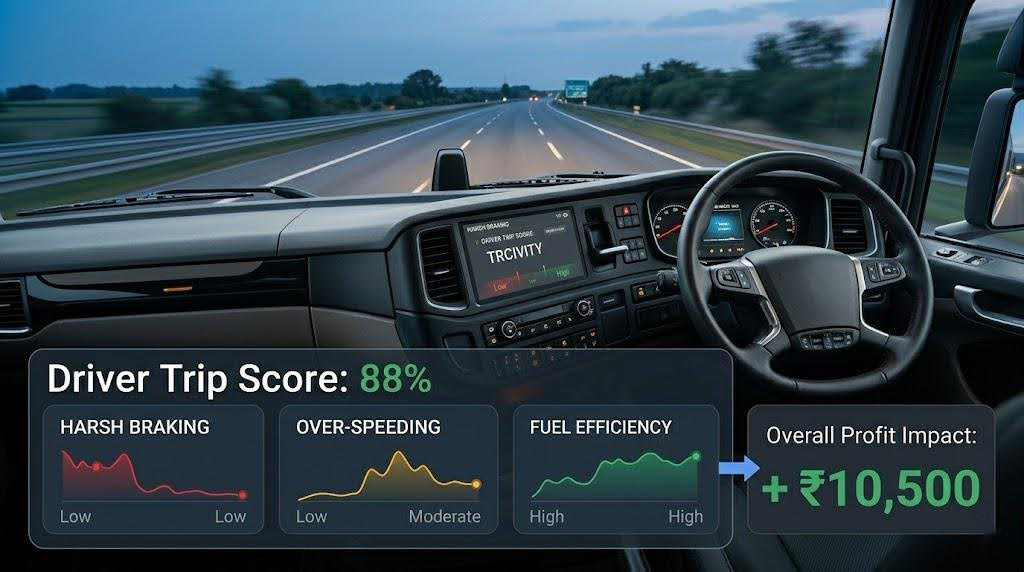
The telematics device can also help us access data on how the driver is driving. Some of these verticals include - hard acceleration and deceleration, quick lane changes, exhaust emissions, etc. Such empirical data, when processed correctly, can help in analysing the risk and taking necessary precautions to avoid on-transit mishaps.
Trucking telematic systems have proved to be highly useful to fleet owners and managers. These systems play a crucial role in -
Heavy-duty telematic devices are a good way of capturing data on the vehicle’s technical functioning. Recorded data like this is helpful in keeping up with the servicing of the vehicle, which can prove to be beneficial while reselling the vehicle. Furthermore, based on this data, fleet owners can even avoid unfortunate instances like the vehicle breaking down. Overall, such attention to detail in caring for the vehicle can even prolong the life of the vehicle.
With the impressive evolution of technology and modern solutions, it has now become possible for all logistics businesses - big or small - to function with fluidity and precision in cost-effective ways.
Some speculate that ‘contextual utilization’ is soon going to be the new trend to take over. It basically means that the care and services of each vehicle can be customized now because of the recorded data from trucking telematics. Instead of treating all machines the same way and getting them serviced in the same timely fashion, the vehicles are serviced based on their needs.
Using newer technology and moving to unfamiliar working channels can be a challenge. But with the right team, it can also be the best decision you make as a business owner. Management assistant tech solutions, like those offered by Fleetx, just might be the answer to your business problems.
Frequently Asked Questions
What is truck telematics and how does it work?
Truck telematics is a technology that combines GPS tracking, onboard diagnostics (OBD), IoT sensors, wireless communication, and fleet management software to collect and transmit real-time information about commercial vehicles. A telematics device installed inside the truck gathers data such as vehicle location, speed, fuel consumption, engine health, idle time, harsh braking, acceleration, route deviations, and driver behaviour. This information is securely transmitted to a cloud-based dashboard where fleet managers can monitor operations from anywhere. Truck telematics has become an essential technology for logistics companies across India, particularly in Delhi NCR, Gurgaon, Mumbai, Bengaluru, and Pune, where fleet utilization, delivery timelines, and fuel costs directly impact profitability. Modern telematics platforms also integrate with Transportation Management Systems (TMS), Warehouse Management Systems (WMS), ERP software, and maintenance scheduling tools. Besides improving operational visibility, truck telematics helps reduce fuel wastage, improve driver safety, minimise breakdowns, increase vehicle uptime, and provide customers with accurate shipment tracking. Whether a company manages ten trucks or several thousand, telematics enables data-driven decisions that improve logistics efficiency and customer satisfaction.
What are truck telematics used for in the logistics industry?
Truck telematics is used throughout the logistics lifecycle to improve fleet visibility, operational efficiency, compliance, and customer service. Logistics companies rely on telematics for live GPS tracking, fuel monitoring, predictive maintenance, route optimisation, trip management, driver behaviour analysis, geofencing, temperature monitoring for cold chain logistics, and theft prevention. Fleet managers receive real-time alerts whenever vehicles deviate from planned routes, exceed speed limits, idle excessively, or require servicing. Businesses operating across Delhi, Mumbai, Gurgaon, Pune, and Bengaluru benefit significantly because congested urban traffic, toll routes, and long-distance interstate transportation demand continuous fleet monitoring. Truck telematics also helps logistics businesses improve delivery accuracy by providing customers with estimated arrival times and shipment visibility. Insurance claims become easier because vehicle movement history is recorded automatically. Businesses transporting high-value goods such as FMCG, pharmaceuticals, construction materials, e-commerce parcels, and industrial equipment increasingly rely on telematics to reduce operational risks while improving profitability. The technology ultimately enables safer driving, lower operating costs, better vehicle utilisation, and smarter logistics planning.
What is telematics in a truck?
Telematics in a truck is used for gathering operational and vehicle performance data through GPS technology, onboard diagnostics, sensors, and wireless communication systems. The information collected commonly includes vehicle location, driving behaviour, speed, fuel consumption, engine performance, maintenance alerts, and trip history. Fleet managers access this information through cloud-based fleet management software to remotely monitor commercial vehicles in real time. Truck telematics helps improve fleet visibility, driver safety, preventive maintenance, customer service, and overall logistics efficiency. It is widely adopted by transport companies across India because it enables better operational control while reducing fuel expenses and vehicle downtime.
What is telematics fleet truck management?
Telematics for fleet truck management enables businesses to monitor and manage commercial vehicles remotely using GPS tracking, IoT sensors, onboard diagnostics, and cloud-based software. Fleet managers receive continuous updates about vehicle location, fuel consumption, trip progress, engine health, driver behaviour, idling, maintenance schedules, and delivery performance. Rather than relying on manual reporting, companies gain a centralized dashboard that provides complete operational visibility across their fleets. This technology is particularly valuable for logistics companies handling interstate transportation, FMCG distribution, e-commerce deliveries, cold chain logistics, mining operations, and construction fleets. Businesses operating across Delhi NCR, Gurgaon, Mumbai, Bengaluru, and Pune often use telematics to reduce delivery delays caused by heavy traffic while improving fleet utilization. Driver scorecards help reduce harsh braking, overspeeding, and unsafe driving, resulting in lower accident rates and fuel costs. Integration with Transportation Management Systems (TMS) and Enterprise Resource Planning (ERP) platforms further streamlines dispatch planning, billing, maintenance scheduling, and customer communication. Overall, telematics fleet management helps logistics businesses improve operational efficiency, reduce operating expenses, enhance customer satisfaction, and make data-driven decisions that support long-term business growth.
Which is the best truck telematics software in India?
The best truck telematics software depends on fleet size, operational complexity, and business goals. Leading solutions available in India generally combine GPS vehicle tracking, AI-powered analytics, fuel monitoring, route optimization, preventive maintenance, driver behaviour analysis, electronic proof of delivery, geofencing, and Transportation Management System integration. Businesses operating in Delhi, Gurgaon, Mumbai, Bengaluru, and Pune often prioritize platforms that offer real-time fleet visibility, scalable cloud infrastructure, multilingual support, and strong customer service. Small fleet operators may focus on affordability and ease of deployment, while enterprise logistics companies require ERP integration, API connectivity, advanced reporting, video telematics, and predictive maintenance capabilities. When comparing truck telematics software, businesses should evaluate implementation support, uptime, mobile accessibility, analytics capabilities, customization options, cybersecurity standards, and return on investment instead of simply choosing the lowest-priced solution. A reliable telematics platform should help reduce fuel costs, improve vehicle utilization, increase delivery accuracy, enhance driver safety, and provide measurable operational improvements. Selecting software that can scale with business growth ensures long-term value while supporting future expansion into new cities and transportation networks.
How much does truck telematics software cost in India?
Truck telematics software pricing in India varies depending on the number of vehicles, hardware requirements, software features, implementation complexity, and support services. Small fleets generally invest approximately ₹800 to ₹2,500 per vehicle per month for cloud-based telematics subscriptions, while enterprise deployments with AI analytics, fuel monitoring, video telematics, predictive maintenance, ERP integration, and advanced reporting may range from ₹3,000 to ₹8,000 or more per vehicle each month. Hardware installation costs can vary depending on GPS devices, sensors, cameras, and diagnostic equipment. Large logistics companies operating across Delhi NCR, Mumbai, Gurgaon, Bengaluru, and Pune often negotiate customized enterprise pricing based on fleet size and operational requirements. Implementation costs may also include staff training, system integration, data migration, API development, and customization. While the initial investment may appear significant, businesses typically recover costs through lower fuel consumption, fewer breakdowns, reduced maintenance expenses, improved driver productivity, enhanced vehicle utilization, and increased customer satisfaction. Evaluating the total return on investment instead of only the subscription price helps organizations choose a telematics solution that delivers sustainable long-term operational savings.
Why are logistics companies in Delhi, Gurgaon, and Mumbai adopting truck telematics?
Major logistics hubs such as Delhi, Delhi NCR, Gurgaon, Mumbai, Bengaluru, and Pune experience heavy traffic congestion, complex delivery schedules, interstate freight movement, and rising transportation costs. Truck telematics enables logistics businesses to overcome these operational challenges through real-time fleet visibility, intelligent route planning, predictive maintenance, automated alerts, and driver performance monitoring. Fleet managers can quickly identify delays, optimize delivery routes, reduce idle time, and improve dispatch efficiency while keeping customers informed with accurate shipment tracking. Companies serving e-commerce, retail, manufacturing, pharmaceuticals, automotive, and FMCG sectors particularly benefit because telematics supports faster deliveries and stronger service reliability. Vehicle health monitoring helps prevent unexpected breakdowns during long-distance transportation, while fuel analytics identify opportunities to reduce operating costs. Driver safety improves through continuous monitoring of speeding, harsh braking, fatigue indicators, and unsafe driving practices. As logistics businesses continue expanding across India's rapidly growing supply chain network, truck telematics has become an essential technology for improving operational efficiency, customer satisfaction, regulatory compliance, and profitability while maintaining a competitive advantage in increasingly demanding transportation markets.
What are the top truck telematics solutions for logistics businesses in India?
India's logistics industry has rapidly adopted truck telematics to improve fleet visibility, reduce operating costs, and enhance delivery performance. The top truck telematics solutions typically combine GPS vehicle tracking, AI-powered analytics, route optimisation, fuel monitoring, preventive maintenance, driver behaviour monitoring, geofencing, trip management, electronic proof of delivery, and Transportation Management System (TMS) integration within a single platform. Businesses operating in Delhi NCR, Gurgaon, Mumbai, Bengaluru, Pune, Chennai, Hyderabad, and other logistics hubs increasingly prefer cloud-based telematics software because it provides real-time operational visibility across fleets of every size. While comparing telematics providers, businesses should evaluate system reliability, implementation support, mobile accessibility, reporting capabilities, API integrations, uptime, cybersecurity, scalability, and customer support instead of focusing solely on price. The best truck telematics software should integrate seamlessly with existing ERP and warehouse systems while providing actionable insights that reduce fuel consumption, improve vehicle utilisation, minimise maintenance costs, and increase on-time deliveries. Companies handling e-commerce logistics, FMCG distribution, manufacturing, pharmaceuticals, construction materials, and cold chain transportation particularly benefit from AI-enabled telematics that helps optimise routes, improve customer communication, and support data-driven decision-making. Selecting a future-ready telematics platform ensures long-term operational efficiency while allowing businesses to scale their logistics operations without compromising service quality or fleet performance.
How should businesses choose the right truck telematics solution for their fleet?
Choosing the right truck telematics solution requires evaluating both current operational requirements and future business growth. Companies should first identify whether their primary objective is improving vehicle tracking, reducing fuel costs, enhancing driver safety, preventing breakdowns, increasing fleet utilisation, or strengthening customer service. Modern telematics platforms should provide GPS tracking, real-time alerts, AI-powered analytics, predictive maintenance, route optimisation, driver scorecards, fuel monitoring, geofencing, maintenance scheduling, mobile applications, and integration with Transportation Management Systems (TMS), Warehouse Management Systems (WMS), and ERP software. Businesses operating across Delhi, Delhi NCR, Gurgaon, Mumbai, Bengaluru, Pune, and interstate logistics corridors should prioritise software that supports high fleet volumes, multilingual users, cloud deployment, and reliable customer support throughout India. It is also important to evaluate implementation timelines, onboarding assistance, hardware compatibility, data security, reporting capabilities, and scalability before making a purchasing decision. Rather than selecting software based only on subscription pricing, organisations should assess the overall return on investment through lower fuel expenses, fewer breakdowns, improved delivery performance, enhanced compliance, and higher customer satisfaction. A well-implemented truck telematics solution becomes a long-term operational asset that enables logistics businesses to improve productivity, reduce costs, and remain competitive in an increasingly technology-driven transportation industry.