
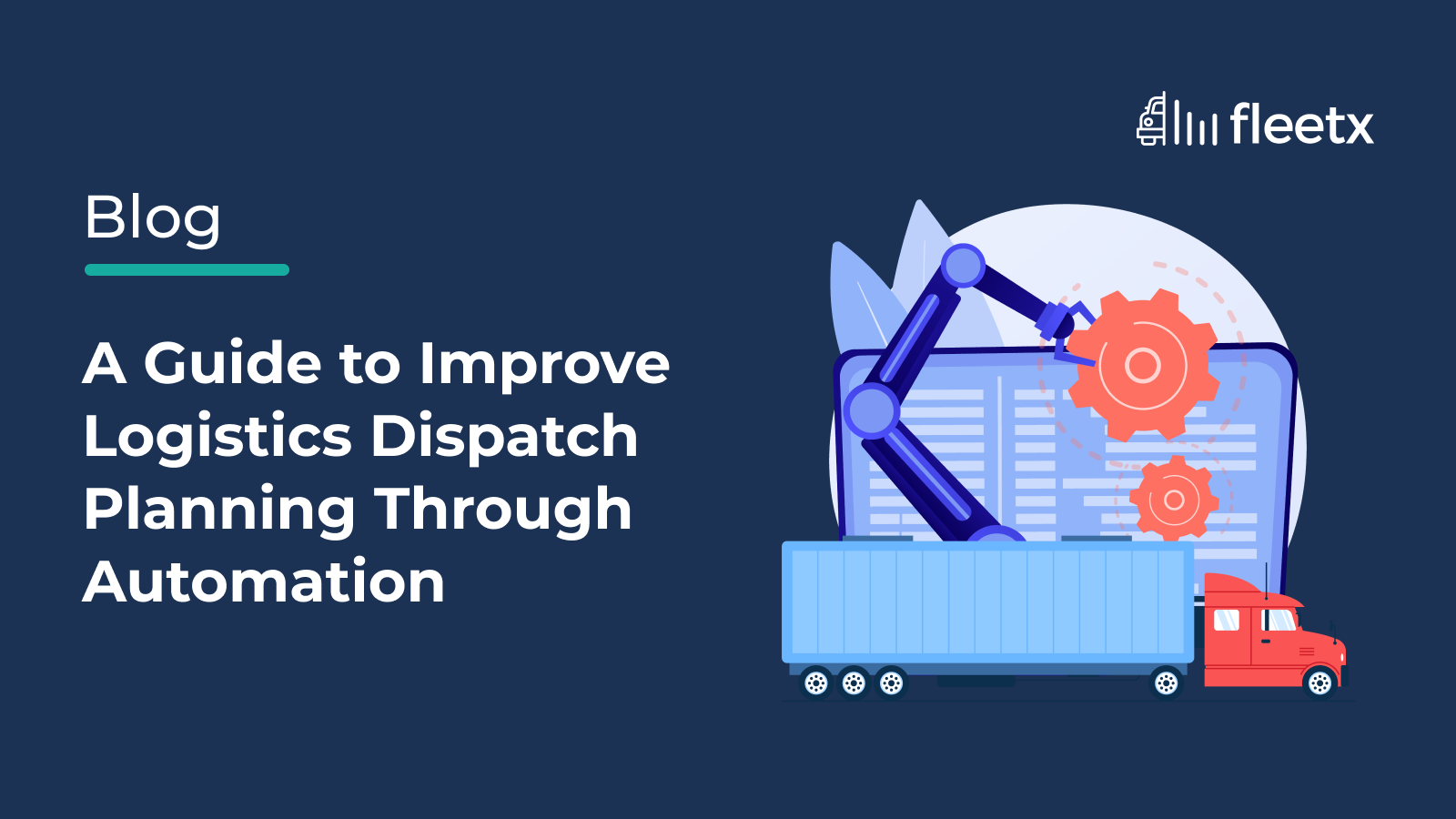
A flourishing heavy-logistics operation revolves around several functions – assigning tasks, load scheduling, and route planning. The operation site often becomes a complex mesh of constant phone calls, spreadsheets, notes, reminder cards, etc. Chaos levels are at extremes due to the endless pressure of manually ensuring on-time delivery and customer satisfaction, often leading to personnel burnout.
Wondering how to bring order to this chaos? Automation has played a vital role in transforming several other sectors and the expectation is similar in logistics.
Key Dispatch Process Challenges
The chain of operations involved in transporting products or items from one location to another comes under the umbrella of Dispatch Logistics. Numerous hurdles arise in the process, impacting efficiency, costs, and customer satisfaction. The dominant issues include:
Route-Related Issues
- Longer travel times and higher fuel consumption due to inefficient route planning
- Sudden route disruptions due to unexpected congestion, road closures, or weather abnormalities
Inadequate Vehicle Utilization
- Lack of optimal load planning leads to space underutilization
- Financial losses follow insufficient resource usage
Inconsistent Data
- Data entry errors minimize dispatch efficiency
- Inefficient integration among systems leads to data silos
Limited visibility
- Inability to virtually monitor the loading process, in real-time
- Hindrance to proactive decision-making
What are the Objectives of Dispatch Logistics?
The goals of the dispatch planning process include:
- Timely delivery
- Cost-effectiveness
- Optimal resource utilization
- Seamless flow of information
- Safety adherence
- Data-backed decisions
The modern global economy runs on speed and efficiency, and logistics acts as a crucial pillar of support. With time, these functions are becoming more complex, and data-driven automated dispatching operations are gaining prominence.
The Rising Popularity of Dispatch Automation Systems
Statista figures indicate a 39% growth in the coming years in retail e-commerce sales, from USD 5.8 trillion in 2023, with growth expectations to surpass USD 8 trillion by 2027. In an age where customers are demanding ever-faster services, such as same-day delivery, the absence of an automatic dispatch mechanism, such as cement dispatch software, would result in the waste of precious time in heavy industries by following tedious manual processes.
Dispatch Planner is one of the core features of the Fleetx TMS that lets users schedule and coordinate tasks efficiently, allocate resources, and optimize routes for timely delivery and smooth logistics operations.
Features of the Automated Dispatch Planner from Fleetx
● Plan routes to consolidate the shipments heading in the same direction to optimize transportation & reduce costs
● Determine the fastest route for each dispatch based on factors such as distance, on-road traffic, etc.
● Determine the order in which goods should be loaded to maximize space & unloading at various stops
● Assign shipments to vehicles based on factors like vehicle availability, vehicle capacity, shipment requirements, etc.
Benefits of the Fleetx Dispatch Planning System
Modernizing dispatch operations requires implementing advanced dispatch software.
Route Analysis for Optimization
Data from several shipments can also be analyzed to ascertain the possibility of route consolidation for multiple deliveries.
Ensuring Load Compliance
Dispatch managers are tasked with optimizing the loading capacities of the vehicles, and the load builder functionality ensures not only optimum space utilization but also the safety of the shipment, for instance - easy plans for FTL and PTL orders.
Establishing Communication Protocols
Several stakeholders are involved in the load dispatch process. A centralized, virtual tool provides access to real-time data and necessary updates to all parties involved.
Marketplace Integration
The automated dispatch platform can be easily integrated with multiple external resources, for instance - the warehouse, to improve logistics efficiency.
Analytical Reporting for Better Decisions
One of the most significant aspects of the Fleetx automated dispatch tool is the data-powered reporting that provides valuable insights to complete deliveries on time and for operation managers to fulfill their KPIs successfully.
Higher Savings
Implementing the automated solution for the dispatch process ensures optimal space utilization and faster operations, resulting in streamlined processes and, ultimately, savings on the costs involved.
A Practical Application of the Fleetx Dispatch Planner
Problem Statement
One of the truck fleet owners had multiple locations to cater to and diverse industries were dependent on the timely delivery of the materials through this vendor. However, the transporter’s manual dispatch procedure led to frequent delays, and the vehicles were frequently left under-utilized, costing the carrier heavily.
Solution Offered
The AI-driven solution optimized the shipment process through:
Dynamic Scheduling - Being adaptable to real-time changes in demands and vehicle availability, the system ensured adherence to delivery timelines.
Load Optimization – Removing the loading constraint, the AI-driven load builder maximized the vehicle capacity and led to cost savings with minimized trips and lower fuel costs.
Informational Alerts – Transporters received real-time notifications related to vehicle assignment and route plans, reducing errors.
Performance Metrics – Through the tracking of vehicles’ turn-around-time (TAT), the delivery efficiency got a boost, relaying actionable insights for continuous process improvement.
Collaborate with Fleetx - Amplify Customer Satisfaction & Your Profits
Trust-building is crucial for ensuring customer satisfaction. Setting realistic client expectations is one of the ways to build trust and commitment to schedules and timelines is the key to success. Fleetx has built the reputation of an effective enabler of these fundamental trust-building factors.
Investing in continuous innovation is Fleetx’s motto and this scalable, first-mile and mid-mile delivery platform offers a futuristic solution for businesses looking to streamline their delivery operations.
Frequently Asked Questions About Logistics Dispatch Planning
1. What is logistics dispatch planning?
Logistics dispatch planning is the process of assigning orders, shipments, vehicles, drivers, routes and delivery schedules so that goods reach their destinations safely and on time. It connects order management with day-to-day transport execution. A dispatch plan normally specifies which vehicle will carry an order, how much cargo it will transport, when it should leave, which route it should follow and the sequence in which deliveries should be completed.
Manual dispatch planning commonly depends on spreadsheets, telephone calls, paper records and the personal experience of a dispatcher. This method may work for a small number of predictable trips, but it becomes difficult to manage when order volumes, customer locations or traffic conditions change. Automated logistics dispatch planning software brings the relevant information into one platform and recommends practical vehicle, load and route combinations.
A well-designed dispatch process generally covers:
- Order prioritisation according to delivery windows and service commitments;
- Vehicle selection based on capacity, availability and cargo requirements;
- Load consolidation to reduce unused vehicle space and unnecessary trips;
- Route planning based on distance, road restrictions and expected travel time;
- Driver allocation, live communication and exception management; and
- Performance measurement using delivery, cost and vehicle-utilisation data.
For Indian logistics operations, dispatch planning must also account for city congestion, toll routes, regional restrictions, loading delays and varied road conditions. The objective is not merely to send a truck quickly. It is to produce a feasible, cost-effective plan that improves vehicle utilisation, reduces delivery uncertainty and gives dispatch teams better operational control.
2. What is automated dispatch planning, and how does it work?
Automated dispatch planning uses software, operational rules and data analysis to create or recommend shipment, vehicle, driver and route assignments. Instead of manually comparing every order with every available truck, the system evaluates multiple constraints simultaneously and produces a workable dispatch schedule. Dispatchers can review the recommendations, make authorised changes and release the final plan for execution.
The process begins when order data enters the platform through manual upload, an enterprise resource planning system, a warehouse management system or an application programming interface. The software then reviews delivery locations, time windows, shipment weight and volume, vehicle capacity, driver availability and operational restrictions. Depending on the solution, it may also consider live traffic, historical turnaround time, tolls and vehicle location.
A typical automated workflow includes:
- Validating orders and identifying incomplete or conflicting information;
- Grouping compatible shipments travelling towards similar locations;
- Matching loads with suitable vehicles rather than assigning trucks randomly;
- Sequencing stops and calculating efficient routes;
- Sharing trip details and updates with drivers or transport partners; and
- Monitoring delays, deviations and delivery status after dispatch.
Automation does not eliminate the dispatcher’s role. It reduces repetitive comparison and calculation so that the team can focus on exceptions, customer coordination and operational decisions. The quality of the output depends on accurate master data, realistic constraints and disciplined system use. Businesses should therefore treat automated dispatch planning as a structured operational capability—not as a one-click tool that can compensate for incomplete orders, inaccurate vehicle details or unrealistic delivery commitments.
3. What are the top benefits of automated logistics dispatch planning?
The top benefits of automated logistics dispatch planning are faster scheduling, better vehicle utilisation, more consistent routing and improved visibility. Its value is greatest when a business handles numerous orders, vehicles, destinations or delivery windows that would be difficult to compare manually. Rather than relying only on dispatcher memory, the organisation can apply standard planning rules across shifts, facilities and transport partners.
Important operational benefits include:
- Faster planning: Orders and available resources can be evaluated together, reducing spreadsheet work and repeated phone calls.
- Higher capacity utilisation: Compatible shipments may be consolidated while respecting weight, volume and handling constraints.
- More practical routes: Stop sequences can be planned around distance, expected travel time and delivery commitments.
- Better visibility: Dispatchers can see assigned, unassigned, delayed and completed trips in a common system.
- Consistent execution: Standard operating rules are less dependent on one experienced employee.
- Measurable performance: Managers can track metrics such as planning time, vehicle fill rate, on-time dispatch and delivery success.
Automation can also support customer service because teams receive clearer information about vehicle allocation and expected delivery. However, no responsible provider should promise a universal percentage of savings. Results vary according to baseline inefficiency, route density, shipment profile, fuel costs and adoption quality. A credible evaluation should compare before-and-after metrics over representative routes. Businesses can begin with a pilot covering one facility, region or customer segment and then expand after validating plan feasibility, user acceptance and measurable commercial value.
4. How much does logistics dispatch planning software cost in India?
Logistics dispatch planning software in India may cost from approximately ₹20,000–₹75,000 per month for a limited deployment, while customised enterprise implementations can cost several lakh rupees annually. These are indicative market-planning ranges rather than fixed quotations. Actual pricing depends on fleet size, shipment volume, number of users, required integrations, optimisation complexity and support level.
Vendors may charge per vehicle, user, trip, order, facility or subscription tier. A basic system may offer order allocation, route creation and status tracking. Advanced platforms can add load optimisation, multi-depot planning, dynamic scheduling, control-tower dashboards, transporter collaboration and integration with ERP, WMS, GPS or electronic proof-of-delivery systems.
Businesses should budget for more than the licence fee. Possible cost components include:
- Initial configuration and workflow mapping;
- ERP, WMS, telematics or API integration;
- Data cleaning and vehicle-master preparation;
- User training, implementation support and change management;
- Custom reports, alerts or approval workflows; and
- Mobile applications, GPS hardware or messaging usage where applicable.
A small pilot may sometimes be available for roughly ₹50,000–₹2,00,000, depending on its duration and scope, whereas complex multi-location projects can require a substantially higher implementation budget. Buyers should ask for a written breakdown of recurring and one-time charges. The best commercial comparison also considers total cost of ownership, implementation time and expected operational impact—not merely the lowest monthly subscription. A useful business case compares software expense with current planning labour, empty kilometres, detention, underutilised capacity, missed delivery windows and manual-error costs.
5. How can dispatch automation improve logistics operations in Delhi and Delhi NCR?
Dispatch automation can improve Delhi and Delhi NCR logistics by coordinating vehicle allocation, delivery windows and route schedules around highly variable urban operating conditions. Operations serving Delhi, Noida, Greater Noida, Ghaziabad, Faridabad and Gurgaon often encounter congestion, long loading queues, seasonal pollution-related restrictions and differing access conditions across commercial zones. A static route prepared early in the day may quickly become impractical.
An automated dispatch planner can group shipments geographically, match them with suitable vehicles and establish stop sequences before release. When connected with live vehicle or traffic information, it can also help dispatchers identify delays and revise operational decisions. For example, deliveries towards Noida may be planned separately from shipments moving towards Gurgaon when combining them would create excessive cross-city travel.
For a Delhi NCR operation, useful capabilities include:
- Configurable delivery windows and customer receiving hours;
- Zone-based order grouping and multi-stop route planning;
- Vehicle-type rules for restricted or congested areas;
- Real-time alerts for prolonged stoppages and route deviations;
- Estimated arrival updates for customers and warehouse teams; and
- Analysis of detention, turnaround time and repeated delay locations.
Delhi NCR businesses should test software using real routes rather than a generic demonstration. A pilot can cover one warehouse and 20–50 vehicles, with pricing often determined by functionality and integration depth. The best evaluation metrics include on-time dispatch, planning time, kilometres per delivery, vehicle fill rate and delivery-window adherence. Because local restrictions and congestion patterns can change, human oversight and updated operational rules remain essential even after automation is introduced.
6. What is the best dispatch planning software for logistics companies in Gurgaon?
The best dispatch planning software for a Gurgaon logistics company is the platform that can model its actual orders, vehicles, customer time windows and Delhi NCR operating constraints. There is no single product that is automatically best for every transporter, manufacturer, distributor or third-party logistics provider. A business operating from Udyog Vihar may have different requirements from a warehouse serving Manesar, Bilaspur, Sohna or multiple NCR destinations.
Gurgaon buyers should evaluate whether the software supports order consolidation, capacity-based vehicle assignment, multi-stop route planning, live trip visibility and integration with existing business systems. The platform should also allow dispatchers to intervene when a priority order, vehicle breakdown, loading delay or customer request changes the original plan.
A practical vendor assessment should examine:
- Ability to process representative daily order volumes within an acceptable time;
- Support for owned, attached and market vehicles;
- ERP, WMS, GPS and transporter-system integration options;
- Configurable service areas, vehicle restrictions and delivery windows;
- Implementation support available in Gurgaon or remotely across India;
- Role-based dashboards, reports and audit trails; and
- Transparent licence, integration and support pricing.
Request a proof of concept using anonymised historical orders. Compare the recommended plan with actual performance and check whether dispatchers consider it operationally feasible. Indicative pilot expenses may begin around ₹50,000 but can rise significantly with integrations and customisation. Buyers should avoid choosing solely on a long feature list. The top solution is the one users can operate consistently and that improves agreed metrics such as planning time, load utilisation, on-time dispatch and delivery cost.
7. How does automated dispatch planning support Mumbai logistics and last-mile delivery?
Automated dispatch planning supports Mumbai logistics by organising deliveries around dense traffic, limited access, time-sensitive receiving windows and complex movement between the city and surrounding industrial areas. Routes may extend across Mumbai, Navi Mumbai, Thane, Bhiwandi and nearby distribution hubs. Distance alone is therefore a weak planning measure: a shorter route can still require more time because of congestion, loading delays or building-access rules.
The software can divide orders into practical clusters, assign an appropriate vehicle and calculate a feasible stop sequence. For last-mile delivery, it can consider shipment size, customer priority, promised slot, service time and vehicle capacity. Dispatchers can monitor execution and respond when a vehicle is delayed or a customer cannot accept delivery.
Relevant Mumbai use cases include:
- Planning deliveries from Bhiwandi or Navi Mumbai distribution centres;
- Separating bulk movement from smaller urban delivery routes;
- Scheduling around customer receiving hours and local access conditions;
- Reducing unnecessary cross-city travel through geographic clustering;
- Sharing estimated arrival information with customers; and
- Identifying recurring detention or failed-delivery locations.
A Mumbai business should verify whether the platform uses realistic travel-time data and permits local operating rules to be configured. It should also test mobile usability because drivers and field teams need a simple way to receive routes and report status. Commercial pricing may range from a modest monthly subscription for a limited fleet to a customised enterprise contract. The final cost depends on orders, vehicles, integrations and support. A pilot should measure delivery success, route completion time, kilometres per order and customer-window adherence.
8. How can Bengaluru logistics companies use dispatch automation to manage traffic and delivery windows?
Bengaluru logistics companies can use dispatch automation to create realistic vehicle and route schedules based on delivery windows, service time, shipment capacity and expected travel conditions. The city’s congestion and spread-out demand centres make straight-line distance an unreliable basis for planning. A vehicle serving Electronic City, Whitefield, Peenya and central Bengaluru in one sequence may appear efficient on a map but perform poorly during actual execution.
Automated software can cluster orders into serviceable territories and evaluate whether a vehicle can complete the assigned stops within its shift. It can also reserve capacity for priority orders and alert dispatchers when planned arrival times are at risk. Historical trip information is particularly useful because it helps teams compare planned travel time with observed performance.
For Bengaluru operations, buyers should prioritise:
- Time-window and service-duration planning;
- Zone-based clustering for major residential, commercial and industrial areas;
- Support for two-wheelers, light commercial vehicles and larger trucks where required;
- Dynamic reassignment when orders or vehicle availability change;
- Driver-friendly route communication and electronic delivery updates; and
- Dashboards showing late stops, route adherence and delivery productivity.
The top dispatch platform should produce feasible plans, not merely mathematically short routes. Businesses should test it during both ordinary and high-demand days and include dispatchers in the evaluation. An indicative small-fleet subscription can begin in the tens of thousands of rupees per month, while multi-hub systems with integrations cost more. Success should be evaluated through on-time delivery, failed-attempt rate, kilometres per completed delivery, planning effort and vehicle utilisation rather than through vendor claims alone.
9. How can dispatch planning software benefit manufacturers and transporters in Pune?
Dispatch planning software can help Pune manufacturers and transporters coordinate plant dispatches, supplier movements, industrial deliveries and regional distribution through a common planning workflow. Operations may involve facilities and customers across Chakan, Talegaon, Pimpri-Chinchwad, Ranjangaon and the wider Pune region. These networks often combine fixed production schedules with uncertain vehicle arrival, loading time and customer receiving capacity.
An automated planner can match orders to vehicles according to payload, body type, availability and destination. It can consolidate compatible shipments, sequence deliveries and give warehouse teams better visibility of planned vehicle movement. This coordination is valuable when several vehicles compete for loading bays or when delayed loading affects downstream delivery appointments.
High-value Pune use cases include:
- Planning milk runs for suppliers or industrial customers;
- Coordinating plant, warehouse and transporter schedules;
- Assigning full-truckload and part-truckload orders appropriately;
- Tracking vehicle turnaround time at gates and loading points;
- Managing urgent orders without disrupting every existing trip; and
- Analysing lane performance, detention and capacity utilisation.
Manufacturers should look for software that integrates with order, inventory, warehouse and vehicle-tracking systems. Transporters should verify support for contracted and market vehicles, freight information and driver communication. Costs vary widely: a limited deployment may use subscription pricing, while plant-level integrations and custom workflows can require a larger implementation budget. A useful return-on-investment assessment examines dispatch planning hours, loading-bay waiting, trips per day, vehicle fill rate, delivery punctuality and exception frequency. The implementation should begin with accurate master data and clearly defined responsibility for approving, releasing and modifying dispatch plans.
10. How should an Indian business choose the best automated dispatch planning solution?
An Indian business should choose automated dispatch planning software by matching its operational constraints, integration needs and measurable objectives with the platform’s proven capabilities. The selection process should begin with the problem to be solved. Examples include slow planning, low vehicle utilisation, excessive empty travel, missed delivery windows, poor trip visibility or inconsistent decisions across dispatch teams.
Document current order volumes, fleet types, facilities, destinations, planning time and performance levels before contacting vendors. This baseline makes demonstrations more meaningful and prevents the purchase from becoming a feature-list comparison. Ask shortlisted providers to plan a representative set of historical or test orders using real constraints.
A strong evaluation checklist includes:
- Order allocation, load building, route optimisation and dynamic replanning;
- Support for Indian addresses, regional operations and varied vehicle types;
- Integration with ERP, WMS, telematics, billing and proof-of-delivery tools;
- Configurable restrictions, delivery windows and approval rules;
- Data security, access controls, audit logs and service reliability;
- Implementation methodology, training and post-launch support;
- Clear recurring, one-time and customisation costs; and
- Evidence from comparable fleet, manufacturing or distribution operations.
Run a controlled pilot and agree on success metrics before it begins. These may include planning-time reduction, on-time dispatch, vehicle fill rate, delivery-window adherence and cost per completed delivery. Evaluate output feasibility with dispatchers and drivers, not only management dashboards. The best solution should improve decisions while allowing authorised human intervention. Businesses should also confirm how maps, traffic data, upgrades and integrations are priced so that the quoted licence does not hide the platform’s true long-term cost.