
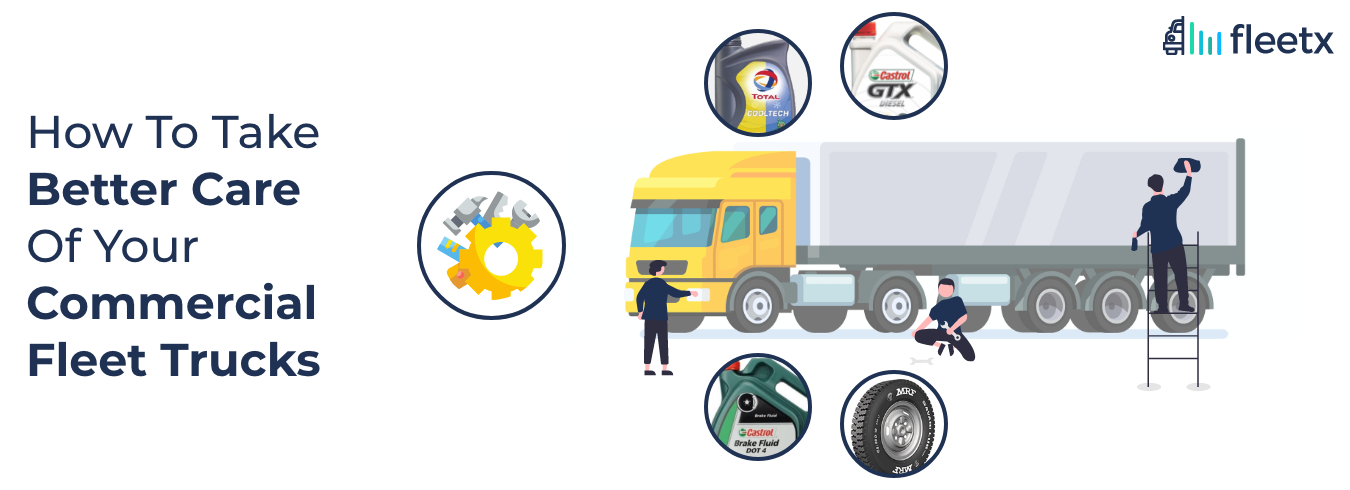
Fleet vehicles are the heart and soul of your business. Your company is only as good as the service you provide after all, and you get as much as you give. This applies to your trucks as well! We, at Fleetx, know that a lot of you depend on these vehicles for your livelihood. And that’s why we developed our Vehicle management system: to ensure that your fleet operates at its best. We wanted to share a few tips to help you take better care of them so that they can truly go the long haul. While each make and model will have its own special needs (make sure to keep the manual close by!) with these simple maintenance tips, your truck can continue running like it's new for years to come.
Key Takeaways
- Regular preventive maintenance significantly reduces unexpected truck breakdowns and costly emergency repairs.
- Checking engine oil, tyres, coolant, brake fluid, filters, and wheel alignment improves fuel efficiency and vehicle lifespan.
- Fleet management software helps automate maintenance schedules, monitor driver behaviour, and improve fleet uptime.
- Predictive maintenance using telematics and IoT enables fleet managers to identify issues before they become major failures.
- Commercial fleets operating in India, including Delhi NCR, Mumbai, Bengaluru, Pune, and Gurgaon, benefit from location-specific maintenance planning due to varying road and traffic conditions.
- Tracking maintenance KPIs such as downtime, maintenance cost per kilometre, tyre life, and vehicle utilization improves long-term fleet profitability.
- Preventive maintenance delivers lower total ownership costs than reactive maintenance while improving driver safety and customer satisfaction.
Check the oil regularly
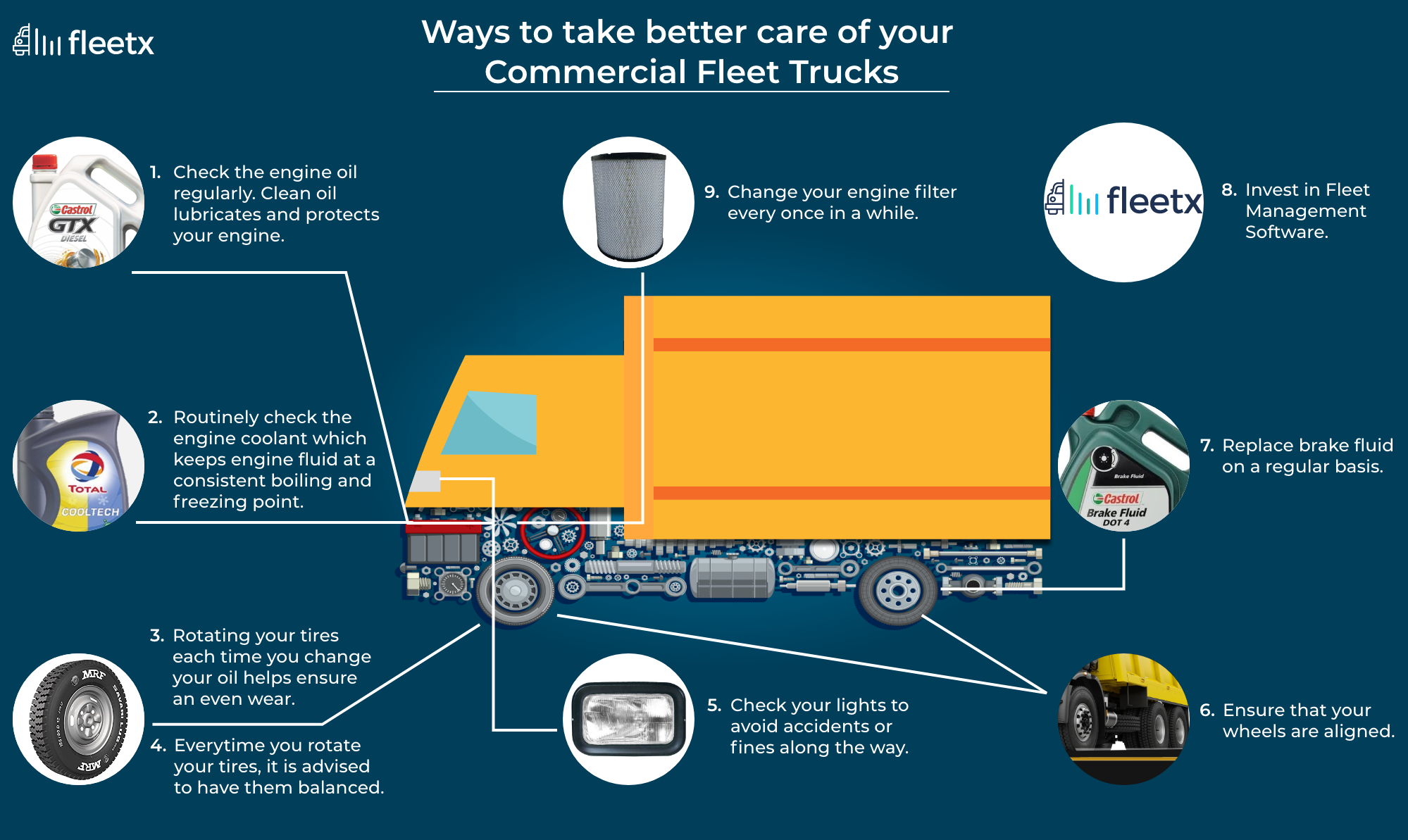
Clean oil lubricates and protects your truck’s engine. Engine oil can easily become contaminated with dust, dirt, and debris from the engine and environment. When this happens, the engine can’t do its job properly. We recommend using Castrol, a tried and tested brand, to keep your engine running smoothly . If you are regularly carrying heavy loads, driving at low speeds or travelling long distances, it is especially important that you keep an eye on it. It is recommended that you change the engine oil every 12000 km or every six months, whichever comes first.
Rotate your tires
Rotating your tires each time you change your oil helps ensure an even wear—because tires wear unevenly according to the drivetrain of your truck. Tyre rotation is very important, according to Ford’s chief global engineer. Expect your front tyres to wear out faster than your back tyres. By regularly rotating your tyres, you can extend the life of these tyres, ensure a smoother ride and reduce the burden on your truck’s suspension, which can happen as a result of uneven wear. MRF tyres come in a variety of options, allowing you to choose the best for your vehicle. They are designed for Indian roads, and are a homegrown brand!
Keep the tyres balanced
Everytime you rotate your tires, it is advised to have them balanced. A tire is balanced when the weight of the tire is equally distributed around the axle. With each bump, pothole and off-road excursion, your tires get more and more imbalanced. An unbalanced set of tires can lead to vibrations on the road and cause increased wear on your suspension as well as uneven wear on your tires.
Ensure that your wheels are aligned
Whenever you head in for an oil change, it is worthwhile to make sure that your wheels are aligned. If you notice your vehicle pulling to one side of the road, then you know it’s time for a re-alignment. Misaligned tyres cause your tyres to wear out faster, gives you worse mileage and puts you in greater danger of road accidents.
Check your lights
This might not be on the top of your maintenance list, but faulty lights if left unchecked could be a costly mistake. It might just be an electrical problem, but it could also jeopardize your trip and either lead to accidents or fines along the way.
Monitor various fluid levels
In addition to the engine oil, you should also routinely check the engine coolant, power steering fluid, windshield washer fluid, and brake fluid. Engine coolant keeps engine fluids at a consistent boiling and freezing point. Check out Total’s Cooltech Coolant, with biodegradable organic technology, that keeps your engine cool even under difficult driving conditions. The power steering fluid is responsible for moving the various components of your truck’s steering system. Changing the power steering fluid can help prolong the life of other more expensive power-steering components.
And although it may not seem like a big deal, changing the windshield washer fluid is an important part of routine truck maintenance. Dust and smears can quickly build up on your windshield, making it difficult to see. Routinely changing the windshield washer fluid is not only a safe practice, but it protects your windshield. Over time, brake fluid absorbs moisture from the air, causing it to not work properly. This is why your brake fluid should be replaced with new fluid on a regular basis. Castrol’s brake oil is sure to help you keep the brakes working in good condition.
Change your engine filter (every once in a while)
Over time, air filters become clogged with dust, debris, and chemical contaminants. Swap in a fresh engine air filter every 24,000 KM or even more often if you're frequently driving on dirt roads. A clean air filter will not only help your engine last longer, it can optimize your engine's efficiency and acceleration.
Invest in Fleet Management Software, here’s why:
- It can help you prepare for your journey
One of the most important parts of long term care is keeping in mind what kind of wear and tear you're putting on your truck. Whether you're carrying heavy loads, driving off road, or making multiple short trips daily, the way you use your truck will determine the exact type of maintenance you'll need. Fleetx can help you keep a better eye on the roads and the driving conditions in real time, so that you can keep a better watch over your truck. This will limit calls back and forth, as you will have all the data at your fingertips. This data will also be available for you to look back on later to analyse.
- It will help you plan your inspections better
A truck inspection is a little like an annual check-up for your truck. An expert analyzes your truck for any issues. It’s important to catch any mechanical or safety issues early on. Getting your truck inspected is a critical part of maintaining your vehicle. Schedule your inspection using our fleet management tool so that you have all the information in one place!
- Monitor driver behaviour
When your trucks are driven by different members of your crew, due to unsafe or rash driving, your truck’s life can be put at risk. Unmindful driving can lead to excessive fuel consumption, place a heavy load on your truck’s engine and endanger your cargo. Thus, it helps to invest in a fleet management system like Fleetx to keep an eye on your drivers routes and behaviour.
Data-Driven Fleet Maintenance: How Predictive Maintenance Reduces Downtime
Traditional truck maintenance relies on fixed service schedules, where every vehicle is serviced after a predetermined number of kilometres or months. While this approach is effective, it often overlooks the actual condition of the vehicle. Modern commercial fleets are increasingly adopting predictive maintenance, where maintenance decisions are based on real-time vehicle data rather than estimates.
By combining telematics, IoT sensors, GPS tracking, and vehicle diagnostics, fleet managers can identify early warning signs before a component fails. Instead of reacting to unexpected breakdowns, businesses can schedule maintenance during planned downtime, improving fleet availability and reducing emergency repair costs.
How Predictive Maintenance Works
Modern fleet management systems continuously monitor critical vehicle parameters such as:
- Engine temperature and overheating trends
- Battery voltage and charging performance
- Engine idle hours
- Fuel efficiency patterns
- Brake health indicators
- Tyre pressure and abnormal wear
- Coolant and lubricant levels
- Driver behaviour, including harsh braking and rapid acceleration
Whenever abnormal patterns are detected, fleet managers receive alerts that allow maintenance teams to inspect the vehicle before a major failure occurs.
Business Benefits of Predictive Maintenance
- Reduces unexpected roadside breakdowns
- Improves vehicle uptime and delivery reliability
- Extends engine and tyre lifespan
- Reduces expensive emergency repairs
- Improves workshop planning and technician productivity
- Enhances driver safety through proactive inspections
- Increases customer satisfaction by minimizing delivery delays
- Supports better asset lifecycle management
As commercial fleets continue to grow across India, predictive maintenance is becoming a competitive advantage rather than just a maintenance strategy. Businesses operating in logistics hubs such as Delhi NCR, Mumbai, Bengaluru, Pune, and Gurgaon are increasingly using connected fleet technologies to improve operational efficiency while reducing maintenance costs.
Preventive vs Reactive Truck Maintenance: Which Strategy Saves More Money?
Many fleet owners still wait until a truck develops a mechanical issue before scheduling repairs. While this reactive approach may appear to reduce immediate maintenance spending, it often results in higher long-term operating costs. Preventive maintenance, on the other hand, focuses on identifying and resolving issues before they disrupt fleet operations.
Comparison: Preventive Maintenance vs Reactive Maintenance
| Parameter | Preventive Maintenance | Reactive Maintenance |
|---|---|---|
| Maintenance Planning | Scheduled in advance | Performed after failure |
| Vehicle Downtime | Low | High |
| Repair Cost | Generally lower | Often significantly higher |
| Breakdown Risk | Minimal | High |
| Driver Safety | Improved | Higher operational risk |
| Fuel Efficiency | Better maintained | Declines over time |
| Tyre Life | Longer due to regular inspections | Shorter because of uneven wear |
| Customer Deliveries | More reliable | Frequently delayed |
| Fleet Productivity | Higher | Lower |
| Long-Term Operating Cost | Lower Total Cost of Ownership | Higher Total Cost of Ownership |
Situations Where Preventive Maintenance Delivers Maximum Value
Preventive maintenance becomes particularly valuable when fleets:
- Operate long-haul transportation routes
- Handle temperature-sensitive cargo
- Transport high-value goods
- Operate across multiple states
- Manage large commercial truck fleets
- Serve time-sensitive industries such as FMCG, e-commerce, pharmaceuticals, and manufacturing
Companies that invest in preventive maintenance typically experience fewer vehicle failures, more predictable maintenance budgets, and improved fleet utilization rates over the life of the vehicle.
Building a Fleet Maintenance Program That Scales with Business Growth
As fleets expand from a few vehicles to hundreds of commercial trucks, manual maintenance tracking becomes increasingly difficult. Service reminders, inspection records, repair invoices, and driver feedback can quickly become fragmented across spreadsheets and paperwork, making it harder to maintain operational consistency.
Creating a structured fleet maintenance program helps businesses standardize maintenance processes while improving visibility across the entire fleet.
Essential Components of a Scalable Fleet Maintenance Program
A comprehensive maintenance program should include:
- Standardized vehicle inspection checklists
- Preventive maintenance schedules based on kilometres and operating hours
- Digital maintenance history for every vehicle
- Tyre replacement and rotation tracking
- Engine oil and filter replacement schedules
- Brake and suspension inspection records
- Driver defect reporting procedures
- Workshop performance monitoring
- Spare parts inventory management
- Maintenance cost analysis by vehicle
Key Performance Indicators (KPIs) Every Fleet Manager Should Track
Monitoring the right metrics helps identify inefficiencies before they become costly problems. Important fleet maintenance KPIs include:
- Mean Time Between Failures (MTBF)
- Vehicle uptime percentage
- Maintenance cost per kilometre
- Fuel consumption per vehicle
- Average repair turnaround time
- Number of unscheduled breakdowns
- Tyre replacement frequency
- Average vehicle age
- Workshop utilization rate
- Driver-reported defect resolution time
Why Digital Maintenance Records Matter
Maintaining digital maintenance records offers several long-term advantages:
- Faster compliance audits
- Easier warranty and insurance documentation
- Better budgeting for future repairs
- Improved resale value through complete service history
- Data-driven replacement planning
- More accurate forecasting of maintenance expenses
As logistics businesses continue to digitize their operations, integrating maintenance management with fleet tracking, driver monitoring, and fuel management creates a single source of truth for vehicle health. This holistic approach enables fleet operators to make informed decisions, reduce operating costs, improve asset utilization, and maintain high service levels across growing transportation networks.
The health of your business, and your trucks is a priority for us. We have been working on developing a host of solutions that address your challenges to make sure that they are only fleeting! Do head over to our homepage to see how we can address your various logistical challenges.
Frequently Asked Questions
What is commercial fleet truck maintenance?
Commercial fleet truck maintenance is the planned process of inspecting, servicing, repairing, and monitoring trucks used for business transportation. It includes routine tasks such as checking engine oil, tyre pressure, wheel alignment, brake fluid, coolant levels, lights, filters, battery health, and suspension condition. For Indian fleet operators, maintenance is especially important because trucks often run long distances across highways, city roads, construction zones, industrial areas, and mixed road conditions.
A well-maintained fleet helps reduce sudden breakdowns, improves driver safety, lowers fuel wastage, and extends vehicle life. In cities like Delhi, Gurgaon, Mumbai, Bengaluru, and Pune, commercial trucks face heavy traffic, heat, dust, potholes, and frequent stop-start movement. This makes preventive maintenance more valuable than waiting for a truck to fail.
The best fleet maintenance approach combines manual inspection, driver reporting, service schedules, and fleet management software. A digital system can help track service reminders, vehicle health data, route history, driver behaviour, fuel usage, and maintenance costs in one place. This makes commercial fleet truck maintenance easier to manage for logistics companies, transporters, FMCG distributors, e-commerce fleets, and long-haul operators.
Why is preventive maintenance important for commercial fleet trucks in India?
Preventive maintenance is important for commercial fleet trucks in India because road, traffic, weather, and load conditions can increase wear and tear quickly. Trucks running between Delhi NCR, Gurgaon, Mumbai, Pune, Bengaluru, and other logistics hubs often deal with congestion, long idle hours, uneven roads, high temperatures, and frequent loading or unloading cycles. Without regular maintenance, small issues such as low oil, uneven tyre wear, weak brakes, or coolant leakage can turn into expensive breakdowns.
Preventive maintenance helps fleet owners reduce downtime and keep trucks available for deliveries. This is important because even one breakdown can delay shipments, increase towing costs, affect customer commitments, and reduce driver productivity. Regular inspection also helps improve fuel efficiency because aligned wheels, clean filters, balanced tyres, and healthy engines consume fuel more efficiently.
For the best results, fleet operators should create a maintenance checklist based on kilometres travelled, vehicle type, route conditions, load pattern, and manufacturer guidelines. Using fleet management software can further improve planning by sending service reminders, tracking inspection history, and identifying risky driving patterns that may damage vehicles faster.
How much does commercial fleet truck maintenance cost in India?
The cost of commercial fleet truck maintenance in India depends on the truck type, vehicle age, route conditions, usage intensity, spare parts, labour charges, and service frequency. For light commercial vehicles, basic maintenance may start from around ₹5,000 to ₹15,000 per service. For medium and heavy commercial trucks, routine servicing can range from ₹15,000 to ₹50,000 or more, depending on oil changes, filters, brake checks, tyre work, coolant replacement, and labour.
Major repairs such as clutch replacement, suspension repair, engine work, gearbox repair, or tyre replacement can cost much higher. Tyres alone may become a major recurring expense for fleets running long-distance routes or operating in construction, mining, and heavy-load industries.
Common cost areas include:
- Engine oil, coolant, brake fluid, and power steering fluid replacement
- Tyre rotation, balancing, alignment, and replacement
- Brake inspection and brake pad or liner replacement
- Air filter, fuel filter, and engine filter replacement
- Labour, workshop charges, towing, and downtime costs
Fleet management software can help reduce avoidable costs by tracking service schedules, identifying poor driving behaviour, monitoring fuel use, and helping managers act before a small maintenance issue becomes a large repair expense.
What is the best maintenance checklist for commercial fleet trucks?
The best maintenance checklist for commercial fleet trucks should cover daily, weekly, monthly, and kilometre-based inspections. A checklist helps drivers and fleet managers avoid missed checks and improves accountability across the fleet. For Indian logistics operations, the checklist should be practical enough for busy drivers but detailed enough to catch safety and performance issues early.
A strong commercial truck maintenance checklist should include:
- Engine oil level and oil change schedule
- Tyre pressure, tread depth, rotation, balancing, and alignment
- Brake fluid level, brake pads, brake liners, and braking response
- Coolant level, radiator condition, and engine temperature
- Headlights, indicators, brake lights, fog lights, and reflectors
- Battery health, wiring, horn, mirrors, and wipers
- Air filter, fuel filter, and cabin filter condition
- Driver behaviour, route conditions, mileage, and fuel consumption
For top-performing fleets, this checklist should not stay only on paper. Digital inspection forms and fleet management software make it easier to store service history, set reminders, track recurring issues, and compare maintenance performance across vehicles. This improves visibility for fleet owners operating in Delhi, Gurgaon, Mumbai, Bengaluru, Pune, and other high-demand transport routes.
How often should commercial fleet trucks be serviced?
Commercial fleet trucks should be serviced based on manufacturer recommendations, kilometres travelled, load type, road conditions, and vehicle usage. As a general practice, many trucks need routine checks every few thousand kilometres, while engine oil, filters, brakes, tyres, coolant, and fluid levels should be inspected regularly. For trucks running long-distance routes, high-load routes, or daily city deliveries, service intervals may need to be shorter.
In India, trucks operating in Delhi NCR, Mumbai, Gurgaon, Pune, and Bengaluru often experience heavy traffic, heat, pollution, dust, and frequent braking. These conditions can increase engine stress, tyre wear, brake wear, and fuel consumption. A truck used for highway freight may need a different maintenance schedule than a truck used for urban delivery or construction movement.
Fleet managers should follow a combination of:
- Daily driver inspections before trips
- Weekly tyre, light, brake, and fluid checks
- Monthly workshop inspections
- Kilometre-based servicing for oil, filters, alignment, and major components
The best approach is to use fleet management software to automate service reminders and track maintenance history. This helps avoid missed servicing, reduces downtime, and improves the long-term health of commercial trucks.
What are the top benefits of fleet management software for truck maintenance?
The top benefits of fleet management software for truck maintenance include better service planning, lower breakdown risk, improved vehicle visibility, and more control over maintenance costs. Instead of depending only on manual registers, calls, or driver memory, fleet managers can use software to track vehicle health, service due dates, inspection records, driver behaviour, route history, and fuel usage.
For commercial fleet trucks, software is useful because maintenance depends on multiple factors such as kilometres driven, road quality, load weight, driving style, and service history. A fleet management system can help identify which vehicles need immediate attention and which trucks are repeatedly causing high maintenance expenses.
Key benefits include:
- Automated service reminders based on time or distance
- Better tracking of tyre, engine, brake, and fluid-related issues
- Reduced downtime through preventive maintenance alerts
- Driver behaviour monitoring to reduce harsh braking, overspeeding, and rash driving
- Centralized maintenance records for audits and decision-making
For fleets in India, especially in Delhi NCR, Mumbai, Gurgaon, Bengaluru, and Pune, fleet management software can make maintenance more predictable and data-driven. It also helps businesses improve delivery reliability and reduce avoidable repair costs.
What are the best truck maintenance practices for fleets in Delhi NCR and Gurgaon?
The best truck maintenance practices for fleets in Delhi NCR and Gurgaon focus on tyre health, brake performance, engine cooling, air filters, and route-based inspection. These areas are important because trucks in Delhi, Noida, Ghaziabad, Faridabad, and Gurgaon often face dense traffic, construction dust, long idling, heat, and frequent short-distance movement between warehouses, factories, distribution centres, and customer locations.
Fleet operators in Gurgaon and Delhi NCR should pay extra attention to air filters because dust and pollution can clog filters faster. Brake checks are also important because city and expressway driving often involve sudden braking. Tyre pressure and alignment should be inspected frequently, especially for trucks moving between industrial zones, highways, and urban roads.
Recommended practices include:
- Check tyre pressure before long trips and high-load movement
- Inspect brakes regularly for city and expressway operations
- Clean or replace air filters more often in dusty routes
- Monitor engine temperature and coolant levels during summer
- Use fleet management software for service reminders and driver behaviour tracking
For Delhi NCR and Gurgaon fleets, preventive maintenance is not just about reducing repair cost. It also supports safer operations, better delivery planning, and improved fleet productivity.
What should Mumbai fleet operators know about commercial truck maintenance costs?
Mumbai fleet operators should know that commercial truck maintenance costs can increase due to traffic congestion, coastal humidity, frequent braking, monsoon conditions, and dense delivery routes. Trucks operating across Mumbai, Navi Mumbai, Thane, Bhiwandi, and nearby logistics hubs may face waterlogging, corrosion risk, tyre stress, and high fuel consumption from long idle times.
Routine maintenance costs in Mumbai can vary depending on the truck size and service type. Basic servicing for smaller commercial vehicles may start from around ₹5,000 to ₹15,000, while medium and heavy trucks may require ₹15,000 to ₹50,000 or more for regular maintenance. Costs can rise further if the vehicle needs brake work, tyre replacement, suspension repair, electrical checks, or engine-related repairs.
During monsoon months, fleet operators should focus on:
- Brake inspection and brake fluid condition
- Tyre tread depth and wheel alignment
- Battery terminals, wiring, and lighting systems
- Wipers, windshield washer fluid, and visibility checks
- Rust prevention and underbody inspection
The best way to control truck maintenance costs in Mumbai is to follow a preventive schedule and use digital fleet tools to track recurring issues, downtime, driver behaviour, and vehicle-wise repair expenses.
How can Bengaluru and Pune logistics fleets improve truck performance?
Bengaluru and Pune logistics fleets can improve truck performance by combining preventive maintenance, driver monitoring, fuel tracking, route planning, and regular inspection. Both cities have strong logistics, manufacturing, e-commerce, automotive, and technology-driven supply chain activity. Trucks often move through industrial areas, city traffic, highways, and regional routes, which can create different maintenance challenges.
In Bengaluru, congestion and frequent stop-start movement can increase fuel consumption, clutch wear, brake wear, and engine stress. In Pune, trucks serving automotive, industrial, and warehouse clusters may deal with high-load movement and mixed road conditions. Fleet managers should focus on tyre alignment, brake condition, engine oil, coolant, filters, and battery health.
Useful practices include:
- Schedule inspections based on kilometres, route type, and load pattern
- Monitor harsh braking, overspeeding, idling, and route deviations
- Use clean filters and correct engine oil for better fuel efficiency
- Rotate and balance tyres to improve tyre life
- Maintain digital service records for each truck
For the best performance, logistics companies should use fleet management software to connect maintenance data with real-time vehicle usage. This helps reduce downtime, improve trip reliability, and support better decision-making across commercial fleet operations.
How can fleet owners reduce truck breakdowns and improve vehicle lifespan?
Fleet owners can reduce truck breakdowns and improve vehicle lifespan by shifting from reactive repairs to preventive maintenance. Reactive repair means fixing a truck only after something fails, while preventive maintenance means regularly checking critical components before they create downtime. For commercial trucks, this includes oil checks, tyre rotation, brake inspection, coolant monitoring, filter replacement, wheel alignment, and driver behaviour tracking.
Breakdowns usually happen when small warning signs are ignored. Low coolant can lead to overheating, poor alignment can reduce tyre life, dirty filters can affect engine performance, and harsh driving can increase wear on brakes, suspension, and fuel systems. In Indian conditions, where trucks operate across highways, crowded city roads, industrial zones, and rural routes, these issues can become expensive quickly.
Fleet owners should focus on:
- Creating a vehicle-wise maintenance calendar
- Training drivers to report issues early
- Using telematics and fleet software for real-time visibility
- Tracking fuel usage, idling, overspeeding, and harsh braking
- Reviewing repair history to identify high-cost vehicles
The best long-term strategy is to use data to predict maintenance needs. This helps extend truck lifespan, reduce emergency repair expenses, improve delivery reliability, and protect the business from avoidable operational losses.