
Quick Summary
Key Takeaways
Short on time? Here is everything this guide covers, in seven points.
-
Fleet management software is no longer a tracking tool. In 2026 it is the operating system for transport businesses, combining GPS telematics, IoT sensors, AI analytics, routing, maintenance, fuel, and compliance in one platform.
-
Businesses that deploy fleet management software typically report 15 to 30 percent lower fuel costs, 20 to 25 percent lower maintenance spend, and a 30 to 40 percent drop in accident rates, driven by visibility, alerts, and driver coaching.
-
Fleet management software India is a distinct category. AIS 140 certified devices, FASTag and toll data, regional language support, and mixed owned plus market vehicle operations make India-built platforms such as Fleetx materially different from Western tools.
-
Fleet management software for small business starts paying for itself at as few as 5 vehicles. Entry pricing in India typically runs a few hundred rupees per vehicle per month, well below the cost of a single day of unplanned downtime.
-
Our top 10 fleet management software comparison covers Fleetx, Samsara, Geotab, Motive, Verizon Connect, Trimble, LocoNav, Fleetio, Azuga, and Webfleet, mapped by strength, ideal fleet size, and geography.
-
Real results are measurable. Kataria Transport achieved 24/7 fleet visibility for the first time and cut turnaround time by 20 percent after deploying Fleetx, while Fleetx customers on average report around 18 percent cost reduction and 70 percent of routine operations automated.
-
The evaluation shortlist that matters: real-time data refresh rates, AI and automation depth, hardware certification, integration APIs, implementation support, and total cost of ownership, not just the monthly subscription price.
Picture a Tuesday morning at a mid-sized transport company. Forty trucks are on the road. The operations head is fielding calls: a consignee wants an ETA, a driver claims he is stuck in traffic, the accounts team needs last month's kilometre figures, and a vehicle that was serviced three weeks ago has broken down outside Nagpur. Every answer requires a phone call, a guess, or a spreadsheet that was outdated the moment it was saved.
Now picture the same morning with a fleet management platform running underneath the business. The ETA is on a live map. The driver's stoppage triggered an idle alert 40 minutes ago and has already been resolved. Kilometre data flows automatically into reports. And the breakdown never happened, because the platform flagged a battery voltage anomaly ten days earlier and scheduled the fix.
That gap between the two mornings is what this guide is about. We will walk through what fleet management software actually does, how it works under the hood, what it costs, which platforms lead the market in 2026, and how to choose one whether you run 5 vehicles or 5,000. Along the way we will look at hard numbers from real deployments, including how Fleetx helped an Indian transporter cut turnaround time by a fifth.
What Is Fleet Management Software and Why Does It Matter in 2026?
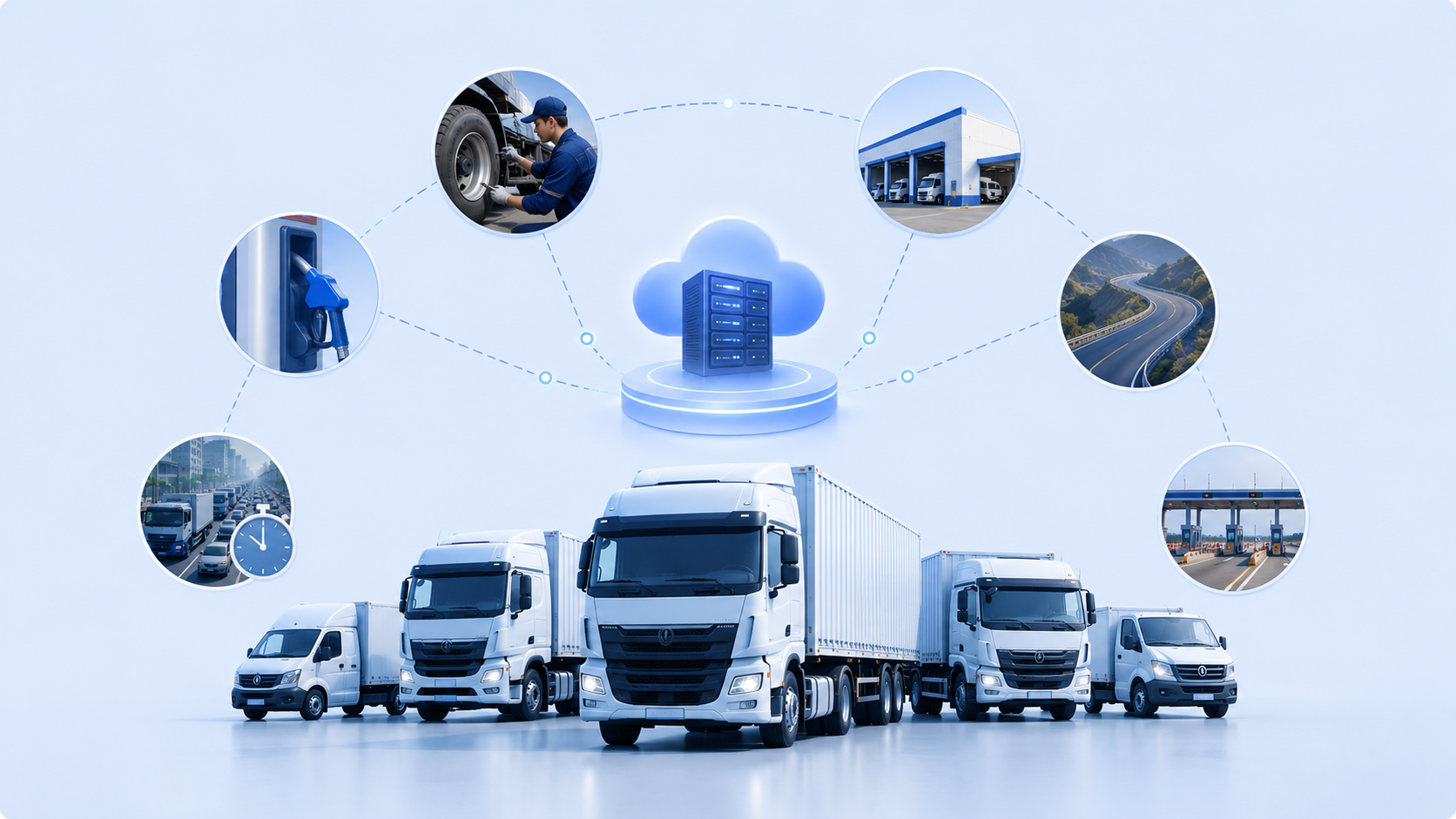
Fleet management software is a cloud platform that gives businesses complete, real-time visibility and control over their vehicles, drivers, and cargo. It collects data from GPS trackers, OBD and CAN bus ports, fuel sensors, temperature probes, dashcams, and driver apps, then turns that raw stream into live maps, alerts, reports, and increasingly, automated decisions.
The category has evolved through three distinct generations, and knowing which generation a vendor belongs to tells you a lot about what you are actually buying:
Generation 1: Track and trace. A dot on a map. You knew where a vehicle was, and little else. Most basic GPS vendors still live here.
Generation 2: Telematics and reporting. Location plus vehicle health, fuel data, driver behavior scoring, and scheduled reports. This is where much of the market sits today.
Generation 3: AI-native fleet intelligence. Platforms like Fleetx that ingest tens of millions of data points daily and use AI to predict delays, forecast maintenance failures, optimize routes, and automate workflows that humans used to do manually. Fleetx alone processes over 50 million data points per day and generates more than 10 million AI predictions daily across roughly 250,000 managed assets.
Why does this matter more in 2026 than it did five years ago? Because the economics of transport have tightened everywhere. Fuel remains the highest controllable cost for most fleets, driver shortages have pushed up wages, customers now expect Amazon-grade delivery visibility from every carrier, and regulators from India's Ministry of Road Transport and Highways to the US FMCSA keep raising compliance requirements. Margins that once absorbed inefficiency can no longer. Software is the only scalable way to find and remove that inefficiency.
A useful mental model: fleet management software does for a transport business what an ERP did for manufacturing in the 1990s. It moves the business from tribal knowledge and phone calls to a single source of operational truth.
How Does Fleet Management Software Actually Work?
Under the hood, every serious platform is built on the same four-layer architecture. Understanding these layers helps you ask sharper questions during vendor demos, because weaknesses in any one layer cap the value of everything above it.
| Layer | What it Does | What to Check Before Buying |
|---|---|---|
| 1 Data Capture (Hardware) | GPS trackers, AIS 140 devices, OBD/CAN readers, fuel level sensors, temperature sensors, e-locks, dashcams, and driver mobile apps capture raw signals from the vehicle and cargo. | Device certification (iCAT for AIS 140 in India), battery backup, tamper-proof design, and remote firmware updates over the air. |
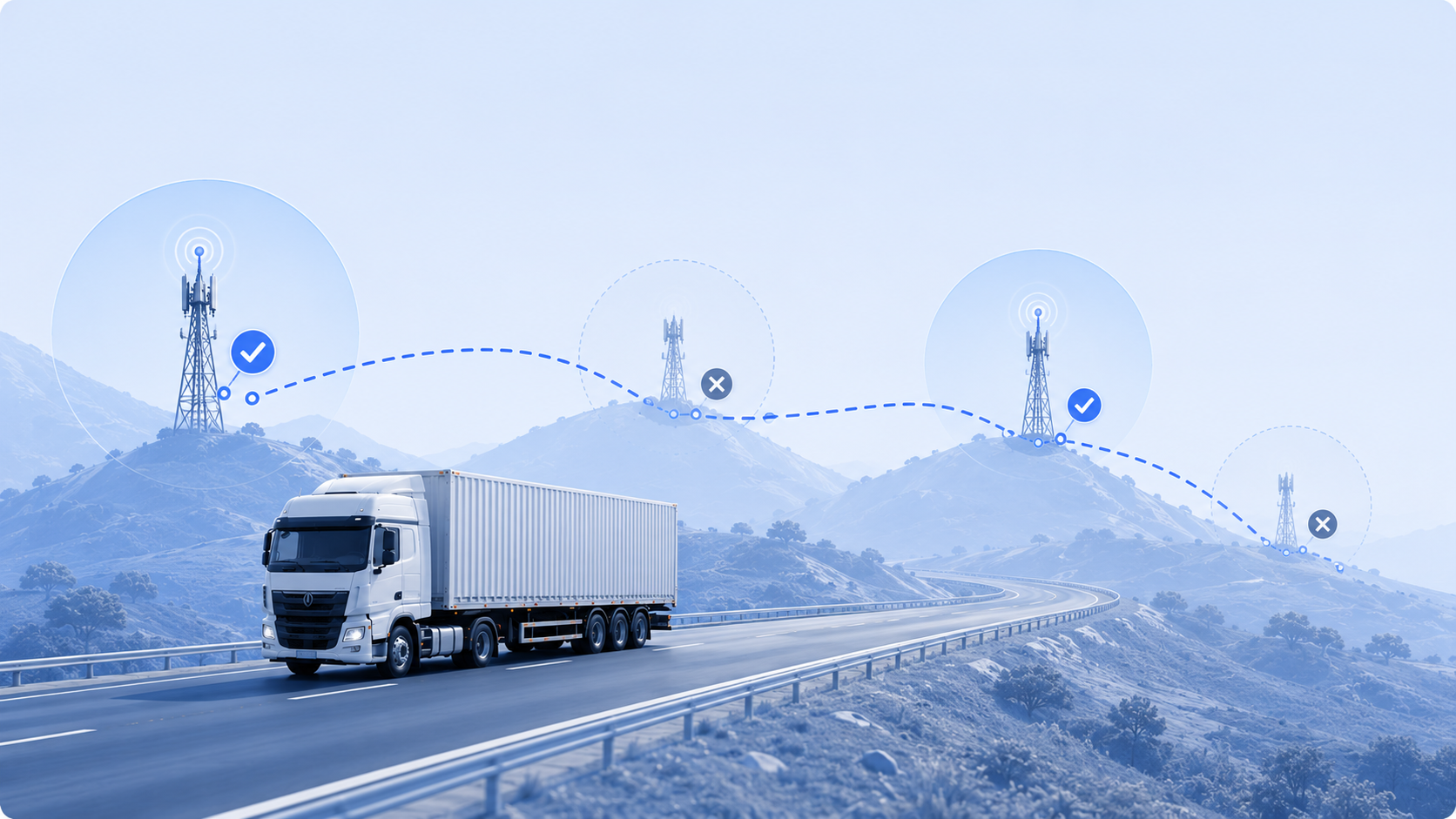
| 2 Connectivity | Cellular—and increasingly multi-network or satellite fallback—transmits data from moving vehicles to the cloud, including through low-coverage corridors. | Multi-operator SIMs, store-and-forward buffering during network outages, and data refresh frequency (10–30 seconds is considered the modern standard). |
| 3 Platform & Intelligence | The cloud brain. It cleans and stores data, runs AI models for ETA prediction, route optimization, fuel theft detection, predictive maintenance, and powers dashboards and automated alerts. | Whether AI capabilities are native or bolted on, platform uptime SLAs, scalability, and the volume of data points the platform processes daily. |
| 4 Applications & Integrations | Web dashboards, mobile apps, automated reports, and APIs that connect with ERP, TMS, CRM, accounting software, and customer portals. | Open REST APIs, pre-built integrations, webhook support, role-based access controls, and self-service report builders. |
In practice, the flow looks like this:
A truck leaves a plant gate
The geofence around the plant fires an automatic departure event, no phone call needed
Every few seconds the tracker reports position, speed, ignition status, and engine parameters.
The platform compares the live path against the planned route, recalculates the ETA using traffic and historical trip data, and pushes that ETA to the customer.
If the driver idles beyond a set threshold, brakes harshly, or deviates from the corridor, the right person gets an alert within seconds.
At trip close, kilometres, fuel consumed, toll crossings, and stoppages are already reconciled into reports that used to take a back-office team days to compile.
The best platforms then close the loop with automation. Fleetx, for example, reports that around 70 percent of routine fleet operations such as trip creation, document reconciliation, alert triage, and report generation can be automated on its platform, which is precisely the layer where Generation 3 systems separate from older telematics tools.
What Problems Does Fleet Management Software Solve?
It is worth being concrete here, because "visibility" sounds abstract until you map it to the daily fires an operations team fights. Here are the problems that show up in almost every pre-deployment audit:
• Invisible idling and unauthorized stoppages - Drivers who know nobody is watching idle longer. Kataria Transport, before deploying Fleetx, could not distinguish genuine traffic delays from unnecessary stoppages at all. Idling is also expensive in fuel terms; the US Department of Energy estimates that idling wastes billions of litres of fuel globally every year.
• Fuel theft and pilferage - Calibrated fuel sensors plus AI anomaly detection catch sudden drops in fuel level, fills that do not match bills, and mileage patterns that do not add up.
• High turnaround time - When you cannot see where hours are lost between dispatch and return, you cannot fix them. Trip-level data exposes loading delays, detours, and idle windows.
• Reactive maintenance and surprise breakdowns - Odometer-based and sensor-based service scheduling replaces the register at the workshop. Predictive models flag failures before they strand a loaded vehicle.
• Unsafe driving - Harsh braking, overspeeding, rapid acceleration, and night driving get scored per driver, enabling coaching instead of guesswork. Video telematics adds context to every event.
• Compliance exposure - AIS 140 mandates for commercial vehicles in India, ELD and hours-of-service rules in the US (FMCSA ELD program), permits, insurance, and fitness renewals all live in one system with automated reminders.
• Customer distrust - Shippers increasingly refuse to work with carriers who cannot share live tracking links and accurate ETAs. Visibility has become a commercial requirement, not a nice-to-have.
• Data black holes at head office - Kilometres run, cost per km, vehicle utilization, and route profitability finally become measurable, which is the foundation for every pricing and expansion decision.
Is GPS Tracking the Same as Fleet Management Software?
This is one of the most common points of confusion for first-time buyers, and it costs money when the confusion carries into a purchase. GPS tracking is a component. Fleet management software is a system. A GPS tracker answers one question: where is the vehicle? A fleet management platform answers the questions that actually run a transport business: why is this trip late, which routes are burning fuel, which vehicle will fail next month, which driver needs coaching, and what did each rupee of operation actually buy?
The distinction matters commercially because thousands of operators buy a cheap tracking subscription, discover within a year that it cannot do routing, maintenance, fuel analytics, or integrations, and then pay twice: once for the dead-end system and again for the migration. If you already know your business will need more than a dot on a map, start on a platform that scales, even if you only switch on the tracking module on day one.
|
Question |
GPS tracking alone |
Full fleet management software |
|
Where is my vehicle? |
Yes |
Yes, at 10 to 30 second refresh
with geofences and sharing links |
|
Why is the trip late? |
No |
Route deviation, idle windows,
loading delays, and TAT breakdown per trip |
|
Is fuel being stolen? |
No |
Sensor-based fuel level tracking
with AI anomaly and theft alerts |
|
Which vehicle fails next? |
No |
Fault codes, engine health, and
predictive maintenance scheduling |
|
Is my driver safe? |
Speed only |
Scorecards, harsh events, fatigue
and distraction detection via video AI |
|
What does each trip cost? |
No |
Cost per km, route profitability,
and utilization analytics |
|
Does it talk to my ERP? |
Rarely |
Open APIs and prebuilt connectors
for ERP, TMS, and CRM systems |
What Features Separate the Best Fleet Management Software From the Rest?
Feature lists on vendor websites all look identical. The difference lies in depth. Every platform claims "GPS tracking," but a 2-minute refresh interval and a 10-second refresh interval are entirely different products when a reefer truck carrying vaccines goes off route. Use the table below as a depth checklist rather than a checkbox exercise.
|
Capability |
Baseline (any vendor) |
Best-in-class (what to demand in 2026) |
|
Live tracking and visibility |
Dot on a map, periodic refresh |
10 to 30 second refresh, AI
control tower, one-click live location sharing with customers, automatic
geofencing at plants, warehouses, and dealer points |
|
Routing and dispatch |
Straight-line or car routes |
Truckable routes trained on
millions of trip data points, accurate TAT prediction, deviation and corridor
alerts, route-wise utilization to cut empty miles |
|
Fuel management |
Fuel entries logged manually |
Calibrated tank sensors, theft
and pilferage alerts, mileage benchmarking per vehicle and route, integration
with fuel cards |
|
Maintenance |
Service reminders by date |
Odometer and engine-hour based
scheduling, DTC fault code capture over OBD/CAN, predictive failure alerts,
job cards and parts inventory |
|
Driver safety |
Overspeed alerts |
Driver scorecards, harsh event
detection, AI dashcams with distracted driving and fatigue detection, in-cab
audio coaching |
|
Compliance |
Document upload folder |
AIS 140 certified hardware with
IRNSS support, automated permit, insurance, and fitness expiry workflows,
e-lock integration for bonded and high-value cargo |
|
Reporting and analytics |
Fixed report templates |
AI-generated custom reports that
adapt to your templates, unified analytics suite, scheduled delivery to
stakeholders, self-serve dashboards |
|
Integrations |
CSV export |
Open REST APIs, prebuilt ERP,
TMS, and CRM connectors, webhooks, SAP and Oracle certified integrations for
enterprise deployments |
|
Automation and AI |
Rule-based alerts |
Automated trip creation, document
generation and reconciliation, alert triage, and workflow automation covering
the majority of routine operations |
A practical tip from hundreds of vendor evaluations: ask every shortlisted vendor to run a live demo on your routes with your vehicle types, not their showcase account. Truckable routing in the Himalayas, mine roads in Odisha, or last-mile lanes in Bengaluru will expose the difference between marketing and engineering within fifteen minutes.
Why Is Fleet Management Software India a Category of Its Own?
Search interest in fleet management software India has grown steadily for a simple reason: platforms built for American or European fleets often stumble on Indian ground realities. If your operations live on Indian highways, evaluate vendors against these India-specific requirements.
Regulatory fit comes first
India mandates AIS 140 certified GPS devices with panic buttons for public service and many commercial vehicle categories, a standard administered through testing agencies such as the Automotive Research Association of India. A global tracker without iCAT certification is simply not compliant, whatever its software looks like. Fleetx ships iCAT certified AIS 140 trackers with IRNSS and GPS support, RS232 interfaces for external sensors, large battery backup, tamper-proof housings, and web-based FOTA firmware updates, which means the hardware layer is compliant out of the box.
Beyond devices, the policy environment is pushing digitization hard. The Ministry of Road Transport and Highways has digitized vehicle records through the Vahan national registry, FASTag has made toll movement machine-readable, and the National Logistics Policy explicitly targets bringing India's logistics cost down toward global benchmarks through digital integration. Fleet software that plugs into this stack turns government infrastructure into operational data.
Operational fit comes second
• Network coverage gaps. Long-haul corridors cross low-signal zones. Devices need multi-network SIMs and store-and-forward memory so trips do not vanish between towers.
• Mixed fleets and market vehicles. Indian transporters routinely combine owned trucks with attached and hired vehicles. The platform must track SIM-based or temporary assets alongside hardwired ones.
• Driver app usability. Multilingual interfaces and voice-friendly, low-literacy-tolerant driver apps decide adoption on the ground. WhatsApp-based alerts and workflows matter in India in a way they simply do not in Ohio.
• Fuel economics. With diesel representing an outsized share of Indian trucking costs, sensor-based fuel monitoring and theft detection deliver faster payback in India than in most markets.
• Local support depth. Device installation, calibration, and repair across hundreds of districts requires an on-ground network. Ask vendors how they service a sensor failure in Guwahati, not just Gurugram.
This is the context in which India-built platforms such as Fleetx, headquartered in Gurugram and trusted by leaders across cement, FMCG, ports, metals, and 3PL, have grown to manage over 250,000 assets. The product decisions, from AIS 140 hardware to truckable routing trained on Indian road data, reflect the market they were built in.
How Kataria Transport Achieved 24×7 Fleet Visibility and Reduced Turnaround Time by 20%
Real-time fleet visibility transformed Kataria Transport's operations. With Fleetx, the company gained complete vehicle tracking, reduced unnecessary driver idling, improved route adherence, and achieved a 20% reduction in turnaround time (TAT), resulting in higher fleet productivity and better operational control.
See Fleetx in Action
Discover how one of India's leading transport companies improved fleet efficiency using AI-powered visibility.
Is Fleet Management Software for Small Business Actually Worth It?
A fair question, and one that owners of 5 to 25 vehicle fleets ask constantly. The honest answer: small fleets often see faster payback than enterprises, because in a small fleet every single vehicle is a meaningful share of revenue, and the owner is usually the operations team, the accounts team, and the customer service desk rolled into one person.
Run the arithmetic on a typical 10-truck operation:
• Fuel - If tracking and idle control save even 8 to 10 percent on a monthly diesel bill of a few lakh rupees, the software fee is recovered from fuel alone.
• One prevented breakdown - A single avoided on-road failure, with its towing, emergency repair, penalty, and lost-trip costs, can exceed a full year of subscription for that vehicle.
• Owner time - The most underpriced asset in a small transport business. Cutting twenty status-check phone calls a day to two dashboard glances returns hours weekly.
• Customer retention - Sharing live tracking links makes a 10-truck operator look and feel like a national carrier to shippers, and increasingly wins contracts that demand visibility.
What should a small fleet actually buy? Resist the temptation to start with everything. A sensible adoption ladder looks like this:
Stage 1 (day one): GPS tracking, geofencing, idle and overspeed alerts, and basic trip reports. This alone changes driver behavior within weeks.
Stage 2 (month 2 to 3): Fuel sensors on the thirstiest vehicles, maintenance reminders, and document expiry alerts.
Stage 3 (month 4 onward): Driver scorecards, route analytics, customer-facing tracking links, and accounting or ERP integration as volume justifies it.
Rule of thumb: if you operate 5 or more vehicles and cannot answer "where is every vehicle right now and what did each one cost me last month" within one minute, fleet management software for small business will pay for itself. Choose a vendor that lets you start small and scale modules, rather than one that forces an enterprise bundle on day one.
Which Industries Get the Most Out of Fleet Management Software?
Fleet software is often marketed as one-size-fits-all, but the highest-ROI feature set varies sharply by industry. Knowing your industry's leverage point helps you weight the vendor comparison correctly and avoid paying for depth you will never use. Here is how the value concentrates across the sectors where deployments are most common:
|
Industry |
Highest-value capabilities |
Why it moves the needle |
|
Transportation and 3PL |
24/7 visibility, TAT analytics,
customer tracking links, driver accountability |
Margins live and die on
turnaround time and asset utilization; Kataria Transport's 20% TAT gain is
the archetype |
|
Cement and building materials |
Plant geofencing, trip
automation, route adherence, weighbridge document reconciliation |
High trip volumes from fixed
plants make gate-to-gate automation and diversion control enormously valuable |
|
FMCG and distribution |
Route optimization, delivery
ETAs, temperature monitoring for sensitive SKUs, retailer-level proof of
delivery |
Dense multi-stop routes reward
even small per-stop efficiencies at massive scale |
|
Cold chain and pharma |
Continuous temperature sensors,
breach alerts, compliance-grade trip records |
A single temperature excursion
can destroy an entire consignment and a customer relationship |
|
Mining and metals |
Rugged AIS 140 hardware, e-locks,
off-road route intelligence, pilferage control |
Harsh environments and high-value
cargo demand tamper-proof hardware and theft prevention; Fleetx customers in
this segment have reported multi-year zero-theft records |
|
Ports and container logistics |
Yard and corridor geofencing, TAT
at terminals, integration with port community systems |
Detention and demurrage costs
turn every saved hour directly into money |
|
Employee transport and buses |
Video telematics, panic buttons,
route and stop compliance, parent or employee tracking apps |
Safety and accountability are
regulatory and reputational requirements, not efficiency plays |
|
Construction and infrastructure |
Equipment hour tracking, fuel
monitoring on machines, site geofencing |
Fuel and idle abuse on machines
and tippers is often the largest invisible leak on a project P&L |
A closing note on industry fit: ask shortlisted vendors for customer references in your sector, running your vehicle mix, at your scale. Fleetx's published customer stories span exactly this spread, from transporters like Kataria to cement, metals, and port operators, which is a level of proof that generic feature pages cannot provide.
What Does the Top 10 Fleet Management Software List Look Like in 2026?
Every top 10 fleet management software list should come with a disclaimer, so here is ours: there is no universally best fleet management software, only the best fit for your fleet size, geography, vehicle mix, and ambition. What follows is a fleet management software list built around that idea. It maps the ten platforms most commonly shortlisted in 2026, what each is genuinely strong at, and who should look at it first.
|
Platform |
Best known for |
Ideal fleet profile |
Primary geography |
|
Fleetx |
AI-native fleet intelligence:
visibility, connected IoT, routing and dispatch, and analytics on one
platform, with AIS 140 hardware and roughly 250K assets managed |
Enterprise and mid-market fleets
in logistics, cement, FMCG, metals, ports; scales down to growing SMB fleets |
India, expanding into Africa and
Middle East |
|
Samsara |
Integrated video telematics and
connected operations cloud |
Large North American mixed fleets
with strong safety mandates |
US, Canada, Western Europe |
|
Geotab |
Open telematics platform, deep
OEM data, huge marketplace of add-ons |
Data-driven enterprises and
government fleets wanting extensibility |
Global, strongest in North
America |
|
Motive |
Driver-centric platform, ELD
compliance, AI dashcams |
US trucking fleets governed by
FMCSA hours-of-service rules |
US and Canada |
|
Verizon Connect |
Carrier-grade tracking with broad
field service tooling |
Service fleets, vans, and
distributed field teams |
US, UK, Australia |
|
Trimble Transportation |
Enterprise TMS plus telematics
depth for asset-heavy carriers |
Very large carriers and shippers
with complex networks |
North America, Europe |
|
LocoNav |
Affordable tracking and
FASTag-linked services |
Price-sensitive SMB fleets
starting their digitization journey |
India and emerging markets |
|
Fleetio |
Maintenance-first fleet
operations and workshop workflows |
Fleets where maintenance, not
trips, is the core problem |
US, global SMB |
|
Azuga |
Usage-based safety scoring and
driver rewards |
SMB fleets prioritizing driver
behavior and insurance savings |
US |
|
Webfleet (Bridgestone) |
Mature European telematics with
strong OEM ties |
European commercial fleets and
mobility operators |
Europe |
Three honest observations to help you read this list well. First, the US-centric platforms are exceptional at ELD compliance and video safety but typically lack AIS 140 certification, Indian route intelligence, and local installation networks, which matters enormously if your trucks run on NH44 rather than I-80. Second, budget trackers get you on the map cheaply but tend to plateau exactly when your business starts needing routing intelligence, automation, and integrations. Third, the platforms pulling ahead in 2026 are the ones that treat AI as an architecture, not a feature announcement, because prediction quality compounds with data scale.
How Should You Compare Fleet Management Software Vendors?
Once you have a shortlist of two or three, structure the evaluation instead of relying on demo charisma. This scoring framework, weighted for a typical mid-market fleet, keeps the decision anchored to operational value:
|
Evaluation criterion |
Weight |
Questions that expose the truth |
|
Data quality and refresh rate |
20% |
What is the ping interval? What
happens in no-network zones? Show me last week's raw trip data for a demo
vehicle. |
|
AI and automation depth |
20% |
Which decisions does the platform
make without a human? Show ETA accuracy on my lanes. What share of routine
operations can be automated? |
|
Hardware and compliance |
15% |
Are devices iCAT certified for
AIS 140? Battery backup? Tamper response? Over-the-air firmware updates? |
|
Integrations and openness |
15% |
Is there a documented public API?
Prebuilt ERP and TMS connectors? What does an SAP integration take in weeks? |
|
Implementation and support |
15% |
Who installs and calibrates
devices in my geography? What is the average go-live time? Is there a named
success manager? |
|
Total cost of ownership |
15% |
Hardware plus subscription plus
SIM plus installation plus training over 3 years, not just the per-month
sticker price. |
One more filter that rarely appears in comparison articles: look at who already runs on the platform in your industry. Reference customers in cement behave differently from reference customers in e-commerce. Fleetx, for instance, publishes detailed customer stories across transportation, metals, cement, and ports on its customer stories hub, which lets you benchmark against operations that actually resemble yours before you sign anything.
How Much Does Fleet Management Software Cost in 2026?
Pricing is the question every buyer asks first and every vendor answers last, so let us put realistic ranges on the table. Costs vary by market, hardware depth, and contract size, but the structure is consistent everywhere: a one-time hardware and installation cost per vehicle, plus a recurring per-vehicle subscription.
|
Deployment tier |
Typical monthly software cost per vehicle |
Hardware (one-time, per vehicle) |
What you get |
|
Entry / small business |
INR 300 to 600 (roughly USD 4 to
8) |
INR 2,000 to 5,000 for a basic
GPS or AIS 140 tracker |
Live tracking, geofences, idle
and speed alerts, trip reports, mobile app |
|
Mid-market |
INR 600 to 1,200 (USD 8 to 15) |
INR 5,000 to 12,000 with OBD/CAN
or fuel sensor |
Everything above plus fuel
monitoring, maintenance module, driver scorecards, API access |
|
Enterprise / AI-native |
INR 1,200 to 2,500+ (USD 15 to
35+), volume negotiated |
INR 10,000 to 30,000+ with video
telematics, e-locks, temperature sensors |
Full stack: AI control tower,
routing and dispatch, predictive maintenance, automation, ERP integrations,
dedicated success team |
Three cost traps to avoid when reading quotes:
• The sticker-price trap - A cheap subscription with paid add-ons for every report, API call, and alert usually ends up costlier than an inclusive plan. Price the modules you will need in year two, not just month one.
• The hardware-lock trap - Some vendors subsidize hardware, then lock you in with proprietary devices that no other platform can read. Ask explicitly about device portability and exit terms.
• The hidden-labor trap - If the platform cannot automate report generation, document reconciliation, and alert triage, you will pay for it in back-office salaries forever. Automation is a cost line, just an invisible one.
What ROI Can You Realistically Expect From Fleet Management Software?
Vendors promise the moon, so let us stay disciplined and use ranges that recur across independent industry studies and published customer results. Programs like the US EPA SmartWay initiative have documented for years that measurement and telematics-driven practices meaningfully cut fuel use and emissions across carrier fleets, and the operational data from modern deployments points the same way.
|
Impact area |
Typical documented range |
Where it comes from |
|
Fuel cost |
15 to 30% reduction |
Idle control, route optimization,
theft detection, driving style correction |
|
Maintenance cost |
15 to 25% reduction |
Preventive scheduling, early
fault codes, fewer catastrophic failures |
|
Accident frequency |
30 to 40% reduction |
Driver scorecards, coaching,
video telematics deterrence |
|
Unplanned downtime |
Up to 45% reduction |
Predictive maintenance and health
monitoring |
|
Vehicle utilization |
10 to 20% improvement |
Faster turnarounds, less empty
running, better dispatch decisions |
|
Overall operating cost |
Around 18% reduction reported
across Fleetx customers |
Compounding effect of the above
across the full operation |
The pattern worth noticing: no single feature delivers the ROI. Fuel savings alone rarely justify an enterprise platform. It is the compounding of fuel plus maintenance plus utilization plus safety plus back-office automation that turns a per-vehicle subscription into one of the highest-return investments available to a transport business. Which is exactly why the most convincing evidence is never a benchmark table. It is a deployment story with a before and an after.
What Mistakes Do First-Time Buyers Make Most Often?
Having watched hundreds of fleet software evaluations succeed and fail, the failure patterns are remarkably consistent. If you can avoid these seven mistakes, you are already ahead of most of the market:
• Buying on price per vehicle alone - The cheapest subscription with the weakest data quality is the most expensive system you can own, because every decision built on bad data compounds the loss.
• Skipping the hardware conversation - Software demos are polished; hardware failures happen on a highway at 2 am. Interrogate device certification, battery backup, tamper design, and the installation and repair network before you sign.
• Ignoring drivers until rollout day - Systems introduced as surveillance get sabotaged: devices unplugged, sensors damaged, apps uninstalled. Systems introduced as fairness, with scorecards, recognition, and incentives, get adopted.
• Turning on every alert at once - Fifty alert types on day one produce alert fatigue by day ten, and then nobody reads any of them. Start with five alerts that map to your three priority metrics, then expand.
• Not defining success metrics in writing - If TAT, idle hours, and fuel cost per km were not baselined before go-live, the 90-day review becomes an argument about feelings instead of a reading of numbers.
• Treating implementation as the vendor's job alone - The best platforms fail without an internal owner. Name one person accountable for adoption, with time carved out for the first quarter.
• Postponing integrations forever - The opposite trap of integrating too early. Once field data is stable, every month the platform stays disconnected from your ERP and CRM is a month of manual reconciliation you paid to avoid.
The meta-mistake underneath all seven: treating fleet management software as an IT purchase instead of an operations transformation. Budget for change management, not just licenses, and the technology will return many times its cost.
Case in Point: How Did Kataria Transport Cut Turnaround Time by 20% With Fleetx?
Kataria Transport is a textbook example of the problem this entire article circles around. The company had a capable, experienced operations team, and yet faced the challenge common to nearly every fleet-intensive business at scale: a fundamental lack of real-time visibility. Drivers, aware they were not being monitored, idled for extended periods without accountability. Managers could not distinguish genuine traffic delays from unnecessary stoppages. Route adherence could not be verified, kilometre data was unreliable, and turnaround time from dispatch to delivery and return stayed stubbornly high. Root-cause analysis was, in the company's own experience, largely guesswork.
What Fleetx did next is instructive for anyone evaluating vendors. Rather than dropping a standard product, the team spent several weeks studying Kataria's vehicle flows and the specific anatomy of its TAT problem, then deployed three things:
- Real-time GPS tracking with 24/7 visibility - covering the full cycle from departure to delivery and return, with route mapping against planned paths, per-trip kilometre tracking, and historical trip replay.
- Customizable alerts and in-depth reporting - including idle alerts triggered whenever a vehicle stayed stationary beyond three hours, so managers could intervene immediately instead of discovering the loss days later.
- A platform simple enough for the whole team - adopted without extensive training and embedded into daily operations quickly, which the Kataria team confirmed felt natural and intuitive.
The results: 24/7 real-time fleet visibility achieved for the first time in the company's history, a 20 percent reduction in turnaround time, the elimination of unchecked driver idling (with a behavioral bonus: idling dropped further simply because drivers knew they were visible), and accurate operational data that now feeds performance benchmarking and cost analysis every single day.
How Kataria Transport Reduced Turnaround Time by 20% with Fleetx
A lack of fleet visibility was impacting turnaround time and operational efficiency. By implementing Fleetx's AI-powered fleet management platform, Kataria Transport gained complete 24×7 fleet visibility, eliminated unchecked driver idling, and reduced turnaround time by 20%.
Real Customer Results
See how Fleetx transformed fleet visibility into measurable operational gains.
How Do You Implement Fleet Management Software Without Disrupting Operations?
Buying the platform is the easy half. Most failed deployments die in rollout, and almost always for people reasons rather than technology reasons. Here is the implementation playbook that consistently works, distilled from deployments across fleet sizes:
- Start with a pilot, but a real one: Pick 10 to 20 percent of the fleet across your hardest routes, not your easiest. If the platform survives your worst corridor, the rest of the rollout is de-risked.
- Define 3 metrics before day one: Turnaround time, idle hours, and fuel cost per km are a strong default trio. A platform cannot prove ROI against goals that were never written down.
- Bring drivers in early, and frame it honestly: Position tracking as protection and fair evaluation, not surveillance. Driver scorecards work best when paired with recognition and incentives for the top of the leaderboard, not only penalties at the bottom.
- Calibrate hardware properly: Fuel sensors, especially. A poorly calibrated sensor produces false theft alerts, and false alerts kill trust in the whole system within a month.
- Automate one report per week: Every week of the first quarter, take one manual report or register and move it into the platform. By week twelve, the back office runs differently.
- Integrate after you stabilize: ERP, TMS, and CRM integrations multiply value, but only once field data is clean. Plug dirty data into your ERP and you have automated your confusion.
- Review at 90 days against the metrics from step 2: This is where you expand modules, renegotiate scope, or, if the vendor has not delivered, exit while the sunk cost is still small.
Vendor tell: ask what their average go-live time is and who does device installation in your specific geographies. Vendors with real implementation muscle answer in days and district names. Vendors without it answer in adjectives.
Where Is Fleet Management Software Heading Next?
If you are signing a multi-year contract in 2026, you are really buying the vendor's roadmap. Four shifts are already visible in production systems and worth weighting in your decision:
• From dashboards to decisions - The interface of fleet software is becoming the alert and the automated action, not the map. AI control towers now watch every trip continuously and escalate only genuine exceptions, which is the only model that scales past a few hundred vehicles.
• Video everywhere - AI dashcams that detect fatigue, phone usage, and tailgating are moving from premium add-on to default expectation, driven by insurance economics as much as safety culture.
• Electrification readiness - EV fleets change everything downstream: range planning replaces fuel monitoring, charging schedules replace fuel stops, battery health replaces engine diagnostics. Platforms with native EV telemetry, a capability Fleetx already builds into its connected IoT stack, will age far better than retrofitted ones.
• Deep integration with national digital infrastructure - In India specifically, expect tighter loops between fleet platforms and FASTag, Vahan, e-way bills, and freight marketplaces, compressing paperwork that still consumes thousands of back-office hours across the industry.
The through-line across all four: data scale wins. A platform generating 10 million AI predictions a day gets measurably smarter every quarter, and that advantage compounds in a way feature checklists never capture.
The Bottom Line: Which Fleet Management Software Should You Choose?
Come back to the two Tuesday mornings from the beginning of this guide. Every fleet business is living one of them right now. The difference between the two is not headcount, experience, or effort. Kataria Transport had all three and still could not see its own fleet. The difference is a system that watches every asset and every movement continuously, and turns that watching into decisions.
So choose in this order. First, fix your non-negotiables: geography, compliance requirements like AIS 140, and fleet size. Second, shortlist from the top 10 fleet management software list above by fit rather than fame. Third, run structured pilots on your hardest routes with written success metrics. Fourth, weight AI depth, automation, and integration openness over sticker price, because that is where the compounding lives.
And if your fleet runs on Indian roads, put an AI-native, India-built platform at the top of the shortlist. Fleetx manages more than 250,000 assets, processes over 50 million data points a day, and delivers around 18 percent cost reduction with 70 percent of routine operations automated, with customer stories from Kataria Transport to some of India's largest cement, metals, and FMCG fleets to back it up.
Every asset. Every movement. Under one intelligence. That is not a tagline. In 2026, it is the minimum standard for running a fleet.