
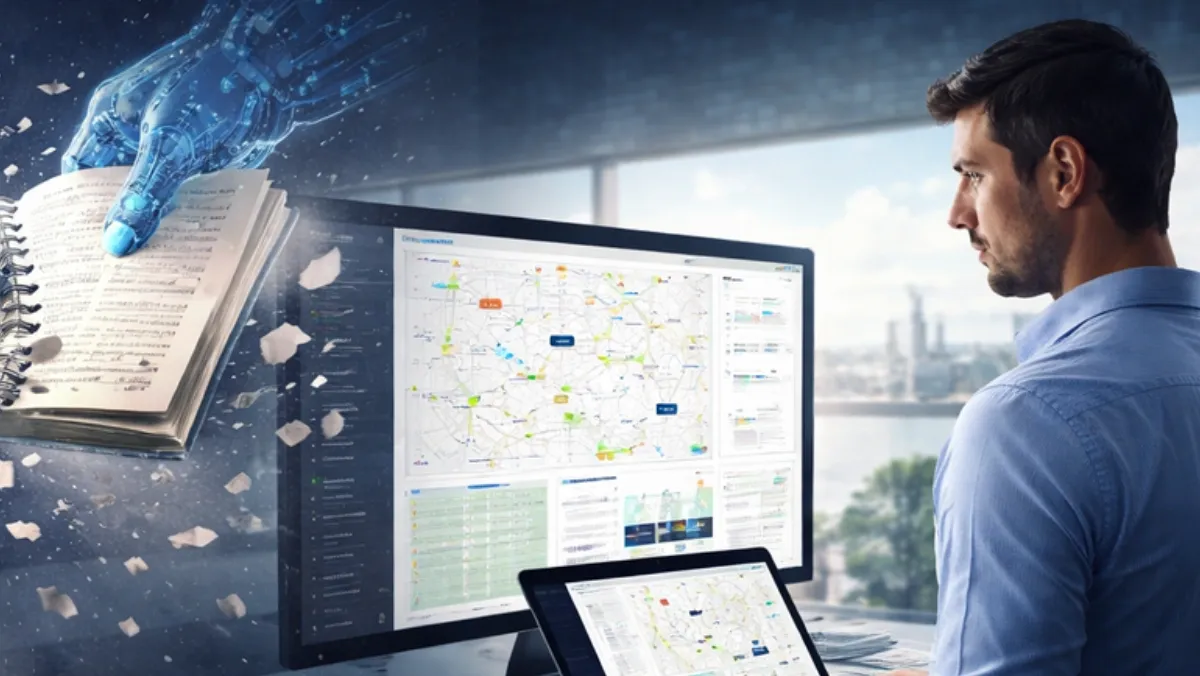
Still relying on manual sheets? Playing "phone tag" between operations and drivers? If you’re still juggling spreadsheets and endless check-ins, you aren’t just "old school" - you’re bleeding money.
In an era of instant gratification and razor-sharp margins, the future of logistics demands three things: Precision, Speed, and Visibility. While your competitors are using AI to shave 40% off their transport costs, manual operators are left guessing.
The Brutal Reality: Automation is No Longer Optional
Relying on manual logistics today is like entering a horse in an F1 race. The friction in a manual supply chain is visible everywhere:
The Paper Trail: Handwritten logs that are lost, smudged, or faked.
The "Guesswork" Dispatch: Dispatchers sending drivers on "gut instinct" rather than data-validated routes.
The Profit Leak: Half-empty trucks leaving the yard because load planning was done on the fly.
Logistics automation isn't about replacing people - it’s about removing the friction that stops your people from being profitable.
Comparison: The Cost of the "Status Quo"
The Fleetx Difference: 6 Ways Automation Transforms Your Bottom Line
Zero-Guesswork Dispatching
Routes are optimized instantly based on live traffic, load type, and deadlines. No more relying on a driver’s memory or last-minute calls. The result? Trucks stay on the best path, fuel costs drop by 20%, and reliability becomes your brand identity.
Radical Cost Suppression
AI-powered load building ensures no truck leaves the yard with "dead space." Digital documentation eliminates the human errors that lead to expensive compliance penalties. These aren't just savings; they are direct injections into your profit margin.
From "Black Box" to "Glass Box" Visibility
Manual processes leave you blind. Fleetx provides one "Pane of Glass" where every vehicle, delay, and resource is visible. Total control - no guesswork required.
The Driver Retention Secret
Drivers hate paperwork as much as you do. By replacing calls with a simple mobile app for e-PODs and expense logging, you reduce driver frustration. Happy drivers stay longer, cutting your recruitment and training costs.
Proactive Customer Trust
Instead of clients chasing your support team for updates, they get proactive transparency. Real-time ETAs and instant issue resolution turn your logistics from a back-end cost center into a front-end competitive advantage.
Scale Without Chaos
Growth usually means more phone calls and more stress. Automation breaks that cycle. Whether you are managing 50 trucks or 5,000, our cloud-based platform scales seamlessly without increasing your administrative headcount.
6 AI-Driven Engines Powering the Fleetx TMS
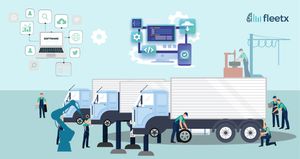
Here are 6 ways AI-Driven Engines are Powering the Fleetx Transport Management System
Spot Auction: Tap into real-time carrier bidding. Stop overpaying and start procuring with agility.
Load Builder: Maximize every cubic inch of cargo space. If it fits, it ships—smartly.
Dispatch Planner: Logistics on autopilot. Adaptive scheduling that accounts for real-world disruptions in real-time.
Freight Audit & Payment: Eliminate "freight leakage" and double-billing with automated, precision auditing.
RFQ Management: Move from chaotic email threads to a streamlined, digital quote flow.
Multi-Channel Integration: All your data streams—GPS, ERP, and CRM—united in one actionable dashboard.
From Reactive Logistics to Predictive Logistics: How AI Creates a Smarter Supply Chain
For decades, logistics technology focused primarily on digitizing manual tasks. Businesses replaced paper records with spreadsheets, phone calls with emails, and handwritten delivery notes with digital documents. While these improvements reduced administrative effort, they did not fundamentally change how logistics decisions were made. Most planning still depended on historical information and human judgement rather than real-time operational intelligence.
Today, the logistics industry is moving beyond simple automation into predictive logistics—an AI-driven operating model where software continuously analyses live operational data, identifies future risks, and recommends the best course of action before problems occur. Instead of simply recording events after they happen, modern transportation management software helps businesses anticipate disruptions, optimize resources proactively, and make data-driven decisions that improve efficiency across the entire supply chain.
This shift is particularly important for transporters operating across India, where fluctuating fuel prices, urban congestion, seasonal demand, weather disruptions, and increasing customer expectations create an environment where reactive decision-making is no longer sufficient.
Predictive ETA Management Improves Customer Confidence
One of the biggest weaknesses of manual logistics is the inability to provide reliable delivery estimates. Dispatch teams often rely on driver updates, historical averages, or assumptions that quickly become inaccurate when traffic, weather, or operational delays occur.
AI-powered transportation management systems continuously analyse GPS location, historical route performance, traffic conditions, loading delays, unloading times, driver behaviour, and delivery priorities to generate highly accurate Estimated Time of Arrival (ETA) predictions. As conditions change throughout the journey, the ETA automatically updates, allowing logistics managers and customers to receive the latest delivery information without making repeated phone calls.
For companies delivering across Delhi NCR, Mumbai, Bengaluru, Pune, and Gurgaon, this capability significantly improves customer communication while reducing the workload on customer support teams. Instead of reacting to complaints after delays occur, businesses can proactively notify customers, adjust delivery schedules, or reroute vehicles before service levels are affected.
AI Identifies Operational Bottlenecks Before They Become Expensive Problems
Traditional logistics management often discovers problems only after they have already impacted operations. Vehicles arrive late, freight costs exceed estimates, customer complaints increase, or delivery performance declines before managers realize something has gone wrong.
Predictive logistics changes this approach by continuously monitoring operational performance across every stage of the transportation process. AI models evaluate thousands of data points, including dispatch efficiency, driver productivity, idle time, fuel consumption, warehouse turnaround, vehicle utilization, and delivery completion rates.
When unusual patterns emerge, the system immediately alerts operations teams. For example, repeated loading delays at a particular warehouse may indicate staffing issues, while increasing idle time on a specific route may suggest inefficient dispatch planning. Instead of waiting until these issues affect profitability, businesses can investigate and resolve them early.
Over time, this continuous operational intelligence helps organizations eliminate recurring inefficiencies and create more resilient logistics processes.
Intelligent Capacity Planning Maximizes Fleet Utilization
Many businesses assume purchasing additional vehicles is the quickest way to increase transportation capacity. However, AI often reveals that existing assets are being underutilized due to inefficient planning rather than insufficient fleet size.
Modern transportation management software analyses historical shipment volumes, seasonal demand, vehicle availability, customer locations, delivery frequencies, and route performance to recommend the most efficient allocation of available resources.
Rather than dispatching partially loaded vehicles or allowing trucks to return empty, AI identifies opportunities to consolidate shipments, improve load balancing, reduce empty miles, and optimize fleet scheduling.
This predictive approach allows businesses to transport more freight using existing vehicles while reducing fuel costs, driver overtime, and unnecessary fleet expansion. For transport companies experiencing rapid growth, improved asset utilization often delivers higher returns than simply investing in additional vehicles.
Predictive Maintenance Reduces Unplanned Downtime
Vehicle breakdowns remain one of the most expensive operational challenges for logistics companies. Unexpected failures delay deliveries, increase maintenance expenses, disrupt customer commitments, and reduce fleet availability.
Instead of relying solely on fixed maintenance schedules, AI-powered fleet management systems monitor vehicle health using telematics and IoT sensor data. Parameters such as engine temperature, fuel efficiency, battery condition, tyre pressure, braking performance, and engine diagnostics are continuously analysed to identify signs of potential failure.
When abnormal patterns are detected, maintenance teams receive alerts before a serious breakdown occurs. Repairs can then be scheduled during planned maintenance windows rather than emergency roadside situations.
For businesses operating large fleets across India's diverse road conditions, predictive maintenance improves vehicle reliability while reducing repair costs, minimizing downtime, and extending asset lifespan.
AI Supports Better Strategic Decision-Making
Operational efficiency is only one part of successful logistics management. Business leaders also need reliable insights to make long-term strategic decisions regarding fleet expansion, warehouse locations, customer profitability, pricing, and investment planning.
Transportation management software transforms operational data into executive-level business intelligence through customizable dashboards and predictive analytics.
Managers can identify:
- Most profitable customers and delivery routes
- Vehicles generating the highest operating costs
- Regional demand trends
- Driver productivity patterns
- Fuel efficiency opportunities
- Seasonal shipment fluctuations
- Freight procurement performance
- Customer service trends
Rather than making decisions based on intuition or fragmented reports, leadership teams gain a comprehensive understanding of business performance supported by real-time data.
Why Predictive Logistics Is Becoming a Competitive Advantage
As customer expectations continue to evolve, logistics companies can no longer compete solely on fleet size or transportation rates. Speed, visibility, reliability, and operational intelligence increasingly determine long-term success.
Businesses that adopt predictive logistics gain the ability to identify problems before they impact customers, optimize resources continuously, improve operational efficiency, and make smarter strategic decisions using live business intelligence.
For organizations operating across India's rapidly growing logistics markets—including Delhi, Delhi NCR, Mumbai, Bengaluru, Pune, and Gurgaon—predictive transportation management represents the next stage of digital transformation. Rather than simply replacing paper-based processes, AI creates a connected logistics ecosystem where vehicles, drivers, warehouses, customers, and management teams work together through a single intelligent platform.
The result is a supply chain that is more agile, more resilient, and significantly better prepared to meet the increasing demands of modern freight transportation.
Building a Future-Ready Logistics Technology Stack: Why a Transportation Management System Works Best as Part of an Integrated Digital Ecosystem
Adopting an AI-powered Transportation Management System (TMS) is a major step toward modernizing logistics operations, but organizations that achieve the greatest efficiency rarely rely on a single software solution. Instead, they build an integrated digital ecosystem where transportation management software works seamlessly with telematics, ERP platforms, warehouse systems, driver applications, customer portals, and business intelligence tools. This connected approach eliminates information silos, improves collaboration between departments, and creates a single source of truth for every logistics operation.
As businesses across India expand into multiple cities such as Delhi, Delhi NCR, Gurgaon, Mumbai, Bengaluru, Pune, Hyderabad, and Chennai, logistics operations become increasingly complex. Shipments originate from different warehouses, multiple carriers operate simultaneously, customer expectations continue to rise, and regulatory compliance becomes more demanding. Managing these moving parts using disconnected software or spreadsheets often leads to duplicate data entry, inconsistent reporting, delayed communication, and avoidable operational errors.
A connected logistics ecosystem addresses these challenges by ensuring that every operational system shares accurate, real-time information. The result is faster decision-making, greater visibility, improved customer satisfaction, and significantly higher operational efficiency.
Integrating ERP and Transportation Management for Better Business Visibility
Many logistics businesses already use Enterprise Resource Planning (ERP) software to manage finance, procurement, inventory, and customer information. However, when transportation data remains isolated from ERP systems, departments often work with different versions of operational data, leading to delays and reconciliation issues.
By integrating ERP software with a Transportation Management System, dispatch information, freight costs, delivery status, invoicing, inventory movement, and customer orders automatically synchronize between systems. Finance teams gain immediate visibility into freight expenses, procurement teams can monitor shipment progress, while operations managers receive accurate order information without manual updates.
For growing enterprises operating multiple warehouses across India, ERP integration improves financial reporting, accelerates billing cycles, reduces administrative work, and ensures operational decisions are based on consistent, real-time information.
Why IoT and Telematics Have Become Essential for Modern Fleet Operations
Artificial Intelligence can only make intelligent decisions when supported by high-quality operational data. This is where Internet of Things (IoT) devices and vehicle telematics play a crucial role.
Modern fleets generate thousands of data points every day through GPS devices, engine diagnostics, fuel sensors, temperature monitors, driver behaviour tracking, tyre pressure monitoring systems, and onboard vehicle electronics. Instead of collecting this information for reporting purposes alone, AI-powered transportation management software continuously analyses these inputs to identify opportunities for operational improvement.
For example, telematics data can reveal excessive idling, harsh braking, speeding, engine faults, inefficient driving behaviour, or abnormal fuel consumption. AI then transforms these insights into practical recommendations that fleet managers can immediately act upon. Rather than relying on assumptions, businesses gain measurable visibility into vehicle performance and operating costs.
This combination of IoT, telematics, and AI helps organizations improve driver safety, reduce maintenance expenses, optimize fuel consumption, and increase fleet availability without adding operational complexity.
Digital Driver Applications Improve Productivity Beyond GPS Tracking
Drivers are one of the most important stakeholders within every logistics operation, yet they often spend valuable time handling paperwork, making status calls, or waiting for manual approvals. Mobile driver applications eliminate many of these administrative tasks by connecting drivers directly with dispatch teams through a centralized digital platform.
Using a mobile application, drivers can receive trip assignments, navigate optimized routes, upload electronic proof of delivery (ePOD), capture delivery photographs, record expenses, complete digital vehicle inspections, report delays, and communicate exceptions in real time. This reduces unnecessary phone calls while ensuring operational data is immediately available across the organization.
For transport businesses operating in high-density metropolitan regions such as Delhi NCR, Mumbai, Bengaluru, and Pune, digital driver workflows improve communication speed while reducing documentation errors and increasing delivery accuracy.
Customer Self-Service Portals Strengthen Business Relationships
Modern customers increasingly expect the same level of shipment visibility they experience when tracking personal online purchases. Businesses that still rely on manual status updates often struggle to meet these expectations.
Customer self-service portals integrated with transportation management software provide secure access to shipment tracking, estimated arrival times, proof of delivery, freight documents, invoices, and delivery history. Rather than contacting customer support for routine updates, customers can independently access real-time shipment information whenever needed.
This transparency reduces support workloads while strengthening customer confidence. It also creates a more professional service experience, particularly for manufacturers, distributors, retailers, and third-party logistics providers managing large shipment volumes across India.
Business Intelligence Dashboards Turn Operational Data into Executive Decisions
Collecting logistics data has little value unless decision-makers can easily interpret it. Business intelligence dashboards consolidate information from transportation management systems, ERP software, telematics devices, warehouse platforms, and customer portals into interactive reports that support strategic planning.
Executives can monitor key performance indicators such as fleet utilization, on-time delivery performance, transportation costs, freight profitability, customer service metrics, vehicle productivity, warehouse turnaround times, and fuel efficiency through a single interface.
Instead of reviewing static reports at the end of each month, leadership teams gain continuous operational visibility that supports faster and more informed business decisions.
Comparison Table: Standalone Software vs Integrated Logistics Ecosystem
| Capability | Standalone Transportation Software | Integrated AI-Powered Logistics Ecosystem |
|---|---|---|
| Data Visibility | Limited to transport operations | End-to-end visibility across logistics, finance, warehouse, and customer operations |
| Decision Making | Based on isolated reports | Based on real-time unified operational intelligence |
| Customer Experience | Manual updates and fragmented communication | Live tracking, automated notifications, customer portals, and digital documentation |
| Fleet Management | Basic GPS monitoring | AI-powered route optimization, predictive maintenance, driver analytics, and telematics integration |
| Warehouse Coordination | Manual coordination between teams | Automated synchronization with warehouse management systems |
| Financial Reporting | Separate freight reconciliation | Automatic ERP integration and faster invoicing |
| Operational Scalability | Difficult to manage multiple locations | Designed for multi-city and multi-warehouse operations across India |
| Business Intelligence | Historical reporting | Predictive analytics, customizable dashboards, and AI-driven recommendations |
Creating a Connected Logistics Operation for Long-Term Growth
As logistics networks become increasingly interconnected, businesses that rely on disconnected software solutions will find it more difficult to maintain operational efficiency. A future-ready logistics organization requires technology that enables continuous collaboration between transportation, warehousing, finance, procurement, customer service, and executive leadership.
Rather than viewing transportation management software as a standalone application, organizations should treat it as the central intelligence platform connecting every logistics process. When integrated with ERP systems, IoT devices, telematics, warehouse management software, customer portals, and business intelligence tools, a Transportation Management System evolves into a comprehensive digital control tower capable of supporting faster decisions, lower costs, improved customer experiences, and sustainable long-term growth.
For businesses expanding across India's competitive logistics landscape, this integrated technology ecosystem provides the operational resilience and scalability required to succeed in an increasingly data-driven supply chain environment.
Preparing Your Logistics Business for the Next Five Years: A Practical Roadmap for Sustainable Growth
The logistics industry is entering a period where competitive advantage will depend less on fleet size and more on operational intelligence. Businesses that continue relying solely on manual coordination or isolated digital tools will find it increasingly difficult to meet growing customer expectations, control transportation costs, and respond quickly to market changes. The next phase of logistics transformation is not about adopting every new technology available—it is about building a scalable, data-driven operation that can continuously adapt to changing business conditions.
Across India, transport companies are expanding beyond regional operations into nationwide distribution networks. Businesses serving customers in Delhi NCR, Mumbai, Bengaluru, Pune, Gurgaon, Hyderabad, Chennai, Ahmedabad, and other emerging logistics hubs must now manage higher shipment volumes, multiple warehouses, larger carrier networks, and increasingly complex customer requirements. This growth creates opportunities, but it also introduces operational challenges that require intelligent planning rather than simply increasing manpower.
Instead of asking, "How can we manage more shipments?" modern logistics leaders are asking, "How can we build a system that continues improving as the business grows?" AI-powered transportation management software provides the foundation for answering that question.
Developing a Digital Maturity Roadmap
Digital transformation should be viewed as a continuous journey rather than a one-time software implementation. Many businesses attempt to digitize every process simultaneously, which often leads to operational disruption and low user adoption. A phased roadmap allows organizations to achieve measurable improvements while minimizing implementation risks.
The first stage focuses on replacing manual processes with digital workflows. Activities such as dispatch planning, vehicle tracking, proof of delivery, freight documentation, and expense management are centralized within a Transportation Management System. This creates operational visibility while reducing paperwork and repetitive administrative tasks.
The second stage introduces automation. AI begins assisting with route optimization, dispatch scheduling, freight planning, customer notifications, and operational reporting. Employees spend less time performing repetitive work and more time solving higher-value business challenges.
The final stage involves predictive intelligence. Machine learning continuously analyses operational data to forecast demand, identify maintenance requirements, optimize fleet utilization, predict delivery delays, and recommend business improvements before problems occur. At this point, technology evolves from being a reporting tool into an active decision-support system.
Organizations that follow a structured digital maturity roadmap generally experience faster adoption, stronger employee engagement, and better long-term returns on technology investments.
Measuring Success Through the Right Logistics KPIs
Technology investments deliver value only when supported by meaningful performance measurement. Many transport businesses continue evaluating success using only basic metrics such as completed deliveries or monthly revenue. While important, these indicators provide only a partial picture of operational performance.
A modern logistics organization should monitor a balanced set of Key Performance Indicators (KPIs) that measure efficiency, profitability, customer service, and sustainability simultaneously.
Some of the most valuable logistics KPIs include:
- Fleet utilization percentage
- Vehicle idle time
- Empty return mileage
- Fuel consumption per kilometre
- On-time pickup percentage
- On-time delivery percentage
- Average delivery turnaround time
- Cost per shipment
- Freight cost per kilometre
- Customer complaint resolution time
- Digital proof of delivery completion rate
- Preventive maintenance compliance
- Driver safety score
- Vehicle downtime
- Carbon emissions per trip
Monitoring these KPIs through centralized dashboards allows management teams to identify performance trends early, benchmark operations across locations, and prioritize improvement initiatives that generate measurable business impact.
Sustainability Is Becoming a Competitive Business Requirement
Environmental sustainability has become an important strategic priority across global supply chains. Customers, investors, regulators, and business partners increasingly expect logistics companies to demonstrate measurable progress toward reducing emissions and improving resource efficiency.
Fortunately, many sustainability improvements also reduce operating costs.
AI-powered transportation management software contributes to environmental performance by optimizing routes, minimizing unnecessary mileage, reducing idle time, improving vehicle utilization, and supporting preventive maintenance programs that improve fuel efficiency. Digital documentation also reduces paper consumption while streamlining compliance processes.
As electric commercial vehicles become more widely adopted across India, transportation management platforms will play an increasingly important role in managing charging schedules, battery performance, route planning, and mixed fleets containing both electric and conventional vehicles.
Businesses that integrate sustainability into daily logistics operations are likely to improve both environmental performance and long-term profitability.
Strengthening Supply Chain Resilience Through Data
Recent global disruptions have demonstrated that resilient supply chains are just as important as efficient ones. Weather events, infrastructure challenges, labour shortages, geopolitical uncertainty, fuel price fluctuations, and unexpected demand changes can significantly impact transportation operations.
Organizations using manual planning often struggle to respond quickly because information is fragmented across spreadsheets, emails, and phone conversations.
AI-powered logistics platforms improve resilience by continuously monitoring operational conditions and providing real-time recommendations. Alternative routes, backup carriers, available fleet capacity, warehouse inventory, and shipment priorities can all be evaluated within minutes instead of hours.
This ability to adapt rapidly allows businesses to maintain service levels even during unexpected disruptions while minimizing financial losses and protecting customer relationships.
The Growing Role of AI Assistants in Logistics Management
Artificial intelligence is also changing how logistics professionals interact with operational data. Rather than manually searching through reports, managers increasingly use conversational AI assistants to obtain business insights instantly.
For example, an operations manager may ask:
- Which routes generated the highest fuel costs this month?
- Which vehicles experienced the most downtime?
- Which customers had the highest number of delayed deliveries?
- What factors reduced fleet utilization last week?
- Which distribution centre processed shipments most efficiently?
Instead of manually compiling reports from multiple systems, AI assistants analyse operational data and deliver immediate, actionable insights.
As conversational AI continues to evolve, transportation management systems will become increasingly accessible for users at every organizational level, enabling faster decisions and more effective collaboration.
Future Technologies That Will Shape Logistics Operations
The next generation of logistics technology will extend beyond traditional transportation management. Businesses should prepare for innovations that further increase operational intelligence and automation.
Emerging technologies include:
- AI-powered logistics copilots that recommend operational decisions.
- Digital twins that simulate transportation networks before changes are implemented.
- Advanced predictive analytics for demand forecasting.
- Computer vision systems supporting automated vehicle inspections.
- Autonomous planning engines that continuously optimize fleet operations.
- Intelligent warehouse robotics integrated with transportation workflows.
- Real-time carbon footprint monitoring for sustainability reporting.
- Blockchain-enabled freight documentation for enhanced transparency.
- Enhanced IoT ecosystems providing deeper visibility into vehicle and cargo conditions.
Although adoption timelines will vary by industry and business size, organizations that establish strong digital foundations today will be significantly better positioned to integrate these innovations in the future.
Building a Logistics Business That Is Ready for Tomorrow
The future of logistics will not be defined by who owns the largest fleet—it will be shaped by who uses information most effectively. Businesses that embrace intelligent transportation management, integrated technology ecosystems, predictive analytics, and continuous operational improvement will be able to scale faster while maintaining service quality and controlling costs.
For organizations operating throughout India, particularly in fast-growing logistics markets such as Delhi NCR, Mumbai, Bengaluru, Gurgaon, Pune, Hyderabad, and Chennai, investing in AI-powered transportation management is no longer simply a technology decision. It is a long-term business strategy that supports sustainable growth, operational resilience, customer satisfaction, and competitive advantage.
Companies that begin building this foundation today will be better prepared to navigate changing market conditions, adopt future innovations with confidence, and create logistics operations that remain efficient, intelligent, and profitable for years to come.
The Verdict: Automate or Evaporate
In the battle for logistics supremacy, playing manually is a guaranteed way to lose. Fleetx connects your assets, your people, and your processes under one hood. As India's logistics industry continues to evolve, businesses that embrace AI-powered transportation management software will be better positioned to reduce operating costs, improve fleet utilization, optimize routes, and deliver superior customer experiences. Whether you're managing a regional fleet in Delhi NCR, scaling operations across Mumbai and Bengaluru, or expanding nationwide, digital logistics is no longer a future investment, it is a present-day business necessity. By replacing fragmented manual processes with real-time visibility, predictive analytics, and intelligent automation, organizations can build resilient, data-driven supply chains that adapt to changing market demands. The businesses that invest in smarter logistics today will be the ones leading tomorrow's transportation ecosystem with greater efficiency, profitability, and long-term competitive advantage.
Frequently Asked Questions
What is manual logistics management and why are businesses replacing it with AI-powered transportation management systems? ▼
Manual logistics management refers to operating transport activities using spreadsheets, paper logbooks, phone calls, handwritten delivery records, manual dispatch planning, and disconnected systems. While these methods may work for very small fleets, they quickly become inefficient as shipment volumes increase. Businesses lose visibility over vehicles, drivers, fuel consumption, delivery timelines, and freight costs, making it difficult to maintain profitability.
An AI-powered Transportation Management System (TMS) automates planning, dispatching, route optimization, proof of delivery, freight auditing, GPS tracking, and analytics from a single platform. Instead of relying on human assumptions, decisions are made using live operational data. Companies can monitor every shipment, reduce delays, improve customer communication, and optimize fleet utilization.
Across India, including Delhi, Delhi NCR, Gurgaon, Mumbai, Bengaluru, and Pune, logistics companies are rapidly adopting digital fleet management platforms because customers increasingly expect real-time shipment visibility and faster deliveries. AI-driven logistics software also improves compliance, reduces paperwork, and supports business growth without adding proportional administrative costs.
For companies aiming to build a modern supply chain, replacing manual logistics with intelligent automation is becoming less of an option and more of a competitive necessity.
What are the biggest hidden costs of running logistics operations manually? ▼
Many businesses believe manual operations save software costs, but the opposite is often true. The biggest expenses usually remain invisible because they are spread across multiple departments rather than appearing as a single bill.
Hidden costs include excess fuel consumption from poor route planning, delayed deliveries, inaccurate freight billing, unnecessary overtime, idle vehicles, compliance penalties, manual paperwork, shipment disputes, and customer dissatisfaction. Businesses also spend valuable employee time updating spreadsheets, making phone calls, tracking drivers, and resolving avoidable operational errors.
For transporters operating across India, especially in high-density logistics hubs such as Delhi NCR, Mumbai, and Bengaluru, traffic congestion alone can significantly increase fuel expenses when routes are planned manually. AI-powered logistics software continuously adjusts routes using live traffic and operational conditions, helping reduce unnecessary mileage and improve vehicle productivity.
Another overlooked cost is poor decision-making caused by limited data. Without centralized reporting, managers cannot accurately measure profitability per vehicle, customer, or route. Modern transportation management systems convert operational data into actionable insights, allowing businesses to improve efficiency while reducing long-term operating costs.
What is the best transportation management software for businesses in India? ▼
The best transportation management software depends on fleet size, shipment complexity, business goals, and integration requirements. However, modern businesses typically look for AI-powered capabilities rather than basic GPS tracking alone.
A comprehensive TMS should include intelligent route optimization, dispatch planning, freight audit automation, proof of delivery, vehicle tracking, maintenance management, fuel analytics, driver performance monitoring, and ERP integration. Businesses should also prioritize cloud deployment, mobile accessibility, strong customer support, and scalable architecture.
Organizations operating across Delhi, Gurgaon, Mumbai, Pune, Bengaluru, and other major logistics corridors often prefer platforms capable of managing multi-location operations while providing centralized visibility. AI-powered systems can also help companies improve on-time deliveries, reduce empty trips, and maximize fleet utilization.
Instead of selecting software solely based on price, businesses should evaluate total return on investment, implementation support, reporting capabilities, and long-term scalability. A solution that reduces operational inefficiencies, improves customer satisfaction, and provides actionable business intelligence typically delivers significantly higher value than low-cost software with limited automation.
How much does transportation management software cost in India? ▼
The cost of transportation management software in India varies depending on fleet size, required features, deployment model, and implementation complexity. Most cloud-based providers offer subscription pricing, making advanced logistics technology accessible to businesses of different sizes.
Small fleets may find solutions starting around ₹1,500–₹5,000 per vehicle annually for basic tracking services, while comprehensive AI-powered transportation management platforms with dispatch automation, freight management, route optimization, analytics, and integrations generally range from ₹50,000 to several lakhs annually depending on operational scale. Enterprise deployments involving ERP integration, IoT devices, telematics, and customized workflows typically require tailored pricing.
Businesses should evaluate software based on measurable returns rather than initial subscription costs. Savings generated through lower fuel consumption, improved asset utilization, reduced paperwork, fewer delivery delays, and better freight auditing often outweigh implementation expenses.
Companies across Delhi NCR, Mumbai, Bengaluru, Gurgaon, Pune, and other major logistics markets increasingly consider transportation management software a strategic investment that delivers operational efficiency, stronger customer service, and sustainable long-term profitability.
How does AI-powered route optimization reduce fuel costs and improve delivery performance? ▼
AI-powered route optimization uses live traffic conditions, delivery priorities, vehicle capacity, weather updates, historical trip patterns, and road restrictions to determine the most efficient route for every shipment. Unlike manual planning, where dispatchers often rely on experience or static maps, AI continuously recalculates routes whenever unexpected delays or disruptions occur.
For logistics companies operating across Delhi NCR, Mumbai, Bengaluru, Pune, Gurgaon, and other busy freight corridors, route optimization significantly reduces unnecessary mileage and idle time. Vehicles spend less time in traffic, drivers complete more deliveries within the same working hours, and businesses consume less fuel without compromising service quality.
Modern transportation management software can also combine multiple deliveries into optimized routes, minimize empty return trips, recommend the nearest available vehicle, and balance workloads across the fleet. These improvements help organizations lower transportation costs while increasing vehicle utilization.
Beyond cost savings, optimized routing enhances customer satisfaction through more accurate estimated arrival times (ETAs), proactive delay notifications, and better delivery consistency. Businesses also benefit from lower carbon emissions, improved driver productivity, and better compliance with delivery schedules. As customer expectations continue to rise across India's logistics sector, AI-powered route optimization has become one of the most valuable features within modern fleet management and transportation management software.
Why are logistics companies in Delhi, Mumbai, Bengaluru and Gurgaon moving from spreadsheets to digital fleet management? ▼
Major logistics hubs across India are experiencing rapid shipment growth driven by eCommerce, manufacturing, retail distribution, pharmaceuticals, FMCG, and third-party logistics providers. As shipment volumes increase, spreadsheets become increasingly difficult to manage accurately because they depend heavily on manual updates, phone calls, and disconnected information.
Businesses operating in Delhi, Delhi NCR, Gurgaon, Mumbai, Bengaluru, and Pune often manage hundreds or thousands of daily vehicle movements. Manual systems make it difficult to monitor driver performance, identify delivery delays, manage freight costs, or maintain complete operational visibility. Even minor data entry mistakes can lead to incorrect dispatches, customer complaints, billing disputes, and compliance issues.
Digital fleet management platforms centralize every logistics activity into one dashboard. Managers can monitor live vehicle locations, automate dispatching, receive maintenance alerts, track proof of delivery, analyze operational KPIs, and generate reports without relying on paperwork.
Cloud-based transportation management systems also improve collaboration between operations teams, drivers, warehouse staff, and customers by providing real-time information accessible from anywhere. This increased visibility allows businesses to make faster decisions while reducing administrative workload and improving profitability. For growing transport businesses, digital transformation is becoming essential for remaining competitive in India's increasingly technology-driven logistics industry.
What features should businesses look for when choosing the best transportation management software? ▼
Selecting the best transportation management software involves evaluating much more than GPS tracking. The ideal platform should support end-to-end logistics operations while remaining scalable as the business grows.
Important features include AI-powered dispatch planning, intelligent route optimization, real-time GPS tracking, automated proof of delivery (ePOD), freight audit and payment management, digital documentation, maintenance scheduling, fuel monitoring, driver behaviour analytics, compliance reporting, load optimization, and customizable dashboards. Integration with ERP, CRM, warehouse management systems, and accounting software is equally important for creating a connected supply chain.
Businesses should also consider implementation support, mobile applications for drivers, cloud security, uptime reliability, multilingual support, API availability, and reporting capabilities. Companies operating across India, particularly in Delhi NCR, Mumbai, Bengaluru, Gurgaon, and Pune, often benefit from platforms capable of handling multi-branch logistics operations through a centralized interface.
Rather than focusing solely on software price, organizations should compare long-term business value. A transportation management platform that improves fleet utilization, reduces fuel costs, increases on-time deliveries, and enhances customer experience generally provides a substantially higher return on investment than basic tracking software with limited automation capabilities.
Can small and medium-sized transport businesses benefit from AI-powered logistics software? ▼
Absolutely. AI-powered logistics software is no longer limited to large enterprise fleets. Cloud-based deployment and subscription pricing have made advanced transportation management solutions affordable for small and medium-sized transport companies throughout India.
Businesses managing as few as 20 to 100 vehicles often experience significant improvements after digitizing their logistics operations. Automated dispatching, route optimization, digital proof of delivery, expense management, maintenance reminders, and real-time fleet visibility reduce administrative effort while improving operational efficiency. These improvements help smaller businesses compete with much larger logistics providers without proportionally increasing manpower.
Transport companies serving customers across Delhi, Gurgaon, Mumbai, Bengaluru, Pune, and regional distribution networks particularly benefit from better customer communication through live shipment tracking and accurate delivery estimates. Improved visibility also reduces disputes regarding deliveries, delays, and freight documentation.
As the business grows, cloud-based transportation management software scales without requiring major infrastructure investments. Additional vehicles, users, customers, and operational locations can be managed within the same platform. This scalability allows growing logistics companies to maintain operational control while expanding into new markets, making AI-powered logistics technology a practical long-term investment for businesses of every size.
How does logistics automation improve customer experience and business growth? ▼
Customer expectations have changed dramatically over the last few years. Whether shipments are moving within Delhi NCR, between Mumbai and Pune, or across multiple states in India, customers now expect complete visibility, accurate delivery timelines, and proactive communication throughout the transportation process. Businesses that continue relying on manual phone calls and spreadsheets often struggle to meet these expectations, resulting in delayed responses, customer complaints, and lost business opportunities.
Logistics automation improves customer experience by providing real-time shipment tracking, automated ETA updates, instant proof of delivery (ePOD), digital documentation, and proactive alerts whenever delays occur. Instead of customers repeatedly contacting support teams for shipment updates, they receive timely notifications that improve transparency and build trust.
Modern transportation management software also allows customer service teams to resolve issues quickly because every shipment, vehicle, driver, and document can be accessed from a centralized dashboard. AI-powered analytics further identify recurring delivery bottlenecks so businesses can continuously improve service quality.
Companies that consistently deliver accurate information, faster deliveries, and reliable communication often enjoy stronger customer retention, higher referral rates, and improved profitability. Logistics automation therefore becomes much more than an operational upgrade—it directly contributes to long-term business growth, customer loyalty, and competitive differentiation in India's rapidly evolving transportation industry.
What industries benefit the most from AI-powered transportation management systems? ▼
Almost every industry that depends on transportation can benefit from AI-powered transportation management software. While logistics providers and fleet operators are the most obvious users, many manufacturers, distributors, retailers, and service organizations also rely heavily on intelligent logistics platforms to improve operational efficiency.
Industries such as FMCG, eCommerce, pharmaceuticals, cement, steel, chemicals, construction materials, food and beverage, automotive, cold chain logistics, mining, agriculture, and third-party logistics (3PL) companies regularly transport high shipment volumes that require continuous coordination between warehouses, drivers, customers, and dispatch teams.
Businesses operating across India's major commercial hubs—including Delhi, Gurgaon, Mumbai, Bengaluru, Pune, Chennai, Hyderabad, and Ahmedabad—often manage deliveries across multiple warehouses and regional distribution centers. AI-powered fleet management software enables centralized control while improving route planning, reducing transportation costs, minimizing delivery delays, and increasing fleet utilization.
Organizations handling temperature-sensitive goods, high-value cargo, or time-critical deliveries particularly benefit from real-time tracking, automated compliance monitoring, predictive maintenance, and intelligent exception management. Regardless of industry, businesses seeking higher operational visibility, lower logistics costs, and better customer service increasingly view transportation management software as a strategic technology investment rather than simply an operational tool.
How can businesses calculate the return on investment (ROI) of transportation management software? ▼
Calculating the return on investment (ROI) of transportation management software requires looking beyond the subscription cost. The true value comes from operational savings, improved productivity, and increased customer satisfaction achieved after replacing manual logistics processes with intelligent automation.
Businesses should evaluate measurable improvements such as reduced fuel consumption, higher fleet utilization, lower empty miles, improved driver productivity, faster dispatch planning, fewer delivery delays, reduced paperwork, lower freight auditing errors, fewer compliance penalties, and decreased administrative workload. Additional benefits include better customer retention, more accurate billing, and improved decision-making through centralized reporting.
For companies operating throughout Delhi NCR, Mumbai, Bengaluru, Gurgaon, Pune, and other logistics-intensive regions, even a small percentage improvement in fuel efficiency or vehicle utilization can generate substantial annual savings. AI-powered route optimization alone may significantly reduce unnecessary mileage, while predictive maintenance lowers vehicle downtime and expensive breakdowns.
When comparing software providers, businesses should evaluate total business value rather than simply selecting the lowest price. A transportation management system that consistently reduces operating expenses while supporting long-term scalability often delivers significantly higher ROI than cheaper solutions offering limited automation or reporting capabilities.
What is the future of AI-powered logistics and transportation management in India? ▼
The future of logistics in India is increasingly driven by artificial intelligence, automation, connected vehicles, predictive analytics, IoT sensors, and cloud-based transportation management platforms. As supply chains become more complex and customer expectations continue rising, businesses will increasingly depend on intelligent systems capable of making real-time operational decisions.
AI will continue improving demand forecasting, automated dispatching, predictive maintenance, freight optimization, driver safety monitoring, warehouse coordination, and route planning. Machine learning models will become more accurate over time by continuously learning from shipment history, traffic conditions, seasonal demand, and operational performance.
Rapidly growing logistics markets such as Delhi, Delhi NCR, Gurgaon, Mumbai, Bengaluru, Pune, Hyderabad, and Chennai are expected to witness increased adoption of integrated transportation management software that connects GPS tracking, telematics, ERP systems, warehouse operations, and customer communication into a single digital ecosystem.
Businesses investing in AI-powered logistics today will be better positioned to improve efficiency, reduce transportation costs, meet sustainability goals, and deliver exceptional customer experiences. As digital transformation accelerates across India's transportation sector, organizations that embrace automation are likely to gain a lasting competitive advantage through smarter decision-making, higher operational visibility, and scalable logistics operations.