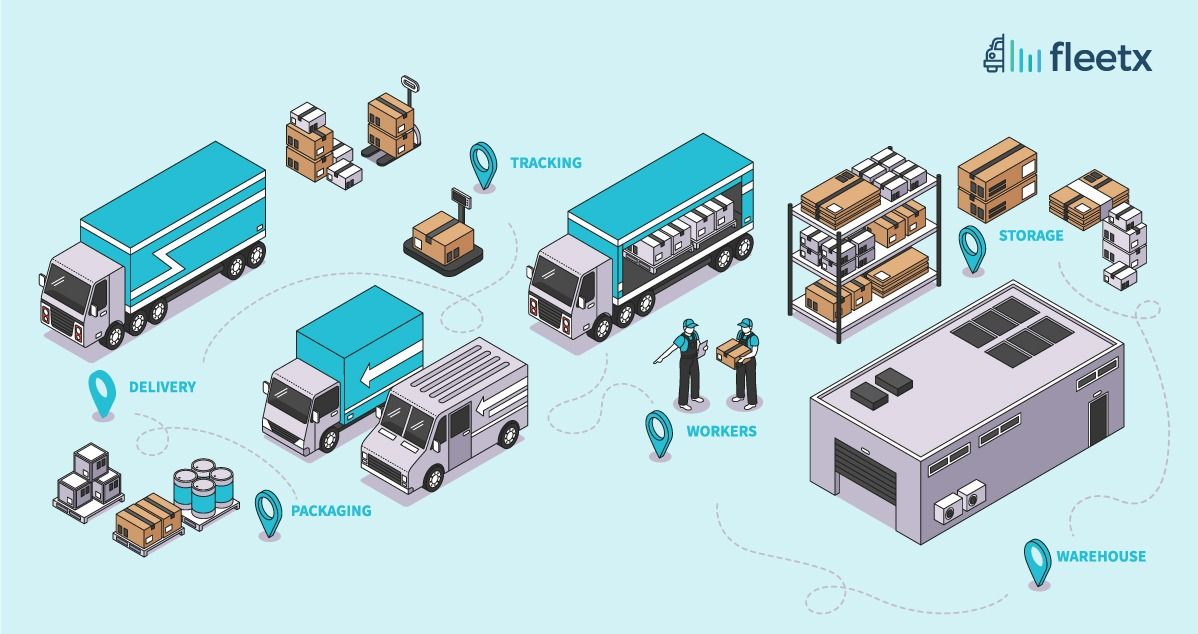


Load planning is a strategic process that involves the organization of goods within transportation vehicles to maximize space utilization, reduce transportation costs, and ensure the safe and timely delivery of goods. This process is crucial for mitigating high logistical expenses which currently stand at about 14% of India’s GDP, highlighting the need for refined load planning strategies to enhance economic efficiency and sustainability.
The Significance of Load Planning in India
In a country where the logistics market is expected to witness substantial growth, refining load planning techniques becomes a strategic all-important. Efficient load planning significantly cuts transportation costs by minimizing wasted space, optimizing fuel usage, and alleviating the overall logistical burden on the economy.
Strategies for Load Planning
1. Leveraging Technology
Advanced technological solutions such as Warehouse Management Systems (WMS) and Transportation Management Systems (TMS) play a critical role in automating and optimizing the load planning process. These systems provide essential real-time data and analytics, enabling logistics companies to maximize the capacity of each load efficiently.
2. Training and Development
Comprehensive training for logistics personnel is vital. Well-informed and trained teams can make critical decisions regarding stacking norms, weight distribution, and handling instructions, which are indispensable for preventing damage and mitigating transit risks.
3. Standardization of Procedures
Creating and enforcing standardized packing and loading procedures ensures operational consistency and efficiency. Well-defined guidelines for loading order, stacking methods, and securing loads optimize goods placement and balance weight distribution throughout the transport unit.
4. Route Optimization
Integrating load planning with advanced route optimization strategies offers substantial savings and operational efficiencies. Software solutions that recommend the most effective routes based on load specifics, vehicle type, traffic conditions, and delivery schedules can significantly reduce costs and improve delivery timelines.
5. Continuous Evaluation and Feedback
Regularly evaluating load planning strategies and integrating feedback from drivers and ground staff are vital for continuous improvement, as frontline input enhances operational effectiveness and efficiency. This feedback mechanism helps in identifying practical challenges and refining strategies, thus enhancing the overall operational effectiveness.
Challenges in Load Planning
1. Diversity in Goods and Packaging
The wide array of goods and packaging in India necessitates innovative and adaptable load planning strategies to meet the diverse demands of different industries effectively. Every sector poses distinct challenges, such as fragile goods in the electronics industry and perishable items in the food sector, which need tailored solutions for efficient load management.
2. Infrastructure Constraints
Given the varying road conditions in India, the need for durable packaging and secure loading practices is heightened to prevent damage, particularly on underdeveloped roads. These infrastructure challenges demand more sophisticated and resilient load planning methodologies.
3. Navigating Regulatory Landscapes
Navigating the complex network of local and national regulations concerning load weights, dimensions, and safety standards adds layers of complexity to load planning processes, requiring meticulous attention to compliance. Adhering to these regulations is vital not just for legal compliance but also for safeguarding the safety and integrity of the transportation process.
Advanced Load Planning Best Practices for Modern Logistics Operations
Efficient load planning is no longer limited to fitting more goods inside a truck. Modern logistics operations use data, automation, AI, and operational intelligence to improve asset utilization, reduce freight costs, and deliver a better customer experience. Whether a company operates a regional fleet in Delhi NCR or manages a nationwide transportation network across Mumbai, Bengaluru, Pune, Hyderabad, Chennai, and Kolkata, following structured load planning practices can significantly improve operational performance.
The most successful logistics companies build load planning into their transportation strategy instead of treating it as a warehouse activity. Every shipment should be planned based on cargo characteristics, vehicle specifications, delivery commitments, customer priorities, and road conditions.
Best Practices for Efficient Load Planning
- Classify shipments before vehicle allocation
- Group loads based on destination, delivery time, product category, weight, and handling requirements.
- Avoid mixing incompatible cargo that could increase damage risks.
- Optimize vehicle selection
- Match truck size with shipment volume instead of assigning vehicles based only on availability.
- Select vehicles according to payload limits, axle configuration, and route restrictions.
- Use cube utilization instead of only weight utilization
- Many companies focus only on weight while ignoring available cubic space.
- Optimizing both dimensions improves vehicle productivity.
- Prioritize unloading sequence
- Arrange cargo according to delivery order.
- This minimizes unloading time and reduces handling at every customer location.
- Integrate warehouse and transport planning
- Synchronize warehouse loading schedules with dispatch planning to reduce waiting time and detention.
- Monitor loading KPIs continuously
- Measure truck utilization percentage.
- Track average load factor.
- Monitor empty return trips.
- Evaluate loading accuracy.
- Measure turnaround time.
Why This Matters for Indian Logistics
Indian transportation networks involve varying road infrastructure, state regulations, seasonal demand, toll routes, urban congestion, and long-haul freight corridors. Companies operating between Delhi, Gurgaon, Mumbai, Bengaluru, Pune, Ahmedabad, Jaipur, Lucknow, and Chennai benefit significantly from standardized load planning because it improves consistency while reducing operational variability.
Businesses that implement structured load planning often experience:
- Better truck utilization
- Lower freight cost per shipment
- Improved on-time deliveries
- Reduced cargo handling errors
- Better driver productivity
- Improved warehouse efficiency
- Lower fuel consumption
- Higher customer satisfaction
As logistics becomes increasingly data-driven, load planning should be viewed as a continuous optimization process supported by transportation management systems (TMS), AI-driven analytics, and real-time fleet visibility rather than a one-time dispatch activity.
Load Planning Comparison: Manual Planning vs AI-Powered Load Planning
| Parameter | Manual Load Planning | AI-Powered Load Planning & Transportation Management System |
|---|---|---|
| Vehicle Capacity Utilization | Depends on planner experience | Continuously optimized using algorithms |
| Planning Time | High | Significantly reduced |
| Human Errors | Frequent | Minimal |
| Weight Distribution | Manual estimation | Automated optimization |
| Route Synchronization | Separate planning | Integrated with route optimization |
| Multiple Delivery Stops | Difficult to manage | Automatically sequenced |
| Freight Cost Optimization | Limited | Data-driven recommendations |
| Real-time Visibility | Not available | Live monitoring and tracking |
| Scalability | Suitable for smaller fleets | Ideal for growing enterprises |
| Decision Making | Reactive | Predictive and AI-assisted |
| KPI Monitoring | Manual reports | Live dashboards and analytics |
| Customer Service | Limited shipment visibility | Real-time shipment updates |
Modern enterprises increasingly adopt AI-powered transportation management systems because they combine load optimization, fleet visibility, route planning, freight management, and performance analytics into one connected platform. This integrated approach delivers measurable improvements in operational efficiency while supporting business growth.
Conclusion
Transportation industry in India needs to be able to plan loads well in order to stay competitive and cut costs. Businesses can significantly enhance operational efficiency by leveraging technology effectively, ensuring process consistency, and dedicating themselves to continual enhancement and refinement. India's economy is still growing, which means that improved transportation and load planning will become even more important to businesses across the board. This shows how important it is to make progress in this essential area.
Frequently Asked Questions on Efficient Load Planning
What is load planning in logistics and why is it important for Indian businesses?
Load planning in logistics is the process of arranging goods inside trucks, containers, trailers, or delivery vehicles in a way that maximizes space, balances weight, protects cargo, and improves delivery efficiency. For Indian businesses, especially companies operating across Delhi NCR, Gurgaon, Mumbai, Bengaluru, Pune, and other high-demand logistics corridors, efficient load planning directly affects transportation cost, delivery speed, vehicle utilization, and customer satisfaction.
A good load planning process considers vehicle size, payload capacity, product weight, packaging type, delivery sequence, route plan, unloading priority, and regulatory limits. Without proper planning, trucks may run partially empty, overloaded, poorly balanced, or arranged in a way that causes delays at unloading points. This increases fuel consumption, driver hours, vehicle wear and tear, and damage risk.
For businesses in India, where logistics costs are already high, load planning becomes a strategic cost-saving activity. A top transport management system or load optimization tool can help companies reduce manual errors, improve cubic space utilization, and make better dispatch decisions. This is particularly useful for FMCG, retail, manufacturing, e-commerce, automotive, pharma, and cold-chain companies that manage frequent shipments across multiple cities.
How does efficient load planning help reduce transportation costs in India?
Efficient load planning helps reduce transportation costs by improving truck capacity utilization, reducing the number of trips, minimizing fuel wastage, and lowering cargo damage. In India, where freight movement often involves long routes, mixed road conditions, toll costs, loading delays, and regional compliance requirements, even small improvements in load utilization can create meaningful savings.
For example, if a company frequently dispatches trucks from Delhi to Mumbai, Gurgaon to Pune, or Bengaluru to Chennai, poor load planning may lead to underutilized vehicles or unnecessary extra trips. By planning loads based on weight, volume, destination priority, and unloading sequence, businesses can fit more goods safely into fewer vehicles. This reduces fuel expenses, driver costs, toll charges, and maintenance overheads.
Cost savings depend on shipment volume, vehicle type, route, and operational complexity. For small fleets, optimized load planning may reduce avoidable expenses by a few thousand rupees per month. For mid-sized and enterprise logistics operations, savings can run into lakhs per month through better fleet utilization and reduced empty miles. The best load planning solutions also integrate with route optimization, transport management software, and real-time tracking, helping logistics teams make faster and more accurate decisions.
What is the best way to optimize load planning for trucks in Delhi NCR and Gurgaon?
The best way to optimize load planning for trucks in Delhi NCR and Gurgaon is to combine digital load planning software with route planning, vehicle tracking, standardized loading rules, and real-time dispatch visibility. These regions have dense industrial clusters, high traffic movement, multiple delivery points, and frequent intercity freight routes, making manual load planning difficult and error-prone.
Businesses operating from Gurgaon, Manesar, Faridabad, Noida, Ghaziabad, and Delhi often deal with mixed cargo, time-bound dispatches, warehouse congestion, and last-mile delivery pressure. A digital load planning system can help logistics teams decide which goods should go into which vehicle, how they should be placed, and in what sequence they should be unloaded. This improves both vehicle capacity usage and delivery accuracy.
For better results, companies should define loading rules based on weight distribution, fragile cargo handling, pallet size, vehicle type, customer priority, and route sequence. They should also track actual loading performance against planned loading efficiency. A top transport management system can further help by connecting load planning with freight allocation, driver assignment, route optimization, delivery tracking, and proof of delivery. This creates a more reliable and scalable logistics workflow for Delhi NCR and Gurgaon-based businesses.
How much does load planning software cost in India?
The cost of load planning software in India depends on the size of the fleet, number of users, shipment volume, integrations required, and whether the business needs a standalone load builder or a complete transport management system. Basic load planning tools may start from approximately ₹2,000 to ₹10,000 per user per month, while advanced enterprise-grade logistics platforms can cost significantly more depending on customization, automation, analytics, and implementation needs.
For small and mid-sized logistics teams, pricing may be based on the number of vehicles, monthly shipments, or software users. For larger enterprises in Delhi, Gurgaon, Mumbai, Bengaluru, Pune, or pan-India operations, pricing is usually customized because the system may include load optimization, route planning, freight management, transporter allocation, GPS tracking, analytics dashboards, ERP integration, and customer visibility modules.
Businesses should not evaluate cost only as a monthly subscription. The better way is to compare software cost against savings from reduced trips, improved vehicle utilization, lower fuel expenses, fewer damages, faster dispatches, and improved delivery performance. A top load planning or TMS solution can often justify its price by reducing operational leakages and improving shipment efficiency across warehouses and distribution networks.
Why is load planning important for logistics operations in Mumbai, Bengaluru, and Pune?
Load planning is especially important for logistics operations in Mumbai, Bengaluru, and Pune because these cities have high freight density, traffic congestion, warehousing clusters, time-sensitive deliveries, and strong demand from manufacturing, retail, e-commerce, pharma, automotive, and FMCG sectors. Poor load planning in these locations can quickly lead to delayed dispatches, higher freight costs, missed delivery windows, and inefficient vehicle use.
In Mumbai, logistics teams often deal with port-linked cargo movement, regional distribution, tight delivery windows, and high congestion. In Bengaluru, businesses face urban delivery complexity, technology-driven supply chains, and fast-moving e-commerce shipments. Pune has strong automotive, manufacturing, and industrial freight movement where weight distribution, route planning, and vehicle utilization are critical.
Efficient load planning helps companies decide the right vehicle for each shipment, arrange cargo safely, prioritize unloading sequence, and reduce avoidable trips. It also supports better coordination between warehouse teams, transporters, drivers, and customers. When combined with GPS tracking and transport management software, load planning gives logistics managers better visibility into dispatch performance and delivery reliability. For companies looking for the best logistics optimization approach in Mumbai, Bengaluru, or Pune, digital load planning should be treated as a core operational process, not just a warehouse activity.
What are the top features to look for in a load planning or transport management system?
The top features to look for in a load planning or transport management system include vehicle capacity optimization, weight and volume calculation, route sequencing, transporter allocation, real-time tracking, shipment visibility, analytics, and integration with ERP or warehouse systems. For Indian businesses, the system should also support multi-city dispatches, mixed fleet types, transporter networks, and regional logistics complexity.
A good load planning solution should help logistics teams choose the right vehicle, reduce underutilized trips, prevent overloading, and arrange goods based on unloading priority. It should also provide visibility into planned versus actual loading performance. For companies operating across Delhi NCR, Gurgaon, Mumbai, Bengaluru, Pune, and other Indian logistics hubs, route-aware load planning is very useful because it connects vehicle loading with delivery sequence.
Important features to evaluate include:
- Automated load allocation based on weight, volume, and vehicle type
- Route optimization and delivery sequencing
- Real-time GPS tracking and dispatch visibility
- Freight cost and transporter performance analytics
- Alerts for underutilization, overloading, or delays
- Integration with TMS, WMS, ERP, and billing systems
The best systems are scalable, easy to use, and capable of improving both cost efficiency and service reliability.
Can load planning reduce vehicle overloading and cargo damage?
Yes, load planning can significantly reduce vehicle overloading and cargo damage by ensuring that goods are placed according to weight limits, volume capacity, stacking rules, product type, and safe handling requirements. In logistics, improper loading is one of the major reasons for damaged goods, unstable vehicles, compliance issues, and avoidable delivery disputes.
Overloading can lead to higher fuel consumption, tyre wear, suspension damage, braking risks, road safety issues, and regulatory penalties. Poor cargo arrangement can also damage fragile items, crush lightweight products, or create imbalance during transit. This is a common challenge for businesses moving mixed cargo across Indian routes, especially between industrial hubs such as Gurgaon, Delhi NCR, Mumbai, Pune, Bengaluru, Chennai, Ahmedabad, and Hyderabad.
A structured load planning process helps teams define rules for heavy goods, fragile goods, perishable items, palletized cargo, hazardous materials, and multi-drop shipments. It also helps decide what should be loaded first and what should be unloaded first. Digital load planning systems make this process more accurate by using vehicle dimensions, payload capacity, shipment data, and destination sequence. For companies looking to improve safety and reduce claim costs, load planning is one of the best operational controls to implement.
How does load planning work with route optimization and fleet tracking?
Load planning works best when it is connected with route optimization and fleet tracking. Load planning decides how goods should be arranged inside a vehicle, route optimization decides the most efficient delivery path, and fleet tracking provides real-time visibility into vehicle movement. Together, these systems help logistics teams improve cost control, delivery speed, and operational reliability.
For example, if a truck has deliveries in Gurgaon, Delhi, Noida, and Ghaziabad, the load should be arranged according to the delivery sequence. Goods for the first stop should be accessible first, while goods for later stops should be placed accordingly. If load planning is done without route visibility, drivers may waste time rearranging cargo or unloading unnecessary items at every stop.
When integrated with fleet tracking, logistics managers can monitor whether the planned route and delivery sequence are being followed. They can also identify delays, route deviations, detention time, or unloading inefficiencies. For high-volume operations in India, especially in Mumbai, Bengaluru, Pune, Delhi NCR, and other busy freight corridors, this integration helps reduce manual coordination and improves customer communication. A top transport management system connects load planning, dispatch planning, route optimization, GPS tracking, and delivery confirmation in one workflow.
Which businesses benefit the most from efficient load planning in India?
Businesses that manage frequent shipments, high freight costs, multiple SKUs, mixed vehicle types, or multi-city distribution benefit the most from efficient load planning in India. This includes FMCG companies, retail brands, e-commerce businesses, automotive manufacturers, pharma distributors, cold-chain logistics providers, construction material suppliers, 3PL companies, and large transport operators.
For FMCG and retail companies, load planning improves store replenishment, reduces partial truckloads, and supports faster deliveries. For pharma and cold-chain logistics, it helps protect sensitive goods and maintain proper handling discipline. For automotive and manufacturing businesses in Gurgaon, Pune, Chennai, Bengaluru, and Mumbai, it improves dispatch accuracy, vehicle utilization, and plant-to-dealer movement. For e-commerce and last-mile networks, it supports route-wise loading and faster unloading.
The commercial value is highest for companies that operate across multiple warehouses, distribution centres, and customer locations. Even a small improvement in truck utilization can reduce the number of trips and improve freight cost per unit. Businesses looking for the best logistics efficiency gains should combine load planning with transport management software, route optimization, fleet tracking, and analytics. This makes the logistics process more predictable, measurable, and scalable across India.
How can companies choose the best load planning solution in India?
Companies can choose the best load planning solution in India by evaluating business requirements, shipment complexity, fleet size, route network, integration needs, ease of use, analytics capabilities, and vendor support. The right solution should not only help arrange cargo but also improve the complete dispatch and transportation workflow.
Before selecting a system, businesses should assess current challenges such as low vehicle utilization, frequent delays, high freight cost, cargo damage, manual planning errors, poor transporter visibility, or lack of route-level coordination. A company operating in Delhi NCR or Gurgaon may need strong multi-location dispatch planning, while a business in Mumbai may prioritize port-linked movement, congestion handling, and delivery scheduling. Companies in Bengaluru and Pune may need stronger integration with manufacturing, e-commerce, or technology-driven supply chain systems.
Key selection points include:
- Ability to optimize loads by weight, volume, vehicle type, and route
- Integration with TMS, WMS, ERP, and GPS tracking
- Easy dashboards for logistics and warehouse teams
- Scalability for multi-city and pan-India operations
- Strong customer support and implementation assistance
The best solution is one that improves measurable outcomes such as truck utilization, dispatch time, freight cost, delivery reliability, and customer visibility.