
What is Cold Chain Fleet Management?
In the supply chain, certain goods are temperature-sensitive. The transportation of these goods through thermal and refrigerated packing methods and logistical planning is called the Cold Chain Fleet Management.
What is it used for?
Globalization may have made the world a smaller place but the vast geographical distances are a reality that we need to combat. Transportation of commodities over vast distances can be a complex process with a lot of risk of damage to the cargo.
Some commodities which are fragile and prone to breaking are at a risk of damage by shocks, while some commodities, like perishable goods, can be damaged by temperature changes.
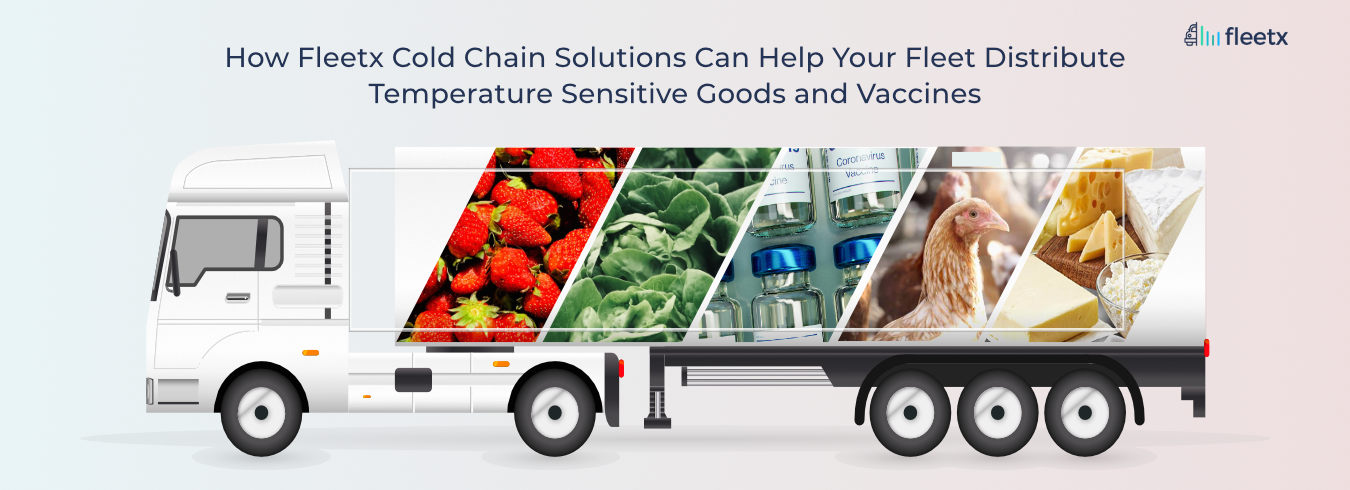
When speaking of temperature-sensitive goods, we mostly talk of perishables like food or pharmaceutical or biological products which need strict temperature regulation.
Why do we need cold chain solutions?
Before the 1950s, the entire supply chain, including the cold chain, was directly handled by the manufacturer or the distributor. The onset of government intervention and regulation of products led to stricter laws. This led to manufacturers resorting to third party logistic (3PL) experts for the transportation of their goods and thus the emergence of the logistics industry as we know it.
Cold chain logistics is not just logistical planning, but also involves science, technology and multiple operational processes.
The two main types of commodities that require cold chain are
- Perishables like food
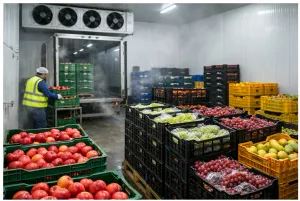
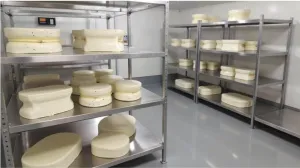
Food being sensitive to any and all changes is a major public health concern. Depending on the quantity and the required conditions, cold chain can be customized in modal choice, packaging and other logistical planning required.
- Pharmaceutical goods
Cold chain has gained major importance in the pharmaceutical industry. A lot of work in the pharmaceutical industry involves clinical research, trials, testing, production, movement of these drugs and distribution. A major part of the pharma industry is clinical research and trials, which cost up to millions of dollars and have a high failure rate. A lot of the drugs used in the process are temperature sensitive and open to risk. In case of any unforeseen unfortunate instances like accidents or temperature variations, these drugs can prove to be ineffective or worse, harmful to humans or the environment.
Are there different methods of cold chain packaging?
In recent decades, cold chain processes have improved a lot and can now cater to a wider range of goods. Different products have different requirements. To facilitate this, the logistics industry has broadly categorized the different temperature standards. The most common are –
- ‘Banana’ at 13 °C (Eg. Most raw food items)
- ‘Chill’ at 2 °C (Eg. IIVs or Inactivated Influenza Vaccines are stored at 2°C to 8°C)
- ‘Frozen’ at -18 °C (Eg. MMR vaccine for measles and mumps is stored at -50°C to +8°C)
- ‘Deep-frozen’ at -29 °C (Varicella or the chickenpox vaccine is stored at -50°C to -15°C)
To ensure that a shipment remains within the temperature range for an extended period of time is basically dependent on the type of container used and the method of refrigeration. About 20% of cold chain logistics relies on cargo refrigeration. There are multiple factors involved in deciding the type of packaging required and the level of energy consumed. Some such factors are –
- Transit Duration
- Size of the shipment
- Outside temperatures
The cold chain technologies majorly involved in providing a temperature-controlled environment for transport are –
- Dry ice
Or solid Carbon Dioxide is measured at -80°C and is used mostly for the shipping of pharmaceutical goods, dangerous goods and food. Dry ice does not melt but rather sublimate when it comes in contact with air.
- Gel packs
Most of the pharmaceutical and medicinal goods are classified as ‘chilled products’ and must be stored between 2 and 8°C. Gel packs contain phase-changing substances that go from solid to liquid and vice versa to maintain the temperature.
- Eutectic plates or ‘cold plates’
Just like gel packs, these are filled with a liquid that maintains the required temperature and are better used in delivery vehicles for shorter time periods.
- Liquid Nitrogen
Measured at -196°C, this is mostly used for the transportation of biological cargo like tissue and organs.
- Quilts
These are insulated pieces that are placed over and around the cargo to maintain the temperature of the entire cargo.
- Reefers
Generic term used to describe any temperature-controlled vehicle like a van, a small truck or a standard ISO container. Reefers have an attached and independent refrigerator and thus can be used to keep cargo cold or even warm, depending on the requirement.
What is Fleetx and how can it help in the distribution of vaccines?
The global pandemic Covid-19 continues to claim lives. Major pharmaceutical companies have dedicated all their resources to finding a vaccine. Some such vaccines have reached the trial phase already, which only means we are closer to finding a solution.
With the current world population at 7.8 billion, we can only imagine the logistical nightmare that will stir up with the onset of vaccines. Vaccines will be rendered useless if the correct distribution channels and methods are not in place. The demand for cold chain fleet solutions will be at an all-time high and upcoming logistic support companies like Fleetx are the only ones that can help fight the good fight.
Fleetx’s AI-driven software not only handles general shipments for our clients and their fleets, but also caters to a niche product category of temperature-sensitive goods like food and pharmaceutical commodities, making them our most reliable logistic partners when it comes to Covid vaccines and their distribution.
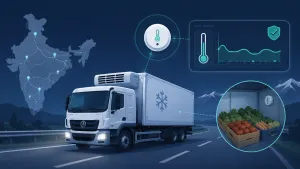
Backed by a software that automatically monitors temperatures and gives real-time updates on the shipments, Fleetx’s temperature sensors in their clients’ refrigerated fleet ensure that the shipment will be safe and free of any contamination. Additionally, vendors also have access to detailed reports on the shipment, which include minute-by-minute breakdowns of temperature and sensor data. Such reports will help in reducing any risk of delay or destruction of the Covid vaccines when the time comes.
Fleetx is ready to do its bit when the time comes to distribute the Covid vaccines. All we can do now is support pharmaceutical companies in finding a vaccine and hope that this global pandemic finally comes to an end.
Frequently Asked Questions
What is cold chain fleet management and why is it important for temperature-sensitive transportation?
Cold chain fleet management is the process of transporting temperature-sensitive products while maintaining a predefined temperature range from origin to destination. It combines refrigerated vehicles, IoT sensors, GPS tracking, temperature monitoring, route optimization, driver management and analytics to ensure that products remain safe throughout transit. Industries transporting vaccines, dairy products, frozen foods, seafood, pharmaceuticals, chemicals and fresh produce rely heavily on cold chain logistics to reduce spoilage and comply with regulations.
In India, where products often travel across long distances between cities such as Delhi, Mumbai, Bengaluru, Pune and Gurgaon, maintaining temperature consistency becomes even more challenging because of traffic congestion, weather conditions and varying road infrastructure. A modern cold chain fleet management solution provides live temperature alerts, geofencing, vehicle tracking and automated reporting that help businesses respond immediately if refrigeration systems fail or temperatures exceed acceptable limits.
Businesses also benefit from improved inventory visibility, lower wastage, higher customer satisfaction and easier regulatory compliance. Instead of discovering damaged cargo after delivery, logistics managers receive real-time notifications that allow corrective action before product quality is affected.
Whether transporting pharmaceutical products across Delhi NCR or delivering frozen food throughout Mumbai, implementing the best cold chain fleet management software helps reduce operational risk while improving efficiency. Companies that digitize their cold chain operations often experience lower spoilage costs, improved delivery performance and better decision-making through historical temperature and vehicle analytics.
Why do businesses in India need the best cold chain logistics software?
The best cold chain logistics software helps businesses manage temperature-sensitive deliveries with greater visibility, compliance and operational efficiency. Traditional manual monitoring methods cannot provide continuous temperature tracking or instant alerts, making them unsuitable for industries where product integrity directly impacts customer safety.
Across India, manufacturers, distributors and logistics providers are transporting larger volumes of pharmaceuticals, vaccines, dairy products, seafood and processed food than ever before. Businesses operating in Delhi NCR, Gurgaon, Mumbai, Bengaluru and Pune frequently manage shipments over hundreds of kilometres, increasing the likelihood of refrigeration failures, unexpected delays or route deviations.
A modern cold chain management platform integrates GPS tracking, telematics, IoT temperature sensors, proof of delivery, route optimization and automated reporting into one dashboard. Managers can monitor every refrigerated vehicle in real time, receive alerts if temperatures move outside acceptable ranges and access compliance reports without manual paperwork.
The software also supports predictive maintenance by identifying refrigeration equipment issues before they become costly failures. Combined with AI-powered analytics, businesses can improve fleet utilization, reduce fuel consumption and maintain product quality across multiple distribution hubs.
For companies expanding across India, investing in a top cold chain logistics solution improves customer confidence while reducing losses caused by spoilage. Whether managing pharmaceutical distribution in Gurgaon or food deliveries across Mumbai, digital cold chain visibility provides a measurable competitive advantage and supports long-term business growth.
How much does cold chain fleet management software cost in India?
The cost of cold chain fleet management software in India depends on fleet size, hardware requirements, number of refrigerated vehicles, IoT sensors, software features and implementation complexity. Small businesses generally require only basic GPS tracking and temperature monitoring, while enterprise logistics companies often need advanced analytics, AI-powered reporting, ERP integration and multiple sensor configurations.
For smaller fleets, cloud-based subscription plans may start from approximately ₹800–₹2,500 per vehicle per month depending on features. Mid-sized businesses with advanced reporting, route optimization and compliance dashboards may spend between ₹2,500 and ₹5,000 per vehicle monthly. Enterprise deployments involving hundreds of refrigerated trucks, custom integrations and dedicated support can involve significantly larger implementation budgets.
Additional costs may include temperature sensors, telematics devices, installation, user training, API integrations and ongoing maintenance. However, businesses should compare these expenses with the financial impact of spoiled cargo, rejected pharmaceutical shipments or food safety violations, which often exceed the software investment.
Companies operating across Delhi, Gurgaon, Mumbai, Bengaluru and Pune usually evaluate software based on scalability, customer support, uptime, analytics capabilities and integration with existing transportation management systems rather than price alone. Choosing the best cold chain software means balancing implementation costs with long-term savings through lower spoilage, better compliance, reduced fuel usage and improved delivery performance.
What are the best cold chain fleet management software solutions for businesses in India?
The best cold chain fleet management software combines GPS vehicle tracking, IoT-enabled temperature monitoring, route optimization, AI-powered analytics, automated alerts and compliance reporting into one centralized platform. Businesses transporting pharmaceuticals, dairy products, frozen food, seafood and vaccines need software that provides complete visibility throughout the transportation process while ensuring products remain within the required temperature range.
When evaluating the best cold chain logistics software in India, businesses should prioritize real-time temperature tracking, geofencing, predictive maintenance, driver behaviour monitoring, proof of delivery, mobile accessibility and seamless integration with ERP or Transportation Management Systems (TMS). These capabilities help reduce spoilage, improve delivery timelines and simplify compliance with food safety and pharmaceutical regulations.
Companies operating across Delhi, Delhi NCR, Gurgaon, Mumbai, Bengaluru and Pune often require scalable cloud-based platforms capable of monitoring hundreds of refrigerated vehicles simultaneously. Multi-location dashboards, automated notifications and historical analytics allow logistics managers to identify recurring issues and improve operational efficiency over time.
Instead of selecting software solely based on price, businesses should compare implementation support, hardware compatibility, reporting capabilities, customer service and future scalability. A solution that minimizes cargo loss, increases fleet utilization and enhances customer satisfaction often delivers significantly higher long-term value than lower-cost alternatives. Choosing one of the top cold chain fleet management solutions enables businesses to strengthen supply chain resilience while maintaining product quality throughout every shipment.
How can cold chain logistics software improve pharmaceutical and vaccine transportation in Delhi NCR and Gurgaon?
Pharmaceutical and vaccine transportation requires strict temperature control because even minor deviations can reduce product effectiveness or render shipments unusable. Cold chain logistics software helps healthcare companies, distributors and logistics providers maintain complete visibility over temperature-sensitive cargo from dispatch to delivery.
In regions like Delhi NCR and Gurgaon, pharmaceutical shipments frequently encounter heavy traffic, unexpected delays and long distribution routes. Without continuous monitoring, refrigerated vehicles may experience temperature fluctuations that remain unnoticed until delivery. Modern cold chain software eliminates this risk through real-time GPS tracking, temperature sensors, automated alerts and cloud-based monitoring dashboards.
Logistics managers receive immediate notifications whenever refrigeration systems fail or cargo temperatures exceed acceptable limits. Drivers can respond quickly while control teams coordinate alternate routes or maintenance support to protect high-value pharmaceutical products and vaccines.
The software also generates automated compliance reports that simplify audits and regulatory documentation. Historical temperature records provide proof that products remained within approved storage conditions throughout transportation, reducing disputes with customers and regulatory authorities.
Healthcare providers and pharmaceutical companies serving Delhi, Gurgaon and surrounding NCR cities benefit from improved delivery accuracy, lower spoilage rates, enhanced patient safety and better operational planning. As India's pharmaceutical supply chain continues expanding, implementing an advanced cold chain management solution has become an essential investment for ensuring reliable, compliant and efficient distribution.
How does cold chain fleet management help food and beverage businesses in Mumbai, Bengaluru and Pune?
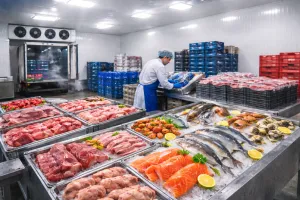
Food and beverage companies depend on cold chain fleet management to maintain freshness, quality and food safety throughout transportation. Products such as dairy, meat, seafood, frozen foods, fruits and ready-to-eat meals can deteriorate rapidly if refrigeration systems fail or delivery schedules are delayed.
Businesses operating in Mumbai, Bengaluru and Pune often distribute products across multiple warehouses, retail outlets and restaurants while dealing with traffic congestion, changing weather conditions and varying delivery distances. Cold chain fleet management software provides real-time vehicle tracking, continuous temperature monitoring and intelligent route optimization that help businesses maintain product integrity from warehouse to customer.
Managers can instantly identify refrigeration issues, receive alerts for temperature deviations and monitor driver performance through centralized dashboards. Automated reporting also helps businesses comply with food safety standards while reducing manual paperwork and inspection preparation.
The software improves fleet utilization by analysing delivery routes, idle time, fuel consumption and refrigeration performance. Businesses can identify recurring operational inefficiencies and implement corrective measures that lower transportation costs while improving service quality.
Whether delivering dairy products across Pune, frozen foods throughout Mumbai or fresh produce in Bengaluru, cold chain technology helps reduce spoilage, improve customer satisfaction and increase profitability. Investing in a top cold chain fleet management solution enables food businesses to operate more efficiently while protecting product quality across every stage of the supply chain.
What challenges do companies face while implementing cold chain fleet management software in India?
Implementing cold chain fleet management software is a strategic investment, but businesses often encounter several operational and technical challenges during deployment. Common issues include integrating GPS devices and temperature sensors with existing fleet systems, training drivers and logistics teams, maintaining reliable internet connectivity, and ensuring accurate data collection across multiple vehicles. Companies that continue to rely on manual record-keeping may also experience resistance to digital transformation during the initial implementation phase.
For businesses operating across India, especially in Delhi, Delhi NCR, Gurgaon, Mumbai, Bengaluru and Pune, additional challenges include managing diverse delivery routes, varying weather conditions and different compliance requirements across industries such as pharmaceuticals and food distribution. Refrigerated vehicles travelling long distances require continuous monitoring to avoid temperature deviations that can result in cargo spoilage and financial losses.
The implementation process generally involves installing telematics devices, IoT temperature sensors, configuring dashboards, integrating ERP or Transportation Management Systems (TMS), and training operational staff. Depending on fleet size, deployment may take anywhere from a few days to several weeks. Businesses should also establish standard operating procedures for responding to temperature alerts and equipment failures.
Choosing an experienced technology partner significantly reduces implementation risks. A scalable cloud-based solution with dedicated onboarding, technical support and regular software updates ensures smoother adoption while helping organizations achieve faster ROI through reduced wastage, better compliance and improved operational visibility.
How do AI, IoT and GPS technology improve modern cold chain fleet management?
Artificial Intelligence (AI), the Internet of Things (IoT) and GPS tracking have transformed cold chain fleet management by providing continuous visibility into vehicle location, cargo condition and operational performance. Instead of relying on manual inspections, businesses can monitor refrigerated shipments in real time and receive instant alerts whenever temperatures exceed predefined thresholds.
IoT-enabled temperature sensors continuously collect environmental data from refrigerated vehicles and transmit it to cloud-based dashboards. GPS tracking allows logistics managers to monitor vehicle movement, estimated arrival times and route deviations, while AI analyses historical data to predict equipment failures, identify inefficient routes and recommend operational improvements.
Businesses transporting pharmaceuticals, vaccines, dairy products and frozen foods across Delhi, Mumbai, Bengaluru, Pune and Gurgaon benefit from these technologies because they reduce spoilage risks while improving delivery reliability. Predictive maintenance alerts can identify refrigeration issues before breakdowns occur, reducing unexpected downtime and repair costs. AI also helps optimise routes based on traffic conditions, delivery schedules and fuel efficiency.
Comprehensive reporting enables businesses to demonstrate regulatory compliance through detailed temperature logs and shipment histories. Customers also gain greater confidence because they receive accurate delivery updates and assurance that products have remained within acceptable temperature limits throughout transportation. Together, AI, IoT and GPS create a smarter, more resilient and data-driven cold chain ecosystem capable of supporting future supply chain growth.
How should businesses choose the right cold chain fleet management solution for long-term growth?
Selecting the right cold chain fleet management solution requires more than comparing software features or subscription prices. Businesses should evaluate how effectively the platform supports their long-term operational goals, regulatory requirements and future expansion plans. The ideal solution should offer real-time temperature monitoring, GPS tracking, route optimisation, automated reporting, predictive maintenance and seamless integration with existing ERP or Transportation Management Systems.
Scalability is particularly important for businesses expanding across India. Companies operating in Delhi, Delhi NCR, Gurgaon, Mumbai, Bengaluru and Pune often manage multiple warehouses, regional distribution centres and refrigerated fleets of varying sizes. Cloud-based software that supports unlimited users, multiple locations and customizable dashboards can grow alongside the business without requiring major infrastructure upgrades.
Implementation support, customer service quality, software reliability and cybersecurity should also be evaluated before making a purchasing decision. Businesses should request product demonstrations, pilot deployments and customer references to understand how the solution performs in real-world cold chain operations. Comparing reporting capabilities, mobile accessibility and analytics dashboards also helps identify the platform that delivers the greatest operational value.
Although implementation costs vary, investing in a robust cold chain management platform usually results in lower spoilage, improved compliance, better customer satisfaction and stronger operational efficiency. Choosing one of the best cold chain fleet management solutions today positions businesses for sustainable growth as India's temperature-controlled logistics sector continues to expand.