
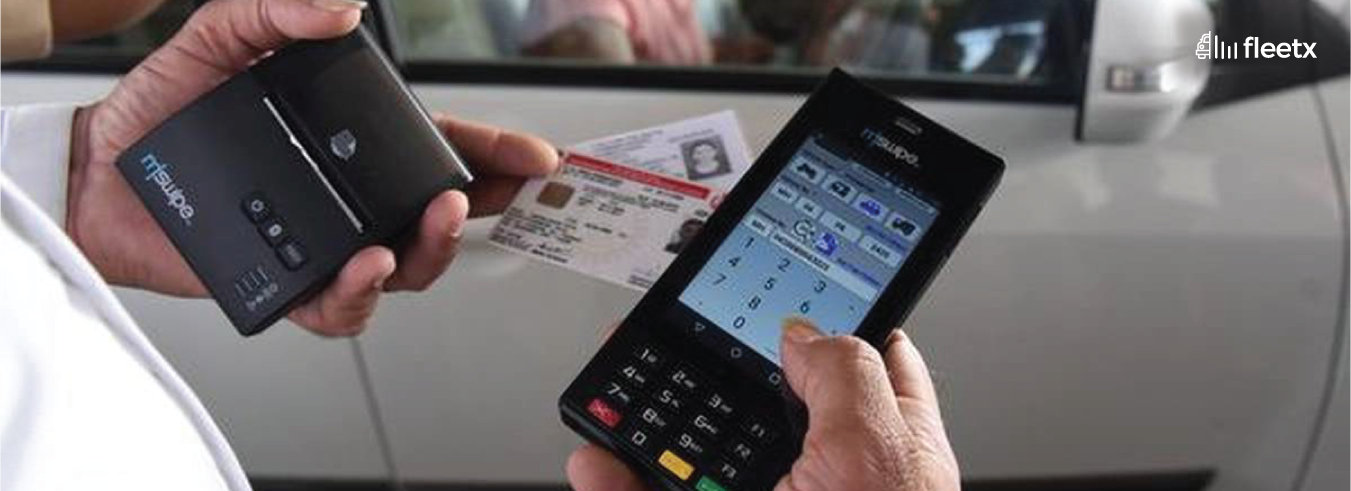
So, the traffic department is not far behind; they have recently started leveraging the tech to better regulate the traffic and enforce traffic rules. They have also installed AI-based speed cams at select hotspots on the roads (there are at least 30 such spots in Delhi) to detect traffic violations and send e-challans via SMS to traffic defaulters and even send a physical notice later on, at their registered address. Traffic police is also capable of issuing e-challans for any traffic violation, such as wrong/dangerous parking on the roadside, speeding, jumping signals and so on.
E-challan- Digital Traffic/Transport Enforcement Solution is an initiative of the Ministry of Road Transport and Highways (MoRTH), Government of India, that allows people to check their traffic e-challan status and pay it online. You can visit the website here
According to recent MV 2019 regulations, penalties for violating traffic rules have increased substantially, and not paying the same within the timeline, typically 60 days, may attract further court action, which may result into an imprisonment of a term upto 3 months or additional fine or both. It's important to adhere to traffic rules and e-challan notices now than ever before as along with legal implication that it may attract, increased penalties can have a huge impact on your monthly budget too.
Steps to pay your e-challan online:
Step 1: Visit the Digital Traffic/Transport Enforcement Solution website i.e. http://echallan.parivahan.gov.in And, click on 'Check Challan Status' tab to proceed further.
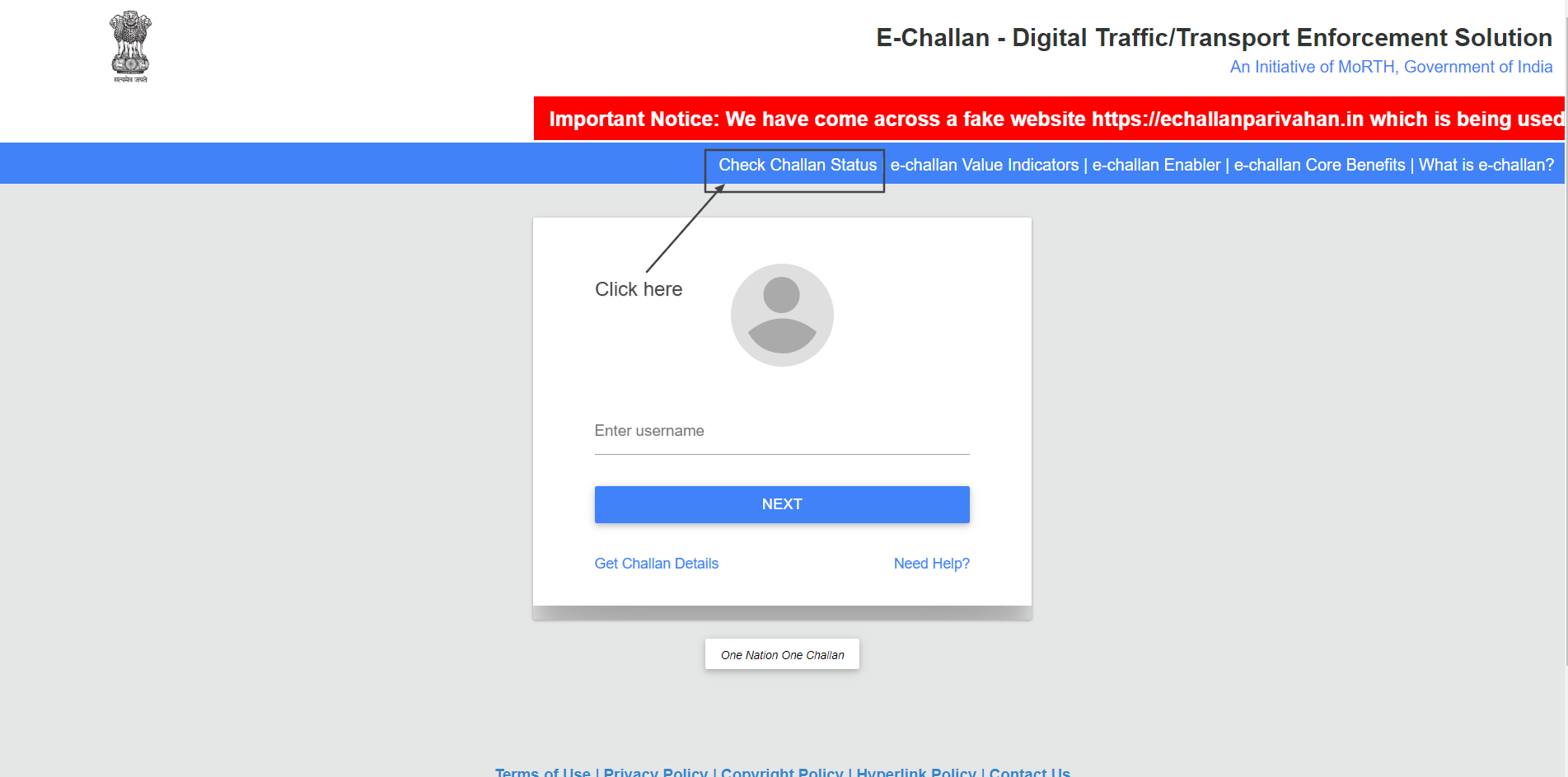
Step 2: You can view your challan details by entering either the challan number, vehicle number or Driving Licence (DL) number. Enter the details of the option you have selected (as shown below), along with the captcha and then click on 'GET DETAIL'.
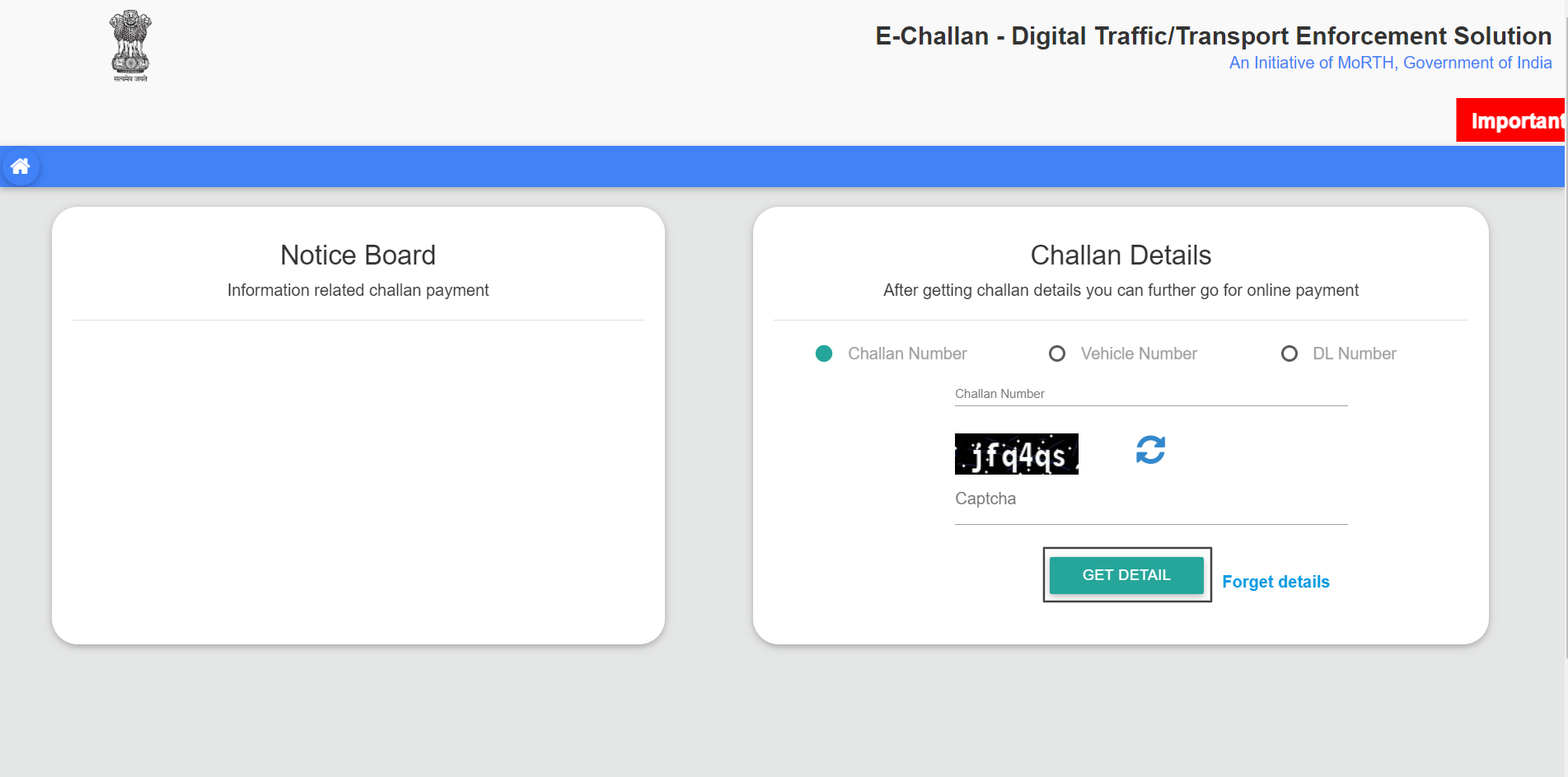
Step 3: The row(s) for challan status details will reflect below the same screen once you have clicked on the 'Get Details' tab. The row will remain blank if no challan is found. You can also track the total number of challans filed against you.
Step 4: If you have made any offence, the challans will start reflecting in the challan status row. Here, you can start making the online payments. In such a case, under the 'Payment option,' you will have to click on 'Pay Now' to proceed further.
Step 5: Select the mode of payment - credit card/debit card or Net-banking. If you have chosen Net-banking, select the bank you want to make payment from. Once you have made the payment towards e-challan, you will receive a 'Payment Successful' message along with the transaction ID. Do not forget to make a note of the transaction ID for future reference.
How Fleet Operators Can Reduce the Risk of Repeated E-Challans
For logistics companies, transport businesses, and commercial fleet operators, recurring e-challans can quickly increase operational costs. Beyond financial penalties, repeated traffic violations may lead to delays, compliance issues, and reduced fleet productivity. Building a preventive strategy helps businesses maintain smoother operations while improving driver safety.
Common Reasons Commercial Vehicles Receive E-Challans
Commercial vehicles often accumulate e-challans because they operate for long hours across multiple states and cities. Some of the most common reasons include:
- Over-speeding in monitored corridors
- Illegal parking during loading or unloading
- Driving in restricted time zones
- Red-light violations
- Lane discipline violations
- Improper documentation during inspections
- Vehicle overloading beyond permitted limits
- Expired permits or fitness certificates
- Driving without a valid FASTag or electronic toll compliance
Best Practices to Minimise Traffic Violations
Transport businesses can significantly reduce violations by implementing preventive measures across their fleet.
Driver-Focused Measures
- Conduct periodic road safety training.
- Educate drivers about updated Motor Vehicle Act regulations.
- Encourage defensive driving techniques.
- Create an incentive program for violation-free driving.
Vehicle Compliance Measures
Maintain updated records for:
- Vehicle registration
- Insurance
- Pollution Under Control (PUC) certificate
- Fitness certificate
- National or state permits
- Driving licences of assigned drivers
Technology-Based Monitoring
Modern fleet management solutions can assist by providing:
- Real-time speed monitoring
- Driver behaviour analytics
- Geofencing alerts
- Route compliance monitoring
- Automated maintenance reminders
- Instant notifications for unsafe driving behaviour
Taking preventive action is considerably more cost-effective than repeatedly paying fines and managing operational disruptions caused by traffic violations.
Individual Vehicle Owners vs Commercial Fleet Operators: Managing E-Challans
Although the e-challan process remains the same, the way violations affect individuals and businesses is quite different.
| Aspect | Individual Vehicle Owner | Commercial Fleet Operator |
|---|---|---|
| Number of vehicles | Usually one or two | Dozens or thousands |
| Violation tracking | Manual checking | Centralised fleet monitoring |
| Financial impact | Limited to one vehicle | Can affect overall operating costs |
| Driver accountability | Owner is usually the driver | Multiple drivers require monitoring |
| Compliance management | Simple documentation | Large-scale permit and compliance tracking |
| Operational impact | Personal inconvenience | Delivery delays, customer dissatisfaction and productivity loss |
| Prevention strategy | Safe driving habits | Driver training, telematics and fleet compliance systems |
For businesses managing multiple commercial vehicles, proactive monitoring is far more efficient than handling violations individually after they occur. Companies that regularly analyse driving behaviour and compliance data often experience fewer traffic penalties and better fleet utilisation.
Stay Updated on Traffic Rules
Traffic regulations and penalty amounts may change over time. Reviewing the latest notifications issued by transport authorities helps drivers and fleet managers remain compliant and avoid avoidable penalties during daily travel.
Frequently Asked Questions
What is an e-challan and how does the online e-challan system work in India?
An e-challan is a digitally generated traffic violation notice issued by traffic police or transport authorities under the Ministry of Road Transport and Highways (MoRTH). Instead of issuing only paper challans, modern enforcement systems use AI-enabled cameras, ANPR (Automatic Number Plate Recognition), CCTV surveillance, speed detection cameras, and handheld devices to identify traffic violations and automatically generate fines.
The system has now been adopted across most Indian states including Delhi, Delhi NCR, Gurgaon, Mumbai, Bengaluru, Pune, Hyderabad, Chennai, Ahmedabad, Jaipur and many others. Vehicle owners generally receive an SMS notification after the violation is recorded. The challan can then be viewed and paid through the official Parivahan e-Challan portal.
Information generally included in an e-challan
- Vehicle registration number
- Date and time of violation
- Location of offence
- Nature of traffic violation
- Applicable Motor Vehicle Act section
- Fine amount payable
- Payment status
Common traffic offences covered
- Overspeeding
- Signal jumping
- Wrong parking
- Driving without seat belt
- Helmet violations
- Using mobile phone while driving
- Lane discipline violations
- Commercial vehicle documentation violations
The digital system improves transparency, reduces paperwork, minimizes disputes and enables vehicle owners to verify challan details from anywhere. Since enforcement is increasingly technology-driven, drivers should regularly monitor their vehicle records instead of waiting for physical notices. This proactive approach helps avoid additional penalties and ensures better compliance with Indian traffic regulations.
How can I check if my vehicle has an e-challan without receiving an SMS?
Many vehicle owners assume that an SMS notification is the only way to know whether an e-challan has been issued. However, messages may not always reach the registered owner because of outdated mobile numbers, network issues or incorrect registration records. Therefore, periodically checking your vehicle's challan status online is considered a best practice.
The official Parivahan e-Challan portal allows users to search using multiple identifiers such as the vehicle registration number, driving licence number or challan number. This makes it easy for both private vehicle owners and commercial fleet operators to verify pending fines.
Situations where you should check immediately
- After travelling through AI camera monitored highways.
- After driving in high-surveillance cities like Delhi, Mumbai or Bengaluru.
- Before selling a vehicle.
- Before renewing insurance or permits.
- Before applying for commercial fleet documentation.
- After receiving any unofficial payment request.
Benefits of checking regularly
- Avoid overdue penalties.
- Identify incorrect challans quickly.
- Maintain clean compliance records.
- Reduce legal complications.
- Keep fleet operations uninterrupted.
For businesses operating trucks, buses or delivery fleets across Delhi NCR, Gurgaon, Mumbai or Pune, periodic verification of vehicle records can prevent operational delays and improve regulatory compliance across multiple vehicles.
What are the most common reasons vehicles receive e-challans in Delhi, Gurgaon and Mumbai?
Traffic enforcement differs slightly between cities, but the majority of e-challans across India are issued for similar violations. Metropolitan regions like Delhi, Gurgaon and Mumbai have extensive CCTV surveillance, AI-based traffic cameras and automated speed enforcement, making violations easier to detect than ever before.
Common violations in Delhi NCR
- Red-light jumping
- Overspeeding
- Driving without seat belts
- Helmet violations
- Illegal parking
- Wrong-side driving
Common violations in Gurgaon
- Commercial vehicle parking violations
- Lane discipline issues
- Overspeeding on expressways
- Improper loading and unloading
Common violations in Mumbai
- No-parking violations
- Signal jumping
- Using mobile phones while driving
- Driving in restricted zones
- Improper commercial vehicle movement during restricted hours
Fleet operators should additionally monitor documentation such as permits, insurance, PUC certificates and fitness certificates because commercial vehicle inspections frequently include document verification. Maintaining driver awareness and using fleet monitoring technology significantly lowers the likelihood of recurring violations.
How much can an e-challan cost in India, and how are traffic fines calculated?
The cost of an e-challan in India depends on the type of traffic violation, the applicable provisions of the Motor Vehicles Act, state-specific rules, and whether the offence is a repeat violation. Following the implementation of the amended Motor Vehicles Act, penalties for many traffic offences increased substantially to encourage safer driving and improve road discipline. While the exact fine varies across states and can be revised periodically by transport authorities, vehicle owners should always verify the latest penalty on the official Parivahan e-Challan portal or the respective state transport department.
Typical traffic fine ranges in India
- Helmet or seat belt violations: approximately ₹500–₹1,000.
- Overspeeding: approximately ₹1,000–₹2,000 for private vehicles and higher for commercial vehicles.
- Dangerous driving: often ₹5,000 or more depending on the offence.
- Driving without a valid driving licence: can attract penalties up to ₹5,000.
- Commercial vehicle permit or documentation violations may carry significantly higher penalties.
What affects the final fine amount?
- Nature and severity of the violation.
- Whether it is a first-time or repeat offence.
- State transport authority regulations.
- Vehicle category (private or commercial).
- Applicable provisions under the Motor Vehicles Act.
Fleet operators in Delhi NCR, Gurgaon, Mumbai, Bengaluru and Pune should also consider the indirect cost of repeated e-challans. Beyond paying the fine itself, businesses may face delayed deliveries, driver downtime, administrative work and compliance risks. Investing in driver training, telematics and proactive compliance monitoring is often far more cost-effective than repeatedly paying penalties throughout the year.
What is the best way for fleet operators to prevent repeated e-challans across India?
For companies managing dozens or even thousands of vehicles, preventing e-challans is considerably more efficient than handling penalties after they occur. The best approach combines driver awareness, vehicle compliance and technology-driven monitoring. Modern transport businesses increasingly rely on fleet management software and telematics platforms to reduce traffic violations while improving operational efficiency.
Best practices followed by leading fleet operators
- Monitor vehicle speed in real time.
- Track harsh braking, acceleration and unsafe driving behaviour.
- Use geofencing to monitor restricted zones.
- Maintain updated insurance, permits and PUC certificates.
- Conduct periodic driver safety training.
- Review driver performance reports every month.
- Implement preventive maintenance schedules.
Benefits of using technology
- Reduced traffic violations.
- Improved driver accountability.
- Lower compliance costs.
- Better fuel efficiency.
- Improved fleet utilisation.
- Reduced operational disruptions.
Transport companies operating in Delhi, Gurgaon, Mumbai, Bengaluru and Pune often benefit from AI-powered fleet management systems that provide automated alerts for speeding, route deviations and risky driving behaviour. Instead of reacting to penalties after they occur, businesses can proactively identify potential compliance issues before they become costly violations. This preventive strategy not only reduces e-challans but also enhances overall road safety, customer satisfaction and fleet productivity.
Which are the best fleet management software solutions for reducing e-challans and improving compliance?
There is no single fleet management platform that suits every transport business. The best software depends on fleet size, operational complexity, reporting requirements and compliance goals. However, leading fleet management solutions generally include features specifically designed to minimise traffic violations and improve driver behaviour.
Features to look for in top fleet management software
- Real-time GPS vehicle tracking.
- Speed monitoring and instant alerts.
- Driver behaviour analytics.
- Trip history and route optimisation.
- Geofencing for restricted areas.
- Maintenance scheduling.
- Fuel monitoring.
- Compliance reminders for permits and insurance.
- Centralised dashboard for multi-vehicle operations.
Who benefits the most?
- Logistics companies.
- Transport service providers.
- E-commerce delivery fleets.
- Cold-chain operators.
- Construction companies.
- Passenger transport businesses.
Businesses operating across Delhi NCR, Gurgaon, Mumbai, Bengaluru and Pune often manage vehicles across multiple states where compliance requirements can differ. A robust fleet management solution helps centralise driver records, vehicle documentation and operational data, making it easier to reduce traffic violations while improving efficiency. When evaluating the best fleet management software, organisations should prioritise scalability, ease of use, reporting capabilities, integration options and customer support instead of selecting a platform based solely on price.
How do businesses in Delhi, Gurgaon and Mumbai manage e-challans for large commercial fleets?
Managing e-challans for a fleet of trucks, buses or delivery vehicles is significantly more complex than handling violations for a single private vehicle. Transport companies operating in Delhi, Gurgaon, Mumbai and other major logistics hubs may have hundreds of vehicles travelling across multiple states every day. Without a structured compliance process, pending challans can quickly accumulate, leading to financial losses, legal complications and operational delays.
Best practices followed by professional fleet operators
- Assign a dedicated compliance or fleet operations manager.
- Review vehicle challan status at regular intervals instead of waiting for SMS notifications.
- Maintain digital records of permits, insurance, PUC certificates and fitness certificates.
- Track repeat offenders through driver performance reports.
- Investigate recurring traffic violations to identify operational issues.
- Implement driver coaching programs based on driving behaviour data.
- Use GPS tracking and telematics for continuous monitoring.
Why proactive monitoring matters
In high-traffic regions such as Delhi NCR, Mumbai and Gurgaon, AI-enabled cameras and automated traffic enforcement systems operate throughout the day. Businesses that monitor compliance proactively are more likely to avoid unnecessary penalties, delivery delays and customer service disruptions.
Many organisations also integrate fleet management software with their operational workflows to centralise vehicle documentation, driver records and compliance reminders. This reduces manual effort while ensuring vehicles remain road-ready. Rather than treating e-challans as isolated incidents, successful fleet operators consider them an important performance indicator that helps improve safety, compliance and operational efficiency across the entire fleet.
Can an incorrect e-challan be disputed or challenged in India?
Yes. Although AI-enabled traffic enforcement has improved accuracy considerably, mistakes can occasionally occur because of incorrect number plate recognition, duplicate vehicle registrations, image quality issues or data entry errors. Vehicle owners who believe an e-challan has been issued incorrectly should avoid ignoring it and instead follow the appropriate grievance process.
Situations where you may raise a dispute
- The vehicle shown in the challan is not yours.
- The registration number has been incorrectly captured.
- The violation occurred after the vehicle was sold.
- The location or time mentioned is incorrect.
- The challan has already been paid but still appears pending.
- Duplicate challans have been issued for the same offence.
Documents that may help
- Vehicle Registration Certificate (RC).
- Driving Licence.
- Payment receipt (if applicable).
- Insurance documents.
- Supporting photographs or GPS records where available.
Vehicle owners in Delhi, Mumbai, Bengaluru, Pune, Gurgaon and other cities should first verify the challan details on the official government portal before contacting the relevant traffic police authority. Businesses operating commercial fleets should also maintain detailed trip records because GPS logs and telematics reports can sometimes help verify vehicle movement during the reported time of the violation. Addressing incorrect challans promptly reduces unnecessary legal complications and keeps compliance records accurate.
Why should vehicle owners regularly check their e-challan status even if they drive safely?
Many drivers assume that careful driving completely eliminates the need to check their e-challan status. While following traffic rules significantly reduces the chances of receiving a penalty, periodically reviewing your vehicle's challan record is still considered a best practice. Automated enforcement systems continue to expand across India, and traffic violations may sometimes go unnoticed until they affect documentation or legal compliance.
Benefits of regular e-challan checks
- Identify pending fines before additional legal action.
- Verify that previous payments have been successfully recorded.
- Detect incorrect or duplicate challans early.
- Maintain complete compliance before vehicle resale or ownership transfer.
- Prevent administrative delays during permit or insurance renewals.
- Improve record management for commercial fleets.
Who should check more frequently?
- Commercial fleet operators.
- Taxi and cab owners.
- Transport businesses.
- Intercity truck operators.
- Drivers frequently travelling through Delhi NCR, Mumbai, Bengaluru, Pune and Gurgaon.
Whether you own a private car or manage a nationwide transport fleet, routinely checking your e-challan status supports responsible driving and regulatory compliance. Combined with safe driving practices, proper vehicle documentation and modern fleet management technology, regular monitoring helps reduce avoidable penalties while ensuring smoother vehicle operations. As digital traffic enforcement continues to grow across India, staying informed remains the most effective way to avoid unnecessary fines and compliance issues.