
Supply chain management is often chaotic and inefficient, partly because it is still poorly understood. This is a surprise, because it contributes to a lot of the business input costs, and can drastically reduce them if inbound and outbound logistics processes are optimised. A lot of the time, supply chains and logistics processes within businesses aren’t strategically designed and grow organically over time. They are rarely given due consideration and lack the scrutiny required to ensure that they operate as efficiently as possible. Fleetx likes to make sure that all aspects of your business run as efficiently as possible, and we hope this article can help you optimise inbound logistics processes to increase your profit margin and limit input costs.
Even though they are often used interchangeably, this is a good opportunity for us to distinguish between supply chain management and logistics, because it will make the content of this article clearer. Inbound and outbound logistics refer to getting the product from one point to another, while supply chain management refers to the entire process of moving the product from its original destination to the customer. To make it a little more concise, logistics refers to the movement of goods within one company, while supply chain management covers the movement of goods through different businesses in the supply chain.
Why should you optimise your inbound logistics network?
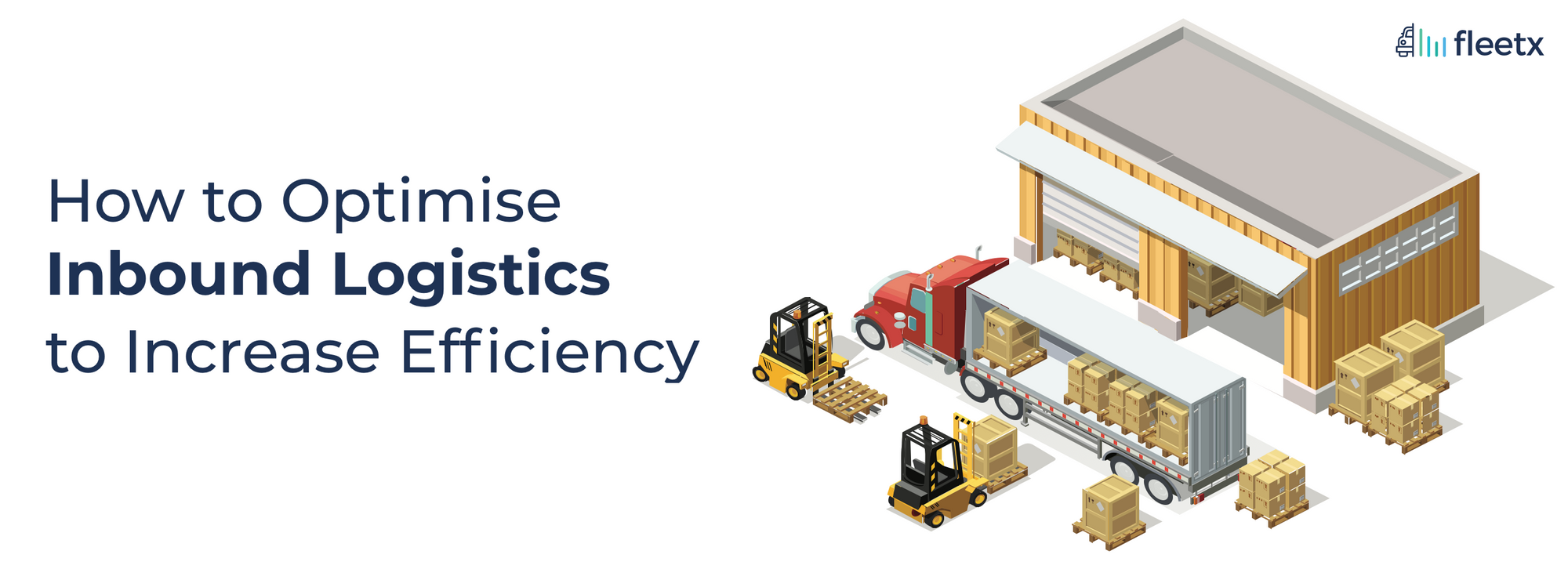
Inbound logistics refers to the network that brings products or materials to your business. Your inbound logistics network includes everything you need to transport, store, and deliver goods to your business from other suppliers. The nature of the products that you bring into your business depends on the industry that you operate in. Inbound logistics can cover things like raw materials if you are a manufacturer, or finished products if you deal with assembly and distribution. To sum it up, inbound logistics includes everything your business needs to create the finished product that you eventually sell.
A majority of businesses spend most of their efforts on optimising their outbound logistics network (which is also important!), but fail to give the same amount of consideration to their inbound logistics network. And it’s surprising, because goods and products coming into your business take up a lot of time, labour and resources.
Optimising inbound logistics in your business can make a real impact, help you save money in a big way and streamline your operations. Your inbound logistics network consists of several variables, and these all have to be managed to achieve efficiency and accuracy. If your inbound logistics are badly planned, mismanaged or unreliable, your business will have to suffer the consequences!
How to Optimize the Inbound Logistics Process?
Everyone is familiar with the phrase, ‘a penny saved is a penny earned, and it is highly relevant to your inbound logistics processes. Inbound logistics is both incredibly complex and important, and experts consider it to be the final challenge to reducing transportation costs. Optimizing your inbound logistics network can help you streamline your business operations, and to achieve this, you must have a full picture of every moving part in the network and understand how the network functions.
For your inbound logistics network to operate as efficiently as possible, you have to optimize everything from receiving products to transporting those products to your facilities and distributing them. Streamlining this process is not easy and will require a considerable amount of effort from supply chain managers and warehouse operators. To help you get started, we’ve compiled a list of activities you can engage in to optimise inbound logistics in your network.
- Discuss delivery strategies with your suppliers that benefit both parties. Determine what route is the most optimal and create a routing guide to define the standard operating procedures. The routing guide can include:
- Modes of transportation and what carriers to use on specific routes
- Rate requirements
- Service requirements
We suggest using online routing guides because they are dynamic and can adapt to changes in the shipping landscape, and give you the best deal when rates fluctuate. By implementing a routing guide, you can limit ad-hoc expenses put forward by suppliers. It can help establish rate benchmarks and eliminate the use of non-authorized carriers.
Develop and implement Vendor Inbound Compliance Standards (VICS)
Establishing a VICS will help you streamline and optimise your supply chain, and reduce challenges caused by supplier specific behaviour. It is advisable to have all your suppliers agree to your VICS if they want to work with your company. Through this, you can ensure that all your suppliers behave appropriately, and penalize negative behaviour. For VICS to be effective, you have to have a strong monitoring system and ensure that non-compliance is dealt with effectively. This will help your suppliers to take these standards seriously.
Eliminate costly errors
In the supply chain, errors occur often and can come at a high cost. For example, shipments may be non-deliverable due to flawed or outdated information, or containers might be detained at ports because import/export documentation isn't complete. To avoid these errors and their associated costs, logistics managers should develop risk assessment tools and make use of technology to identify the source of possible errors and improve their shipping processes.
Consolidate shipments
Less-than-truckload (LTL) shipments are inefficient and can lead to unnecessary costs both in terms of shipping and unloading. Consolidating your shipments is an extremely effective method of saving on these transportation costs, and it can generate huge payoffs if you are operating on a large scale. Logistics managers can streamline inbound and outbound transportation movements so all trucks and containers hold as much capacity as possible, and reduce the number of trips that need to be made.
There are challenges associated with this because consolidation can be a complex process. These are a few things to keep in mind if you decide to consolidate your shipments:
- Shipping and handling requirements: Every shipment has unique handling requirements depending on the type of goods being transported. Clearly defining packaging standards, loading procedures, temperature requirements, and handling instructions helps minimise damage, improve warehouse efficiency, and ensure products reach their destination in optimal condition. Standardised handling practices also reduce delays caused by confusion or improper processing.
- Origin and destination of the shipment: Understanding where shipments originate and where they are delivered enables businesses to plan transportation more effectively. Evaluating supplier locations, transit corridors, and delivery points helps optimise routing decisions, reduce transit times, and improve coordination between procurement, warehousing, and transportation teams.
- Weight of shipment: Shipment weight directly influences transportation planning, vehicle selection, and freight costs. Properly categorising loads based on weight ensures regulatory compliance, prevents vehicle overloading, and enables businesses to maximise payload capacity while maintaining operational safety and fuel efficiency.
- Arrival of different shipments: Coordinating the arrival schedules of multiple shipments is essential for maintaining smooth warehouse operations. Proper scheduling prevents receiving bottlenecks, reduces waiting times at unloading bays, and ensures inventory is available when required without creating unnecessary storage congestion.
- Availability of trucks and drivers: Transportation plans are only effective when the required vehicles and qualified drivers are available at the right time. Monitoring fleet availability and scheduling resources proactively helps avoid shipment delays, improves asset utilisation, and ensures inbound deliveries remain consistent even during periods of fluctuating demand.
- Educate decision-makers: Working in-house with your managers and decision-makers is one of the most significant steps that you can take. They should be educated on what their decisions mean for the entire logistics network and what the trade-offs are so that they are well equipped to make ones that optimise inbound logistics processes.
- Work with a third-party logistics (3PL) provider: 3PLs are experts in creating strategies to optimise inbound logistics networks and will help ensure that the movement of goods and materials into your business meets your operational objectives. An advantage of working with 3PLs to optimise inbound logistics is that it is less expensive than doing it in-house. 3PLs can help scale your company’s inbound logistics network without costly investment in labor, equipment, and infrastructure.
Building a Risk-Resilient Inbound Logistics Network
Inbound logistics is often evaluated based on transportation costs, inventory availability, and supplier performance. However, one equally important aspect that determines long-term operational success is risk management. Even a well-planned inbound logistics network can experience disruptions due to supplier failures, transportation bottlenecks, regulatory changes, labour shortages, or unexpected fluctuations in demand. Businesses that proactively identify and manage these risks are better equipped to maintain operational continuity while reducing costly disruptions.
Instead of responding to challenges after they occur, organisations should build a resilient inbound logistics framework that identifies vulnerabilities, prepares contingency plans, and continuously monitors operational risks. This not only improves supply chain reliability but also enhances procurement efficiency, strengthens supplier relationships, and ensures production schedules remain uninterrupted.
Why Risk Management is Becoming Essential in Inbound Logistics
Modern supply chains have become increasingly interconnected, with businesses sourcing materials from multiple suppliers across different regions and countries. While this creates opportunities for cost optimisation and supplier diversification, it also introduces new operational risks. A delay at one supplier, unexpected port congestion, or changes in transportation regulations can quickly disrupt the entire inbound logistics process.
Developing a structured risk management strategy helps businesses anticipate these challenges before they impact operations.
Some major benefits include:
- Reduced production interruptions
- Better procurement planning
- Improved inventory availability
- Greater supplier reliability
- Lower emergency transportation costs
- Faster recovery from supply chain disruptions
Organisations that regularly assess logistics risks are more likely to maintain consistent operations even during periods of uncertainty.
Develop a Supplier Risk Assessment Framework
Choosing suppliers solely on the basis of pricing can expose businesses to significant operational risks. A supplier may offer competitive prices but struggle with inconsistent deliveries, poor communication, or limited production capacity during peak demand. Evaluating suppliers through a structured assessment framework enables businesses to make sourcing decisions based on long-term reliability rather than short-term cost savings.
Financial Stability
A supplier's financial health plays an important role in determining its ability to meet long-term commitments. Financially stable suppliers are generally better positioned to invest in production capacity, maintain inventory levels, and absorb temporary market fluctuations without affecting deliveries.
Before establishing long-term partnerships, businesses should evaluate factors such as:
- Business growth trends
- Financial sustainability
- Creditworthiness
- Investment in manufacturing capabilities
Selecting financially secure suppliers reduces the likelihood of sudden supply disruptions caused by business closures or operational constraints.
Geographic Risk Assessment
Supplier location directly influences transportation reliability and lead times. Businesses sourcing materials from regions prone to natural disasters, political instability, or transportation congestion should carefully evaluate the associated risks.
Important geographical considerations include:
- Distance from manufacturing facilities
- Availability of transportation infrastructure
- Exposure to adverse weather conditions
- Port and border dependencies
- Regional regulatory environment
Diversifying supplier locations reduces dependence on a single region and improves overall supply chain resilience.
Delivery Performance History
Past performance often provides the most reliable indicator of future performance. Rather than relying solely on supplier promises, organisations should evaluate historical operational data to understand supplier consistency.
Key performance indicators include:
- On-time delivery percentage
- Average lead time
- Shipment accuracy
- Order fulfilment rate
- Frequency of shipment delays
- Responsiveness during emergencies
Monitoring these indicators helps procurement teams identify suppliers that consistently meet service expectations while highlighting those requiring performance improvements.
Compliance and Quality Standards
Compliance with industry standards demonstrates a supplier's commitment to operational excellence. Suppliers that maintain recognised quality certifications and regulatory compliance are less likely to experience shipment rejections, product recalls, or documentation-related delays.
Businesses should assess whether suppliers comply with:
- Quality management standards
- Safety regulations
- Environmental requirements
- Product-specific certifications
- Import and export documentation requirements
Working with compliant suppliers reduces operational risks while supporting consistent product quality.
Production Capacity and Scalability
Demand fluctuations are common across industries. Businesses should ensure suppliers possess sufficient production capacity to accommodate seasonal demand spikes or unexpected increases in order volume.
Important evaluation criteria include:
- Manufacturing capacity
- Equipment availability
- Workforce strength
- Production flexibility
- Expansion capabilities
Suppliers with scalable production capabilities are better equipped to support business growth without affecting delivery commitments.
Create Supplier Performance Scorecards
Supplier evaluation should not be a one-time activity performed during vendor selection. Instead, businesses should establish supplier scorecards that measure operational performance continuously throughout the relationship.
A supplier scorecard provides objective insights into supplier performance while encouraging continuous improvement.
An effective scorecard may include:
Supplier scorecards create transparency between buyers and suppliers while encouraging performance improvements through measurable objectives.
Diversify Supplier Sources to Reduce Dependency
One of the most common supply chain risks is excessive dependence on a single supplier. While consolidating procurement with one supplier may simplify purchasing, it also increases operational vulnerability if that supplier experiences disruptions.
Supplier diversification enables businesses to distribute procurement across multiple qualified vendors.
Benefits include:
Improved Business Continuity
If one supplier experiences delays or production issues, alternative suppliers can continue fulfilling demand, reducing the likelihood of operational interruptions.
Greater Negotiation Flexibility
Working with multiple suppliers creates a competitive procurement environment and strengthens negotiating power regarding pricing, service levels, and delivery schedules.
Reduced Regional Risk
Sourcing materials from different geographic regions protects businesses against localised disruptions such as floods, strikes, political instability, or transportation restrictions.
Better Capacity Management
Multiple suppliers provide additional production capacity during seasonal demand spikes or periods of rapid business expansion.
Supplier diversification should focus on balancing operational resilience with procurement efficiency rather than simply increasing the number of vendors.
Build Contingency Plans for Supply Chain Disruptions
Even the most efficient inbound logistics network cannot eliminate every operational risk. Businesses should therefore prepare contingency plans that enable rapid responses when disruptions occur.
An effective contingency plan should clearly define:
- Alternative suppliers
- Emergency transportation providers
- Backup warehousing options
- Escalation procedures
- Internal communication protocols
- Inventory prioritisation strategies
Documenting these procedures in advance enables organisations to respond quickly without disrupting production or customer commitments.
Conduct Periodic Logistics Risk Reviews
Risk management should be viewed as a continuous process rather than a one-time exercise. As supplier networks, transportation routes, and market conditions evolve, businesses should regularly reassess their inbound logistics strategy.
Quarterly or biannual reviews help organisations identify emerging risks while measuring the effectiveness of previously implemented improvements.
Key review areas include:
- Supplier performance trends
- Procurement efficiency
- Transportation reliability
- Inventory availability
- Lead time changes
- Market and regulatory developments
Continuous evaluation enables businesses to adapt proactively rather than reacting to operational challenges after they arise.
Traditional Procurement vs Risk-Based Procurement
| Evaluation Area | Traditional Procurement | Risk-Based Procurement |
| Primary Selection Criteria | Lowest purchase cost | Total operational value |
| Supplier Evaluation | Price and availability | Performance, compliance, financial stability and risk profile |
| Risk Monitoring | Occasional reviews | Continuous monitoring using KPIs |
| Business Continuity Planning | Limited contingency planning | Structured backup supplier strategy |
| Decision Making | Short-term purchasing decisions | Long-term strategic sourcing |
| Operational Resilience | Vulnerable to disruptions | Higher adaptability and stability |
Emerging Technologies Transforming Inbound Logistics
Inbound logistics is rapidly evolving as businesses embrace digital transformation to improve operational efficiency, enhance supply chain visibility, and build greater resilience against disruptions. Modern logistics is no longer driven solely by transportation and warehousing—it increasingly relies on intelligent technologies that enable organisations to make faster, data-driven decisions while improving collaboration across suppliers, carriers, warehouses, and procurement teams.
Technologies such as Artificial Intelligence (AI), the Internet of Things (IoT), Digital Twins, blockchain, predictive analytics, and Logistics Control Towers are reshaping how inbound logistics operations are planned, monitored, and optimised. Businesses that invest in these innovations gain better visibility into their supply chain, reduce operational risks, and improve their ability to respond to changing market conditions.
Artificial Intelligence for Smarter Inbound Logistics Decisions
Artificial Intelligence is transforming inbound logistics by converting large volumes of operational data into actionable business insights. Instead of relying solely on historical reports or manual decision-making, AI continuously analyses supplier behaviour, transportation patterns, inventory movement, and procurement trends to recommend the most efficient course of action.
As supply chains become increasingly complex, AI enables logistics teams to identify risks before they escalate into operational disruptions.
Some of the most valuable AI applications include:
Demand Forecasting
AI analyses historical purchasing behaviour, seasonal demand, production schedules, and market trends to predict future material requirements more accurately. Better demand forecasting helps procurement teams maintain optimal inventory levels while reducing excess stock and emergency purchasing.
Predictive Supplier Risk Analysis
Machine learning algorithms continuously evaluate supplier performance using delivery history, lead-time consistency, quality metrics, and external market indicators. This enables procurement teams to identify high-risk suppliers early and develop contingency plans before supply interruptions occur.
Predictive Estimated Time of Arrival (ETA)
Rather than relying on static delivery schedules, AI combines live traffic conditions, weather updates, route information, and historical transportation data to generate more accurate estimated arrival times. This allows warehouses to prepare receiving operations more efficiently while improving communication across the supply chain.
Intelligent Inventory Optimisation
Artificial intelligence helps determine appropriate inventory levels based on demand variability, procurement lead times, supplier reliability, and warehouse capacity. This improves inventory turnover while reducing carrying costs and stock shortages.
By integrating AI into inbound logistics planning, organisations can improve operational accuracy while making faster and more informed decisions.
Internet of Things (IoT) Creates Real-Time Shipment Visibility
One of the biggest challenges in inbound logistics is maintaining visibility after shipments leave supplier facilities. Internet of Things (IoT) technology addresses this challenge by connecting vehicles, cargo, sensors, and logistics systems through real-time data collection.
IoT-enabled devices continuously transmit shipment information, allowing businesses to monitor transportation conditions throughout the entire journey.
Location Tracking
GPS-enabled IoT devices provide continuous updates on vehicle locations, enabling logistics teams to monitor shipment progress and identify potential delays before they affect warehouse operations.
Temperature Monitoring
Industries such as pharmaceuticals, food processing, chemicals, and healthcare require strict temperature control throughout transportation. IoT sensors immediately alert logistics managers if cargo moves outside predefined temperature ranges, helping prevent product spoilage.
Humidity Monitoring
Certain raw materials, electronic components, and packaged goods are sensitive to moisture. Monitoring humidity levels throughout transportation helps maintain product quality while reducing damage caused by environmental conditions.
Shock and Vibration Detection
IoT sensors can detect excessive vibration, sudden impacts, or rough handling during transportation. This information enables businesses to investigate damaged shipments while improving transportation practices.
Door Activity Monitoring
Smart sensors record every door opening event during transportation. This improves cargo security while reducing theft risks and ensuring compliance with handling procedures.
Continuous monitoring provides logistics managers with greater visibility and enables proactive intervention whenever shipment conditions deviate from expected standards.
Digital Twins Improve Logistics Planning Before Changes Are Implemented
A Digital Twin is a virtual representation of a physical supply chain that enables businesses to simulate operational changes before implementing them in real-world logistics operations.
Instead of relying on trial-and-error approaches, organisations can evaluate different scenarios digitally to identify the most effective strategy.
Businesses commonly use Digital Twins to simulate:
Warehouse Capacity Planning
Digital simulations help determine whether existing warehouse infrastructure can support increased inbound shipment volumes before expansion decisions are made.
Transportation Route Optimisation
Different transportation routes can be tested virtually to identify options that minimise transit time, fuel consumption, and transportation costs.
Supplier Allocation Strategies
Procurement teams can simulate changes in supplier allocation to understand how supplier diversification may affect inventory availability and transportation efficiency.
Inventory Policy Evaluation
Digital Twins enable organisations to compare different inventory strategies before implementation, helping balance inventory availability against carrying costs.
Seasonal Demand Planning
Businesses experiencing seasonal demand fluctuations can simulate different procurement scenarios and evaluate warehouse capacity requirements in advance.
Digital Twin technology reduces implementation risks while improving strategic planning across the inbound logistics network.
Logistics Control Towers Enable End-to-End Supply Chain Visibility
As inbound logistics networks become more complex, businesses increasingly require centralised visibility across suppliers, transportation providers, warehouses, and procurement operations. Logistics Control Towers provide this unified operational view by integrating data from multiple systems into a single dashboard.
Rather than monitoring isolated activities, logistics managers can oversee the complete inbound supply chain in real time.
A Logistics Control Tower supports:
- Live shipment tracking across suppliers and carriers
- Centralised inventory visibility
- Exception management through automated alerts
- Supplier performance monitoring
- Procurement status tracking
- Real-time operational dashboards
This centralised visibility enables faster decision-making while improving collaboration between departments and external partners.
Blockchain Improves Transparency Across the Supply Chain
Supply chains involve multiple stakeholders exchanging documents, purchase orders, shipment records, and compliance information. Managing this information manually increases the risk of errors and reduces transparency.
Blockchain technology creates a secure, tamper-resistant digital ledger that records every transaction throughout the inbound logistics process.
Potential applications include:
Secure Shipment Documentation
Blockchain stores shipment records securely, reducing documentation errors while improving traceability.
Supplier Verification
Businesses can validate supplier certifications, compliance documents, and quality records more efficiently.
Purchase Order Transparency
Every transaction associated with procurement can be securely recorded, improving accountability across suppliers and buyers.
Product Traceability
Organisations can trace products back to their original source, supporting quality assurance, regulatory compliance, and recall management.
Although blockchain adoption continues to evolve, it offers significant opportunities to improve trust and transparency within modern supply chains.
Sustainability is Becoming a Core Logistics Objective
Environmental responsibility is no longer viewed as a separate business initiative. Increasingly, organisations are integrating sustainability into inbound logistics strategies to reduce operational costs while supporting long-term environmental goals.
Sustainable inbound logistics focuses on improving transportation efficiency, reducing unnecessary resource consumption, and lowering greenhouse gas emissions.
Businesses are adopting several sustainable practices.
Consolidate Shipments
Combining multiple inbound deliveries into fewer shipments improves vehicle utilisation while reducing transportation costs and emissions.
Optimise Transportation Routes
Advanced route planning software helps minimise fuel consumption by selecting more efficient transportation routes and reducing unnecessary travel distances.
Reduce Empty Vehicle Movements
Planning return loads and improving transport scheduling helps maximise vehicle utilisation while lowering operational expenses.
Digitise Logistics Documentation
Replacing paper-based documentation with digital records reduces administrative effort while improving operational efficiency and supporting sustainability initiatives.
Improve Warehouse Energy Efficiency
Energy-efficient lighting, automated equipment, and intelligent warehouse management systems reduce energy consumption while lowering operating costs.
Sustainability initiatives not only support environmental objectives but also contribute directly to improved logistics efficiency and long-term cost savings.
Traditional Inbound Logistics vs Intelligent Inbound Logistics
| Operational Area | Traditional Inbound Logistics | Intelligent Inbound Logistics |
|---|---|---|
| Shipment Visibility | Manual updates | Real-time IoT tracking |
| Demand Planning | Historical estimates | AI-powered forecasting |
| Inventory Management | Reactive replenishment | Predictive optimisation |
| Decision Making | Manual analysis | Data-driven recommendations |
| Risk Management | Respond after disruptions | Predictive risk identification |
| Documentation | Paper-based processes | Digital and blockchain-enabled records |
| Operational Monitoring | Individual systems | Integrated Control Tower dashboards |
| Supply Chain Planning | Static planning | Digital Twin simulations |
Preparing for the Future of Inbound Logistics
The future of inbound logistics will be shaped by organisations that embrace intelligent technologies alongside strong operational planning. Businesses that integrate Artificial Intelligence, IoT, Digital Twins, blockchain, predictive analytics, and Logistics Control Towers into their inbound logistics strategy will be better equipped to improve visibility, strengthen supplier collaboration, optimise inventory, and respond proactively to operational challenges.
Rather than replacing traditional logistics practices, these technologies enhance existing processes by providing greater transparency, faster decision-making, and improved operational resilience. As global supply chains continue to become more interconnected, organisations that invest in digital transformation today will be better positioned to build agile, cost-efficient, and future-ready inbound logistics networks capable of supporting sustainable long-term business growth.
Bottom Line
Optimising inbound logistics processes with appropriate technological solutions will help you stay in control of your dynamic supply chain and improve your business operations. You will be able to access data on all of your shipments in one place, and enable analytics to guide the process. The power of inbound logistics software solutions can provide a great deal of insight into the decision-making process. It will help you identify gaps to improve efficiency, reduce overhead through cost analysis, and minimise material consumption and waste.
Frequently Asked Questions (FAQs)
What is inbound logistics, and why is it important for modern businesses?
Inbound logistics refers to the process of planning, transporting, receiving, storing, and managing the materials, components, and goods that a business requires before production or distribution begins. It includes supplier coordination, procurement planning, inventory management, warehouse receiving, transportation scheduling, and quality verification.
Efficient inbound logistics ensures that raw materials or finished goods arrive at the right place, in the right quantity, and at the right time. When this process runs smoothly, businesses experience lower transportation costs, reduced inventory carrying costs, improved production planning, and fewer operational disruptions.
For manufacturers, retailers, FMCG companies, pharmaceutical businesses, and eCommerce brands across India, inbound logistics directly affects profitability. A delayed shipment from a supplier in Delhi, a warehouse in Gurgaon, or a manufacturing partner near Mumbai can disrupt production schedules and delay customer deliveries.
Modern businesses increasingly use Transportation Management Systems (TMS), Warehouse Management Systems (WMS), GPS tracking, predictive analytics, and AI-powered logistics software to optimise inbound logistics. These technologies provide better shipment visibility, improve supplier collaboration, reduce manual work, and enable data-driven decision-making.
Whether a company operates locally or across multiple states, investing in a structured inbound logistics strategy helps improve supply chain resilience while reducing unnecessary operational expenses.
What are the best ways to optimise inbound logistics operations?
The best inbound logistics strategies focus on improving visibility, reducing delays, and increasing coordination between suppliers, warehouses, procurement teams, and transport partners. Instead of viewing transportation as an isolated activity, businesses should optimise the complete inbound supply chain.
Some of the most effective approaches include implementing supplier performance scorecards, consolidating shipments, automating warehouse receiving, improving route planning, monitoring delivery performance through GPS tracking, and using predictive analytics to identify potential disruptions before they occur.
Businesses should also establish clear vendor compliance standards, digitise procurement workflows, and regularly review transportation performance using KPIs such as on-time deliveries, lead times, unloading efficiency, and inventory availability.
Companies operating across industrial hubs like Delhi NCR, Gurgaon, Mumbai, Pune, Chennai, Hyderabad, and Bengaluru often manage suppliers spread across multiple states. Real-time shipment visibility and automated exception alerts help procurement teams respond quickly when delays occur.
Combining operational best practices with modern logistics software enables organisations to reduce costs, improve inventory planning, strengthen supplier relationships, and build a more resilient inbound logistics network capable of supporting long-term business growth.
Which industries benefit the most from inbound logistics optimisation in India?
Almost every industry that depends on regular procurement can benefit from inbound logistics optimisation. However, sectors with complex supplier networks and high shipment volumes often experience the greatest improvements in efficiency and cost reduction.
Manufacturing companies rely on timely deliveries of raw materials to avoid production downtime. FMCG businesses require continuous inventory replenishment to maintain product availability across retail channels. Pharmaceutical companies depend on temperature-controlled transportation and regulatory compliance. Automotive manufacturers coordinate thousands of components from multiple suppliers, while eCommerce businesses require efficient warehouse replenishment to support fast deliveries.
Large industrial regions such as Delhi NCR, Gurgaon, Mumbai, Pune, Ahmedabad, Hosur, Chennai, and Bengaluru frequently manage extensive inbound transportation networks involving multiple warehouses, factories, and distribution centres.
Inbound logistics optimisation also benefits construction companies, chemical manufacturers, food processing businesses, electronics manufacturers, steel producers, and consumer goods companies.
Regardless of industry, organisations that improve supplier coordination, transportation planning, warehouse efficiency, and inventory visibility generally experience lower procurement costs, better service levels, improved operational resilience, and stronger customer satisfaction.
What is the best inbound logistics software for businesses in India?
The best inbound logistics software depends on the size of the business, shipment volume, supplier network, and operational complexity. An ideal solution should provide end-to-end visibility into inbound shipments while integrating procurement, warehouse operations, transportation management, and supplier communication on a single platform.
Businesses should look for features such as real-time GPS tracking, automated shipment notifications, supplier performance monitoring, digital proof of delivery, route optimisation, warehouse scheduling, inventory visibility, predictive ETA, analytics dashboards, and ERP integration. AI-powered insights and automated alerts further help procurement teams identify potential disruptions before they impact production.
Large manufacturers in Delhi NCR and Gurgaon often prioritise supplier collaboration and production planning, while logistics-intensive businesses operating around Mumbai ports may require stronger shipment visibility and multimodal transportation management. Companies with warehouses across multiple cities generally benefit from cloud-based platforms that centralise inbound logistics data and improve coordination between procurement, warehouse, and transport teams.
Rather than selecting software based only on price, organisations should evaluate scalability, ease of implementation, reporting capabilities, customer support, and long-term return on investment. The best inbound logistics software should reduce transportation costs, improve supplier performance, minimise inventory shortages, and provide complete visibility across the inbound supply chain.
What are the top technologies improving inbound logistics today?
Modern inbound logistics has evolved far beyond manual spreadsheets and basic shipment tracking. Today's top-performing supply chains rely on advanced digital technologies that improve visibility, automate repetitive tasks, and support faster decision-making.
Artificial Intelligence (AI) helps forecast demand, optimise inventory levels, predict supplier risks, and estimate delivery times more accurately. Internet of Things (IoT) sensors provide real-time tracking of vehicles, cargo conditions, temperature, humidity, and shipment security throughout transportation. Predictive analytics enables logistics managers to identify operational bottlenecks before they disrupt production.
Many organisations are also adopting Transportation Management Systems (TMS), Warehouse Management Systems (WMS), Digital Twins, blockchain-based documentation, automated warehouse scheduling, and Logistics Control Towers to improve end-to-end visibility.
Across manufacturing clusters in Delhi, Gurgaon, Pune, Chennai, Bengaluru, and Mumbai, businesses increasingly integrate these technologies with ERP systems to streamline procurement and inbound transportation. Real-time dashboards allow procurement teams, warehouse operators, and logistics managers to collaborate using the same operational data.
Adopting these technologies not only improves operational efficiency but also strengthens supplier collaboration, reduces transportation costs, minimises manual intervention, and enables organisations to build more resilient inbound logistics networks.
How much does inbound logistics software cost in India?
The cost of inbound logistics software in India varies depending on business size, required features, implementation complexity, number of users, and system integrations. Small businesses usually require basic shipment tracking and supplier management, whereas large enterprises often need advanced analytics, ERP connectivity, AI-powered forecasting, and multi-location visibility.
For small and medium-sized businesses, cloud-based inbound logistics solutions typically start from approximately ₹20,000 to ₹75,000 per month, depending on shipment volume and platform capabilities. Mid-sized organisations generally invest between ₹75,000 and ₹2 lakh per month for more advanced workflow automation, warehouse integration, reporting, and transportation management features.
Enterprise-level implementations involving multiple warehouses, manufacturing plants, supplier portals, IoT devices, and custom integrations may require annual investments ranging from several lakhs to significantly higher, depending on operational scale and deployment requirements.
Businesses should also consider implementation costs, employee training, system customisation, data migration, and ongoing support while calculating total ownership costs. Instead of focusing solely on subscription pricing, organisations should evaluate long-term savings achieved through lower transportation costs, improved inventory management, reduced stockouts, better supplier performance, and increased operational efficiency.
Is inbound logistics software affordable for small and medium-sized businesses?
Yes. Modern cloud-based inbound logistics software has become increasingly accessible for small and medium-sized businesses (SMEs). Many providers now offer subscription-based pricing models, allowing organisations to avoid large upfront investments in hardware and software infrastructure.
Instead of purchasing expensive on-premise systems, SMEs can choose scalable cloud platforms that grow with their operations. Businesses can often begin with core features such as shipment tracking, supplier coordination, inventory visibility, and transportation planning before expanding into advanced capabilities like AI-driven forecasting, predictive analytics, warehouse automation, and ERP integration.
Manufacturers, distributors, wholesalers, and retailers operating in Delhi, Gurgaon, Mumbai, Ahmedabad, Jaipur, and other growing industrial regions are increasingly adopting digital logistics solutions to improve operational efficiency while maintaining cost control.
Although monthly subscription fees vary depending on business requirements, many organisations recover their investment through lower transportation expenses, improved vehicle utilisation, reduced inventory carrying costs, fewer emergency shipments, and enhanced supplier performance. When evaluated over several years, inbound logistics software often delivers measurable operational savings while supporting business growth and improving customer satisfaction.
How can businesses in Delhi and NCR optimise inbound logistics for faster procurement?
Businesses operating across Delhi, Noida, Ghaziabad, Faridabad and the wider NCR region often deal with heavy traffic, multiple industrial clusters, supplier diversity and strict delivery schedules. Optimising inbound logistics starts with creating complete visibility over supplier shipments and coordinating procurement with warehouse receiving schedules.
Companies should standardise supplier communication, digitise purchase orders, automate appointment scheduling for warehouse unloading and use GPS-enabled transportation management systems to monitor deliveries in real time. Predictive ETAs help warehouse teams prepare unloading resources before trucks arrive, reducing waiting times and improving dock utilisation.
Supplier scorecards should also be introduced to evaluate vendors based on delivery accuracy, lead times, compliance and shipment quality. Businesses receiving materials from multiple states can consolidate loads wherever possible to reduce transportation costs without affecting inventory availability.
Manufacturers, distributors and retailers in Delhi NCR that adopt digital inbound logistics processes often experience fewer shipment delays, improved inventory planning, lower procurement costs and better coordination between purchasing, transportation and warehouse operations. Continuous monitoring and regular supplier performance reviews help businesses build a resilient inbound logistics network that supports long-term operational efficiency.
What inbound logistics challenges do manufacturers in Gurgaon commonly face?
Gurgaon is home to numerous automotive, engineering, electronics, consumer goods and manufacturing companies that depend on reliable inbound supply chains. One of the biggest challenges is coordinating deliveries from multiple suppliers while maintaining uninterrupted production schedules.
Manufacturers frequently experience issues such as inconsistent supplier lead times, traffic congestion, limited warehouse capacity during peak periods, unexpected shipment delays and poor communication between procurement and logistics teams. These challenges can increase inventory costs while affecting production efficiency.
Implementing inbound logistics software enables manufacturers to gain real-time visibility into supplier shipments, automate receiving schedules, monitor supplier performance and optimise transportation planning. AI-powered forecasting can further improve procurement planning by predicting material requirements based on historical consumption patterns and production schedules.
Companies that regularly review transportation performance, improve supplier collaboration and digitise warehouse operations are generally better equipped to reduce operational disruptions. A structured inbound logistics strategy enables Gurgaon-based manufacturers to improve production continuity, lower transportation expenses and increase overall supply chain efficiency.
How can businesses managing imports through Mumbai improve inbound logistics efficiency?
Mumbai serves as one of India's largest logistics and trade hubs, handling significant volumes of imported raw materials, industrial equipment and finished goods. Businesses depending on inbound shipments through ports often face challenges such as customs clearance delays, container congestion, documentation errors and fluctuating transportation schedules.
Improving inbound logistics begins with accurate shipment planning, proactive documentation management and close coordination with customs agents, freight forwarders and transportation providers. Real-time shipment tracking allows businesses to monitor cargo movement from ports to warehouses while improving communication across procurement and warehouse teams.
Container scheduling, route optimisation and automated warehouse appointment systems further reduce unloading delays and improve inventory availability. Organisations should also maintain contingency plans that include alternative transportation providers and backup warehouse capacity during periods of congestion.
Companies that import products through Mumbai and integrate digital logistics platforms into their operations typically achieve greater shipment visibility, lower demurrage charges, faster inventory replenishment and improved coordination across their inbound supply chain.
How can businesses reduce inbound logistics costs without affecting service quality?
Reducing inbound logistics costs should focus on improving operational efficiency rather than simply lowering transportation expenses. Businesses that optimise their procurement and transportation processes often achieve sustainable cost savings while maintaining supplier reliability and production continuity.
Some of the most effective cost reduction strategies include consolidating shipments, improving vehicle utilisation, selecting optimal transportation routes, reducing empty return trips, automating warehouse receiving processes and strengthening supplier collaboration. Accurate demand forecasting also prevents excessive inventory carrying costs while reducing emergency procurement.
Technology plays an important role in identifying inefficiencies. Transportation Management Systems, warehouse automation, predictive analytics and AI-powered reporting help logistics managers identify recurring delays, underutilised vehicles and inefficient supplier performance. Businesses can then implement targeted improvements using measurable operational data.
Rather than focusing only on freight rates, organisations should evaluate total logistics costs including storage, inventory holding, unloading delays, labour utilisation and supplier performance. Continuous monitoring enables businesses to lower operational expenses while maintaining high service levels and improving overall supply chain performance.
Which KPIs should businesses monitor to measure inbound logistics performance?
Tracking Key Performance Indicators (KPIs) enables businesses to evaluate whether their inbound logistics processes are delivering expected operational improvements. Selecting the right metrics helps identify inefficiencies and supports continuous optimisation.
Some of the most valuable inbound logistics KPIs include supplier on-time delivery percentage, average procurement lead time, transportation cost per shipment, inventory turnover ratio, warehouse receiving time, unloading turnaround time, dock utilisation, order accuracy, shipment visibility, inventory availability and supplier compliance rates.
Additional metrics such as vehicle utilisation, damage rates, emergency shipment frequency and warehouse processing efficiency provide deeper insights into operational performance. Procurement teams should review these KPIs regularly using dashboards that combine transportation, warehouse and supplier data.
Businesses operating across multiple facilities in India often benchmark performance between warehouses and supplier locations to identify best practices and standardise operations. Continuous KPI monitoring allows organisations to make informed decisions, improve supplier relationships and strengthen the overall resilience of their inbound logistics network.
What is the future of inbound logistics, and how will AI shape supply chain operations?
The future of inbound logistics is becoming increasingly data-driven, connected and automated. As supply chains continue to grow in complexity, businesses are adopting technologies that provide real-time visibility, predictive decision-making and intelligent process automation.
Artificial Intelligence is expected to play a central role by improving demand forecasting, predicting supplier risks, optimising transportation routes and generating more accurate estimated arrival times. Internet of Things (IoT) devices will continue expanding shipment visibility through GPS tracking, environmental monitoring and automated cargo status updates.
Other emerging technologies include Digital Twins for logistics simulations, blockchain for secure documentation, autonomous warehouse systems, robotics and advanced analytics platforms that support faster operational decisions. These innovations enable businesses to respond proactively to disruptions while improving inventory availability and reducing transportation costs.
Across India's manufacturing and logistics sectors, organisations that invest in intelligent inbound logistics solutions today will be better positioned to improve operational resilience, increase efficiency, strengthen supplier collaboration and support sustainable long-term business growth in an increasingly competitive marketplace.