

What is coolant?
Engine coolant in a vehicle is a fluid which specially works to maintain the temperature to keep it running in an optimal temperature range. The fluid is basically ethylene glycol or propylene. It is usually green, pink or blue in colour.
How does it work?
Vehicle engines create energy by burning fuel. Some of this energy is used by the engine and this makes the vehicle move forward. The leftover energy is converted into plain heat. Some of this heat is released by the engine through the exhaust, while the rest of it stays back in the engine itself.
On an average, combustion temperatures are around 1093 °C. Sometimes it may even go as high as 2842°C. To put things into perspective, aluminium parts start melting at approximately 662°C. This can prove to be highly dangerous for the engine.
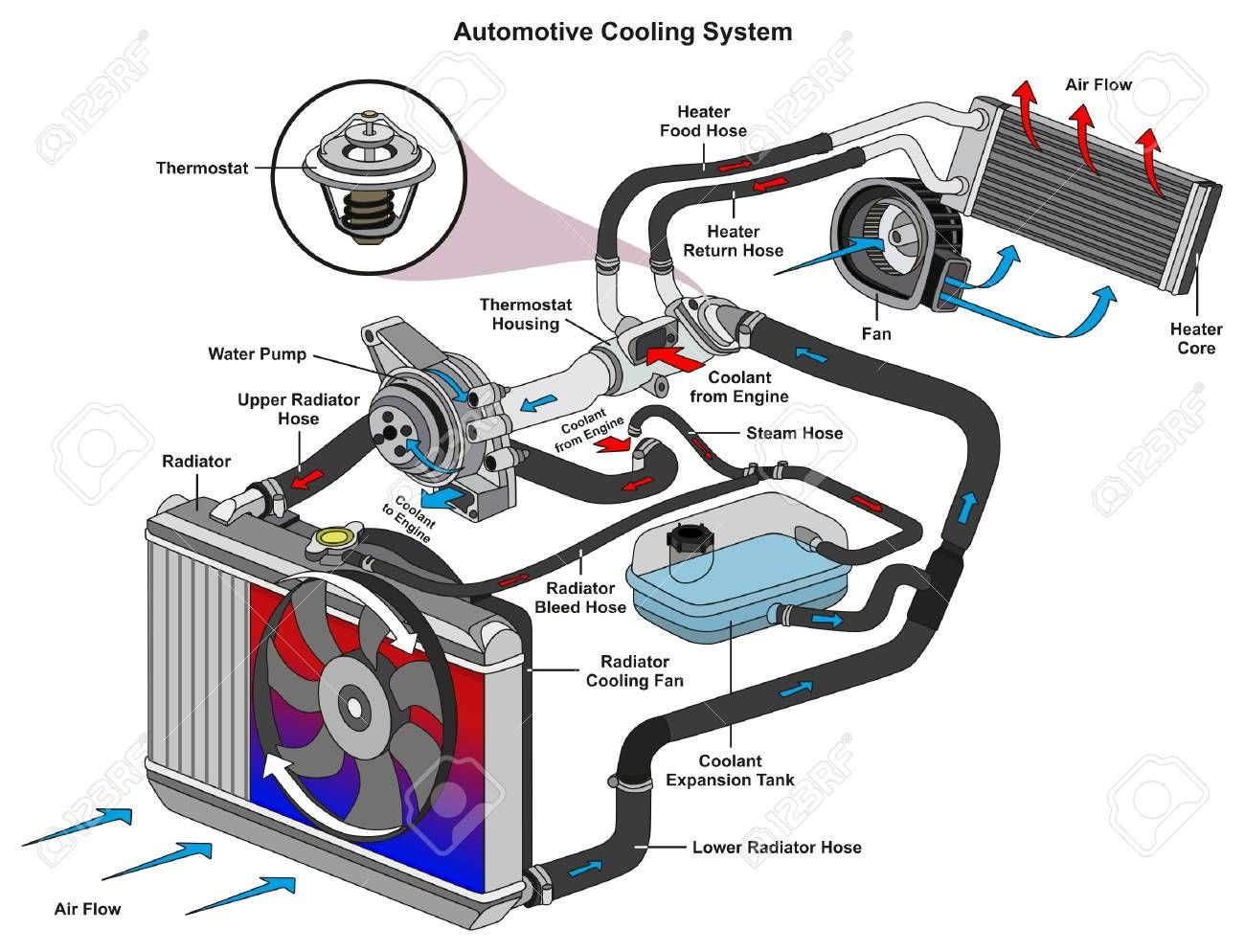
The engine has various blocks and heads. The vehicle’s cooling system basically sends the coolant through these blocks and heads. As it moves through these passages, the coolant picks up this heat and continues to travel through a rubber hose to the radiator of the car. As the heated coolant flows through the thin tubes of the radiator, the air steam entering from the grill of the vehicle cools it down.
Once the coolant has managed to get rid of the heat, it continues to go back to the engine to absorb more heat and thus the cycle continues. The coolant manages to keep moving through the engine and radiator and back as a result of the water pump.
Why use Coolant and not any other substance?
Water cannot be used as a cooling agent due to the high temperature, as it won’t suffice. The high temperatures inside the engine would very easily boil the water and evaporate it completely. Similarly, in cold weather conditions, the water would very easily freeze when the vehicle is not being used. This would leave the cooling system completely useless.
The cooling system used today is a dual effort of the glycols (coolant) and water. This ensures that the cooling system runs smoothly in both cold and hot environments, all year round.
Additionally, the coolant also has added benefits like how it protects the engine against corrosion.
Disadvantages for Engine and Fleet when high coolant issue is not resolved
According to statistics, a large amount of engine failures are caused due to problems with engine cooling. So engine coolant is used in order to protect the engine on the whole and to keep it running at an optimal temperature.
Ideally, engines should run between 90°C and 104°C. This is when we assume that the engine is running with a perfectly balanced mix of coolant and water.
At 107°C, this mixture will boil but still manage to run smoothly till the engine temperature hits 129°C. Again, this is assuming that the radiator cap is not removed and the cooling system is still intact. In the other extreme case, if the engine is too cold, it simply won’t start.
If the engine exceeds this range and gets too hot, the fuel will ignite before reaching the engine cylinder. The cylinder is where the fuel is burnt up and this is what makes the engine work. Now, if the fuel is igniting before reaching the engine, this will produce more heat and can be potentially dangerous for the engine. It can even blow out the head gasket of the engine!
When dealing with heavy-duty trucks that are transporting goods, small delays caused by coolant issues can prove to be financially taxing for both the client and the fleet companies.
Trucking fleets in the logistics industry run on tight schedules where time is money. Even slight delays in transit time can have enormous monetary costs and repercussions. Furthermore, delays like these ensure that there will be delays in the next slot of shipments as well.
So, in order to avoid engine failure of any kind, coolant alarms are very important. They would alarm the driver or fleet manager of the change in coolant temperature.
Fleetx’s Solution for High Coolant Issues
Considering the scale of damage that high engine temperatures can cost, it is not advisable to risk coolant-related ignorance in the logistics industry.
Fleetx’s feature, which tackles the coolant issue, is very simple to implement. We are not required to install any additional devices to collect data on coolant. If you already have our OBD device installed in your vehicle, no additional instalment is required. If you don’t have any OBD device plugged in, we simply need to plug in the device and you’re all set.
This OBD device is enough to directly collect information from the ECU in the vehicle. The ECU will automatically alarm the OBD if the engine temperature exceeds 103°C. The fleet managers can then take necessary precautions to protect the integrity of the fleet’s functioning. It’s better to be prepared for such emergencies rather than incur losses of money and the breakdown of vehicles.
Frequently Asked Questions
What is a coolant alarm, and why is it important for commercial vehicles and truck fleets?
A coolant alarm is a vehicle monitoring feature that alerts the driver or fleet manager whenever the engine coolant temperature crosses a safe operating limit. Modern trucks rely on engine coolant to regulate heat generated during combustion. If coolant levels become low or temperatures rise beyond the recommended range, the engine can overheat, resulting in expensive repairs, unexpected downtime, reduced fuel efficiency, and even complete engine failure.
For logistics companies, transporters, mining fleets, construction businesses, and cold-chain operators across India, coolant monitoring is far more than a maintenance feature—it is a business continuity tool. Every hour a truck remains stranded because of overheating can lead to delayed deliveries, contractual penalties, dissatisfied customers, and increased operating costs. Fleets operating in high-temperature regions such as Delhi NCR, Gurgaon, Mumbai, Pune, Bengaluru, Jaipur, Hyderabad, and Nagpur are particularly vulnerable because prolonged traffic congestion and hot weather place additional stress on heavy-duty engines.
Modern telematics platforms combine coolant alarms with GPS tracking, engine diagnostics, OBD data, predictive maintenance, and real-time notifications. Instead of discovering an overheating engine after it has already caused damage, fleet managers receive instant alerts that enable them to take preventive action before a breakdown occurs.
A properly configured coolant alarm helps businesses:
- Prevent engine overheating and catastrophic failures.
- Reduce unexpected vehicle downtime.
- Improve fleet reliability and trip completion rates.
- Lower maintenance and repair costs.
- Increase driver safety during long-distance transportation.
- Support predictive maintenance programs.
Whether operating a fleet of ten trucks or several thousand commercial vehicles, coolant alarms have become an essential component of modern fleet management and intelligent transportation systems.
How does a coolant alarm work with modern fleet management software and telematics systems?
A coolant alarm works by continuously monitoring engine coolant temperature through the vehicle's ECU (Electronic Control Unit), OBD interface, or integrated telematics hardware. Whenever the temperature exceeds a predefined threshold, the system immediately generates an alert that can be viewed by both the driver and the fleet manager.
Today's fleet management software goes far beyond displaying a dashboard warning light. Advanced telematics platforms correlate coolant temperature with engine RPM, trip history, idling duration, GPS location, driver behaviour, fuel consumption, and maintenance records. This allows fleet operators to understand not only that overheating occurred but also why it happened.
For example, a logistics company operating between Delhi and Mumbai can receive a real-time notification if a truck begins overheating near Kota. Fleet managers can immediately contact the driver, schedule roadside assistance, reroute deliveries if necessary, and prevent further engine damage.
Modern platforms typically provide:
- Real-time coolant temperature monitoring.
- Mobile app and dashboard notifications.
- Email, SMS, or instant alert integration.
- Predictive maintenance scheduling.
- Historical temperature reports.
- Driver performance analytics.
- Vehicle health diagnostics.
- Remote fleet visibility across multiple cities.
Businesses managing fleets across Delhi NCR, Gurgaon, Bengaluru, Pune, Chennai, Mumbai, and other industrial corridors increasingly integrate coolant alarms into their overall fleet monitoring strategy. Combining coolant alerts with GPS tracking, fuel monitoring, tyre pressure monitoring, and preventive maintenance creates a comprehensive vehicle health ecosystem that minimizes downtime while improving operational efficiency.
What are the common causes of engine overheating, and how can fleet operators prevent expensive breakdowns?
Engine overheating rarely occurs because of a single issue. In most commercial vehicles, overheating develops gradually due to maintenance gaps, cooling system failures, excessive engine load, or prolonged operation under extreme environmental conditions. Recognizing these warning signs early helps fleet operators avoid costly repairs and unexpected downtime.
Common causes include:
- Low coolant levels.
- Coolant leakage.
- Radiator blockage.
- Faulty thermostat.
- Water pump failure.
- Damaged radiator fan.
- Blocked coolant passages.
- Heavy overloading.
- Long idling in traffic.
- Poor preventive maintenance.
Commercial fleets operating in cities such as Delhi, Gurgaon, Mumbai, Pune, Bengaluru, and Ahmedabad frequently encounter stop-and-go traffic, high ambient temperatures, and long-distance operations that significantly increase engine stress. Mining, construction, cement, FMCG, and logistics vehicles are especially susceptible because they often operate continuously under demanding conditions.
The most effective way to reduce overheating incidents is through preventive maintenance supported by telematics. Fleet operators should monitor coolant temperature in real time, inspect coolant quality during scheduled servicing, replace worn hoses and pumps before failure, clean radiators regularly, and train drivers to respond immediately whenever coolant alarms appear.
Combining predictive maintenance software with coolant alarms enables organizations to identify recurring patterns before major engine failures occur. This proactive approach extends engine life, reduces repair expenses, improves vehicle availability, and helps fleets maintain reliable delivery schedules throughout India.
What is the average cost of implementing a coolant alarm or fleet monitoring solution in India?
The cost of implementing a coolant alarm depends on whether a fleet already uses GPS tracking or telematics. If the vehicle already has an OBD device or advanced telematics hardware capable of reading ECU data, coolant monitoring may simply be activated through the fleet management platform without requiring additional hardware. In other situations, companies may need compatible telematics devices capable of collecting engine health information.
For businesses operating across India, approximate implementation costs generally fall within these ranges:
- Basic GPS tracking device: ₹3,000–₹8,000 per vehicle.
- Advanced OBD/ECU telematics device with engine diagnostics: ₹6,000–₹20,000+ per vehicle.
- Fleet management software subscription: approximately ₹300–₹1,500 per vehicle per month depending on features and fleet size.
- Enterprise implementation for large fleets may include customized dashboards, APIs, analytics, and maintenance workflows.
Although there is an upfront investment, coolant monitoring often pays for itself by preventing engine failures that may cost anywhere from ₹50,000 to several lakh rupees depending on vehicle type. Even a single overheating incident can result in expensive towing charges, delayed deliveries, customer penalties, replacement vehicles, and lost business opportunities.
Transport companies operating in Delhi NCR, Gurgaon, Mumbai, Bengaluru, Pune, Chennai, Hyderabad, and other logistics hubs increasingly consider predictive maintenance technology a necessity rather than an optional investment. Businesses managing large truck fleets typically achieve greater return on investment because preventive maintenance reduces breakdown frequency, improves vehicle utilization, extends engine life, and lowers overall maintenance expenditure.
When evaluating implementation cost, fleet owners should compare the total cost of ownership rather than simply choosing the lowest-priced solution. Features such as predictive analytics, maintenance scheduling, driver alerts, GPS integration, fuel monitoring, and real-time diagnostics often deliver significantly higher long-term value.
Which are the best fleet management software platforms with coolant monitoring capabilities in India?
The best fleet management software combines coolant monitoring with GPS tracking, engine diagnostics, preventive maintenance, fuel analytics, driver behaviour monitoring, and real-time alerts. Instead of treating coolant alarms as a standalone feature, modern platforms integrate them into a comprehensive vehicle health management system that helps reduce downtime and improve fleet efficiency.
When evaluating the best fleet management software in India, businesses should consider several factors:
- Real-time coolant temperature monitoring.
- ECU and OBD integration.
- Predictive maintenance capabilities.
- GPS vehicle tracking.
- Fuel management analytics.
- Maintenance reminders.
- Driver performance insights.
- Mobile applications for managers and drivers.
- Cloud-based dashboards.
- Scalability for growing fleets.
Fleet operators in Delhi, Gurgaon, Mumbai, Bengaluru, Pune, Ahmedabad, Chennai, and Hyderabad generally prioritize platforms that provide centralized fleet visibility across multiple locations. Logistics companies transporting FMCG products, pharmaceuticals, cold-chain goods, construction material, cement, mining equipment, and industrial cargo particularly benefit from integrated engine health monitoring.
The ideal software should also support customizable alert thresholds, historical maintenance reports, automated service reminders, API integrations with ERP systems, and analytics that identify recurring overheating trends. Businesses should request live demonstrations, evaluate customer support quality, compare implementation timelines, and assess future scalability before selecting a platform.
Rather than choosing software solely on price, organizations should focus on long-term operational value. The best fleet management solutions help reduce unexpected breakdowns, improve vehicle availability, extend engine lifespan, and increase customer satisfaction by ensuring deliveries remain on schedule.
Why are logistics companies in Delhi, Gurgaon, Mumbai, Bengaluru, and Pune increasingly adopting coolant alarms?
India's major logistics hubs present unique operating conditions that make engine health monitoring increasingly important. Commercial vehicles frequently travel long distances while carrying heavy loads through congested urban roads, industrial corridors, highways, ports, and construction zones. These demanding operating environments significantly increase the likelihood of engine overheating if cooling systems are not properly monitored.
In Delhi NCR and Gurgaon, trucks often experience prolonged idling due to traffic congestion and urban deliveries. Mumbai combines coastal humidity, dense traffic, and continuous freight movement around ports and warehouses. Bengaluru's stop-and-go traffic places additional stress on commercial vehicles during city distribution, while Pune serves as a major manufacturing and automotive hub where fleet uptime directly affects supply chain efficiency.
Coolant alarms help logistics companies maintain operational continuity by providing immediate warnings before overheating develops into major engine damage. Instead of waiting until a truck breaks down on the highway, fleet managers receive real-time alerts and can coordinate preventive action immediately.
Major industries benefiting from coolant monitoring include:
- Third-party logistics (3PL).
- Cold-chain transportation.
- FMCG distribution.
- E-commerce logistics.
- Construction fleets.
- Mining transportation.
- Cement and steel logistics.
- Oil and gas transportation.
As predictive maintenance becomes standard across India's commercial vehicle sector, coolant alarms are increasingly viewed as an essential component of fleet management rather than an optional feature. Businesses that proactively monitor engine health often experience fewer roadside breakdowns, lower maintenance costs, higher vehicle utilization, and improved customer service levels.
How can fleet managers use coolant alarms for predictive maintenance and reduce vehicle downtime?
Predictive maintenance has become one of the biggest advantages of connected fleet management systems, and coolant alarms play a major role in this approach. Rather than waiting for an engine failure or unexpected roadside breakdown, fleet operators can identify abnormal temperature patterns early and schedule maintenance before expensive repairs become necessary.
Traditional maintenance follows either a reactive approach, where repairs happen only after a failure, or a fixed schedule based on mileage. Predictive maintenance, however, continuously analyses live vehicle data collected from the ECU, OBD device, GPS tracker, and telematics platform. If coolant temperature repeatedly exceeds safe limits during certain routes, driving conditions, or vehicle loads, fleet managers receive early warnings that help identify potential problems such as radiator blockage, coolant leakage, thermostat failure, water pump wear, or excessive engine stress.
This approach is particularly valuable for logistics companies operating across India, including Delhi NCR, Gurgaon, Mumbai, Bengaluru, Pune, Chennai, Ahmedabad, and Hyderabad, where commercial vehicles often travel thousands of kilometres every month.
Predictive maintenance supported by coolant alarms helps businesses:
- Reduce unplanned vehicle downtime.
- Prevent catastrophic engine failures.
- Schedule maintenance during non-operational hours.
- Improve fleet utilization.
- Increase vehicle lifespan.
- Lower repair and warranty costs.
- Improve customer delivery performance.
Instead of reacting to breakdowns, fleet operators can make data-driven maintenance decisions that improve operational reliability while reducing the overall cost of fleet ownership.
What features should businesses look for when choosing a top coolant monitoring and fleet management solution?
Selecting a fleet management platform involves much more than comparing prices. Businesses should evaluate whether the solution can support long-term operational growth while providing complete visibility into vehicle health. A modern coolant monitoring solution should integrate seamlessly with telematics, GPS tracking, maintenance management, and operational analytics instead of functioning as an isolated alert system.
Fleet operators searching for the best or top fleet management software should prioritise solutions offering:
- Real-time coolant temperature alerts.
- Engine diagnostic data from ECU or OBD.
- GPS vehicle tracking.
- Predictive maintenance analytics.
- Fuel consumption monitoring.
- Maintenance scheduling.
- Driver behaviour analytics.
- Historical vehicle health reports.
- Mobile applications.
- Cloud-based dashboards.
- API and ERP integrations.
- Scalability for growing fleets.
Businesses operating across Delhi, Gurgaon, Mumbai, Bengaluru, Pune, and other industrial centres should also assess implementation support, customer service quality, training, software updates, reporting capabilities, and data security.
The most valuable fleet management systems enable managers to identify problems before they become operational disruptions. Features such as customizable alerts, maintenance reminders, route visibility, AI-powered analytics, and centralized fleet dashboards improve decision-making while reducing maintenance expenses and increasing vehicle availability.
Choosing a platform based solely on the lowest subscription fee may limit future growth. Instead, organizations should compare the overall business value delivered through reduced downtime, higher productivity, better compliance, and improved customer satisfaction.
Can coolant alarms improve fuel efficiency, fleet safety, and overall logistics performance?
Yes. Although coolant alarms are primarily designed to prevent engine overheating, they also contribute significantly to fuel efficiency, operational safety, and fleet productivity. Engines operating within their recommended temperature range perform more efficiently than engines experiencing excessive heat or cooling system problems.
When coolant levels are inadequate or temperatures rise beyond normal limits, engines often consume more fuel, experience increased mechanical wear, and produce lower overall performance. Drivers may also be forced to stop unexpectedly, causing shipment delays and disrupting logistics operations.
By combining coolant monitoring with GPS tracking, predictive maintenance, engine diagnostics, and driver coaching, fleet operators gain a complete picture of vehicle health and operating efficiency.
Major business benefits include:
- Reduced fuel wastage.
- Improved engine efficiency.
- Lower maintenance costs.
- Higher fleet availability.
- Fewer roadside breakdowns.
- Better driver safety.
- Reduced delivery delays.
- Higher customer satisfaction.
- Longer engine life.
- Lower total cost of ownership.
These advantages are especially valuable for transport companies operating across India, including Delhi NCR, Mumbai, Bengaluru, Pune, Gurgaon, Chennai, Hyderabad, and Ahmedabad, where delivery schedules are tightly managed and vehicle uptime directly impacts profitability.
As logistics operations become increasingly data-driven, coolant alarms are evolving from simple warning systems into critical components of intelligent fleet management. Businesses that continuously monitor engine health are better positioned to reduce operating costs, improve service reliability, and maintain a competitive advantage in India's rapidly growing transportation and logistics sector.