
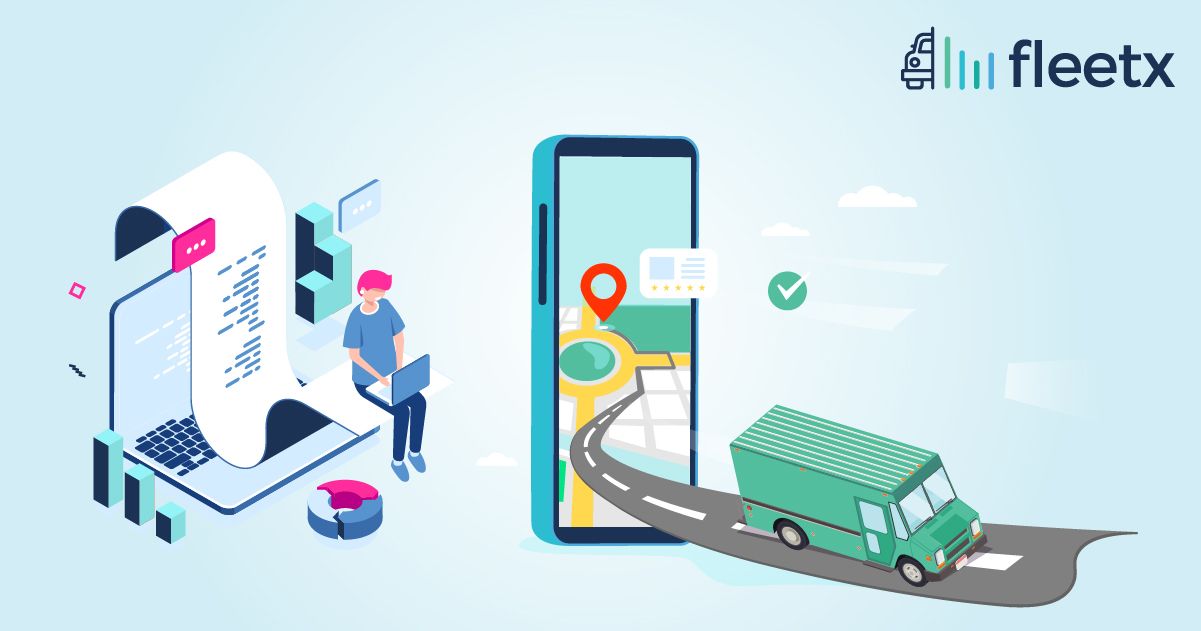
In the life of a fleet manager handling a large number of consignments, Proof of Delivery forms an integral part of the invoicing process. Not only do they mark the successful closure of the ticket, but they are also contractual obligations upon fleet managers-they act as proof of acceptance of delivery of the consignment in agreed condition.
At Fleetx, we have developed a new set of features called Electronic-PODs to manage proof of deliveries digitally without the need for pen and paper. The new feature of Electronic Proof of Delivery is well integrated within our existing TMS architecture as it can be raised either by Transporter or Customer, or even at Shipper's end. The system is designed to account for both PTL and FTL deliveries.
Let's take a closer look at how the feature works and what value it can add-
The Method of Creating an E-POD
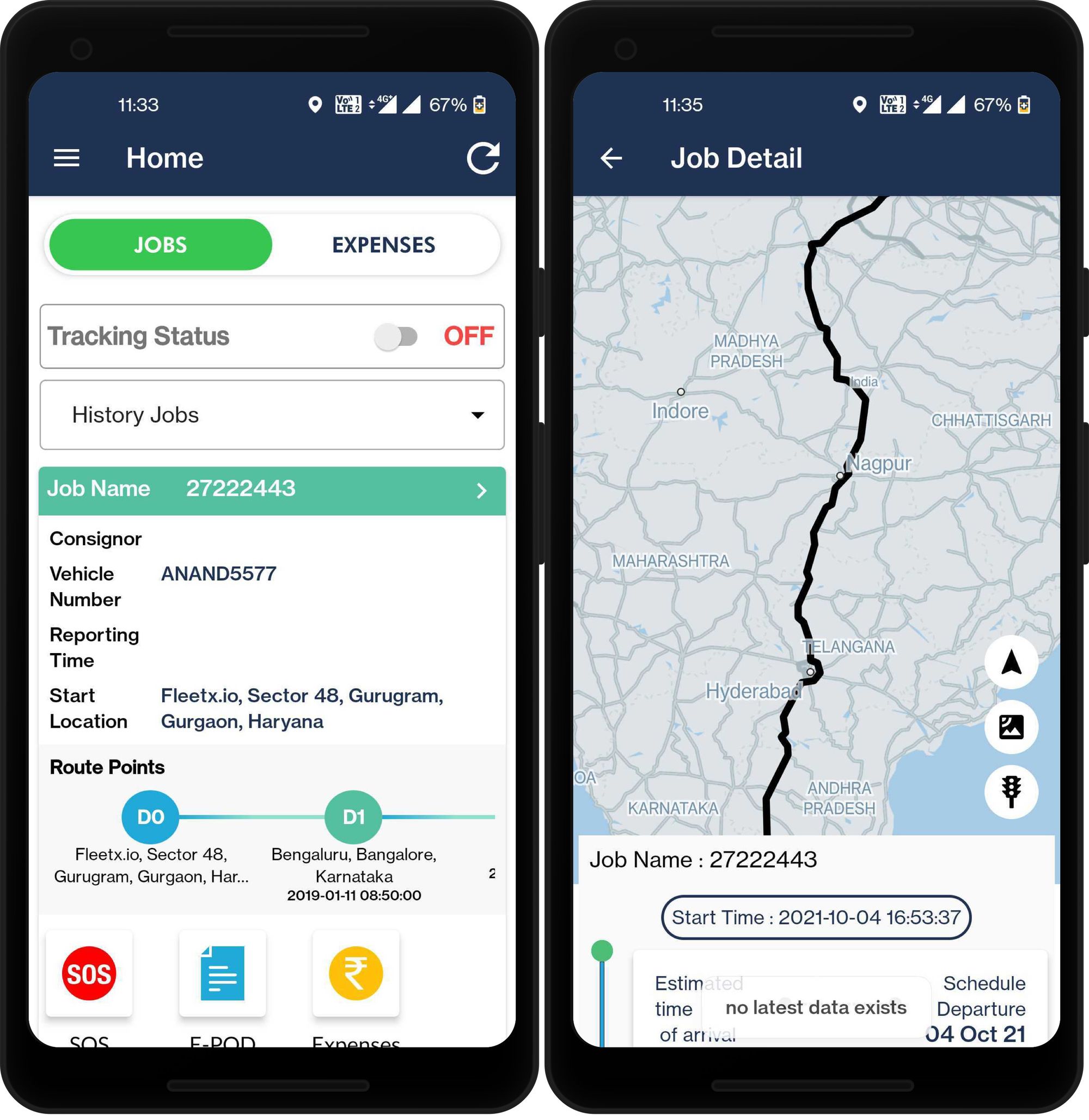
Since generating an E-POD usually happens at the doorsteps or entrances of factories, the availability of web-connected computers might be an issue. Taking this into account, Fleetx has made it possible to generate E-POD on the go through smartphones using the Fleetx Driver App. This method can be used by any consignee, transporter, or even driver to get the required approval. Apart from this, Fleetx also supports E-POD generation through SMS Delivered Link for all consignments, which can be filled by any party outside the Fleetx system. This has lots of use cases where the receiver is not available at the spot of delivery, but has to later assess the quality of the delivery. Another method is IVR (Interactive Voice Response telephony), which enables access to those areas where even an internet connection is an issue.
Other Features supported by E-POD Module
- Integrated Geo Deviation Data
- Multilingual Support
- Form Customization Support
E Negotiation
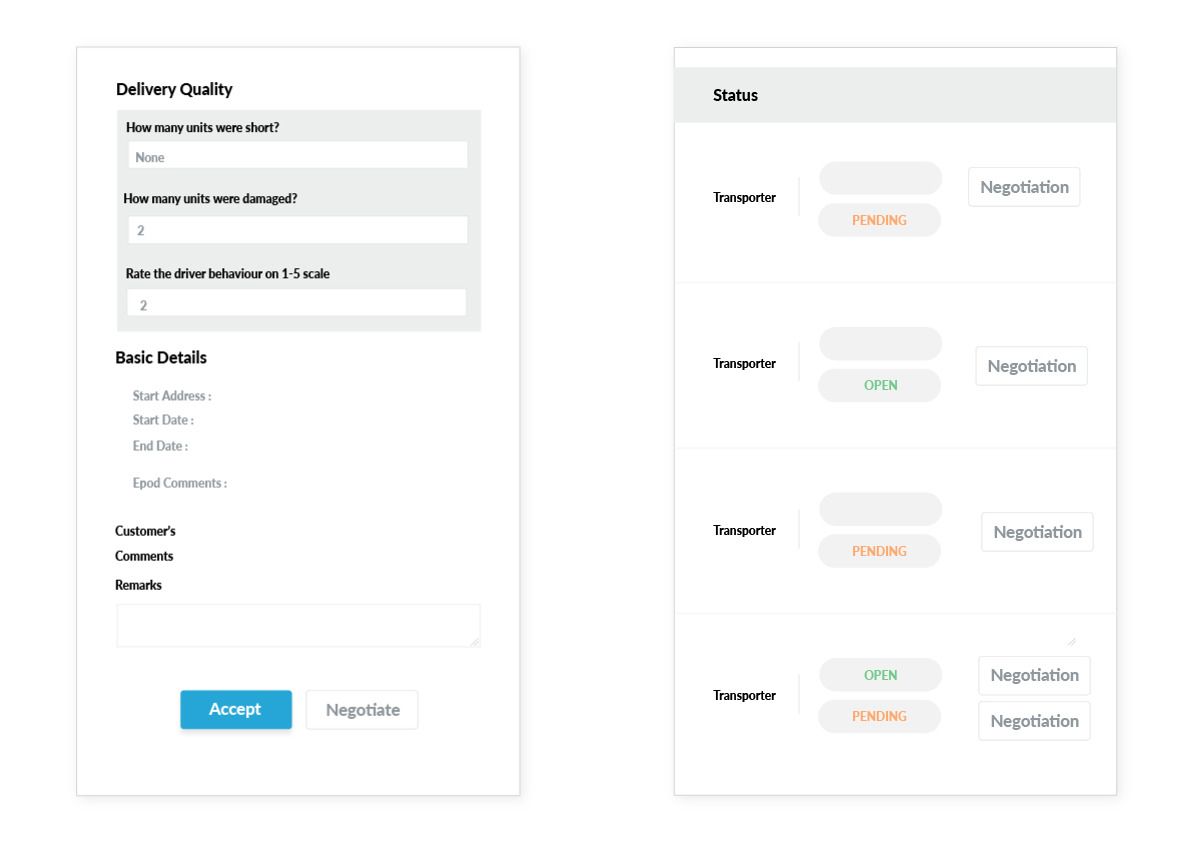
Another piece of the puzzle in the invoicing process is resolving conflicts between multiple parties involved in delivery quality. Usually, this happens over telephonic interactions, and there is no proof of record over commitments made and shortcomings over those if any. Realizing the importance of such a process, Fleetx has integrated an E-Negotiation feature within the E-POD module.
The feature lets any party to the commerce open “a negotiation process” - be it a shipper, customer or transporter. Here the customer can raise any configured issue - such as items damaged during delivery, driver behavior, shortage of delivered items, quality of service, and so on. Both parties must accept the final status- upon which a “charges and penalty option” is generated to settle the dispute.
Benefits of E-POD
In India, logistics costs are around 14% of GDP which is way more than 7% in Japan and 9% in USA. One of the main reasons behind such high costs is lack of digitization and the informal nature of processes within the logistic industry. Lack of transparency deprives the industry of visibility and enforcement of contracts and creates a lack of trust which impacts ease of doing a business in the sector.
The EPOD is designed to help fight such uncertainty within the business environment by streamlining and digitizing the flow of information. It eliminates the need for manual documentation, thus reducing the amount of possible human error. It also makes the billing cycle faster as delivery can be immediately negotiated along with proof of records - such as images.
Another advantage of E-POD is that it is the most accurate form of POD - by integrating geo-spatial data with delivery and option to share delivery images - enrichment with precise data makes it more dependable . This in the long run also helps to reduce financial administration costs - such as filing claims and reducing invoicing errors. The process also reduces the carbon footprint of the industry and facilitates sustainability in the long term.
Pros of E-Pod
• Reduces dependencies on paperwork
• Boosts delivery productivity
• Eases Audit Process
• Easier accessibility of the information due to cloud based storage
• Enhances customer experience
• Monitor Delivery Quality
• Reduces dependencies on paperwork
• Securely passes on details to managers
• Shortens Billing Cycle
• Shrinks Carbon Footprint
• Enhances customer experience
• Easier accessibility of the information due to cloud-based storage
Last but not least, as in any contract management the best outcome is of customer satisfaction and trust. A channel to raise any issue - with proof and option to negotiate goes a long way when it comes to customer retention.
How E-POD Integrates with Modern Transportation Management Systems (TMS)
Electronic Proof of Delivery (E-POD) delivers the greatest business value when it functions as part of an integrated Transportation Management System (TMS) rather than as an isolated documentation tool. In modern logistics operations, every shipment generates valuable operational data, from order creation and dispatch to delivery confirmation and invoicing. By connecting E-POD with other logistics applications, businesses create a continuous flow of verified information that improves visibility, accelerates decision-making, and reduces operational delays.
Instead of manually transferring delivery records between departments, an integrated ecosystem allows every stakeholder, including logistics managers, transporters, finance teams, warehouse personnel, and customers, to access consistent and up-to-date shipment information. This approach not only improves operational efficiency but also supports scalable logistics management as shipment volumes continue to grow.
Where E-POD Fits Within the Transportation Management Workflow
Digital proof of delivery is one stage within a much larger transportation process. When integrated correctly, information collected during delivery automatically supports subsequent operational activities without requiring duplicate data entry.
| Logistics Stage | Role of E-POD Integration | Business Impact |
|---|---|---|
| Order Creation | Links delivery requirements with shipment records | Better shipment accuracy |
| Dispatch Planning | Associates delivery instructions with assigned vehicles | Improved execution consistency |
| In-Transit Tracking | Connects GPS tracking with delivery milestones | Greater shipment visibility |
| Delivery Completion | Captures digital proof, signatures, images and timestamps | Verified delivery confirmation |
| Invoice Processing | Triggers billing after successful delivery validation | Faster payment cycles |
| Customer Service | Provides authenticated delivery records during enquiries | Improved customer experience |
| Performance Analytics | Feeds operational dashboards with delivery outcomes | Better strategic planning |
This connected workflow minimizes information gaps between operational teams while ensuring that delivery records remain synchronized across the logistics network.
Business Systems That Can Benefit from E-POD Integration
As organizations digitize logistics operations, E-POD data becomes valuable beyond transportation teams. When integrated with enterprise software, verified delivery information supports multiple departments simultaneously.
Common integrations include:
- Transportation Management System (TMS): Synchronizes dispatch, shipment status, and delivery confirmation.
- Enterprise Resource Planning (ERP): Updates financial records and supports invoice generation using validated delivery information.
- Warehouse Management System (WMS): Confirms completed deliveries for inventory reconciliation and replenishment planning.
- Customer Relationship Management (CRM): Provides customer service teams with authenticated delivery records during support interactions.
- Business Intelligence (BI) Platforms: Converts delivery data into operational dashboards and performance reports for management teams.
Rather than operating in separate systems, these integrations establish a single source of operational information that improves collaboration across departments and reduces manual reconciliation efforts.
Best Practices for Implementing an Enterprise E-POD Solution
Organizations achieve better long-term outcomes when E-POD implementation focuses on operational standardization rather than simply replacing paper documents. Establishing consistent digital processes ensures reliable data quality and smoother adoption across teams.
Recommended implementation practices include:
- Standardize digital proof-of-delivery formats across all delivery locations.
- Define mandatory fields such as timestamps, signatures, photographs, and delivery remarks.
- Establish approval workflows for delivery exceptions and damaged consignments.
- Train drivers, transport partners, and warehouse teams on standardized digital procedures.
- Integrate E-POD with existing logistics platforms instead of creating isolated workflows.
- Configure automated notifications for delayed or exception-based deliveries.
- Periodically review delivery analytics to identify recurring operational issues.
- Maintain secure cloud-based storage with role-based access for different stakeholders.
Following these practices helps organizations improve data consistency while supporting future operational expansion without increasing administrative complexity.
Common Challenges During Digital Logistics Transformation
Implementing E-POD is not solely a technology initiative, it also requires operational alignment across multiple stakeholders. Organizations that anticipate common implementation challenges are generally better positioned to achieve successful adoption.
Some of the most frequently encountered challenges include:
- Inconsistent delivery documentation standards across transport partners.
- Limited digital adoption among drivers or field personnel.
- Integration difficulties with legacy ERP or logistics systems.
- Poor internet connectivity in remote delivery locations.
- Incomplete delivery information reducing record accuracy.
- Lack of standardized workflows for dispute resolution.
- Data silos created by disconnected operational software.
Addressing these challenges early allows organizations to maximize the value of digital proof-of-delivery systems while maintaining operational continuity throughout the implementation process.
Why End-to-End Integration Matters for Future Logistics Operations
As logistics networks become increasingly data-driven, organizations require connected systems that enable information to move seamlessly across the entire supply chain. E-POD plays an important role in this ecosystem by transforming delivery confirmation into structured operational data that supports planning, compliance, customer service, finance, and performance management.
When integrated with broader transportation technologies, E-POD contributes to improved shipment visibility, faster operational workflows, stronger collaboration between stakeholders, and more reliable business intelligence. Rather than serving as the final document in the delivery process, it becomes an important data source that helps organizations optimize logistics performance, improve service quality, and build scalable digital supply chain operations capable of supporting future business growth.
Frequently Asked Questions
What is Electronic Proof of Delivery (E-POD) in logistics? ▼
Electronic Proof of Delivery (E-POD) is a digital method of confirming that a shipment has reached its intended destination successfully. Instead of relying on paper-based delivery receipts, businesses capture proof using smartphones, tablets, driver applications, SMS-based confirmation links, photographs, GPS location, timestamps, digital signatures, and delivery remarks. The information is stored digitally and can be accessed instantly by logistics managers, transporters, shippers, and customers.
Modern transportation companies use E-POD as part of a Transportation Management System (TMS) to improve shipment visibility and reduce paperwork. The solution is especially valuable for businesses managing large fleets or high shipment volumes because delivery confirmation becomes immediately available to operations and finance teams without waiting for physical documents to return.
Key benefits include:
- Digital delivery verification with time and location stamps.
- Faster invoice processing after delivery completion.
- Reduced paperwork and manual documentation.
- Better transparency between customers, transporters, and shippers.
- Quicker dispute resolution using digital evidence.
- Centralized cloud-based storage of delivery records.
Across India—including Delhi NCR, Gurgaon, Mumbai, Bengaluru, and Pune—organizations are increasingly adopting E-POD solutions to improve operational efficiency, customer satisfaction, and regulatory compliance while building more reliable digital logistics operations.
Why is proof of delivery important? ▼
Proof of delivery is one of the most important documents in transportation because it confirms that goods have been delivered according to agreed terms and conditions. Without proper delivery confirmation, businesses may experience billing delays, customer disputes, inventory mismatches, and difficulties resolving claims related to damaged or missing goods.
Digital proof of delivery significantly improves this process by replacing handwritten documentation with authenticated electronic records. Information such as customer signatures, GPS coordinates, timestamps, delivery photographs, and remarks provides stronger evidence than traditional paper documents. This helps improve trust between shippers, transporters, customers, and logistics service providers.
Businesses benefit from proof of delivery by:
- Reducing disputes related to delivery completion.
- Supporting faster customer billing.
- Improving audit readiness through digital documentation.
- Providing authenticated delivery evidence for claims.
- Increasing operational transparency.
- Enhancing customer confidence throughout the delivery process.
For industries such as FMCG, retail, manufacturing, pharmaceuticals, e-commerce, and third-party logistics operating across India, maintaining accurate proof of delivery is essential for improving supply chain reliability and ensuring smooth commercial transactions between multiple stakeholders.
How does E-POD improve transportation management and logistics operations? ▼
E-POD improves transportation management by converting delivery confirmation into structured digital data that supports operational visibility across the complete shipment lifecycle. Instead of waiting several days for paper documents to return to the office, logistics teams receive verified delivery information immediately after shipment completion.
This enables transportation managers to monitor deliveries in real time, accelerate invoicing, improve fleet utilization, and identify operational bottlenecks much faster. Integration with Transportation Management Systems (TMS), Enterprise Resource Planning (ERP), Warehouse Management Systems (WMS), and customer portals further improves coordination across departments.
Organizations implementing E-POD typically experience improvements in:
- Delivery documentation accuracy.
- Shipment visibility.
- Billing turnaround time.
- Driver productivity.
- Customer communication.
- Compliance reporting.
- Operational analytics.
- Digital record management.
Businesses operating regional and nationwide logistics networks across Delhi NCR, Mumbai, Bengaluru, Pune, and other major logistics hubs can particularly benefit because digital documentation enables standardized processes across multiple warehouses, transport partners, and delivery locations without increasing administrative workload.
Which industries benefit the most from Electronic Proof of Delivery solutions? ▼
Electronic Proof of Delivery is valuable for almost every industry that transports physical goods, but some sectors benefit more because they manage high shipment volumes, complex distribution networks, or strict compliance requirements. Digital delivery confirmation reduces paperwork while improving shipment visibility and customer service.
Industries commonly adopting E-POD include manufacturing, FMCG, retail distribution, pharmaceuticals, cold chain logistics, construction materials, chemicals, automotive supply chains, e-commerce, and third-party logistics (3PL). These businesses often handle thousands of deliveries each month, making manual documentation inefficient and difficult to manage.
Common business applications include:
- Retail distribution requiring store-wise delivery confirmation.
- Pharmaceutical deliveries needing compliance documentation.
- Cold chain logistics requiring temperature-sensitive shipment records.
- Construction projects tracking material deliveries.
- E-commerce companies managing high-volume last-mile deliveries.
- Manufacturing firms coordinating deliveries across multiple plants and warehouses.
Organizations operating across India's major logistics corridors—including Delhi, Gurgaon, Mumbai, Pune, Chennai, Hyderabad, and Bengaluru—often use E-POD to standardize delivery processes, improve customer satisfaction, and reduce delays associated with manual proof-of-delivery documentation.
What is the cost of implementing an Electronic Proof of Delivery (E-POD) system in India? ▼
The cost of implementing an Electronic Proof of Delivery (E-POD) solution in India depends on several factors, including fleet size, number of monthly deliveries, software features, deployment model, integration requirements, and user licenses. Most cloud-based logistics platforms offer subscription pricing, while enterprise deployments may involve additional implementation and integration costs.
For small and medium-sized businesses, cloud-hosted E-POD solutions are generally the most affordable because they require minimal IT infrastructure and can be deployed relatively quickly. Larger enterprises with multiple warehouses, ERP integrations, custom workflows, and nationwide transportation networks usually require more advanced implementations.
Typical cost considerations include:
- Software subscription or annual licensing fees.
- Driver mobile application deployment.
- Transportation Management System (TMS) integration.
- ERP or Warehouse Management System (WMS) connectivity.
- Employee onboarding and training.
- Custom workflow development.
- Technical support and maintenance.
Many organizations in Delhi, Gurgaon, Mumbai, Bengaluru, and Pune evaluate E-POD solutions based on return on investment rather than software price alone. Reduced paperwork, faster invoicing, improved customer satisfaction, lower dispute resolution costs, and higher operational efficiency often generate measurable savings over time. Businesses comparing different vendors should request detailed demonstrations, implementation timelines, integration capabilities, scalability options, and total ownership costs before selecting a solution that aligns with their long-term logistics strategy.
Which is the best Electronic Proof of Delivery software for logistics companies? ▼
The best Electronic Proof of Delivery software is one that aligns with a company's operational requirements rather than simply offering the largest feature list. Businesses should evaluate how well the platform integrates with existing transportation systems, supports drivers in the field, and improves overall logistics efficiency.
An enterprise-grade E-POD platform should function as part of a broader Transportation Management System instead of operating independently. This enables organizations to automate shipment tracking, delivery confirmation, invoicing, reporting, and customer communication from a single ecosystem.
When comparing the best E-POD software, consider features such as:
- Digital signature and image capture.
- GPS location and timestamp verification.
- Offline functionality for low-connectivity regions.
- SMS and mobile-based delivery confirmation.
- ERP, CRM, WMS, and TMS integration.
- Cloud-based document storage.
- Real-time shipment visibility.
- Analytics and operational dashboards.
- Role-based access and data security.
Organizations across India—including Delhi NCR, Gurgaon, Mumbai, Bengaluru, Pune, Hyderabad, and Chennai—typically shortlist vendors based on scalability, implementation support, ease of adoption, customer service, and integration capabilities. Choosing software that can grow alongside business expansion often delivers better long-term value than selecting a solution based solely on initial pricing.
How are logistics companies in Delhi NCR and Gurgaon using E-POD solutions? ▼
Delhi NCR and Gurgaon are among India's busiest logistics and distribution hubs, serving manufacturing clusters, e-commerce companies, retail supply chains, pharmaceuticals, automotive businesses, and third-party logistics providers. These operations manage thousands of deliveries every day, making manual proof-of-delivery processes increasingly inefficient.
Electronic Proof of Delivery enables organizations to standardize delivery documentation across multiple warehouses, transport partners, and customer locations. Delivery confirmations become immediately available to operations, finance, and customer service teams, allowing quicker billing, improved shipment visibility, and faster issue resolution.
Businesses commonly use E-POD in Delhi NCR and Gurgaon for:
- Multi-warehouse distribution networks.
- Retail and FMCG deliveries.
- Manufacturing supply chains.
- E-commerce fulfillment.
- Automotive component transportation.
- Enterprise contract logistics.
- Third-party logistics (3PL) services.
With growing investments in digital logistics across the National Capital Region, companies are increasingly integrating E-POD with GPS tracking, transportation management software, warehouse systems, and enterprise resource planning platforms. This integrated approach helps reduce paperwork, improve operational transparency, and support data-driven logistics decision-making while maintaining consistent service quality across high-volume delivery operations.
How does E-POD help businesses manage deliveries in Mumbai, Bengaluru, and Pune? ▼
Mumbai, Bengaluru, and Pune each present unique logistics challenges. Mumbai experiences dense urban traffic and complex last-mile delivery conditions, Bengaluru supports rapidly growing technology, manufacturing, and e-commerce sectors, while Pune has become a major automotive and industrial logistics hub. Businesses operating across these cities require delivery documentation that remains accurate, accessible, and consistent regardless of shipment volume.
Electronic Proof of Delivery helps organizations improve operational control by digitizing delivery confirmation and making shipment information immediately available across departments. Instead of relying on physical paperwork, logistics teams can verify deliveries using mobile applications, digital signatures, GPS coordinates, photographs, and timestamped records.
Companies commonly use E-POD to support:
- Urban last-mile delivery management.
- Multi-city transportation networks.
- Manufacturing and industrial distribution.
- Retail replenishment operations.
- High-volume e-commerce deliveries.
- Customer service and dispute management.
- Performance reporting across multiple branches.
As businesses expand across western and southern India, integrating E-POD with transportation management platforms enables standardized delivery processes across different cities while improving customer experience, operational visibility, and financial workflows. This scalability makes digital proof of delivery an important component of modern logistics transformation initiatives.
What should businesses look for before implementing an Electronic Proof of Delivery solution? ▼
Implementing an Electronic Proof of Delivery (E-POD) platform involves more than replacing paper delivery receipts. Businesses should evaluate how the solution fits within their existing logistics processes, technology stack, and future growth plans. Selecting a scalable platform helps organizations maximize long-term operational efficiency while avoiding expensive software migrations later.
Before implementation, logistics leaders should identify existing operational challenges such as delayed invoicing, manual paperwork, customer disputes, fragmented delivery records, or lack of shipment visibility. Understanding these issues allows organizations to prioritize features that deliver measurable business value.
Important evaluation criteria include:
- Compatibility with existing Transportation Management Systems (TMS).
- Integration with ERP, CRM, and Warehouse Management Systems.
- Ease of use for drivers and delivery personnel.
- Offline functionality for low-network delivery locations.
- Cloud-based document storage and secure access controls.
- Real-time reporting and operational dashboards.
- Configurable delivery workflows for different business models.
- Reliable customer support and implementation assistance.
- Scalability for future fleet expansion.
Organizations operating across India, including Delhi, Gurgaon, Mumbai, Bengaluru, Pune, Hyderabad, and Chennai, should also assess regional deployment support, multilingual capabilities, implementation timelines, and ongoing maintenance services. Choosing a solution that aligns with both present operational needs and future digital transformation goals helps create a more resilient and efficient logistics ecosystem.
Can Electronic Proof of Delivery improve customer experience and business transparency? ▼
Yes. One of the biggest advantages of Electronic Proof of Delivery is its ability to improve transparency throughout the delivery lifecycle. Customers increasingly expect accurate shipment updates, timely delivery confirmation, and quick resolution of delivery-related concerns. Digital proof of delivery helps businesses meet these expectations by providing authenticated delivery information almost instantly.
Unlike traditional paper documentation, digital records containing signatures, timestamps, GPS locations, delivery images, and remarks can be shared across relevant departments without delays. This improves communication between customer service teams, logistics managers, transport partners, and end customers while reducing uncertainty regarding shipment status.
Customer experience improvements include:
- Faster confirmation that deliveries have been completed.
- Reduced disputes over delivery timing or shipment condition.
- Improved communication between logistics teams and customers.
- Greater confidence through digitally verified delivery records.
- Quicker complaint investigation using authenticated documentation.
- More consistent service quality across multiple delivery locations.
For organizations managing nationwide logistics operations, transparency also supports stronger business relationships with suppliers, distributors, retailers, and enterprise customers. By making delivery information immediately accessible, E-POD contributes to higher customer satisfaction, improved operational credibility, and more efficient collaboration throughout the supply chain.