

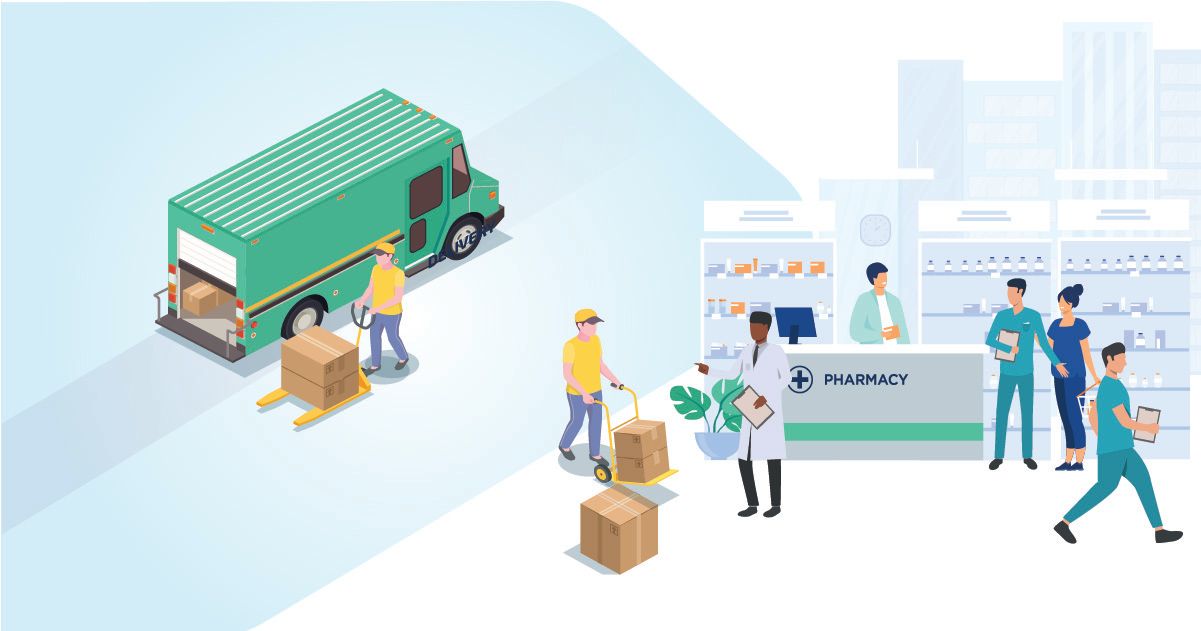
This article looks at the supply chain problems and bottlenecks the healthcare industry faces in the post-covid world. Additionally, it also looks at possible solutions that companies are currently employing to improve the efficiency of pharmaceutical supply chain management.
The supply chain is probably the most crucial element of any business. Globalisation and leaps in technology have made it possible for goods to be transported from one corner of the world to another. In contrast, it has also introduced several levels of complexity in its management, which has increased the chances of errors. Although a certain error level is managed in most sectors, there is absolutely no scope for error in healthcare or pharmaceutical supply chain management.
For decades, inefficiencies and lack of infrastructure for cold chain logistics have plagued the pharmaceutical logistics industry, but the problem was never in the limelight.
For decades, inefficiencies and lack of infrastructure for cold chain logistics have plagued the pharmaceutical logistics industry, but the problem was never in the limelight. However, the coronavirus pandemic exposed the faultlines in the healthcare logistics industry during both the first and second waves. Several of these failures had a devastating impact on people's lives, leaving millions infected and thousands dead.
Impact of the healthcare supply chain disruptions
- Disruptions in the supply chain of PPE kits, surgical masks, syringes, and other essential items due to inefficiencies in the global supply chain exposed thousands of doctors and healthcare workers across the globe and in India to coronavirus, resulting in them getting infected while several hundreds lost their lives to it.
- Supply chain constraints and inefficient management led to oxygen shortages across India during the second wave leading to death and havoc. The situation got so bad that the High Courts across the country had to intervene to mitigate the issue related to logistics problems between governments, private companies, and transporters.
- Covid-19 vaccines, whether it is Moderna, Pfizer, Covisheld, or Covaxin, had varying transportation requirements, requiring cold chain logistics. However, the lack of proper infrastructure and visibility in the supply chain process resulted in a shortage of coronavirus vaccines worldwide but primarily in tropical countries in Asia & Africa, where poor cold chain logistics infrastructure coupled with harsh summers made it impossible to transport certain vaccines.
- India faced severe infrastructural constraints managing cold chain logistics constraints and distribution for its ambitious mission to vaccinate all eligible populations with coronavirus vaccines under its Univeral Immunisation Programme (UIP). India has primarily relied on diesel-run refrigerated vehicles for cold chain logistics & transportation, which requires a continuous power source. However, the solution has been ineffective for the scale of the operation required for covid-19 vaccine distribution across the country, creating challenges for quality control.
Existing cold chain infrastructure has been inadequate for the coronavirus crisis, particularly for highly temperature-sensitive vaccines like Moderna & Pfizer, requiring temperatures of -20 and -70 degrees Celcius throughout transport. The problem of lacking the required cold chain logistics infrastructure is not new. A report published by Economic Times in 2016 highlighted that over 25% of vaccines which India administers under its Universal Immunisation Programmes go to waste due to lacking cold chain logistics infrastructure. In the case of BCG vaccines, the wastage is doubled to 50%.
A study conducted by GSI and Association for Healthcare Providers (India) (AHPI) titled, 'Building resilience in India's post-Covid healthcare supply chain,' published in April 2022, highlighted grave concerns over the status of the healthcare supply chain in the country. Some key findings include,
- Over 80% of pharmaceutical manufacturers lack supply chain visibility over supply chain operations till the point of care.
- According to their survey, over 69% of healthcare product manufacturers lack the capability for reverse logistics, which makes them unable to do product recall due to a lack of end-to-end visibility in operations.
- Due to inefficiencies in the supply chain, warehousing and logistics costs are 15% higher in India than the global average. The cost leads to reduced margins for businesses and high costs for consumers.
- Over 50% of pharmaceutical manufacturers face a 1% loss in sales due to pilferages and expiry.
- India pharmaceutical companies have an inventory period of 98 days compared to 64 days across top-class global pharmaceutical manufacturers resulting in inefficient inventory management. It drives up product prices due to high inventory holding costs.
According to a report by ATKearney published in 2021, India has the highest number of FDA approved sites after the US, and the pharmaceutical market stands at 30 billion US dollars. This section looks at key challenges and bottlenecks faced by the healthcare supply chain sector.
The Healthcare: new logistical challenges: 2021 State of Logistics article by Kearney lists four critical challenges from a US perspective in the healthcare supply chain sector. These challenges include,
- The rise of the customer-centric supply chain on the back of technology-driven last-mile delivery services of pharma goods requires equivalent logistics advancement. In addition, it presents the need to integrate technology like analytics, Internet-of-Things (IoT), and data-based demand projections, among others, to ensure efficiency.
- The rise of the requirement for speciality drugs primarily dispatched through 3PL providers has led to increasing complexity impacting the supply chain efficiency and distribution. Therefore, better trace and tracking mechanisms are needed for such 3PL providers to ensure they are compliant with regulations without negatively impacting their efficiency.
- Resilience requirement for supplies that concerns the stocking of inventory and warehousing is also an area that requires urgent attention. The pandemic showed us how supply chain disruptions could lead to artificial shortages causing tremendous pain and suffering for the consumers. Thus, the efficiency needs to be increased through better inventory management, safe & secure packaging and warehousing.
- Making the availability of medical equipment decentralised is also crucial to ensure the timely availability of essential drugs and pharma equipment to the end consumers regardless of their geographical location. It would require much better augmentation and utilisation of data for demand projections that could factor in potential disruption and navigate accordingly.
Focus areas to make the healthcare supply chain more efficient.
Considering the existing bottlenecks present in healthcare supply chain management and future challenges, we identify two areas that require the urgent attention of manufacturers and supply chain providers affiliated with the healthcare industry. However, it is crucial first to understand the stakeholders involved which, in the case of the healthcare industry, are manufacturers, distributors, providers, and consumers across different healthcare products.
Accurate and real-time inventory management
Inventory management is one of the most crucial elements which matches the supply and demand for medical goods. The poor visibility of the hospital's inventory impacts the augmentation of the supply of such medical goods. On the other hand, hospitals suffer from inaccurate inventory management, which is a result of reliance on outdated or legacy software used by them for tracking inventory, managing procurement, logistics, and other supply chain-related processes. Similar issues are found in hospitals across countries. The problem was further exacerbated during the covid-19 pandemic when we saw cases of hospitals running out of ventilators, crucial medical supplies, medicines, etc. The lack of accurate existing inventory of essential medical products resulted in the hospital failing to cater to the demand at the required time; thus, several patients suffered from shortages of critical medical supplies leading to death or making their situations worse.
Thus, there is an urgent need to implement technology to manage inventory and procurement at hospitals. The refusal to integrate technology into their operations has cost dearly to the hospitals, and thus, it should serve as a wake-up call to them. We advocate for cloud-based and data-driven inventory management software to be used by hospitals so the flow of accurate information related to the demand for critical medical goods can flow from the primary purchasers to the manufacturers and distributors.
Supply Chain Visibility
A significant chunk of inefficiencies across the healthcare supply chain can be attributed to poor visibility. Lack of access to centralised and real-time data sources and systems is a considerable constraint. As a result, the supply chain is broken and operates in silos regarding healthcare. Since managing logistics and the supply chain is not the core function of hospitals, they rely on distributors and third-party logistics or 3PL providers to manage it.
Similar to inventory management, many processes related to supply chain management still require a great deal of manual intervention, which makes the operations inefficient, non-flexible, and prone to inaccuracies. Thus, we suggest integrating procurement, inventory, and logistics with technology to eliminate manual interventions and make the flow of information related to the demand more linear. Moreover, the healthcare supply chain can be made more transparent, accessible, and efficient using automation and AI-based solutions, improving overall supply chain visibility.
Digital Healthcare Supply Chains: The Shift from Reactive Operations to Predictive Decision-Making
The healthcare industry is experiencing a major transformation as organizations move from reactive supply chain management to predictive and data-driven operations. Historically, hospitals, pharmaceutical manufacturers, distributors, and healthcare logistics providers relied heavily on manual record keeping, fragmented systems, and historical demand patterns to make operational decisions. While these methods were sufficient for relatively stable environments, the COVID-19 pandemic demonstrated that traditional approaches are no longer capable of handling large-scale disruptions, sudden demand spikes, and complex distribution requirements.
Predictive healthcare supply chains leverage technologies such as Artificial Intelligence (AI), Machine Learning (ML), Internet of Things (IoT) sensors, cloud computing, and advanced analytics to identify risks before they become operational problems. Rather than responding to shortages after they occur, healthcare organizations can anticipate disruptions, predict demand fluctuations, and optimize inventory levels proactively.
For example, pharmaceutical manufacturers can use predictive analytics to forecast medicine demand across different regions of India based on seasonal diseases, population trends, weather conditions, and healthcare consumption patterns. Hospitals can monitor inventory levels in real time and receive automated alerts before critical medical supplies reach stock-out levels. Logistics providers can use route optimization and predictive traffic analytics to improve delivery timelines for temperature-sensitive healthcare products.
The benefits extend beyond operational efficiency. Predictive supply chains improve patient outcomes by ensuring that critical medicines, vaccines, diagnostic kits, and medical equipment remain available when required. They also reduce wastage, lower transportation costs, improve supplier collaboration, and strengthen regulatory compliance.
Large healthcare networks operating across Delhi NCR, Mumbai, Bengaluru, Pune, Hyderabad, Chennai, and Gurgaon are increasingly investing in digital supply chain transformation initiatives. These investments are helping organizations build resilient supply chains capable of adapting to future disruptions while maintaining high service standards.
As healthcare systems become more interconnected, predictive decision-making will become a core requirement rather than a competitive advantage. Organizations that adopt data-driven healthcare supply chains today will be better positioned to manage future healthcare emergencies, maintain operational continuity, and improve patient care outcomes.
Traditional Healthcare Supply Chain vs Digital Healthcare Supply Chain
The comparison clearly demonstrates why healthcare organizations worldwide are prioritizing digital transformation initiatives. The transition to technology-enabled healthcare logistics creates measurable improvements in efficiency, transparency, compliance, and patient satisfaction.
| Factor | Traditional Healthcare Supply Chain | Digital Healthcare Supply Chain |
|---|---|---|
| Inventory Tracking | Manual spreadsheets and periodic audits | Real-time inventory visibility across locations |
| Demand Forecasting | Historical estimates | AI-driven predictive analytics |
| Cold Chain Monitoring | Manual temperature checks | Continuous IoT-based monitoring |
| Shipment Tracking | Limited visibility | Live GPS tracking and automated alerts |
| Risk Management | Reactive issue resolution | Predictive risk identification |
| Regulatory Compliance | Paper-based documentation | Automated digital compliance records |
| Decision Making | Based on historical reports | Real-time data-driven decisions |
| Product Recall Efficiency | Slow and complex | Rapid traceability and recall management |
| Operational Costs | Higher due to inefficiencies | Optimized through automation and analytics |
| Patient Service Levels | Inconsistent during disruptions | More reliable and resilient |
Building a Resilient Healthcare Supply Chain for the Next Decade
The healthcare supply chain of the future must be designed around resilience, agility, sustainability, and visibility. While efficiency remains important, recent global disruptions have shown that healthcare organizations must also be prepared for unexpected events such as pandemics, natural disasters, geopolitical conflicts, supplier failures, and transportation disruptions.
A resilient healthcare supply chain begins with diversification. Organizations that rely heavily on a single supplier, transportation route, or distribution center face greater operational risks. Healthcare providers increasingly diversify sourcing networks, establish backup suppliers, and create contingency plans to reduce vulnerability during disruptions.
Another critical focus area is end-to-end traceability. Healthcare products often pass through multiple stakeholders before reaching patients. Advanced tracking technologies provide visibility at every stage of the supply chain, helping organizations maintain product integrity and respond quickly to potential quality concerns. This is particularly important for vaccines, biologics, specialty medicines, and temperature-sensitive pharmaceutical products.
Sustainability is also becoming a strategic priority. Healthcare organizations are exploring environmentally responsible logistics practices such as route optimization, energy-efficient cold chain systems, electric delivery fleets, recyclable packaging materials, and carbon footprint monitoring. These initiatives help reduce environmental impact while supporting long-term operational efficiency.
Cybersecurity has emerged as another key consideration. As healthcare supply chains become increasingly digital, protecting sensitive operational and patient-related data becomes essential. Organizations must implement robust cybersecurity measures to safeguard connected systems, cloud platforms, and supply chain networks.
The future healthcare supply chain will also rely heavily on collaborative ecosystems. Manufacturers, distributors, healthcare providers, logistics companies, technology vendors, and regulatory authorities must work together through shared platforms and integrated data systems. Greater collaboration improves information flow, strengthens demand planning, and enables faster responses during emergencies.
Healthcare organizations that invest in resilience today will be better equipped to manage future uncertainties. By combining technology, visibility, sustainability, and collaboration, healthcare supply chains can evolve from cost centers into strategic assets that directly contribute to better patient outcomes, stronger operational performance, and long-term healthcare system stability.
Recent industry trends indicate that healthcare organizations implementing integrated supply chain technologies consistently achieve improvements in inventory accuracy, transportation efficiency, supplier performance, and service levels. As digital transformation accelerates across India and globally, resilient healthcare supply chains will play a crucial role in supporting population health, pharmaceutical distribution, and healthcare accessibility for millions of patients.
The Growing Importance of Last-Mile Delivery in Healthcare Supply Chains
Last-mile delivery has emerged as one of the most critical components of modern healthcare supply chain management. While manufacturers, distributors, and logistics providers often focus on large-scale transportation and warehousing operations, the final delivery stage directly influences patient satisfaction, treatment continuity, and healthcare accessibility. In healthcare logistics, the last mile involves transporting medicines, vaccines, diagnostic samples, medical devices, and healthcare supplies from distribution centers or pharmacies to hospitals, clinics, healthcare facilities, and increasingly, patients' homes.
The healthcare sector has witnessed a significant shift toward patient-centric delivery models. Telemedicine adoption, e-pharmacies, home healthcare services, remote patient monitoring, and direct-to-patient pharmaceutical delivery have increased the complexity of healthcare logistics. Patients increasingly expect faster delivery timelines, greater visibility into shipment status, and consistent product quality throughout the delivery process.
However, healthcare last-mile logistics presents unique challenges. Temperature-sensitive medicines require strict environmental controls during transportation. Urban congestion in cities such as Delhi, Mumbai, Bengaluru, Pune, and Gurgaon can significantly affect delivery schedules. Rural and remote areas may lack adequate healthcare logistics infrastructure, making timely delivery difficult. In addition, healthcare providers must ensure compliance with strict regulatory standards related to pharmaceutical transportation and patient safety.
Technology is playing a central role in addressing these challenges. GPS tracking systems, route optimization software, electronic proof of delivery solutions, AI-powered dispatch planning, and IoT-enabled monitoring devices help improve delivery efficiency while maintaining product integrity. Real-time visibility allows healthcare organizations to monitor deliveries continuously and respond quickly to potential disruptions.
As healthcare services continue to become more decentralized, last-mile logistics will increasingly influence operational performance and patient outcomes. Organizations that optimize last-mile delivery capabilities can improve service levels, reduce transportation costs, strengthen customer trust, and ensure timely access to critical healthcare products.
Why Data Integration is Becoming Essential in Healthcare Supply Chain Management
One of the most significant barriers to healthcare supply chain efficiency is fragmented data. Many hospitals, pharmaceutical companies, distributors, and logistics providers operate multiple disconnected systems that prevent information from flowing seamlessly across the supply chain. Procurement teams, inventory managers, transportation planners, warehouse operators, and healthcare providers often work with separate databases, creating information silos that reduce visibility and increase operational risks.
Integrated healthcare supply chains eliminate these silos by connecting inventory management systems, transportation management platforms, enterprise resource planning software, warehouse management solutions, supplier networks, and analytics tools into a unified ecosystem. This integration creates a single source of truth that enables better coordination across all stakeholders.
Data integration improves forecasting accuracy by combining information from multiple operational sources. Healthcare organizations can analyze inventory trends, supplier performance, transportation metrics, demand fluctuations, and consumption patterns simultaneously. This comprehensive visibility supports more informed decision-making and reduces the likelihood of stockouts or excess inventory.
Integrated systems also improve regulatory compliance and traceability. Pharmaceutical companies can track products throughout the supply chain, maintain accurate records, and respond quickly to recalls or quality concerns. Hospitals can gain greater visibility into procurement activities, inventory utilization, and supplier performance.
Furthermore, integrated healthcare supply chains support advanced technologies such as Artificial Intelligence, Machine Learning, and predictive analytics. These technologies rely on accurate, comprehensive data to generate meaningful insights and recommendations. Without integrated systems, organizations struggle to fully realize the benefits of digital transformation initiatives.
As healthcare ecosystems continue to expand and become more complex, data integration will become a foundational requirement for operational excellence. Organizations that successfully connect their systems will gain significant advantages in visibility, efficiency, compliance, and patient service quality.
Emerging Technologies Reshaping Healthcare Logistics and Pharmaceutical Distribution
Healthcare supply chains are entering a new era driven by rapid technological innovation. Emerging technologies are helping organizations overcome longstanding challenges related to visibility, compliance, inventory management, transportation efficiency, and risk mitigation. These innovations are not only improving operational performance but also creating more resilient healthcare ecosystems capable of responding to future disruptions.
Artificial Intelligence is increasingly used to forecast demand, optimize inventory levels, identify supply chain risks, and improve procurement planning. Machine learning algorithms continuously analyze operational data and generate recommendations that support faster, more accurate decision-making. These capabilities help healthcare organizations reduce waste, improve inventory accuracy, and strengthen supply chain resilience.
The Internet of Things is transforming healthcare logistics through connected devices that provide real-time operational visibility. Temperature sensors, GPS trackers, smart packaging solutions, and connected medical storage systems enable continuous monitoring of healthcare products throughout the supply chain. Organizations can detect anomalies immediately and take corrective action before product quality is compromised.
Blockchain technology is also gaining attention within pharmaceutical supply chains. By creating secure and transparent transaction records, blockchain improves traceability, supports regulatory compliance, and helps combat counterfeit medicines. Healthcare organizations can verify product authenticity and track movement across the supply chain more effectively.
Automation technologies are streamlining warehouse operations, inventory management, and distribution processes. Automated storage systems, robotic picking solutions, and intelligent sorting technologies improve operational efficiency while reducing manual errors.
Digital twins are another emerging innovation with significant potential. These virtual representations of physical supply chains allow organizations to simulate different scenarios, evaluate risks, and test operational strategies before implementing changes in real-world environments.
Together, these technologies are creating smarter, more agile healthcare supply chains capable of delivering better patient outcomes while reducing operational complexity. As adoption accelerates across India and global healthcare markets, technology-driven healthcare logistics will become increasingly important for maintaining competitiveness, ensuring compliance, and supporting long-term growth.
Conclusion
This article first looked at the key elements in the healthcare supply chain and how bottlenecks and inefficiencies can have devastating consequences, as highlighted by the coronavirus pandemic. Lastly, we discussed the areas in the healthcare supply chain that require immediate attention across the stakeholders, them being supply chain visibility and inventory management. Exploring them, we understood how lack of transparency makes the supply chain further inefficient in the face of rising demand for medical goods.
Thus, we conclude by further emphasising the role of technologies related to supply chain management that can make the process transparent, automated and efficient. We recommend companies in the healthcare industries adapt to changing circumstances and shift from outdated and mainly manual interventions to manage their supply chain to a more organised, automated, and tech-driven one.
What is the healthcare supply chain?
Healthcare Supply Chain Logistics is a set of procedures, involving personnel from several teams and the transportation of goods that healthcare professionals need to do their duties, such as medications, surgical instruments, and other products.
What are the components of health supply chain management?
The main components of health supply chain management are : planning, Budget , organization and staffing, supervision, quality monitoring and evaluation, procurement, product selection, quantification, inventory management, advocacy and serving customers.