
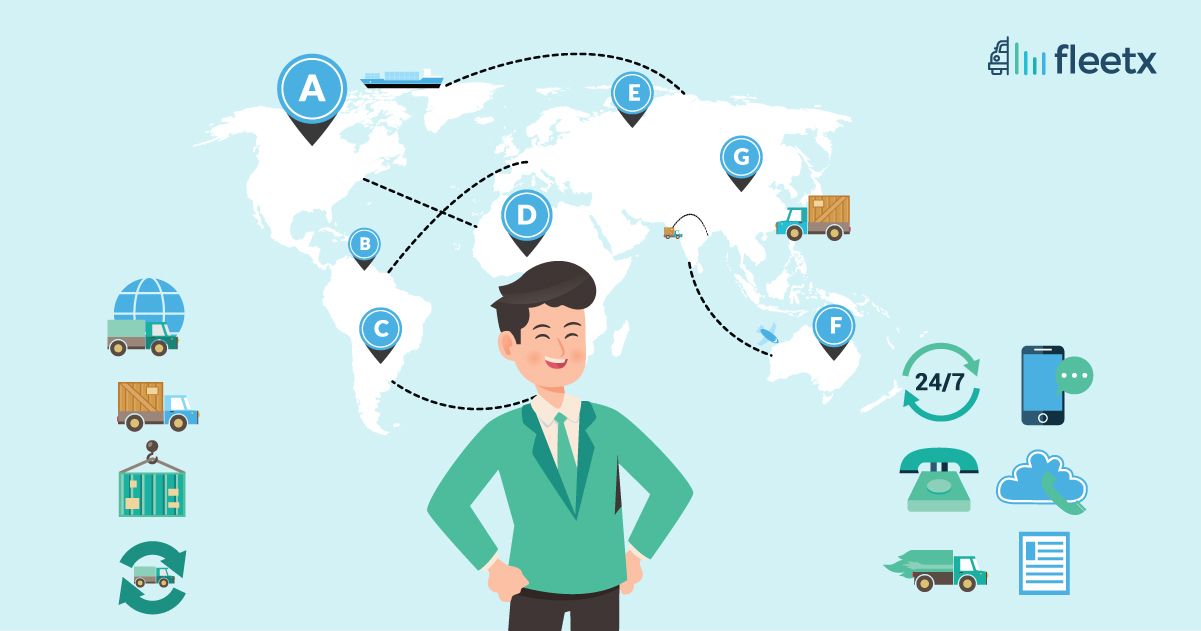
Have you ever wondered where the things you use every day come from? We are aware that everything can not be acquired everywhere in the world, but we are still able to obtain the desired item. Behind it all, a fleet manager is in charge of keeping track of all the small and large aspects of the goods that are being delivered and attempting to get to us.
A major logistics component of every business is fleet management. Truck fleets must be well-run and managed by fleet managers to ensure optimal performance. Being a fleet manager may be a fulfilling job since you often encounter new problems and are in charge of managing expensive assets in a dynamic environment but it's not an easy task, there are a lot of roles and responsibilities above them.
Figuring out what it takes to be a fleet manager and looking into their qualifications might help you decide whether this career path fits with your talents and objectives. We discuss what the job requires and how to become a successful fleet manager.
What is a fleet manager?
All aspects of managing a company's fleets are within the scope of the fleet manager. Fleet managers assist in navigating the specific responsibilities and difficulties that each fleet faces. In order to ensure that a business operates effectively, safely, and in accordance with the law, a fleet manager is responsible for overseeing fleet operations inside the organization.
The cost of the vehicles that their firms own or lease must be directed and managed by the fleet managers. They may also design driving schedules and develop rules to handle vehicle utilization and driver behavior depending on organizational requirements.
An overview of a fleet manager's responsibility
A fleet manager is in charge of overseeing the daily operations of a company's fleet of vehicles.This entails ensuring that all vehicles are properly maintained, monitored, insured, and operated by drivers in a safe manner. The cost-effectiveness of the company's vehicle utilization and its total environmental impact may also be reviewed by a fleet manager while keeping costs in mind.
They are in charge of keeping an inventory, tracking vehicles in real-time, securing timely insurance, controlling fuel and vehicle costs, keeping an eye on the vehicles, and considering all of their requirements. Some of the major duties and responsibilities of a fleet manager are as follows:
Fleet vehicle maintenance: Keeping accurate records of all information relevant to a fleet, including historical data, is one of a fleet manager's key tasks. Fleet managers should also make sure they have the correct number of vehicles, choosing the best vehicles, and figuring out the best method to finance a fleet. They must acquire or lease vehicles depending on specific businesses transportation needs, plan routine maintenance, and prioritize driver safety. They are also negotiators.
Maintenance Routines: Maintenance of vehicles is the responsibility of fleet management. For carrying out their numerous tasks, they make sure their cars are in top condition.
Licencing, registration, and compliance: Fleet managers are responsible for managing all fleet registrations, licencing, and compliance, which is a challenging undertaking given that various fleets have varying renewal dates. 27.2% of trucking businesses struggle with HOS (Hours of Service) compliance, according to a 2019 ATRI research. Another research claims that there are issues with the MV Act 1998's implementation of registration and licensing, which is yet another significant daily task a fleet manager must manage.
Driver management: Managing the drivers is one of the basic responsibilities of fleet managers. This covers recruiting, training, driver relationships, safety, and planning of the route.
Boost operational efficiency: Fleet managers should monitor and evaluate activities so as to increase overall operational efficiency. They are the examiners of the collected data.
Should be pre-planned and prepared for all the upcoming: Fleet managers need to be aware of the various problems that might delay the delivery of products and services by their fleets. They must thus create situational strategies as issues emerge. They need to have well-thought-out strategies and be ready for everything, including car breakdowns and accidents.
How is the fleet manager role changing with evolving supply chain?
Vehicle types and emerging technology are raising the bar for fleet manager skill sets. Knowledge in technology, data utilization, analytics, and strategic planning is becoming more and more in demand. Additional abilities a fleet manager needs are as follows:
Financial and technological expertise: Understanding how to employ software and fleet technologies, such as telematics and dash cameras, is essential for monitoring performance trends, reducing downtime, and offering insightful data about the vehicle's operation. When managing fleets, keeping data reports, being aware of all expenditures, having a general understanding of the fleet budget, and responding to the information presented are crucial.
Managing business: Avoiding penalties and maximizing safety will be made possible by maintaining cooperative relationships with internal and external stakeholders that have an influence on fleet operations and by remaining current with legal requirements, business and driver rules, and regulatory needs.
What are some of the main reasons for inefficiency in fleet managers?
Fleet managers are required to handle many projects at once and frequently get involved in many tasks. Additionally, it has been shown that fleet managers are frequently allowed to handle administrative activities on their own rather than having them outsourced. These responsibilities include registration, fuel cards, invoicing, driver expenses, pricing, and ordering. Fleet managers have little or no time to devote to developing strategies to improve their overall fleet operations and customer service because of all these obligations.
Fleet managers are unaware of all the fleet management support systems and tools that are accessible to them that may help them save time and effort. Thus, they lack the necessary technologies and experience serious organizational issues.
Fleet managers may discover ideal vehicles, driver distraction, and vehicle maintenance problems, which result in maintenance expenses, by using services like telematics, video telematics, fleet management software, and route planning tools.
How to Become a successful Fleet Manager
Recognize your passion: Before becoming a fleet manager, have some expertise in business administration or automotive technology. Additionally, you may get some expertise working on automobiles or trucks.
Obtain a fleet manager certificate: Get a bachelor's degree in business, logistics, or transportation to work as a fleet manager. An advanced degree is also beneficial. Numerous certificates in supply chain management, logistics, and transportation are available from the Chartered Institute of Logistics and Transport.
Get a job: If you already have expertise in the field, it will be simpler for you to obtain an entry-level employment. Before looking for employment as a manager or supervisor of a fleet department at an auto dealership or trucking firm, spend some time developing your CV if you don't already have one. You could get practical knowledge and insight into what it takes to work in the industry from this.
Recognize the levels: Get some experience under your belt before taking on greater responsibility.
Conclusion
By 2025, MarketsandMarkets predicts that the worldwide fleet management market will reach 34 billion dollars. By reducing expenses, making cost cuts, and guiding policies that have an influence on revenue and the bottom line, fleet managers will continue to play a greater and more important role in businesses. Fleet managers will still be important members of organizations and appreciated contributors.
Fleetx has taken initiative via Fleetx academy, and its end goal is to train and educate fleet managers and aspiring fleet managers to contribute towards sustainable logistics operations and expand the sustainable logistics operation all over the world. This initiative will help fleet managers to upkeep, secure and preserve welfare of their company’s fleet. The fleet is dependent on fleet managers, and it depends on technology to be
at its peak performance and Fleetx will enable them to contribute to the process of India’s logistics development.
FAQs on Becoming a Successful Fleet Manager in India
What is a fleet manager and why is this role important for logistics businesses in India?
A fleet manager is the person responsible for planning, monitoring, maintaining, and improving the performance of a company’s commercial vehicles. In India, this role is especially important because logistics operations often deal with long-distance routes, variable road conditions, fuel cost fluctuations, driver availability issues, compliance requirements, and delivery pressure across cities such as Delhi, Gurgaon, Mumbai, Bengaluru, Pune, and other major transport hubs.
A successful fleet manager handles vehicle tracking, preventive maintenance, driver safety, fuel monitoring, route planning, insurance, documentation, regulatory compliance, and cost control. For transporters, 3PL companies, FMCG distributors, construction fleets, cold chain operators, and passenger transport businesses, the fleet manager directly impacts delivery reliability and operating margins.
The best fleet managers today are not only operational supervisors. They also use fleet management software, GPS tracking, telematics, fuel analytics, dashcams, maintenance alerts, and transport management systems to make faster decisions. This makes the role highly valuable for companies that want better visibility, fewer breakdowns, improved driver productivity, lower fuel wastage, and stronger customer satisfaction.
What are the top skills required to become a successful fleet manager?
The top skills required to become a successful fleet manager include operational planning, vehicle maintenance knowledge, driver management, cost control, data analysis, communication, compliance handling, and technology adoption. A fleet manager must understand how vehicles perform on different routes, how fuel consumption changes by driver behavior, and how delays affect customer commitments.
In India, fleet managers also need strong local knowledge. A manager handling Delhi NCR or Gurgaon routes may deal with traffic restrictions, toll movement, industrial clusters, and interstate documentation. A Mumbai fleet manager may need to plan around port movement, urban congestion, and time-sensitive deliveries. In Bengaluru and Pune, route planning, driver availability, and city traffic patterns become major priorities.
The best fleet managers are proactive rather than reactive. They track vehicle health before breakdowns happen, monitor harsh braking or overspeeding before accidents occur, and review fuel reports before costs become uncontrollable. They should also be comfortable using dashboards, reports, mobile apps, GPS systems, and automated alerts. This mix of field experience and digital decision-making helps fleet managers improve efficiency, safety, and profitability.
How much does fleet management software cost in India?
Fleet management software cost in India usually depends on the number of vehicles, features required, hardware needs, data frequency, integrations, and support level. For a small fleet, basic GPS tracking and vehicle monitoring may start from around ₹300 to ₹800 per vehicle per month. Mid-level solutions with fuel monitoring, route tracking, maintenance alerts, driver behavior reports, and mobile access may range from ₹800 to ₹2,000 per vehicle per month.
Advanced enterprise fleet management platforms with AI-based analytics, video telematics, fuel theft alerts, transport management system integrations, API access, automated reports, control tower visibility, and custom dashboards may cost more depending on deployment complexity. Hardware such as GPS devices, fuel sensors, dashcams, RFID devices, or IoT sensors may involve an additional one-time cost.
For businesses in Delhi NCR, Gurgaon, Mumbai, Bengaluru, and Pune, the best approach is to compare cost against savings. A good fleet management system can reduce fuel wastage, improve vehicle utilization, lower maintenance surprises, improve driver accountability, and reduce manual follow-ups. Instead of choosing only the cheapest option, businesses should evaluate reliability, data accuracy, customer support, scalability, and integration capabilities.
What is the best fleet management approach for companies in Delhi NCR and Gurgaon?
The best fleet management approach for companies in Delhi NCR and Gurgaon is a technology-led model that combines real-time vehicle tracking, automated trip planning, driver monitoring, maintenance scheduling, fuel analytics, and compliance management. Gurgaon has a high concentration of corporate offices, warehouses, industrial areas, logistics parks, and last-mile delivery operations, which makes visibility and control extremely important.
Fleet managers operating in Gurgaon, Manesar, Faridabad, Noida, Ghaziabad, and Delhi often deal with traffic congestion, route diversions, toll delays, vehicle entry restrictions, and customer delivery windows. A manual approach can create gaps in communication and increase dependency on phone calls. With GPS tracking and fleet management software, managers can identify vehicle location, expected arrival time, route deviation, idle time, stoppage duration, and driver behavior in real time.
For Delhi NCR fleets, top priorities should include route optimization, fuel monitoring, preventive maintenance, compliance alerts, and driver safety. Businesses should also use reports to compare planned versus actual trips, fuel usage per route, vehicle downtime, and driver performance. This helps reduce unnecessary cost and improves service reliability.
What should Mumbai fleet operators focus on to improve fleet performance?
Mumbai fleet operators should focus on route planning, vehicle utilization, fuel control, delivery scheduling, port movement visibility, and driver productivity. Mumbai’s logistics ecosystem includes city distribution, port-linked transportation, FMCG movement, e-commerce deliveries, cold chain logistics, and intercity freight. Because of heavy traffic, narrow delivery windows, and high operating costs, fleet managers need strong real-time visibility.
A good fleet manager in Mumbai should monitor idle time, detention time, route deviation, fuel consumption, vehicle breakdowns, and driver attendance. Even small delays can affect multiple deliveries in dense areas. Fleet management software helps managers reduce manual calling, track live vehicle movement, and identify whether a delay is caused by traffic, loading issues, driver stoppage, or route inefficiency.
Cost control is also important. Fuel, maintenance, driver wages, tolls, parking, and vehicle downtime can significantly affect margins. Depending on fleet size, companies may spend thousands to lakhs per month on operations. The best way to improve performance is to use data-driven planning, preventive maintenance alerts, driver behavior analytics, and automated reports that help managers act before problems become expensive.
How can fleet managers in Bengaluru and Pune reduce operating costs?
Fleet managers in Bengaluru and Pune can reduce operating costs by improving route planning, lowering idle time, monitoring fuel usage, scheduling preventive maintenance, reducing vehicle downtime, and using driver behavior data. Both cities have fast-growing logistics, manufacturing, IT, e-commerce, and industrial supply chain networks. This creates high demand for reliable fleet operations.
In Bengaluru, traffic congestion and long urban travel times can increase fuel consumption and delivery delays. In Pune, industrial movement around areas such as Chakan, Pimpri-Chinchwad, Talegaon, and logistics corridors requires careful vehicle planning. Fleet managers should compare planned routes with actual routes, track trip delays, and identify vehicles with high fuel consumption or repeated maintenance issues.
Common cost-saving opportunities include reducing unnecessary idling, preventing unauthorized vehicle usage, improving tyre and engine maintenance, detecting fuel theft, and training drivers on safe driving. A fleet management system may cost a few hundred to a few thousand rupees per vehicle per month depending on features, but the savings from better utilization and reduced wastage can be much higher for growing fleets.
What are the best tools a fleet manager should use for vehicle tracking and driver safety?
The best tools for a fleet manager include GPS vehicle tracking, telematics, fuel monitoring systems, dashcams, driver behavior analytics, maintenance management software, route planning tools, and transport management systems. These tools help fleet managers move from manual supervision to data-backed fleet control.
GPS tracking shows live vehicle location, trip status, route deviation, stoppage duration, and estimated arrival time. Telematics helps monitor speed, harsh braking, acceleration, engine health, and vehicle usage. Fuel monitoring systems help identify fuel theft, sudden drops, abnormal consumption, and route-wise fuel efficiency. Dashcams and video telematics improve driver safety by providing visibility into road events, risky driving, and accident evidence.
For companies operating in India, especially across Delhi NCR, Gurgaon, Mumbai, Bengaluru, and Pune, these tools are highly useful because fleet managers often handle multiple vehicles, drivers, routes, and customer commitments at the same time. The top fleet management systems combine these features into one dashboard, making it easier to reduce phone calls, improve accountability, and make faster decisions.
How can a fleet manager improve fuel efficiency and reduce fuel theft?
A fleet manager can improve fuel efficiency by tracking fuel consumption, monitoring driver behavior, reducing idling, planning efficient routes, maintaining vehicles regularly, and using fuel sensors or fuel analytics. Fuel is one of the biggest operating costs for logistics and transportation companies in India, so even small improvements can lead to meaningful monthly savings.
Fuel theft and leakage can happen through unauthorized siphoning, false fuel bills, route deviations, excessive idling, poor driving habits, or inefficient vehicle maintenance. A fleet manager should compare fuel filled, fuel consumed, distance covered, vehicle mileage, route type, and driver behavior. Sudden fuel drops, abnormal consumption, or mismatch between distance and fuel usage should be investigated immediately.
The best fleet managers use real-time alerts, automated reports, and historical data instead of relying only on manual entries. In cities such as Delhi, Gurgaon, Mumbai, Pune, and Bengaluru, where vehicles may spend long hours in traffic or loading points, idle fuel loss can be significant. Monitoring idle time and training drivers on efficient driving can reduce unnecessary fuel expenses.
What are the top challenges faced by fleet managers in India?
The top challenges faced by fleet managers in India include rising fuel costs, driver shortage, vehicle downtime, delayed deliveries, compliance management, poor route visibility, maintenance issues, fuel theft, accident risk, and manual coordination. Fleet managers often have to handle multiple responsibilities at once, from vehicle allocation and driver communication to customer updates and cost control.
Local challenges vary by region. In Delhi NCR and Gurgaon, traffic restrictions, interstate movement, tolls, and industrial route planning can affect fleet performance. In Mumbai, congestion, port delays, and urban delivery constraints can increase turnaround time. In Bengaluru and Pune, route planning, driver productivity, and growing delivery volumes are major operational concerns.
A successful fleet manager needs systems that provide real-time data and reduce dependency on manual calls. Fleet management software, GPS tracking, preventive maintenance alerts, digital documentation, and driver behavior monitoring can help solve many of these issues. The best results come when companies combine technology with clear processes, driver training, regular review meetings, and measurable KPIs.
How do businesses choose the best fleet management solution in India?
Businesses should choose the best fleet management solution in India by evaluating features, accuracy, scalability, support quality, pricing, integrations, reporting capabilities, and ease of use. A good system should help fleet managers track vehicles, monitor drivers, reduce fuel wastage, schedule maintenance, improve delivery visibility, and generate useful performance reports.
Before selecting a platform, businesses should define their operational goals. A small transporter may need basic GPS tracking and trip visibility. A mid-sized fleet may need fuel monitoring, driver behavior reports, route planning, and maintenance reminders. A large enterprise may need advanced analytics, API integrations, video telematics, automated workflows, control tower dashboards, and multi-location visibility.
Companies in Delhi NCR, Gurgaon, Mumbai, Bengaluru, and Pune should also check whether the provider understands Indian logistics conditions, regional support needs, vehicle types, and compliance requirements. Price matters, but the cheapest solution may not always be the most reliable. The top solution is the one that reduces operating cost, improves productivity, increases vehicle uptime, and gives fleet managers actionable insights.