
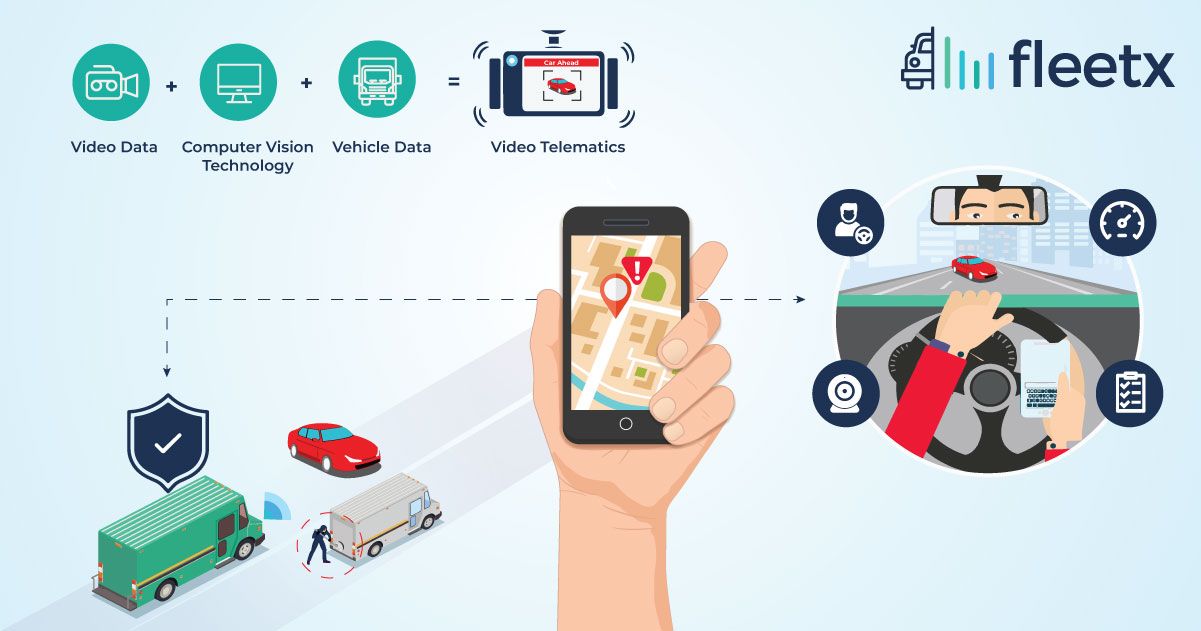
The term "video telematics" refers to a technology that combines cameras and analytics with fleet tracking. The purpose of using this technology is to ensure that fleets are running efficiently and safely. Vehicle cameras, once considered a commodity or even a potential liability, are now becoming increasingly important to have in your fleet. We are witnessing a transition from traditional dashcam to video telematics.
Most of the companies that own a fleet of vehicles are generally involved in either transporting their goods or providing transportation services to others. Before this technology came into view, companies had to bear the huge cost of cargo transportation. While crossing borders of certain states or while drivers were taking rest, the incidents of cargo thefts were reported by drivers and final receivers of goods. Not only this but a sense of casualness and negligence was also seen in driver's behavior, as there were more challans and driver complaints like rash driving, frequent incidents, inappropriate use of vehicles, etc.
Video telematics has two distinct advantages over a standard dash camera. The first advantage is that video telematics can be used by managers to identify and modify risky driving behavior. The second advantage of this technology is that managers can get quick video proof of critical incidents, or what insurers call "first notification of loss (FNOL)”.
While transmitting the video evidence in real-time over a cellular network, fleet video telematics combines driving and vehicle data to add more context to any incident footage. Multiple cameras are installed both outside and inside of the vehicle now. Cameras facing the road are equipped with AI technology that use certain algorithms to calculate the driving pattern of the driver and provide a real-time update to users about the road conditions and incidents taking place in real-time. It also serves as video proof in case one of the vehicles gets involved in an accident. In those scenarios, the footage of cameras is used.
Driver facing cameras can be used for various purposes such as:-
Driver coaching: Driver coaching is made much easier by being able to see what the driver is seeing in order to address any mistakes, identify hazards, and praise good decisions. Additionally, it offers the driver immediate feedback based on actual data rather than guesses.
Driver motivation and gamification: As drivers are rewarded by the way they drive, they get more motivated to focus on good driving behavior rather than unsafe driving behaviors, like talking or texting on the phone while driving.
Better driver behavior and driver achievements: Monitoring with video telematics ensures road safety and a significant improvement in driver behavior. Staff can see how they can improve (usually in real time) and have a fruitful conversation with their fleet manager. It is an investment in the company as well as the drivers' careers. Video telematics also offers a quick system for communicating accomplishments among them.
Driver exemption : Dashcams, and especially trucks with multi-camera systems installed that provide a 360-degree view around the truck, can be used in incident reviews and litigation to demonstrate that a driver was not at fault during accident or any suspicious activity, exonerating the driver involved in a crash, or exposing a scam.
Cameras that are installed inside the vehicle are generally seen in the cargo area and driver's cabin. The ones which are facing the driver are used to keep an eye on drivers to check if they are paying attention to the road, speed limits, and vehicle gauges. This keeps managers updated about driver behavior whether they are driving while being intoxicated with alcohol or if they’re dozing out while being on the road, as these things might result in a catastrophe. The rest of the cameras are installed inside the cargo area for various reasons such as:-
Cargo theft detection: The theft is quickly reported to fleet managers via an alert notification. This draws attention to the vehicle's location and alerts managers to a violated rule or theft. Having a dashcam adds up in the report as it allows the vehicle to record everything that happens around the vehicle. It can also help managers identify thieves and locate landmarks to pinpoint the location of a vehicle.
Creates accountability : It is possible for carriers to examine cargo claims more thoroughly and at a lower cost by having access to cargo photos at the pickup and delivery sites. These photographs give a clear record of how the cargo was loaded and how it appeared upon delivery.
Video Telematics vs Traditional Fleet Monitoring: Understanding the Difference
Many fleet operators still rely on traditional GPS tracking and basic dashcams to monitor vehicles. While these tools provide visibility into vehicle location and recording capabilities, they often fail to deliver the contextual intelligence required for modern fleet operations. Video telematics bridges this gap by combining video footage, telematics data, AI-powered analytics, and driver behavior monitoring into a single ecosystem.
Traditional fleet monitoring systems primarily answer questions such as where a vehicle is located, how fast it is travelling, or when it stops. However, they cannot always explain why an incident occurred or what actions led to a safety event. Video telematics adds this missing layer of context. By synchronising video footage with speed, braking patterns, acceleration data, route information, and vehicle diagnostics, fleet managers gain a complete understanding of operational events.
For example, if a truck suddenly brakes on a highway, GPS tracking may only indicate a speed reduction. Video telematics can reveal whether the driver avoided a collision, reacted to a pedestrian crossing, encountered poor road conditions, or engaged in unsafe driving behavior. This contextual information is crucial for driver coaching, insurance claims management, compliance reporting, and operational improvement.
The growing adoption of AI-powered transportation technology has transformed video telematics from a passive recording system into an active fleet intelligence platform. Modern solutions can identify distracted driving, mobile phone usage, smoking while driving, seatbelt violations, drowsiness, tailgating, harsh cornering, lane departure events, and unsafe following distances. Instead of reviewing footage manually, fleet managers receive automated alerts and prioritized safety insights.
Video Telematics vs Traditional Fleet Monitoring
| Feature | Traditional GPS Tracking | Basic Dashcam | Video Telematics |
|---|---|---|---|
| Vehicle Location Tracking | Yes | No | Yes |
| Driver Behavior Monitoring | Limited | Limited | Advanced |
| Real-Time Alerts | Basic | No | Yes |
| AI-Powered Safety Analysis | No | No | Yes |
| Driver Distraction Detection | No | No | Yes |
| Drowsiness Detection | No | No | Yes |
| Video Evidence for Accidents | No | Yes | Yes |
| Cargo Monitoring | No | Limited | Yes |
| Driver Coaching Support | Limited | Limited | Advanced |
| Insurance Claim Support | Moderate | Good | Excellent |
| Fleet Safety Scoring | No | No | Yes |
| Operational Intelligence | Limited | Limited | Extensive |
Another major advantage of video telematics is its ability to reduce the administrative burden on fleet managers. Instead of manually investigating incidents, managers can access timestamped video evidence paired with telemetry data. This accelerates root cause analysis and helps organizations establish objective safety standards across their fleet.
As transportation networks become increasingly complex, fleet operators require more than visibility; they need actionable intelligence. Video telematics transforms fleet data into operational insights that improve safety, accountability, efficiency, and decision-making across the entire transportation lifecycle.
How AI-Powered Video Telematics Improves Fleet Safety, Compliance, and Operational Efficiency
Artificial Intelligence has significantly expanded the capabilities of video telematics systems. Earlier generations of fleet cameras primarily served as recording devices that captured footage for later review. Today's AI-powered video telematics solutions actively analyze driver behavior and road conditions in real time, enabling preventive intervention rather than reactive investigation.
One of the most valuable applications of AI in fleet safety is behavioral analysis. The system continuously evaluates driving patterns and identifies risky activities before they lead to accidents. Common behaviors detected include distracted driving, fatigue, harsh braking, aggressive acceleration, unsafe lane changes, seatbelt violations, mobile phone usage, smoking, and prolonged inattentiveness.
Rather than relying solely on fleet managers to review hours of video footage, AI algorithms automatically classify and prioritize safety events. This allows managers to focus their attention on the highest-risk incidents while reducing administrative workload.
AI-powered video telematics also strengthens compliance management. Commercial transportation companies often operate under strict safety regulations and service-level commitments. Maintaining consistent compliance across hundreds or thousands of vehicles can be challenging. Automated monitoring helps organizations ensure adherence to company safety policies and industry best practices.
Beyond safety, video telematics plays an important role in operational efficiency. Every unsafe driving behavior carries financial implications. Excessive speeding, harsh braking, unnecessary idling, aggressive acceleration, and poor route discipline contribute to increased fuel consumption, vehicle wear, maintenance expenses, and accident-related costs.
When organizations use video telematics to coach drivers and improve driving habits, they often experience benefits such as:
- Reduced accident frequency
- Lower vehicle downtime
- Improved fuel efficiency
- Reduced maintenance expenses
- Better driver retention
- Faster incident investigations
- Improved customer service levels
- Stronger fleet compliance
- Better insurance claim outcomes
- Increased operational transparency
For logistics companies managing high-value cargo, video telematics adds another layer of security. Cargo-facing cameras and event-triggered recordings help identify unauthorized access, mishandling, theft attempts, and loading or unloading discrepancies. This level of visibility is especially valuable in industries such as pharmaceuticals, FMCG distribution, retail logistics, cold chain transportation, manufacturing, and e-commerce fulfillment.
The combination of AI analytics and visual evidence enables transportation companies to shift from reactive fleet management to proactive risk prevention. Instead of responding after an incident occurs, organizations can identify trends, correct unsafe behaviors, and continuously improve fleet performance.
As fleets generate increasing volumes of operational data, AI-powered video telematics serves as a critical decision-support tool that converts raw information into meaningful actions. The result is a safer, more efficient, and more resilient transportation operation.
The Future of Video Telematics in Logistics and Commercial Transportation
The future of fleet management is increasingly data-driven, connected, and predictive. Video telematics is expected to become one of the foundational technologies supporting next-generation transportation operations. As artificial intelligence, machine learning, edge computing, and connected vehicle technologies continue to evolve, the role of video telematics will extend far beyond safety monitoring.
One emerging trend is predictive risk management. Instead of simply identifying unsafe events after they occur, future systems will analyze historical driving behavior, environmental conditions, traffic patterns, vehicle health data, and route characteristics to predict potential safety risks before they happen. Fleet managers will receive recommendations designed to prevent incidents rather than investigate them.
Another significant development is the integration of video telematics with broader transportation management ecosystems. Modern logistics organizations increasingly rely on Transportation Management Systems (TMS), fleet management software, route optimization platforms, maintenance systems, fuel management solutions, and supply chain visibility tools. Video telematics data can enhance each of these systems by providing contextual intelligence that improves decision-making.
For example, a transportation management platform may identify recurring delivery delays. By integrating video telematics data, managers can determine whether delays stem from traffic congestion, driver behavior, route inefficiencies, loading bottlenecks, vehicle issues, or external environmental factors. This deeper level of visibility enables more accurate operational planning.
The logistics sector is also witnessing increased demand for sustainability and fuel efficiency. Video telematics contributes directly to these goals by encouraging safer driving habits, reducing fuel waste, minimizing unnecessary idling, and optimizing vehicle utilization. Organizations pursuing sustainability objectives can use telematics-generated insights to measure and improve environmental performance.
Commercial transportation in India is particularly well-positioned to benefit from advanced video telematics adoption. With expanding highway infrastructure, growing e-commerce demand, increasing freight volumes, and rising expectations around road safety, fleet operators require intelligent technologies that support scalable operations. Video telematics helps address these challenges by improving visibility across drivers, vehicles, cargo, and transportation networks.
Future video telematics systems are also expected to support:
- Predictive accident prevention
- Advanced driver risk scoring
- Automated compliance reporting
- AI-generated driver coaching recommendations
- Integrated fleet safety dashboards
- Real-time hazard detection
- Smart cargo monitoring
- Connected vehicle ecosystems
- Autonomous fleet support systems
- Enhanced transportation analytics
Organizations that invest in video telematics today are not simply adopting another fleet technology. They are building the foundation for a more intelligent, data-driven transportation strategy capable of adapting to evolving safety, operational, regulatory, and customer requirements.
The evolution from basic dashcams to intelligent video telematics represents one of the most significant advancements in fleet management technology. As AI capabilities continue to mature, video telematics will increasingly become a core component of modern logistics operations, enabling safer roads, smarter fleets, and more efficient supply chains.
Takeaway
Video telematics ensures improved driver performance, stronger road safety, greater operational visibility, and more consistent business outcomes. However, modern video telematics extends far beyond simple video capture. By combining AI-powered analytics, real-time alerts, driver behavior monitoring, and vehicle telemetry data, it creates a comprehensive ecosystem for proactive fleet management. Fleet operators can identify risks before they escalate, coach drivers using objective insights, reduce accident-related costs, strengthen cargo security, and improve overall fleet efficiency. As logistics operations become increasingly data-driven, video telematics is evolving into a critical tool for enhancing compliance, optimizing performance, and supporting smarter decision-making across transportation networks. For fleet owners and drivers alike, it delivers not only visual evidence but also actionable intelligence that drives safer roads, more accountable operations, and long-term business growth.
Key Takeaways
| Area | Key Takeaway |
|---|---|
| Video Telematics | Combines AI-powered cameras, telematics data, and fleet analytics to provide real-time visibility into driver behavior, vehicle performance, and road conditions. |
| Traditional Dashcams vs Video Telematics | Unlike traditional dashcams, video telematics links video footage with speed, braking, acceleration, route, and vehicle data to deliver actionable operational insights. |
| Driver Safety | Helps detect distracted driving, fatigue, speeding, harsh braking, mobile phone usage, and other risky behaviors before they result in accidents. |
| Driver Coaching | Real-time alerts and objective performance insights enable effective driver coaching and encourage safer driving habits. |
| Incident Management | Provides video evidence that supports faster incident investigations, insurance claims processing, compliance reporting, and driver exoneration. |
| Cargo Security | Cargo-facing and cabin-facing cameras improve shipment visibility, reduce theft risks, and enhance accountability throughout transportation operations. |
| Operational Efficiency | Supports lower fuel consumption, reduced maintenance costs, improved vehicle utilization, and more efficient fleet operations. |
| Industry Applications | Widely used across logistics, transportation, FMCG, manufacturing, e-commerce, cold chain, construction, and passenger transit fleets. |
| Future of Fleet Management | AI-powered video telematics is becoming a critical technology for improving fleet safety, compliance, operational visibility, and data-driven decision-making. |
| Business Impact | Video telematics is evolving from a monitoring tool into a strategic fleet management solution that drives safer roads, smarter logistics, and sustainable business growth. |
FAQs
What is video telematics and how does it improve fleet safety in India?
Video telematics combines cameras, telematics data, GPS tracking, AI analytics, and driver monitoring to create a complete fleet visibility platform. Organizations across Delhi, Gurgaon, Mumbai, Bengaluru, Pune, and other logistics hubs use these systems to improve safety, reduce accidents, strengthen compliance, and optimize operations. Modern platforms provide real-time alerts, driver coaching, incident reconstruction, cargo security monitoring, and operational intelligence. Implementation costs vary depending on hardware, camera count, cloud storage, and analytics requirements, but many fleets justify investment through lower accident rates, fuel savings, reduced insurance disputes, and improved fleet productivity. As AI adoption grows, video telematics is becoming a core technology for commercial transportation, logistics, FMCG distribution, manufacturing, cold chain operations, and e-commerce fleets. Video telematics combines cameras, telematics data, GPS tracking, AI analytics, and driver monitoring to create a complete fleet visibility platform. Organizations across Delhi, Gurgaon, Mumbai, Bengaluru, Pune, and other logistics hubs use these systems to improve safety, reduce accidents, strengthen compliance, and optimize operations. Modern platforms provide real-time alerts, driver coaching, incident reconstruction, cargo security monitoring, and operational intelligence. Implementation costs vary depending on hardware, camera count, cloud storage, and analytics requirements, but many fleets justify investment through lower accident rates, fuel savings, reduced insurance disputes, and improved fleet productivity. As AI adoption grows, video telematics is becoming a core technology for commercial transportation, logistics, FMCG distribution, manufacturing, cold chain operations, and e-commerce fleets. Video telematics combines cameras, telematics data, GPS tracking, AI analytics, and driver monitoring to create a complete fleet visibility platform. Organizations across Delhi, Gurgaon, Mumbai, Bengaluru, Pune, and other logistics hubs use these systems to improve safety, reduce accidents, strengthen compliance, and optimize operations. Modern platforms provide real-time alerts, driver coaching, incident reconstruction, cargo security monitoring, and operational intelligence. Implementation costs vary depending on hardware, camera count, cloud storage, and analytics requirements, but many fleets justify investment through lower accident rates, fuel savings, reduced insurance disputes, and improved fleet productivity. As AI adoption grows, video telematics is becoming a core technology for commercial transportation, logistics, FMCG distribution, manufacturing, cold chain operations, and e-commerce fleets. Video telematics combines cameras, telematics data, GPS tracking, AI analytics, and driver monitoring to create a complete fleet visibility platform. Organizations across Delhi, Gurgaon, Mumbai, Bengaluru, Pune, and other logistics hubs use these systems to improve safety, reduce accidents, strengthen compliance, and optimize operations. Modern platforms provide real-time alerts, driver coaching, incident reconstruction, cargo security monitoring, and operational intelligence. Implementation costs vary depending on hardware, camera count, cloud storage, and analytics requirements, but many fleets justify investment through lower accident rates, fuel savings, reduced insurance disputes, and improved fleet productivity. As AI adoption grows, video telematics is becoming a core technology for commercial transportation, logistics, FMCG distribution, manufacturing, cold chain operations, and e-commerce fleets. Video telematics combines cameras, telematics data, GPS tracking, AI analytics, and driver monitoring to create a complete fleet visibility platform. Organizations across Delhi, Gurgaon, Mumbai, Bengaluru, Pune, and other logistics hubs use these systems to improve safety, reduce accidents, strengthen compliance, and optimize operations. Modern platforms provide real-time alerts, driver coaching, incident reconstruction, cargo security monitoring, and operational intelligence. Implementation costs vary depending on hardware, camera count, cloud storage, and analytics requirements, but many fleets justify investment through lower accident rates, fuel savings, reduced insurance disputes, and improved fleet productivity. As AI adoption grows, video telematics is becoming a core technology for commercial transportation, logistics, FMCG distribution, manufacturing, cold chain operations, and e-commerce fleets. Video telematics combines cameras, telematics data, GPS tracking, AI analytics, and driver monitoring to create a complete fleet visibility platform. Organizations across Delhi, Gurgaon, Mumbai, Bengaluru, Pune, and other logistics hubs use these systems to improve safety, reduce accidents, strengthen compliance, and optimize operations. Modern platforms provide real-time alerts, driver coaching, incident reconstruction, cargo security monitoring, and operational intelligence. Implementation costs vary depending on hardware, camera count, cloud storage, and analytics requirements, but many fleets justify investment through lower accident rates, fuel savings, reduced insurance disputes, and improved fleet productivity. As AI adoption grows, video telematics is becoming a core technology for commercial transportation, logistics, FMCG distribution, manufacturing, cold chain operations, and e-commerce fleets.
How does AI-powered video telematics improve driver behavior?
Video telematics combines cameras, telematics data, GPS tracking, AI analytics, and driver monitoring to create a complete fleet visibility platform. Organizations across Delhi, Gurgaon, Mumbai, Bengaluru, Pune, and other logistics hubs use these systems to improve safety, reduce accidents, strengthen compliance, and optimize operations. Modern platforms provide real-time alerts, driver coaching, incident reconstruction, cargo security monitoring, and operational intelligence. Implementation costs vary depending on hardware, camera count, cloud storage, and analytics requirements, but many fleets justify investment through lower accident rates, fuel savings, reduced insurance disputes, and improved fleet productivity. As AI adoption grows, video telematics is becoming a core technology for commercial transportation, logistics, FMCG distribution, manufacturing, cold chain operations, and e-commerce fleets. Video telematics combines cameras, telematics data, GPS tracking, AI analytics, and driver monitoring to create a complete fleet visibility platform. Organizations across Delhi, Gurgaon, Mumbai, Bengaluru, Pune, and other logistics hubs use these systems to improve safety, reduce accidents, strengthen compliance, and optimize operations. Modern platforms provide real-time alerts, driver coaching, incident reconstruction, cargo security monitoring, and operational intelligence. Implementation costs vary depending on hardware, camera count, cloud storage, and analytics requirements, but many fleets justify investment through lower accident rates, fuel savings, reduced insurance disputes, and improved fleet productivity. As AI adoption grows, video telematics is becoming a core technology for commercial transportation, logistics, FMCG distribution, manufacturing, cold chain operations, and e-commerce fleets. Video telematics combines cameras, telematics data, GPS tracking, AI analytics, and driver monitoring to create a complete fleet visibility platform. Organizations across Delhi, Gurgaon, Mumbai, Bengaluru, Pune, and other logistics hubs use these systems to improve safety, reduce accidents, strengthen compliance, and optimize operations. Modern platforms provide real-time alerts, driver coaching, incident reconstruction, cargo security monitoring, and operational intelligence. Implementation costs vary depending on hardware, camera count, cloud storage, and analytics requirements, but many fleets justify investment through lower accident rates, fuel savings, reduced insurance disputes, and improved fleet productivity. As AI adoption grows, video telematics is becoming a core technology for commercial transportation, logistics, FMCG distribution, manufacturing, cold chain operations, and e-commerce fleets. Video telematics combines cameras, telematics data, GPS tracking, AI analytics, and driver monitoring to create a complete fleet visibility platform. Organizations across Delhi, Gurgaon, Mumbai, Bengaluru, Pune, and other logistics hubs use these systems to improve safety, reduce accidents, strengthen compliance, and optimize operations. Modern platforms provide real-time alerts, driver coaching, incident reconstruction, cargo security monitoring, and operational intelligence. Implementation costs vary depending on hardware, camera count, cloud storage, and analytics requirements, but many fleets justify investment through lower accident rates, fuel savings, reduced insurance disputes, and improved fleet productivity. As AI adoption grows, video telematics is becoming a core technology for commercial transportation, logistics, FMCG distribution, manufacturing, cold chain operations, and e-commerce fleets. Video telematics combines cameras, telematics data, GPS tracking, AI analytics, and driver monitoring to create a complete fleet visibility platform. Organizations across Delhi, Gurgaon, Mumbai, Bengaluru, Pune, and other logistics hubs use these systems to improve safety, reduce accidents, strengthen compliance, and optimize operations. Modern platforms provide real-time alerts, driver coaching, incident reconstruction, cargo security monitoring, and operational intelligence. Implementation costs vary depending on hardware, camera count, cloud storage, and analytics requirements, but many fleets justify investment through lower accident rates, fuel savings, reduced insurance disputes, and improved fleet productivity. As AI adoption grows, video telematics is becoming a core technology for commercial transportation, logistics, FMCG distribution, manufacturing, cold chain operations, and e-commerce fleets. Video telematics combines cameras, telematics data, GPS tracking, AI analytics, and driver monitoring to create a complete fleet visibility platform. Organizations across Delhi, Gurgaon, Mumbai, Bengaluru, Pune, and other logistics hubs use these systems to improve safety, reduce accidents, strengthen compliance, and optimize operations. Modern platforms provide real-time alerts, driver coaching, incident reconstruction, cargo security monitoring, and operational intelligence. Implementation costs vary depending on hardware, camera count, cloud storage, and analytics requirements, but many fleets justify investment through lower accident rates, fuel savings, reduced insurance disputes, and improved fleet productivity. As AI adoption grows, video telematics is becoming a core technology for commercial transportation, logistics, FMCG distribution, manufacturing, cold chain operations, and e-commerce fleets.
What is the cost of video telematics systems in India?
Video telematics combines cameras, telematics data, GPS tracking, AI analytics, and driver monitoring to create a complete fleet visibility platform. Organizations across Delhi, Gurgaon, Mumbai, Bengaluru, Pune, and other logistics hubs use these systems to improve safety, reduce accidents, strengthen compliance, and optimize operations. Modern platforms provide real-time alerts, driver coaching, incident reconstruction, cargo security monitoring, and operational intelligence. Implementation costs vary depending on hardware, camera count, cloud storage, and analytics requirements, but many fleets justify investment through lower accident rates, fuel savings, reduced insurance disputes, and improved fleet productivity. As AI adoption grows, video telematics is becoming a core technology for commercial transportation, logistics, FMCG distribution, manufacturing, cold chain operations, and e-commerce fleets. Video telematics combines cameras, telematics data, GPS tracking, AI analytics, and driver monitoring to create a complete fleet visibility platform. Organizations across Delhi, Gurgaon, Mumbai, Bengaluru, Pune, and other logistics hubs use these systems to improve safety, reduce accidents, strengthen compliance, and optimize operations. Modern platforms provide real-time alerts, driver coaching, incident reconstruction, cargo security monitoring, and operational intelligence. Implementation costs vary depending on hardware, camera count, cloud storage, and analytics requirements, but many fleets justify investment through lower accident rates, fuel savings, reduced insurance disputes, and improved fleet productivity. As AI adoption grows, video telematics is becoming a core technology for commercial transportation, logistics, FMCG distribution, manufacturing, cold chain operations, and e-commerce fleets. Video telematics combines cameras, telematics data, GPS tracking, AI analytics, and driver monitoring to create a complete fleet visibility platform. Organizations across Delhi, Gurgaon, Mumbai, Bengaluru, Pune, and other logistics hubs use these systems to improve safety, reduce accidents, strengthen compliance, and optimize operations. Modern platforms provide real-time alerts, driver coaching, incident reconstruction, cargo security monitoring, and operational intelligence. Implementation costs vary depending on hardware, camera count, cloud storage, and analytics requirements, but many fleets justify investment through lower accident rates, fuel savings, reduced insurance disputes, and improved fleet productivity. As AI adoption grows, video telematics is becoming a core technology for commercial transportation, logistics, FMCG distribution, manufacturing, cold chain operations, and e-commerce fleets. Video telematics combines cameras, telematics data, GPS tracking, AI analytics, and driver monitoring to create a complete fleet visibility platform. Organizations across Delhi, Gurgaon, Mumbai, Bengaluru, Pune, and other logistics hubs use these systems to improve safety, reduce accidents, strengthen compliance, and optimize operations. Modern platforms provide real-time alerts, driver coaching, incident reconstruction, cargo security monitoring, and operational intelligence. Implementation costs vary depending on hardware, camera count, cloud storage, and analytics requirements, but many fleets justify investment through lower accident rates, fuel savings, reduced insurance disputes, and improved fleet productivity. As AI adoption grows, video telematics is becoming a core technology for commercial transportation, logistics, FMCG distribution, manufacturing, cold chain operations, and e-commerce fleets. Video telematics combines cameras, telematics data, GPS tracking, AI analytics, and driver monitoring to create a complete fleet visibility platform. Organizations across Delhi, Gurgaon, Mumbai, Bengaluru, Pune, and other logistics hubs use these systems to improve safety, reduce accidents, strengthen compliance, and optimize operations. Modern platforms provide real-time alerts, driver coaching, incident reconstruction, cargo security monitoring, and operational intelligence. Implementation costs vary depending on hardware, camera count, cloud storage, and analytics requirements, but many fleets justify investment through lower accident rates, fuel savings, reduced insurance disputes, and improved fleet productivity. As AI adoption grows, video telematics is becoming a core technology for commercial transportation, logistics, FMCG distribution, manufacturing, cold chain operations, and e-commerce fleets. Video telematics combines cameras, telematics data, GPS tracking, AI analytics, and driver monitoring to create a complete fleet visibility platform. Organizations across Delhi, Gurgaon, Mumbai, Bengaluru, Pune, and other logistics hubs use these systems to improve safety, reduce accidents, strengthen compliance, and optimize operations. Modern platforms provide real-time alerts, driver coaching, incident reconstruction, cargo security monitoring, and operational intelligence. Implementation costs vary depending on hardware, camera count, cloud storage, and analytics requirements, but many fleets justify investment through lower accident rates, fuel savings, reduced insurance disputes, and improved fleet productivity. As AI adoption grows, video telematics is becoming a core technology for commercial transportation, logistics, FMCG distribution, manufacturing, cold chain operations, and e-commerce fleets.
What are the benefits of video telematics for logistics companies?
Video telematics combines cameras, telematics data, GPS tracking, AI analytics, and driver monitoring to create a complete fleet visibility platform. Organizations across Delhi, Gurgaon, Mumbai, Bengaluru, Pune, and other logistics hubs use these systems to improve safety, reduce accidents, strengthen compliance, and optimize operations. Modern platforms provide real-time alerts, driver coaching, incident reconstruction, cargo security monitoring, and operational intelligence. Implementation costs vary depending on hardware, camera count, cloud storage, and analytics requirements, but many fleets justify investment through lower accident rates, fuel savings, reduced insurance disputes, and improved fleet productivity. As AI adoption grows, video telematics is becoming a core technology for commercial transportation, logistics, FMCG distribution, manufacturing, cold chain operations, and e-commerce fleets. Video telematics combines cameras, telematics data, GPS tracking, AI analytics, and driver monitoring to create a complete fleet visibility platform. Organizations across Delhi, Gurgaon, Mumbai, Bengaluru, Pune, and other logistics hubs use these systems to improve safety, reduce accidents, strengthen compliance, and optimize operations. Modern platforms provide real-time alerts, driver coaching, incident reconstruction, cargo security monitoring, and operational intelligence. Implementation costs vary depending on hardware, camera count, cloud storage, and analytics requirements, but many fleets justify investment through lower accident rates, fuel savings, reduced insurance disputes, and improved fleet productivity. As AI adoption grows, video telematics is becoming a core technology for commercial transportation, logistics, FMCG distribution, manufacturing, cold chain operations, and e-commerce fleets. Video telematics combines cameras, telematics data, GPS tracking, AI analytics, and driver monitoring to create a complete fleet visibility platform. Organizations across Delhi, Gurgaon, Mumbai, Bengaluru, Pune, and other logistics hubs use these systems to improve safety, reduce accidents, strengthen compliance, and optimize operations. Modern platforms provide real-time alerts, driver coaching, incident reconstruction, cargo security monitoring, and operational intelligence. Implementation costs vary depending on hardware, camera count, cloud storage, and analytics requirements, but many fleets justify investment through lower accident rates, fuel savings, reduced insurance disputes, and improved fleet productivity. As AI adoption grows, video telematics is becoming a core technology for commercial transportation, logistics, FMCG distribution, manufacturing, cold chain operations, and e-commerce fleets. Video telematics combines cameras, telematics data, GPS tracking, AI analytics, and driver monitoring to create a complete fleet visibility platform. Organizations across Delhi, Gurgaon, Mumbai, Bengaluru, Pune, and other logistics hubs use these systems to improve safety, reduce accidents, strengthen compliance, and optimize operations. Modern platforms provide real-time alerts, driver coaching, incident reconstruction, cargo security monitoring, and operational intelligence. Implementation costs vary depending on hardware, camera count, cloud storage, and analytics requirements, but many fleets justify investment through lower accident rates, fuel savings, reduced insurance disputes, and improved fleet productivity. As AI adoption grows, video telematics is becoming a core technology for commercial transportation, logistics, FMCG distribution, manufacturing, cold chain operations, and e-commerce fleets. Video telematics combines cameras, telematics data, GPS tracking, AI analytics, and driver monitoring to create a complete fleet visibility platform. Organizations across Delhi, Gurgaon, Mumbai, Bengaluru, Pune, and other logistics hubs use these systems to improve safety, reduce accidents, strengthen compliance, and optimize operations. Modern platforms provide real-time alerts, driver coaching, incident reconstruction, cargo security monitoring, and operational intelligence. Implementation costs vary depending on hardware, camera count, cloud storage, and analytics requirements, but many fleets justify investment through lower accident rates, fuel savings, reduced insurance disputes, and improved fleet productivity. As AI adoption grows, video telematics is becoming a core technology for commercial transportation, logistics, FMCG distribution, manufacturing, cold chain operations, and e-commerce fleets. Video telematics combines cameras, telematics data, GPS tracking, AI analytics, and driver monitoring to create a complete fleet visibility platform. Organizations across Delhi, Gurgaon, Mumbai, Bengaluru, Pune, and other logistics hubs use these systems to improve safety, reduce accidents, strengthen compliance, and optimize operations. Modern platforms provide real-time alerts, driver coaching, incident reconstruction, cargo security monitoring, and operational intelligence. Implementation costs vary depending on hardware, camera count, cloud storage, and analytics requirements, but many fleets justify investment through lower accident rates, fuel savings, reduced insurance disputes, and improved fleet productivity. As AI adoption grows, video telematics is becoming a core technology for commercial transportation, logistics, FMCG distribution, manufacturing, cold chain operations, and e-commerce fleets.
Which industries benefit most from video telematics?
Video telematics combines cameras, telematics data, GPS tracking, AI analytics, and driver monitoring to create a complete fleet visibility platform. Organizations across Delhi, Gurgaon, Mumbai, Bengaluru, Pune, and other logistics hubs use these systems to improve safety, reduce accidents, strengthen compliance, and optimize operations. Modern platforms provide real-time alerts, driver coaching, incident reconstruction, cargo security monitoring, and operational intelligence. Implementation costs vary depending on hardware, camera count, cloud storage, and analytics requirements, but many fleets justify investment through lower accident rates, fuel savings, reduced insurance disputes, and improved fleet productivity. As AI adoption grows, video telematics is becoming a core technology for commercial transportation, logistics, FMCG distribution, manufacturing, cold chain operations, and e-commerce fleets. Video telematics combines cameras, telematics data, GPS tracking, AI analytics, and driver monitoring to create a complete fleet visibility platform. Organizations across Delhi, Gurgaon, Mumbai, Bengaluru, Pune, and other logistics hubs use these systems to improve safety, reduce accidents, strengthen compliance, and optimize operations. Modern platforms provide real-time alerts, driver coaching, incident reconstruction, cargo security monitoring, and operational intelligence. Implementation costs vary depending on hardware, camera count, cloud storage, and analytics requirements, but many fleets justify investment through lower accident rates, fuel savings, reduced insurance disputes, and improved fleet productivity. As AI adoption grows, video telematics is becoming a core technology for commercial transportation, logistics, FMCG distribution, manufacturing, cold chain operations, and e-commerce fleets. Video telematics combines cameras, telematics data, GPS tracking, AI analytics, and driver monitoring to create a complete fleet visibility platform. Organizations across Delhi, Gurgaon, Mumbai, Bengaluru, Pune, and other logistics hubs use these systems to improve safety, reduce accidents, strengthen compliance, and optimize operations. Modern platforms provide real-time alerts, driver coaching, incident reconstruction, cargo security monitoring, and operational intelligence. Implementation costs vary depending on hardware, camera count, cloud storage, and analytics requirements, but many fleets justify investment through lower accident rates, fuel savings, reduced insurance disputes, and improved fleet productivity. As AI adoption grows, video telematics is becoming a core technology for commercial transportation, logistics, FMCG distribution, manufacturing, cold chain operations, and e-commerce fleets. Video telematics combines cameras, telematics data, GPS tracking, AI analytics, and driver monitoring to create a complete fleet visibility platform. Organizations across Delhi, Gurgaon, Mumbai, Bengaluru, Pune, and other logistics hubs use these systems to improve safety, reduce accidents, strengthen compliance, and optimize operations. Modern platforms provide real-time alerts, driver coaching, incident reconstruction, cargo security monitoring, and operational intelligence. Implementation costs vary depending on hardware, camera count, cloud storage, and analytics requirements, but many fleets justify investment through lower accident rates, fuel savings, reduced insurance disputes, and improved fleet productivity. As AI adoption grows, video telematics is becoming a core technology for commercial transportation, logistics, FMCG distribution, manufacturing, cold chain operations, and e-commerce fleets. Video telematics combines cameras, telematics data, GPS tracking, AI analytics, and driver monitoring to create a complete fleet visibility platform. Organizations across Delhi, Gurgaon, Mumbai, Bengaluru, Pune, and other logistics hubs use these systems to improve safety, reduce accidents, strengthen compliance, and optimize operations. Modern platforms provide real-time alerts, driver coaching, incident reconstruction, cargo security monitoring, and operational intelligence. Implementation costs vary depending on hardware, camera count, cloud storage, and analytics requirements, but many fleets justify investment through lower accident rates, fuel savings, reduced insurance disputes, and improved fleet productivity. As AI adoption grows, video telematics is becoming a core technology for commercial transportation, logistics, FMCG distribution, manufacturing, cold chain operations, and e-commerce fleets. Video telematics combines cameras, telematics data, GPS tracking, AI analytics, and driver monitoring to create a complete fleet visibility platform. Organizations across Delhi, Gurgaon, Mumbai, Bengaluru, Pune, and other logistics hubs use these systems to improve safety, reduce accidents, strengthen compliance, and optimize operations. Modern platforms provide real-time alerts, driver coaching, incident reconstruction, cargo security monitoring, and operational intelligence. Implementation costs vary depending on hardware, camera count, cloud storage, and analytics requirements, but many fleets justify investment through lower accident rates, fuel savings, reduced insurance disputes, and improved fleet productivity. As AI adoption grows, video telematics is becoming a core technology for commercial transportation, logistics, FMCG distribution, manufacturing, cold chain operations, and e-commerce fleets.
What are the top features to look for in a video telematics solution?
Video telematics combines cameras, telematics data, GPS tracking, AI analytics, and driver monitoring to create a complete fleet visibility platform. Organizations across Delhi, Gurgaon, Mumbai, Bengaluru, Pune, and other logistics hubs use these systems to improve safety, reduce accidents, strengthen compliance, and optimize operations. Modern platforms provide real-time alerts, driver coaching, incident reconstruction, cargo security monitoring, and operational intelligence. Implementation costs vary depending on hardware, camera count, cloud storage, and analytics requirements, but many fleets justify investment through lower accident rates, fuel savings, reduced insurance disputes, and improved fleet productivity. As AI adoption grows, video telematics is becoming a core technology for commercial transportation, logistics, FMCG distribution, manufacturing, cold chain operations, and e-commerce fleets. Video telematics combines cameras, telematics data, GPS tracking, AI analytics, and driver monitoring to create a complete fleet visibility platform. Organizations across Delhi, Gurgaon, Mumbai, Bengaluru, Pune, and other logistics hubs use these systems to improve safety, reduce accidents, strengthen compliance, and optimize operations. Modern platforms provide real-time alerts, driver coaching, incident reconstruction, cargo security monitoring, and operational intelligence. Implementation costs vary depending on hardware, camera count, cloud storage, and analytics requirements, but many fleets justify investment through lower accident rates, fuel savings, reduced insurance disputes, and improved fleet productivity. As AI adoption grows, video telematics is becoming a core technology for commercial transportation, logistics, FMCG distribution, manufacturing, cold chain operations, and e-commerce fleets. Video telematics combines cameras, telematics data, GPS tracking, AI analytics, and driver monitoring to create a complete fleet visibility platform. Organizations across Delhi, Gurgaon, Mumbai, Bengaluru, Pune, and other logistics hubs use these systems to improve safety, reduce accidents, strengthen compliance, and optimize operations. Modern platforms provide real-time alerts, driver coaching, incident reconstruction, cargo security monitoring, and operational intelligence. Implementation costs vary depending on hardware, camera count, cloud storage, and analytics requirements, but many fleets justify investment through lower accident rates, fuel savings, reduced insurance disputes, and improved fleet productivity. As AI adoption grows, video telematics is becoming a core technology for commercial transportation, logistics, FMCG distribution, manufacturing, cold chain operations, and e-commerce fleets. Video telematics combines cameras, telematics data, GPS tracking, AI analytics, and driver monitoring to create a complete fleet visibility platform. Organizations across Delhi, Gurgaon, Mumbai, Bengaluru, Pune, and other logistics hubs use these systems to improve safety, reduce accidents, strengthen compliance, and optimize operations. Modern platforms provide real-time alerts, driver coaching, incident reconstruction, cargo security monitoring, and operational intelligence. Implementation costs vary depending on hardware, camera count, cloud storage, and analytics requirements, but many fleets justify investment through lower accident rates, fuel savings, reduced insurance disputes, and improved fleet productivity. As AI adoption grows, video telematics is becoming a core technology for commercial transportation, logistics, FMCG distribution, manufacturing, cold chain operations, and e-commerce fleets. Video telematics combines cameras, telematics data, GPS tracking, AI analytics, and driver monitoring to create a complete fleet visibility platform. Organizations across Delhi, Gurgaon, Mumbai, Bengaluru, Pune, and other logistics hubs use these systems to improve safety, reduce accidents, strengthen compliance, and optimize operations. Modern platforms provide real-time alerts, driver coaching, incident reconstruction, cargo security monitoring, and operational intelligence. Implementation costs vary depending on hardware, camera count, cloud storage, and analytics requirements, but many fleets justify investment through lower accident rates, fuel savings, reduced insurance disputes, and improved fleet productivity. As AI adoption grows, video telematics is becoming a core technology for commercial transportation, logistics, FMCG distribution, manufacturing, cold chain operations, and e-commerce fleets. Video telematics combines cameras, telematics data, GPS tracking, AI analytics, and driver monitoring to create a complete fleet visibility platform. Organizations across Delhi, Gurgaon, Mumbai, Bengaluru, Pune, and other logistics hubs use these systems to improve safety, reduce accidents, strengthen compliance, and optimize operations. Modern platforms provide real-time alerts, driver coaching, incident reconstruction, cargo security monitoring, and operational intelligence. Implementation costs vary depending on hardware, camera count, cloud storage, and analytics requirements, but many fleets justify investment through lower accident rates, fuel savings, reduced insurance disputes, and improved fleet productivity. As AI adoption grows, video telematics is becoming a core technology for commercial transportation, logistics, FMCG distribution, manufacturing, cold chain operations, and e-commerce fleets.
How is video telematics used in Delhi NCR and Gurgaon fleets?
Video telematics combines cameras, telematics data, GPS tracking, AI analytics, and driver monitoring to create a complete fleet visibility platform. Organizations across Delhi, Gurgaon, Mumbai, Bengaluru, Pune, and other logistics hubs use these systems to improve safety, reduce accidents, strengthen compliance, and optimize operations. Modern platforms provide real-time alerts, driver coaching, incident reconstruction, cargo security monitoring, and operational intelligence. Implementation costs vary depending on hardware, camera count, cloud storage, and analytics requirements, but many fleets justify investment through lower accident rates, fuel savings, reduced insurance disputes, and improved fleet productivity. As AI adoption grows, video telematics is becoming a core technology for commercial transportation, logistics, FMCG distribution, manufacturing, cold chain operations, and e-commerce fleets. Video telematics combines cameras, telematics data, GPS tracking, AI analytics, and driver monitoring to create a complete fleet visibility platform. Organizations across Delhi, Gurgaon, Mumbai, Bengaluru, Pune, and other logistics hubs use these systems to improve safety, reduce accidents, strengthen compliance, and optimize operations. Modern platforms provide real-time alerts, driver coaching, incident reconstruction, cargo security monitoring, and operational intelligence. Implementation costs vary depending on hardware, camera count, cloud storage, and analytics requirements, but many fleets justify investment through lower accident rates, fuel savings, reduced insurance disputes, and improved fleet productivity. As AI adoption grows, video telematics is becoming a core technology for commercial transportation, logistics, FMCG distribution, manufacturing, cold chain operations, and e-commerce fleets. Video telematics combines cameras, telematics data, GPS tracking, AI analytics, and driver monitoring to create a complete fleet visibility platform. Organizations across Delhi, Gurgaon, Mumbai, Bengaluru, Pune, and other logistics hubs use these systems to improve safety, reduce accidents, strengthen compliance, and optimize operations. Modern platforms provide real-time alerts, driver coaching, incident reconstruction, cargo security monitoring, and operational intelligence. Implementation costs vary depending on hardware, camera count, cloud storage, and analytics requirements, but many fleets justify investment through lower accident rates, fuel savings, reduced insurance disputes, and improved fleet productivity. As AI adoption grows, video telematics is becoming a core technology for commercial transportation, logistics, FMCG distribution, manufacturing, cold chain operations, and e-commerce fleets. Video telematics combines cameras, telematics data, GPS tracking, AI analytics, and driver monitoring to create a complete fleet visibility platform. Organizations across Delhi, Gurgaon, Mumbai, Bengaluru, Pune, and other logistics hubs use these systems to improve safety, reduce accidents, strengthen compliance, and optimize operations. Modern platforms provide real-time alerts, driver coaching, incident reconstruction, cargo security monitoring, and operational intelligence. Implementation costs vary depending on hardware, camera count, cloud storage, and analytics requirements, but many fleets justify investment through lower accident rates, fuel savings, reduced insurance disputes, and improved fleet productivity. As AI adoption grows, video telematics is becoming a core technology for commercial transportation, logistics, FMCG distribution, manufacturing, cold chain operations, and e-commerce fleets. Video telematics combines cameras, telematics data, GPS tracking, AI analytics, and driver monitoring to create a complete fleet visibility platform. Organizations across Delhi, Gurgaon, Mumbai, Bengaluru, Pune, and other logistics hubs use these systems to improve safety, reduce accidents, strengthen compliance, and optimize operations. Modern platforms provide real-time alerts, driver coaching, incident reconstruction, cargo security monitoring, and operational intelligence. Implementation costs vary depending on hardware, camera count, cloud storage, and analytics requirements, but many fleets justify investment through lower accident rates, fuel savings, reduced insurance disputes, and improved fleet productivity. As AI adoption grows, video telematics is becoming a core technology for commercial transportation, logistics, FMCG distribution, manufacturing, cold chain operations, and e-commerce fleets. Video telematics combines cameras, telematics data, GPS tracking, AI analytics, and driver monitoring to create a complete fleet visibility platform. Organizations across Delhi, Gurgaon, Mumbai, Bengaluru, Pune, and other logistics hubs use these systems to improve safety, reduce accidents, strengthen compliance, and optimize operations. Modern platforms provide real-time alerts, driver coaching, incident reconstruction, cargo security monitoring, and operational intelligence. Implementation costs vary depending on hardware, camera count, cloud storage, and analytics requirements, but many fleets justify investment through lower accident rates, fuel savings, reduced insurance disputes, and improved fleet productivity. As AI adoption grows, video telematics is becoming a core technology for commercial transportation, logistics, FMCG distribution, manufacturing, cold chain operations, and e-commerce fleets.
How is video telematics helping transporters in Mumbai?
Video telematics combines cameras, telematics data, GPS tracking, AI analytics, and driver monitoring to create a complete fleet visibility platform. Organizations across Delhi, Gurgaon, Mumbai, Bengaluru, Pune, and other logistics hubs use these systems to improve safety, reduce accidents, strengthen compliance, and optimize operations. Modern platforms provide real-time alerts, driver coaching, incident reconstruction, cargo security monitoring, and operational intelligence. Implementation costs vary depending on hardware, camera count, cloud storage, and analytics requirements, but many fleets justify investment through lower accident rates, fuel savings, reduced insurance disputes, and improved fleet productivity. As AI adoption grows, video telematics is becoming a core technology for commercial transportation, logistics, FMCG distribution, manufacturing, cold chain operations, and e-commerce fleets. Video telematics combines cameras, telematics data, GPS tracking, AI analytics, and driver monitoring to create a complete fleet visibility platform. Organizations across Delhi, Gurgaon, Mumbai, Bengaluru, Pune, and other logistics hubs use these systems to improve safety, reduce accidents, strengthen compliance, and optimize operations. Modern platforms provide real-time alerts, driver coaching, incident reconstruction, cargo security monitoring, and operational intelligence. Implementation costs vary depending on hardware, camera count, cloud storage, and analytics requirements, but many fleets justify investment through lower accident rates, fuel savings, reduced insurance disputes, and improved fleet productivity. As AI adoption grows, video telematics is becoming a core technology for commercial transportation, logistics, FMCG distribution, manufacturing, cold chain operations, and e-commerce fleets. Video telematics combines cameras, telematics data, GPS tracking, AI analytics, and driver monitoring to create a complete fleet visibility platform. Organizations across Delhi, Gurgaon, Mumbai, Bengaluru, Pune, and other logistics hubs use these systems to improve safety, reduce accidents, strengthen compliance, and optimize operations. Modern platforms provide real-time alerts, driver coaching, incident reconstruction, cargo security monitoring, and operational intelligence. Implementation costs vary depending on hardware, camera count, cloud storage, and analytics requirements, but many fleets justify investment through lower accident rates, fuel savings, reduced insurance disputes, and improved fleet productivity. As AI adoption grows, video telematics is becoming a core technology for commercial transportation, logistics, FMCG distribution, manufacturing, cold chain operations, and e-commerce fleets. Video telematics combines cameras, telematics data, GPS tracking, AI analytics, and driver monitoring to create a complete fleet visibility platform. Organizations across Delhi, Gurgaon, Mumbai, Bengaluru, Pune, and other logistics hubs use these systems to improve safety, reduce accidents, strengthen compliance, and optimize operations. Modern platforms provide real-time alerts, driver coaching, incident reconstruction, cargo security monitoring, and operational intelligence. Implementation costs vary depending on hardware, camera count, cloud storage, and analytics requirements, but many fleets justify investment through lower accident rates, fuel savings, reduced insurance disputes, and improved fleet productivity. As AI adoption grows, video telematics is becoming a core technology for commercial transportation, logistics, FMCG distribution, manufacturing, cold chain operations, and e-commerce fleets. Video telematics combines cameras, telematics data, GPS tracking, AI analytics, and driver monitoring to create a complete fleet visibility platform. Organizations across Delhi, Gurgaon, Mumbai, Bengaluru, Pune, and other logistics hubs use these systems to improve safety, reduce accidents, strengthen compliance, and optimize operations. Modern platforms provide real-time alerts, driver coaching, incident reconstruction, cargo security monitoring, and operational intelligence. Implementation costs vary depending on hardware, camera count, cloud storage, and analytics requirements, but many fleets justify investment through lower accident rates, fuel savings, reduced insurance disputes, and improved fleet productivity. As AI adoption grows, video telematics is becoming a core technology for commercial transportation, logistics, FMCG distribution, manufacturing, cold chain operations, and e-commerce fleets. Video telematics combines cameras, telematics data, GPS tracking, AI analytics, and driver monitoring to create a complete fleet visibility platform. Organizations across Delhi, Gurgaon, Mumbai, Bengaluru, Pune, and other logistics hubs use these systems to improve safety, reduce accidents, strengthen compliance, and optimize operations. Modern platforms provide real-time alerts, driver coaching, incident reconstruction, cargo security monitoring, and operational intelligence. Implementation costs vary depending on hardware, camera count, cloud storage, and analytics requirements, but many fleets justify investment through lower accident rates, fuel savings, reduced insurance disputes, and improved fleet productivity. As AI adoption grows, video telematics is becoming a core technology for commercial transportation, logistics, FMCG distribution, manufacturing, cold chain operations, and e-commerce fleets.
What is the difference between dashcams and video telematics?
Video telematics combines cameras, telematics data, GPS tracking, AI analytics, and driver monitoring to create a complete fleet visibility platform. Organizations across Delhi, Gurgaon, Mumbai, Bengaluru, Pune, and other logistics hubs use these systems to improve safety, reduce accidents, strengthen compliance, and optimize operations. Modern platforms provide real-time alerts, driver coaching, incident reconstruction, cargo security monitoring, and operational intelligence. Implementation costs vary depending on hardware, camera count, cloud storage, and analytics requirements, but many fleets justify investment through lower accident rates, fuel savings, reduced insurance disputes, and improved fleet productivity. As AI adoption grows, video telematics is becoming a core technology for commercial transportation, logistics, FMCG distribution, manufacturing, cold chain operations, and e-commerce fleets. Video telematics combines cameras, telematics data, GPS tracking, AI analytics, and driver monitoring to create a complete fleet visibility platform. Organizations across Delhi, Gurgaon, Mumbai, Bengaluru, Pune, and other logistics hubs use these systems to improve safety, reduce accidents, strengthen compliance, and optimize operations. Modern platforms provide real-time alerts, driver coaching, incident reconstruction, cargo security monitoring, and operational intelligence. Implementation costs vary depending on hardware, camera count, cloud storage, and analytics requirements, but many fleets justify investment through lower accident rates, fuel savings, reduced insurance disputes, and improved fleet productivity. As AI adoption grows, video telematics is becoming a core technology for commercial transportation, logistics, FMCG distribution, manufacturing, cold chain operations, and e-commerce fleets. Video telematics combines cameras, telematics data, GPS tracking, AI analytics, and driver monitoring to create a complete fleet visibility platform. Organizations across Delhi, Gurgaon, Mumbai, Bengaluru, Pune, and other logistics hubs use these systems to improve safety, reduce accidents, strengthen compliance, and optimize operations. Modern platforms provide real-time alerts, driver coaching, incident reconstruction, cargo security monitoring, and operational intelligence. Implementation costs vary depending on hardware, camera count, cloud storage, and analytics requirements, but many fleets justify investment through lower accident rates, fuel savings, reduced insurance disputes, and improved fleet productivity. As AI adoption grows, video telematics is becoming a core technology for commercial transportation, logistics, FMCG distribution, manufacturing, cold chain operations, and e-commerce fleets. Video telematics combines cameras, telematics data, GPS tracking, AI analytics, and driver monitoring to create a complete fleet visibility platform. Organizations across Delhi, Gurgaon, Mumbai, Bengaluru, Pune, and other logistics hubs use these systems to improve safety, reduce accidents, strengthen compliance, and optimize operations. Modern platforms provide real-time alerts, driver coaching, incident reconstruction, cargo security monitoring, and operational intelligence. Implementation costs vary depending on hardware, camera count, cloud storage, and analytics requirements, but many fleets justify investment through lower accident rates, fuel savings, reduced insurance disputes, and improved fleet productivity. As AI adoption grows, video telematics is becoming a core technology for commercial transportation, logistics, FMCG distribution, manufacturing, cold chain operations, and e-commerce fleets. Video telematics combines cameras, telematics data, GPS tracking, AI analytics, and driver monitoring to create a complete fleet visibility platform. Organizations across Delhi, Gurgaon, Mumbai, Bengaluru, Pune, and other logistics hubs use these systems to improve safety, reduce accidents, strengthen compliance, and optimize operations. Modern platforms provide real-time alerts, driver coaching, incident reconstruction, cargo security monitoring, and operational intelligence. Implementation costs vary depending on hardware, camera count, cloud storage, and analytics requirements, but many fleets justify investment through lower accident rates, fuel savings, reduced insurance disputes, and improved fleet productivity. As AI adoption grows, video telematics is becoming a core technology for commercial transportation, logistics, FMCG distribution, manufacturing, cold chain operations, and e-commerce fleets. Video telematics combines cameras, telematics data, GPS tracking, AI analytics, and driver monitoring to create a complete fleet visibility platform. Organizations across Delhi, Gurgaon, Mumbai, Bengaluru, Pune, and other logistics hubs use these systems to improve safety, reduce accidents, strengthen compliance, and optimize operations. Modern platforms provide real-time alerts, driver coaching, incident reconstruction, cargo security monitoring, and operational intelligence. Implementation costs vary depending on hardware, camera count, cloud storage, and analytics requirements, but many fleets justify investment through lower accident rates, fuel savings, reduced insurance disputes, and improved fleet productivity. As AI adoption grows, video telematics is becoming a core technology for commercial transportation, logistics, FMCG distribution, manufacturing, cold chain operations, and e-commerce fleets.
What is the future of video telematics in India?
Video telematics combines cameras, telematics data, GPS tracking, AI analytics, and driver monitoring to create a complete fleet visibility platform. Organizations across Delhi, Gurgaon, Mumbai, Bengaluru, Pune, and other logistics hubs use these systems to improve safety, reduce accidents, strengthen compliance, and optimize operations. Modern platforms provide real-time alerts, driver coaching, incident reconstruction, cargo security monitoring, and operational intelligence. Implementation costs vary depending on hardware, camera count, cloud storage, and analytics requirements, but many fleets justify investment through lower accident rates, fuel savings, reduced insurance disputes, and improved fleet productivity. As AI adoption grows, video telematics is becoming a core technology for commercial transportation, logistics, FMCG distribution, manufacturing, cold chain operations, and e-commerce fleets. Video telematics combines cameras, telematics data, GPS tracking, AI analytics, and driver monitoring to create a complete fleet visibility platform. Organizations across Delhi, Gurgaon, Mumbai, Bengaluru, Pune, and other logistics hubs use these systems to improve safety, reduce accidents, strengthen compliance, and optimize operations. Modern platforms provide real-time alerts, driver coaching, incident reconstruction, cargo security monitoring, and operational intelligence. Implementation costs vary depending on hardware, camera count, cloud storage, and analytics requirements, but many fleets justify investment through lower accident rates, fuel savings, reduced insurance disputes, and improved fleet productivity. As AI adoption grows, video telematics is becoming a core technology for commercial transportation, logistics, FMCG distribution, manufacturing, cold chain operations, and e-commerce fleets. Video telematics combines cameras, telematics data, GPS tracking, AI analytics, and driver monitoring to create a complete fleet visibility platform. Organizations across Delhi, Gurgaon, Mumbai, Bengaluru, Pune, and other logistics hubs use these systems to improve safety, reduce accidents, strengthen compliance, and optimize operations. Modern platforms provide real-time alerts, driver coaching, incident reconstruction, cargo security monitoring, and operational intelligence. Implementation costs vary depending on hardware, camera count, cloud storage, and analytics requirements, but many fleets justify investment through lower accident rates, fuel savings, reduced insurance disputes, and improved fleet productivity. As AI adoption grows, video telematics is becoming a core technology for commercial transportation, logistics, FMCG distribution, manufacturing, cold chain operations, and e-commerce fleets. Video telematics combines cameras, telematics data, GPS tracking, AI analytics, and driver monitoring to create a complete fleet visibility platform. Organizations across Delhi, Gurgaon, Mumbai, Bengaluru, Pune, and other logistics hubs use these systems to improve safety, reduce accidents, strengthen compliance, and optimize operations. Modern platforms provide real-time alerts, driver coaching, incident reconstruction, cargo security monitoring, and operational intelligence. Implementation costs vary depending on hardware, camera count, cloud storage, and analytics requirements, but many fleets justify investment through lower accident rates, fuel savings, reduced insurance disputes, and improved fleet productivity. As AI adoption grows, video telematics is becoming a core technology for commercial transportation, logistics, FMCG distribution, manufacturing, cold chain operations, and e-commerce fleets. Video telematics combines cameras, telematics data, GPS tracking, AI analytics, and driver monitoring to create a complete fleet visibility platform. Organizations across Delhi, Gurgaon, Mumbai, Bengaluru, Pune, and other logistics hubs use these systems to improve safety, reduce accidents, strengthen compliance, and optimize operations. Modern platforms provide real-time alerts, driver coaching, incident reconstruction, cargo security monitoring, and operational intelligence. Implementation costs vary depending on hardware, camera count, cloud storage, and analytics requirements, but many fleets justify investment through lower accident rates, fuel savings, reduced insurance disputes, and improved fleet productivity. As AI adoption grows, video telematics is becoming a core technology for commercial transportation, logistics, FMCG distribution, manufacturing, cold chain operations, and e-commerce fleets. Video telematics combines cameras, telematics data, GPS tracking, AI analytics, and driver monitoring to create a complete fleet visibility platform. Organizations across Delhi, Gurgaon, Mumbai, Bengaluru, Pune, and other logistics hubs use these systems to improve safety, reduce accidents, strengthen compliance, and optimize operations. Modern platforms provide real-time alerts, driver coaching, incident reconstruction, cargo security monitoring, and operational intelligence. Implementation costs vary depending on hardware, camera count, cloud storage, and analytics requirements, but many fleets justify investment through lower accident rates, fuel savings, reduced insurance disputes, and improved fleet productivity. As AI adoption grows, video telematics is becoming a core technology for commercial transportation, logistics, FMCG distribution, manufacturing, cold chain operations, and e-commerce fleets.
Which are the best video telematics solutions for enterprise fleets?
Video telematics combines cameras, telematics data, GPS tracking, AI analytics, and driver monitoring to create a complete fleet visibility platform. Organizations across Delhi, Gurgaon, Mumbai, Bengaluru, Pune, and other logistics hubs use these systems to improve safety, reduce accidents, strengthen compliance, and optimize operations. Modern platforms provide real-time alerts, driver coaching, incident reconstruction, cargo security monitoring, and operational intelligence. Implementation costs vary depending on hardware, camera count, cloud storage, and analytics requirements, but many fleets justify investment through lower accident rates, fuel savings, reduced insurance disputes, and improved fleet productivity. As AI adoption grows, video telematics is becoming a core technology for commercial transportation, logistics, FMCG distribution, manufacturing, cold chain operations, and e-commerce fleets. Video telematics combines cameras, telematics data, GPS tracking, AI analytics, and driver monitoring to create a complete fleet visibility platform. Organizations across Delhi, Gurgaon, Mumbai, Bengaluru, Pune, and other logistics hubs use these systems to improve safety, reduce accidents, strengthen compliance, and optimize operations. Modern platforms provide real-time alerts, driver coaching, incident reconstruction, cargo security monitoring, and operational intelligence. Implementation costs vary depending on hardware, camera count, cloud storage, and analytics requirements, but many fleets justify investment through lower accident rates, fuel savings, reduced insurance disputes, and improved fleet productivity. As AI adoption grows, video telematics is becoming a core technology for commercial transportation, logistics, FMCG distribution, manufacturing, cold chain operations, and e-commerce fleets. Video telematics combines cameras, telematics data, GPS tracking, AI analytics, and driver monitoring to create a complete fleet visibility platform. Organizations across Delhi, Gurgaon, Mumbai, Bengaluru, Pune, and other logistics hubs use these systems to improve safety, reduce accidents, strengthen compliance, and optimize operations. Modern platforms provide real-time alerts, driver coaching, incident reconstruction, cargo security monitoring, and operational intelligence. Implementation costs vary depending on hardware, camera count, cloud storage, and analytics requirements, but many fleets justify investment through lower accident rates, fuel savings, reduced insurance disputes, and improved fleet productivity. As AI adoption grows, video telematics is becoming a core technology for commercial transportation, logistics, FMCG distribution, manufacturing, cold chain operations, and e-commerce fleets. Video telematics combines cameras, telematics data, GPS tracking, AI analytics, and driver monitoring to create a complete fleet visibility platform. Organizations across Delhi, Gurgaon, Mumbai, Bengaluru, Pune, and other logistics hubs use these systems to improve safety, reduce accidents, strengthen compliance, and optimize operations. Modern platforms provide real-time alerts, driver coaching, incident reconstruction, cargo security monitoring, and operational intelligence. Implementation costs vary depending on hardware, camera count, cloud storage, and analytics requirements, but many fleets justify investment through lower accident rates, fuel savings, reduced insurance disputes, and improved fleet productivity. As AI adoption grows, video telematics is becoming a core technology for commercial transportation, logistics, FMCG distribution, manufacturing, cold chain operations, and e-commerce fleets. Video telematics combines cameras, telematics data, GPS tracking, AI analytics, and driver monitoring to create a complete fleet visibility platform. Organizations across Delhi, Gurgaon, Mumbai, Bengaluru, Pune, and other logistics hubs use these systems to improve safety, reduce accidents, strengthen compliance, and optimize operations. Modern platforms provide real-time alerts, driver coaching, incident reconstruction, cargo security monitoring, and operational intelligence. Implementation costs vary depending on hardware, camera count, cloud storage, and analytics requirements, but many fleets justify investment through lower accident rates, fuel savings, reduced insurance disputes, and improved fleet productivity. As AI adoption grows, video telematics is becoming a core technology for commercial transportation, logistics, FMCG distribution, manufacturing, cold chain operations, and e-commerce fleets. Video telematics combines cameras, telematics data, GPS tracking, AI analytics, and driver monitoring to create a complete fleet visibility platform. Organizations across Delhi, Gurgaon, Mumbai, Bengaluru, Pune, and other logistics hubs use these systems to improve safety, reduce accidents, strengthen compliance, and optimize operations. Modern platforms provide real-time alerts, driver coaching, incident reconstruction, cargo security monitoring, and operational intelligence. Implementation costs vary depending on hardware, camera count, cloud storage, and analytics requirements, but many fleets justify investment through lower accident rates, fuel savings, reduced insurance disputes, and improved fleet productivity. As AI adoption grows, video telematics is becoming a core technology for commercial transportation, logistics, FMCG distribution, manufacturing, cold chain operations, and e-commerce fleets.
How can businesses calculate ROI from video telematics?
Video telematics combines cameras, telematics data, GPS tracking, AI analytics, and driver monitoring to create a complete fleet visibility platform. Organizations across Delhi, Gurgaon, Mumbai, Bengaluru, Pune, and other logistics hubs use these systems to improve safety, reduce accidents, strengthen compliance, and optimize operations. Modern platforms provide real-time alerts, driver coaching, incident reconstruction, cargo security monitoring, and operational intelligence. Implementation costs vary depending on hardware, camera count, cloud storage, and analytics requirements, but many fleets justify investment through lower accident rates, fuel savings, reduced insurance disputes, and improved fleet productivity. As AI adoption grows, video telematics is becoming a core technology for commercial transportation, logistics, FMCG distribution, manufacturing, cold chain operations, and e-commerce fleets. Video telematics combines cameras, telematics data, GPS tracking, AI analytics, and driver monitoring to create a complete fleet visibility platform. Organizations across Delhi, Gurgaon, Mumbai, Bengaluru, Pune, and other logistics hubs use these systems to improve safety, reduce accidents, strengthen compliance, and optimize operations. Modern platforms provide real-time alerts, driver coaching, incident reconstruction, cargo security monitoring, and operational intelligence. Implementation costs vary depending on hardware, camera count, cloud storage, and analytics requirements, but many fleets justify investment through lower accident rates, fuel savings, reduced insurance disputes, and improved fleet productivity. As AI adoption grows, video telematics is becoming a core technology for commercial transportation, logistics, FMCG distribution, manufacturing, cold chain operations, and e-commerce fleets. Video telematics combines cameras, telematics data, GPS tracking, AI analytics, and driver monitoring to create a complete fleet visibility platform. Organizations across Delhi, Gurgaon, Mumbai, Bengaluru, Pune, and other logistics hubs use these systems to improve safety, reduce accidents, strengthen compliance, and optimize operations. Modern platforms provide real-time alerts, driver coaching, incident reconstruction, cargo security monitoring, and operational intelligence. Implementation costs vary depending on hardware, camera count, cloud storage, and analytics requirements, but many fleets justify investment through lower accident rates, fuel savings, reduced insurance disputes, and improved fleet productivity. As AI adoption grows, video telematics is becoming a core technology for commercial transportation, logistics, FMCG distribution, manufacturing, cold chain operations, and e-commerce fleets. Video telematics combines cameras, telematics data, GPS tracking, AI analytics, and driver monitoring to create a complete fleet visibility platform. Organizations across Delhi, Gurgaon, Mumbai, Bengaluru, Pune, and other logistics hubs use these systems to improve safety, reduce accidents, strengthen compliance, and optimize operations. Modern platforms provide real-time alerts, driver coaching, incident reconstruction, cargo security monitoring, and operational intelligence. Implementation costs vary depending on hardware, camera count, cloud storage, and analytics requirements, but many fleets justify investment through lower accident rates, fuel savings, reduced insurance disputes, and improved fleet productivity. As AI adoption grows, video telematics is becoming a core technology for commercial transportation, logistics, FMCG distribution, manufacturing, cold chain operations, and e-commerce fleets. Video telematics combines cameras, telematics data, GPS tracking, AI analytics, and driver monitoring to create a complete fleet visibility platform. Organizations across Delhi, Gurgaon, Mumbai, Bengaluru, Pune, and other logistics hubs use these systems to improve safety, reduce accidents, strengthen compliance, and optimize operations. Modern platforms provide real-time alerts, driver coaching, incident reconstruction, cargo security monitoring, and operational intelligence. Implementation costs vary depending on hardware, camera count, cloud storage, and analytics requirements, but many fleets justify investment through lower accident rates, fuel savings, reduced insurance disputes, and improved fleet productivity. As AI adoption grows, video telematics is becoming a core technology for commercial transportation, logistics, FMCG distribution, manufacturing, cold chain operations, and e-commerce fleets. Video telematics combines cameras, telematics data, GPS tracking, AI analytics, and driver monitoring to create a complete fleet visibility platform. Organizations across Delhi, Gurgaon, Mumbai, Bengaluru, Pune, and other logistics hubs use these systems to improve safety, reduce accidents, strengthen compliance, and optimize operations. Modern platforms provide real-time alerts, driver coaching, incident reconstruction, cargo security monitoring, and operational intelligence. Implementation costs vary depending on hardware, camera count, cloud storage, and analytics requirements, but many fleets justify investment through lower accident rates, fuel savings, reduced insurance disputes, and improved fleet productivity. As AI adoption grows, video telematics is becoming a core technology for commercial transportation, logistics, FMCG distribution, manufacturing, cold chain operations, and e-commerce fleets.