
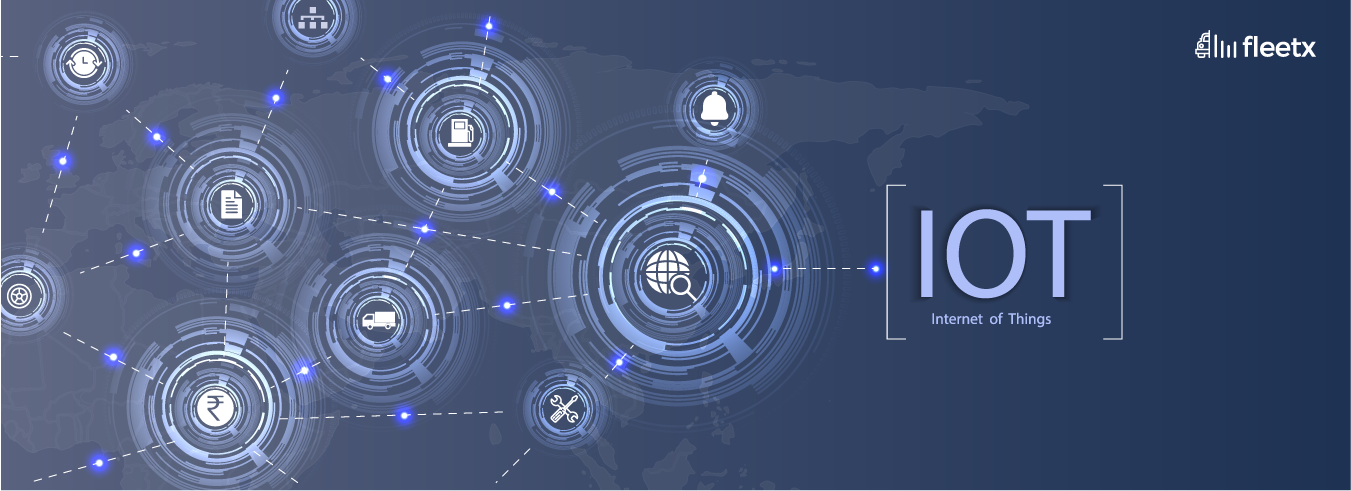
The Internet of Things (IoT) is the concept of physical devices connected to the internet. The physical devices are digital machines and have the capacity to exchange information over the internet without any human intervention. This allows people to synchronize, backup and store data online which can be easily accessed over the internet.
Internet of things (IoT) is starting to revolutionize several aspects of our lives in daily life, and also its vehicle-to-vehicle and vehicle-to-infrastructure communication that promises to keep roads safer and less congested. IoT collects the data in real-time and stores it online to cloud storage. This data can be easily accessed anytime with the internet and has 99.99 percent up-time. This advancement of IoT has opened huge opportunities for the logistics industry.
Transportation problems and their solutions with IoT
Problem 1: Increase In Fuel Consumption
Traditional transportation business lacks route management which causes the fleet to run extra miles to reach the final destination and consumes more fuel, adding to that no fuel consumption record was maintained. But with IoT, the device can measure the total fuel consumption in real-time. This real-time fuel data along with efficient route management has eliminated the fuel cost which was caused by picking up improper routes. IoT device also measures the fuel wastage caused due to the idling of vehicles, hard acceleration, sharp turn, etc. These data points help in reducing the overall fuel cost.
Problem 2: Inefficiency In Operation
The traditional logistics business lacks operational efficiency. But with IoT powered systems, logistics companies get the real-time update of their vehicle and can track vehicles and view or manage driver's activity at any instant. It gives a more transparent view and insights into how the resources are being utilized which further help in improving the overall business operation. It is considered as the tool to ensure a smooth flow of operations and to reduce under utilization of resources to maximize profits.
Problem 3: No Real-Time Visibility Of Assets
The traditional logistics business does not provide real-time visibility like current running speed, over speeding alert, route deviation alerts, vehicles going idle etc. But IoT device has the capability to provide all advance alerts in real-time and keeps fleet owners informed at every point of time which helps in increasing the safety, comfort, and efficiency of fleets.
Problem 4: Reporting and Analytics
With IoT, find out what your vehicles were doing at any date, time, and location. Reports keep all the vital data points like ignition on & off, trip start & stop, idling vehicle time, geofence entries and exits, etc. Reports are easily viewed online or exported to several other different formats. With the report's data, identify the hidden patterns and trends by doing the data analysis and set a goal around key metrics.
IoT benefits to the Logistics sector
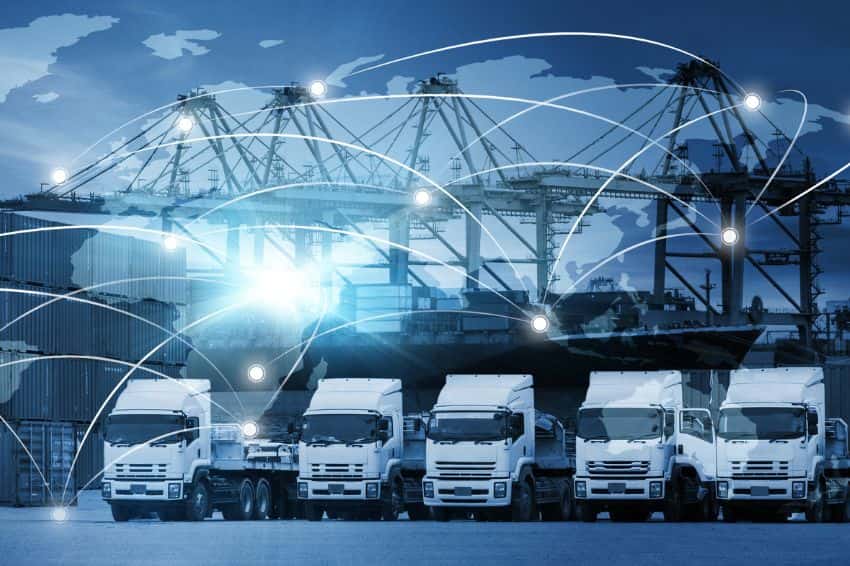
With more accurate information about the vehicle, the driver, and the traffic, better strategies can improve the fleet and fuel cost management. The data collected through IoT sensors make it possible for the companies to optimize their load and choose the most efficient transport mode for any particular shipment.
IoT can help logistics companies automate vehicle maintenance and repair. Compliance and safety are critical aspects of supply chain management and automating these processes can help companies avoid trouble. Some other benefits include:
- Optimizes asset utilization.
- Reducing the cases of theft with Geo-fencing.
- Provides Smart Transport Management System
- Enable accurate monitoring of resources and workflow.
- Accurate real-time visibility and alerts.
- Analyze real-world data for insights that help decision making.
- Automates manual data handling to improve accuracy.
- Identify new opportunities by detailed analysis of previous data.
Discover the true potential of your fleet with the power of IoT .
Frequently Asked Questions About IoT in Transportation
1. What is IoT in transportation, and how does it work?
IoT in transportation is a connected system of sensors, GPS devices, vehicle trackers, cameras, gateways and cloud-based software that collects and exchanges operational data. These devices can monitor a vehicle’s location, speed, fuel level, engine condition, temperature, route progress and driver behaviour. The information is transmitted through cellular or other communication networks to a fleet management platform, where it can be viewed through dashboards, alerts and reports.
A typical commercial vehicle may use a GPS tracking device connected to the ignition, fuel sensor or vehicle diagnostics interface. The system records events such as harsh braking, overspeeding, excessive idling, route deviation and unauthorised vehicle use. Fleet operators can then receive real-time alerts and use historical reports to identify recurring problems.
For Indian transport businesses, IoT can be particularly useful when vehicles travel between cities, industrial areas, warehouses and customer locations. A transporter operating from Delhi NCR to Mumbai, Pune or Bengaluru can track estimated arrival times, monitor stoppages and communicate more accurate delivery updates. However, IoT does not automatically solve every operational problem. Its value depends on reliable hardware, suitable network coverage, correct installation, data quality and consistent action by the control-room team. The best results usually come when tracking data is connected with dispatch planning, driver coaching, maintenance and fuel-management processes.
2. What is an IoT-based fleet management system?
An IoT-based fleet management system is a digital platform that combines connected vehicle devices with software for monitoring, analysing and improving transport operations. Unlike basic location tracking, a comprehensive system can bring together vehicle movement, fuel use, driver performance, maintenance indicators, geofences, trip schedules and delivery status in one operational view.
The system generally includes three layers. The first is the in-vehicle hardware, such as a GPS tracker, fuel sensor, temperature sensor or camera. The second is the communication layer that transmits data to the cloud. The third is the fleet dashboard, which converts raw data into alerts, reports and performance indicators. Transport managers can use these insights to answer practical questions: Which vehicles are delayed? Where is fuel being lost? Which drivers repeatedly overspeed? Which vehicle may require preventive maintenance?
In India, the required configuration varies by fleet type. A Delhi delivery fleet may prioritise live ETAs, geofencing and route compliance, while a Mumbai cold-chain operator may need temperature monitoring and door-open alerts. A long-haul fleet serving Gurgaon, Pune and Bengaluru may focus on fuel analytics, driver safety and trip turnaround time. Buyers should verify device compatibility, reporting frequency, data access, service coverage, installation quality and support terms. The most useful platform is not necessarily the one with the largest feature list; it is the one that produces accurate, actionable information for the fleet’s actual routes and operating model.
3. What are the top benefits of IoT in transportation and logistics in India?
The top benefits of IoT in Indian transportation are improved visibility, stronger safety controls, better fuel management and faster operational decisions. Connected devices allow fleet teams to see where vehicles are, whether they are following assigned routes and when they are likely to reach a destination. This reduces dependence on repeated driver calls and helps dispatchers inform customers about delays.
Important operational benefits include:
- Real-time location tracking and more reliable estimated arrival times.
- Alerts for overspeeding, harsh braking, prolonged idling and route deviations.
- Fuel monitoring that can reveal unusual consumption, refuelling or possible theft.
- Geofences around warehouses, plants, toll points and customer locations.
- Trip-history reports for analysing detention, turnaround time and asset utilisation.
- Maintenance planning based on kilometres, engine data or recurring fault indicators.
These capabilities matter across very different operating environments. Delhi NCR fleets may use geofences and dynamic dispatch to manage dense urban routes. Mumbai operators may monitor delays caused by congestion and loading restrictions. Bengaluru and Pune businesses can use trip data to improve last-mile planning across expanding industrial and residential zones.
Benefits should be measured through defined indicators rather than assumed. Useful measures include idling minutes per trip, fuel consumed per kilometre, on-time delivery rate, route-deviation frequency, vehicle utilisation and accident-related events. A pilot involving representative vehicles can establish a baseline and show whether the system produces measurable improvements before a wider rollout.
4. How does IoT improve vehicle safety and driver behaviour?
IoT improves vehicle safety by turning driving events into timely alerts and measurable trends. GPS and telematics devices can detect overspeeding, harsh acceleration, sudden braking, sharp cornering, extended driving periods and unauthorised route changes. Depending on the selected system, an in-cabin buzzer may warn the driver immediately while the same event is recorded for the fleet safety team.
Connected cameras can add context by showing whether an incident was caused by distraction, fatigue, road conditions or another vehicle. This is more useful than judging performance from a single speed reading. Fleet managers can combine event data with coaching, incentive programmes and route-specific safety instructions. Drivers with repeated high-risk events can receive targeted training, while consistently safe drivers can be recognised.
Local operating conditions should shape safety rules. A speed threshold suitable for a highway trip from Delhi to Jaipur may be inappropriate for urban deliveries in Gurgaon or Mumbai. Bengaluru traffic may produce frequent braking events that require contextual review rather than automatic penalties. Therefore, alerts should be calibrated by vehicle category, road type and business use.
IoT is a decision-support system, not a substitute for driver training, vehicle maintenance or legal compliance. Businesses should tell drivers what information is collected, restrict access to authorised teams and establish fair review procedures. The best safety programme combines reliable data with preventive maintenance, realistic schedules, rest policies, documented coaching and management accountability.
5. How can IoT reduce fuel costs for commercial fleets?
IoT can reduce fuel costs by identifying the operational behaviours and vehicle conditions that cause avoidable consumption. A connected fleet platform can track distance travelled, idling duration, route deviation, speeding patterns and fuel-level changes. When combined with reliable fuel sensors or vehicle data, it can help managers compare expected consumption with actual performance.
For example, a truck that repeatedly idles outside a Delhi NCR warehouse may consume fuel without adding productive kilometres. A delivery vehicle in Mumbai may travel extra distance because of poor stop sequencing. A long-haul vehicle travelling between Pune and Bengaluru may show declining fuel efficiency because of tyre pressure, loading, maintenance or aggressive acceleration. IoT reports help isolate these patterns so that the operator can investigate the cause.
A practical fuel-control process usually includes:
- Establishing a fuel-efficiency baseline for each vehicle category and route.
- Monitoring excessive idling, route deviations and unusual fuel-level drops.
- Comparing drivers and vehicles only under similar load and route conditions.
- Reviewing tyre, engine and maintenance issues when efficiency deteriorates.
- Tracking whether corrective action produces sustained improvement.
Savings vary substantially and should not be guaranteed before analysing fleet data. Vehicle age, traffic, terrain, load, driving style and sensor accuracy all influence results. Businesses should compare monthly fuel expenditure and litres per kilometre before and after implementation while accounting for route and workload changes.
6. What does an IoT fleet management solution cost in India?
The cost of an IoT fleet management solution in India depends on the hardware, reporting features, connectivity, installation, support and number of vehicles. As an indicative planning range, basic GPS tracking hardware may cost approximately ₹2,500–₹8,000 per vehicle. More advanced telematics, fuel sensors, temperature monitoring or connected cameras can raise the initial equipment cost to roughly ₹10,000–₹50,000 or more per vehicle.
Software and connectivity may be charged monthly or annually. A basic subscription can start around ₹200–₹800 per vehicle per month, while advanced analytics, video telematics, API access or specialised compliance features may cost ₹1,000–₹3,000 or more per vehicle per month. Installation, calibration, SIM connectivity, warranty extensions and on-site support may be separate. These figures are broad market-planning estimates, not fixed quotations.
Pricing can also differ between Delhi, Gurgaon, Mumbai, Bengaluru and Pune because of installation coverage, travel charges, local support capacity and fleet scale. Buyers should request an itemised proposal covering:
- Device and sensor costs.
- Installation and calibration charges.
- Software, connectivity and data-retention fees.
- Warranty, replacement and support terms.
- API, integration and training costs.
The correct comparison is total cost of ownership rather than the lowest device price. A paid pilot can help confirm data accuracy, dashboard usability and potential savings before committing the entire fleet.
7. How can businesses choose the best IoT transportation solution in Delhi NCR and Gurgaon?
Businesses choosing the best IoT transportation solution in Delhi NCR and Gurgaon should begin with operational problems, not product features. A last-mile delivery company may need accurate ETAs, geofences and dispatch visibility, whereas a manufacturer serving Manesar or other industrial areas may prioritise plant turnaround time, route compliance and proof of arrival. Long-haul transporters may place greater emphasis on fuel monitoring, driver safety and maintenance.
A structured vendor evaluation should examine device accuracy, network performance, installation capability, dashboard usability, report customisation, mobile access and local after-sales support. Ask vendors to demonstrate the platform using routes and events similar to the company’s actual operations. Verify how the system handles connectivity gaps, delayed data transmission and device tampering.
Commercial evaluation should include the complete first-year and recurring cost. Businesses should compare hardware, installation, subscription, SIM connectivity, training, integrations, warranty and replacement policies. A cheaper quote can become expensive if devices frequently fail or reports cannot be used by the transport team.
Before selecting a provider, run a pilot across different vehicle types and routes in Delhi, Noida, Faridabad, Ghaziabad and Gurgaon. Measure location accuracy, alert latency, driver acceptance, fuel-data consistency and support response time. The top solution is the one that performs reliably in the business’s real environment and provides usable information to dispatchers, safety teams and management—not simply the platform with the most dashboard modules.
8. Which IoT fleet features are most useful for Mumbai transport and logistics companies?
For Mumbai transport and logistics companies, the most useful IoT features are those that improve visibility during congestion, complex delivery windows and extended loading or unloading periods. Live tracking with accurate ETAs helps operations teams inform customers when dense traffic changes arrival times. Geofences can record when a vehicle enters or leaves a port, warehouse, distribution centre or customer site without relying on manual calls.
Useful capabilities for Mumbai fleets include route-deviation alerts, stoppage analysis, idling reports, driver-safety events and trip turnaround dashboards. Cold-chain businesses may also require temperature, humidity and door-open monitoring. Connected sensors can warn teams when conditions move outside a defined range, allowing intervention before product quality is affected.
Companies operating around Mumbai, Navi Mumbai, Thane and nearby industrial corridors should test device connectivity across their common routes. The platform should store data during temporary network interruptions and upload it after connectivity returns. Reports should separate traffic-related delays from avoidable detention or unauthorised stops.
When comparing solutions, ask whether the system supports custom geofences, multilingual driver communication, mobile access and integration with existing transport or order-management software. Pricing should be evaluated against expected improvements in on-time delivery, vehicle utilisation, detention control and fuel efficiency. The best setup may combine basic tracking across the fleet with specialised sensors only for vehicles carrying high-value, sensitive or temperature-controlled cargo.
9. How can IoT support last-mile delivery fleets in Bengaluru and Pune?
IoT supports last-mile delivery fleets in Bengaluru and Pune by giving dispatch teams real-time visibility into vehicle location, trip progress, stoppages and delivery exceptions. When vehicles serve many stops, location data can help teams determine which driver is closest to an urgent pickup, whether an assigned route is being followed and when a customer can expect delivery.
Geofences around fulfilment centres, delivery clusters and customer and locations can automatically record arrivals and departures. This reduces manual status updates and makes it easier to measure dwell time at each stop. Route-history reports can reveal repeated delays, unnecessary kilometres and low-performing delivery zones. Driver-behaviour alerts can also support safer operations for vans, commercial vehicles and two-wheeler fleets.
In Bengaluru, route performance may vary significantly by time of day and technology corridor. Pune fleets may face different patterns across central areas, industrial zones and surrounding highways. Historical IoT data helps planners use actual fleet movement rather than general assumptions when setting schedules or assigning vehicles.
Implementation should start with clearly defined indicators such as deliveries per vehicle, kilometres per completed order, first-attempt delivery rate, idling time and on-time arrival percentage. Businesses should also determine how the IoT platform will exchange information with order-management, customer-notification or transport-management systems. Connected tracking is most valuable when alerts lead to a defined action, such as reassigning a delivery, contacting a customer or investigating an extended stop.
10. How should an Indian transport company implement IoT across its fleet?
An Indian transport company should implement IoT in stages, beginning with measurable business objectives. Management should identify two or three priority problems—such as fuel loss, unsafe driving, poor vehicle visibility, delivery delays or excessive detention—and record baseline performance before installing devices. This makes it possible to evaluate whether the technology delivers a genuine improvement.
The next step is a controlled pilot using representative vehicles, drivers and routes. A fleet serving Delhi, Mumbai, Bengaluru, Gurgaon and Pune should include both urban and long-haul operations where relevant. During the pilot, the company should test device accuracy, network recovery, alert usefulness, sensor calibration, dashboard usability and vendor support.
A practical rollout includes:
- Defining vehicle, route and driver-level performance indicators.
- Selecting compatible hardware and documenting installation standards.
- Setting realistic alert thresholds for different operating conditions.
- Training dispatchers, managers and drivers on data on use.
- Creating escalation procedures for safety, fuel and route exceptions.
- Reviewing data access, retention, cybersecurity and privacy controls.
After the pilot, compare costs and outcomes before expanding. Track recurring subscription expenses alongside fuel efficiency, delivery performance, safety events and asset utilisation. IoT should be treated as an ongoing operational programme rather than a one-time device purchase. Regular calibration, device health checks, driver engagement and management reviews are essential for maintaining data quality and long-term value.