


Many industries, especially related to construction, logistics, and fleet management, are gravitating towards RFID technology to keep track of their vehicles, shipments, and equipment. With real-time location tracking, this technology is fast emerging as a necessity for companies that want to measure the efficiency of transportation and delivery operations.
RFID technology is used with fleet and logistics processes to track vehicle movement and manage shipments by ensuring managers know exactly where their location is. Apart from logistics and supply chain visibility, uses of RFID are also seen in retail and warehouse management as a way to streamline processes such as store-level inventory, checkout, in-store traffic patterns, theft detection, and more.
What is RFID ?
RFID stands for Radio Frequency Identification and is a part of the group of technologies known as AIDC or Automatic Identification and Data Capture. RFID technology works on radio waves that are used to send and receive information through a wireless non-contact manner to transfer data. This system is made up of two main components - a reader and a tag. These tags have an integrated circuit and antenna that are used for transmitting data to the RFID reader. The reader then converts these radio waves into a more understandable form of data that can later be analysed on a computer system. This collected information is transferred through a communications interface and is stored in a database on your system.
At its simplest level, RFID tags can be compared to barcodes in order to better understand how they work. Just like barcodes, RFID tags are very commonly used for trucks to monitor their location or track shipments. But since RFID tags work on radio wave technology, they don’t need to have a direct line-of-sight for the reader to scan them, unlike barcodes that need to be oriented in specific positions in front of a scanner. This means by using such technology, you can scan as many as 700 products each second as long as they are within the range of the reader.
Various types of RFID systems
RFID systems are differentiated based on their frequency range - low, high, and ultra-high. Within each of these RFID types, they can either be active, passive, or battery-assisted passive.
Low frequency RFID systems
Low frequency (LF) RFID systems have slower read rates as well as a shorter range to read the tags as compared to the high and ultra-high frequency systems. They operate within the range of 30 kHz to 300 kHz and have a read range of around 10 cm. On the other hand, the advantage of using LF RFID systems is that they are less susceptible to liquid or metal interference due to their longer wavelength.
High frequency RFID systems
High frequency (HF) RFID systems have a bigger memory and come with a longer read range as opposed to low frequency RFID systems. These systems have a reading distance from 10 cm up to 1 m and operate between the range of 3 MHz and 30 MHz.
Ultra-high frequency RFID systems
Ultra-high frequency (UHF) RFID systems work between the frequency range of 300 MHz and 3 GHz and have a reading range that goes up to 12 m, thus offering extremely fast data transfer rates. This is also known as the “supply chain frequency” due to its vast range as well as a comparatively lower price than other types of RFID systems. This ultra-high frequency makes it very easy to read hundreds of tags at the same time, reducing the time and effort it would take earlier to carry out such a task. They are more susceptible to liquid or metal interference as well as electromagnetic signals than the other systems but advancement in IoT technology and new design innovations have mitigated some of these issues.
Active, passive, or battery-assisted passive RFID tags
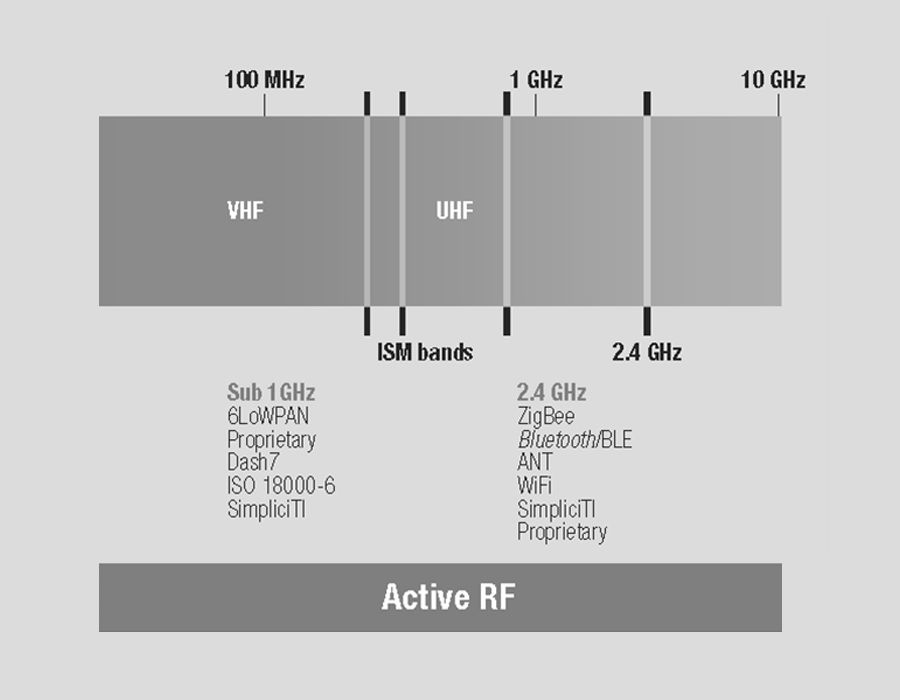
Active RFID tags - Active RFID tags come with an included transmitter and power source and periodically transmit signals. These are usually ultra-high frequency RFID systems and can boost signal strength to extend read ranges up to 100 m in most cases. Due to these advanced capabilities, these tags are much bigger in size and costlier than others and are thus often used for high-value assets like construction equipment in fleet vehicles and such. They also come equipped with sensors that can track and measure several factors. Active tags are of two types - transponders that “wake up” only when they receive a signal, and beacons that emit a signal at certain pre-set intervals.
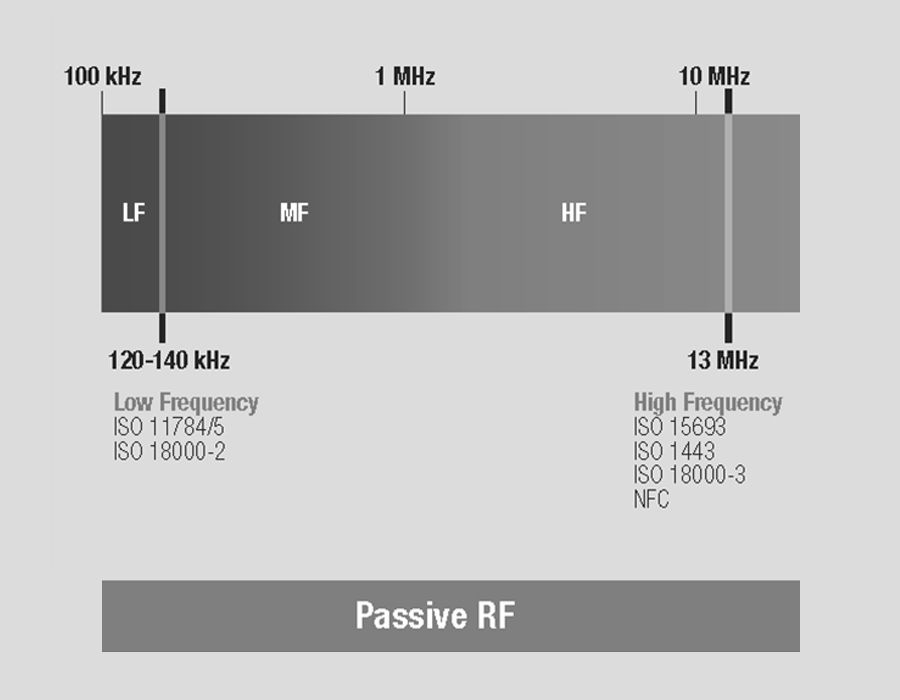
Passive RFID tags - Passive RFID tags stay dormant until a radio signal is received from a reader. This energy from the signal turns the tag on and then reflects information-carrying signals back to the reader. They have a shorter read range than active RFID tags, but are smaller in size and less expensive, making them more flexible for use.
Battery-assisted passive RFID tags - Also known as semi-passive RFID tags, these hybrid tags contain a battery and don’t transmit periodic signals as active ones do. Instead, their battery only turns the tag on upon receiving a signal, allowing the captured energy from the reader to be fully reflected back to elevate data transfer rates as well as improve read distance.
The need for RFID in fleet management is now
Radio Frequency Identification (RFID) is a key technology in the field of IoT and is undoubtedly a very essential component that helps enhance efficiency for businesses when it comes to areas such as fleet management or supply chain management. For instance, a main area where such a system comes handy is when vehicles need to get inside or outside the business premises. Gate-in and gate-out processes are much faster with RFID and don’t require manual verification each time a vehicle is at your gate. Such a system also offers several benefits like streamlined processes, cost control, maintenance, risk minimisation, transparency, fuel management, safety, tracking, as well as reliable user identification and access control. Such a robust system can help in maintaining driver and vehicle-related processes for long distances or short routes, ensuring that your fleet is running optimally at all times.
RFID Implementation Strategy: How Businesses Successfully Deploy RFID Technology
RFID implementation is the process of planning, deploying, integrating, and optimizing RFID technology within business operations. While RFID hardware plays an important role, successful implementation depends on clearly defined business objectives, operational workflows, and technology integration strategies.
Many organizations make the mistake of viewing RFID as simply a tagging solution. In reality, RFID is a data collection and automation platform that can transform how businesses manage vehicles, shipments, inventory, assets, warehouses, and supply chain operations.
Step 1: Identify the Business Problem
Before selecting RFID hardware, organizations should identify the specific operational challenge they want to solve.
Common RFID implementation objectives include:
- Reducing vehicle turnaround time
- Improving inventory accuracy
- Automating warehouse operations
- Enhancing shipment visibility
- Strengthening access control
- Improving asset utilization
- Reducing manual paperwork
- Increasing supply chain transparency
The clearer the objective, the more effective the RFID deployment will be.
Step 2: Determine the Assets to be Tracked
RFID can be deployed across multiple business assets, including:
- Commercial vehicles
- Fleet equipment
- Containers
- Pallets
- Inventory items
- Warehouse assets
- Tools and machinery
- Driver identification cards
- Fuel dispensing points
Organizations should determine what information needs to be captured and how frequently it needs to be collected.
Step 3: Choose the Right RFID Type
Different RFID systems support different operational requirements.
Low Frequency RFID
Low-frequency RFID systems offer reliable performance around liquids and metals and are commonly used for access control and identification applications.
High Frequency RFID
High-frequency RFID provides greater data storage capacity and is often used for inventory management, ticketing systems, and warehouse operations.
Ultra-High Frequency RFID
Ultra-high-frequency RFID offers longer read distances and faster data transfer rates. This makes it the preferred choice for logistics, transportation, warehousing, and fleet management applications.
Step 4: Integrate RFID with Existing Systems
The true value of RFID comes from integration.
Modern businesses increasingly connect RFID systems with:
- Fleet Management Software
- GPS Vehicle Tracking Systems
- Transportation Management Systems (TMS)
- Warehouse Management Systems (WMS)
- Enterprise Resource Planning (ERP) Platforms
- Supply Chain Visibility Solutions
- Fuel Management Systems
- Video Telematics Platforms
Integration ensures that RFID-generated data contributes directly to operational decision-making rather than existing in isolation.
Step 5: Establish Operational Workflows
Successful RFID deployment requires clear operational processes.
Examples include:
- Automatic gate entry validation
- Vehicle dispatch verification
- Shipment loading confirmation
- Warehouse inventory audits
- Asset movement monitoring
- Driver authentication procedures
Without well-defined workflows, RFID data may be collected but not effectively utilized.
Step 6: Measure Performance and ROI
Businesses should track measurable outcomes after implementation.
Key RFID performance metrics include:
- Vehicle turnaround time
- Inventory accuracy rate
- Asset utilization percentage
- Shipment visibility improvements
- Labor productivity gains
- Warehouse throughput
- Order fulfillment accuracy
- Supply chain efficiency improvements
Monitoring these metrics helps organizations continuously optimize their RFID deployment and maximize return on investment.
RFID Adoption in India
RFID adoption is growing rapidly across India as logistics companies, manufacturers, retailers, warehouses, and transportation providers pursue greater operational efficiency.
Major logistics hubs such as Delhi NCR, Gurgaon, Mumbai, Bengaluru, Pune, Chennai, Hyderabad, and Ahmedabad are seeing increased investment in RFID-enabled infrastructure because businesses recognize the value of automation, real-time visibility, and digital supply chain management.
As Industry 4.0, IoT adoption, and supply chain digitization continue to accelerate, RFID technology is expected to become a foundational component of modern logistics operations. Businesses that implement RFID strategically today will be better positioned to improve operational efficiency, strengthen customer service, and remain competitive in increasingly data-driven supply chains.
Real-World RFID Applications Across the Logistics and Supply Chain Lifecycle
RFID technology is often associated with vehicle tracking and warehouse automation, but its actual impact extends across the entire logistics and supply chain lifecycle. From the moment raw materials enter a manufacturing facility until finished products reach customers, RFID enables businesses to create a connected ecosystem where assets, shipments, vehicles, and inventory can be identified, monitored, and managed with greater accuracy.
The ability to automatically collect operational data without manual intervention makes RFID one of the most valuable technologies in modern supply chain management. Organizations across transportation, manufacturing, retail, warehousing, e-commerce, pharmaceuticals, food distribution, cold chain logistics, and construction sectors increasingly rely on RFID to improve visibility and reduce operational inefficiencies.
RFID in Transportation and Fleet Operations
Transportation companies operate in highly dynamic environments where delays, route deviations, manual processes, and lack of visibility can impact profitability. RFID helps address these challenges by creating automated checkpoints throughout the transportation process.
For example, when a truck enters a distribution center, an RFID reader can instantly identify the vehicle, verify its authorization status, and record entry time without requiring manual documentation. Similar processes can be applied at loading docks, customer locations, fuel stations, maintenance facilities, and warehouse gates.
This creates a digital audit trail that helps transportation managers understand vehicle movement patterns, improve turnaround times, and identify bottlenecks.
Key transportation benefits include:
- Faster gate-in and gate-out processing
- Reduced vehicle waiting times
- Improved route compliance
- Enhanced shipment visibility
- Better fleet utilization
- Improved driver accountability
- Reduced paperwork
- Stronger security controls
For logistics companies operating across Delhi NCR, Mumbai, Bengaluru, Pune, Chennai, and Hyderabad, these efficiencies can significantly improve operational performance and customer satisfaction.
RFID in Warehouse Management
Warehouses contain thousands or even millions of inventory items that move continuously through receiving, storage, picking, packing, and dispatch processes. Managing these activities manually often creates challenges related to inventory accuracy, labor productivity, and operational visibility.
RFID enables warehouses to automate inventory tracking by attaching RFID tags to products, pallets, cartons, racks, or containers. As items move through different warehouse zones, RFID readers automatically capture movement data.
Unlike traditional inventory counting methods that require manual scanning, RFID systems can identify multiple items simultaneously. This significantly reduces the time required for inventory audits and cycle counts.
Warehouse managers gain access to:
- Real-time inventory visibility
- Automated stock updates
- Reduced inventory discrepancies
- Faster receiving processes
- Improved order fulfillment accuracy
- Better storage optimization
- Reduced labor costs
- Enhanced inventory traceability
As warehouse operations become increasingly automated, RFID continues to serve as a foundational technology supporting efficiency and accuracy.
RFID in Supply Chain Visibility
Supply chain visibility refers to the ability to monitor products, assets, and shipments as they move between suppliers, manufacturers, warehouses, transportation providers, and customers.
One of the biggest challenges in supply chain management is the lack of real-time information. Delays, misplaced inventory, shipment discrepancies, and communication gaps often occur because stakeholders do not have access to accurate operational data.
RFID helps solve this challenge by creating visibility checkpoints throughout the supply chain.
Whenever an RFID-tagged item passes a reader, information is automatically recorded and transmitted to centralized systems. This allows businesses to monitor product movement, validate shipment status, and identify disruptions more quickly.
Enhanced supply chain visibility helps organizations:
- Improve planning accuracy
- Reduce stockouts
- Minimize overstock situations
- Increase customer satisfaction
- Improve supplier collaboration
- Reduce operational risks
- Enhance compliance reporting
- Improve forecasting accuracy
These benefits become increasingly valuable as supply chains grow more complex and geographically distributed.
RFID in Cold Chain Logistics
Cold chain logistics requires strict temperature control during transportation and storage. Industries such as pharmaceuticals, food and beverage distribution, dairy products, vaccines, biotechnology products, and healthcare supplies depend on reliable cold chain operations.
RFID technology plays a significant role in maintaining cold chain integrity.
Modern RFID tags can be integrated with sensors capable of monitoring temperature, humidity, and environmental conditions. This allows businesses to identify potential quality issues before products are compromised.
Cold chain operators can use RFID to:
- Track temperature-sensitive shipments
- Monitor storage conditions
- Validate compliance requirements
- Improve product traceability
- Reduce spoilage risks
- Improve quality assurance
- Strengthen regulatory compliance
With India's pharmaceutical and food logistics sectors expanding rapidly, RFID is becoming increasingly important for maintaining supply chain quality standards.
RFID in Manufacturing Operations
Manufacturing environments depend on precise control over raw materials, work-in-progress inventory, equipment, and finished products.
RFID technology helps manufacturers improve operational visibility by tracking materials throughout production processes.
Manufacturers use RFID to:
- Monitor production workflows
- Track raw material consumption
- Manage work-in-progress inventory
- Improve equipment utilization
- Enhance quality control
- Reduce production delays
- Improve inventory accuracy
- Support lean manufacturing initiatives
By creating greater visibility across manufacturing operations, RFID helps organizations reduce waste, improve efficiency, and increase production reliability.
RFID in Asset Management
Asset management is one of the most valuable RFID applications across multiple industries.
Organizations often struggle to maintain visibility over equipment, tools, machinery, containers, trailers, and mobile assets. Lost or misplaced assets can result in operational delays, replacement costs, and reduced productivity.
RFID provides automated asset tracking capabilities that help businesses understand:
- Asset location
- Asset utilization
- Maintenance status
- Asset movement history
- Ownership verification
- Asset availability
Industries such as construction, mining, logistics, transportation, manufacturing, utilities, and infrastructure development commonly use RFID for asset management.
The ability to automatically monitor high-value assets improves accountability and reduces operational inefficiencies.
RFID and the Future of Smart Logistics
The logistics industry is moving toward increasingly connected and intelligent operations. Concepts such as Industry 4.0, Logistics 4.0, digital supply chains, smart warehouses, and connected transportation networks all depend on accurate data collection.
RFID serves as a critical technology within this transformation because it bridges physical operations and digital systems.
Future RFID deployments will increasingly integrate with:
- Artificial Intelligence (AI)
- Machine Learning (ML)
- Internet of Things (IoT)
- Predictive Analytics
- Digital Twins
- Cloud Computing Platforms
- Autonomous Warehouses
- Smart Transportation Systems
As these technologies evolve, RFID-generated data will become even more valuable for operational decision-making.
Organizations that invest in RFID today are not simply implementing a tracking technology. They are building the foundation for a more connected, intelligent, and data-driven supply chain ecosystem that supports long-term growth, operational efficiency, and competitive advantage
RFID Technology FAQs
What does RFID stand for in trucking?
A proven data-carrying and automatic identifying technology used by industry is radio-frequency identification (RFID), which enables data to be broadcast from a miniature silicon chip at very high rates and without the need for line of sight, as required by barcodes.
How is RFID used in vehicle tracking?
Instead of providing continuous tracking like GPS can, RFID devices track vehicles from one location to the next. RFID, however, provides a number of benefits such as automatic recognition and recording, improved precision and dependability, and the capacity to function in enclosed or inside areas without a GPS signal.
What is RFID technology and how does RFID work in logistics and fleet management?
RFID, or Radio Frequency Identification, is a wireless identification technology that uses radio waves to detect, identify and record information stored on tags attached to vehicles, products, pallets, containers or equipment. A basic RFID system includes a tag, an antenna, a reader and software that stores or processes the captured data. When a tagged asset enters the reader's coverage area, the reader receives its identification data and sends it to a fleet management, warehouse management or transportation management platform.
In logistics and fleet management, RFID is commonly used at defined checkpoints rather than for continuous road-level tracking. Readers installed at warehouse gates, loading docks, parking areas, fuel stations or maintenance facilities can automatically record when a commercial vehicle or shipment enters or leaves. This helps automate gate-in and gate-out verification, loading confirmation, asset allocation, driver authentication and inventory movement.
Unlike a barcode, an RFID tag usually does not require direct line of sight and multiple tags may be detected during the same reading cycle. Passive tags receive power from the reader and are generally selected for high-volume identification, while active tags contain batteries and may support longer read ranges or sensor-based monitoring.
Indian logistics businesses can integrate RFID data with GPS tracking, ERP, WMS, TMS and fleet management software. RFID then confirms identity and checkpoint movement, while GPS provides continuous location visibility. Together, these technologies create a more reliable digital record of vehicles, shipments and operational events.
Why is RFID considered one of the best technologies for vehicle tracking and fleet management in India?
RFID is considered one of the best supporting technologies for automated vehicle identification because it can recognise tagged vehicles quickly without requiring drivers or security personnel to scan every vehicle manually. It is particularly useful at logistics parks, factories, warehouses, depots, mines, construction sites and distribution centres where many trucks enter and exit throughout the day.
For Indian fleet operators, RFID can address operational challenges such as long gate queues, handwritten registers, incorrect vehicle records, unauthorised entry and limited visibility into turnaround time. When an RFID-tagged truck approaches an enabled gate, the system can match the vehicle with dispatch information, record its arrival and alert the relevant team. Depending on the integration, it may also trigger a barrier, weighbridge workflow, loading assignment or security check.
Important benefits include:
- Automatic identification of vehicles, drivers and assets
- Faster gate-in and gate-out processing
- Accurate time stamps for detention and turnaround analysis
- Reduced paperwork and manual data-entry errors
- Improved access control and vehicle authentication
- Integration with GPS, TMS, WMS, ERP and fleet software
RFID should not be treated as a complete replacement for GPS. GPS is better suited to continuous route and location monitoring, while RFID verifies movement at selected checkpoints. For fleets operating across India, combining both technologies can provide stronger visibility from the road to the warehouse gate. The best solution depends on the required read range, traffic volume, operating environment, asset value and integration needs.
How much does an RFID system cost in India?
The cost of an RFID system in India depends on the type of tags, number of readers, required read range, installation environment, software integration and deployment scale. A small proof-of-concept using basic passive RFID tags and one reader may require a budget of roughly ₹30,000 to ₹1.5 lakh. A multi-gate warehouse, factory or fleet project can range from approximately ₹2 lakh to ₹15 lakh or more, while enterprise deployments across several locations may cost substantially more.
Passive tags are generally the lowest-cost option and may range from a few rupees to several hundred rupees per tag, depending on durability, memory, frequency and whether the tag is designed for metal, windshields or harsh outdoor conditions. Active RFID tags, which include batteries and may support longer ranges or sensors, can cost several hundred to several thousand rupees each. Reader prices also vary widely between desktop, handheld, fixed and industrial gate-based models.
A complete RFID budget may include:
- RFID tags, readers, antennas and mounting equipment
- Installation, site surveys and reader calibration
- Middleware, dashboards and cloud subscriptions
- API integration with ERP, WMS, TMS or fleet software
- Testing, employee training, support and maintenance
These figures are indicative planning ranges rather than fixed quotations. Businesses in Delhi, Gurgaon, Mumbai, Bengaluru or Pune should request a site-specific assessment because metal surfaces, liquids, gate width, traffic flow and network availability can affect hardware requirements. Starting with one operational use case and a controlled pilot is usually the most cost-effective approach.
Which industries benefit the most from RFID technology?
RFID delivers the greatest value in industries that manage high volumes of vehicles, inventory, equipment or time-sensitive goods. Logistics, transportation and warehousing are among the top RFID use cases because businesses need to identify assets quickly as they move between gates, loading docks, storage zones and delivery locations.
Fleet operators can use RFID for vehicle authentication, automated entry, driver identification, fuel-point access and maintenance records. Warehouses and fulfilment centres can tag pallets, cartons, containers or reusable assets to improve receiving, cycle counting, picking and dispatch verification. Manufacturing companies use RFID to monitor raw materials, work-in-progress inventory, tools and finished products across production stages.
Other industries that commonly benefit include:
- Retail and e-commerce: Inventory visibility, replenishment and loss prevention
- Pharmaceuticals and healthcare: Equipment tracking, traceability and cold-chain monitoring
- Food and beverage: Batch identification, storage monitoring and expiry management
- Construction and mining: Tracking machinery, tools, vehicles and high-value assets
- Automotive: Component tracking, yard management and production sequencing
- Aviation: Baggage, tools, spare parts and maintenance asset identification
The ideal application is one where manual identification causes delays, errors, loss or limited accountability. In Indian logistics hubs such as Delhi NCR, Gurgaon, Mumbai, Bengaluru and Pune, RFID can be especially useful where warehouses, manufacturing units and transport yards handle frequent asset movement. Businesses should evaluate expected transaction volume, accuracy requirements and measurable operational savings before selecting an RFID deployment.
What is the difference between RFID and GPS tracking?
RFID identifies an asset when it comes within range of an RFID reader, whereas GPS determines the geographical location of a vehicle or device using satellite signals. The two technologies therefore solve different tracking problems and are often more effective when used together.
RFID is primarily checkpoint-based. A tag attached to a truck, pallet, container or piece of equipment is detected when it passes a reader at a gate, warehouse zone, loading dock or fuel station. This creates a reliable record that the identified asset was present at a particular operational point. RFID is valuable for access control, automated gate entry, shipment verification, inventory movement and asset identification, including certain indoor or enclosed environments.
GPS provides continuous or periodic location updates over large geographical areas. Fleet managers use it to monitor routes, estimated arrival times, stoppages, speeding, deviations and vehicle utilisation. However, GPS generally requires a powered tracking device, connectivity and access to satellite signals.
For example, a logistics operator may use GPS to follow a truck travelling from Delhi to Mumbai. When the vehicle reaches the destination warehouse, RFID can authenticate the truck at the entry gate, record its arrival time and connect it to the correct shipment or loading bay.
RFID is therefore not automatically better than GPS, and GPS is not a complete substitute for RFID. Businesses should select GPS for road-level visibility, RFID for automated identification at controlled points, and an integrated system when they need end-to-end fleet and shipment visibility.
RFID vs barcode technology: Which is better?
RFID is generally better for high-speed, automated and non-line-of-sight identification, while barcodes are often better for simple, low-cost applications. The right choice depends on transaction volume, automation requirements, operating conditions and the value of the assets being tracked.
Barcode labels must usually be visible and positioned in front of a scanner. This can be efficient when employees are already handling individual products and scanning one item at a time. Barcode systems are inexpensive, widely supported and suitable for businesses that do not need automatic bulk identification.
RFID tags communicate through radio waves and may be detected without direct visual contact. Depending on the system, multiple RFID tags can be read during the same cycle. This makes RFID useful for pallets, cartons, vehicles, tools and warehouse inventory that must move rapidly through operational checkpoints.
Key comparison factors include:
- Cost: Barcodes are generally cheaper to print and deploy
- Read method: Barcodes require line of sight; RFID may not
- Read volume: RFID can support simultaneous tag detection
- Durability: Industrial RFID tags can withstand demanding environments
- Data: Some RFID tags support rewritable information
- Automation: RFID is easier to integrate with unattended gates and portals
A small business may choose barcodes for basic inventory control and introduce RFID only for high-value assets or critical workflows. Large logistics and manufacturing operations may use both: barcodes for customer-facing labels and RFID for internal automation, vehicle access and bulk inventory movement.
What are the best RFID solutions in India?
The best RFID solution in India is not necessarily the system with the longest range or the highest number of features. It is the solution that reliably performs the required operational task, integrates with existing software and remains manageable at the organisation's expected scale.
For logistics and fleet management, a suitable solution may include windshield or vehicle-mounted RFID tags, fixed readers at gates, antennas positioned for reliable lane coverage, middleware for processing tag events and API integration with fleet management, TMS, ERP, WMS or gate management software. Warehouses may require UHF tags, handheld readers, fixed portals and location-based workflows for receiving, storage and dispatch.
Businesses should compare RFID providers based on:
- Experience with the relevant industry and use case
- Read accuracy under real operating conditions
- Compatibility with Indian frequency and regulatory requirements
- Availability of durable tags for metal, vehicles or outdoor use
- Software dashboards, APIs and integration capabilities
- Local installation, training and after-sales support
- Data security, user permissions and audit trails
- Total cost of ownership rather than hardware price alone
Companies in Delhi NCR, Gurgaon, Mumbai, Bengaluru and Pune should favour vendors that can conduct an on-site survey and pilot deployment. Urban warehouses, basement facilities, metal-heavy yards and multi-lane gates can create different radio-frequency challenges. A top RFID provider should test tag orientation, antenna placement, interference, read zones and exception handling before recommending a full rollout. The final decision should be supported by measurable pilot results rather than marketing claims alone.
What is the ROI of RFID implementation?
RFID return on investment is the measurable financial and operational value generated by RFID compared with its total implementation and running cost. RFID does not create the same return for every organisation, so ROI should be calculated around a clearly defined workflow such as gate automation, inventory counting, asset tracking or shipment verification.
A logistics company may generate savings by reducing vehicle waiting time, security processing, manual register work and incorrect dispatches. A warehouse may benefit through faster stock counts, fewer inventory discrepancies, reduced searching time and improved order accuracy. Construction and manufacturing businesses may achieve returns by reducing asset loss, tool replacement and production delays.
Common RFID ROI measurements include:
- Minutes saved per vehicle entry or asset transaction
- Reduction in manual labour and administrative work
- Decrease in lost, misplaced or unrecorded assets
- Improvement in inventory and shipment accuracy
- Increase in warehouse throughput or vehicle turnaround
- Reduction in detention, replacement and reconciliation costs
Businesses should calculate total costs, including tags, readers, antennas, software, integration, installation, maintenance and training. The expected annual benefit can then be compared with these costs to estimate the payback period.
For example, even a modest reduction in processing time may create substantial value at a busy Delhi NCR or Mumbai facility handling hundreds of daily truck movements. The most reliable approach is to establish baseline metrics before deployment, run a pilot and compare actual results over several weeks or months before expanding the system.
How are logistics companies in Delhi NCR, Gurgaon, and Mumbai using RFID?
Logistics companies in Delhi, Delhi NCR, Gurgaon and Mumbai use RFID primarily to automate vehicle identification, warehouse movement, access control and shipment verification. These regions contain dense networks of industrial estates, distribution centres, transport yards, fulfilment facilities and manufacturing units where manual processing can create queues and incomplete records.
At a warehouse or logistics park, an RFID tag can be assigned to a truck, trailer, driver card, pallet or reusable container. Readers installed at gates or loading areas record each authorised movement and send the information to a gate management, transportation management or warehouse management system. This helps operations teams confirm which vehicle arrived, when it entered, whether it was authorised and which shipment or dock assignment was associated with it.
In Delhi NCR and Gurgaon, RFID can support operations around high-traffic industrial corridors and facilities where faster gate processing reduces vehicle congestion. Mumbai-region businesses can use it at warehouses, ports, yards and distribution locations where accurate asset movement and turnaround records are important. Similar applications are relevant in Bengaluru and Pune for manufacturing, automotive, technology hardware and e-commerce operations.
Common local use cases include:
- Automated truck entry and exit
- Driver and contractor access control
- Loading-bay and yard movement records
- Pallet, container and returnable-asset tracking
- Fuel-point or maintenance-facility authentication
- Integration with GPS and fleet management platforms
RFID performance depends on site design, so companies should test readers around metal, vehicle windshields, narrow lanes and crowded operational areas before rollout.
Can SMBs benefit from RFID technology?
Yes, small and medium-sized businesses can benefit from RFID when they apply it to a specific problem with measurable costs. An SMB does not need to tag every product, vehicle or asset immediately. A focused deployment can begin with one gate, one warehouse zone, a group of high-value tools or a limited number of commercial vehicles.
For example, a regional transporter may use RFID cards or vehicle tags to automate entry at its depot and improve attendance or turnaround records. A small warehouse may tag pallets or reusable containers that are frequently misplaced. A manufacturer may track costly tools, dies or equipment instead of tagging low-value inventory. This targeted approach keeps the initial investment manageable while allowing the business to measure operational results.
SMBs can gain value through:
- Reduced manual registers and repetitive data entry
- Faster identification of vehicles, tools or stock
- Improved accountability for reusable assets
- Fewer inventory and dispatch errors
- Better access control at warehouses and facilities
- More accurate records for customer and management reporting
A small pilot may use passive tags, a single fixed or handheld reader and cloud-based software rather than complex enterprise infrastructure. Businesses in Gurgaon, Delhi, Mumbai, Bengaluru or Pune should compare the cost of RFID with the current cost of delays, losses, manual work and errors.
RFID is most suitable when transactions occur frequently enough to justify automation. If an SMB handles only a few items or vehicles each day, barcodes or QR codes may remain more economical. A pilot helps determine whether RFID provides enough value before wider implementation.
What are the future trends of RFID technology?
The future of RFID technology will be shaped by deeper integration with IoT, artificial intelligence, cloud platforms, advanced sensors and automated logistics systems. RFID is moving beyond basic identification and is increasingly becoming part of connected supply chain ecosystems that continuously collect, analyse and act on operational data.
One major trend is the use of RFID with sensor-enabled tags. These tags can monitor conditions such as temperature, humidity, vibration and movement, making them useful for pharmaceuticals, cold chain logistics, food distribution and high-value cargo. In India, this is especially relevant for businesses operating across Mumbai, Delhi NCR, Bengaluru and Pune, where large-scale warehousing, manufacturing and distribution networks require better product traceability.
Important future RFID trends include:
- Integration with AI and machine learning for predictive insights
- Cloud-based RFID platforms for multi-location visibility
- Smaller, cheaper and more durable RFID tags
- Sensor-enabled tags for cold chain and asset condition monitoring
- Greater use of RFID in smart warehouses and automated fulfilment centres
- Integration with digital twins, robotics and autonomous vehicles
- Improved data security and encrypted tag communication
- Expansion of RFID-based vehicle access and tolling systems
RFID will also work more closely with GPS, TMS, WMS, ERP and fleet management software. This combination will allow businesses to connect physical asset movement with digital workflows. As RFID adoption grows, companies will focus less on isolated tag-reading systems and more on integrated platforms that improve visibility, automation and decision-making across the entire supply chain.
How do businesses choose the best RFID solution?
Businesses choose the best RFID solution by first defining the operational problem they want to solve, then matching the hardware, software and tag type to that specific use case. The most expensive or longest-range RFID system is not always the best option. A suitable solution should deliver reliable read accuracy, integrate with existing business software and provide measurable operational value.
The selection process should begin with a clear objective, such as automating vehicle entry, tracking pallets, managing warehouse inventory, identifying drivers or monitoring high-value assets. Businesses should then decide whether they need passive, active or battery-assisted RFID tags and whether low-frequency, high-frequency or UHF RFID is most appropriate.
Key factors to evaluate include:
- Required read range and speed
- Type and number of assets to be tracked
- Indoor, outdoor, metal-heavy or high-interference environments
- Tag durability and battery requirements
- Compatibility with ERP, WMS, TMS and fleet management platforms
- Installation, maintenance and after-sales support
- Data security, user access and reporting capabilities
- Total cost of ownership and expected ROI
Businesses in Delhi, Gurgaon, Mumbai, Bengaluru and Pune should also consider whether the vendor offers local site surveys, pilot testing and technical support. RFID performance can vary depending on gate width, vehicle speed, antenna position, metal surfaces and network conditions. The best approach is to run a controlled pilot, measure read accuracy and operational savings, and only then expand the system across additional vehicles, warehouses or locations.