
One of the best use cases of technology is that it helps us monitor issues which matter to us - without spending a lot of resources on it. This is especially relevant in a fleet manager's life where he handles a large fleet but is not aware of what happens at ground level. Imagine the amount of uncertainties that a fleet manager has to go through, because once a vehicle is out there on the road there is no visibility except the cellphone which is answered by the driver.
Such a “black box” model of supply chain is inherently opaque and impacts the financials in terms of diversions, delays, thefts, crashes and casualties. Paradigm shift brought by increasing internet penetration led by the Jio Revolution has made innovation in this sector not only pragmatic but also a necessity.
What is Video Telematics?
Video Telematics is an emerging area of technology where informatics i.e. science of gathering valuable information meets on-demand video monitoring. It is an amalgamation of fields like computer vision, pattern recognition, data analytics and internet of things. In other words, it refers to adding intelligence and connectivity to camera technologies to provide solutions to complex industrial problems.
In the context of Fleet Management, Video Telematics is going to be the cutting edge in the near future. A typical fleet manager operates under a large amount of uncertainty and lack of visibility on what is happening at fleet level. While cameras and GPS have been here for ages, video telematics has truly revolutionised the space by making it intelligent and specific to problems of the industry. An example would be alarms - triggered video capturing - so that managers don’t have to browse 100s of hours of video to do root cause analysis.
How does the technology work?
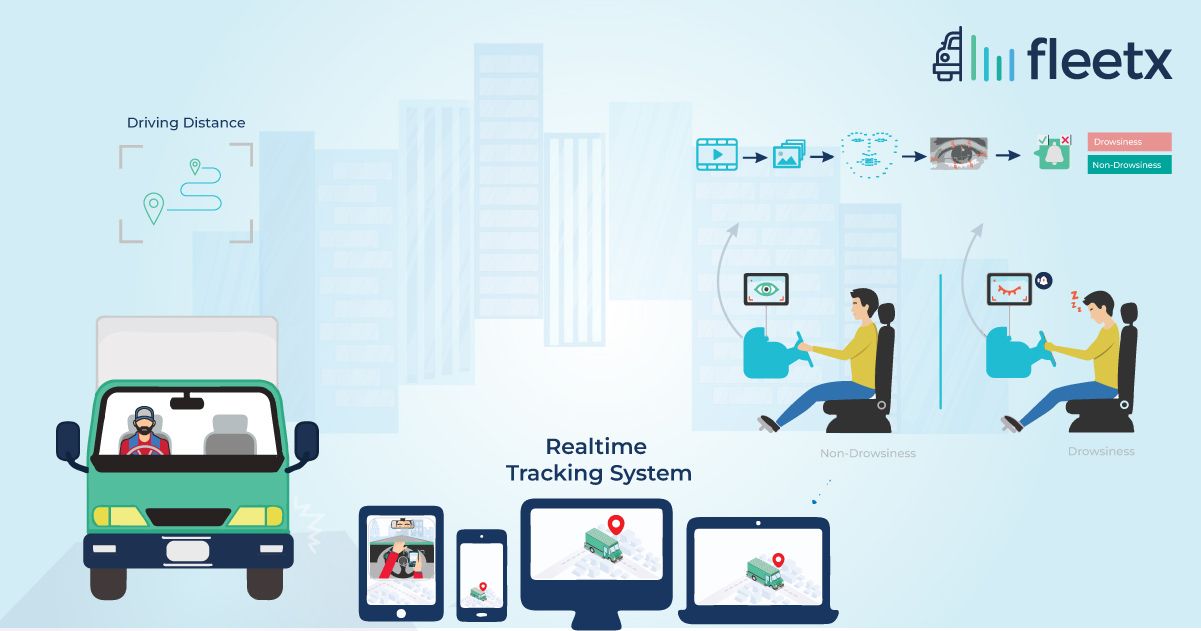
At the centre stage of technology is a high resolution camera module which can be easily mounted at the dashboard, side profile or at the back of the vehicle. The high resolution makes identification of various objects possible using modern image processing algorithms, which is then transmitted to Fleetx Servers making it accessible to clients at the touch of a button. The video is available both in live view format as well as historic recording - with an option to create time-lapse and desired output resolution.
To add to this, modern innovations in telematics have enabled software to draw useful insights from recorded video - thus reducing the need for manual interventions manifold. Leveraging this Fleetx has built a whole array of analytical tools - such as speed monitoring, harsh acceleration, harsh braking, tailgating, lane-drifting among others.
We are also enabling our clients to gauge Behavioural Driving Patterns of drivers and alarms based on Driver’s activity such as distracted driving, smoking while driving and Cell Phone Distraction Alarms.
List of Alarms being released by Fleetx:
How does it impact fleet management practices?
24X7 Visibility: Fleet managers can monitor any collision, theft or any insurance related disputes through any of the cameras. Also they can verify the claims of drivers regarding road conditions, weather, traffic or any other reason for deviation or delay.
Control Room Functionality: To build a seamless user experience, Fleetx provides control room functionality with live video tracking in its real time GPS dashboard.
Identification of Risky Driving: The present setup also captures risky driving behaviours like cell phone use, smoking, drowsiness, tailgating, traffic sign violations etc. Which can be used later for training of drivers.
Defending drivers in crashes: This University of Michigan study highlights that for the majority of crashes & casualties between trucks and cars, 80% of the time it is the car owners fault. Thus there is a legit case of video recordings to defend drivers in case of such emergencies.
Reducing Insurance Costs: Another area which is being talked about in India actively is telematics - based issuance and how it can reduce costs for those who keep their driving performance high. IRDAI, the insurance regulator, has launched a sandboxing trial on implementing this and is being increasingly adopted by players like HDFC, Tata AIG and Reliance.
Driver rewards or training purposes: Video telematics solutions also enable to capture a driver’s act of bravery or a simple act of impressive driving, for rewarding the best performers and incentivizing good upkeep of the fleet. A repository of bad behaviours can also be made for future training purposes.
Road Safety: In 2020, leaders of the world met in Sweden to adopt the “Stockholm Declaration on Road Safety” led by the World Bank and WHO. The declaration adopted by 80 countries, highlighted the need of adapting technologies to insure crash prevention and other forms of road safety. Video Telematics is a right step in this direction.
Industry Specific Demands: Fleet managers are aware that not all cargos are equal and some require intricate management and monitoring while on the go. An example is the petroleum industry which requires drivers to not “smoke” in the vicinity of vehicles owing to the highly inflammable nature of shipment. The technology has reached sufficient levels in order to cater to such nuanced needs of the industry using image processing algorithms.
End to End Supply Chain Mapping: While cameras have been an integral component of warehouses and industrial compounds - but as soon as a consignment left the premises - it was prone to externalities such as theft, manhandling and so on. Using video telematics while on the go - provides visibility to the entire supply chain and helps reduce such externalities in the long run.
Conclusion
It is imperative that video telematics is going to change the fleet industry by making a paradigm shift in how we approach our fleet operations at day to day level. The possible benefits are not only going to be increased business efficiency and reduced economic costs, but also safer driver and vehicle operations, thus making the industry more humane.
Frequently Asked Questions
What is a fleet dash cam? ▼
Dash cams for fleets of commercial vehicles are cameras that are mounted within the vehicle. They frequently are fixed to the windshield and capture activities occurring in front of a moving vehicle.
What are the two types of fleets? ▼
While delivery fleets are made up of vehicles that pick up items from transit hubs and deliver them locally, trucking fleets are made up of trucks that are utilised for long-haul transport regionally or nationally.
What is video telematics in fleet management? ▼
Video telematics in fleet management is a technology that combines vehicle cameras, GPS tracking, IoT sensors, driver behaviour analytics and cloud-based video access to give fleet owners real-time visibility into what happens on the road. Instead of relying only on driver calls or basic vehicle location data, video telematics helps businesses see risky driving events, road incidents, delays, route deviations, theft attempts and accident evidence with visual proof.
For Indian logistics companies, transporters and enterprise fleets, this is especially useful because road conditions, traffic density and driver behaviour can vary greatly across cities such as Delhi, Gurgaon, Mumbai, Bengaluru and Pune. A fleet dash cam or AI-enabled camera can detect harsh braking, overspeeding, drowsiness, mobile phone usage, tailgating and lane drift. These insights help fleet managers improve safety, reduce vehicle misuse and make better operational decisions.
The best video telematics systems are not just cameras. They include live video streaming, event-based recordings, driver alerts, cloud storage, GPS integration, reports and control room visibility. For companies managing trucks, buses, cold chain vehicles, cash logistics, construction fleets or last-mile delivery vehicles, video telematics can support safer driving, better compliance, faster dispute resolution and stronger fleet efficiency.
How does Fleetx video telematics help transport businesses in India? ▼
Fleetx video telematics helps Indian transport businesses by giving them real-time visibility into vehicles, drivers and road events. In many logistics operations, once a vehicle leaves the warehouse, plant, depot or hub, the fleet manager has limited visibility beyond GPS location and driver phone updates. Video telematics solves this by adding camera-based intelligence to fleet tracking.
For transporters in India, this can help in multiple practical ways. If a truck is delayed near Delhi NCR, stuck in Mumbai traffic, operating on Bengaluru routes or moving between Pune and industrial zones, managers can verify road conditions, driver behaviour and incident causes using video evidence. This reduces guesswork and helps teams respond faster.
Key benefits include:
- Monitoring harsh braking, overspeeding, lane drift and distracted driving.
- Reducing false accident claims with recorded video proof.
- Improving driver coaching through real incident footage.
- Supporting theft prevention and cargo visibility.
- Helping control rooms monitor high-value or sensitive shipments.
For businesses looking for the best fleet safety solution in India, video telematics adds strong operational value because it connects safety, compliance, productivity and accountability in one system. It is especially useful for logistics, FMCG, e-commerce, petroleum, cold chain, cement, construction and passenger transport fleets.
What is the cost of video telematics or fleet dash cams in India? ▼
The cost of video telematics or fleet dash cams in India depends on the camera type, number of channels, AI features, cloud storage, installation, GPS integration and software subscription. Basic fleet dash cams may start from approximately ₹5,000 to ₹12,000 per vehicle, while advanced AI video telematics systems with driver monitoring, ADAS alerts, live streaming and cloud-based analytics can range from around ₹15,000 to ₹45,000 or more per vehicle.
In cities such as Delhi, Gurgaon, Mumbai, Bengaluru and Pune, pricing may also vary based on fleet size, installation complexity, support requirements and whether the business needs front-facing cameras, cabin cameras, side cameras or multi-camera setups. Larger enterprise fleets may receive customized pricing based on the number of vehicles and required features.
Typical cost factors include:
- Hardware cost for dash cams and camera modules.
- SIM, data and cloud video storage charges.
- Monthly or annual software subscription.
- Installation and support charges.
- AI alerts such as drowsiness, distraction, tailgating and collision warnings.
For businesses comparing the top video telematics solutions in India, the cheapest option may not always be the best. A reliable system should offer accurate alerts, clear video quality, easy access to recordings, strong GPS integration, responsive support and useful analytics for driver safety and fleet performance.
Why is video telematics important for fleet safety in Delhi NCR and Gurgaon? ▼
Video telematics is important for fleet safety in Delhi NCR and Gurgaon because these regions have dense traffic, high commercial vehicle movement, expressways, industrial routes, construction zones and frequent congestion. Fleet vehicles operating across Delhi, Gurgaon, Manesar, Faridabad, Noida and Ghaziabad often face route delays, accident risks, sudden braking events and driver behaviour challenges.
A video telematics system gives fleet managers visual context behind every critical event. For example, if a truck reports harsh braking on NH48 near Gurgaon or a delivery vehicle faces a collision risk in Delhi traffic, the system can capture the event and help the operations team understand what actually happened. This is far more useful than GPS data alone because video evidence can show whether the driver was distracted, another vehicle cut across, traffic was blocked or road conditions caused the issue.
For Delhi NCR fleet operators, the best use cases include:
- Driver safety monitoring on high-traffic routes.
- Accident investigation with video proof.
- Monitoring driver fatigue and phone distraction.
- Improving control room visibility for enterprise fleets.
- Reducing cargo theft and unauthorized stoppages.
For logistics companies in Gurgaon and Delhi NCR, video telematics can improve safety, reduce disputes, support insurance-related documentation and help train drivers using real road events.
How can video telematics help fleets in Mumbai, Bengaluru and Pune? ▼
Video telematics can help fleets in Mumbai, Bengaluru and Pune by improving visibility, safety and driver accountability in busy urban and industrial transport environments. These cities have heavy commercial vehicle movement, traffic congestion, last-mile delivery pressure and long operating hours. Fleet operators often need to manage delays, accident risks, route deviations and driver performance across multiple locations.
In Mumbai, video telematics is useful for fleets dealing with port movement, FMCG distribution, e-commerce deliveries and high-traffic routes. In Bengaluru, it supports technology-driven logistics, employee transport, city distribution and intercity movement. In Pune, it is valuable for automotive, manufacturing, construction and industrial supply chain fleets.
Important use cases include:
- Live video access for control room teams.
- Monitoring overspeeding, harsh braking and distracted driving.
- Recording accident evidence for faster dispute resolution.
- Improving driver training through actual event footage.
- Tracking sensitive cargo and high-value shipments.
For businesses searching for the best fleet dash cam or top video telematics solution in Mumbai, Bengaluru or Pune, the ideal platform should combine GPS tracking, AI camera alerts, driver behaviour reports and easy video retrieval. This helps companies move from reactive fleet management to proactive safety and operational control.
What are the top features to look for in the best video telematics system? ▼
The best video telematics system should offer more than basic video recording. It should combine high-quality camera hardware, AI-based event detection, GPS tracking, cloud storage and actionable fleet analytics. For Indian businesses managing logistics, transport, passenger mobility or enterprise fleets, the right features can directly impact safety, compliance, productivity and cost control.
Top features to look for include:
- Front-facing and cabin-facing camera options.
- Live video streaming and historical video playback.
- AI alerts for drowsiness, distracted driving and mobile phone usage.
- Road safety alerts such as tailgating, lane drift and forward collision warning.
- GPS integration for route, location and event mapping.
- Cloud-based access for managers and control room teams.
- Driver behaviour reports and safety scorecards.
- Easy video retrieval for accident, theft or insurance cases.
For fleet operators in India, Delhi NCR, Gurgaon, Mumbai, Bengaluru and Pune, support and scalability are also important. A system should work across different vehicle types, including trucks, buses, vans, tankers, construction vehicles and delivery vehicles. The best solution is one that helps reduce manual monitoring, identifies risky behaviour automatically and gives managers clear evidence for faster decision-making.
Can video telematics reduce fleet accidents and insurance costs? ▼
Yes, video telematics can help reduce fleet accidents and may support lower insurance-related costs over time by improving driver behaviour, creating event-based evidence and helping businesses manage road risk more effectively. While insurance savings depend on the insurer, policy type, claim history and fleet profile, video telematics gives companies better documentation and stronger control over safety incidents.
The system captures unsafe driving behaviour such as harsh braking, overspeeding, tailgating, lane drifting, distracted driving, smoking, drowsiness and mobile phone use. Fleet managers can use this data to coach drivers, identify repeat-risk patterns and reward safe driving. Over time, better driver behaviour can reduce accident frequency, vehicle damage and operational downtime.
Video proof is also valuable during accident disputes. In many road incidents, especially involving commercial vehicles, it can be difficult to establish fault without evidence. Dash cam footage and telematics data can help businesses defend drivers, verify claims and provide context to internal teams, insurers or legal authorities when required.
For Indian fleet operators in high-traffic regions such as Delhi NCR, Mumbai, Bengaluru and Pune, this can be a strong advantage. Businesses looking for the best safety-focused fleet management solution should consider video telematics as a long-term investment in accident prevention, driver training, claim support and operational reliability.
Which industries benefit most from Fleetx video telematics? ▼
Fleetx video telematics can benefit any industry that depends on commercial vehicles, driver safety, cargo protection and real-time fleet visibility. It is especially useful for businesses where delays, accidents, theft, unsafe driving or lack of road visibility can directly affect costs and customer service.
Industries that benefit most include logistics, transport, e-commerce, FMCG, cold chain, petroleum, cement, construction, cash logistics, passenger transport and manufacturing supply chains. For example, a petroleum fleet may need to monitor smoking or unsafe driver behaviour near highly inflammable cargo. A cold chain operator may need visibility into vehicle movement and delays. A construction fleet may need to monitor vehicle misuse, harsh driving and site-to-site movement. Passenger transport operators can use video telematics to improve safety and accountability.
In India, this is relevant across major business hubs such as Delhi, Gurgaon, Mumbai, Bengaluru and Pune, where enterprise fleets operate in complex traffic and high-demand logistics environments. Fleetx video telematics helps these businesses move beyond basic GPS tracking by adding visual intelligence, driver behaviour alerts and event-based video records.
For companies searching for the top fleet management technology in India, video telematics is valuable because it supports safer operations, better compliance, faster incident investigation and improved control room monitoring across different vehicle categories and routes.
Is video telematics better than normal CCTV or basic dash cams for fleets? ▼
Video telematics is better than normal CCTV or basic dash cams for fleets because it does not only record video; it connects video with GPS tracking, driver behaviour data, AI alerts and fleet analytics. A normal dash cam may capture road footage, but a video telematics system helps fleet managers understand why an event happened, where it happened and how it affects safety or operations.
For example, if a vehicle reports harsh braking, a basic dash cam may store footage that needs to be searched manually. A video telematics system can automatically tag the event, connect it with location data and make the relevant clip available to managers. This saves time and helps teams respond faster.
Compared with basic cameras, video telematics offers:
- AI-based detection of risky driving behaviour.
- Live video access from vehicles.
- Event-triggered recordings instead of manual searching.
- GPS-linked incident timelines.
- Driver coaching and safety scorecards.
- Cloud-based access for fleet managers and control rooms.
For Indian fleet operators in Delhi NCR, Gurgaon, Mumbai, Bengaluru and Pune, this makes video telematics a more practical and scalable choice. Businesses looking for the best fleet dash cam solution should choose one that goes beyond recording and provides intelligent insights for safety, compliance and operational improvement.