
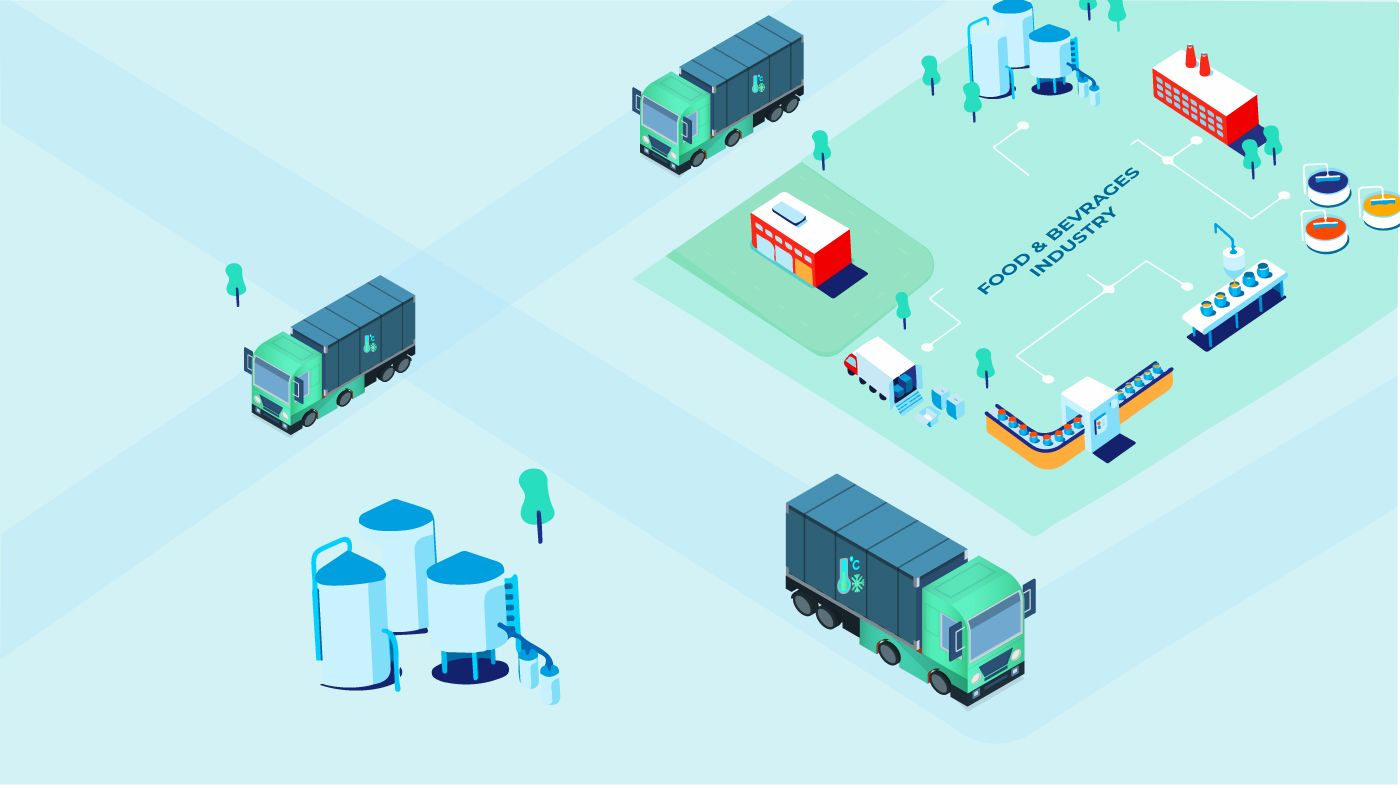
The food & beverage industry is vast and serves various consumers. From the chips we eat to the coffee we order to the meat we purchase at supermarts, the timely availability of all these goods relies on the smooth functioning of the complex supply chain mechanism that makes the availability of all these goods possible. In case even one aspect of the supply chain in the food & beverage industry fails, the consumers end up seeing an ‘Out of Stock’ or ‘Product unavailable’.
What happens when the supply chain in the food & beverage industry fails?
In logistics, identifying inefficiencies and problems requires a concrete understanding of the players or components involved. Thus, to understand the underlying issues in food & beverage logistics, we first need to understand the key stakeholders in the Food & Beverage industry. These stakeholders and components can be broadly divided into Production, Processing, Distribution, Retail, Consumers & Last Mile Delivery. When it comes to disruptions and their impacts,
•Primary production relies on the steady supply chain of production inputs. It has never undergone any major disruptions, but disruptions in the supply chain of inputs may further lead to disruptions in the production process.
• Processing primarily involves food processing and packaging and can be equivalent to manufacturing. It is also most vulnerable to disruptions such as labour shortage, changing regulation, capacity & scaling up challenges, among others. The most recent example is the shortage of meat in the US during the covid-19 driven lockdowns due to supply chain disruptions.
• Inefficiencies and visibility problems have continued to plague the distribution system of Food & Beverage supply chain operations due to the complexities involved. Increasing consumer demand coupled with varied transportation requirements and the sheer volume of goods requiring transportation varies across products making the supply chain operation challenging. Failure to evolve to the rising challenges results in disruption leading to shortages, revenue and consumer losses.
• Retailers have traditionally been the bridge between manufacturers and consumers, and inventory data from them have been crucial for demand forecasting and optimising the entire supply chain. However, the lack of technology in inventory management for retailers has been one of the primary reasons for inaccurate demand forecasting for manufacturers and others along the supply chain, ultimately leading to the loss of business to new-age companies. For example, using technology-driven supply chain management, Amazon has continued to destroy the market share of brick-and-mortar stores across the US and other places.
• Demand for more accessible and consumer-friendly goods has created an opportunity for a more creative solution in Food & Beverage supply chain management. While challenging, new-age companies use technology to counter supply chain problems, such as employing 3PL providers. Companies Zomato, Licious, Grofers, etc., are great examples as they get ready to go head-to-head with their US counterparts in the 10-minute delivery model, which, knowing India’s supply chain problems, was impossible to think about just a few years ago.
Current trends in the Food & Beverage industry
Latest reports on the Food & Beverage industry in India have persistently focused on the need to resolve supply chain bottlenecks and inefficiencies in the sector. Indian Food & Beverage Sector: The new wave report by Grant Thornton and the Confederation of Indian Industries (CII) attributes most of the challenges related to the supply chain in the Food & Beverage industry to inadequate capacities, and most of the new business models have focused on capabilities rather than capacities. In comparison, a report by Quantzig sheds light on the regulatory changes related to logistics making it even more difficult for businesses to remain efficient.
Moreover, sustainability and reducing carbon emissions have undoubtedly been two key trends in the global logistics & supply chain sector. Businesses are continuously looking for ways to reduce their emissions related to the supply chain and become more sustainable. Technology has continued to play an essential role in helping businesses transition from traditional to sustainable. A report by Deloitte titled Industry 4.0 in Food Industry identifies sustainability in Food & Beverage industry supply chain as one of the most emerging trends. Moreover, the drive to make supply chain operations more sustainable resonates across businesses and borders.
However, the shift from 'business as usual' towards sustainability can only be achieved after other crucial problems such as supply chain visibility, improper inventory management, poor demand forecasting, and communication-related challenges. When it comes to the Indian Food & Beverage industry, it has a long way to go. Let's discuss these challenges in more detail.
Upcoming and existing challenges for the Food & Beverage industry
In this final section, we address the existing logistics & supply chain-related challenges in the Food & Beverage industry in detail. Understanding these challenges will help businesses address them, making more informed business decisions to improve efficiency and bring transparency to their operations.
1. Poor Supply Chain Visibility
India's logistics and supply chain operations lack visibility and transparency across industries because operations rely on manual interventions. Transportation in the Food & Beverage industry is more prone to such instances due to short shelf-life and temperature sensitivity. Such goods require case-sensitive packaging, handling and movement, often missing due to a lack of capacity to track shipments. As a result, cases of rejected shipments and poor handling lead to revenue loss, and negative client perception is quite common.
2. Poor Inventory Management
Inventory management using manual interventions or outdated software used by most retailers is the root cause of inaccurate inventory data provided to businesses and manufacturers. Several other aspects such as warehousing, packaging, transportation, and even production rely on inventory data, and inaccurate management can create faultlines in all the adjoining functions of the supply chain.
3. Poor demand forecasting and scheduling deliveries
Accurate demand forecasting can allow companies to minimise excess inventory, scale operations & distribution, and accordingly, adjust their transport operations. Demand forecasting is also an essential component for growth projects that is critical from an executive position for any business. However, demand forecasting also depends on accurate inventory data from the retailers, as discussed in the section above. Moreover, route planning is also crucial to the Food & Beverage industry as demand is quite volatile in the sector; thus, using data and technology, businesses and logistics providers can use delivery scheduling to improve their consumer experience and their operating efficiency. Providing clients with ETA of deliveries can be an excellent example.
4. Increasing consumer expectations
E-commerce has opened pandora's box for convenience across several sectors such as electronics, lifestyle, and furniture. Naturally, consumers began to expect the same from other industries, and Food & Beverage industry is no exception. However, Food & Beverage supply chain lacks user-friendly delivery logistics infrastructure due to the nature of goods and fragmented and disorganised supply chain. For the perishable goods segment, scaling operations to cover all geographical areas becomes challenging and resource-draining.
5. Growing regulatory challenges
The Food & Beverage supply chain management deals with several regulations and compliances to operate. The regulations range across Food & Beverage supply chain, including transportation-related compliances such as FSSAI requirements for food safety, temperature data management, and accurate driver duty log, among several other compliances. For large businesses and fleet owners, ensuring that compliances for each delivery and vehicle are met is a very resource-intensive affair and thus, making the entire supply chain more inefficient and slow. In addition, increasing regulations such as the single-use plastic ban in India, effective from July 1, 2022, will considerably affect the supply chain's efficiency.
Conclusion
The Food & Beverage industry continues to expand both in terms of consumer demand and service offering, thus, forcing businesses to evolve their supply chain management accordingly. However, expanding service offerings comes with several logistical challenges that cannot be dealt with by continuing with the same traditional and manual intensive practices that continue to be employed by businesses in the Food & Beverage distribution. Thus, the adoption of technology and digitalisation is absolutely essential for the survival of the traditional players in the industry in light of rising consumer demand and fierce competition from e-commerce players. Failure to do so would only mean bleeding market share, mounting losses, and fear of eventual closure of operations.
What is food and beverage? ▼
Food and beverages refer to all edible and drinkable products manufactured, processed, transported, stored and sold for human consumption. This includes fresh fruits and vegetables, dairy products, packaged foods, frozen foods, meat and seafood, bakery products, snacks, bottled water, juices, soft drinks, alcoholic beverages and ready-to-eat meals. The industry also covers restaurants, cloud kitchens, supermarkets, wholesalers, distributors and food service businesses that ensure these products reach consumers safely and efficiently.
In India, the food and beverage industry is one of the country's fastest-growing sectors, driven by increasing urbanisation, rising disposable incomes, organised retail and e-commerce. Major business hubs such as Delhi, Delhi NCR, Gurgaon, Mumbai, Bengaluru and Pune witness high daily demand for fresh and packaged food products, making efficient logistics and supply chain management essential. Businesses operating in these cities must ensure timely deliveries, proper inventory management and compliance with food safety regulations to maintain product quality and customer satisfaction.
Modern food and beverage businesses increasingly rely on fleet management, transport management systems, cold chain logistics and real-time supply chain visibility to reduce delays, minimise spoilage and optimise delivery performance. Depending on the scale of operations, logistics technology costs in India can range from approximately ₹500 to ₹2,500 per vehicle per month for fleet tracking solutions, while enterprise-grade transport and cold chain management platforms are generally offered through customised pricing. Investing in the right technology helps businesses improve operational efficiency, reduce logistics costs and deliver a better customer experience.
What is food and beverage logistics? ▼
Food and beverage logistics refers to the planning, movement, storage, monitoring and delivery of food products, beverages, raw materials, packaged goods, frozen products and perishable items across the supply chain. It includes transportation from farms, factories, warehouses, cold storage units, distributors, retailers, restaurants, cloud kitchens and end consumers. In India, food and beverage logistics is especially complex because products often move through multiple cities, state borders, temperature zones and delivery partners before reaching the final buyer.
For businesses in Delhi, Gurgaon, Mumbai, Bengaluru, Pune and other high-demand urban markets, food and beverage logistics requires strong supply chain visibility, route planning, vehicle tracking, inventory coordination and delivery scheduling. Products such as dairy, meat, frozen foods, packaged snacks, beverages and fresh produce need timely movement because even small delays can result in spoilage, rejected shipments, stockouts or customer complaints.
The best food and beverage logistics systems usually combine GPS tracking, temperature monitoring, digital proof of delivery, route optimisation and fleet management dashboards. Depending on fleet size and features, logistics technology costs in India can broadly start from around ₹500 to ₹2,500 per vehicle per month, while advanced cold chain or enterprise solutions may cost more based on integrations, sensors and reporting needs.
Why is supply chain visibility important for food and beverage companies in India? ▼
Supply chain visibility is important for food and beverage companies because it helps businesses know where their shipments, vehicles, drivers and inventory are at every stage of movement. In a sector where products are often perishable, temperature-sensitive or demand-driven, lack of visibility can directly lead to delayed deliveries, spoiled goods, rejected loads, inaccurate ETAs and revenue loss. For Indian food and beverage companies, the issue becomes even more critical due to traffic congestion, fragmented transport networks, manual coordination and high delivery expectations in metro cities.
In Delhi NCR, Gurgaon and Mumbai, delivery routes can change quickly because of traffic, loading delays, market restrictions or last-mile congestion. Without real-time vehicle tracking and automated alerts, logistics teams may only discover a delay after the customer or distributor has already escalated the issue. Visibility also supports better planning for warehouse dispatches, retail replenishment and cold chain compliance.
Top food and beverage supply chain visibility platforms usually provide live tracking, route deviation alerts, detention tracking, temperature visibility, delivery performance reports and digital documentation. These features help businesses reduce manual calls, improve SLA compliance and make logistics more predictable. For mid-size fleets in India, pricing generally depends on the number of vehicles, sensor requirements and dashboard features, with basic fleet visibility tools often starting at affordable monthly per-vehicle pricing.
What are the biggest logistics challenges in the food and beverage industry? ▼
The biggest logistics challenges in the food and beverage industry include poor supply chain visibility, inaccurate inventory management, demand forecasting gaps, delivery delays, temperature control issues, regulatory compliance and rising customer expectations. These challenges affect manufacturers, distributors, retailers, 3PL providers, cloud kitchens, grocery brands and cold chain operators. Since many food and beverage products have limited shelf life, even a small operational gap can create large business losses.
In India, these problems are often amplified by manual tracking, fragmented vendor networks, city-specific delivery restrictions, high fuel costs and traffic delays. Delhi and Gurgaon businesses may struggle with NCR route congestion and distributor coordination, while Mumbai companies often face dense last-mile routes, port-linked movement delays and high warehousing costs. Bengaluru and Pune face their own challenges related to urban delivery density, rising demand and technology-led consumer expectations.
Common problem areas include:
- Delayed deliveries caused by poor route planning
- Rejected shipments due to temperature or handling issues
- Stockouts caused by inaccurate inventory data
- High transportation costs due to inefficient vehicle usage
- Lack of real-time ETA updates for customers and distributors
The best way to address these challenges is to use fleet management, transport management, route planning and visibility tools that connect logistics data in one place.
How can food and beverage companies reduce logistics costs? ▼
Food and beverage companies can reduce logistics costs by improving route planning, reducing empty miles, monitoring fuel usage, avoiding delivery delays, improving vehicle utilisation and using real-time fleet tracking. Logistics cost reduction is not only about finding cheaper transport vendors; it also requires better control over dispatch planning, driver behaviour, delivery scheduling, inventory movement and proof of delivery.
In India, logistics costs can increase due to traffic delays, fuel wastage, poor loading plans, manual follow-ups, detention charges and repeated delivery attempts. For businesses operating in Delhi NCR, Gurgaon, Mumbai, Bengaluru and Pune, route optimisation can play a major role because urban congestion directly affects delivery time and fuel consumption. A smart fleet management system can help teams compare planned routes with actual routes, identify delays, reduce idle time and improve trip productivity.
Typical cost-saving areas include:
- Fuel savings through route optimisation and driver monitoring
- Lower spoilage losses through temperature and delay alerts
- Reduced manual coordination through automated tracking
- Better vehicle utilisation through dispatch planning
- Fewer penalties through improved delivery compliance
Technology pricing can vary by use case. Basic GPS-based fleet tracking may start from around ₹500 to ₹1,500 per vehicle per month, while advanced transport management, cold chain monitoring and enterprise dashboards may require custom pricing depending on fleet size and integrations.
What is the best logistics solution for food and beverage distribution in Delhi NCR and Gurgaon? ▼
The best logistics solution for food and beverage distribution in Delhi NCR and Gurgaon is one that combines real-time vehicle tracking, route optimisation, delivery scheduling, temperature monitoring, digital proof of delivery and performance analytics. Delhi NCR has a complex distribution environment because food and beverage goods often move between warehouses, industrial hubs, retail stores, restaurants, distributors and last-mile delivery points across Delhi, Gurgaon, Noida, Faridabad and Ghaziabad.
For businesses in Gurgaon, visibility becomes especially important because many companies operate from large warehouses, corporate supply chains, quick-commerce networks and regional distribution centres. Traffic bottlenecks, delivery time windows and customer expectations make manual tracking inefficient. A strong logistics platform helps dispatch teams monitor vehicles, reduce delays, share accurate ETAs and improve delivery reliability.
For Delhi NCR food and beverage businesses, useful features include:
- Live GPS tracking for all delivery vehicles
- Route planning for high-traffic urban routes
- Temperature alerts for frozen, chilled or perishable goods
- Trip-level reports for distributor and retailer deliveries
- Digital delivery records for faster reconciliation
Cost can vary depending on whether the business needs basic fleet tracking or a full transport management system. Smaller fleets may start with per-vehicle monthly plans, while larger F&B brands and 3PL operators usually need custom enterprise pricing.
How does cold chain logistics help food and beverage businesses in Mumbai, Bengaluru and Pune? ▼
Cold chain logistics helps food and beverage businesses maintain the required temperature for products such as dairy, frozen foods, meat, seafood, ice cream, beverages, fresh produce and ready-to-eat meals. In cities such as Mumbai, Bengaluru and Pune, cold chain logistics is important because consumer demand is high, delivery expectations are strict and products often move through dense urban routes before reaching retailers, restaurants, supermarkets or customers.
Mumbai’s humid climate and heavy traffic can increase the risk of temperature-sensitive goods getting damaged during transit. Bengaluru and Pune also have growing demand for packaged foods, cloud kitchens, premium grocery brands and quick-commerce delivery models. Without proper temperature monitoring, companies may face shipment rejection, product spoilage, customer complaints and compliance issues.
A good cold chain logistics system usually includes vehicle tracking, temperature sensors, route planning, door-open alerts, trip reports and automated notifications when the temperature goes outside the allowed range. These tools help logistics teams respond before the shipment quality is affected.
In India, cold chain logistics costs are usually higher than regular transportation because refrigerated vehicles, sensors and monitoring systems are required. Pricing depends on product type, distance, vehicle size, temperature range and service level. Businesses using technology-led cold chain monitoring may pay additional sensor or platform charges, but the investment can reduce spoilage, improve compliance and protect brand reputation.
How can route planning improve food and beverage delivery performance? ▼
Route planning improves food and beverage delivery performance by helping businesses choose faster, more efficient and more reliable delivery routes. In food and beverage logistics, route planning is especially important because delivery delays can affect product freshness, customer satisfaction, retail availability and revenue. Unlike general cargo, food products often have strict delivery windows and handling requirements.
In Indian cities such as Delhi, Mumbai, Bengaluru, Gurgaon and Pune, traffic congestion can change delivery performance significantly. A route that looks short on distance may not always be the fastest in real operating conditions. Route planning software helps logistics teams assign vehicles, sequence deliveries, reduce unnecessary kilometres, avoid known bottlenecks and improve ETA accuracy.
For food and beverage companies, route planning can support:
- Faster store replenishment and distributor delivery
- Lower fuel consumption and fewer empty trips
- Better driver productivity and trip completion rates
- Improved on-time delivery for perishable goods
- More reliable customer and retailer communication
The best route planning tools also integrate with fleet tracking and transport management systems so businesses can compare planned routes with actual movement. This helps identify recurring delays, underperforming routes and opportunities for cost reduction. For many Indian businesses, route optimisation becomes one of the highest-impact areas for improving logistics efficiency.
What technology should food and beverage companies use for better fleet management? ▼
Food and beverage companies should use fleet management technology that provides real-time tracking, trip monitoring, driver behaviour insights, fuel analytics, route planning, delivery alerts, temperature monitoring and digital reporting. The right technology depends on the type of products being transported, fleet size, city coverage, delivery model and compliance needs.
For packaged food and beverage distribution, GPS tracking and route planning may be the first priority. For frozen foods, dairy, meat, seafood or fresh produce, temperature monitoring and cold chain visibility become essential. For large enterprises and 3PL providers, a transport management system may be needed to manage multiple vehicles, vendors, warehouses, dispatches and delivery SLAs from one dashboard.
Top fleet management features for food and beverage businesses include:
- Live vehicle location and ETA tracking
- Route deviation and stoppage alerts
- Fuel usage and driver performance reports
- Temperature and cold chain monitoring
- Digital proof of delivery and trip analytics
In India, fleet management software cost usually depends on the number of vehicles and features required. Basic tracking can be budget-friendly for small fleets, while advanced enterprise systems for Delhi NCR, Mumbai, Bengaluru or national operations may require custom pricing based on automation, integrations and reporting depth.
How much does food and beverage logistics software cost in India? ▼
Food and beverage logistics software cost in India depends on the features, fleet size, type of vehicles, number of users, integrations, sensors and level of automation required. A small business may only need GPS tracking and basic trip reports, while a large food and beverage distributor may need route planning, temperature monitoring, digital proof of delivery, fuel analytics, vendor management and transport management dashboards.
As a general cost idea, basic vehicle tracking solutions may start from around ₹500 to ₹1,500 per vehicle per month. More advanced fleet management platforms with analytics, alerts, reporting and route optimisation may range higher depending on the provider and feature set. Cold chain monitoring may include additional sensor, installation or device costs. Enterprise transport management solutions are often priced on a custom basis because they may include multiple branches, warehouses, integrations and workflow automation.
For companies in Delhi, Gurgaon, Mumbai, Bengaluru and Pune, the best approach is to calculate logistics software cost against savings from reduced fuel wastage, fewer delayed deliveries, lower spoilage, better vehicle utilisation and improved customer satisfaction. The cheapest option is not always the best if it does not solve visibility, compliance or delivery performance issues. A scalable logistics platform can deliver stronger ROI when it supports both current operations and future growth.
What should food and beverage businesses look for in a top logistics partner or fleet management platform? ▼
Food and beverage businesses should look for a logistics partner or fleet management platform that can improve visibility, delivery reliability, cost control, compliance and customer experience. The best solution should not only track vehicles but also provide actionable insights that help teams make better dispatch, routing and inventory decisions. Since food and beverage logistics often involves perishable products, time-sensitive deliveries and temperature requirements, the platform must support real-time monitoring and quick issue resolution.
Important factors to evaluate include:
- Real-time GPS tracking and ETA accuracy
- Route planning for city and intercity deliveries
- Cold chain or temperature monitoring support
- Digital proof of delivery and automated reports
- Fuel, driver and vehicle performance analytics
- Scalability for Delhi NCR, Mumbai, Bengaluru, Pune and pan-India operations
Businesses should also check whether the platform can integrate with existing ERP, warehouse, inventory or transport systems. For growing food and beverage brands, a technology-led solution is often more valuable than manual coordination because it reduces dependency on phone calls, spreadsheets and delayed updates. While pricing matters, the best platform should be judged by total ROI, including fewer delays, lower spoilage, better customer service and improved logistics control.