
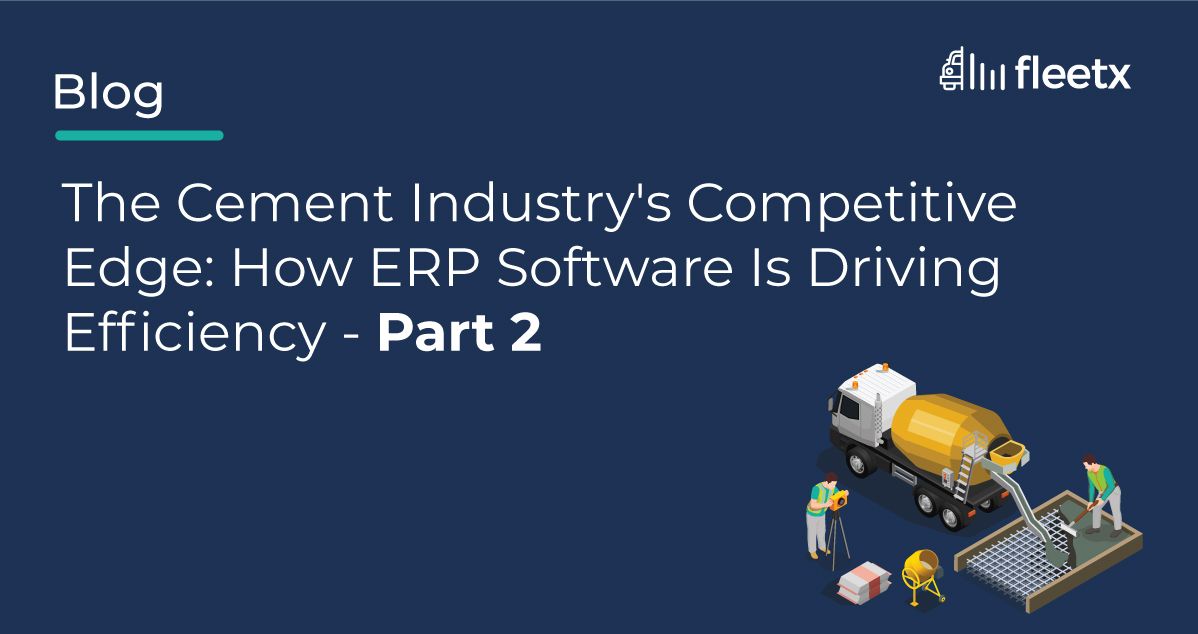
India’s current economic wave is promising, and companies across industries are looking for ways to improve their competitive edge and drive efficiency. The previous article in this series disscused how an Enterprise Resource Planning (ERP) software can be a powerful solution for players in the cement industry looking to accelerate their operations. This second article will provide data on how cement manufacturing companies worldwide have benefitted from a Tms ERP system.
Just to give you a few more reasons to allow us to provide you with a customised solution for your business.
How has ERP software benefitted cement manufacturers globally?
Implementing an ERP system has shown significant benefits for companies in the cement manufacturing industry globally. For example, a leading cement manufacturer in the United States reported an increase in efficiency by over 10% after implementing an ERP system. Similarly, a global cement company saw a reduction in inventory costs by 20% and an increase in revenue by 19% after adopting an ERP system.
Furthermore, a study conducted by IDC (International Data Corporation) found that companies using an ERP system in the cement industry can reduce production costs by up to 30%, increase productivity by 25%, and improve inventory accuracy by 20%. This translates to improved profitability and a competitive advantage in the industry.
The list continues
The benefits of an ERP system go beyond just improving efficiency and driving growth. By providing a centralized platform for data management and analysis, an ERP system can also help companies improve data accuracy, reduce errors and discrepancies, and improve compliance with regulations and industry standards. Here are a few more ways a tms erp system can help take your cement business to the next level:
1. Quality control: High-quality product is key to retaining customers in the cement industry, where the quality of the final product can have a significant impact on customer satisfaction and brand reputation. A Tms ERP system can help ensure consistent quality by tracking production data and providing real-time feedback on process parameters.
This can help identify potential quality issues before they become major problems, and enable quick corrective action to be taken. Access to data on quality processes can further help establish accountability guidelines, and minimize future mistake.
2. Streamline HR: Managing a large workforce is a challenge for any manufacturing company, and this is particularly true in the cement industry. An ERP system can help optimise employee processes by providing a centralized platform for managing employee data, payroll software , and benefits. This can help reduce administrative overhead, improve accuracy, and ensure compliance with labor laws. The system can be customised to the needs of the organisation, and provide valuable data on performance.
3. Order processing: Automating the order fulfillment process can help the company reduce lead times and improve customer satisfaction. This includes everything from order entry and invoicing to shipping and delivery tracking with the help of logistics erp. With this system, the company can manage orders more efficiently, ensuring that customers receive their products on time and in good condition, while also minimizing the risk of errors and delays.
4. Effective marketing: Companies can access customer data and gain valuable insights into behavior and market trends. By analyzing this data and sales trends, companies can better understand customer needs and preferences, develop targeted marketing campaigns, and improve customer satisfaction.
5. Environmental compliance and sustainability: An ERP system can help integrate environmental management and compliance functions into all business operations, to track and manage environmental impact, reduce waste and minimise the risk of regulatory violations. A study by Aberdeen Group found that companies using an ERP system had a 23% higher rate of regulatory compliance compared to those that did not.
Countries around the world are tightening regulations due to rising pollution levels and climate change. By automating these processes, the company can improve its sustainability score and reduce its environmental footprint, enhancing its reputation and appeal to customers and stakeholders.
How ERP Software Supports Digital Transformation Across the Cement Supply Chain
Modern cement manufacturers are increasingly moving beyond isolated software systems and adopting connected digital ecosystems. Instead of treating production, logistics, procurement, finance, and customer service as separate functions, an ERP platform enables every department to work with the same real-time operational data. This creates a more responsive and data-driven organization capable of adapting to market fluctuations and customer demand.
A digitally connected cement enterprise benefits from better coordination between plants, warehouses, transport partners, distributors, and customers. Since cement demand often fluctuates due to seasonal construction cycles and infrastructure projects, having real-time business intelligence becomes a competitive advantage.
Key Areas Where ERP Enables Digital Transformation
- Centralized operational visibility
- Consolidates production, inventory, procurement, finance, and logistics data into a single platform.
- Eliminates duplicate data entry and inconsistent reporting.
- Improved decision-making
- Live dashboards help management monitor production efficiency, dispatch performance, inventory turnover, and transport costs.
- Enables faster corrective actions when bottlenecks occur.
- Greater supply chain collaboration
- Improves coordination between manufacturing plants, warehouses, transporters, dealers, and procurement teams.
- Reduces communication delays across multiple stakeholders.
- Business scalability
- Supports expansion into new manufacturing plants, warehouses, dealer networks, and regional markets without increasing administrative complexity.
- Standardizes workflows across multiple locations.
Business Outcomes
Organizations implementing ERP software typically experience:
| Operational Area | Business Improvement with ERP |
|---|---|
| Inventory Management | Better stock accuracy and lower excess inventory |
| Production Planning | Improved capacity utilization and scheduling |
| Procurement | Faster vendor coordination and purchase approvals |
| Logistics | Better shipment planning and freight visibility |
| Finance | Faster invoicing and improved financial reporting |
| Customer Service | Quicker order updates and improved delivery communication |
Rather than simply digitizing existing processes, ERP software creates a connected operational environment where every department contributes to faster decisions, lower operating costs, and higher customer satisfaction.
ERP vs Traditional Business Management in Cement Manufacturing
Many cement manufacturers still depend on spreadsheets, standalone accounting software, emails, and manual coordination between departments. While these methods may work at a smaller scale, they become increasingly difficult to manage as production volumes, dealer networks, and transportation requirements grow.
The difference between a traditional management approach and an integrated ERP platform becomes particularly visible when handling hundreds of daily dispatches, multiple production plants, and geographically distributed customers.
Comparison: Traditional Operations vs ERP-Driven Operations
| Business Function | Traditional Process | ERP-Based Process |
|---|---|---|
| Order Management | Manual entry and follow-ups | Automated order processing with live tracking |
| Inventory Updates | Delayed manual reconciliation | Real-time inventory visibility |
| Production Planning | Spreadsheet-based scheduling | Automated demand-based planning |
| Transport Coordination | Phone calls and emails | Integrated dispatch and transporter management |
| Financial Reporting | Separate departmental reports | Unified real-time dashboards |
| Customer Communication | Manual status updates | Automated order and shipment visibility |
| Compliance | Manual documentation | Digital records and audit-ready reporting |
| Performance Monitoring | Historical reporting | Live KPI dashboards and analytics |
Why This Matters for Cement Companies
An integrated ERP platform helps businesses:
- Reduce manual intervention across departments.
- Improve collaboration between production and logistics teams.
- Increase visibility into plant-wise and warehouse-wise inventory.
- Minimize dispatch delays caused by communication gaps.
- Support business expansion without proportional increases in operational complexity.
For manufacturers handling high dispatch volumes, ERP becomes a strategic investment rather than simply another software implementation.
Future Trends Shaping ERP Adoption in the Cement Industry
The role of ERP software is evolving beyond enterprise resource planning. Modern ERP platforms increasingly integrate artificial intelligence, predictive analytics, IoT devices, and transportation management technologies to create smarter manufacturing operations.
As construction demand grows and supply chains become more complex, cement manufacturers are investing in technologies that improve forecasting accuracy, reduce operating costs, and enhance customer experience.
Emerging ERP Capabilities
AI-Powered Business Intelligence
Modern ERP systems can analyze historical production, sales, procurement, and logistics data to:
- Predict future demand.
- Identify operational bottlenecks.
- Recommend inventory replenishment schedules.
- Forecast procurement requirements.
Predictive Maintenance Integration
ERP software integrated with IoT-enabled equipment can:
- Monitor machine performance continuously.
- Schedule maintenance before equipment failure.
- Reduce unexpected production downtime.
- Extend equipment lifespan.
Intelligent Logistics Planning
When integrated with Transport Management Systems, ERP solutions can support:
- Automated shipment allocation.
- Route optimization.
- Freight cost analysis.
- Vehicle utilization monitoring.
- Delivery performance tracking.
Sustainability and ESG Reporting
Environmental compliance is becoming increasingly important across manufacturing industries. Modern ERP platforms help organizations:
- Monitor energy consumption.
- Track carbon emissions across operations.
- Reduce material wastage.
- Improve regulatory reporting.
- Support sustainability initiatives with measurable operational data.
Why These Trends Matter
Cement manufacturers that adopt intelligent ERP capabilities position themselves for long-term operational resilience by:
- Improving forecasting accuracy.
- Enhancing supply chain responsiveness.
- Increasing operational transparency.
- Supporting data-driven executive decision-making.
- Building scalable digital operations that can adapt to future market demands.
As digital transformation accelerates across the manufacturing sector, ERP software is no longer just a business management tool—it serves as the foundation for connected, intelligent, and highly efficient cement manufacturing operations.
Let us now wrap up this series; an ERP system can drive efficiency and productivity in cement manufacturing operations, leading to improved profitability and a competitive edge in the market. By optimizing several processes, reducing costs, and increasing revenue, companies can achieve their business goals and better serve their customers.
The data and statistics from leading cement companies globally demonstrate the potential benefits of implementing an ERP system, not to mention the several benefits. Therefore, it is highly recommended that cement companies consider investing in an ERP system to take advantage of these innovative solutions and stay ahead of the competition.
Frequently Asked Questions
What is ERP software for the cement industry? ▼
ERP software for the cement industry is a centralized business management system that connects production, inventory, dispatch, transport, finance, sales, procurement, quality control, and compliance data in one platform. For cement manufacturers, distributors, and logistics teams, ERP software helps replace manual spreadsheets, disconnected tools, and delayed reporting with real-time visibility across operations.
In a cement business, daily operations often include raw material planning, plant scheduling, clinker and cement stock monitoring, dealer order processing, freight allocation, weighbridge updates, invoice generation, and delivery tracking. A cement ERP system helps these processes work together instead of functioning separately. When integrated with a Transport Management System, GPS tracking, route planning, and fleet analytics, it becomes even more useful for businesses managing high-volume cement movement across India.
For companies operating in Delhi NCR, Gurgaon, Mumbai, Bengaluru, Pune, and other industrial regions, ERP software can improve dispatch accuracy, reduce manual errors, support faster decision-making, and make customer service more reliable. The best ERP software for cement businesses usually includes modules for inventory, logistics, finance, order management, vendor management, and analytics. Cost can vary widely depending on users, integrations, modules, and deployment type, but Indian businesses may generally see pricing from entry-level subscription models to larger custom enterprise implementations.
How does ERP software improve cement logistics and transport management in India? ▼
ERP software improves cement logistics and transport management in India by creating a single source of truth for orders, dispatches, inventory, freight costs, vehicle allocation, and delivery status. Cement logistics is time-sensitive because delays can affect project sites, dealer commitments, warehouse planning, and production schedules. When logistics data is handled manually, teams often face duplicate entries, shipment confusion, missed updates, and poor visibility over vehicle movement.
A cement ERP system integrated with a transport management system can help businesses plan dispatches based on order priority, stock availability, destination, vehicle type, and route efficiency. This is especially useful for cement movement across Delhi, Gurgaon, Mumbai, Pune, Bengaluru, and other high-demand markets where traffic, delivery windows, toll costs, and turnaround time can directly affect profitability.
Key benefits include:
- Real-time order-to-dispatch visibility for sales, plant, and logistics teams.
- Better truck allocation based on load, destination, and availability.
- Reduced freight leakage through automated cost tracking.
- Improved customer communication with delivery updates.
- Lower dependency on Excel sheets and manual calls.
For Indian cement manufacturers, the best ERP-led logistics setup is one that supports regional operations, multi-plant visibility, dealer distribution, transporter coordination, and integration with GPS or fleet management tools. This makes decision-making faster and helps businesses handle higher shipment volumes with fewer operational gaps.
What are the top benefits of ERP software for cement manufacturers? ▼
The top benefits of ERP software for cement manufacturers include better operational visibility, improved inventory control, faster order processing, stronger logistics coordination, and more accurate business reporting. Cement manufacturing involves many connected processes, from raw material procurement and production planning to quality checks, dispatch, transport, billing, and customer delivery. ERP software helps align these functions so teams can make decisions using real-time data instead of outdated spreadsheets or scattered records.
One of the biggest advantages is improved inventory accuracy. Cement businesses need to track raw materials, clinker, finished cement, packing materials, and stock across plants, warehouses, and distribution points. ERP software helps reduce stock mismatches and enables better planning. Another major benefit is transport efficiency. When ERP is connected with fleet or TMS tools, manufacturers can monitor dispatches, route performance, delivery status, and freight costs more effectively.
For businesses in India, especially in Delhi NCR, Gurgaon, Mumbai, Bengaluru, and Pune, ERP software also supports faster customer response. Sales teams can check order status, finance teams can track invoices, and logistics teams can manage delivery commitments from one system. The best ERP systems for cement manufacturers also support compliance, analytics, vendor management, quality control, and role-based access.
Cost-wise, ERP implementation depends on company size and customization. Smaller cement suppliers may start with basic cloud modules, while large manufacturers often need enterprise-grade ERP with integrations, automation, analytics, and multi-location support.
How much does ERP software cost for cement companies in India? ▼
The cost of ERP software for cement companies in India depends on the number of users, required modules, customization level, deployment model, integrations, support, and business scale. A small cement distributor or regional supplier may need only basic modules such as inventory, sales, billing, and dispatch tracking. A large cement manufacturer may require production planning, procurement, quality control, finance, transport management, dealer management, fleet visibility, analytics, and integration with weighbridge or GPS systems.
As a broad estimate, cloud-based ERP software for small and mid-sized businesses may start from monthly or annual subscription pricing, while advanced enterprise ERP implementation can move into higher custom pricing depending on complexity. Businesses should also account for setup fees, training, data migration, customization, API integrations, and ongoing support. For cement logistics operations in Delhi, Gurgaon, Mumbai, Bengaluru, Pune, and other Indian industrial hubs, transport-related modules may add extra value because freight cost, route efficiency, and delivery reliability are major cost drivers.
Common ERP cost factors include:
- Number of plants, warehouses, users, and departments.
- Modules such as finance, inventory, production, sales, and transport.
- Integration with TMS, GPS tracking, weighbridge, or accounting tools.
- Level of reporting, dashboards, and automation required.
- Training, onboarding, and long-term support needs.
The best approach is to compare ERP cost against savings from reduced manual work, lower freight leakage, better stock control, fewer dispatch errors, and improved customer satisfaction.
Which is the best ERP software for cement businesses in Delhi NCR and Gurgaon? ▼
The best ERP software for cement businesses in Delhi NCR and Gurgaon is one that supports high-volume dispatch, dealer distribution, transporter coordination, real-time inventory visibility, and integration with logistics systems. Delhi NCR and Gurgaon are important business and industrial regions where cement companies often serve construction sites, infrastructure projects, warehouses, dealers, and contractors. Because delivery timelines and freight costs can vary due to traffic, route constraints, and regional demand, a cement ERP system should not only manage back-office operations but also support transport visibility.
For cement manufacturers, suppliers, and distributors in Delhi NCR, ERP software should ideally include modules for order management, stock tracking, invoice automation, procurement, finance, dispatch planning, vehicle allocation, and analytics. If the business manages its own fleet or works with multiple transporters, integration with a Transport Management System can help improve shipment tracking, route planning, proof of delivery, and freight cost control.
When evaluating the top ERP options for Gurgaon or Delhi-based cement businesses, companies should check whether the platform can support multiple branches, GST-compliant billing, local logistics workflows, transporter performance reports, and mobile access for field teams. Pricing may differ based on deployment size, but the right ERP investment should reduce operational delays, improve order accuracy, and help teams manage cement movement more efficiently across Delhi, Noida, Ghaziabad, Faridabad, Gurgaon, and nearby industrial areas.
Why do cement companies in Mumbai, Pune, and Bengaluru need ERP software? ▼
Cement companies in Mumbai, Pune, and Bengaluru need ERP software because these markets involve high construction demand, complex distribution networks, multiple delivery points, and strong pressure to maintain timely supply. In such cities, cement businesses often handle orders from dealers, contractors, infrastructure projects, warehouses, and retail networks. Managing all this through Excel sheets, calls, and disconnected systems can create delays, stock mismatches, billing errors, and poor logistics visibility.
ERP software gives cement businesses a structured way to manage sales, production, inventory, procurement, dispatch, billing, and transport coordination. In Mumbai, where traffic congestion and delivery timing are major challenges, ERP-linked transport visibility can help teams plan dispatches better. In Pune, where industrial and construction growth creates frequent material movement, ERP can improve stock planning and dealer supply. In Bengaluru, where urban expansion and infrastructure activity require reliable delivery coordination, ERP can help reduce manual follow-ups and improve customer updates.
The best ERP software for cement businesses in these cities should include real-time dashboards, inventory alerts, order tracking, invoice automation, transporter management, and analytics. If combined with fleet management or TMS capabilities, companies can also track vehicle movement, reduce detention time, compare transporter performance, and monitor freight expenses. This makes ERP useful not only for operational control but also for profitability, customer satisfaction, and long-term scalability in competitive cement markets.
How can ERP software reduce hidden costs in cement manufacturing and logistics? ▼
ERP software can reduce hidden costs in cement manufacturing and logistics by identifying inefficiencies that are often missed in manual operations. Cement businesses may lose money through incorrect inventory records, delayed dispatches, excess freight charges, poor vehicle utilization, production planning gaps, manual billing errors, duplicate data entry, and weak coordination between sales, plant, finance, and logistics teams. These costs may not always appear as direct expenses, but they affect margins over time.
A cement ERP system helps reduce such losses by connecting operational data across departments. For example, when sales orders, stock availability, dispatch plans, transporter rates, and invoices are managed in one platform, teams can avoid repeated follow-ups and prevent mismatched information. ERP dashboards can highlight delayed orders, slow-moving stock, high freight routes, pending invoices, and transporter performance issues.
In India, where cement logistics often involves long-distance movement, regional warehouses, dealer networks, and high fuel or toll costs, ERP can support better decision-making. Businesses operating across Delhi NCR, Gurgaon, Mumbai, Bengaluru, and Pune can use ERP data to compare routes, monitor delivery delays, and reduce unnecessary manual work.
Key hidden cost reductions may come from:
- Lower manual errors in billing and order processing.
- Better inventory control and reduced stock mismatch.
- Improved freight cost tracking and transporter accountability.
- Faster dispatch planning and fewer delivery delays.
- Stronger visibility into plant, warehouse, and customer-level operations.
What features should cement companies look for in a top ERP system? ▼
Cement companies should look for an ERP system that supports industry-specific workflows instead of only basic accounting or inventory functions. The top ERP system for cement businesses should connect production, inventory, procurement, sales, finance, dispatch, transport, quality control, and reporting in one platform. Since cement movement depends heavily on logistics, companies should also evaluate whether the ERP can integrate with transport management, GPS tracking, weighbridge systems, and fleet analytics.
Important ERP features for cement manufacturers include real-time inventory tracking, dealer and distributor management, automated order processing, purchase management, production planning, GST-compliant invoicing, role-based dashboards, and business intelligence reports. For logistics-heavy operations, features like dispatch planning, route visibility, transporter rate management, proof of delivery, freight reconciliation, and vehicle utilization tracking can add significant value.
For companies in India, especially those operating in Delhi, Gurgaon, Mumbai, Bengaluru, Pune, and other industrial markets, mobile accessibility is also important. Field teams, sales representatives, warehouse managers, and logistics coordinators should be able to access relevant information without waiting for office updates.
Before choosing the best ERP software, cement businesses should check scalability, customization options, integration support, implementation timeline, vendor experience, reporting quality, data security, and after-sales support. A good ERP system should not only digitize existing processes but also help the company improve efficiency, reduce costs, and build a more reliable operating model for future growth.
Can ERP software help cement companies improve customer satisfaction? ▼
Yes, ERP software can help cement companies improve customer satisfaction by making order processing, dispatch updates, inventory availability, billing, and delivery coordination more reliable. In the cement industry, customers often expect timely supply, accurate quantity, correct billing, and clear communication. When teams rely on manual records or disconnected systems, customers may face delayed confirmations, unclear delivery timelines, invoice errors, and repeated follow-ups.
An ERP system allows sales, finance, warehouse, production, and logistics teams to work from the same data. When a customer places an order, teams can check stock availability, confirm pricing, generate invoices, plan dispatch, and track delivery status more efficiently. If ERP is connected with transport management or fleet tracking, customers can also receive better shipment visibility and more accurate delivery updates.
This is especially useful in competitive markets such as Delhi NCR, Gurgaon, Mumbai, Bengaluru, and Pune, where cement buyers may compare suppliers based on reliability, speed, and service quality. For dealers, contractors, and infrastructure customers, even small delays can affect project schedules. ERP software helps reduce these service gaps by improving internal coordination.
The best ERP systems also help companies analyze customer buying patterns, repeat orders, payment cycles, complaint history, and delivery performance. These insights can help cement businesses offer better service, improve planning, and build long-term customer trust. Over time, better customer satisfaction can support stronger retention, higher repeat business, and improved brand reputation.