
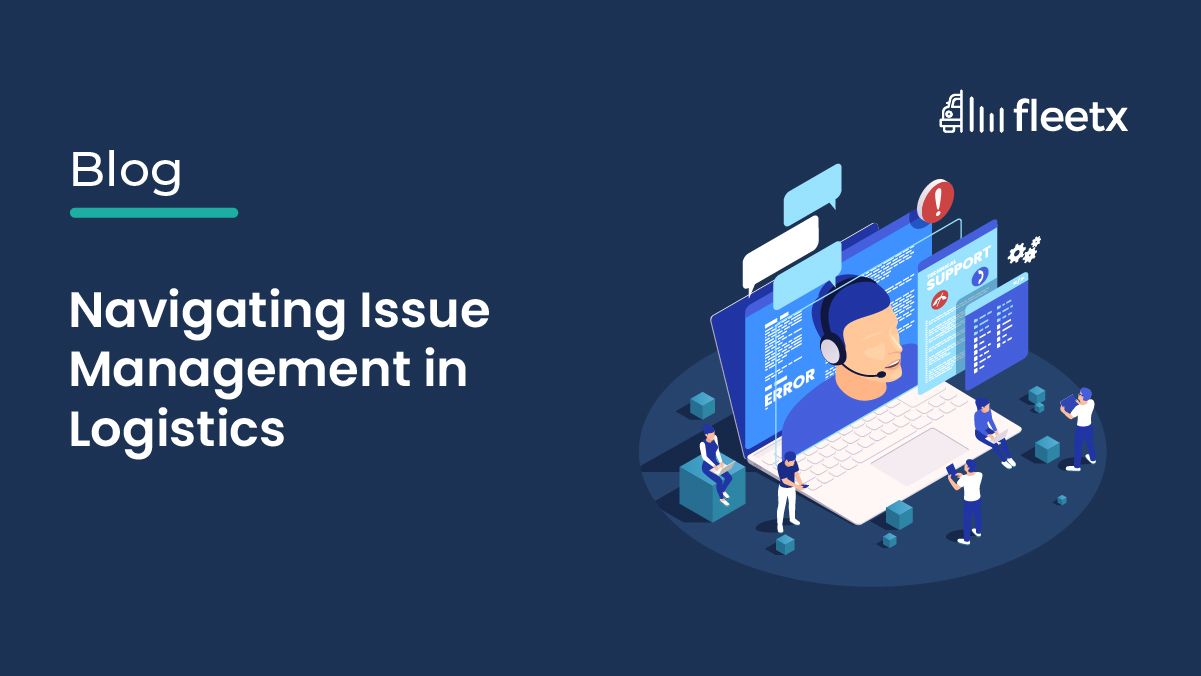
Logistics industry, which includes transportation, warehousing, and distribution, is often confronted with various challenges that have the potential to disrupt the supply chain. Efficiently managing issues requires promptly identifying, addressing, and resolving problems. This blog will dive into the significance of managing issues in logistics, the typical challenges encountered, effective strategies for resolving issues, and the impact of technology on improving issue management.
The Significance of Managing Problems in Logistics
Logistics plays a crucial role in international trade, enabling the smooth flow of products from producers to end-users. Any interruption in the supply chain can result in substantial financial losses, customer dissatisfaction, and harm to reputation.
Effective management of issues is crucial for:
1. Prioritizing Timely Deliveries: Delays in logistics can have a significant impact on production schedules, inventory levels, and customer deliveries. Efficient problem-solving is crucial for promptly addressing any delays, ensuring that goods reach their destination on time.
2. Ensuring Customer Satisfaction: Timely and accurate deliveries are expected by customers. Efficiently resolving problems minimizes any disruptions, ensuring that customer expectations are met and ultimately enhancing their satisfaction.
3. Minimizing Expenses: Delays, damages, and inefficiencies in the supply chain can result in higher costs. Efficient problem-solving techniques aid in identifying and resolving the underlying issues, resulting in cost reduction and enhanced profitability.
4. Enhancing Operational Efficiency: Through proactive management of challenges, logistics companies can optimize their operations, boost productivity, and elevate overall performance.
Common Challenges in Logistics
Logistics operations can be challenging, as they involve various factors that can cause disruptions in the supply chain.
There are a few common issues that often arise:
1. Inconveniences and Interruptions: Issues such as transportation delays caused by traffic, weather conditions, or mechanical failures can lead to significant disruptions in the supply chain.
2. Inventory Management: Poor inventory management can result in stock shortages or excess inventory, impacting the timely delivery of orders and raising storage expenses.
3. Damage and Loss: Products may incur damage or go missing while in transit, resulting in financial setbacks and customer dissatisfaction.
4. Regulatory requirements: Meeting regulatory requirements can be a complex task, especially when it involves cross-border logistics.
5. Technological Failures: Issues with logistics management systems, tracking devices, and communication tools can cause disruptions in operations and lead to delays in resolving problems.
Strategies for Efficient Issue Management
Efficient problem-solving in the logistics industry requires a proactive mindset in recognizing, tackling, and resolving issues.
Here are some strategies to improve issue management:
1. Monitoring for Efficiency: Consistently keeping an eye on logistics operations allows for early detection of possible problems, preventing them from becoming bigger issues. Integrating real-time tracking systems and closely monitoring key performance indicators (KPIs) can offer valuable insights into potential issues before they escalate.
2. Clear and Efficient Communication: Effective issue management relies on clear and timely communication. Building strong connections with all parties involved, such as suppliers, carriers, and customers, guarantees that any concerns are quickly acknowledged and resolved.
3. Identifying the Underlying Issue: Recognizing the underlying reason behind a problem is essential for finding a successful solution. Performing comprehensive investigations and analyzing data can assist in pinpointing the root causes of issues and proactively preventing their reoccurrence.
4. Working Together to Solve Problems: Working together among all parties involved is crucial for addressing problems in a timely and effective manner. Promoting collaboration and engaging all relevant parties in the problem-solving process can result in more efficient solutions.
5. Training and Development: Offering consistent training to employees on problem-solving techniques can improve their capacity to recognize and resolve issues in a timely manner.
6. Standard Operating Procedures (SOPs): Establishing and executing standard operating procedures for issue management guarantees a systematic and uniform method for addressing problems. Standard Operating Procedures (SOPs) should clearly define the necessary steps, assign responsibilities, and establish escalation procedures for various types of issues.
The Impact of Technology on Improving Issue Management
Technology is crucial for improving issue management in logistics. Utilizing cutting-edge technologies can greatly enhance the efficiency of monitoring, diagnosing, and resolving issues.
Here are some technologies that are revolutionizing issue management in logistics:
1. Internet of Things (IoT): Devices connected to the internet, like sensors and GPS trackers, offer up-to-date information on the whereabouts, state, and condition of products. This allows for proactive monitoring and early identification of possible problems.
2. Artificial Intelligence (AI): Artificial intelligence and machine learning algorithms have the ability to analyze large volumes of data in order to detect patterns and anticipate potential problems. These technologies can also streamline and simplify routine tasks, such as automating the tracking of shipments and promptly notifying stakeholders of any delays.
3. Blockchain technology: Blockchain technology offers a reliable and open platform for documenting transactions and monitoring goods. This improves visibility and traceability, minimizing the potential for fraudulent activities and ensuring adherence to regulatory requirements.
4. Cloud Computing: Utilizing cloud-based logistics management systems allows for instant access to data and promotes smooth collaboration among all parties involved. These systems have the capability to seamlessly integrate with other cutting-edge technologies like IoT and AI, allowing for a significant boost in issue management capabilities.
5. Utilizing the power of data analytics: Examining extensive datasets can offer valuable insights into logistics operations and aid in recognizing patterns and possible concerns. Big data analytics can also assist in identifying the underlying causes of issues and facilitating informed decision-making.
Case Study: Effective Issue Management in Logistics
Let's look into the significance and efficiency of issue management in logistics by examining an example of a leading manufacturing company.
The Challenge
Manufacturing company's Logistics encountered major difficulties in handling its supply chain, especially with delays in transportation and inventory management. Delays caused by various factors such as traffic congestion, weather conditions, and mechanical failures were frequent, resulting in missed delivery deadlines and higher expenses. In addition, the suboptimal management of inventory led to frequent instances of running out of stock and having excess stock, which had a negative impact on fulfilling orders and satisfying customers.
Our Solution
In order to tackle these challenges, Leading manufacturing company's Logistics put into place a thorough issue management strategy that made use of cutting-edge technologies and industry standards. Important components of their approach included:
1. Tracking in Real-Time: The company incorporated to track the whereabouts and status of vehicle in real-time. This facilitated the proactive identification of possible delays and enabled prompt interventions.
2. Utilizing the power of artificial intelligence: Our predictive analytics provide valuable insights and forecasts. AI algorithms were utilized to analyze past data and forecast possible transportation disruptions. This enabled the company to proactively adjust routes and schedules, effectively minimizing any disruptions.
3. Platforms for Collaboration: A control tower was implemented to enhance communication and collaboration among all parties involved. This ensured that problems were quickly reported and resolved.
4. Identifying the Underlying Issue: The company conducted in-depth analyses to identify the underlying causes of recurring issues, such as delays and inventory discrepancies. This assisted in recognizing the root causes and implementing necessary actions for improvement.
5. Employee Training: Employees received regular training sessions on issue management and problem-solving techniques. This improved their capacity to quickly recognize and resolve problems.
The Outcome
The implementation of this all-encompassing issue management strategy resulted in notable enhancements for Logistics Operations. Here are the key results:
Minimizing Transportation Delays: The company's implementation of real-time tracking and predictive analytics solutions resulted in a significant reduction of transportation delays, leading to improved delivery timeliness and increased customer satisfaction.
Enhanced Inventory Management: An analysis of the underlying causes and steps to address the issue Enhanced inventory management, resulting in a 25% decrease in stockouts and overstocking.
Improved Operational Efficiency: By leveraging cutting-edge technologies and fostering collaboration through innovative platforms, operations were optimized, resulting in enhanced efficiency and a significant 15% reduction in costs.
Improved Customer Satisfaction: By adopting a proactive approach to issue management, we were able to significantly improve customer satisfaction. Our on-time delivery rates saw a remarkable increase of 20%.
Key Performance Indicators (KPIs) Every Logistics Team Should Monitor for Faster Issue Resolution
While identifying and resolving logistics issues is important, measuring how effectively those issues are managed is equally critical. Organizations that track logistics KPIs consistently are better equipped to identify recurring bottlenecks, improve operational efficiency, and make data-driven decisions. Instead of waiting until customer complaints or missed deliveries occur, operations teams can use KPIs to detect early warning signs and take preventive action.
Whether managing a regional fleet or a nationwide transportation network, monitoring the right metrics helps logistics managers understand where delays occur, why they occur, and how future disruptions can be prevented.
Essential Issue Management KPIs
- Average Issue Resolution Time (ART): Measures how quickly operational issues are resolved after being reported. A lower resolution time generally indicates a more responsive logistics operation.
- On-Time Delivery Rate (OTD): Tracks the percentage of shipments delivered within the promised delivery window. Consistently high OTD reflects effective issue management and planning.
- First-Time Resolution Rate: Indicates the percentage of issues resolved without requiring repeated follow-ups or escalations.
- Vehicle Downtime: Measures how long vehicles remain unavailable due to breakdowns, maintenance, or operational issues. Lower downtime improves fleet utilization.
- Route Deviation Incidents: Helps identify unauthorized or unexpected route changes that may increase delivery time, fuel costs, or security risks.
- Customer Escalation Rate: Monitors the number of issues that ultimately reach customers, providing insight into service quality and communication effectiveness.
- Recurring Issue Percentage: Identifies operational problems that repeatedly occur, helping teams focus on long-term process improvements instead of temporary fixes.
Comparison Table: Traditional Monitoring vs KPI-Driven Issue Management
| Parameter | Traditional Logistics Operations | KPI-Driven Issue Management |
|---|---|---|
| Issue Visibility | Manual updates | Real-time operational dashboards |
| Delay Detection | After customer complaints | Automated alerts before SLA breach |
| Decision Making | Reactive | Data-driven and predictive |
| Root Cause Analysis | Difficult and inconsistent | Historical trend analysis |
| Resource Allocation | Manual planning | KPI-based prioritization |
| Customer Communication | Delayed | Proactive ETA updates |
| Operational Improvement | Periodic reviews | Continuous optimization |
Organizations that regularly monitor these KPIs are more likely to improve delivery performance, reduce operational costs, and enhance customer satisfaction while building a more resilient logistics network.
Building a Standard Logistics Issue Escalation Framework
One of the biggest challenges in logistics is not identifying an issue—it is ensuring the right team responds quickly. Without a structured escalation framework, even minor disruptions can delay multiple shipments and impact customer service.
A standardized issue escalation process enables faster coordination between drivers, warehouse teams, transport planners, fleet managers, and customer support departments. It also reduces confusion regarding ownership and accountability.
Recommended Logistics Issue Escalation Workflow
Level 1 – Detection
Operational issues are identified through:
- GPS tracking alerts
- Driver mobile applications
- Warehouse management systems
- Customer notifications
- IoT-enabled vehicle sensors
- Operations control tower dashboards
Level 2 – Classification
Every issue should be categorized based on urgency:
- Critical (vehicle breakdown, accident, shipment theft)
- High Priority (major delivery delay, compliance issue)
- Medium Priority (inventory mismatch, loading delay)
- Low Priority (documentation correction, minor operational deviation)
Level 3 – Assignment
Assign issues immediately to the responsible stakeholder:
- Fleet Operations Team
- Transport Manager
- Warehouse Supervisor
- Customer Support Team
- Maintenance Team
- Compliance Officer
Level 4 – Resolution
The assigned team investigates the issue, communicates corrective actions, updates stakeholders, and records the outcome.
Level 5 – Root Cause Review
Once resolved, every significant issue should undergo a structured review to determine:
- Why did the issue occur?
- Could it have been prevented?
- Which process needs improvement?
- Should SOPs or training be updated?
- Can automation eliminate similar issues in the future?
Benefits of a Standard Escalation Process
- Faster issue ownership
- Reduced delivery disruptions
- Improved cross-functional collaboration
- Better SLA compliance
- Higher customer confidence
- Consistent documentation for future audits
- Continuous operational improvement
Rather than relying on ad hoc communication through calls and messages, a standardized escalation framework creates repeatable processes that improve both operational efficiency and customer experience.
Future Trends Shaping Issue Management in Logistics
As supply chains become increasingly digital, issue management is evolving beyond reactive problem-solving. Modern logistics organizations are investing in technologies that predict disruptions before they occur, automate routine decisions, and improve end-to-end visibility across transportation networks.
Companies adopting these innovations can respond to operational risks more quickly while continuously improving supply chain performance.
Emerging Technologies Transforming Logistics Issue Management
Predictive AI Models
Artificial intelligence can analyze historical shipment data, weather patterns, traffic conditions, and vehicle performance to forecast potential delays before they happen. This allows logistics teams to reroute shipments proactively rather than reacting after disruptions occur.
Digital Control Towers
Control tower platforms provide centralized visibility into fleets, warehouses, inventory, and transportation partners. Operations managers can monitor multiple shipments simultaneously and resolve issues from a single dashboard.
Digital Twins
A digital twin creates a virtual representation of logistics operations. Businesses can simulate disruptions such as road closures, warehouse congestion, or vehicle breakdowns to evaluate different response strategies without affecting live operations.
Intelligent Workflow Automation
Automation reduces manual intervention by automatically assigning issues, notifying stakeholders, generating incident reports, and escalating unresolved cases based on predefined business rules.
Advanced Business Intelligence Dashboards
Interactive dashboards combine operational, financial, and customer service data to provide a comprehensive view of logistics performance. Decision-makers can identify recurring bottlenecks and prioritize improvement initiatives using real-time insights.
Why These Trends Matter
Organizations adopting next-generation issue management technologies are likely to achieve:
- Greater operational visibility across the supply chain
- Faster response to disruptions
- Improved resource utilization
- Reduced transportation and operational costs
- Better customer communication and delivery transparency
- Stronger regulatory compliance and audit readiness
- Scalable logistics operations capable of supporting business growth
As logistics networks become more complex across India—including major freight corridors connecting Delhi NCR, Gurgaon, Mumbai, Bengaluru, and Pune—businesses that combine structured issue management processes with predictive technologies will be better positioned to deliver consistent, reliable, and customer-centric supply chain operations.
In Summary
Efficiently addressing and resolving issues is crucial for the smooth functioning of logistics operations. By taking a proactive approach to identifying, addressing, and resolving issues, logistics companies can guarantee on-time deliveries, enhance customer satisfaction, cut down on expenses, and boost operational efficiency.
By harnessing cutting-edge technologies like IoT, AI, blockchain, and cloud computing, companies can significantly improve their issue management capabilities.
FAQs on Issue Management in Logistics
What is issue management in logistics? ▼
Issue management in logistics is the structured process of identifying, tracking, prioritizing, resolving, and preventing problems that affect supply chain and fleet operations. These issues may include vehicle delays, route deviations, damaged goods, inventory mismatches, missed delivery slots, driver communication gaps, fuel inefficiencies, compliance problems, or customer escalations.
For logistics companies in India, issue management is especially important because operations often depend on multiple external factors such as city traffic, toll delays, weather disruptions, road restrictions, loading-unloading delays, and regional compliance requirements. A shipment moving across Delhi NCR, Gurgaon, Mumbai, Bengaluru, Pune, or other logistics hubs can face several operational risks if issues are not monitored in real time.
The best issue management approach combines people, process, and technology. Logistics teams need clear escalation rules, standard operating procedures, real-time vehicle tracking, automated alerts, driver communication systems, and data-based reporting. This helps teams resolve issues faster instead of waiting for manual updates or customer complaints.
From an SEO, AEO, and GEO perspective, issue management in logistics can be understood as a proactive system that improves delivery reliability, customer satisfaction, operational visibility, and fleet efficiency. Instead of reacting after a delay has already affected the customer, companies can detect early warning signs and take corrective action before the issue becomes costly.
Why is issue management important for logistics companies in India? ▼
Issue management is important for logistics companies in India because supply chains operate across highly variable conditions. India has dense city traffic, long-haul highway movement, multi-state transport rules, toll routes, weather-related delays, and high customer expectations for timely delivery. Without a proper issue management system, small operational problems can quickly turn into missed delivery timelines, higher costs, customer dissatisfaction, and revenue loss.
For example, a fleet operating in Delhi NCR or Gurgaon may face route congestion, warehouse entry delays, or last-mile delivery bottlenecks. In Mumbai, port traffic, monsoon disruption, and urban delivery restrictions can affect movement. In Bengaluru and Pune, technology parks, industrial corridors, and city traffic can create unpredictable delivery windows. Real-time issue tracking helps logistics teams identify such problems early and take corrective action.
Strong issue management helps companies:
- Reduce delivery delays and customer escalations
- Improve vehicle and driver utilization
- Lower detention, fuel, and re-routing costs
- Improve communication between transporters, drivers, warehouses, and customers
- Build better visibility across the supply chain
The best logistics companies use issue management not just to solve problems but to prevent repeated failures. By analyzing recurring issues such as route delays, loading inefficiencies, damaged shipments, or vehicle breakdowns, businesses can improve long-term planning and operational performance.
What are the top common logistics issues faced by companies in Delhi NCR and Gurgaon? ▼
The top logistics issues faced by companies in Delhi NCR and Gurgaon are delivery delays, traffic congestion, warehouse coordination gaps, route deviations, driver communication issues, compliance checks, vehicle breakdowns, and poor real-time visibility. Since Delhi NCR is one of India’s busiest logistics and commercial regions, fleet movement often involves multiple touchpoints such as industrial hubs, distribution centres, customer sites, toll roads, and city delivery routes.
In Gurgaon, logistics teams often manage corporate deliveries, B2B distribution, e-commerce movement, spare parts movement, FMCG distribution, and warehouse-to-retail dispatches. Delays may happen because of peak-hour congestion, entry restrictions, road diversions, or slow unloading at customer locations. Without a centralized issue management system, these problems are often reported late, making resolution slower and more expensive.
The best way to manage logistics issues in Delhi NCR and Gurgaon is to use real-time vehicle tracking, automated alerts, geo-fencing, driver communication tools, and escalation workflows. These systems help operations teams know when a vehicle is delayed, when it has deviated from the planned route, or when a delivery milestone has been missed.
Cost impact can vary depending on fleet size and shipment type. For small fleets, repeated delays may increase monthly operating costs by thousands of rupees through extra fuel, waiting charges, and manual coordination. For larger enterprise fleets, poor issue management can result in lakhs of rupees in avoidable costs across detention, penalties, customer claims, and productivity loss.
How can logistics companies in Mumbai manage delivery delays and supply chain disruptions? ▼
Logistics companies in Mumbai can manage delivery delays and supply chain disruptions by using a proactive issue management framework supported by real-time tracking, automated alerts, route planning, predictive analytics, and clear escalation workflows. Mumbai logistics operations often deal with port movement, dense city traffic, monsoon-related disruptions, limited unloading windows, and high-volume distribution networks, making issue visibility critical.
A strong issue management process starts with monitoring every important delivery milestone. This includes dispatch time, route progress, expected arrival time, stoppage duration, unloading status, proof of delivery, and customer confirmation. When any milestone is missed, the system should automatically alert the operations team so they can act before the issue affects the customer.
For Mumbai-based fleets, the best approach includes:
- Using GPS and IoT tracking for live vehicle visibility
- Creating geofences around ports, warehouses, and customer locations
- Setting automated alerts for detention, route deviation, and long stoppages
- Maintaining backup routes during monsoon or traffic disruption
- Using analytics to identify recurring delay points
The cost of poor issue management in Mumbai can be high because delays may lead to detention charges, customer penalties, missed delivery slots, and extra fuel usage. Basic tracking tools may start from a few hundred rupees per vehicle per month, while advanced logistics issue management platforms with control tower visibility, analytics, and automated workflows may cost more depending on fleet size and features.
What is the best technology for issue management in logistics? ▼
The best technology for issue management in logistics is a connected logistics management platform that combines GPS tracking, IoT sensors, artificial intelligence, automated alerts, control tower visibility, analytics dashboards, and workflow-based escalation. A single tool may solve only one part of the problem, but an integrated platform helps logistics teams detect, assign, resolve, and analyze issues across the full delivery cycle.
For Indian logistics companies, the most useful technologies include real-time vehicle tracking, route monitoring, geofencing, predictive ETA, digital proof of delivery, driver communication apps, fuel monitoring, temperature monitoring for cold chain, and automated incident reporting. These tools are especially helpful for fleets operating in high-volume regions such as Delhi NCR, Gurgaon, Mumbai, Bengaluru, and Pune.
AI and analytics are becoming increasingly important because they help identify patterns behind recurring logistics issues. For example, if a particular route repeatedly causes delays, the system can highlight it. If a specific warehouse causes frequent detention, the operations team can address the bottleneck. If vehicle breakdowns happen frequently in a specific fleet segment, preventive maintenance can be planned.
The best issue management technology should offer:
- Real-time visibility of vehicles and shipments
- Automated alerts for delays, deviations, and exceptions
- Easy issue assignment and escalation
- Data-backed reports for root cause analysis
- Integration with transport management and fleet management systems
How much does logistics issue management software cost in India? ▼
The cost of logistics issue management software in India depends on the number of vehicles, feature requirements, integrations, reporting needs, and whether the company needs basic tracking or advanced control tower visibility. Basic GPS tracking and alert systems may start from a few hundred rupees per vehicle per month, while more advanced fleet and logistics management platforms may have higher monthly or annual pricing based on scale.
For small transporters or regional logistics businesses, a basic system may include live tracking, simple alerts, trip visibility, and route monitoring. For mid-sized and enterprise fleets, issue management software may include predictive ETA, driver app integration, automated escalation, analytics dashboards, proof of delivery, customer notifications, fuel monitoring, and integration with ERP or transport management systems.
Indicative cost ranges in India may look like this:
- Basic GPS tracking: around ₹300 to ₹800 per vehicle per month
- Fleet management with alerts and reports: around ₹800 to ₹2,000 per vehicle per month
- Advanced logistics control tower or enterprise platform: custom pricing based on fleet size and integrations
Companies in Delhi, Gurgaon, Mumbai, Bengaluru, and Pune often choose advanced systems because delivery expectations, traffic complexity, and customer SLAs are higher in these cities. The best way to calculate ROI is to compare software cost with savings from reduced delays, fewer customer escalations, better vehicle utilization, lower fuel wastage, and faster issue resolution.
How does real-time tracking improve issue management in logistics? ▼
Real-time tracking improves issue management in logistics by giving operations teams instant visibility into vehicle location, route progress, stoppages, delays, deviations, and delivery status. Instead of relying only on driver calls or manual updates, companies can monitor shipments live and identify problems before they become major disruptions.
For example, if a truck travelling from Gurgaon to Mumbai stops unexpectedly for a long period, the logistics team can receive an automated alert and contact the driver immediately. If a delivery vehicle in Delhi NCR deviates from the planned route, the team can check whether it is due to traffic, road closure, driver error, or unauthorized movement. If a cold chain shipment in Bengaluru or Pune faces a delay, real-time alerts can help protect product quality and customer commitments.
Real-time tracking supports issue management through:
- Live vehicle and shipment visibility
- Early detection of delays and route deviations
- Automated alerts for long stoppages or missed milestones
- Better ETA accuracy for customers and internal teams
- Data for root cause analysis and future planning
From an AEO and GEO perspective, the simple answer is that real-time tracking turns logistics issue management from a reactive process into a proactive one. It helps companies solve problems faster, reduce uncertainty, improve customer communication, and build a more reliable supply chain.
What are the best practices for reducing logistics issue management costs? ▼
The best practices for reducing logistics issue management costs include proactive monitoring, automated alerts, root cause analysis, better route planning, driver training, preventive maintenance, and stronger coordination between warehouses, transporters, and customers. The goal is not just to resolve issues quickly but to reduce how often the same issues happen again.
In India, logistics costs can increase because of fuel wastage, detention charges, failed delivery attempts, customer penalties, excess inventory, poor vehicle utilization, and manual coordination. These problems are common in busy logistics markets such as Delhi NCR, Gurgaon, Mumbai, Bengaluru, and Pune, where traffic, delivery windows, and customer expectations are often difficult to manage manually.
To reduce costs, companies should:
- Track vehicles and shipments in real time
- Set alerts for delays, long stoppages, route deviations, and missed delivery milestones
- Use analytics to identify recurring issue patterns
- Create standard escalation workflows for high-priority problems
- Improve driver communication and training
- Plan preventive maintenance to avoid breakdown-related delays
- Use digital proof of delivery to reduce disputes
Cost savings vary by fleet size and operation type. A company may save money by reducing fuel wastage, avoiding repeated detention, improving delivery success rates, and lowering manual coordination effort. For larger fleets, even a small percentage improvement in delivery efficiency can create significant monthly savings.
How can AI and IoT help in logistics issue management? ▼
AI and IoT help in logistics issue management by collecting real-time operational data and converting it into actionable insights. IoT devices such as GPS trackers, sensors, fuel monitors, temperature sensors, and vehicle diagnostics tools collect live data from trucks, assets, and shipments. AI systems analyze this data to detect risks, predict delays, identify unusual patterns, and recommend faster resolutions.
For logistics companies in India, AI and IoT are useful because fleet operations involve many moving parts. Vehicles may travel through Delhi NCR, Gurgaon, Mumbai, Bengaluru, Pune, highways, ports, warehouses, and customer delivery points. Manual monitoring becomes difficult when fleets grow. AI-powered systems can automatically highlight which issue needs immediate attention, which route is likely to be delayed, or which vehicle may need maintenance.
AI and IoT can support issue management by:
- Predicting delays using historical and real-time data
- Sending alerts for route deviation, long stoppage, or vehicle breakdown risk
- Monitoring shipment temperature and condition for sensitive goods
- Improving ETA accuracy for customers
- Helping managers identify repeated operational bottlenecks
The best logistics companies use AI and IoT to move from manual issue reporting to automated exception management. This improves speed, accuracy, customer communication, and overall supply chain performance. It also makes logistics operations more measurable, which helps leadership teams make better business decisions.