
It is nearly impossible to optimise your company’s supply chain performance without a complete and accurate view of your shipments and freight flows. With fractured information that is disconnected, there is no way to get a holistic view of how many jobs are ongoing or where each truck is positioned. To remedy this, businesses in the logistics industry have now turned to Transportation Management Solutions that come with control tower capabilities to help improve supply chain insight and visibility. Such a control tower can compound, analyse, and present data to decision-makers in a concise manner. It also offers panoramic views of each ongoing process by integrating data from multiple sources and parties involved.
What is a TMS Control Tower?
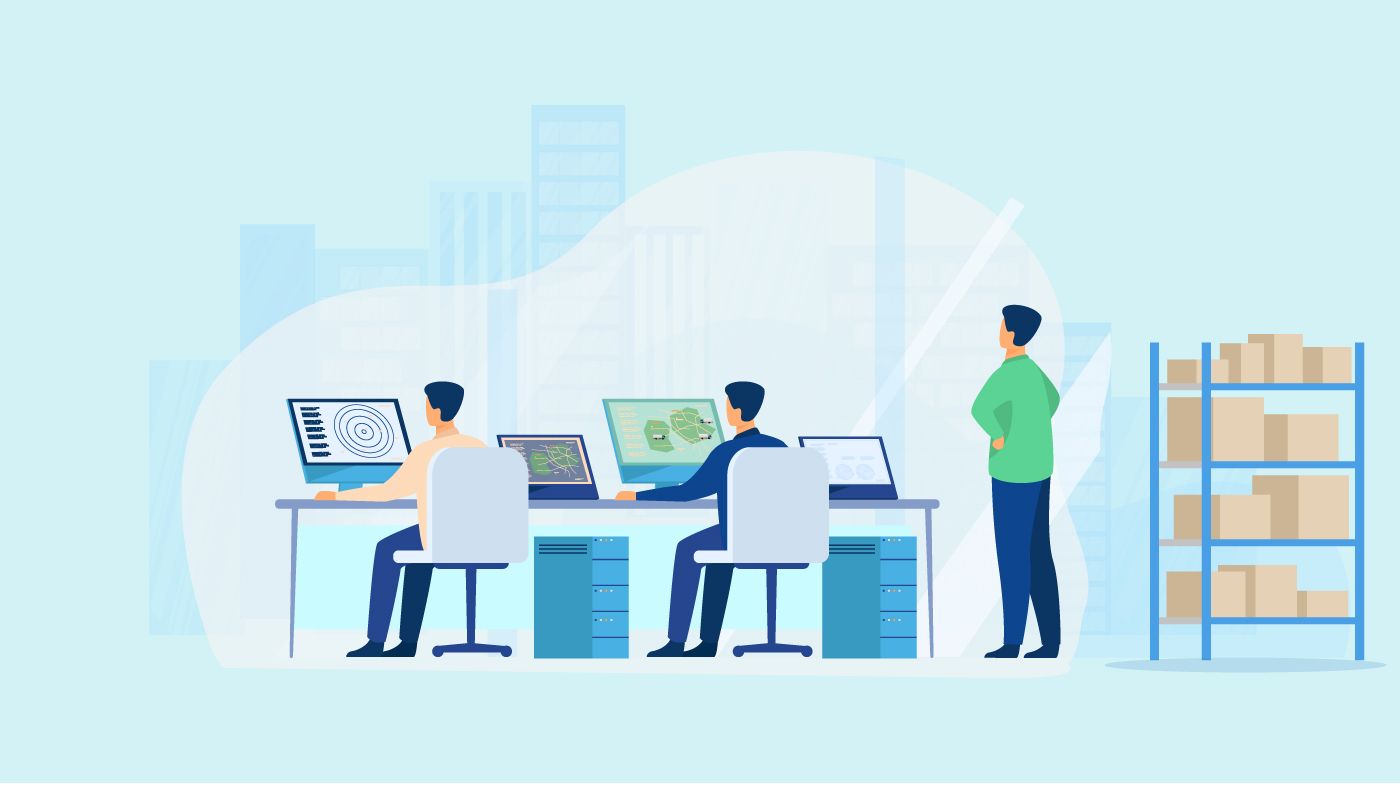
A TMS control tower can be easily defined as a customised and connected dashboard of events, logistical data, and key business activities across the supply chain. With smart capabilities for end-to-end visibility, it enables businesses to clearly prioritise critical issues and prevent vulnerabilities in real time.
A Transport Management System (TMS) control tower offers a single view of fleet, partners, and inventory that works across the company and offers access to data they require to make well-informed decisions as well as collaborate with others internally and externally. Advanced control tower solutions provide tools and features to companies to help them take complete control of each aspect of transportation. Whether it is combatting modern distribution channels, dealing with sales model complexities, or collaborating with new logistics partners, a control tower can offer actionable visibility all in a single platform. Access and streamline ongoing and past jobs across global locations with multiple parties, as well as get an interactive system that provides seamless connection and collaboration to all.
Key benefits and capabilities of implementing control tower solutions
- Holistic, real-time visibility
Control tower solutions offer complete end-to-end visibility throughout your supply chain using correlated data from previously siloed systems. Access every bit of information from job panning to fleet location to daily processing for each order all in a personalised dashboard.
- Collaborative and seamless information sharing
One of its most critical applications is aligning disparate functional views to reduce silos in the company. When reduced to just having access to what is each department’s jurisdiction, separate silos start functioning independently, leading to low collaboration and misalignment of goals. Get AI-powered solutions to improve collaboration and seamlessly manage exceptions throughout the complete supply chain to quickly take action and drive KPI performance.
- Informed and accurate decision support
Improve supply chain resiliency with actionable insights to properly understand the direct impact on customer support and service as a way to prioritise your response. Adding the above collaborative features to make holistic decisions, there is also no disparity between data streams thus also improving data quality.
- Comprehensive supply chain and logistics model
Advanced control tower solutions can find real-time disruptions in your supply chain that impact performance to help resolve them instantly. An extensive supply chain and logistics model that also represents all parties involved can help improve performance with detailed tracking capabilities.
Get a unified platform with advanced control tower solutions
A TMS control tower offers tools to align responsibilities and ties together different functional perspectives into a unified view, offering a way for all departments to move in one direction. The three main areas that require complete visibility and monitoring in the transportation process can be viewed with complete precision at any given time. Let’s delve into them.
- Jobs
View all the present and completed jobs in your control tower dashboard along with its Job Status and Running Status. Not only can you add Tags for easily finding specific jobs, but also see the ETA (Estimated Arrival Time) and STA (Standard Time of Arrival). Get all the details about the Vehicles or fleet transporting the products as well as when the Job was completed.
- Location
Keep an eye on where each Vehicle in your fleet is and which of the Vehicles are within Radius. Check their status and know exactly which step of the transportation process they are on - are they Loaded, Loading, or Unloaded, as well as which Vehicles are Not on Job and which are Empty.
- Running
Track Vehicles on the job and check which ones were on the road and which weren’t. Sort through Yesterday Job Running and Today Job Running to see the work completed Jobs.
Poor visibility into your companies supply chain can create several issues down the road from inflated transportation budgets to material shortages and slow delivery services. Choosing a Transportation Management System (TMS) control tower can be the make or break point for your business since it works as a single source of truth for all parties involved in the transportation process. Get in touch with FleetX to know how our TMS control tower tools and features can help take your transportation business to the next level.
What is a control tower in logistics?
A connected, personalised dashboard of data, important business KPIs, and events occurring along the supply chain is the classic definition of a supply chain control tower. A supply chain control tower enables businesses to better identify, classify, and address urgent problems in real time.
What is control tower in supply chain?
A supply chain control tower is a cloud-based solution that uses cutting-edge technologies to manage supply chains in a proactive manner. These technologies include artificial intelligence (AI), machine learning, and the Internet of Things (IoT).
Frequently Asked Questions
What is a transportation control tower in logistics?
A transportation control tower is a centralized digital platform that provides complete visibility across transportation operations, freight movement, vehicles, shipments, warehouses, and logistics partners. Instead of relying on multiple disconnected systems, businesses receive real-time information from one dashboard, helping logistics managers monitor every shipment from dispatch to final delivery.
Modern transportation control towers are commonly integrated with Transportation Management Systems (TMS), GPS tracking, IoT devices, warehouse management systems, ERP platforms, and fleet management software. This enables businesses to identify delays, reduce transportation risks, optimize routes, improve carrier performance, and enhance customer satisfaction.
Whether operating across Delhi NCR, Mumbai, Bengaluru, Pune, Gurgaon, or throughout India, organizations increasingly use transportation control towers to gain operational transparency, faster decision-making, and better supply chain resilience. The technology has become an essential part of digital logistics transformation for manufacturers, distributors, retailers, FMCG companies, and third-party logistics providers.
How does a transportation management system (TMS) control tower work?
A Transportation Management System (TMS) control tower collects operational data from multiple logistics sources into one unified interface. It continuously monitors fleet movement, shipment milestones, delivery schedules, warehouse updates, carrier performance, customer orders, and route progress in real time.
Instead of manually checking multiple software platforms, logistics teams receive live alerts whenever disruptions occur, such as traffic congestion, delayed loading, route deviations, vehicle breakdowns, or delivery exceptions. Managers can immediately respond using predictive insights instead of reacting after problems occur.
Today's advanced TMS control towers also use AI-powered analytics, ETA prediction, automated reporting, and exception management to improve operational efficiency. Businesses across India increasingly deploy these platforms to reduce transportation costs, improve customer service, and simplify decision-making across complex supply chains.
Why is end-to-end transportation visibility important for supply chain management?
End-to-end transportation visibility allows companies to monitor shipments from order creation until final customer delivery. Instead of working with fragmented information, businesses gain continuous visibility into every transportation milestone.
This visibility helps logistics teams detect delays before they become expensive problems, improve customer communication, optimize fleet utilization, reduce empty miles, improve driver productivity, and increase on-time deliveries.
Companies operating across large logistics networks in India often face challenges such as traffic congestion, weather disruptions, multiple transport partners, and changing delivery schedules. A transportation control tower minimizes these risks by providing centralized monitoring and intelligent decision support, allowing businesses to proactively resolve issues while improving overall supply chain performance.
What industries benefit the most from transportation control tower solutions?
Transportation control towers are valuable for almost every industry that depends on logistics, fleet operations, or supply chain visibility. Organizations with high shipment volumes gain the greatest operational improvements because centralized monitoring simplifies complex transportation networks.
Industries commonly using transportation control towers include:
- Manufacturing
- Retail and E-commerce
- FMCG Distribution
- Automotive Logistics
- Pharmaceutical Supply Chains
- Cold Chain Logistics
- Cement and Construction Materials
- Chemical Transportation
- Mining Operations
- Third-Party Logistics (3PL)
- Fourth-Party Logistics (4PL)
These industries benefit from improved shipment visibility, reduced transportation delays, optimized carrier utilization, lower logistics costs, and stronger customer service across regional and national operations.
What are the biggest transportation barriers that a control tower can solve?
Transportation operations often struggle with fragmented systems, delayed communication, manual reporting, poor shipment visibility, inaccurate ETAs, inefficient route planning, and disconnected carrier information. These issues increase transportation costs while reducing customer satisfaction.
A transportation control tower addresses these challenges by creating a single source of operational truth. Logistics teams gain access to live shipment tracking, centralized dashboards, predictive analytics, automated alerts, route optimization, and collaborative workflows.
Rather than discovering delays after deliveries are missed, businesses receive proactive notifications that allow immediate corrective action. This significantly improves delivery performance, reduces operational inefficiencies, minimizes transportation risks, and strengthens overall supply chain resilience.
What features should businesses look for in the best transportation control tower software?
The best transportation control tower software combines real-time visibility with intelligent decision-making capabilities. Rather than functioning as a simple tracking dashboard, modern solutions integrate operational data from multiple logistics systems into one platform.
Key features should include:
- Real-time shipment tracking
- AI-powered ETA prediction
- Route optimization
- Fleet monitoring
- Carrier performance analytics
- Exception management
- Automated alerts
- Custom dashboards
- Warehouse integration
- ERP integration
- Order visibility
- Mobile accessibility
- Business intelligence reporting
- Predictive analytics
- Multi-location management
Organizations selecting a transportation control tower should prioritize scalability, ease of integration, security, reporting capabilities, and industry-specific functionality.
How does a transportation control tower improve customer experience?
Customer expectations continue to increase as businesses demand accurate delivery timelines, proactive communication, and complete shipment transparency. Transportation control towers improve customer experience by providing precise shipment tracking and faster responses during delivery disruptions.
Instead of relying on manual updates from carriers, customer service teams can instantly access shipment status, estimated arrival times, proof of delivery, route progress, and delivery exceptions.
Customers benefit from improved transparency while logistics providers reduce support inquiries, missed deliveries, and communication delays. Better visibility ultimately strengthens trust between businesses and their customers while improving long-term retention and operational reliability.
How is AI transforming transportation control tower solutions?
Artificial intelligence is transforming transportation control towers from monitoring platforms into intelligent decision-support systems. Rather than simply displaying logistics data, AI analyzes operational patterns to predict disruptions before they occur.
Modern AI capabilities include demand forecasting, predictive ETAs, route optimization, anomaly detection, vehicle utilization analysis, automated exception management, fuel optimization, and performance benchmarking.
These technologies allow logistics managers to make faster decisions based on predictive insights instead of historical reports. As AI adoption grows across India's logistics sector, transportation control towers continue becoming smarter, more autonomous, and more valuable for enterprise supply chain management.
Can transportation control towers support multi-city logistics operations across India?
Yes. Transportation control towers are specifically designed to manage complex logistics operations spread across multiple cities and distribution networks. Businesses transporting goods between Delhi, Delhi NCR, Gurgaon, Mumbai, Bengaluru, Pune, Chennai, Hyderabad, Ahmedabad, Kolkata, and other regions can monitor every shipment from a centralized dashboard.
Managers receive real-time information regardless of shipment origin, warehouse location, transport partner, or delivery destination. The platform standardizes logistics reporting while improving coordination across regional teams.
This centralized visibility is particularly valuable for enterprises managing thousands of shipments every month across India's rapidly expanding transportation infrastructure.
What is the difference between fleet management software and a transportation control tower?
Although both technologies improve logistics operations, they serve different purposes. Fleet management software primarily focuses on vehicles, drivers, fuel usage, maintenance schedules, GPS tracking, compliance, and vehicle utilization.
A transportation control tower provides a broader operational view. It combines fleet information with shipment tracking, warehouse operations, carrier management, order visibility, inventory movement, route optimization, customer deliveries, and business analytics into one centralized platform.
Many leading logistics organizations integrate both systems together to achieve complete end-to-end supply chain visibility. This combination delivers greater operational efficiency, lower transportation costs, improved customer satisfaction, and stronger strategic decision-making across enterprise logistics operations.
What is the average cost of implementing a transportation control tower solution in India?
The cost of implementing a transportation control tower solution in India depends on factors such as fleet size, shipment volume, number of users, system integrations, analytics requirements, and deployment model. Cloud-based Software-as-a-Service (SaaS) platforms are generally more affordable for growing businesses, while enterprise deployments offer greater customization and scalability.
As a broad estimate, small businesses may spend anywhere between ₹50,000 and ₹2 lakh annually for a basic transportation visibility platform. Mid-sized organizations often invest between ₹3 lakh and ₹15 lakh per year, while large enterprises with nationwide logistics operations may spend ₹20 lakh to well over ₹1 crore depending on integrations with ERP, Warehouse Management Systems (WMS), GPS providers, IoT devices, and AI-powered analytics.
Businesses should evaluate the total return on investment rather than only software pricing. Reduced transportation costs, improved fleet utilization, lower detention charges, fewer delivery delays, and better customer satisfaction often generate savings that outweigh implementation expenses over time.
Which is the best transportation control tower software for logistics companies?
The best transportation control tower software is one that matches a company's logistics complexity, operational scale, and digital transformation goals. Rather than focusing solely on brand names, businesses should evaluate platforms based on real-time visibility, AI capabilities, integration options, reporting, scalability, and ease of use.
A high-quality transportation control tower should include live shipment tracking, predictive ETA calculations, automated alerts, route optimization, fleet monitoring, carrier performance management, dashboard customization, analytics, and seamless integration with Transportation Management Systems (TMS), ERP platforms, warehouse software, and GPS devices.
For organizations operating across India, especially in logistics hubs such as Delhi NCR, Mumbai, Bengaluru, Pune, and Gurgaon, selecting a solution with strong regional implementation support, local compliance expertise, and responsive customer service is equally important. The best platform is one that delivers measurable operational improvements while adapting to future business growth.
How do transportation control towers help businesses operating in Delhi NCR?
Delhi NCR is one of India's busiest logistics corridors, connecting manufacturing hubs, warehouses, industrial parks, ports, airports, and distribution centers. High shipment volumes, traffic congestion, multiple transport partners, and tight delivery schedules make logistics management particularly challenging.
A transportation control tower provides centralized visibility into every shipment moving throughout Delhi, Noida, Greater Noida, Ghaziabad, Faridabad, and surrounding regions. Logistics managers can monitor vehicle movement, identify delays, optimize delivery routes, and coordinate with carriers using one unified dashboard.
Businesses serving retail, FMCG, pharmaceuticals, automotive, manufacturing, and e-commerce sectors benefit from improved operational transparency, better customer communication, faster issue resolution, and reduced transportation costs. This makes transportation control towers especially valuable for enterprises managing regional distribution networks throughout the Delhi NCR market.
How can companies in Gurgaon improve logistics efficiency using a transportation control tower?
Gurgaon has become one of India's largest business and logistics ecosystems, supporting numerous manufacturing companies, enterprise headquarters, technology firms, and third-party logistics providers. As shipment volumes continue increasing, transportation operations require better visibility and coordination.
A transportation control tower helps Gurgaon-based businesses monitor every shipment, vehicle, warehouse movement, and carrier from a centralized platform. Real-time alerts allow logistics teams to respond immediately to route deviations, traffic delays, vehicle breakdowns, or shipment exceptions before customer deliveries are affected.
Organizations operating from Gurgaon also benefit from AI-powered analytics, performance dashboards, automated reporting, and predictive insights that improve fleet productivity while reducing transportation costs. These capabilities help companies maintain higher service levels across regional and national distribution networks while supporting long-term digital logistics transformation.
Can transportation control towers reduce logistics costs for businesses in Mumbai?
Yes. Mumbai is India's largest commercial and logistics gateway, handling significant freight movement through ports, industrial zones, warehouses, and distribution centers. Transportation complexity often results in congestion, delivery delays, detention costs, idle vehicles, and inefficient resource utilization.
A transportation control tower improves operational efficiency by providing continuous visibility into shipments, fleet movement, warehouse coordination, and carrier performance. Businesses can optimize routes, reduce empty mileage, improve vehicle utilization, and respond quickly to disruptions affecting delivery schedules.
For companies operating across Mumbai and surrounding regions, these improvements translate into lower fuel consumption, better fleet productivity, reduced transportation expenses, improved on-time delivery performance, and stronger customer satisfaction. Over time, transportation control towers become strategic investments that support scalable logistics growth while improving profitability.
How do transportation control towers improve real-time decision-making?
Transportation control towers improve decision-making by consolidating logistics data from multiple systems into a single, real-time operational dashboard. Instead of waiting for manual reports or updates from carriers, logistics managers can instantly monitor shipment status, vehicle locations, warehouse operations, inventory movement, and delivery performance.
Advanced transportation control towers use AI-driven analytics and automated alerts to identify disruptions before they escalate. Whether a shipment is delayed due to traffic, weather, vehicle breakdowns, or loading issues, managers receive immediate notifications along with suggested corrective actions. This proactive approach helps businesses reduce delays, avoid unnecessary transportation costs, and improve customer communication.
Organizations that operate across India with multiple warehouses, fleets, and transport partners benefit significantly from faster, data-driven decisions that improve overall supply chain efficiency while reducing operational risks.
Can small and medium-sized businesses benefit from transportation control tower solutions?
Absolutely. Transportation control towers are no longer limited to large enterprises. Modern cloud-based platforms have made advanced logistics visibility accessible to small and medium-sized businesses (SMBs) across industries such as manufacturing, retail, wholesale distribution, pharmaceuticals, and e-commerce.
For growing businesses, transportation visibility reduces manual tracking, improves delivery accuracy, enhances customer communication, and simplifies coordination with transport partners. Companies can monitor shipments, track vehicles, analyze operational performance, and generate reports without investing heavily in IT infrastructure.
As businesses expand across cities like Delhi, Gurgaon, Mumbai, Bengaluru, and Pune, transportation control towers provide the scalability needed to manage increasing shipment volumes while maintaining operational efficiency and customer satisfaction.
What are the top KPIs that businesses should monitor using a transportation control tower?
A transportation control tower becomes most valuable when businesses continuously monitor key logistics performance indicators (KPIs). These metrics provide actionable insights into operational efficiency, transportation costs, delivery reliability, and customer service quality.
Some of the most important KPIs include:
- On-time delivery percentage
- Average delivery turnaround time
- Fleet utilization rate
- Vehicle idle time
- Fuel consumption per trip
- Average transportation cost per shipment
- Carrier performance score
- Estimated Time of Arrival (ETA) accuracy
- Shipment delay frequency
- Order fulfillment cycle time
- Proof of Delivery (POD) completion rate
- Empty mileage percentage
Tracking these KPIs allows businesses to identify operational bottlenecks, improve resource utilization, optimize transportation planning, and support continuous supply chain improvement.
How does a transportation control tower support digital supply chain transformation?
Digital supply chain transformation focuses on replacing fragmented, manual logistics processes with connected, intelligent, and automated operations. A transportation control tower acts as the central visibility layer that connects transportation management, fleet operations, warehouses, ERP systems, suppliers, and customers.
Instead of relying on spreadsheets and manual coordination, businesses receive live operational intelligence through centralized dashboards, predictive analytics, automated workflows, and AI-powered recommendations. Decision-makers gain complete visibility into every shipment while reducing dependency on manual intervention.
This digital transformation improves agility, strengthens collaboration across departments, enhances customer experience, and enables businesses to scale transportation operations more efficiently as shipment volumes continue growing across domestic and international supply chains.
What future trends are shaping transportation control tower technology?
Transportation control towers continue evolving as artificial intelligence, machine learning, Internet of Things (IoT), predictive analytics, and automation become increasingly integrated into logistics operations. Future platforms will move beyond monitoring to autonomous decision support that proactively manages transportation disruptions with minimal manual intervention.
Emerging innovations include AI-generated route recommendations, digital twins of supply chains, autonomous exception management, predictive maintenance, sustainability analytics, carbon emission tracking, blockchain-enabled shipment visibility, and conversational AI assistants for logistics operations.
As India's logistics ecosystem becomes increasingly digitized, businesses investing in modern transportation control tower solutions will be better positioned to improve operational resilience, reduce transportation costs, enhance customer service, and remain competitive in a rapidly changing supply chain environment.
How do transportation control towers support businesses operating across Bengaluru and Pune?
Bengaluru and Pune have emerged as two of India's fastest-growing logistics and manufacturing hubs, supporting industries such as automotive, electronics, pharmaceuticals, engineering, e-commerce, FMCG, and technology. Companies operating across these cities often manage multiple warehouses, suppliers, transport partners, and customer locations simultaneously, making transportation visibility increasingly challenging.
A transportation control tower provides centralized monitoring of every shipment, vehicle, order, and carrier across locations. Logistics teams can identify delays, monitor Estimated Time of Arrival (ETA), track fleet utilization, and coordinate deliveries from one intelligent dashboard instead of relying on multiple disconnected systems.
For businesses expanding across southern and western India, this visibility helps improve route planning, reduce transportation delays, optimize fleet utilization, and enhance customer communication. The result is faster deliveries, lower logistics costs, improved operational efficiency, and greater supply chain resilience as shipment volumes continue to grow.
Can a transportation control tower integrate with existing ERP, WMS, and fleet management software?
Yes. One of the biggest advantages of a modern transportation control tower is its ability to integrate seamlessly with existing enterprise systems. Rather than replacing business software, the control tower acts as a centralized visibility layer that consolidates operational data from multiple platforms.
Most enterprise-grade transportation control towers support integration with ERP solutions, Warehouse Management Systems (WMS), Transportation Management Systems (TMS), fleet management software, GPS tracking platforms, IoT sensors, telematics devices, order management systems, and customer relationship management (CRM) software.
This unified ecosystem eliminates information silos and allows logistics managers to monitor transportation operations through one dashboard. Businesses gain better reporting, improved collaboration between departments, more accurate forecasting, and faster decision-making without disrupting existing workflows or technology investments.
How does a transportation control tower improve risk management in supply chains?
Supply chains face numerous risks, including traffic congestion, weather disruptions, fuel price fluctuations, vehicle breakdowns, labor shortages, shipment theft, delayed loading, and unexpected demand spikes. Without real-time visibility, these disruptions can quickly impact customer deliveries and operational costs.
A transportation control tower continuously monitors logistics operations and immediately alerts stakeholders whenever exceptions occur. Advanced analytics help businesses predict potential disruptions before they escalate, allowing logistics teams to reroute vehicles, allocate additional resources, communicate with customers, or adjust delivery schedules proactively.
This capability significantly reduces operational uncertainty while improving business continuity. Companies also benefit from stronger compliance reporting, improved supplier collaboration, enhanced carrier accountability, and greater resilience during unexpected transportation challenges.
How does a transportation control tower contribute to sustainable logistics and ESG goals?
Sustainability has become a major priority for logistics organizations seeking to reduce operating costs while meeting Environmental, Social, and Governance (ESG) objectives. Transportation control towers contribute by improving fleet efficiency and minimizing unnecessary transportation activities.
Real-time visibility enables businesses to optimize routes, reduce empty return trips, decrease fuel consumption, improve vehicle utilization, and minimize idle engine time. Many advanced platforms also provide carbon emission reporting, helping organizations measure and reduce their environmental impact.
By combining AI-powered route optimization with operational analytics, companies can simultaneously lower transportation expenses and reduce greenhouse gas emissions. These improvements not only support sustainability initiatives but also strengthen brand reputation, regulatory compliance, and long-term business competitiveness.
What should businesses consider before choosing a transportation control tower solution?
Selecting the right transportation control tower requires evaluating both current operational needs and future business growth. Companies should first identify their logistics challenges, such as limited shipment visibility, inefficient route planning, fragmented reporting, or poor carrier coordination.
Key evaluation factors include integration capabilities, scalability, real-time tracking accuracy, AI-powered analytics, reporting features, implementation support, cybersecurity standards, mobile accessibility, customization options, and ease of use. Businesses should also review the vendor's industry expertise, customer support quality, and experience with organizations of similar size.
For enterprises operating across India—including Delhi NCR, Gurgaon, Mumbai, Bengaluru, and Pune—a solution with strong local implementation support and the ability to manage multi-location transportation networks provides greater long-term value. Choosing a scalable platform ensures the control tower continues supporting business expansion without requiring significant technology changes in the future.
What are the top benefits of implementing a transportation control tower for enterprise logistics?
A transportation control tower delivers significantly more value than shipment tracking alone. It acts as the operational command center for logistics, bringing together transportation data, fleet operations, warehouse activities, inventory movement, carrier performance, and customer deliveries into one unified platform. This centralized visibility allows businesses to make faster and more informed operational decisions.
Some of the biggest benefits include improved shipment visibility, proactive exception management, better route optimization, enhanced fleet utilization, reduced transportation costs, accurate ETA predictions, stronger collaboration between logistics partners, and improved customer satisfaction. Businesses also gain detailed analytics that support strategic planning and continuous operational improvement.
Large enterprises handling nationwide logistics across India often use transportation control towers to simplify complex supply chains while increasing efficiency, reducing manual processes, and improving resilience against disruptions. As supply chains become more digital, transportation control towers are increasingly becoming an essential component of enterprise logistics management.
How can businesses measure the return on investment (ROI) of a transportation control tower?
Measuring the return on investment (ROI) of a transportation control tower requires evaluating both direct financial savings and operational improvements. While software implementation involves an initial investment, the long-term benefits often outweigh the costs through improved efficiency and reduced logistics expenses.
Businesses typically measure ROI using metrics such as reduced transportation costs, lower fuel consumption, improved fleet utilization, fewer delivery delays, reduced detention charges, lower administrative workload, faster issue resolution, increased on-time delivery rates, and higher customer retention.
Many organizations also experience indirect benefits such as improved decision-making, stronger supply chain resilience, enhanced collaboration with logistics partners, and better customer experience. When evaluated over several years, transportation control towers frequently generate substantial operational savings while supporting sustainable business growth.
How much does the best transportation control tower software typically cost for large enterprises?
Enterprise transportation control tower pricing varies considerably depending on operational complexity, customization requirements, number of users, shipment volume, AI capabilities, integrations, deployment model, and ongoing support services. Large organizations generally require advanced analytics, custom dashboards, ERP integration, warehouse connectivity, and enterprise-grade security.
As a general guideline, enterprise implementations in India may range from approximately ₹20 lakh to well above ₹1 crore depending on deployment scale and business requirements. Organizations operating thousands of shipments each month across multiple warehouses and transportation partners typically require more comprehensive implementations than mid-sized businesses.
Instead of comparing software only by price, businesses should evaluate total value, implementation support, scalability, future upgrade capability, and measurable operational improvements. A solution that consistently reduces transportation costs while improving delivery performance often delivers a significantly higher long-term return than choosing the lowest-priced platform.
What are the best practices for successfully implementing a transportation control tower?
A successful transportation control tower implementation begins with clearly defining business objectives rather than focusing solely on technology. Organizations should first identify operational challenges such as limited shipment visibility, delayed deliveries, disconnected systems, poor reporting, or inefficient transportation planning.
Best practices include mapping existing logistics workflows, integrating key business systems, ensuring accurate master data, establishing measurable performance indicators, training logistics teams, and rolling out implementation in phases instead of attempting a complete transformation at once.
Organizations should also continuously monitor performance after deployment, review logistics KPIs regularly, gather user feedback, and optimize workflows based on operational insights. Businesses that combine technology with process improvements generally achieve faster adoption, greater employee engagement, and significantly higher long-term operational value.
Why are transportation control towers becoming essential for the future of logistics in India?
India's logistics sector is undergoing rapid digital transformation as businesses expand distribution networks, increase shipment volumes, and raise customer expectations for faster deliveries and complete shipment transparency. Managing these increasingly complex transportation networks using manual processes is becoming both inefficient and costly.
Transportation control towers provide the real-time visibility, predictive analytics, and operational intelligence needed to manage modern supply chains. They help businesses monitor fleets, optimize routes, improve warehouse coordination, automate exception management, and make faster data-driven decisions.
As logistics ecosystems continue expanding across Delhi NCR, Gurgaon, Mumbai, Bengaluru, Pune, Chennai, Hyderabad, Ahmedabad, and other major commercial hubs, transportation control towers will play a central role in enabling smarter, more connected, and highly resilient supply chains. Organizations that invest in advanced visibility platforms today will be better prepared to compete in the increasingly digital future of transportation and logistics.