The logistics cost in India is relatively high compared to its global peers standing at 13-14% of the country’s GDP. India’s logistics sector is over-dependent on road transportation for facilitating the movement of logistics across the country. 60% of all logistics in the country is facilitated through road transportation compared to 25% dependence globally. The logistics cost for road transportation is around Rs 3.6 per kilometer per metric tonne. Fuel cost accounts for an estimated 40-60% of the operational cost for individual transporters or transportation companies. In 2021 freight charges were up by 25-30% when India was experiencing a rapid fuel price hike as diesel and petrol costs crossed Rs 100 across several states due to turbulence in global fuel prices. Moreover, India is a major fuel importer that imports over 80% of its fuel requirement annually. Any turbulence in global fuel prices will exponentially affect business logistics costs. Other factors affect the logistics cost to a certain extent, but fuel cost remains the most significant. So what should businesses and transporters do to control the uncertainty over the cost of operations and revenue? The short answer to that question calls for minimizing the cost of transportation, and for that, either fuel prices need to be controlled or operating efficiency needs to be increased. While businesses have no control over fuel price trends, they can certainly take certain steps to maximize their operating efficiency.
What does route planning mean?
The concept of route planning is familiar to businesses and transporters in India. The route that a cargo-carrying truck will take to transport the goods from point A to B is planned before the trip by fleet managers. The idea is to minimize the uncertainty during the trip while providing the customers with a certain time frame related to the transportation of their cargo. For intra-city transportation, route planning is further complicated due to multiple shipping and drops. We talk about route planning in a more nuanced context.
“ Route planning is the process of computing the most effective method of transportation, either through one or several stops, to make transportation as cost-effective as possible. In addition to using route planning to improve daily performance, businesses use route planning software to determine the best short and long-term transportation strategies for their businesses. "
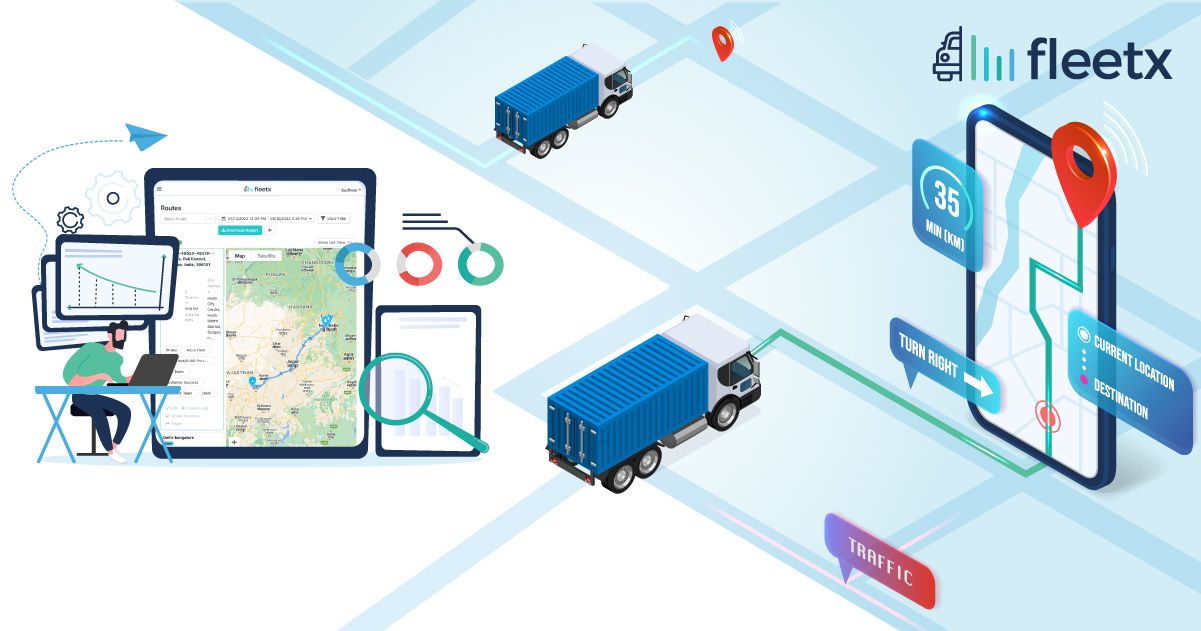
Integration of technology and the use of Data & analytics have pushed route planning beyond planning routes. Route planning software is increasingly being used by businesses and transporters that collect critical transportation-related data to provide the user with the most cost-effective routes to manage their transportation. Moreover, data collected through the trucks’ telematics system, along with other transportation and driver-related data, including real-time traffic data, makes it possible for these software to offer better route optimization in real-time, thus, improving daily performance as well.
Types of route planning
Route planning is done based on the transportation requirements of the business. For example, transportation requirements for a coal mining company would be very different from that of a courier company or online grocery company.
- Depot-to-Depot route planning applies to businesses that require or need to plan their deliveries directly from one point to the other. Trucks usually start with an empty or full load, and the truck driver must pick up/drop cargo between two fixed locations.
- Multi-stop route planning is used when the truck needs to deliver cargo to multiple locations on the go. Route planning, in this case, can be done by creating multiple stops in the delivery route. After receiving the inputs, the software determines the best route the truck driver can follow to maximise efficiency.
- Dynamic route planning is suitable for transport operations of businesses where new routes need to be continuously identified and trucks rerouted. Dynamic route planning allows you to determine the vehicle's current location at any given time, thus helping the truck stuck in traffic or in cases of a breakdown. Assigning a different truck to complete the delivery is also possible in dynamic route planning.
- Open Path routing usually applies to 3PL logistics providers that must complete a maximum number of deliveries in the shortest amount without returning to the loading depot. Food delivery companies rely on open path routing to perform faster deliveries due to the nature of their business. On the other hand, a Reverse Open Path routing allows the truck to make the furthest delivery stop first and edge closer to the depot towards the end of their delivery.
- Closed Path routing allows the truck to start its deliveries from the depot and end at the nearest drop location to that depot, following a U-shaped path. The trucks can save on the extra distance they need to travel between the final stop and the depot.
What are some of the key benefits of route planning?
Apart from the obvious benefit of predetermined routes for cargo transportation, there are two key benefits that make a compelling case for businesses to integrate route planning software in their transport operation.
Cut transportation cost
As discussed, transport operations in India are expensive and incur a huge cost for businesses, particularly due to fuel expenses. Cargo trucks on route face issues like,
- engine idling due to traffic congestion
- rerouting due to unwanted road constructions and closures
- drivers facing long driving hours due to unplanned routes
- lack of real-time data available to customers
- risk of fuel wastage due to backtracking
The issues mentioned above can increase the cost of transportation for businesses. However, route planning software can help businesses minimize such issues by more effectively planning routes for their transport vehicles.
Offer better customer experience
Businesses scale on efficiency and uncertainty related to shipment delivery can negatively affect efficiency. A route planning solution will allow transporters and businesses to provide accurate and real-time shipment tracking at all times. Even if there is a possible delay, the ETA provided to the customer would be accordingly adjusted, thus, limiting the scope of uncertainty.
Why should your business use a route planning software?
Let's track back a little bit and look at the solutions of systems used by businesses and transporters to track different variables that affect their transport operations. The most used device is the in-built odometer pre-installed in trucks which track the speed and distance based on the vehicle's wheel rotations. Several transporters charge their customers based on the distance covered during the trip, which is usually calculated based on the readings from the odometer. Using an odometer for cost management might be useful but is prone to manipulation and cost leakages as the customer has no insight into the route taken by the transport. GPS-based vehicle tracking systems have become increasingly popular due to their utility and accuracy as they are based on satellite data. A GPS-based transport management system also substantially improves supply chain visibility by providing real-time data. Route planning software are also GPS-based and, therefore, can collect more accurate data and provide the most cost-effective and optimized routes. Using route planning software eliminates the issue of any manipulation from the transporter's end by making the entire transport operation transparent. It means no more unwanted stoppages and reduced risk of rerouting, thus allowing the business or transporter to deliver the same output in a shorter time and cover a shorter distance. Thus, saving fuel and increasing longevity by reducing the wear and tear incurred by the vehicle.
Final Verdict
We have discussed how route planning software reduces the average fuel consumption for transporters by making transport operations more efficient. For large businesses and transporters that operate hundreds of trucks, the cost saving will be quite significant when you factor in the additional benefits such as reduced fleet maintenance and increased business output.
Frequently Asked Questions
What is route planning software and how does it help businesses reduce fleet expenses?
Route planning software is a digital solution that helps businesses identify the shortest, fastest, and most cost-effective routes for commercial vehicles. Unlike manual route planning, modern software considers live traffic, road closures, delivery priorities, vehicle capacity, driver availability, toll roads, fuel consumption, and customer delivery windows before recommending an optimized route.
For logistics companies, distributors, manufacturers, FMCG businesses, and transporters across India, route planning software significantly lowers operational costs by reducing fuel consumption, unnecessary kilometres, idle time, and delivery delays. Businesses operating fleets in cities like Delhi, Mumbai, Bengaluru, Gurgaon, and Pune particularly benefit because these regions frequently experience congestion, making efficient route optimization essential.
Advanced route planning platforms also integrate GPS tracking, real-time ETAs, geofencing, analytics, and transportation management systems (TMS), allowing fleet managers to monitor every trip from a central dashboard. This improves customer satisfaction while increasing fleet utilization.
Whether a business manages 10 vehicles or 1,000 trucks, route planning software supports better decision-making, lowers logistics costs, and improves operational efficiency. As fuel prices and transportation expenses continue to rise in India, route optimization has become one of the most effective ways to improve profitability while maintaining reliable delivery performance.
Why is route planning important for logistics and transportation businesses in India?
India's logistics sector operates across highly diverse road conditions, urban congestion, toll routes, and regional transportation networks. Route planning helps businesses overcome these challenges by ensuring deliveries follow the most efficient paths while minimizing fuel consumption and travel time.
Fleet operators in Delhi NCR often face heavy traffic during peak hours, while Mumbai experiences congestion due to dense commercial activity. Bengaluru and Pune regularly deal with IT corridor traffic, whereas long-haul transportation across India requires balancing distance, fuel costs, and driver productivity. Route planning software automatically adjusts routes based on real-time road conditions to maintain delivery schedules.
Effective route planning also reduces vehicle wear and tear, minimizes driver fatigue, improves on-time deliveries, and supports better customer communication through live tracking and estimated arrival times. Businesses transporting FMCG products, pharmaceuticals, e-commerce orders, construction materials, and industrial goods can all improve operational efficiency through optimized routing.
For companies aiming to control logistics costs while improving customer service, route planning has become an essential component of modern transportation management rather than simply a navigation tool.
What is the cost of implementing route planning software in India?
The cost of route planning software in India varies depending on fleet size, required features, integration requirements, and deployment model. Small businesses operating fewer than 20 vehicles generally spend between ₹1,000 and ₹3,000 per vehicle per month for cloud-based solutions. Mid-sized logistics companies often invest between ₹50,000 and ₹3 lakh annually depending on the number of users and vehicles.
Enterprise transportation companies operating across Delhi NCR, Mumbai, Bengaluru, Pune, or multiple states typically require customized pricing because they need integrations with GPS tracking, telematics, ERP, warehouse management systems, and transportation management software. Implementation costs for enterprise deployments may range from ₹5 lakh to ₹30 lakh or more depending on customization and rollout complexity.
While implementation involves an upfront investment, businesses often recover costs through reduced fuel expenses, lower overtime payments, improved fleet utilization, and fewer empty trips. Many organizations report measurable savings within the first year after deployment.
When evaluating software, businesses should compare total ownership costs, scalability, technical support, implementation timelines, training, analytics capabilities, and integration options rather than focusing only on subscription pricing.
Which are the best route planning software solutions for businesses?
The best route planning software depends on fleet size, industry, delivery complexity, and business goals. Companies usually evaluate solutions based on route optimization accuracy, GPS tracking, transportation management capabilities, live vehicle visibility, analytics, driver monitoring, proof of delivery, fuel management, and system integrations.
Businesses in Delhi, Gurgaon, Mumbai, Bengaluru, and Pune typically look for cloud-based platforms that support dynamic routing, AI-powered optimization, multiple vehicle scheduling, real-time traffic updates, customer notifications, and seamless integration with fleet management systems.
The top route planning software solutions generally offer automated route generation, live ETAs, geofencing, trip history, route deviation alerts, fuel efficiency monitoring, and dashboards that help managers improve logistics performance. Organizations should also consider scalability, ease of implementation, customer support, mobile applications, reporting capabilities, and API availability before selecting a platform.
Rather than choosing software solely based on pricing, businesses should evaluate long-term operational savings, implementation support, and the ability to adapt as transportation requirements grow. A scalable solution provides greater value as delivery volumes increase and business operations expand across multiple cities.
How do businesses in Delhi NCR and Gurgaon benefit from route planning software?
Businesses operating across Delhi NCR and Gurgaon face some of India's most challenging transportation conditions, including heavy traffic, construction work, toll roads, and time-sensitive commercial deliveries. Route planning software helps companies optimize daily operations by selecting efficient routes based on live traffic conditions rather than static maps.
Manufacturers, distributors, e-commerce companies, FMCG brands, and third-party logistics providers serving Delhi, Noida, Ghaziabad, Faridabad, and Gurgaon use optimized routing to reduce delivery delays while lowering fuel consumption and operating costs.
Dynamic routing enables fleet managers to reroute vehicles instantly when congestion, accidents, or road closures occur. Businesses also gain real-time visibility into vehicle locations, estimated arrival times, delivery status, and driver performance, allowing proactive communication with customers.
For companies handling hundreds of daily deliveries across Delhi NCR, optimized route planning can significantly improve fleet productivity, reduce idle time, increase vehicle utilization, and enhance customer satisfaction. As commercial activity continues to grow across the region, intelligent route optimization has become an essential competitive advantage for logistics-intensive businesses.
How can route planning software improve deliveries in Mumbai, Bengaluru and Pune?
Mumbai, Bengaluru, and Pune each present unique transportation challenges. Mumbai's dense urban infrastructure, Bengaluru's technology corridor traffic, and Pune's rapidly expanding industrial zones require flexible route planning to maintain delivery efficiency.
Route planning software continuously evaluates traffic patterns, road restrictions, delivery priorities, vehicle capacity, and customer locations to generate optimized routes. Businesses can reduce delays caused by congestion while maximizing the number of deliveries completed during each trip.
Companies involved in retail distribution, pharmaceuticals, manufacturing, food delivery, e-commerce, and industrial transportation benefit from shorter travel times, lower fuel usage, and improved delivery accuracy. Fleet managers receive live updates regarding vehicle movements and can immediately reroute drivers when unexpected delays occur.
The software also improves customer experience by providing accurate ETAs, delivery notifications, and greater shipment visibility. As businesses expand operations across western and southern India, optimized route planning enables consistent service levels while helping organizations control transportation costs despite increasing urban congestion.
What features should businesses look for in top route planning software?
Choosing the right route planning software involves evaluating both current operational needs and future scalability. Modern businesses should prioritize solutions that offer AI-based route optimization, GPS vehicle tracking, live traffic analysis, automated dispatching, ETA prediction, geofencing, proof of delivery, and transportation analytics.
Integration capabilities are equally important. The software should connect with fleet management systems, ERP platforms, warehouse management software, CRM solutions, telematics devices, and transportation management systems to provide end-to-end operational visibility.
Additional features such as driver scorecards, fuel monitoring, maintenance alerts, customizable dashboards, mobile applications, customer notifications, and API support improve operational efficiency while simplifying fleet management.
Businesses in India should also evaluate implementation support, data security, multilingual accessibility, reporting capabilities, cloud deployment, and customer service. Selecting a scalable solution allows organizations to expand from regional operations in Delhi, Gurgaon, Mumbai, Bengaluru, or Pune to nationwide logistics networks without replacing their technology infrastructure.
Can small and medium businesses benefit from route planning software?
Yes. Route planning software is no longer limited to large logistics companies. Small and medium-sized businesses across India increasingly use cloud-based solutions to improve transportation efficiency without investing in expensive IT infrastructure.
Retail distributors, wholesalers, FMCG suppliers, courier companies, pharmaceutical distributors, construction material suppliers, and service providers operating even small vehicle fleets can reduce fuel costs, improve scheduling, and increase delivery capacity using optimized routing.
Cloud-based subscription models make implementation affordable for businesses with limited budgets while allowing them to scale as operations grow. Many providers also offer modular solutions where organizations can begin with route optimization and later expand into GPS tracking, fleet maintenance, driver monitoring, transportation management, and analytics.
For growing businesses in Delhi, Mumbai, Bengaluru, Gurgaon, Pune, and other major commercial hubs, adopting route planning software early helps establish efficient logistics processes, improves customer satisfaction, and creates a strong operational foundation for future expansion. Even modest improvements in delivery efficiency can generate meaningful long-term savings and competitive advantages.
How does AI-powered route planning software improve fleet productivity and customer satisfaction?
AI-powered route planning software goes beyond finding the shortest distance between two locations. It continuously analyses live traffic conditions, vehicle capacity, delivery priorities, driver availability, weather disruptions, toll roads, and historical trip data to recommend the most efficient routes. This enables logistics companies to make faster decisions while reducing transportation costs and improving delivery performance.
For businesses operating across Delhi, Gurgaon, Mumbai, Bengaluru, Pune, and other major Indian cities, AI-driven route planning helps minimise delays caused by congestion and unexpected roadblocks. Instead of relying on static routes, dispatchers can dynamically reroute vehicles, assign deliveries to the nearest available truck, and update customers with accurate estimated arrival times (ETAs). This significantly improves customer experience while increasing fleet utilisation.
Modern route planning solutions also generate valuable operational insights through analytics dashboards. Fleet managers can identify recurring delays, monitor driver performance, analyse fuel consumption, and optimise delivery schedules over time. These insights help businesses reduce empty kilometres, improve vehicle productivity, and maximise return on investment.
As AI and machine learning continue to evolve, route planning software is becoming an essential technology for businesses looking to build smarter, faster, and more cost-efficient logistics operations. Companies adopting AI-powered transportation solutions today are better positioned to meet growing customer expectations while maintaining long-term profitability.
How do businesses choose the top route planning software for long-term growth?
Selecting the top route planning software requires evaluating far more than basic navigation features. Businesses should consider whether the platform can support future expansion, integrate with existing logistics systems, and adapt to changing operational requirements. A solution that works for a fleet of 20 vehicles should also be capable of supporting hundreds or even thousands of vehicles as the business grows.
Important evaluation factors include automated route optimisation, GPS tracking, transportation management system (TMS) integration, fleet maintenance support, API availability, analytics, geofencing, proof of delivery, driver behaviour monitoring, mobile applications, and real-time reporting. Businesses should also compare customer support quality, onboarding assistance, software updates, cybersecurity measures, and implementation timelines.
Organisations operating across India often require software capable of managing interstate transportation, regional distribution centres, and urban deliveries simultaneously. Companies with operations in Delhi NCR, Gurgaon, Mumbai, Bengaluru, Chennai, Hyderabad, and Pune should prioritise platforms that handle complex routing scenarios without compromising visibility or operational control.
Rather than choosing software solely based on subscription cost, businesses should calculate total value by considering fuel savings, improved fleet productivity, reduced delivery delays, lower maintenance costs, and better customer retention. A scalable route planning solution delivers long-term operational benefits that often outweigh the initial investment.