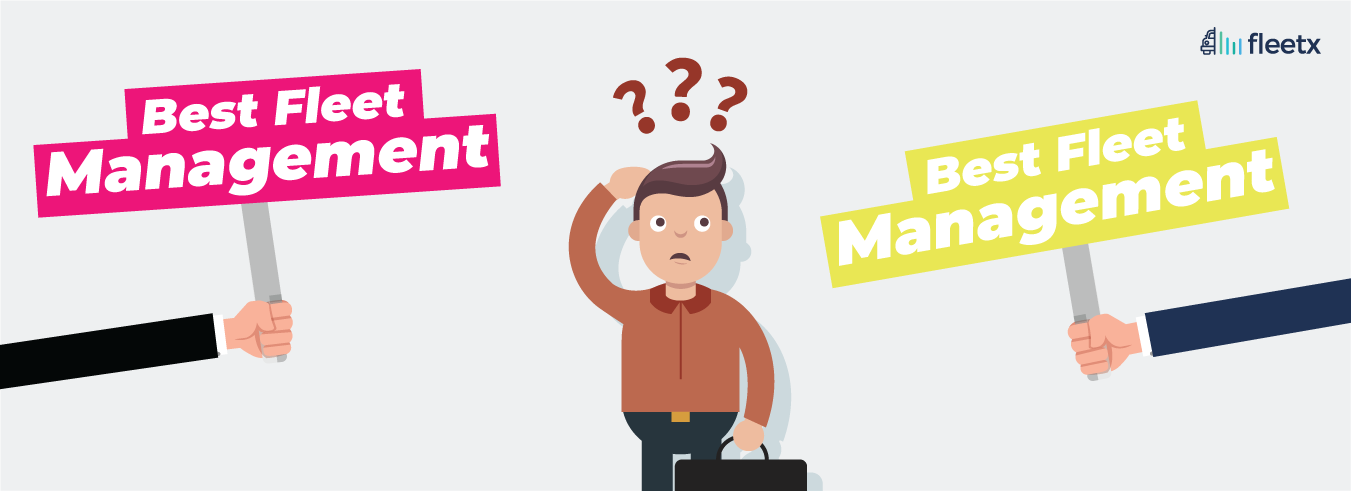
With today's abundance of fleet management solution providers, how do you choose the right one for your fleet?
Fleet is an integral part of many businesses and technology is the cornerstone of effective and efficient fleet management and fundamentally, it makes sense to outsource the fleet management solution for companies of all sizes. There are number of technologies available to choose from and there is no silver-bullet solution for every fleet. To make the right decisions, you need to evaluate your need - explore various technologies available, key-in your requirements, capabilities and specific results you're trying to achieve. Though choosing the right one is worth the effort, when applied correctly it can impact a number of operational factors such as minimizing the downtime of drivers and vehicles, and can save you thousand of bucks per vehicle each year.
A typical ballpark approach goes like:
• Define your Goals
• Do your research
• Request a Demo
• Schedule Installation
• Get buy-in from management and drivers
• Coach everyone involved
• Make it fun
1.Define your Goals:
To get started fleet managers, vehicle management partners, and other stakeholders need to answer following fundamental questions:
• How are we currently tracking current vehicle performance (such as mileage and maintenance), and how could the existing process be improved?
• What is the purpose of the technology and what vehicle and overall fleet data will help make us more efficient?
• Who needs to have access to the data and who will make actionable decisions based on the output?
• Can the technology integrate with the company’s existing software solutions, if any?
• Is the solution offered scalable and customizable?
• How will drivers use the technology?
• Are your staff reliable enough to manage the system when logging the data and keeping the track of your fleet vehicle?
• What is the break-in period on your investment?
Start with two or three short term goals. For example, if you wish to reduce the fuel consumption by drivers and vehicles, you should be tracking the following metrics:
• Driving behavior of the drivers for eg: Idling, speeding, sharp turns, high acceleration/de-acceleration, Ignition on/offs etc.
• Fuel consumed by the drivers and vehicles.
• Routes taken for any of the trip and see if they're optimized.
2.Do your research:
There are lot of fleet management solutions available that you can choose from, though the quality and the customer service varies with each. Choose the one who is willing to dive deeper into the specifics of the your fleet business and able to offer a customized solution based on what you are trying to achieve. Keep a checklist in mind of what features and functions you'll need with the solution. Technology is a big investment, make sure your company has responsive and knowledgeable Account Managers and CS reps. Get reviews from those who has been using or struggling with a selected provider, to get the complete picture of the services offered and the trustworthiness of the provider.
3.Request a Demo:
As next step, when you have zeroed-in on your choices, you should start requesting the demos if available with the respective fleet management solution provider. A fleet management provider should be willing to demonstrate the features and capabilities of the system specific to your business needs so as you get the fair idea of how the system will perform if goes live on your entire fleet.
4.Schedule Installation:
You should be thoughtful here with the dates you pick for the installation. Prepare a full list of vehicles you wish to equip the system with and be careful. Ask your provider to schedule the installation on dates which has minimal impact on the downtime of your vehicles or any other daily operation.
5.Get buy-in from management and drivers:
No matter how dynamic and functional a fleet management solution is, getting managers, supervisors, operator and other employees on-board is crucial. Your implementation will suffer a lot if everyone involved and everyone who is needed is not on-boarded with the system. Get everyone on the same page by sharing what you're trying to achieve with this fleet management system. Outline how the system will benefit the company and the associated drivers.
6.Coach everyone involved:
Fleet management is not among the "set and forget" setups, you need to coach your staff at all levels on how to access, analyze and act on the insights provided by the fleet management solution. Provide on-going training for your staff and answer their questions on timely fashion.
7.Make it fun:
Don't forget to make the last step exciting and fun. There would be drivers who are new to technology and would show negative response. Make sure you reward the drivers who show the most improvement and make it little competitive, challenging and fun.
Fleet Management Solution Checklist: Essential Capabilities to Evaluate Before Making a Decision
While implementation planning is important, evaluating the technical and operational capabilities of a fleet management solution is equally critical. A platform may appear feature-rich but fail to deliver measurable business outcomes if it lacks scalability, integration capabilities, or actionable analytics. Before making a final decision, assess whether the solution supports both your current operational requirements and future business growth.
Features every modern fleet management solution should include
- Real-time vehicle visibility: Monitor vehicle locations, trip status, stoppages, and route progress from a centralized dashboard.
- Predictive maintenance alerts: Receive automated notifications based on engine diagnostics, service intervals, and vehicle health to minimize unexpected breakdowns.
- Fuel management and consumption analytics: Track fuel usage, detect abnormal consumption patterns, identify fuel theft, and improve fuel efficiency across the fleet.
- Driver behaviour monitoring: Measure speeding, harsh braking, rapid acceleration, excessive idling, and unsafe driving practices to improve safety and reduce operational costs.
- Route optimization capabilities: Select the most efficient routes based on distance, traffic conditions, delivery schedules, and vehicle utilization to improve on-time performance.
- Automated reports and dashboards: Generate operational reports for fleet utilization, maintenance history, driver performance, trip completion, and overall fleet productivity.
- Scalable cloud-based architecture: Ensure the platform can support additional vehicles, users, business locations, and operational workflows as your organization expands.
- Third-party software integration: Verify compatibility with ERP systems, transport management software, warehouse management systems, accounting software, fuel cards, and telematics devices to avoid manual data entry.
Evaluating these capabilities before implementation helps organizations choose a fleet management solution that delivers measurable improvements instead of simply digitizing existing processes.
Business outcomes organizations can expect
Implementing a modern fleet management solution can help businesses:
- Improve fleet utilization through better vehicle scheduling.
- Reduce fuel expenses by identifying inefficient driving patterns.
- Minimize vehicle downtime with preventive maintenance planning.
- Increase delivery reliability through optimized route planning.
- Strengthen compliance by maintaining accurate digital records.
- Enhance driver accountability using performance insights.
- Improve customer satisfaction through better visibility and predictable delivery timelines.
Selecting a solution with these capabilities enables organizations to move beyond basic vehicle tracking and build a more efficient, data-driven fleet operation that can adapt to changing business demands.
Explore more about our vehicle tracking system here.
Conclusion
Choosing the right fleet management solution is not just about comparing features, it's about selecting a platform that aligns with your operational goals, supports long-term business growth, and delivers measurable results. By evaluating key capabilities, planning implementation carefully, and ensuring your team is equipped to use the system effectively, organizations can improve fleet visibility, reduce operating costs, enhance driver safety, and make faster, data-driven decisions. Investing in the right solution today lays the foundation for a more efficient, scalable, and future-ready fleet operation.
Frequently Asked Questions
What is a fleet management solution?
A fleet management solution is a software platform that helps businesses monitor, manage, and optimize commercial vehicles from a single dashboard. Modern solutions combine GPS tracking, telematics, driver behaviour monitoring, fuel management, maintenance scheduling, route optimization, compliance management, and real-time reporting to improve operational efficiency. Instead of relying on spreadsheets or manual records, fleet managers receive live data that supports faster and more informed decisions.
Businesses operating delivery fleets, logistics companies, manufacturers, construction firms, passenger transport operators, and e-commerce companies use fleet management software to reduce operational costs while improving vehicle utilization and customer service. A comprehensive platform also integrates with ERP systems, transport management software, warehouse management systems, and accounting tools, creating a connected logistics ecosystem.
In India, fleet management solutions have become increasingly important because businesses must manage long-distance transportation, fluctuating fuel costs, driver shortages, and strict delivery timelines. Companies operating across Delhi NCR, Gurgaon, Mumbai, Bengaluru, Pune, Chennai, and Hyderabad benefit from real-time visibility that helps dispatchers respond quickly to delays, traffic congestion, or unexpected vehicle issues.
The best fleet management solution is one that aligns with your operational goals rather than simply offering the longest feature list. Organizations should evaluate scalability, reporting capabilities, integration options, customer support, implementation assistance, and long-term ROI before making a decision. Choosing the right solution creates measurable improvements in safety, efficiency, compliance, and profitability.
How do you choose the right fleet management solution for your business?
Choosing the right fleet management solution begins with understanding your operational challenges instead of comparing software features alone. Businesses should first identify whether their biggest concern is reducing fuel expenses, improving driver safety, increasing vehicle utilization, enhancing maintenance planning, or improving customer visibility.
Once business goals are clear, evaluate vendors based on practical capabilities rather than marketing claims. Important evaluation criteria include:
- Real-time GPS tracking and trip visibility.
- Predictive maintenance alerts and service scheduling.
- Driver behaviour analytics.
- Fuel monitoring and theft detection.
- Route optimization capabilities.
- Custom dashboards and reporting.
- Integration with ERP, TMS, WMS, and accounting software.
- Scalable cloud infrastructure.
- Reliable customer onboarding and support.
Businesses operating across Delhi, Gurgaon, Mumbai, Bengaluru, and Pune often require multi-location fleet visibility because vehicles travel between warehouses, distribution hubs, manufacturing plants, and customer sites. Solutions supporting centralized fleet management across multiple branches typically provide greater long-term value.
Finally, request a live product demonstration using your own business scenarios. A software provider should demonstrate how its platform solves your operational challenges, not simply showcase generic features. Selecting a solution based on measurable outcomes ensures higher adoption rates and a stronger return on investment.
Which is the best fleet management software in India for growing businesses?
The best fleet management software depends on the size of your fleet, operational complexity, industry requirements, and future growth plans. A logistics startup with 20 vehicles has different requirements than a nationwide transportation company managing thousands of trucks.
Businesses should prioritize solutions offering:
- Live GPS vehicle tracking.
- Fuel management analytics.
- Preventive maintenance scheduling.
- Driver safety monitoring.
- Route optimization.
- AI-powered reporting and analytics.
- Mobile applications for fleet managers and drivers.
- Cloud deployment with enterprise-grade security.
For companies operating throughout India, especially across Delhi NCR, Gurgaon, Mumbai, Bengaluru, and Pune, selecting software with nationwide support, multilingual onboarding, reliable installation services, and scalable cloud infrastructure is equally important. Local implementation teams often reduce deployment timelines while helping businesses train drivers and fleet managers more effectively.
The top fleet management software providers also offer flexible APIs that integrate with transport management systems, warehouse management platforms, ERP software, invoicing tools, and fuel card providers. These integrations eliminate manual data entry while improving reporting accuracy across departments.
Instead of choosing software based solely on pricing, organizations should compare implementation support, customer success services, uptime guarantees, analytics capabilities, product innovation, and long-term scalability. The right platform should continue supporting your fleet as vehicles, routes, drivers, and operational complexity grow over time.
How much does fleet management software cost in India?
The cost of fleet management software in India varies depending on the number of vehicles, features required, hardware, integrations, and implementation complexity. Most providers offer subscription-based pricing, while enterprise deployments are usually customized according to business requirements.
As a general estimate:
- Small fleets (10–50 vehicles): ₹500–₹2,000 per vehicle per month depending on tracking, maintenance, and reporting features.
- Medium fleets (50–300 vehicles): ₹1 lakh–₹5 lakh annually depending on integrations, analytics, and implementation requirements.
- Large enterprise fleets: Custom pricing based on fleet size, telematics hardware, AI capabilities, API integrations, and dedicated support.
Implementation costs may also include GPS devices, installation, onboarding, user training, and software integration with ERP or Transport Management Systems. Some providers include implementation in annual contracts, while others charge separately for deployment.
Businesses operating in Delhi, Gurgaon, Mumbai, Bengaluru, and Pune should evaluate the total cost of ownership instead of comparing subscription fees alone. A slightly higher investment often delivers better ROI through lower fuel expenses, fewer maintenance breakdowns, reduced vehicle downtime, and improved driver productivity.
Before making a purchase decision, request a customized quotation based on fleet size, expected growth, reporting requirements, and operational workflows. This ensures the software meets your business needs without paying for unnecessary features.
What factors influence the implementation cost of a fleet management solution?
Implementation costs extend beyond software licensing and depend on several operational and technical factors. Understanding these variables helps businesses create realistic budgets while avoiding unexpected expenses during deployment.
The primary cost factors include:
- Number of vehicles requiring GPS or telematics devices.
- Installation and hardware configuration.
- Software customization based on business workflows.
- Integration with ERP, TMS, WMS, HRMS, or accounting systems.
- Historical data migration.
- Driver and fleet manager training.
- Mobile application deployment.
- Dedicated customer success and support services.
- Ongoing software maintenance and upgrades.
Organizations with operations across multiple cities such as Delhi NCR, Gurgaon, Mumbai, Pune, and Bengaluru may require phased implementation across several branches, increasing deployment complexity. However, phased rollouts generally improve adoption and reduce operational disruption.
Companies should also consider long-term operational savings rather than focusing only on implementation expenses. Fleet management platforms frequently generate measurable savings through improved route planning, lower fuel consumption, preventive maintenance, increased asset utilization, and reduced paperwork. In many cases, these operational improvements offset implementation costs within the first one to two years.
Why are fleet management solutions especially valuable for businesses in Delhi NCR and Gurgaon?
Businesses operating in Delhi NCR and Gurgaon face unique transportation challenges, including heavy traffic congestion, multiple warehouse locations, time-sensitive deliveries, and high fuel costs. Fleet management software provides real-time visibility that enables businesses to maintain operational efficiency despite these challenges.
Companies serving industrial hubs, manufacturing facilities, retail distribution centres, and e-commerce fulfilment operations benefit from:
- Real-time vehicle tracking across multiple routes.
- Optimized route planning to avoid traffic bottlenecks.
- Automated maintenance scheduling.
- Fuel monitoring and theft prevention.
- Driver performance monitoring.
- Live ETA updates for customers.
- Centralized reporting across multiple depots.
For logistics providers moving goods between Delhi, Noida, Ghaziabad, Faridabad, and Gurgaon, centralized fleet visibility helps improve dispatch planning while reducing idle time and unnecessary fuel consumption. Businesses also gain better control over compliance documentation, vehicle servicing schedules, and driver accountability.
As commercial transportation volumes continue to increase throughout the NCR region, adopting a modern fleet management solution allows organizations to scale operations efficiently while maintaining high service levels and controlling operating costs.
How can businesses in Mumbai improve fleet efficiency with fleet management software?
Mumbai's logistics environment presents unique operational challenges, including dense traffic, restricted delivery windows, high vehicle utilization, and frequent last-mile deliveries. Fleet management software helps businesses overcome these challenges by providing real-time visibility into every vehicle and enabling faster operational decisions.
Businesses involved in retail distribution, FMCG, pharmaceuticals, cold chain logistics, manufacturing, and e-commerce can benefit from capabilities such as:
- Live GPS tracking to monitor vehicle movement across the city.
- Route optimization based on traffic conditions and delivery priorities.
- Driver behaviour monitoring to improve safety and reduce fuel consumption.
- Automated maintenance reminders that reduce unexpected breakdowns.
- Digital trip reports and proof of delivery for improved customer service.
- Centralized dashboards for managing multiple delivery hubs.
Organizations operating between Mumbai, Navi Mumbai, Thane, and nearby industrial corridors often manage large delivery volumes every day. Fleet management software helps dispatchers allocate vehicles more efficiently, reduce idle time, and improve delivery accuracy without increasing fleet size.
As customer expectations continue to rise, businesses that invest in data-driven fleet operations are better positioned to improve delivery performance, reduce operating costs, and provide consistent service across complex urban transportation networks.
What features should growing businesses look for in a top fleet management solution?
Growing businesses should invest in fleet management software that not only addresses current operational requirements but also supports future expansion. A solution that works well for a small fleet should continue delivering value as the organization adds more vehicles, drivers, warehouses, and delivery routes.
Key capabilities to prioritize include:
- Cloud-based architecture for easy scalability.
- Real-time GPS tracking and fleet visibility.
- AI-powered analytics and customizable dashboards.
- Preventive maintenance scheduling.
- Fuel management and expense tracking.
- Driver scorecards and safety monitoring.
- Route planning and dispatch optimization.
- API integrations with ERP, WMS, CRM, and Transport Management Systems.
- Mobile applications for managers and drivers.
- Strong customer onboarding and technical support.
Businesses expanding across Delhi, Gurgaon, Mumbai, Bengaluru, Pune, and other major logistics hubs benefit from software capable of managing multiple branches from one centralized platform. Centralized reporting improves operational visibility while reducing administrative effort.
Rather than selecting software based solely on feature quantity, businesses should evaluate long-term scalability, implementation quality, customer support, security standards, reporting capabilities, and future product innovation to ensure sustainable operational growth.
Can fleet management software improve ROI for logistics businesses?
Yes. A well-implemented fleet management solution can significantly improve return on investment by reducing operational costs while increasing productivity and customer satisfaction. The financial benefits usually come from multiple small improvements that collectively create measurable savings over time.
Common areas where businesses achieve ROI include:
- Lower fuel expenses through optimized routing and reduced idling.
- Reduced maintenance costs with preventive servicing.
- Improved vehicle utilization across the fleet.
- Lower accident rates through safer driver behaviour.
- Reduced paperwork through digital reporting and automation.
- Higher on-time delivery performance.
- Better customer satisfaction through accurate ETAs.
- Improved operational visibility for faster decision-making.
For businesses operating throughout India—including Delhi NCR, Gurgaon, Mumbai, Bengaluru, and Pune—even modest efficiency improvements across hundreds of daily trips can produce substantial annual savings. These operational gains often outweigh software subscription and implementation costs.
Ultimately, the highest ROI comes from choosing a fleet management solution that aligns with business objectives, is adopted successfully by employees, and continuously provides actionable insights that help improve efficiency, safety, compliance, and overall fleet performance.