
Technology has taken the lead in modernizing every aspect of our existence and the same is true for the channels through which people avail the goods they need to improve their quality of life. Technology advancements assist with innovating one such channel - logistics.
A hundred different things go into the smooth functioning of the supply chain process and logistics plays a key role. Several core activities – from carrier selection or freight forwarder to route planning to cargo management and tracking – need to be handled cautiously to ensure timely customer delivery. After all, customer satisfaction is all that matters for a business to grow.
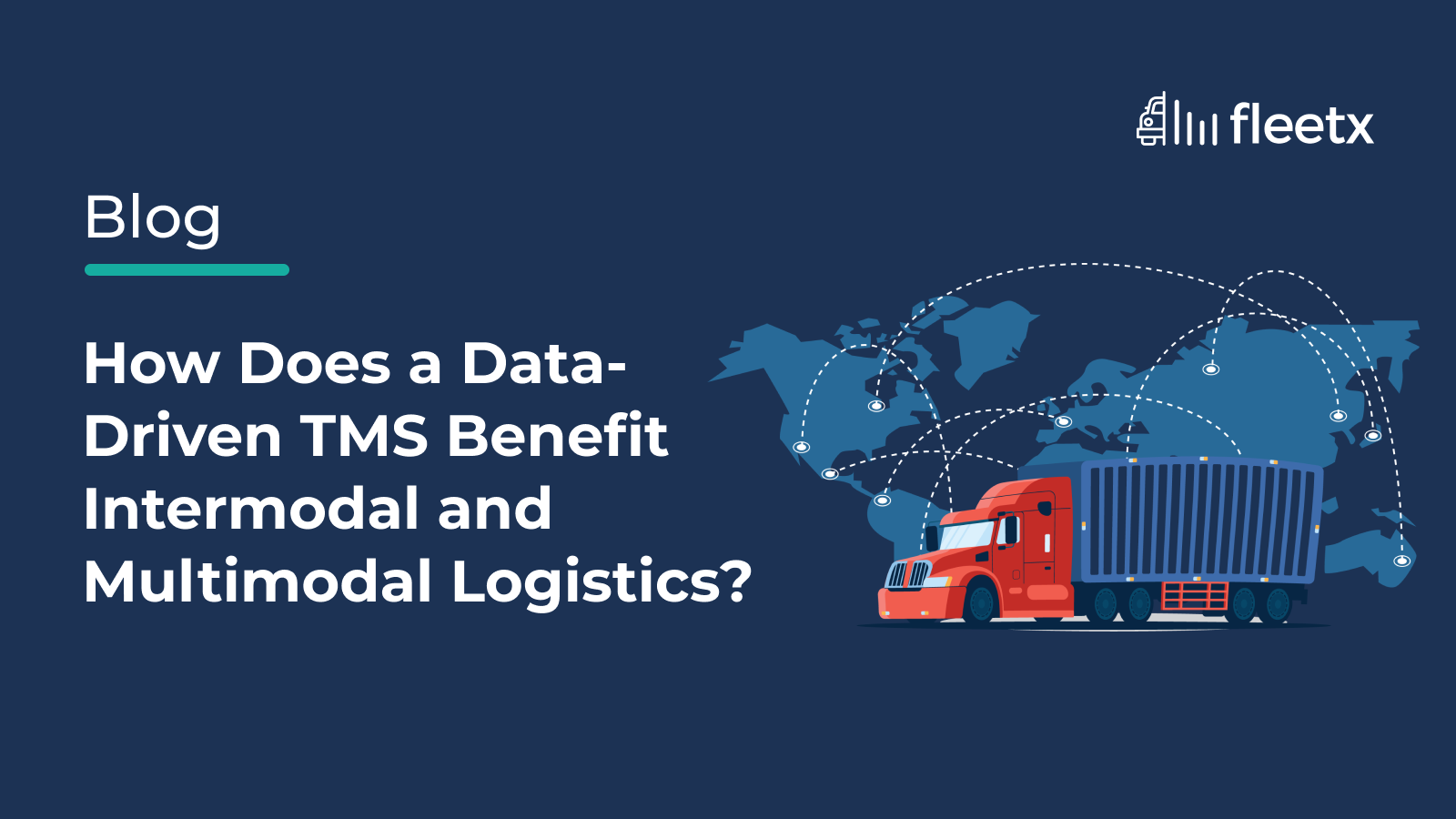
Now, businesses operate in several ways and their logistics needs differ. Intermodal and multimodal logistics models have been beneficial strategies and here we’ll explore how a TMS helps streamline these processes.
A data-driven Transportation Management System (TMS) helps intermodal and multimodal logistics operations by improving shipment visibility, optimizing routes, reducing transportation costs, automating coordination across multiple transport modes, ensuring regulatory compliance, and enhancing customer satisfaction through real-time tracking and accurate ETAs.
What Are Intermodal and Multimodal Logistics?
Intermodal and multimodal logistics are transportation strategies that use multiple modes of transport such as trucks, trains, ships, and aircraft to move goods efficiently. While both involve more than one transportation mode, the key difference lies in how the shipment is managed and contracted.
Intermodal transportation uses separate contracts and carriers for each stage of the journey, whereas multimodal transportation operates under a single contract managed by one transport operator. Both approaches help businesses optimize costs, improve delivery flexibility, and enhance supply chain efficiency.
As global supply chains become increasingly complex, businesses are adopting technology-driven solutions such as Transportation Management Systems (TMS) to gain better visibility and control across multiple transportation modes.
Modes of Transport Enabling Cargo Movement
The general categories that enable intermodal and multimodal shipping and transshipment, within and beyond national borders, include:
- Cargo Trucks
- Freight Trains
- Container Ships
- Aircraft Transfer
An Overview - Intermodal and Multimodal Logistics
The two terms – intermodal and multimodal – are often used interchangeably but the two branches are entirely different.
Intermodal – The cargo shipment process where each transport medium is handled by a separate entity. Independent contractors have separate responsibilities for ensuring the successful delivery of the goods.
Advantages:
- The ability to select multiple carriers for each leg of transportation leads to lower rates
- More flexibility in handling the movement of goods from one point to another
Multimodal – Refers to the cargo movement process under a single contract or bill of lading, involving multiple modes of transport. Separate transportation mediums are handled by a single entity or multimodal transport operator (MTO), covered by the multimodal transport document (MTD).
Advantages:
- Lower operational costs due to a singular tracking link
- Lower logistics coordination efforts required to deliver goods
- Higher security assurance
Intermodal vs Multimodal Logistics: Key Differences
| Intermodal Logistics | Multimodal Logistics |
|---|---|
| Multiple contracts | Single contract |
| Multiple carriers | Single operator |
| Higher flexibility | Simplified coordination |
| Carrier-specific liability | Single-point accountability |
| Complex documentation | Simplified documentation |
TMS - Streamlining Logistics Across Different Modes of Transport
Various operational issues arise in intermodal and multimodal logistics which can be resolved with technology. A transportation management system (TMS) is the ideal data-driven platform to automate the functionalities and the advancements include automated route plan optimization, tracking, load management, contract management, reverse logistics, and more.
The two primary TMS user groups can be categorized as:
- Manufacturers and Distributors
- Third-Party Logistics Providers (3PLs)
Let’s dive deeper into the benefits of TMS in managing intermodal and multimodal logistics functionalities –
Higher Vehicle Visibility
- Real-Time visibility in truck movements – By using TMS, enterprises get real-time visibility across multiple modes of transportation, enabling proactive issue resolution.
- Better Communication Channels – To improve communication among carriers, TMS provides centralized data access.
One of the biggest challenges in intermodal and multimodal logistics is maintaining visibility across multiple transportation modes and carriers. Without real-time tracking, businesses often struggle to monitor shipment locations, identify delays, and communicate accurate delivery updates to customers.
A data-driven Transportation Management System (TMS) provides end-to-end visibility by consolidating information from GPS devices, telematics systems, carriers, warehouses, and logistics partners into a single platform. Fleet managers can monitor vehicle locations, shipment progress, estimated arrival times, and route deviations in real time.
Improved visibility allows businesses to proactively address disruptions before they impact operations. For example, if a shipment is delayed due to traffic congestion, weather conditions, or operational issues, logistics teams can quickly adjust schedules and notify customers. This level of transparency improves operational efficiency while strengthening customer trust.
By providing a comprehensive view of transportation activities, a data-driven TMS enables better decision-making, faster issue resolution, and improved supply chain performance.
Optimized Costs
- Route Optimization – Businesses can select the most cost-efficient routes by adequately considering transit times, saving valuable fuel costs.
- Load Optimization – Consolidating shipments reduces empty miles and reduces logistics costs.
Transportation costs represent a significant portion of overall logistics expenses, making cost optimization a key priority for businesses. A data-driven TMS helps organizations identify inefficiencies and uncover opportunities to reduce transportation spending.
Using real-time data and advanced analytics, the system can recommend cost-effective routes, optimize carrier selection, improve load utilization, and minimize empty miles. Route optimization alone can significantly reduce fuel consumption and vehicle wear while improving delivery timelines.
The platform also enables businesses to compare carrier performance, analyze transportation costs, and negotiate more effectively with logistics partners. These insights support data-driven decisions that improve profitability without compromising service quality.
By continuously monitoring transportation performance and identifying inefficiencies, organizations can achieve sustainable cost reductions across their logistics operations.
Improved Transport Coordination
- Selecting Mode – Automated transport mode selection (road, rail, or sea) based on delivery schedules and costs is enabled by TMS.
- Optimized Transitions – TMS facilitates easy mode transitions by automated coordination of schedules and documentation.
Intermodal and multimodal logistics involve coordinating shipments across multiple transportation modes, terminals, carriers, warehouses, and service providers. Managing these moving parts manually can result in communication gaps, delays, and operational inefficiencies.
A Transportation Management System centralizes transportation planning and execution, enabling all stakeholders to access the same information through a unified platform. This improves collaboration and ensures that everyone involved in the shipment process remains aligned.
Automated notifications, scheduling tools, and workflow management features help businesses streamline communication between carriers, warehouse operators, dispatch teams, and customers. As a result, shipments move more efficiently through the supply chain with fewer delays and disruptions.
Improved transport coordination reduces administrative workload, increases operational efficiency, and supports better customer service.
Data-Based Decisions
- Data Analytics and Reports – Businesses gain valuable insights into several performance metrics such as transit times and costs involved.
- Proactive Actions – Data trends enable predictive analysis of potential delays and suggest alternates.
Modern logistics operations generate vast amounts of transportation data every day. However, data only becomes valuable when it is transformed into actionable insights that support informed decision-making.
A data-driven TMS collects information from multiple sources and presents it through dashboards, reports, and analytics tools. Fleet managers can track key performance indicators such as on-time delivery rates, carrier performance, transportation costs, shipment delays, and vehicle utilization.
These insights help organizations identify trends, monitor performance, and implement targeted improvements. Instead of relying on assumptions or manual reporting, businesses can make decisions based on accurate and real-time information.
Data-driven decision-making enables organizations to improve operational efficiency, optimize resource allocation, and continuously enhance logistics performance.
Supports Regulatory Compliance
- Document Management – The automated TMS is an efficient tool for generating and managing several trade compliance documents (e.g. – customs forms).
- Risk Management – TMS enables the identification and mitigation of risks involved with multimodal transportation.
Compliance is a critical component of intermodal and multimodal logistics, especially when shipments move across multiple jurisdictions and transportation networks. Businesses must comply with transportation regulations, documentation requirements, safety standards, and industry-specific guidelines.
A Transportation Management System helps streamline compliance management by automating documentation processes, maintaining digital records, and ensuring that required information is available throughout the shipment lifecycle.
The system can also generate compliance reports, track regulatory requirements, and alert users to potential issues before they become costly violations. This reduces the risk of penalties, shipment delays, and operational disruptions.
By simplifying compliance management, businesses can focus more on operational efficiency while reducing administrative burden and regulatory risk.
Higher Customer Satisfaction
- Automated ETAs – Automation enables real-time updates and generates accurate ETAs that enhance customer confidence.
- Issue Management – Immediate actions can be taken to address potential delays or disruptions, improving service reliability.
Customer expectations continue to rise as businesses demand faster deliveries, greater transparency, and more accurate shipment information. Meeting these expectations requires real-time visibility and proactive communication throughout the transportation process.
A data-driven TMS helps businesses provide accurate delivery updates, shipment tracking information, and estimated arrival times. Customers gain greater confidence when they can monitor shipments and receive timely notifications regarding delays or schedule changes.
Improved visibility also enables customer service teams to respond more effectively to inquiries and resolve issues quickly. This contributes to stronger customer relationships and improved service quality.
By delivering a more transparent and reliable transportation experience, businesses can increase customer satisfaction, improve retention rates, and strengthen their competitive position in the market.
How a Data-Driven TMS Works
A data-driven TMS collects information from GPS devices, telematics systems, carriers, warehouses, ERP platforms, and logistics partners. This information is analyzed in real time to provide actionable insights that improve transportation planning and execution.
Fleet managers can use this data to optimize routes, allocate resources more effectively, identify delays, improve vehicle utilization, and enhance customer communication. By consolidating logistics information into a single platform, businesses gain end-to-end supply chain visibility.
Conclusion
Intermodal and multimodal logistics provide businesses with flexible and efficient ways to move goods across increasingly complex supply chains. However, managing multiple transport modes, carriers, schedules, and compliance requirements can quickly become challenging without the right technology.
A data-driven Transportation Management System helps businesses streamline logistics operations through real-time visibility, route optimization, automated coordination, predictive insights, and improved customer communication. By centralizing transportation management, organizations can reduce costs, improve operational efficiency, and gain greater control over supply chain performance.
As logistics networks continue to evolve, businesses that embrace data-driven transportation management will be better positioned to improve service quality, increase profitability, and maintain a competitive advantage.
Key Takeaways
- Intermodal and multimodal logistics use multiple transport modes to improve efficiency.
- A TMS centralizes transportation management across different carriers and transport modes.
- Real-time visibility improves operational control and customer satisfaction.
- Route and load optimization reduce transportation costs.
- Data-driven decision-making improves logistics performance and scalability.
Transform Intermodal and Multimodal Logistics with Fleetx TMS
Gain end-to-end shipment visibility, automate transport planning, optimize routes, improve carrier coordination, and reduce transportation costs with Fleetx Transportation Management System.
Schedule a Fleetx demo today to see how a data-driven TMS can streamline your logistics operations.