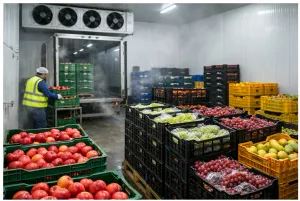

A great amount of raw and finished products (fruits, vegetables, meat, seafood, dairy products, bio-pharmaceutical products, chemicals, artwork, temperature-sensitive beverages etc.) gets deteriorated due to poor hygiene and quality during transportation and storage. We all Indians are fond of fresh produce, yet we are not comfortable in putting in the effort to make up for good hygiene and quality of the product. How do you let your customer enjoy the signature taste and quality of the product which was maintained during manufacturing?
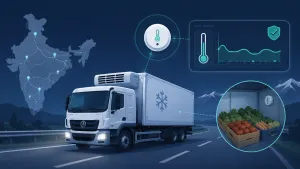
A reefer, more commonly referred as the 'refrigerated containers' is used to transport temperature sensitive goods and is capable of controlling the temperature ranging from -65°C up to 60°C. Transporting such a temperature-sensitive cargo over hundreds of kms. requires strict adherence to precise and continuous temperature control till it reaches the next consumption point. Any deviation from the plan, like a faulty refrigerated trailer or an unexpected delay can result in boxes of food waste to be disposed of later on.
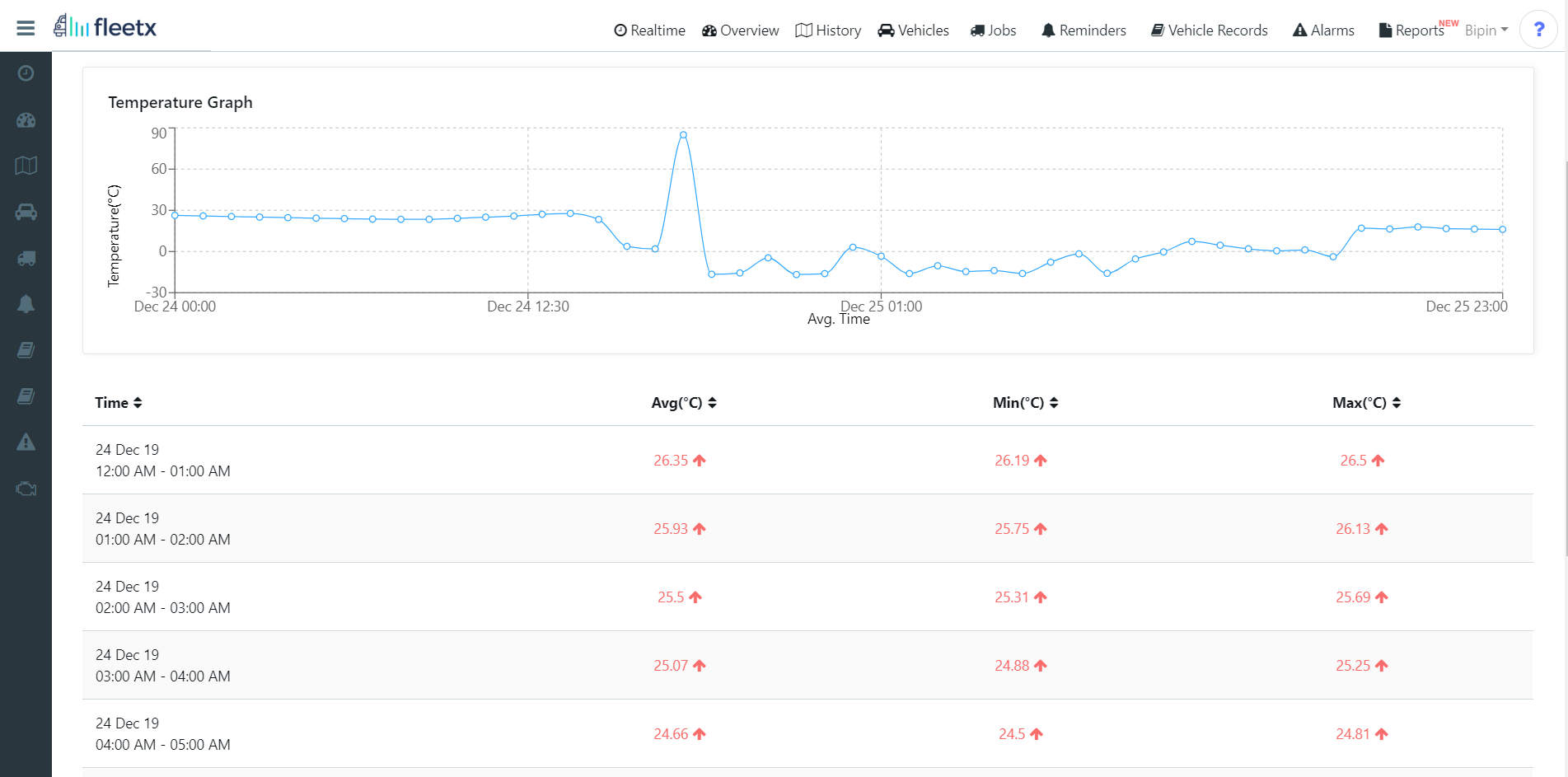
If you have a temperature-sensitive cargo, temperature monitoring is indispensable to keep the product integrity intact. Our latest temperature monitoring feature in our Smart Vehicle Tracking System serves this exact need. You get the minute-by-minute picture of how the temperature is changing inside your temperature-sensitive cargo. Notice how the temperature is still at ambient temp. of 30°C when the vehicle is unloaded and undergoes a sharp rise when the vehicle lid was opened and loaded (at Plant Storage Hub) with the frozen food (Ice-cream) and the temperature hits below -20°C and remains largely the same throughout the transit period of the vehicle. You can see the Min, Max. and Avg temperatures for any interval selected and get the address as well wherein the temperature change gets triggered.
You can further download the temperature reports for the in-transit period of your goods and later on provide historical temperature as evidence to the customer or compliance officers in case of any dispute or clarification.
What would you add to your business with temperature monitoring:
- Better cold chain Logistics visibility
You can now add temperature logging capabilities to your fleet and monitor temperature of your cargo throughout the day, any day - and get even more robust picture of the conditions inside the trailer. First touch-point is in the form of dashboard visualization of the temperature as a graph of temperature vs the time range selected (today, yesterday, this week, this month or any other custom range) and then the row by row time breakdown of the temperature with Min, Max and Avg. temperature in the selected period. This all can be exported as a downloadable report as well.
You can further drill down into the location of the trailer for any of the temperature activity logged and see it on Google maps, which makes the measurement even more effective. You can also set your own minimum and maximum temperature and create a breach alert whenever the actual conditions of your cargo goes past this limit and can put several people on the list to be notified via SMS, Email, web or app push.
- Reduce rejected load claims
With even deeper understanding of the conditions inside the trailer, you can spot the abnormalities swiftly and combat the client concerns over product integrity and quality more easily. As an evidence, you can hand your clients a document containing minute by minute description of the temperature inside the trailer, in question.
- Adhere to the FSSAI Compliance
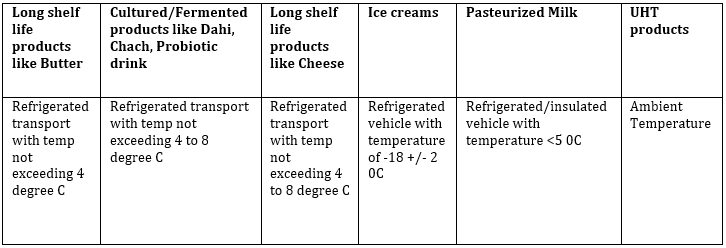
With the historical temperature monitoring and reporting, it makes it simpler than ever to satisfy client demands and comply with the FSSAI guidelines for transportation of cold chain products, especially dairy products -
Temperature reports which are downloadable can be produced later on as evidence of historic temperature that you have maintained throughout the transit of perishable products. You can download the reports as PDF or CSV suiting to your analytics needs or further configure the reports by adding layers of granularity - select the vehicle, select time & date range, and time increments and export.
Common Cold Chain Risks That Real-Time Temperature Monitoring Helps Prevent
Maintaining the correct temperature throughout transportation involves more than simply using refrigerated vehicles. Several operational and environmental factors can compromise product quality before shipments reach their destination. By combining real-time temperature monitoring with fleet visibility, logistics teams can identify issues as they occur instead of discovering them after delivery. This proactive approach helps businesses reduce financial losses, maintain regulatory compliance, and improve customer satisfaction.
Major Risks Faced During Cold Chain Transportation
Even well-maintained refrigerated fleets can encounter unexpected challenges. Some of the most common cold chain risks include:
- Refrigeration unit malfunction: Mechanical failures can quickly cause internal temperatures to move outside the acceptable range.
- Frequent door openings: Repeated loading and unloading increase temperature fluctuations, especially during multi-stop deliveries.
- Traffic congestion and route delays: Extended transit times expose temperature-sensitive goods to higher operational risks.
- Incorrect temperature settings: Human errors while configuring refrigeration units may compromise the quality of an entire shipment.
- Extreme weather conditions: High ambient temperatures during summer months place additional stress on refrigeration systems.
- Power interruptions during loading or unloading: Temporary loss of cooling can affect pharmaceuticals, dairy products, seafood, frozen foods, and other perishable cargo.
- Delayed maintenance: Worn-out refrigeration components may not maintain consistent cooling, increasing the likelihood of spoilage.
Common Cold Chain Risks and How Real-Time Monitoring Helps
| Cold Chain Risk | Potential Business Impact | How Real-Time Temperature Monitoring Helps |
|---|---|---|
| Refrigeration equipment failure | Product spoilage and shipment rejection | Detects abnormal temperature changes immediately for faster corrective action |
| Frequent trailer door openings | Temperature fluctuations | Identifies sudden temperature spikes and helps verify loading activities |
| Traffic delays | Extended exposure during transit | Enables continuous monitoring while goods remain on the road |
| Incorrect temperature settings | Reduced product quality | Allows operators to identify deviations before they become critical |
| Extreme weather conditions | Higher cooling system workload | Provides continuous visibility into temperature stability throughout the journey |
| Poor equipment maintenance | Increased operational disruptions | Historical temperature trends help identify recurring maintenance issues |
Best Practices to Minimise Cold Chain Risks
Technology delivers the greatest value when combined with disciplined operational practices. Businesses can strengthen cold chain performance by following these recommendations:
- Conduct routine inspections of refrigeration units before every trip.
- Pre-cool trailers to the required temperature before loading cargo.
- Minimise door opening duration during loading and delivery operations.
- Schedule preventive maintenance for refrigeration systems and sensors.
- Train drivers to respond immediately to temperature alerts and equipment warnings.
- Review historical temperature reports to identify recurring operational issues and improve future route planning.
By addressing these common risks proactively, businesses can improve shipment reliability, reduce wastage, strengthen regulatory compliance, and consistently deliver temperature-sensitive products in optimal condition.
Be in the know what are the conditions inside your trailer right now, not what was it like 15, 30 or 60 minutes ago.
If you're not a fleetx customer yet, and would like to learn more, schedule a free demo with us.
Frequently Asked Questions
What is trailer temperature monitoring in cold chain logistics? ▼
Trailer temperature monitoring is a technology-driven process that continuously measures and records the internal temperature of refrigerated trailers or reefer containers while temperature-sensitive goods are being transported. Instead of relying on manual inspections at loading and unloading points, sensors installed inside the trailer transmit real-time temperature readings to a centralized dashboard. Fleet operators can instantly identify deviations, receive alerts, generate reports, and maintain complete visibility throughout the journey.
This capability is particularly important for industries transporting dairy products, frozen foods, seafood, pharmaceuticals, fresh fruits, vegetables, vaccines, chemicals, and other perishable goods where even a slight temperature variation can impact quality and regulatory compliance. Businesses can also maintain digital temperature logs for audits and customer verification.
In India, where refrigerated cargo frequently travels between Delhi, Gurgaon, Mumbai, Pune, Bengaluru and other major logistics hubs, temperature monitoring helps reduce spoilage caused by long-distance transportation, traffic congestion, unexpected delays and extreme weather conditions. Modern fleet management platforms integrate temperature monitoring with GPS tracking, route visibility and automated alerts, allowing logistics managers to respond before cargo quality is affected. As cold chain logistics continues to grow across India, trailer temperature monitoring has become an essential requirement for maintaining product integrity, reducing losses and improving customer confidence.
Why is real-time temperature monitoring important for refrigerated transportation? ▼
Real-time temperature monitoring enables logistics companies to detect problems while a shipment is still in transit rather than after delivery. This proactive visibility significantly reduces the risk of spoiled products, rejected consignments and compliance failures. When refrigeration equipment malfunctions, trailer doors remain open for longer than expected, or traffic delays affect delivery schedules, businesses receive immediate alerts and can take corrective action before irreversible damage occurs.
Continuous monitoring also creates a complete digital record of every shipment, making it easier to satisfy customer requirements and industry regulations. Historical reports provide proof that products remained within acceptable temperature ranges throughout transportation, reducing disputes and strengthening trust with clients.
For Indian supply chains transporting goods between Delhi NCR, Gurgaon, Mumbai, Bengaluru, Pune and other commercial centres, maintaining consistent temperatures becomes increasingly important due to long travel distances and varying climatic conditions. Modern monitoring systems further improve operational efficiency by integrating temperature data with vehicle tracking, driver performance, geofencing and maintenance alerts. This combination helps logistics companies optimise fleet utilisation while protecting valuable cargo. Businesses that invest in continuous monitoring generally experience lower wastage, better delivery performance, improved customer satisfaction and stronger compliance with food safety and pharmaceutical transportation standards.
Which industries benefit the most from refrigerated trailer temperature monitoring? ▼
Temperature monitoring delivers value across every industry that depends on maintaining product quality during transportation. Food and beverage manufacturers rely on continuous monitoring to transport dairy products, frozen foods, seafood, meat, chocolates and beverages safely from production facilities to distributors and retailers. Pharmaceutical companies use temperature-controlled transportation to maintain the effectiveness of vaccines, medicines and laboratory samples throughout the supply chain.
Agriculture and fresh produce businesses also benefit by preserving the freshness of fruits, vegetables and flowers during long-distance deliveries. Chemical manufacturers transporting temperature-sensitive materials use monitoring to maintain product stability and reduce safety risks. Retail chains and e-commerce grocery companies increasingly depend on refrigerated logistics to deliver fresh products to consumers without compromising quality.
In India, industries operating across Delhi, Gurgaon, Mumbai, Pune and Bengaluru often manage long transportation routes where environmental temperatures fluctuate significantly. Real-time monitoring enables these businesses to comply with regulatory requirements while reducing spoilage, customer complaints and financial losses. As India's cold chain infrastructure expands, integrated temperature monitoring is becoming an essential investment for businesses seeking operational efficiency, regulatory compliance and consistent customer satisfaction across diverse industries.
What is the cost of implementing a trailer temperature monitoring system in India? ▼
The cost of implementing a trailer temperature monitoring solution in India depends on several factors, including the number of refrigerated vehicles, sensor specifications, software capabilities, reporting requirements, connectivity options, and integration with an existing fleet management system. Businesses may choose hardware-only deployments or comprehensive SaaS-based platforms that combine temperature monitoring with GPS tracking, maintenance management, geofencing, and analytics.
For many small and medium-sized logistics operators, implementation costs generally start from around ₹8,000–₹25,000 per refrigerated vehicle for hardware, while enterprise-grade solutions with cloud software, analytics, alerts, APIs, and reporting can range between ₹25,000–₹60,000+ per vehicle depending on business requirements. Most providers also charge a recurring monthly subscription covering cloud software, SIM connectivity, platform updates, and technical support.
Companies operating across Delhi NCR, Gurgaon, Mumbai, Bengaluru and Pune should evaluate long-term return on investment rather than focusing solely on upfront pricing. Reduced spoilage, fewer rejected shipments, better regulatory compliance, improved customer confidence and lower insurance claims often generate savings that outweigh the implementation cost. When comparing vendors, businesses should consider installation support, software scalability, reporting features, customer service, mobile accessibility, and future integration capabilities instead of selecting the lowest-priced solution.
Which is the best trailer temperature monitoring software for cold chain logistics? ▼
The best trailer temperature monitoring software is one that provides far more than basic temperature readings. Modern logistics businesses require a platform that combines continuous monitoring, GPS vehicle tracking, automated alerts, reporting, fleet visibility, analytics, and compliance documentation within a single dashboard. The ideal solution should also scale as fleet size and operational complexity increase.
When evaluating the best software, businesses should prioritise features such as real-time monitoring, configurable temperature thresholds, instant SMS, email or app notifications, downloadable compliance reports, historical temperature logs, API integrations, mobile applications, geofencing, driver visibility and predictive maintenance capabilities. Cloud-based platforms generally offer greater flexibility because they allow fleet managers to monitor refrigerated vehicles from anywhere.
For organisations operating across India—including Delhi, Gurgaon, Mumbai, Pune and Bengaluru—software should also support multiple vehicles, multiple depots and long-distance interstate transportation. Businesses handling pharmaceuticals, dairy products, frozen foods or fresh produce benefit from solutions capable of integrating temperature data with route optimisation and fleet performance analytics. Instead of selecting software based solely on price, decision-makers should compare implementation support, scalability, reporting quality, customer support responsiveness, security standards and future upgrade options. Choosing a comprehensive platform ensures better cargo protection while improving operational efficiency and long-term business growth.
Which are the top features businesses should look for in refrigerated trailer monitoring solutions? ▼
The top refrigerated trailer monitoring solutions combine multiple operational capabilities into one integrated platform. While continuous temperature monitoring remains the primary requirement, businesses gain significantly greater value when monitoring software also provides visibility into vehicle movement, driver behaviour and operational performance.
Important features include real-time temperature tracking, live GPS location, configurable temperature breach alerts, downloadable compliance reports, historical data storage, cloud accessibility, mobile applications, geofencing, multi-vehicle dashboards, predictive maintenance alerts and integration with transportation or warehouse management systems. Businesses transporting pharmaceutical products may additionally require sensor calibration records and audit-ready documentation.
Companies operating in logistics-intensive regions such as Delhi NCR, Gurgaon, Mumbai, Bengaluru and Pune should also evaluate software based on reliability, ease of installation, reporting flexibility and after-sales support. Enterprise users often benefit from API connectivity that integrates monitoring data with ERP, TMS and supply chain platforms. Selecting a solution with advanced analytics helps identify recurring operational issues, improve route planning and reduce cargo losses over time. Rather than focusing on a single feature, businesses should choose a monitoring platform that supports future growth while simplifying compliance, improving customer transparency and enabling data-driven operational decisions.
How do businesses in Delhi NCR and Gurgaon use trailer temperature monitoring? ▼
Delhi NCR and Gurgaon are among India's largest logistics and distribution hubs, handling significant volumes of food products, pharmaceuticals, dairy, frozen goods and FMCG shipments every day. Since cargo frequently moves between warehouses, manufacturing facilities, retailers and distribution centres across North India, maintaining a stable temperature throughout transit is essential. Even short periods of refrigeration failure can lead to product spoilage, rejected deliveries and regulatory concerns.
Businesses operating in Delhi NCR and Gurgaon increasingly use trailer temperature monitoring to maintain continuous visibility across their refrigerated fleets. Fleet managers can monitor temperature, receive instant alerts if readings move beyond predefined limits, verify compliance records and access historical reports whenever required. These insights help reduce product losses while improving customer confidence and operational efficiency.
Temperature monitoring is particularly valuable for pharmaceutical distributors, dairy companies, quick commerce providers, food processing businesses and third-party logistics providers serving multiple cities from Delhi NCR. Combined with GPS tracking and fleet management software, companies can respond immediately to route delays, refrigeration issues or unexpected operational events. As cold chain infrastructure expands across North India, businesses are investing in digital monitoring technologies to improve compliance, optimise transportation costs and deliver consistently high-quality products while supporting scalable logistics operations.
How does trailer temperature monitoring improve cold chain logistics in Mumbai, Pune and Bengaluru? ▼
Mumbai, Pune and Bengaluru are major manufacturing, pharmaceutical, food processing and e-commerce hubs where temperature-sensitive products are transported daily between factories, warehouses, airports, ports and retail networks. These cities also experience varying climatic conditions and heavy traffic congestion, making continuous temperature visibility increasingly important for cold chain operations.
Trailer temperature monitoring enables logistics teams to supervise refrigerated shipments throughout transit instead of relying solely on manual inspections. Real-time alerts allow operators to detect refrigeration failures, temperature excursions or unexpected operational disruptions before products are compromised. Historical temperature reports also provide documented proof that shipments remained within specified limits, simplifying customer audits and regulatory compliance.
Businesses transporting vaccines, frozen foods, seafood, dairy products, chocolates, fresh produce and specialty chemicals across Maharashtra and Karnataka benefit significantly from integrated monitoring platforms. When combined with GPS tracking, fleet analytics and automated reporting, temperature monitoring improves shipment reliability while reducing wastage and insurance claims. Companies serving Mumbai ports, Pune manufacturing clusters and Bengaluru technology-driven supply chains increasingly view digital temperature monitoring as an operational necessity rather than an optional upgrade. The result is greater supply chain resilience, improved customer satisfaction and better long-term profitability.
Can small and medium businesses benefit from refrigerated trailer temperature monitoring? ▼
Yes. Trailer temperature monitoring is no longer limited to large logistics enterprises. Advances in cloud-based fleet management platforms and IoT technology have made these solutions affordable and scalable for small and medium-sized businesses transporting temperature-sensitive goods. Whether a company operates five refrigerated vehicles or several hundred, continuous monitoring helps reduce avoidable losses while improving operational visibility.
For SMEs involved in dairy distribution, frozen food delivery, pharmaceutical transportation, seafood logistics, agriculture or food processing, even one rejected shipment can represent a significant financial setback. Real-time monitoring helps prevent such losses by identifying temperature deviations immediately, allowing businesses to respond before product quality is affected. Digital reports also simplify compliance and strengthen relationships with customers who require documented proof of transportation conditions.
Across India—including Delhi, Gurgaon, Mumbai, Pune and Bengaluru—many growing businesses are adopting cloud-based monitoring platforms that offer flexible monthly subscriptions instead of large upfront investments. As operations expand, additional vehicles, sensors and reporting capabilities can be added without replacing the existing system. This scalability allows SMEs to improve service quality, compete with larger logistics providers and build a more reliable cold chain operation while maintaining better control over operational costs and customer satisfaction.