
The transportation industry, particularly from the perspective of freight carrier collaboration, has been growing quickly. The existing procurement and freight payment system is no longer workable as a long-term solution due to rising contract complexity and increased market fragmentation. The old manual methods of procurement and payment are becoming inefficient and prone to errors. This can lead to payment delays, disputes, and a negative impact on vendor relationships.
Therefore, to remain competitive and improve operational efficiency, it is important to adopt modern, digital solutions that streamline the procurement and payment processes. Automated systems can help manage contracts, invoices, and payments more effectively, reducing manual effort and minimizing the risk of errors. Additionally, these systems provide real-time visibility into the process, enabling better decision-making and enhancing transparency.
By adopting digital solutions, companies can reduce costs, improve vendor relationships, and gain a competitive edge in the market. With the benefits so clear, it's time to consider automating the procurement and freight payment system and take your business to the next level. Here are several reasons why you should automate the complex freight invoice processing:
Increased Efficiency: Automating the process eliminates the need for manual data entry, reducing the time and effort required to process invoices. This leads to increased efficiency and faster payment cycles, as well as improved accuracy.
Improved Accuracy: Automated systems use advanced algorithms to verify the accuracy of invoices, reducing the risk of human error. They also reduce the risk of fraud and ensure that invoices are paid on time, avoiding late payment fees.
Increased Transparency: Automated systems provide real-time visibility into the invoice processing process, giving you insight into the status of invoices, payment history, and vendor performance. This increased transparency can help you make informed business decisions and improve vendor relationships.
Better Data Management: Automated systems store all invoice data electronically, making it easier to manage and access information. This data can be used to analyze trends, identify areas for improvement, and optimize processes.
Cost Savings: Automating the invoice processing process eliminates the need for manual labor, reducing labor costs and increasing cost savings. Additionally, it reduces the risk of errors and disputes, further reducing costs.
What are freight contracts and freight settlements?
Freight contracts and settlements are critical components of the transportation and logistics industry, as they define the terms and conditions of the shipment of goods from one location to another.
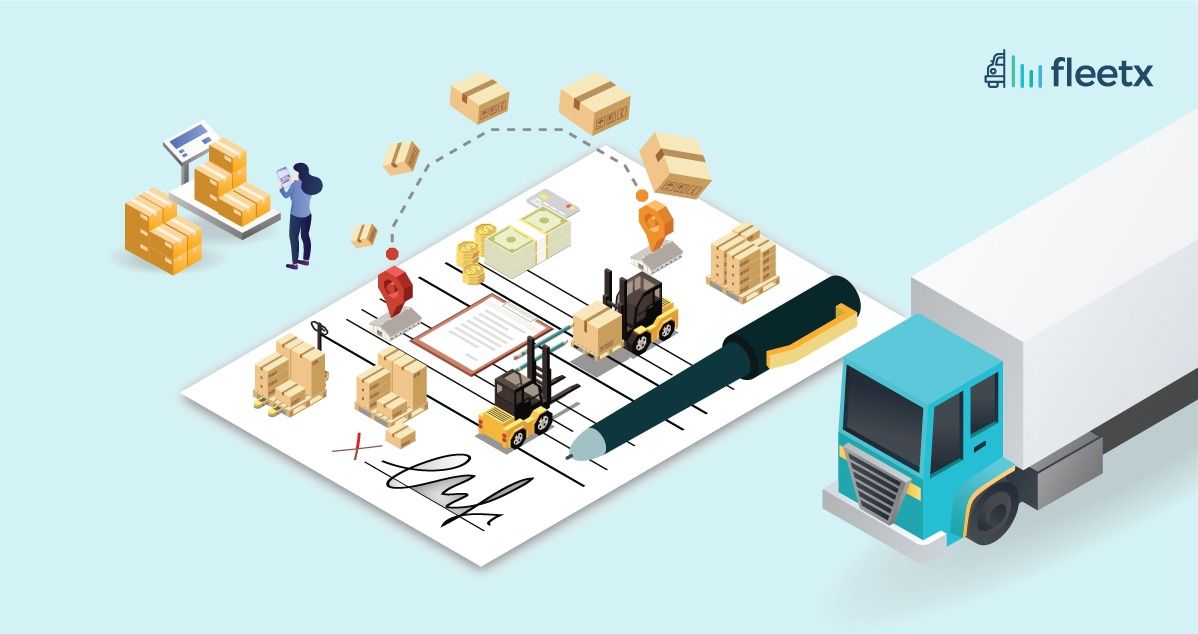
A freight contract is a legally binding agreement between a carrier and a shipper that outlines the terms and conditions of a shipment of goods. This agreement includes details such as the type of goods being shipped, the origin and destination of the shipment, the price of the shipment, and the delivery timeline. Freight contracts also specify the responsibilities of each party and any insurance or liability coverage required for the shipment.
Freight settlements refer to the process of settling the financial details between the carrier and the shipper once a shipment has been completed. This process involves calculating the cost of the shipment based on the terms agreed upon in the freight contract, including any additional costs that may have arisen during the shipment (e.g., fuel surcharges, customs fees, etc.). The final settlement is then used to reconcile the accounts of both parties.
Why Automate Freight Contracts and Settlements?
Automating freight contracts and settlements has become increasingly important as the transportation and logistics industry has grown and evolved. The manual process of creating, managing, and reconciling freight contracts and settlements can be time-consuming, prone to errors, and subject to disputes.
Automation can significantly improve the efficiency and accuracy of these processes, leading to several benefits including, improved efficiency, accuracy and transparency of freight operations. By reducing manual errors, reducing costs, and increasing customer satisfaction, automating freight contracts and settlements is a key strategy for businesses looking to improve their operations and competitiveness in the industry.
How is the transportation business evolving in terms of freight settlement and contract?
Digitalization has greatly impacted the transportation business by improving efficiency, reducing paper-based processes and increasing transparency. It has made freight settlements and contracts easier to manage, track, and enforce. The use of digital platforms and tools has also made it easier for shippers and carriers to connect and transact, thereby improving the overall experience for both parties. The evolution of the transportation business has seen a shift towards digitalization in terms of freight settlements and contracts. This includes:
Automated invoicing and payment systems: Electronic invoicing and payment systems have replaced manual processes, making settlements quicker and more efficient.
Real-time tracking and monitoring: The use of GPS and other tracking technologies has made it possible for freight companies to monitor their shipments in real-time, providing transparency and accountability.
Data-driven pricing: The use of data analytics has allowed transportation companies to price their services more accurately, based on demand, route, and other factors.
Increased collaboration: The rise of digital platforms has made it easier for transportation companies to collaborate with each other and with their customers, leading to more streamlined processes and better outcomes for all parties involved.
Freight Settlement Automation Roadmap: From Manual Processing to Intelligent Financial Control
Many logistics businesses understand the importance of automating freight settlements but are unsure where to begin. Implementing an automated freight settlement and contract management system is not just about replacing spreadsheets with software. It requires creating a connected workflow where procurement, transportation, finance, warehouse operations, and vendor management work from the same source of truth.
A phased implementation approach helps organizations minimize disruption while maximizing return on investment. Companies with large transporter networks, multiple warehouses, regional distribution centers, and nationwide operations often see the greatest improvements when automation is introduced gradually rather than through a complete process overhaul.
A modern freight settlement platform starts by digitizing existing transporter contracts and commercial agreements. Every lane rate, vehicle category, fuel surcharge, detention rule, unloading charge, incentive clause, and service-level agreement is stored digitally. Once contracts become standardized, every shipment can be validated automatically against approved commercial terms instead of relying on manual verification.
The next phase focuses on integrating shipment execution data. Information from transportation management systems (TMS), GPS tracking platforms, warehouse management systems (WMS), enterprise resource planning (ERP) software, proof-of-delivery systems, and e-way bill platforms is synchronized into a single workflow. Instead of finance teams waiting for documents from multiple departments, shipment information becomes available in real time.
Invoice validation then becomes significantly more efficient. Rather than reviewing every invoice manually, the software compares transporter invoices against:
- Approved freight contracts
- Shipment execution records
- Actual delivery dates
- Vehicle type
- Distance travelled
- Fuel surcharge policies
- Additional approved charges
- Delivery proof
- Purchase order references
- GST information
Any mismatch automatically generates an exception instead of allowing inaccurate invoices to proceed for payment.
Another critical step involves establishing automated approval workflows. Organizations can configure different approval hierarchies depending on invoice value, transporter category, business unit, customer account, or operational region. Low-risk invoices that perfectly match contractual conditions can move directly toward payment, while exceptions are routed to relevant stakeholders for review.
As organizations mature, predictive analytics becomes an important capability. Historical settlement data allows businesses to forecast transportation spending, negotiate better carrier contracts, identify underperforming vendors, and optimize freight procurement decisions based on measurable performance instead of assumptions.
For enterprises operating across India, especially those managing transportation between Delhi NCR, Gurgaon, Mumbai, Pune, Bengaluru, Chennai, Hyderabad, Ahmedabad, and other industrial corridors, automation provides centralized visibility across geographically distributed logistics operations. Finance teams no longer need to reconcile invoices from multiple regional offices independently because the entire settlement lifecycle becomes standardized.
The implementation roadmap generally delivers benefits in stages.
Phase 1: Digitization of freight contracts
Organizations eliminate paper-based commercial agreements while creating standardized digital contracts that are easier to manage and audit.
Phase 2: Automated invoice validation
Invoices are matched against contractual terms before payment approval, reducing manual effort and billing discrepancies.
Phase 3: Workflow automation
Digital approval chains reduce payment cycle times while increasing accountability and transparency.
Phase 4: Financial intelligence
Advanced reporting identifies trends in transportation costs, vendor performance, recurring disputes, freight leakage, and procurement opportunities.
Companies adopting this structured approach often report measurable improvements in invoice accuracy, payment turnaround, vendor satisfaction, financial governance, and procurement efficiency without requiring large increases in operational headcount.
Comparison: Manual Freight Settlement vs Automated Freight Settlement
| Parameter | Manual Freight Settlement | Automated Freight Settlement |
|---|---|---|
| Invoice Processing | Manual verification | Automatic validation against contracts |
| Contract Management | Paper files or spreadsheets | Centralized digital repository |
| Payment Accuracy | Depends on manual checks | Automated validation reduces errors |
| Invoice Approval | Email-based approvals | Configurable digital workflows |
| Exception Handling | Difficult to identify | Automatic exception alerts |
| Vendor Communication | Multiple follow-ups | Real-time settlement visibility |
| Financial Transparency | Limited reporting | Live dashboards and analytics |
| Audit Readiness | Manual documentation | Complete digital audit trail |
| Freight Cost Control | Reactive | Proactive through analytics |
| Scalability | Challenging with higher shipment volumes | Easily scales with business growth |
| ERP Integration | Usually manual | Native API integrations |
| Compliance Tracking | Time-consuming | Automated documentation and reporting |
| Settlement Cycle | Several days or weeks | Significantly faster processing |
| Operational Risk | High manual dependency | Reduced human intervention |
| Decision Making | Historical reporting | Real-time business intelligence |
Key Business Metrics That Improve with Automated Freight Settlement
While freight settlement automation is commonly associated with faster invoice processing, its long-term value lies in improving measurable business performance. Organizations that digitize freight contracts and payment workflows gain access to operational intelligence that was previously unavailable through manual processes.
Instead of focusing only on invoice approvals, businesses begin monitoring key performance indicators that directly influence logistics profitability and supply chain efficiency.
One of the most important metrics is invoice accuracy rate. Manual processing often results in duplicate invoices, incorrect freight rates, unauthorized surcharges, missing deductions, and calculation errors. Automated validation ensures every invoice follows predefined commercial agreements, significantly improving billing accuracy.
Payment turnaround time is another critical indicator. Faster settlements improve transporter relationships because vendors receive timely payments without repeated follow-ups. Reliable payment cycles often strengthen long-term carrier partnerships and improve service quality.
Dispute resolution time also decreases substantially. Since contracts, shipment records, delivery confirmations, invoices, and approval histories are connected digitally, operations and finance teams can identify discrepancies almost immediately.
Businesses also benefit from improved freight spend visibility. Instead of reviewing transportation costs monthly or quarterly, management gains access to live dashboards showing expenditure by region, transporter, customer, vehicle category, lane, warehouse, and business unit.
Vendor performance becomes easier to evaluate through objective metrics rather than anecdotal feedback.
Examples include:
- Invoice accuracy percentage
- On-time delivery rate
- Average settlement cycle
- Dispute frequency
- Average freight cost per shipment
- Route-wise profitability
- Contract compliance percentage
- Vendor utilization
- Payment turnaround time
- Exception rate
These insights help procurement teams negotiate stronger commercial agreements during contract renewals because pricing decisions are supported by historical performance data.
Another valuable metric is freight leakage.
Freight leakage refers to transportation expenses that exceed approved contractual commitments due to billing mistakes, duplicate invoices, unauthorized accessorial charges, or poor commercial governance.
Automation identifies these leakages before payments are processed.
Companies managing thousands of monthly shipments often discover recurring cost patterns that were previously hidden within manual workflows.
For example, analytics may reveal:
- Specific routes generating unusually high detention costs
- Certain transporters consistently submitting disputed invoices
- Vehicle categories creating avoidable overspending
- Seasonal pricing fluctuations
- Warehouses with longer invoice approval cycles
- Regions producing higher freight exceptions
These insights support strategic decision-making across finance, procurement, transportation, and executive leadership.
Another increasingly important metric is contract compliance.
As organizations expand, maintaining consistency across hundreds of transporter agreements becomes difficult. Automated settlement ensures invoices follow the latest approved contracts rather than outdated commercial terms, reducing compliance risk while simplifying internal and external audits.
Organizations implementing intelligent freight settlement often experience improvements in:
- Financial governance
- Cash flow planning
- Working capital utilization
- Procurement negotiations
- Vendor accountability
- Operational visibility
- Transportation budgeting
- Supply chain predictability
Instead of functioning as a back-office finance activity, freight settlement becomes an important contributor to overall logistics optimization.
Industry Applications of Automated Freight Settlement Across Different Sectors
Although automated freight settlement is commonly associated with transportation companies, its benefits extend across nearly every industry that relies on organized logistics operations. Different industries face unique freight billing challenges, making automation valuable in different ways.
Manufacturing companies manage continuous inbound raw material movements alongside outbound finished goods distribution. They often work with multiple transport vendors, plants, warehouses, and customer delivery locations. Automated settlement ensures freight invoices accurately reflect negotiated contracts across every manufacturing location while simplifying financial reconciliation.
FMCG businesses operate under extremely high shipment frequencies with strict delivery schedules. Since thousands of deliveries occur daily, manual invoice verification becomes impractical. Automation accelerates settlements while reducing billing errors that can accumulate significantly over large shipment volumes.
Retail and e-commerce organizations benefit from freight automation because they manage first-mile, middle-mile, and last-mile transportation simultaneously. Settlement systems help validate freight charges across multiple logistics partners while improving visibility into transportation costs associated with regional fulfillment centers.
Automotive manufacturers depend on synchronized inbound logistics for production continuity. Delays in freight settlements can impact vendor relationships and transportation availability. Automated contract validation enables consistent payment cycles while maintaining transparency across complex supplier ecosystems.
Pharmaceutical companies require high levels of documentation, regulatory compliance, and shipment traceability. Automated settlement platforms maintain comprehensive digital records, supporting audit readiness while reducing administrative workload.
Cement, steel, mining, chemicals, construction materials, and infrastructure businesses typically transport heavy bulk cargo where freight represents a substantial percentage of overall logistics expenditure. Automated settlement helps verify weight-based billing, route pricing, loading charges, unloading costs, detention calculations, and distance validations with greater precision.
Third-party logistics providers (3PLs) gain additional advantages because they simultaneously manage contracts with customers and transporters. Automation enables accurate margin calculations, customer billing reconciliation, transporter settlements, and service-level monitoring from a centralized platform.
Cold chain logistics companies handling food, dairy, pharmaceuticals, and temperature-sensitive cargo also benefit from digital settlement because delivery conditions, equipment usage, and specialized transportation charges can be incorporated into automated validation rules.
As Indian logistics networks continue expanding through multimodal transportation, digital freight corridors, GST-driven supply chain optimization, and increasing e-commerce demand, automated freight settlement is evolving from a financial automation tool into a strategic logistics capability.
Whether a company operates locally within Delhi NCR, manages regional distribution from Gurgaon or Mumbai, oversees manufacturing logistics in Pune and Bengaluru, or coordinates nationwide transportation networks, intelligent freight settlement provides greater operational consistency, financial transparency, and data-driven decision-making that supports long-term business growth.
To conclude
The transportation industry has undergone a shift towards digitalization in freight settlements and contracts, with the adoption of automated invoicing and payment systems, smart contracts, real-time tracking and monitoring, data-driven pricing, and increased collaboration. These advancements improve efficiency, accuracy, and transparency in the freight process, reducing manual errors, costs, and disputes. Automation is a key strategy for businesses looking to stay competitive in the industry.
FAQs on Automated Freight Settlement and Contracts
What is automated freight settlement and contract management in logistics?
Automated freight settlement and contract management is a digital process that helps shippers, transporters, 3PL companies, and enterprise logistics teams manage freight contracts, invoice validation, rate agreements, deductions, claims, and payments with reduced manual effort. Instead of checking every freight bill manually against transporter contracts, route rates, fuel clauses, detention charges, loading-unloading terms, and delivery proofs, automation systems verify the data digitally and flag mismatches.
For Indian logistics operations, this is especially useful because freight rates often vary by route, vehicle type, lane, city, fuel cost, vendor, and service-level agreement. Companies operating across Delhi NCR, Gurgaon, Mumbai, Bengaluru, Pune, and pan-India routes usually deal with multiple transporters and complex billing cycles. Automated settlement software helps reduce invoice disputes, prevent overbilling, improve payment accuracy, and create a clear audit trail for every transaction.
Why should businesses in India automate freight contracts and settlements?
Businesses in India should automate freight contracts and settlements because manual freight billing is time-consuming, error-prone, and difficult to scale. Logistics teams often handle multiple vendors, shipment proofs, vehicle placement charges, detention fees, fuel adjustments, route deviations, loading charges, and payment approvals. When these processes are managed through spreadsheets or email, disputes and delays become common.
Automation improves freight payment accuracy by matching invoices with approved contracts, shipment data, proof of delivery, rate cards, and agreed commercial terms. For businesses in Delhi, Gurgaon, Mumbai, Bengaluru, Pune, and other logistics hubs, this can help improve transporter relationships and reduce working capital blockage caused by delayed settlements. It also gives finance and operations teams better visibility into pending invoices, disputed bills, and vendor-wise payment status.
For companies with high shipment volumes, automated freight settlement can become one of the best ways to reduce leakage, improve compliance, and make logistics operations more transparent.
How much does automated freight settlement software cost in India?
The cost of automated freight settlement software in India depends on shipment volume, number of transporters, contract complexity, integrations, modules, and level of customization required. For small and mid-sized logistics operations, basic digital freight settlement solutions may start from around ₹25,000 to ₹75,000 per month. For enterprise-grade transport management systems with freight audit, contract management, invoice automation, ERP integration, GPS data, vendor dashboards, and analytics, pricing can range from ₹1 lakh to ₹5 lakh+ per month.
Companies in Delhi NCR, Gurgaon, Mumbai, Bengaluru, and Pune often require customized workflows because they manage multiple plants, warehouses, transport vendors, and regional freight contracts. In such cases, pricing is usually quote-based. The total cost may include software subscription, implementation, data migration, API integration, training, and support.
While the upfront cost may vary, businesses usually evaluate ROI based on reduced billing errors, lower manual workload, faster payment cycles, fewer disputes, better freight visibility, and improved vendor compliance.
What are the best features to look for in freight settlement software?
The best freight settlement software should include contract digitization, automated invoice matching, freight audit, rate-card validation, proof-of-delivery mapping, transporter-wise billing, exception management, approval workflows, and real-time settlement tracking. These features help logistics and finance teams verify whether every freight invoice matches the agreed contract terms before payment is released.
For businesses in India, the software should also support lane-based rates, vehicle-type pricing, fuel surcharge rules, detention charges, loading-unloading costs, multi-location billing, GST-ready invoice workflows, and ERP integration. Companies operating in Delhi NCR, Gurgaon, Mumbai, Bengaluru, and Pune should also look for dashboards that compare transporter performance, billing accuracy, dispute frequency, payment cycle time, and route-wise cost trends.
Top freight settlement platforms also provide audit logs, role-based access, automated alerts, and analytics for better decision-making. A strong system should not only process invoices faster but also help companies identify cost leakages and improve long-term freight procurement strategy.
How does automated freight settlement reduce invoice disputes?
Automated freight settlement reduces invoice disputes by validating each invoice against pre-approved freight contracts, shipment records, delivery proofs, rate cards, and agreed service terms. In manual systems, disputes often arise because transporters and shippers may calculate charges differently or rely on scattered data from emails, spreadsheets, physical PODs, and verbal approvals.
An automated system creates a single source of truth. It checks whether the billed route, vehicle type, shipment weight, distance, detention time, fuel surcharge, and additional charges match the contract. If there is a mismatch, the system flags it before the invoice reaches final approval. This helps both the logistics and finance teams resolve issues quickly.
For high-volume logistics hubs such as Delhi NCR, Gurgaon, Mumbai, Bengaluru, and Pune, invoice disputes can significantly delay transporter payments. Automation helps reduce back-and-forth communication, improves transparency, and builds stronger vendor relationships. It also gives management clear visibility into recurring dispute patterns and cost leakage areas.
Is automated freight settlement useful for companies in Delhi NCR and Gurgaon?
Yes, automated freight settlement is highly useful for companies in Delhi NCR and Gurgaon because these regions are major logistics, manufacturing, warehousing, e-commerce, automotive, FMCG, and distribution hubs. Businesses here often manage large transporter networks, intercity dispatches, regional routes, last-mile movements, plant-to-warehouse transfers, and vendor-specific freight contracts.
In Delhi NCR and Gurgaon, freight billing can become complex due to route variations, delivery timelines, toll charges, detention, vehicle placement delays, and multiple transporter agreements. Automated freight settlement software helps companies verify invoices faster, reduce manual checking, and ensure that every bill aligns with approved commercial terms.
For enterprises looking for the best transport management and freight settlement solutions in Gurgaon or Delhi NCR, important features include automated contract validation, transporter dashboards, digital proof-of-delivery linkage, exception alerts, ERP integration, and payment tracking. The cost can vary widely, but businesses with frequent dispatches may see strong ROI through reduced billing errors and faster settlement cycles.
How can Mumbai-based logistics and supply chain companies benefit from freight automation?
Mumbai-based logistics and supply chain companies can benefit from freight automation by improving settlement accuracy, reducing invoice delays, and gaining better visibility across port, warehouse, factory, and distribution movements. Mumbai is a major commercial and logistics hub, with businesses managing container movements, regional distribution, import-export shipments, vendor contracts, and high-volume transportation workflows.
Manual freight settlement in Mumbai can be challenging because shipments may involve multiple charges such as port-related costs, detention, route changes, tolls, handling charges, vehicle type variations, and transporter-specific commercial terms. Automated settlement software helps verify these charges against approved contracts and shipment data before payments are processed.
For companies searching for top freight settlement software in Mumbai, the best solution should support contract management, invoice audit, transporter billing, GST-compliant workflows, real-time dashboards, and integration with ERP or TMS platforms. Depending on company size and shipment volume, pricing may range from entry-level monthly subscriptions to customized enterprise plans.
What is the role of automated freight contracts in Bengaluru and Pune logistics operations?
Automated freight contracts play an important role in Bengaluru and Pune logistics operations because both cities have strong manufacturing, technology, automotive, e-commerce, and supply chain ecosystems. Companies in these cities often work with multiple transport vendors and need clear digital control over freight rates, contract terms, billing conditions, and payment workflows.
With automated freight contract management, businesses can digitize lane-wise rates, vehicle-wise charges, fuel clauses, service-level agreements, penalties, detention rules, and approval conditions. Once these contracts are stored digitally, every freight invoice can be checked automatically against the agreed terms. This reduces manual errors and makes freight settlement more transparent.
For Bengaluru and Pune companies, especially those handling frequent dispatches or multi-city distribution, automation can improve cost control, reduce vendor disputes, and speed up finance approvals. It also supports better forecasting by showing which routes, vendors, and contract terms are creating the highest logistics costs.
Can automated freight settlement software help reduce logistics costs?
Yes, automated freight settlement software can help reduce logistics costs by preventing overbilling, identifying duplicate invoices, reducing manual errors, and improving contract compliance. Freight cost leakage often happens when invoices are approved without detailed checks against rate cards, delivery proofs, contract clauses, and actual shipment data.
Automation helps businesses detect mismatches before payment. For example, if a transporter bills for a higher vehicle type, incorrect lane rate, extra detention, or unapproved surcharge, the system can flag the exception for review. Over time, analytics can also show which transporters, routes, or contract terms are causing repeated cost overruns.
For Indian companies operating in Delhi, Gurgaon, Mumbai, Bengaluru, Pune, and pan-India logistics networks, even a small percentage reduction in billing errors can lead to significant savings. Apart from direct cost reduction, companies also save time by reducing manual invoice checks, email follow-ups, and dispute resolution efforts. This makes automated freight settlement one of the best tools for improving logistics financial control.
Who should use automated freight settlement and contract management software?
Automated freight settlement and contract management software should be used by manufacturers, FMCG companies, e-commerce businesses, retail distribution networks, 3PL providers, transporters, large enterprises, and companies with frequent freight billing. Any business that manages multiple transport vendors, route-wise freight rates, shipment approvals, invoices, and payment cycles can benefit from automation.
It is especially useful for companies operating across India, including Delhi NCR, Gurgaon, Mumbai, Bengaluru, Pune, and other major logistics corridors. Businesses with complex freight contracts often face billing disputes, delayed payments, manual reconciliation issues, and limited visibility into transportation costs. Automation helps solve these challenges by connecting contract terms, shipment execution, invoice validation, and payment approvals in one workflow.
Companies should consider adopting such software when freight volumes increase, vendor disputes become frequent, invoice approval takes too long, or finance teams struggle to verify transport bills accurately. For growing logistics operations, automated settlement can improve accuracy, transparency, and scalability.