
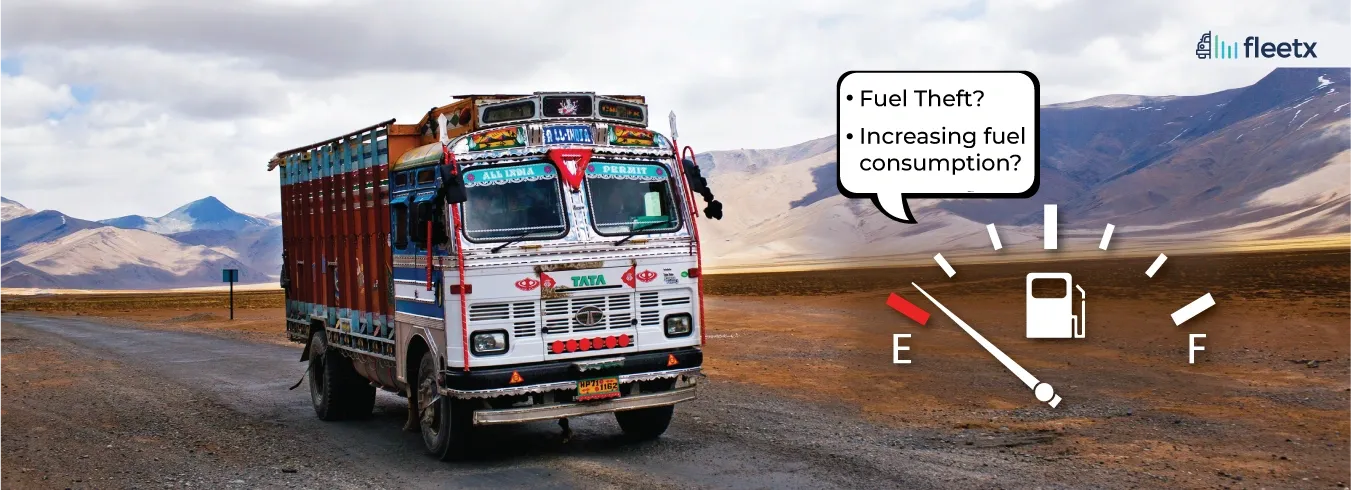
You might have not discussed fuel consumption with your driver, because you trust them, but are you aware of the loss associated with it?
Loss increases when your fleet experiences a high fuel consumption and you don't know about it. It might be possible due to the number of different reasons: vehicles need maintenance, drivers performing harsh driving, unnecessary idling vehicle, or drivers could be stealing fuel. If this fuel consumption issue does not improve even after vehicle timely maintenance, this could be a sign of fuel theft either by your drivers or by someone else while on parking.
Fuel theft is a critical problem in the logistics sector which almost costs a minimum of 7 percent of fuel budget and the inability to prevent this could lead to significant financial loss to your business. Here, we are highlighting some methods to reduce fuel theft with the help of technology.
1. Educate your drivers2. Keep your fleet yard secure
3. Invest in fuel management software
4. Keep track on odometer tampering
5. Install fuel level sensor
1. Educate your drivers
The business should have clear guidelines regarding fueling and fuel purchasing and every driver should know about these guidelines. The driver should be aware that failing to follow these guidelines and misusing the fuel will cause serious consequences to them. Explain to them that the company has already implemented a fuel monitored system which monitors fuel continuously. Also, educate them about basic vehicle security, such as parking the vehicle securely at night and making sure fuel tanks are locked.
2. Keep your fleet yard secure
Fuel theft isn’t always because of your drivers; sometimes, outside thieves may break into your yard to siphon fuel from your vehicles. You need to keep your yard secured with CCTV cameras around every corner to keep an eye on every entry and exit point of your yard.
3. Invest in fuel management software
If you own a fleet business, it is very difficult to record fuel consumption and fuel-related expenses manually and you will always find some inefficiencies in the data. Also, you would not be able to track the mileage of all vehicles in real-time. Without a proper fuel management system in place, there’s a good chance your fuel inventory is at great risk. Therefore it is highly recommended to invest in fleet management software which provides real-time visibility of fuel consumption of your fleet. With the software, you have the complete fuel usage report of all the fleet in real-time and you will be alerted every time whenever your fuel level reduces sharply.
4. Keep track on odometer tampering
Odometer tampering ('Firki') is the common practice of fuel theft in the transportation industry. It is done by drivers to save money on fuel consumption by showing less mileage and it is very important for fleet owners to tackle such types of fraud. Tampering not only cost you more in fuel but also damages your vehicle's speedometer. But with Fleetx, you don't have to worry about such frauds anymore because we have our unique way to filter out such cases and will alert you whenever any tampering happens with vehicle odometer.
5. Install fuel level sensor
The sensor keeps you informed of the real-time fuel level inside the tank with great accuracy. It gives you the current fuel volume and change in volume (refueling or draining) of fuel in the tank. This way, you have always keep an eye on your fuel inventory and you would get alert whenever your fuel sharply declines which might be because of fuel theft.
These are all the necessary and precautionary steps to keep track of your fuel inventory and save that 7 % from your fuel budget.
The Hidden Business Cost of Fleet Fuel Theft: Why Prevention Is About More Than Saving Fuel
Many fleet owners associate fuel theft only with the direct loss of diesel from a vehicle's tank. However, the financial impact extends far beyond the cost of the missing fuel. Every litre lost can trigger a chain reaction that affects operational efficiency, vehicle utilization, customer satisfaction, and long-term profitability.
As fleet sizes increase, even seemingly minor fuel discrepancies across multiple vehicles can accumulate into substantial monthly and annual losses. This is why leading transport businesses now view fuel theft prevention as a strategic business initiative rather than simply a security measure.
Fuel Theft Creates More Than Just Fuel Loss
The visible cost is the stolen fuel, but the hidden operational costs are often much higher.
These indirect impacts include:
- Increased operating costs due to higher fuel consumption.
- Reduced fleet profitability because fuel is one of the largest transportation expenses.
- Delays caused by unexpected refuelling requirements.
- Poor trip planning resulting from inaccurate fuel availability.
- Additional administrative effort spent investigating fuel discrepancies.
- Reduced trust between fleet managers and drivers when data is unavailable.
- Difficulty forecasting transportation budgets accurately.
- Lower overall fleet productivity due to inefficient resource utilization.
When these issues occur repeatedly across an entire fleet, they can significantly reduce operational margins even if each individual fuel theft incident appears relatively small.
Understanding the Different Types of Fuel Loss in Commercial Fleets
Not every increase in fuel consumption is caused by theft. Identifying the actual source of fuel loss helps fleet operators take the right corrective action instead of making assumptions.
| Type of Fuel Loss | Typical Cause | Operational Impact |
|---|---|---|
| Unauthorized fuel theft | Fuel removed from the tank by internal or external parties | Direct financial loss |
| Fuel wastage | Excessive idling, harsh driving, speeding, unnecessary detours | Increased fuel expenses and lower mileage |
| Mechanical fuel loss | Poor engine health, injector issues, tyre pressure, maintenance delays | Reduced fuel efficiency and higher maintenance costs |
| Process-related loss | Inaccurate fuel records, billing errors, manual reporting mistakes | Poor inventory control and unreliable fuel data |
Understanding these categories allows businesses to investigate fuel anomalies more accurately instead of attributing every discrepancy to theft.
Why Fuel Theft Prevention Is a Business Performance Strategy
Modern fleet management is increasingly measured through operational KPIs rather than isolated incidents. Fuel performance directly influences several important business metrics that determine profitability and customer service quality.
Some of the key performance indicators affected by fuel losses include:
- Cost per kilometre travelled.
- Fuel consumption per vehicle.
- Fleet operating cost.
- Vehicle utilization rate.
- On-time delivery performance.
- Fleet profitability.
- Driver productivity.
- Return on fleet assets.
When fuel losses remain uncontrolled, these metrics gradually deteriorate, making it difficult for businesses to identify where operational improvements are needed.
Reactive vs Proactive Fuel Management
Many businesses still investigate fuel theft only after noticing unusually high fuel bills. Modern fleet operations, however, focus on identifying risks before they become costly problems.
| Reactive Approach | Proactive Approach |
|---|---|
| Investigates losses after they occur | Continuously monitors operational performance |
| Depends heavily on manual verification | Uses real-time operational data for faster decision-making |
| Difficult to identify recurring patterns | Helps detect trends before losses escalate |
| Delayed corrective action | Enables quicker operational response |
| Focuses only on recovering losses | Focuses on preventing future losses and improving efficiency |
A proactive approach enables fleet managers to shift from problem-solving to continuous operational improvement.
Industries Where Fuel Monitoring Delivers Significant Operational Value
Fuel theft and inefficient fuel usage affect nearly every industry operating commercial vehicles. However, the operational impact can vary depending on fleet type and business model.
Examples include:
- Long-haul transportation where vehicles travel across multiple states and fuel expenses represent a major share of operating costs.
- Construction fleets, where heavy equipment and on-site vehicles consume large volumes of diesel each day.
- Mining operations, where remote locations make fuel monitoring and inventory management more challenging.
- FMCG and retail distribution, where maintaining delivery schedules and controlling transportation costs are equally important.
- Cold chain logistics, where refrigerated vehicles rely on consistent fuel availability to protect temperature-sensitive cargo.
- Oil and gas logistics, where vehicle uptime and fuel accountability are critical for uninterrupted operations.
Because each industry faces different operational challenges, businesses increasingly require data-driven fuel management practices that align with their specific transportation requirements.
Building a Long-Term Fuel Management Strategy
Preventing fuel theft should be part of a broader fleet optimization strategy rather than a standalone initiative. Businesses that consistently improve fuel performance typically combine operational policies, regular vehicle maintenance, driver accountability, and technology-enabled monitoring into a single management framework.
An effective long-term strategy should focus on:
- Establishing standardized fuel management procedures across the fleet.
- Regularly reviewing fuel consumption trends to identify unusual patterns.
- Improving operational visibility through centralized reporting.
- Monitoring fleet performance using measurable business KPIs.
- Conducting periodic audits of fuel usage and operational processes.
- Using data to support maintenance planning and operational decision-making.
- Continuously identifying opportunities to improve fuel efficiency across different vehicle categories.
By viewing fuel management as an ongoing operational discipline rather than simply a response to theft incidents, fleet operators can improve cost control, strengthen decision-making, and create a more efficient transportation operation over the long term.
Conclusion
Fuel theft is more than an isolated operational issue; it is a challenge that can gradually impact fleet efficiency, operating costs, and overall business performance. While practical measures such as driver awareness, secure parking, fuel monitoring, and regular oversight play an important role, long-term success comes from adopting a proactive, data-driven approach to fuel management. By combining operational best practices with continuous performance monitoring, fleet operators can improve fuel accountability, reduce unnecessary expenses, and make informed decisions that support sustainable business growth. Investing in effective fuel management today helps build a more efficient, transparent, and profitable fleet for the future.
Frequently Asked Questions
What is fleet fuel theft, and why is it a major challenge for transport businesses? ▼
Fleet fuel theft refers to the unauthorized removal, misuse, or manipulation of fuel intended for commercial vehicles. It can occur through fuel siphoning, fake refuelling bills, fuel card misuse, odometer tampering, unauthorized vehicle usage, or gradual fuel drainage that often goes unnoticed. Since fuel is one of the largest operating expenses for logistics companies, transporters, fleet owners, and supply chain businesses, even small losses across multiple vehicles can significantly impact profitability over time.
In India, fuel theft remains a concern for businesses operating fleets in Delhi, Delhi NCR, Gurgaon, Mumbai, Bengaluru, Pune, and other logistics hubs where trucks travel long interstate routes. Long-haul fleets, mining companies, construction firms, FMCG distributors, and cold-chain operators are particularly vulnerable because vehicles spend extended periods on highways and remote locations.
Modern fleet operators increasingly rely on technology rather than manual monitoring to reduce these risks. GPS tracking, fuel monitoring systems, telematics platforms, and real-time fuel sensors provide continuous visibility into vehicle movement and fuel consumption, allowing businesses to identify unusual fuel losses quickly.
Preventing fuel theft is not only about recovering stolen diesel. It also helps businesses:
- Reduce unnecessary fuel expenses.
- Improve fleet profitability.
- Increase operational transparency.
- Improve driver accountability.
- Enhance maintenance planning.
- Support data-driven fleet management decisions.
- Maintain consistent delivery schedules.
For companies managing small fleets as well as enterprises operating hundreds of commercial vehicles, controlling fuel theft contributes directly to lower operating costs and better fleet efficiency.
How can businesses identify fuel theft before it causes significant financial losses? ▼
Fuel theft rarely happens as one large incident. More commonly, businesses experience repeated small losses that gradually increase operating costs. Detecting these issues early requires monitoring vehicle performance, fuel consumption trends, driver behaviour, and operational data instead of relying only on fuel receipts.
Fleet managers should investigate whenever they notice:
- Unexpected reductions in fuel levels.
- Higher-than-normal fuel consumption.
- Repeated refuelling that exceeds expected requirements.
- Unusual idling time.
- Vehicle route deviations.
- Inconsistent mileage records.
- Recurring discrepancies involving the same vehicle.
- Higher fuel expenses despite similar operational workloads.
Businesses in Delhi NCR, Gurgaon, Mumbai, Bengaluru and Pune increasingly use fuel monitoring software integrated with GPS vehicle tracking to identify these warning signs automatically. Instead of reviewing paper fuel logs at the end of the month, operators receive near real-time alerts whenever abnormal fuel activity is detected.
Combining fuel data with maintenance history, route information, and driver performance also helps distinguish genuine mechanical issues from possible fuel theft. This proactive approach reduces investigation time, improves operational visibility, and enables fleet managers to respond before losses accumulate across the fleet.
What are the best fuel management systems for preventing fleet fuel theft in India? ▼
The best fuel management system depends on fleet size, industry, operational complexity, and reporting requirements. Businesses should look for platforms that provide complete fleet visibility instead of focusing solely on fuel tracking.
A modern fuel management solution should ideally include:
- Real-time fuel level monitoring.
- GPS vehicle tracking.
- Fuel theft alerts.
- Driver behaviour monitoring.
- Trip and route analytics.
- Vehicle maintenance tracking.
- Comprehensive reporting dashboards.
- Cloud-based access for fleet managers.
- Integration with transport management or ERP systems.
Transport companies operating across India, especially in Delhi, Gurgaon, Mumbai, Pune and Bengaluru, often evaluate leading fleet management software based on scalability, implementation support, ease of deployment, reporting capabilities, customer service, and total ownership cost rather than software price alone.
The right solution should not only reduce fuel theft but also improve fuel efficiency, fleet utilization, maintenance planning, compliance, and operational productivity. Businesses managing growing fleets generally benefit from selecting a platform that supports future expansion while offering centralized monitoring across multiple branches, warehouses, and distribution centres. Choosing software with strong analytics and automated reporting can significantly improve decision-making while reducing manual administrative work.
How much does a fuel monitoring system cost in India for commercial fleets? ▼
The cost of implementing a fuel monitoring system in India depends on several factors, including fleet size, vehicle type, sensor requirements, software features, installation complexity, and ongoing support. Businesses often compare implementation costs with the amount they lose annually due to fuel theft, excessive idling, and inefficient fuel consumption. In many cases, the return on investment is achieved through improved fuel efficiency and reduced operational losses rather than fuel theft prevention alone.
As a general estimate, businesses may expect:
- Small fleets (5–20 vehicles): approximately ₹2,000–₹8,000 per vehicle for hardware, depending on sensors and telematics equipment.
- Medium fleets (20–100 vehicles): implementation costs usually reduce on a per-vehicle basis because of volume deployment.
- Large enterprise fleets: pricing is generally customised based on fleet size, reporting requirements, integrations, and implementation scope.
Monthly software subscription charges may also apply depending on features such as GPS tracking, analytics, driver behaviour monitoring, maintenance management, and cloud reporting.
Businesses operating in Delhi, Delhi NCR, Gurgaon, Mumbai, Bengaluru and Pune should compare vendors based on total value rather than the lowest price. Factors such as installation quality, customer support, reporting accuracy, uptime, scalability, and ease of use have a greater long-term impact than upfront implementation costs. A reliable fuel management platform should help reduce unnecessary fuel expenses while improving operational visibility and fleet efficiency across all commercial vehicles.
Which industries benefit the most from fuel theft prevention and fuel monitoring solutions? ▼
Although every fleet-dependent business consumes fuel, some industries experience significantly greater financial impact from fuel theft and fuel wastage because of high vehicle utilisation, long travel distances, or continuous operations. For these organisations, effective fuel management becomes an essential part of improving profitability and operational efficiency.
Industries that benefit the most include:
- Road transportation and logistics operating interstate freight vehicles.
- Construction companies using heavy commercial vehicles and earthmoving equipment.
- Mining operations where vehicles operate in remote locations.
- FMCG and retail distribution requiring timely deliveries across multiple cities.
- Cold chain logistics transporting temperature-sensitive products.
- Oil and gas transportation with high fuel dependency.
- Municipal service providers managing waste collection and public utility vehicles.
- Passenger transportation operators running buses and employee transport fleets.
Across logistics hubs such as Delhi, Gurgaon, Mumbai, Bengaluru and Pune, businesses increasingly deploy integrated fleet management systems that combine GPS tracking, fuel monitoring, maintenance planning, and operational analytics. Rather than focusing solely on preventing theft, these organisations aim to optimise fuel efficiency, reduce downtime, improve vehicle utilisation, and gain better control over transportation costs. The result is a more transparent and data-driven fleet operation that supports long-term business growth.
Why are fuel monitoring systems becoming increasingly popular among fleet operators in Delhi, Gurgaon and Mumbai? ▼
Delhi NCR, Gurgaon and Mumbai are among India's busiest logistics corridors, handling thousands of commercial vehicle movements every day. Fleet operators in these regions face challenges such as traffic congestion, long operating hours, rising fuel prices, multiple delivery points, and increasing pressure to improve transportation efficiency. These operational conditions make accurate fuel monitoring more valuable than ever.
Businesses are increasingly adopting fuel monitoring systems because they help provide:
- Greater visibility into daily fuel consumption.
- Real-time monitoring across multiple vehicles.
- Better driver accountability.
- Reduced manual record-keeping.
- Improved fleet utilisation.
- Faster investigation of abnormal fuel losses.
- Better operational planning using historical reports.
- Centralised management for geographically distributed fleets.
Large logistics companies operating warehouses in Gurgaon, manufacturing units around Delhi NCR, distribution centres in Mumbai, or multi-city operations across India particularly benefit from having one central platform for monitoring vehicles. As transportation businesses continue digitising operations, fuel monitoring systems have become part of broader fleet management strategies that improve productivity, operational transparency, and business decision-making while helping organisations control one of their largest recurring operating expenses.
What features should businesses look for when choosing the best fleet fuel management software? ▼
Selecting the best fleet fuel management software involves more than comparing feature lists. Businesses should evaluate whether the solution can support both current operational needs and future fleet expansion. A good platform should improve visibility, reduce manual work, minimise fuel losses, and provide actionable insights that help lower operating costs.
Before making a decision, fleet owners should consider whether the software offers:
- Real-time fuel level monitoring and consumption tracking.
- GPS vehicle tracking integrated with fuel data.
- Fuel theft alerts and anomaly detection.
- Driver behaviour analysis, including idling, harsh acceleration, and overspeeding.
- Trip history and route optimisation insights.
- Automated fuel consumption reports and dashboards.
- Vehicle maintenance scheduling and service reminders.
- Cloud-based access for multi-location fleet management.
- Mobile applications for managers and field teams.
- Integration with ERP, transport management, or accounting systems.
- Role-based user access and data security.
- Scalable architecture suitable for growing fleets.
Businesses operating in Delhi, Delhi NCR, Gurgaon, Mumbai, Bengaluru, and Pune often prefer software that supports multiple branches and provides centralised reporting across all locations. The ideal solution should not only help prevent fuel theft but also improve fleet utilisation, maintenance planning, compliance, and operational efficiency. Choosing software based on long-term business value rather than only upfront pricing generally delivers better returns over the life of the fleet.
How can small and medium fleet owners reduce fuel theft without significantly increasing operating costs? ▼
Many small and medium transport businesses assume that advanced fuel management solutions are designed only for large enterprises. However, modern fleet management technology is increasingly available for fleets of every size, making fuel monitoring affordable and scalable. Even companies operating 5–20 commercial vehicles can benefit from better visibility into fuel consumption and operational performance.
Small fleet owners can begin by adopting a structured fuel management process that includes:
- Maintaining consistent fuel purchase records.
- Monitoring fuel consumption vehicle-wise.
- Comparing expected versus actual mileage.
- Scheduling preventive vehicle maintenance.
- Training drivers on fuel-efficient driving practices.
- Installing GPS tracking with fuel monitoring where appropriate.
- Reviewing monthly operational reports to identify unusual patterns.
- Conducting periodic audits of fuel expenses.
For transport businesses in Delhi, Gurgaon, Mumbai, Bengaluru, Pune, and other rapidly growing logistics markets, gradual implementation is often the most cost-effective strategy. Businesses can start with high-utilisation vehicles and expand deployment as they experience measurable improvements. By focusing on operational discipline alongside technology adoption, small fleet operators can improve fuel efficiency, reduce avoidable losses, strengthen accountability, and build a more profitable transportation business without making large upfront investments.
Is investing in fuel theft prevention technology worth it for commercial fleet operators in India? ▼
For most commercial fleet operators, investing in fuel theft prevention technology is a strategic business decision rather than simply an additional operating expense. Fuel typically represents one of the largest recurring costs in transportation, and even modest improvements in fuel efficiency can generate substantial savings over time. Beyond preventing theft, modern fuel management solutions help businesses improve operational visibility, streamline reporting, and make better fleet management decisions.
Fleet operators often experience value through:
- Lower fuel wastage and improved fuel efficiency.
- Greater transparency across vehicles, routes, and drivers.
- Reduced manual reporting and administrative effort.
- Improved maintenance planning based on operational data.
- Better utilisation of fleet assets.
- Enhanced budgeting and cost forecasting.
- Improved compliance with internal operational policies.
- Higher customer satisfaction through more reliable fleet operations.
Across India's major logistics hubs—including Delhi NCR, Gurgaon, Mumbai, Bengaluru, and Pune—many transport companies now consider fuel monitoring an essential component of digital fleet management. Rather than viewing these systems solely as theft prevention tools, businesses increasingly use them to optimise transportation costs, improve productivity, and support long-term operational growth. When implemented alongside good fleet management practices, fuel monitoring technology can deliver measurable operational and financial benefits that continue well beyond the initial investment.