
An effectively managed transportation and logistics sector has become extremely important in this rapidly expanding generation. A transport and logistics industry must routinely monitor all of its assets due to the rise of industries and the convergence of the world market. Transportation industries have to manage upcoming bookings, payments, general ledgers, and resources in addition to tracking and planning vehicle maintenance. The fact that some data is frequently manually kept in files makes audits and fixes more challenging due to inaccuracies and time consumption.
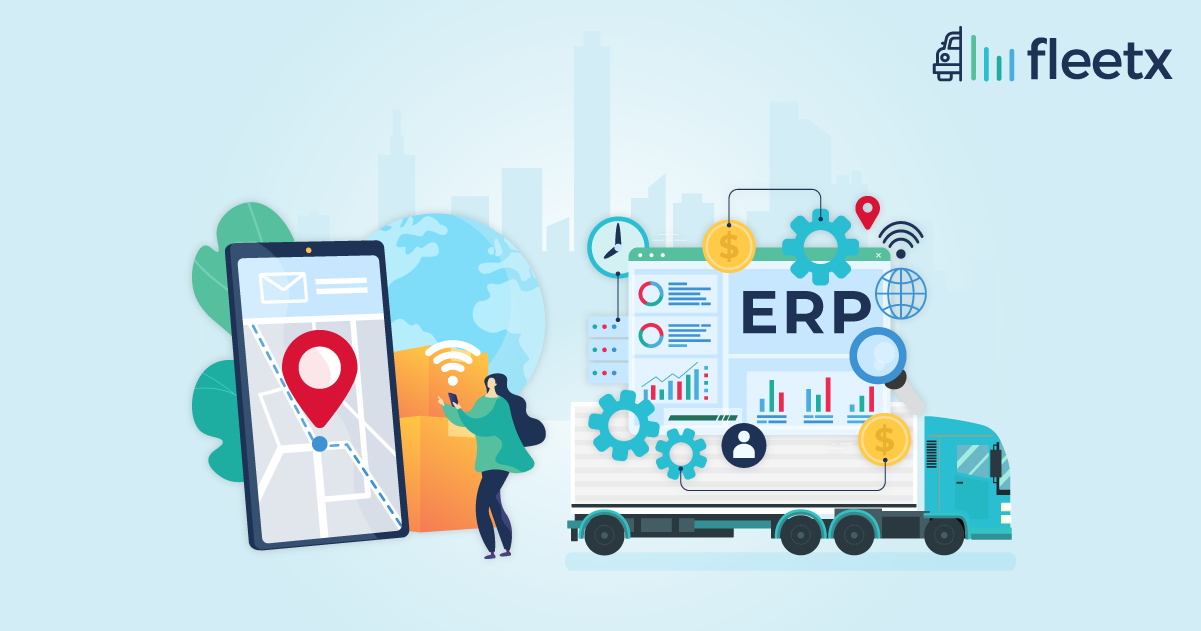
To manage all the databases on one platform with all the sections provided, enterprise resource planning software is the key to the management of all the resources. As its name suggests, ERP is a software that plans and provides all the data required for resource planning. To simplify work processes efficiently and effectively, Fleetx has come up with Fleetx Transporter ERP (Enterprise Resource Planning).
Fleetx Transporter ERP can handle all of the above roles while also providing a centralized and integrated solution for controlling and optimizing all areas of logistics and transportation operations. It can help transporters improve efficiency and reduce costs by automating and streamlining processes such as inventory management, order tracking, maintenance, driver salaries, toll charges, fuel charges, etc. Additionally, Fleetx Transporter ERP can provide real-time visibility into logistics and transportation operations, enabling businesses to quickly identify and address any issues that may arise.
As for now, if we keep aside the function of ERP and focus on what problems it actually does solve at the ground level of the transportation industry, we can analyse the importance it holds in making any business efficient. As an example, we all know that the transportation industry has rate charts prepared for all of its vehicles based on a chart that they decide on based on km, trip, load, and so on. Transporters provide Fleet Fare to the consignee and accept the contract based on the rate. Sounds very simple, right? But no, there is a lot more for the transporters to work on than we can actually think of. With all the trips, they have different kinds of vehicles, fleet fares, maintenance dates, service renewal dates, service charges, driver salaries, trip costs, fuel costs, toll charges, etc. After calculating all these expenses, a transporter gets to know the profitability of one driver, one trip, and one vehicle. Thus, managing all the data manually and systematically becomes difficult and inaccurate for the transporters.
ERP can be transporters' savior here, as it can help transporters manage all this data on one platform with all the options and segments available for making the proper database for each and every truck. All the data can be accessed at any time and maintained accurately with the help of ERP. This can help in keeping track of each and every trip with all the expenses included, and without any waste of time, it can generate your profitability, vehicle availability, per-truck profitability, yearly profit, monthly profit, per-trip profit, maintenance schedules, service renewals, etc.
Fleetx Transporter ERP can help transporters with Modules like:
- Real-time visibility: With real-time visibility into your operations, you can make informed decisions and respond quickly to changes in demand or supply.
- Automated dispatching: ERP software can help you optimize routes and reduce fuel costs by automating the dispatching process.
- Improved tracking: With real-time tracking, you can monitor the location and status of your vehicles, as well as the progress of shipments.
- Billing and invoicing: ERP software can help you automate the billing and invoicing process, reducing the time and effort required to process payments.
- Maintenance management: ERP software can help you keep track of your fleet maintenance schedules, thus reducing downtime and keeping your fleet on the road.
- Compliance management: ERP software can help you stay compliant with regulations such as IFTA, DOT, GST etc.
By using Fleetx ERP software, transportation and logistics companies can gain a competitive advantage by improving their operations and providing better service to their customers.
What Makes Transporter ERP a Strategic Asset in Modern Logistics?
A Transporter ERP (Enterprise Resource Planning) system is far more than a software application used for managing transportation records. In today's logistics environment, it serves as a centralized business platform that connects operations, finance, fleet management, maintenance, compliance, and customer service into a single ecosystem. As transportation businesses scale, relying on spreadsheets, manual records, and disconnected systems creates inefficiencies that directly affect profitability and customer satisfaction. Transporter ERP eliminates these silos by providing a unified view of the entire logistics operation.
The transportation and logistics industry is becoming increasingly complex. Fleet owners and transporters are expected to manage vehicle availability, freight rates, driver performance, customer expectations, fuel costs, maintenance schedules, compliance requirements, and profitability analysis simultaneously. Managing all these variables manually often leads to delayed decisions, inaccurate reporting, and operational inefficiencies. A Transporter ERP system addresses these challenges by consolidating all critical information into one platform, allowing businesses to make faster and more informed decisions.
Unlike standalone transportation tools that solve only a specific operational problem, ERP software provides end-to-end business visibility. Fleet managers can monitor vehicle utilization, trip profitability, maintenance schedules, fuel consumption, driver productivity, and financial performance without switching between multiple applications. This improves decision-making while reducing administrative effort.
For logistics businesses operating across India, especially in logistics hubs such as Delhi NCR, Gurgaon, Mumbai, Bengaluru, Pune, Chennai, Hyderabad, and Ahmedabad, ERP software has become increasingly important. Transportation networks are expanding, customer expectations are rising, and operational costs continue to increase. Businesses need technology that can help them improve efficiency while maintaining profitability. Transporter ERP provides the digital foundation required to achieve these objectives.
One of the most valuable aspects of a modern ERP system is real-time visibility. Managers no longer need to wait for end-of-day reports or manually compile information from different departments. Instead, they can access live operational data, allowing them to identify bottlenecks, address issues proactively, and optimize resource allocation.
Another critical advantage is process standardization. As transportation companies grow, maintaining consistency across branches, teams, and operations becomes challenging. ERP software establishes standardized workflows for trip creation, maintenance management, billing, compliance tracking, and customer communication. This consistency improves operational reliability and reduces errors.
ERP software also plays a significant role in improving customer experience. Customers increasingly expect accurate shipment information, timely updates, and transparent billing processes. By centralizing transportation data, ERP platforms enable transporters to provide better service levels and stronger customer relationships.
In an industry where margins are often under pressure, the ability to control costs and maximize asset utilization is crucial. Transporter ERP systems help businesses identify inefficiencies, optimize routes, reduce downtime, improve vehicle utilization, and enhance profitability. As a result, ERP software has evolved from an operational tool into a strategic business asset that supports long-term growth and competitive advantage.
Comparison Table: Traditional Transport Management vs Transporter ERP
| Parameter | Traditional Management Approach | Transporter ERP Approach |
|---|---|---|
| Data Storage | Physical files and spreadsheets | Centralized cloud platform |
| Fleet Visibility | Limited and delayed | Real-time visibility |
| Maintenance Tracking | Manual reminders | Automated scheduling and alerts |
| Driver Management | Paper-based records | Digital driver database |
| Billing Process | Manual invoice preparation | Automated invoice generation |
| Trip Profitability | Difficult to calculate | Instant profitability analysis |
| Compliance Monitoring | Manual document tracking | Automated compliance alerts |
| Fuel Management | Limited visibility | Fuel analytics and monitoring |
| Reporting | Time-consuming | Real-time dashboards |
| Scalability | Difficult as fleet grows | Designed for expansion |
| Decision Making | Reactive | Data-driven and proactive |
| Customer Service | Limited transparency | Enhanced shipment visibility |
How Transporter ERP Supports Digital Transformation in Indian Logistics
The Indian logistics industry is experiencing a significant transformation driven by technological advancements, growing customer expectations, infrastructure development, and increasing supply chain complexity. As transportation operations expand across regions, traditional methods of managing logistics are becoming insufficient for businesses that want to remain competitive. This shift has made digital transformation a strategic priority for transporters, fleet owners, and logistics service providers.
Transporter ERP plays a crucial role in this transformation by providing a centralized platform that connects operational, financial, and administrative processes. Instead of relying on disconnected spreadsheets, manual records, and multiple software tools, businesses can manage transportation operations from a single source of truth.
One of the primary advantages of ERP-driven digital transformation is improved visibility. Transporters gain access to real-time information about vehicle availability, trip progress, maintenance schedules, fuel consumption, driver performance, and profitability. This visibility enables faster decision-making and reduces the likelihood of operational disruptions.
Digital transformation also supports process standardization. As transportation businesses grow, maintaining consistent procedures across branches and regions becomes increasingly difficult. ERP systems help establish standardized workflows for dispatch management, invoicing, maintenance planning, compliance tracking, and customer communication.
For logistics companies operating in Delhi NCR, Gurgaon, Mumbai, Bengaluru, Pune, Chennai, and Hyderabad, digital transformation is becoming a necessity rather than an option. Customers expect faster deliveries, accurate shipment updates, transparent billing, and proactive communication. ERP software helps organizations meet these expectations while improving internal efficiency.
The future of logistics in India will increasingly depend on connected technologies such as telematics, IoT devices, AI-powered analytics, and predictive maintenance. Transporter ERP acts as the foundation that brings these technologies together, creating a connected logistics ecosystem capable of supporting long-term business growth.
Key Performance Indicators Every Transporter Should Track
Successful transportation businesses rely on data-driven decision-making. While vehicles, routes, and shipments generate large amounts of operational data, the real value comes from measuring performance through meaningful metrics. A modern Transporter ERP system enables organizations to monitor critical key performance indicators (KPIs) that directly impact profitability, efficiency, and customer satisfaction.
Fleet Utilization Rate
Fleet utilization measures how effectively transportation assets are being used. Low utilization often indicates inefficient scheduling, underused vehicles, or poor route planning. Monitoring fleet utilization helps businesses maximize productivity while improving return on investment from fleet assets.
Cost Per Kilometer
Cost per kilometer is one of the most important transportation metrics. It represents the total operational cost associated with every kilometer traveled. This includes fuel, maintenance, toll charges, driver wages, insurance, and administrative expenses. Tracking this metric allows transporters to identify cost-saving opportunities and improve route profitability.
Vehicle Downtime
Vehicle downtime measures the amount of time a vehicle remains unavailable due to maintenance, repairs, or operational issues. Excessive downtime reduces fleet productivity and impacts customer service. ERP software helps minimize downtime through preventive maintenance scheduling and maintenance tracking.
On-Time Delivery Rate
Customer satisfaction often depends on delivery performance. The on-time delivery rate measures how consistently shipments are delivered within the promised timeline. Improving this KPI helps strengthen customer relationships and increase repeat business.
Fuel Efficiency
Fuel is among the largest operating expenses in transportation. Monitoring fuel efficiency helps identify excessive idling, inefficient routes, and poor driving behavior. ERP-integrated fuel management systems provide actionable insights that help reduce fuel costs and improve profitability.
Revenue Per Vehicle
Revenue per vehicle helps businesses evaluate how effectively each fleet asset contributes to overall profitability. This metric supports better asset allocation and long-term fleet planning decisions.
By tracking these KPIs, transporters can make informed decisions, improve operational performance, and maintain a competitive advantage in a rapidly evolving logistics environment.
Transporter ERP vs TMS vs Fleet Management Software
Businesses evaluating logistics technology often encounter multiple software categories, including Transporter ERP, Transportation Management Systems (TMS), and Fleet Management Software. Although these solutions share certain capabilities, their objectives differ significantly.
| Capability | Transporter ERP | Transportation Management System (TMS) | Fleet Management Software |
|---|---|---|---|
| Trip Management | ✓ | ✓ | Limited |
| Fleet Tracking | ✓ | Limited | ✓ |
| Maintenance Management | ✓ | No | ✓ |
| Billing & Invoicing | ✓ | Limited | No |
| Accounting Integration | ✓ | No | No |
| Profitability Analysis | ✓ | Limited | Limited |
| Compliance Management | ✓ | Limited | Limited |
| Driver Management | ✓ | Limited | ✓ |
| Business Reporting | ✓ | Limited | Limited |
| Operational Visibility | ✓ | Moderate | Moderate |
A Transportation Management System primarily focuses on shipment execution, dispatch planning, route optimization, and freight movement. Fleet Management Software concentrates on vehicle tracking, maintenance, telematics, and driver performance.
Transporter ERP combines the capabilities of both systems while extending into accounting, invoicing, compliance management, profitability reporting, and business intelligence. This makes ERP a more comprehensive solution for organizations seeking complete operational visibility and business control.
For logistics businesses operating across India, particularly in major transportation hubs such as Delhi NCR, Gurgaon, Mumbai, Bengaluru, and Pune, Transporter ERP provides the scalability and integration capabilities required to support sustainable growth while improving operational efficiency.
Conclusion
To summarize, Fleetx as a company has always focused on solving problems faced by transporters and has added a powerful ERP solution to our ever-growing list of solutions. By implementing the Fleetx ERP system, transportation and logistics companies can automate key business processes, leading to significant time and cost savings as well as improved efficiency and customer service.
Beyond operational efficiency, Transporter ERP provides transport businesses with the visibility and control needed to make smarter business decisions. As logistics operations become more complex and customer expectations continue to rise, having access to real-time information is no longer a competitive advantage—it is a necessity. From monitoring vehicle performance and managing maintenance schedules to tracking trip profitability and streamlining billing processes, ERP software empowers transporters to operate with greater accuracy and confidence.
For growing transportation companies, scalability is another major benefit. As fleets expand, routes diversify, and customer requirements become more demanding, managing operations manually becomes increasingly difficult. A centralized ERP platform ensures that processes remain standardized, data remains accessible, and business performance remains measurable regardless of fleet size. This enables organizations to grow without compromising efficiency or service quality.
The Indian logistics sector is undergoing rapid digital transformation, particularly across major transportation hubs such as Delhi NCR, Gurgaon, Mumbai, Bengaluru, Pune, Chennai, and Hyderabad. Businesses that embrace technology-driven operations are better positioned to reduce costs, improve resource utilization, strengthen compliance management, and enhance customer satisfaction. Transporter ERP serves as a critical foundation for this transformation by connecting operational workflows, financial processes, and fleet intelligence into a single ecosystem.
As the industry moves toward greater automation, predictive analytics, and AI-driven decision-making, ERP systems will continue to play an increasingly important role in shaping the future of transportation management. Companies that invest in digital infrastructure today will be better equipped to adapt to changing market demands, optimize logistics performance, and maintain a sustainable competitive advantage in the years ahead.
Ultimately, Fleetx Transporter ERP is not just a software solution—it is a strategic business enabler designed to help transporters improve visibility, increase profitability, streamline operations, and build a more resilient logistics organization for the future.
Frequently Asked Questions About Transporter ERP Software
What is a Transporter ERP system and why is it important for logistics businesses in India? ▼
A Transporter ERP (Enterprise Resource Planning) system is a centralized software platform that helps transport companies manage fleet operations, trip planning, freight billing, fuel expenses, maintenance schedules, driver payments, vendor management, compliance records, accounting, and profitability analysis from a single dashboard. For logistics companies operating in India, where fleets often handle thousands of shipments across multiple states, a Transporter ERP eliminates the need for spreadsheets and manual record-keeping.
The importance of ERP software has grown significantly due to rising fuel prices, increasing customer expectations, GST compliance requirements, and the need for real-time visibility across supply chains. Transport businesses in Delhi, Gurgaon, Mumbai, Bengaluru, Pune, and other major logistics hubs increasingly rely on ERP platforms to automate workflows and reduce operational inefficiencies.
A modern Transporter ERP provides instant access to vehicle utilization reports, trip profitability, maintenance alerts, freight invoices, and driver performance metrics. It also improves decision-making because all business-critical information is available in one place. For transporters managing multiple vehicles and routes, ERP software can significantly reduce administrative effort while improving customer service and operational control.
Businesses implementing Transporter ERP systems often report better fleet utilization, reduced downtime, improved billing accuracy, and higher profitability. As logistics becomes increasingly technology-driven, ERP software is now considered a foundational technology for transportation companies seeking scalable growth and competitive advantage.
What are the main benefits of using the best Transporter ERP software for fleet operations? ▼
The best Transporter ERP software delivers significant operational and financial advantages by connecting every aspect of logistics management into one integrated platform. Instead of managing trip records, invoices, fuel costs, maintenance schedules, and driver information separately, transporters can access everything through a unified system.
Key benefits include automated trip management, real-time fleet visibility, maintenance planning, invoice generation, profitability tracking, fuel monitoring, vendor management, and compliance reporting. Transporters can identify inefficiencies quickly and take corrective action before issues impact service quality or profitability.
In major logistics markets such as Delhi NCR, Mumbai, Bengaluru, Gurgaon, and Pune, transport companies face intense competition and rising operational costs. ERP software helps reduce manual workload while improving decision-making through data-driven insights. Fleet managers can monitor vehicle availability, maintenance status, trip progress, and financial performance in real time.
Advanced ERP systems also support integrations with GPS tracking, telematics, fuel management tools, and accounting platforms. This creates a connected logistics ecosystem that improves accuracy and eliminates duplicate data entry.
Beyond efficiency improvements, ERP software enhances customer experience through faster communication, better shipment visibility, and more accurate billing. For growing logistics businesses, ERP technology provides the scalability needed to manage larger fleets and more complex transportation networks without proportionally increasing administrative overhead.
How much does Transporter ERP software cost in India? ▼
The cost of Transporter ERP software in India varies depending on fleet size, required modules, integration requirements, and deployment model. Small transport companies operating fewer than 20 vehicles may find ERP solutions starting from approximately ₹2,000 to ₹10,000 per month, while mid-sized transporters often invest between ₹15,000 and ₹75,000 per month depending on functionality.
Large enterprises with hundreds or thousands of vehicles typically require customized ERP implementations that can range from several lakhs to significantly higher annual investments. These deployments usually include advanced analytics, API integrations, workflow automation, accounting modules, maintenance management, and transportation management capabilities.
Transporters in Delhi NCR, Gurgaon, Mumbai, Bengaluru, and Pune often evaluate ERP solutions based on total value rather than upfront cost. A well-implemented ERP system can reduce fuel wastage, minimize vehicle downtime, improve billing efficiency, and increase fleet utilization, often generating substantial ROI over time.
Additional costs may include onboarding, customization, user training, implementation support, GPS integration, and data migration. Cloud-based ERP systems generally have lower upfront costs compared to traditional on-premise deployments.
When comparing ERP pricing, businesses should assess features, scalability, support quality, implementation timelines, and expected operational savings rather than focusing solely on subscription fees.
Which features should businesses look for in a top Transporter ERP platform? ▼
A top Transporter ERP platform should provide end-to-end visibility across logistics operations while automating repetitive administrative tasks. The most important features include trip management, vehicle management, driver management, fleet maintenance scheduling, invoice generation, freight accounting, vendor management, profitability analysis, and compliance tracking.
Modern ERP solutions should also include real-time GPS integration, route monitoring, fuel consumption analytics, document management, vehicle lifecycle tracking, and automated alerts. These capabilities help transporters improve operational control while reducing manual intervention.
For logistics companies operating in India, GST-compliant invoicing and financial reporting are especially important. Businesses should also evaluate whether the ERP system supports multi-branch operations, multi-user access, and role-based permissions.
Advanced platforms increasingly include AI-powered analytics, predictive maintenance capabilities, exception management, and automated workflow approvals. These features help transporters make proactive decisions rather than reacting to operational issues after they occur.
Scalability is another critical factor. Whether a company operates 10 vehicles in Delhi or manages nationwide transportation networks across Mumbai, Bengaluru, Pune, and Gurgaon, the ERP system should be capable of growing alongside business requirements without requiring major platform changes.
Why are logistics companies in Delhi NCR and Gurgaon adopting Transporter ERP solutions? ▼
Delhi NCR and Gurgaon have emerged as major logistics and supply chain hubs in India, supporting manufacturing, retail, e-commerce, FMCG, and industrial distribution networks. As transportation volumes continue to increase, logistics providers face growing pressure to improve efficiency, reduce costs, and maintain service quality.
Transporter ERP systems help businesses address these challenges by providing centralized control over fleet operations, freight movement, maintenance planning, billing processes, and financial reporting. Instead of managing multiple spreadsheets and disconnected software tools, transporters can streamline operations through a single platform.
Many logistics companies in Gurgaon operate large fleets serving Delhi NCR, Rajasthan, Haryana, Uttar Pradesh, and surrounding regions. ERP software enables real-time visibility into vehicle movements, route performance, fuel usage, and shipment progress.
The adoption of ERP technology is also driven by customer expectations. Modern clients increasingly demand real-time updates, accurate invoicing, faster response times, and detailed performance reporting. ERP platforms make it easier to deliver these capabilities consistently.
As logistics businesses compete for contracts and profitability, ERP systems provide the operational intelligence needed to improve fleet utilization, reduce downtime, and support sustainable growth across highly competitive transportation markets.
How does Transporter ERP software improve profitability for transport companies? ▼
Profitability in transportation depends on controlling costs while maximizing asset utilization. A Transporter ERP system helps businesses achieve both objectives by providing visibility into every cost component associated with fleet operations.
Transporters can track fuel expenses, maintenance costs, toll charges, driver salaries, route performance, and vehicle utilization from a centralized dashboard. This visibility makes it easier to identify inefficiencies and optimize operations.
For example, ERP software can highlight vehicles with unusually high maintenance expenses, routes generating lower margins, or trips with excessive idle time. Managers can then take corrective action to improve performance and reduce unnecessary costs.
ERP platforms also automate invoicing and billing workflows, reducing revenue leakage and improving cash flow. Faster invoice generation and more accurate billing processes contribute directly to profitability.
In logistics-intensive regions such as Mumbai, Delhi, Bengaluru, Pune, and Gurgaon, transportation businesses often manage hundreds of daily trips. ERP systems simplify profitability analysis by calculating revenue and expenses at the vehicle, trip, route, customer, or branch level.
By enabling data-driven decision-making, ERP software helps transport companies improve margins, increase operational efficiency, and achieve sustainable business growth while maintaining high service standards.
What is the difference between Transporter ERP and Transportation Management Software (TMS)? ▼
Transporter ERP and Transportation Management Software (TMS) are closely related but serve different purposes within logistics operations. A TMS primarily focuses on transportation execution, including shipment planning, dispatch management, route optimization, freight tracking, and carrier coordination.
A Transporter ERP, on the other hand, provides a broader business management framework. In addition to transportation operations, ERP systems manage accounting, billing, maintenance planning, driver administration, vendor management, payroll, compliance, and profitability analysis.
Think of a TMS as a specialized transportation execution tool, while ERP serves as the central operating system for the entire transport business. Many modern ERP platforms integrate transportation management capabilities, allowing businesses to manage operational and financial workflows from a single environment.
For logistics companies operating across India, particularly in high-volume markets such as Delhi NCR, Mumbai, Bengaluru, Pune, and Gurgaon, combining ERP and TMS functionality creates significant operational advantages.
The ideal solution depends on business size and complexity. Smaller transporters may initially adopt a TMS, while larger organizations often benefit from a comprehensive ERP platform that incorporates transportation management features alongside broader enterprise capabilities.
Can Transporter ERP software help with fleet maintenance management? ▼
Yes. Fleet maintenance management is one of the most valuable functions within a modern Transporter ERP system. Vehicle downtime directly impacts profitability, customer service, and fleet utilization. ERP software helps transporters proactively manage maintenance activities before breakdowns occur.
The platform can automatically track service intervals based on mileage, operating hours, dates, or predefined schedules. Maintenance alerts ensure that inspections, oil changes, tire replacements, and preventive maintenance tasks are completed on time.
ERP systems also maintain complete maintenance histories for each vehicle. Fleet managers can analyze repair trends, identify recurring issues, compare maintenance costs across vehicles, and make informed replacement decisions.
In cities such as Delhi, Mumbai, Bengaluru, Pune, and Gurgaon where vehicle utilization is often high, preventive maintenance plays a critical role in minimizing disruptions. ERP software supports better planning by ensuring maintenance activities are scheduled during appropriate operational windows.
By reducing unexpected breakdowns and extending vehicle lifespan, maintenance management capabilities contribute significantly to lower operating costs and improved fleet reliability. This ultimately supports higher customer satisfaction and stronger financial performance.
What industries benefit most from Transporter ERP solutions in India? ▼
Transporter ERP solutions are valuable across numerous industries that depend on transportation and logistics operations. These include FMCG, manufacturing, e-commerce, retail distribution, pharmaceuticals, construction, mining, cold chain logistics, automotive supply chains, and third-party logistics providers.
FMCG companies benefit from improved route planning, delivery visibility, and inventory movement tracking. Manufacturing businesses use ERP systems to coordinate raw material transportation and finished goods distribution. Construction firms leverage ERP capabilities to manage equipment movement, project logistics, and supplier coordination.
Cold chain operators require accurate vehicle monitoring and compliance documentation, while pharmaceutical logistics providers depend on visibility and traceability capabilities. E-commerce businesses increasingly use ERP platforms to support high shipment volumes and customer service expectations.
Across logistics hubs such as Delhi NCR, Gurgaon, Mumbai, Bengaluru, and Pune, ERP adoption continues to accelerate because transportation complexity is increasing. Companies managing large fleets or multiple distribution centers gain substantial operational advantages from centralized management platforms.
Regardless of industry, businesses that move goods frequently can benefit from the improved visibility, efficiency, compliance management, and profitability insights provided by modern Transporter ERP software.
What is the implementation timeline for Transporter ERP software? ▼
The implementation timeline for Transporter ERP software depends on business size, process complexity, customization requirements, and integration needs. Small transport companies may complete implementation within two to four weeks, while larger enterprises often require several months for comprehensive deployment.
A typical implementation process includes requirement gathering, workflow mapping, system configuration, data migration, user training, testing, and go-live support. Organizations with multiple branches across Delhi NCR, Mumbai, Bengaluru, Gurgaon, and Pune may require phased rollouts to ensure smooth adoption.
Cloud-based ERP solutions generally offer faster implementation compared to traditional on-premise systems because infrastructure setup requirements are significantly reduced. Businesses can begin realizing operational benefits much sooner.
User training plays an essential role in successful deployment. Drivers, dispatchers, fleet managers, finance teams, and operational staff must understand how to use the platform effectively to maximize ROI.
Organizations should also establish clear performance metrics before implementation. Measuring improvements in fleet utilization, maintenance compliance, billing efficiency, and operational costs helps quantify the value delivered by the ERP investment over time.
What is the future of Transporter ERP software in India’s logistics industry? ▼
The future of Transporter ERP software in India is closely tied to digital transformation across logistics and supply chain operations. As transportation networks become increasingly complex, businesses require intelligent platforms capable of supporting real-time decision-making and predictive operations.
Emerging ERP systems are incorporating artificial intelligence, machine learning, predictive maintenance, automated workflow management, advanced analytics, and real-time exception monitoring. These capabilities enable transporters to identify issues before they affect operations.
Growing logistics activity across Delhi NCR, Gurgaon, Mumbai, Bengaluru, Pune, and other economic centers is accelerating demand for technology-driven transportation management solutions. Companies are investing in ERP platforms to improve visibility, reduce costs, and enhance customer service.
Integration with telematics, IoT sensors, GPS tracking, fuel monitoring systems, and digital freight networks will become increasingly common. ERP platforms will serve as the operational intelligence layer connecting these technologies.
As India continues strengthening its logistics infrastructure through industrial corridors, multimodal transportation initiatives, and supply chain modernization, Transporter ERP software will become an essential business tool. Companies that adopt advanced ERP solutions today will be better positioned to improve efficiency, scale operations, and maintain competitive advantages in the future logistics landscape.