
We are currently living in an era of convenience - businesses are under constant pressure to deliver goods quickly, efficiently, and at minimal cost. One of the most popular methods to achieve this is Just-In-Time (JIT) delivery. Originally developed by Toyota in the 1970s, JIT aims to reduce waste and increase efficiency by receiving goods only when they are needed in the production process. This approach minimizes inventory costs and streamlines operations. However, while JIT offers many benefits, it also comes with its own set of risks, especially in the complex logistics environment of India.
For companies wanting to implement a lean logistics model, understanding the challenges and solutions associated with JIT delivery is critical. This is where smart technology solutions, like those offered by Fleetx, can help. By leveraging AI and data-driven tools, businesses can manage risks more effectively and ensure smooth operations.
What are the Risks Involved in JIT Delivery?
While JIT delivery offers efficiency and cost savings, it also exposes businesses to several risks. The lean nature of JIT means there is little room for error. The smallest disruptions in the supply chain can lead to production halts and customer dissatisfaction.
In India, these risks are amplified by:
- Infrastructure Challenges: Although India has made significant strides in improving its transportation infrastructure, issues like poor road conditions, traffic jams, and inconsistent rail services still pose challenges.
- Regulatory Hurdles: Frequent changes in regulations, varying compliance requirements across states, and complex documentation processes can cause unexpected delays.
- Unpredictable Weather: Monsoons, the subsequent flooding of urban spaces, and other extreme weather events can disrupt transportation routes and schedules.
- Supplier Reliability: Inconsistent supplier performance and lack of real-time communication can lead to delays in receiving critical components.
- Limited Inventory Buffer: With minimal stock on hand, a small delay can halt production lines, leading to financial losses and fractured customer relationships.
Managing Risks with Smart Solutions
To implement JIT delivery while managing its inherent risks, businesses are encouraged to adopt smart technology solutions. Companies like Fleetx offer a variety of tools designed to address the specific challenges of JIT logistics in India. Here’s how:
- Real-Time Tracking and Visibility
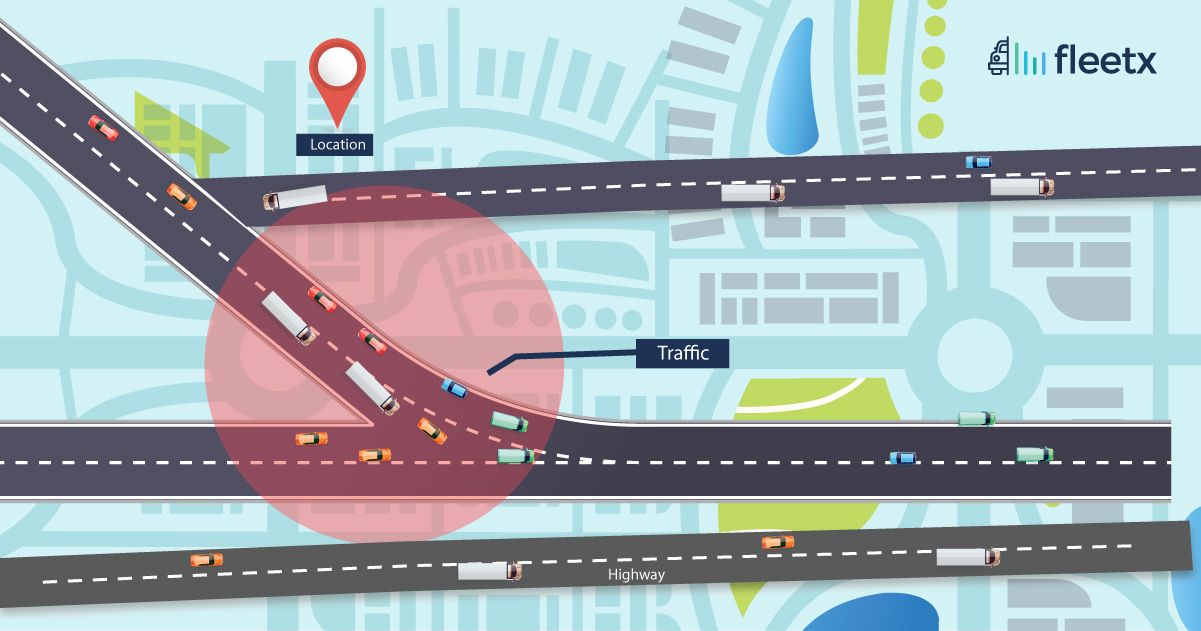
One of the biggest risks in JIT delivery is the lack of visibility into the supply chain. Fleetx’s GPS tracking and telematics solutions provide real-time updates on the location and status of shipments. This allows businesses to monitor their deliveries closely, anticipate potential delays, and make informed decisions quickly.
- Predictive Analytics and AI
Fleetx leverages artificial intelligence and predictive analytics to foresee potential disruptions. By analyzing historical data and current conditions, the platform can predict several risks. This foresight enables businesses to adjust their logistics plans proactively, reducing the chances of unexpected disruptions.
- Route Optimization
Inefficient routes can lead to delays and increased fuel costs. Fleetx’s route optimization tools use AI algorithms to identify the most efficient paths for deliveries, taking into account real-time traffic data, road conditions, and other variables. This ensures that goods reach their destinations on time, even in challenging environments.
- Supplier and Carrier Performance Monitoring
Consistent and reliable supplier performance is critical in JIT logistics. Fleetx provides tools to monitor the performance of suppliers and carriers, offering insights into their reliability and punctuality. This data helps businesses choose the most dependable partners and identify areas for improvement.
- Automated Compliance and Documentation
Navigating India’s complex regulatory landscape can be challenging. Fleetx simplifies this process with automated compliance and documentation tools. These tools ensure that all necessary paperwork is completed accurately and on time, reducing the risk of regulatory delays.
- Inventory Management Integration
Fleetx integrates seamlessly with inventory management systems, providing a holistic view of the supply chain. This integration helps businesses maintain optimal inventory levels, ensuring that they have just enough stock to meet demand without overburdening storage facilities.
- Emergency Response and Contingency Planning
Despite the best planning, disruptions can still occur. Fleetx offers tools for emergency response and contingency planning, allowing businesses to quickly reroute shipments, find alternative suppliers, and communicate with stakeholders in real-time.
Building a Resilient Just-In-Time Supply Chain: A Practical Framework for Indian Businesses
While Just-In-Time (JIT) delivery is widely recognised for reducing inventory costs and improving operational efficiency, the businesses that consistently succeed with JIT are those that treat resilience as seriously as efficiency. In today's logistics environment, characterised by increasing customer expectations, fluctuating fuel prices, changing regulations, and supply chain disruptions, companies need a structured framework that allows them to maintain lean inventory without compromising delivery performance.
Instead of viewing JIT as merely a logistics strategy, organisations should approach it as an end-to-end operational philosophy that connects procurement, transportation, warehousing, production, customer service, and data analytics. Every stakeholder involved in the supply chain must have access to accurate, real-time information to ensure that decisions are made proactively rather than reactively.
Create End-to-End Supply Chain Visibility
The foundation of successful JIT logistics is complete visibility. Businesses should know the location, estimated arrival time, vehicle condition, inventory availability, supplier status, and customer commitments at every stage of the shipment lifecycle.
Modern logistics platforms enable businesses to monitor:
- Live vehicle locations
- Shipment progress
- Driver behaviour
- Route deviations
- Estimated Time of Arrival (ETA)
- Inventory replenishment status
- Warehouse receiving schedules
- Supplier performance metrics
When every shipment becomes digitally visible, logistics teams can respond immediately to unexpected disruptions instead of waiting until customers report delays.
Develop Multi-Level Supplier Risk Management
Many JIT failures occur because companies depend heavily on a limited number of suppliers. Even highly reliable vendors can experience production delays, labour shortages, transportation issues, or regulatory bottlenecks.
A stronger procurement strategy includes:
- Primary and secondary supplier networks
- Regional supplier diversification
- Supplier scorecards
- Delivery accuracy measurement
- Lead time consistency monitoring
- Quality performance tracking
- Emergency procurement workflows
Instead of selecting suppliers only on cost, businesses should evaluate reliability, responsiveness, compliance history, and delivery performance.
Improve Transportation Predictability
Transportation remains one of the largest variables affecting JIT performance.
Businesses should continuously analyse:
- Average transit time
- Route-wise delay frequency
- Peak traffic periods
- Toll waiting times
- Seasonal weather disruptions
- Vehicle utilisation
- Loading and unloading turnaround time
- Driver productivity
Historical logistics data allows organisations to predict delays before they occur, making transport planning significantly more accurate.
Strengthen Inventory Intelligence
JIT does not eliminate inventory—it optimises it.
Successful companies classify inventory into multiple categories based on business criticality.
For example:
- Mission-critical production components
- Fast-moving consumables
- Imported materials
- Seasonal products
- Emergency spare inventory
- Customer-specific inventory
This segmentation enables businesses to maintain appropriate safety stock only where necessary instead of applying a uniform inventory policy across every SKU.
Enable Cross-Functional Collaboration
JIT works best when procurement, production, logistics, finance, warehouse teams, and customer service share the same operational data.
Integrated dashboards help every department understand:
- Current shipment status
- Upcoming deliveries
- Material shortages
- Supplier delays
- Customer priorities
- Vehicle availability
This reduces communication delays and improves overall operational responsiveness.
Build Predictive Decision-Making Capabilities
Traditional logistics relies heavily on historical reporting.
Modern JIT operations increasingly use predictive analytics to answer questions before problems occur.
Examples include:
- Which shipments are likely to be delayed?
- Which suppliers show declining delivery performance?
- Which transport routes experience recurring congestion?
- Which customers are at highest delivery risk?
- Which vehicles require preventive maintenance?
- Which warehouses are likely to experience inventory shortages?
Predictive logistics transforms supply chain management from reactive firefighting into proactive planning.
Comparison Table: Traditional Inventory Management vs Just-In-Time Logistics
| Parameter | Traditional Inventory Management | Just-In-Time (JIT) Logistics |
|---|---|---|
| Inventory Levels | High inventory storage | Minimal inventory based on demand |
| Warehouse Cost | Higher due to excess storage | Lower because stock arrives when required |
| Working Capital | Large amount tied up in inventory | Better cash flow with reduced inventory investment |
| Supply Chain Visibility | Moderate | Requires complete real-time visibility |
| Delivery Planning | Fixed schedules | Dynamic planning based on demand |
| Supplier Dependency | Moderate | High, requiring dependable suppliers |
| Risk During Disruptions | Lower inventory risk but higher carrying cost | Higher disruption risk without visibility |
| Data Requirement | Basic reporting | AI-driven analytics and predictive insights |
| Technology Adoption | Optional | Essential for successful implementation |
| Route Optimisation | Often manual | AI-assisted route optimisation |
| Vehicle Tracking | Limited | Continuous GPS-based monitoring |
| Customer Service | Reactive updates | Proactive ETA notifications |
| Decision Making | Historical reports | Real-time and predictive analytics |
| Inventory Accuracy | Manual reconciliation common | Automated inventory synchronisation |
| Fleet Utilisation | Moderate | Higher through intelligent planning |
| Fuel Efficiency | Limited optimisation | Continuous optimisation using route intelligence |
| Compliance Management | Manual processes | Automated compliance workflows |
| Delivery Performance | Depends on inventory availability | Depends on visibility and coordination |
| Best Suitable Industries | Wholesale, bulk distribution | Manufacturing, FMCG, automotive, retail, e-commerce, pharmaceuticals |
Why AI, Predictive Analytics, and Digital Logistics Are Transforming Just-In-Time Delivery
The future of Just-In-Time delivery extends far beyond GPS tracking. Modern supply chains increasingly rely on artificial intelligence, machine learning, predictive analytics, IoT devices, and digital transportation management systems to improve delivery reliability while reducing operational costs. These technologies are helping organisations build supply chains that are not only lean but also intelligent and resilient.
AI-Powered Demand Forecasting
Demand fluctuations are one of the biggest challenges in lean logistics. AI-powered forecasting models analyse historical sales data, seasonality, promotions, weather patterns, market trends, regional demand, and customer purchasing behaviour to estimate future inventory requirements more accurately. Better forecasting reduces stock shortages, minimises excess inventory, and enables businesses to plan transportation resources more efficiently.
Predictive ETA and Delay Management
Instead of simply displaying a vehicle's current location, predictive logistics platforms estimate arrival times using real-time traffic conditions, weather updates, historical travel patterns, driver behaviour, loading delays, and road restrictions. Logistics managers receive early warnings about possible delays, allowing them to communicate with customers, adjust production schedules, or reroute shipments before service levels are affected.
Digital Control Towers
Large enterprises increasingly deploy logistics control towers that consolidate data from transport management systems, warehouse management systems, ERP platforms, telematics devices, GPS trackers, and supplier portals into a single operational dashboard. This unified view improves coordination between procurement, warehousing, transportation, production, and customer service teams while enabling faster exception management and better executive decision-making.
Intelligent Fleet Optimisation
Fleet optimisation today extends beyond route planning. AI algorithms continuously evaluate vehicle capacity, fuel consumption, driver schedules, maintenance history, delivery priorities, customer locations, and available transport resources. By assigning the right vehicle to the right shipment at the right time, businesses can improve fleet utilisation, reduce empty kilometres, lower transportation costs, and increase delivery reliability.
IoT and Connected Supply Chains
Internet of Things (IoT) devices provide continuous monitoring of shipment conditions, including temperature, humidity, vibration, fuel consumption, tyre pressure, cargo security, and engine health. For industries such as pharmaceuticals, food processing, chemicals, and cold chain logistics, these sensors help maintain product quality while supporting regulatory compliance and reducing spoilage.
Data-Driven Supplier Performance Management
Supplier relationships become significantly stronger when performance is measured objectively. Digital logistics platforms automatically track supplier lead times, order fulfilment accuracy, shipment frequency, damage rates, documentation quality, and on-time delivery percentages. These insights allow procurement teams to identify high-performing vendors, improve contract negotiations, and reduce supply chain risk.
Sustainability and Green Logistics
Sustainability is becoming an important business objective alongside operational efficiency. AI-driven logistics solutions contribute to environmental goals by reducing unnecessary travel, improving vehicle utilisation, minimising idle time, optimising fuel consumption, and lowering carbon emissions. Businesses adopting JIT alongside intelligent fleet management often achieve measurable improvements in both operational costs and ESG performance.
Preparing for the Future of Lean Logistics
As supply chains continue to digitise, successful organisations will increasingly depend on integrated logistics ecosystems where fleet management, transportation planning, warehouse operations, supplier collaboration, inventory management, and customer communication operate on a single connected platform. Companies that invest in AI-powered logistics technologies today are better positioned to handle demand volatility, improve customer experience, reduce operating costs, and build resilient supply chains capable of supporting long-term growth.
By combining lean inventory practices with predictive analytics, automation, and real-time operational intelligence, businesses can transform Just-In-Time delivery from a cost-saving initiative into a strategic competitive advantage. These capabilities not only improve delivery accuracy but also create a scalable logistics infrastructure capable of adapting to changing market conditions across India, including major logistics hubs such as Delhi NCR, Gurgaon, Mumbai, Bengaluru, Pune, Chennai, Hyderabad, Ahmedabad, and Kolkata.
Measuring the Success of Just-In-Time Delivery: KPIs Every Logistics Leader Should Track
Many organisations implement Just-In-Time (JIT) delivery with the objective of reducing inventory costs, but only a small percentage consistently measure whether the strategy is delivering measurable business outcomes. Successful lean logistics programmes rely on continuous performance monitoring rather than assumptions. Without well-defined Key Performance Indicators (KPIs), businesses may overlook hidden inefficiencies that gradually reduce profitability.
Instead of evaluating only whether deliveries arrive on time, companies should establish a balanced scorecard that measures operational efficiency, financial performance, customer satisfaction, supplier reliability, and overall supply chain resilience.
Some of the most valuable KPIs for JIT logistics include:
On-Time Delivery Rate
This measures the percentage of deliveries that reach customers, production facilities, or warehouses within the promised delivery window. Since JIT operations have minimal inventory buffers, even minor delivery delays can affect downstream operations.
A consistently high on-time delivery percentage indicates that transportation planning, warehouse scheduling, and supplier coordination are working effectively.
Perfect Order Fulfilment
Perfect order fulfilment goes beyond timely delivery.
It measures whether every shipment is:
- Delivered on time
- Delivered in full
- Delivered without damage
- Delivered with correct documentation
- Delivered to the correct destination
This KPI provides a more holistic view of logistics performance than delivery speed alone.
Inventory Turnover Ratio
Inventory turnover reflects how efficiently inventory moves through the supply chain.
Higher inventory turnover generally indicates:
- Reduced carrying costs
- Better demand forecasting
- Faster order fulfilment
- Improved working capital utilisation
Businesses implementing JIT should expect gradual improvements in inventory turnover while maintaining service quality.
Dock-to-Stock Time
For manufacturing and distribution companies, the speed at which incoming materials become available for production is equally important.
Dock-to-stock time measures how long goods remain idle after arriving at a warehouse before becoming available for operational use.
Reducing this metric improves responsiveness across the supply chain.
Vehicle Utilisation
Fleet assets should operate at maximum efficiency.
Vehicle utilisation includes:
- Percentage of loaded kilometres
- Empty return trips
- Average vehicle capacity utilisation
- Daily trip completion
- Idle time
Improving vehicle utilisation directly lowers transportation costs while supporting sustainability initiatives.
Supplier Lead Time Variability
Average supplier lead time alone is insufficient.
Businesses should also monitor consistency.
For example:
A supplier that delivers every shipment in exactly five days is generally more reliable than one that delivers between three and eight days.
Lead time variability significantly affects production planning in JIT environments.
Cost Per Shipment
This KPI includes:
- Fuel expenses
- Toll charges
- Driver wages
- Vehicle maintenance
- Administrative costs
- Documentation expenses
- Third-party logistics charges
Tracking cost per shipment helps businesses identify operational improvements without compromising delivery quality.
Customer Fill Rate
Customer fill rate measures the percentage of customer demand fulfilled during the first shipment.
Higher fill rates indicate:
- Better inventory planning
- Improved order allocation
- Strong supplier coordination
- Efficient warehouse operations
Maintaining a high fill rate is essential for customer retention in competitive industries.
Supply Chain Response Time
Modern supply chains must respond rapidly to changing customer demand.
Response time measures how quickly an organisation can:
- Process urgent orders
- Replace delayed shipments
- Allocate inventory
- Arrange transportation
- Adjust production schedules
Businesses with shorter response times generally perform better during market fluctuations.
Continuous Improvement Through KPI Reviews
KPIs should not simply be reported every month.
High-performing logistics organisations regularly review operational metrics with procurement teams, warehouse managers, transport partners, production planners, and senior leadership.
Continuous KPI reviews enable businesses to identify recurring bottlenecks, improve operational workflows, and strengthen overall supply chain resilience.
Emerging Trends That Will Shape the Future of Just-In-Time Logistics
The logistics industry continues to evolve rapidly as businesses adopt digital technologies, automation, and data-driven decision-making. While traditional JIT focused primarily on reducing inventory, modern JIT strategies are increasingly designed around resilience, flexibility, sustainability, and customer experience.
Several emerging trends are expected to redefine lean logistics over the next decade.
Autonomous Supply Chain Planning
Artificial Intelligence is beginning to automate supply chain planning by analysing demand forecasts, supplier capacity, transportation availability, warehouse utilisation, and customer priorities simultaneously.
Rather than relying solely on manual planning, AI systems continuously recommend operational adjustments throughout the day based on changing business conditions.
Digital Twins for Logistics Networks
A digital twin is a virtual representation of an entire logistics network.
It allows businesses to simulate:
- Warehouse expansion
- Route disruptions
- Supplier failures
- Inventory shortages
- Seasonal demand spikes
- Fleet availability
Before implementing operational changes, companies can test multiple scenarios digitally, reducing business risk and improving planning accuracy.
Hyperautomation Across Logistics Operations
Hyperautomation combines robotic process automation (RPA), AI, machine learning, workflow automation, and intelligent document processing.
Typical applications include:
- Invoice processing
- Freight reconciliation
- Proof of delivery verification
- Carrier onboarding
- Shipment scheduling
- Freight audit
- Compliance documentation
Automation reduces manual effort while improving operational consistency.
Carbon-Aware Logistics Planning
Environmental sustainability is becoming an operational priority rather than simply a compliance requirement.
Many businesses now evaluate logistics performance using both financial and environmental metrics.
Examples include:
- Carbon emissions per shipment
- Fuel efficiency
- Electric vehicle adoption
- Empty kilometre reduction
- Alternative fuel usage
- Green warehouse operations
JIT supported by intelligent logistics planning can significantly reduce unnecessary transportation activity.
Real-Time Collaboration Ecosystems
Future supply chains will increasingly rely on connected ecosystems where manufacturers, suppliers, transporters, warehouses, distributors, retailers, and customers operate using shared operational information.
Instead of working in isolated systems, every stakeholder receives live updates regarding:
- Inventory availability
- Shipment status
- Delivery schedules
- Capacity constraints
- Customer demand
This improves transparency while reducing operational delays.
AI-Powered Decision Support
Rather than replacing logistics professionals, AI increasingly acts as an intelligent advisor.
Modern logistics platforms can recommend:
- Alternative transport routes
- Better carrier allocation
- Inventory redistribution
- Shipment consolidation
- Warehouse balancing
- Production adjustments
Human expertise combined with AI recommendations creates more reliable decision-making.
Supply Chain Cybersecurity
As logistics operations become increasingly connected, protecting operational data becomes essential.
Businesses should strengthen:
- Fleet telematics security
- GPS data protection
- API integrations
- Warehouse management systems
- Cloud infrastructure
- User authentication
Cybersecurity is becoming an important component of supply chain resilience.
Creating a Customer-Centric Just-In-Time Delivery Strategy
While operational efficiency is often the primary objective of Just-In-Time delivery, customer experience ultimately determines whether the strategy creates long-term business value. Modern customers—whether manufacturers, distributors, retailers, or end consumers—expect greater visibility, accuracy, and reliability throughout the delivery process. Companies that integrate customer-centric practices into their JIT operations are more likely to strengthen customer loyalty and differentiate themselves in competitive markets.
One important aspect is delivery transparency. Customers increasingly expect real-time updates on shipment status, estimated arrival times, proof of delivery, and proactive notifications if delays occur. Providing this information reduces uncertainty and builds trust without requiring customers to repeatedly contact support teams.
Another important consideration is delivery consistency. Customers value predictable service more than occasional exceptionally fast deliveries. Maintaining consistent lead times allows manufacturers to plan production schedules more accurately, retailers to replenish inventory efficiently, and distributors to fulfil customer orders with confidence. Consistency also reduces operational stress throughout the supply chain.
Businesses should also establish customer-specific delivery strategies rather than applying a uniform approach across all accounts. High-priority customers may require dedicated delivery windows, specialised transport equipment, customised reporting, or enhanced shipment monitoring. Segmenting customers based on service requirements enables logistics teams to allocate resources more effectively while improving satisfaction levels.
Customer feedback should become part of continuous logistics improvement. Organisations can regularly evaluate delivery performance using metrics such as customer satisfaction scores, Net Promoter Score (NPS), delivery accuracy, complaint frequency, repeat order rates, and issue resolution time. These insights help identify service gaps that operational metrics alone may not reveal.
Finally, organisations should view JIT delivery as a strategic customer experience initiative rather than only a cost optimisation strategy. When businesses consistently deliver products on time, provide complete shipment visibility, communicate proactively, and respond quickly to disruptions, they create stronger customer relationships, improve retention, and build a reputation for reliability. In increasingly competitive supply chains across India, this customer-centric approach can become a significant competitive advantage while supporting sustainable business growth.
To Conclude
Just-in-time delivery is a powerful strategy for improving efficiency and reducing costs in lean logistics. However, its effectiveness and success depend on strategic risk management. In the complex logistics environment of India, this can be difficult.
With the help of smart technology solutions like those offered by Fleetx, businesses can navigate these challenges with confidence. Real-time tracking, predictive analytics, route optimization, and integrated inventory management are just a few of the tools that can help mitigate the risks associated with JIT delivery.
Timely delivery is not just a competitive advantage but a necessity to stay in business. Fleetx is committed to making India’s logistics landscape more efficient, resilient, and future-proof.