
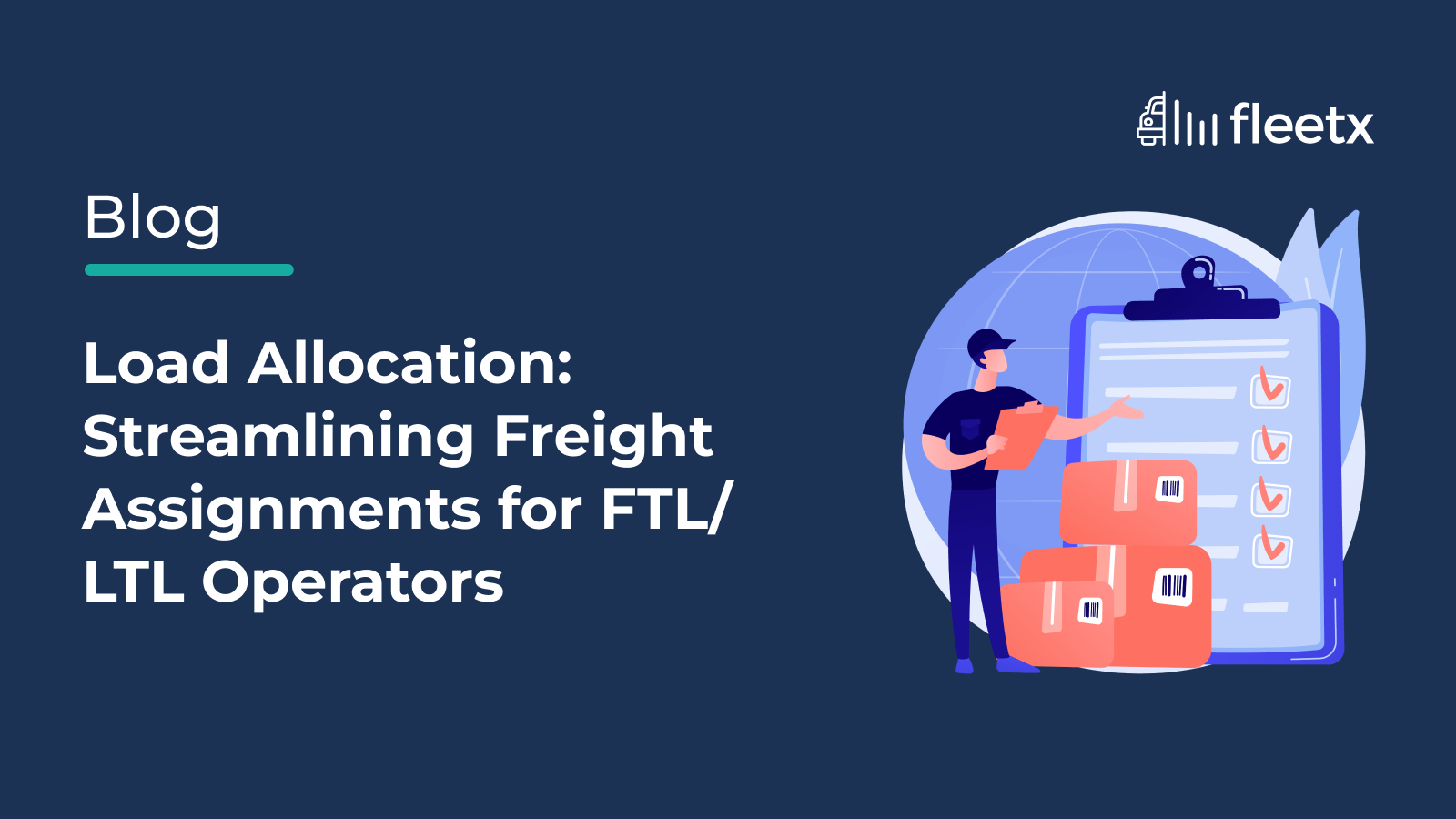
In the world of logistics - as we have discussed previously - efficiency is key. With rising fuel costs, increasing demand, and an industry-wide push for faster deliveries, Full Truckload (FTL) and Less than Truckload (LTL) operators are encouraged to optimize their freight assignments in order to remain competitive. Traditional methods of load allocation often result in delays, underutilized space, and higher operational costs.
This is where smart technology can help; the Load Allocation - powered by AI and automation - is transforming freight assignment processes. It helps operators improve efficiency, reduce costs, and maximize vehicle utilization. Fleetx’s Load Allocation Module is one such solution designed to supercharge load planning and optimize freight movement for logistics businesses.
Challenges in Traditional Load Allocation
Many logistics companies in India still rely on manual processes or outdated technology for load allocation. This leads to several inefficiencies, such as:
- Poor Space Utilization - Without a smart and optimized system, trucks may be dispatched with unused capacity, leading to revenue loss and operational inefficiency.
- Delays in Freight Assignment - Manual allocation takes time, causing delays in dispatch and delivery schedules.
- Lack of Real-Time Data - Traditional methods do not offer real-time tracking or visibility, making it difficult to adapt to changing conditions during disruptions or delays.
- Higher Costs - Inefficient load planning increases fuel consumption and operational expenses.
- Complexity in Managing LTL Shipments - For LTL operators, assigning multiple shipments to the right truck while ensuring cost-effectiveness is a major challenge in the planning process.
With the rise of e-commerce and increased customer expectations, these inefficiencies are no longer sustainable, nor can they be ignored. Logistics businesses need a smart, data-driven approach to freight assignment. Enter, Load Allocation Module.
What is a Load Allocation?
A Load Allocation Module is a smart software solution used in logistics and transportation to optimize the assignment of freight to available trucks. It ensures that shipments are distributed efficiently based on factors like truck capacity, route optimization, delivery schedules, and cost-effectiveness.
For FTL operators, the module helps assign entire truckloads to the most suitable vehicles, reduce empty miles, and improve fleet utilization.
For LTL operators, it plays a crucial role in consolidating multiple smaller shipments into a single truck while ensuring proper space utilization and cost savings.
How Does It Help?
An AI-powered Load Allocation Module is designed to automate and optimize freight assignment, making logistics operations more efficient. Here’s how it addresses key challenges:
1. Automated Load Optimization
The system uses AI algorithms to analyze shipment details, truck capacity, and route efficiency. It then assigns loads in a way that maximizes truck space while minimizing costs and delivery time. This is especially useful for LTL operators who need to consolidate multiple smaller shipments into a single vehicle efficiently.
2. Real-Time Data & Visibility
The module provides real-time tracking and visibility of freight assignments. Operators can monitor which trucks are in transit, their expected arrival times, and any changes in load distribution. This reduces uncertainty and allows for quick adjustments when needed.
3. Dynamic Route Planning
By integrating GPS and traffic data, the software suggests the most efficient routes based on current conditions. This minimizes fuel consumption and reduces transit delays, improving overall delivery efficiency.
4. Smart Cost Reduction
With automated load allocation, operators can avoid empty backhauls and minimize unnecessary trips. This not only saves fuel but also ensures higher profitability per trip. The module also considers factors like fuel efficiency to determine the most cost-effective load distribution strategy.
5. Integration with Existing Systems
Load Allocation Modules integrate with existing Transport Management Systems (TMS) and ERP software, making adoption seamless for logistics businesses. This ensures that companies can improve efficiency without changing their entire operation.
Key Factors to Consider When Choosing a Load Allocation Solution for Modern Logistics Operations
Selecting a load allocation solution is no longer just about assigning freight to available trucks. Modern logistics businesses require a platform that can optimize capacity, improve dispatch speed, integrate with existing systems, and provide real-time operational visibility. As transportation networks become more complex, businesses that invest in intelligent load allocation software gain better control over costs, delivery timelines, and fleet productivity.
Whether a company operates Full Truckload (FTL), Less than Truckload (LTL), dedicated fleets, contract logistics, or third-party logistics (3PL), evaluating the right features before implementation is essential.
1. Intelligent Capacity Planning
The software should automatically calculate available vehicle capacity before assigning shipments. This helps maximize payload utilization while reducing the number of partially loaded vehicles on the road.
Key capabilities include:
- Vehicle-wise capacity calculation
- Weight and volume optimization
- Multi-shipment consolidation
- Trailer compatibility
- Load balancing across fleets
Higher vehicle utilization directly contributes to lower transportation costs and improved profitability.
2. AI-Based Decision Making
Traditional dispatch planning depends heavily on planner experience. AI-powered systems evaluate hundreds of operational variables simultaneously, including:
- Vehicle availability
- Driver schedules
- Delivery deadlines
- Route distance
- Fuel consumption
- Historical trip performance
- Empty return probability
Instead of simply assigning the next available truck, AI recommends the most efficient assignment based on operational goals.
3. Seamless Integration with Existing Systems
A modern load allocation platform should integrate with existing logistics technologies without disrupting operations.
Common integrations include:
- Transport Management System (TMS)
- Enterprise Resource Planning (ERP)
- GPS Vehicle Tracking
- Fuel Management Software
- Warehouse Management Systems
- Electronic Proof of Delivery
- Driver Mobile Applications
- Billing Software
Integration eliminates duplicate data entry and ensures every department works with the same information.
4. Real-Time Operational Visibility
Visibility has become one of the biggest differentiators in logistics.
A quality load allocation platform should provide:
- Live vehicle status
- Assigned shipments
- Pending allocations
- Delayed dispatch alerts
- Delivery ETA updates
- Fleet utilization dashboards
This allows dispatch managers to make immediate adjustments whenever operational conditions change.
5. Scalability for Business Growth
Many transport businesses start with regional operations before expanding nationally.
The ideal system should support growth without requiring migration to another platform.
Important scalability features include:
- Multiple branches
- Multiple warehouses
- Unlimited fleet expansion
- Multi-region operations
- Multiple customer contracts
- Large shipment volumes
- Enterprise analytics
This ensures long-term ROI as the organization grows.
Comparison Table: Manual Load Planning vs AI-Powered Load Allocation
| Parameter | Manual Load Planning | AI-Powered Load Allocation |
|---|---|---|
| Shipment Assignment | Manual | Automated |
| Planning Speed | Slow | Real-time |
| Vehicle Utilization | Moderate | High |
| Capacity Optimization | Limited | Advanced |
| Route Suggestions | Planner dependent | AI optimized |
| Empty Miles | Higher | Significantly reduced |
| Dispatch Accuracy | Varies | Consistent |
| Visibility | Limited | Real-time |
| Scalability | Difficult | Enterprise-ready |
| Decision Making | Human judgement | Data-driven |
Business KPIs That Improve After Implementing Load Allocation Software
Most logistics companies evaluate software based on features. However, successful businesses measure performance using operational KPIs that directly affect profitability, customer satisfaction, and fleet productivity.
Load allocation software impacts several measurable logistics metrics simultaneously.
Fleet Utilization Rate
Fleet utilization measures how effectively available vehicles are used.
Without intelligent allocation:
- Trucks may leave partially loaded.
- Empty return trips increase.
- Vehicle productivity decreases.
With optimized load allocation:
- More shipments are assigned per vehicle.
- Better route planning reduces idle capacity.
- Asset productivity improves.
Higher utilization allows businesses to transport more freight without increasing fleet size.
Cost Per Shipment
Every logistics business monitors transportation cost.
Load allocation software helps reduce:
- Fuel expenses
- Empty miles
- Driver idle time
- Route inefficiencies
- Administrative planning costs
The result is a lower cost per shipment while maintaining service quality.
Dispatch Turnaround Time
Manual freight planning often requires multiple phone calls, spreadsheets, and coordination between planners.
Automation reduces planning time from hours to minutes by automatically recommending optimal vehicle assignments.
This enables:
- Faster dispatch
- Better warehouse coordination
- Improved vehicle turnaround
Delivery Performance
Customers increasingly expect predictable delivery schedules.
Smart allocation improves:
- On-time dispatch
- Route efficiency
- Delivery scheduling
- Shipment prioritization
As a result, businesses experience improved On-Time-In-Full (OTIF) performance.
Empty Mile Percentage
Empty running remains one of the largest operational expenses in road transportation.
AI-powered allocation reduces empty mileage by:
- Identifying return loads
- Matching nearby shipments
- Consolidating routes
- Improving load sequencing
Lower empty mileage directly improves transport profitability.
Planner Productivity
Dispatch teams spend significant time manually assigning freight.
Automation enables planners to focus on:
- Exception handling
- Customer communication
- Strategic planning
- Operational improvements
Instead of repetitive manual tasks.
KPI Improvement Comparison
| Logistics KPI | Before Load Allocation Software | After AI-Based Load Allocation |
|---|---|---|
| Vehicle Utilization | Moderate | High |
| Dispatch Time | Hours | Minutes |
| Empty Miles | High | Lower |
| Fuel Efficiency | Average | Improved |
| Shipment Planning Accuracy | Manual | Automated |
| On-Time Deliveries | Inconsistent | Higher |
| Operational Visibility | Limited | Real-time |
| Planner Productivity | Moderate | Significantly Improved |
| Cost Per Shipment | Higher | Lower |
| Fleet Productivity | Average | Optimized |
Future Trends Shaping Load Allocation and Freight Planning in India
India's logistics industry is rapidly moving toward digital transformation. Rising freight volumes, increasing customer expectations, expanding e-commerce, and government initiatives such as PM Gati Shakti are encouraging transport businesses to adopt intelligent logistics technologies.
Load allocation is expected to become increasingly predictive, automated, and data-driven.
Predictive Load Planning
Instead of reacting to incoming orders, future systems will predict shipment demand using:
- Historical order trends
- Seasonal demand
- Regional freight movement
- Customer buying patterns
- Market forecasts
This enables transporters to position vehicles proactively.
Machine Learning-Based Allocation
Machine learning algorithms continuously improve allocation decisions by learning from previous trips.
Over time, the software identifies:
- Best-performing routes
- High-efficiency vehicle combinations
- Common operational bottlenecks
- Delivery delay patterns
The recommendations become increasingly accurate.
Dynamic Route Optimization
Modern load allocation is evolving beyond static planning.
Future systems will continuously adjust allocations based on:
- Live traffic
- Road closures
- Weather conditions
- Driver availability
- Customer schedule changes
This allows businesses to respond instantly to disruptions.
Sustainability and Carbon Reduction
Environmental performance is becoming an important business metric.
Efficient load allocation contributes to sustainability by:
- Reducing unnecessary trips
- Lowering fuel consumption
- Increasing vehicle utilization
- Minimizing carbon emissions
Companies can improve both operational efficiency and ESG reporting.
Digital Freight Ecosystems
Future logistics platforms will connect:
- Shippers
- Transporters
- Warehouses
- Drivers
- Customers
- Finance teams
through a unified digital ecosystem.
Load allocation will become one component of an integrated transportation workflow that includes planning, dispatch, tracking, invoicing, analytics, proof of delivery, and performance monitoring.
Increased Adoption Across Indian Logistics Hubs
Demand for intelligent load allocation solutions is expected to grow rapidly across major logistics hubs including Delhi NCR, Gurgaon, Mumbai, Bengaluru, Pune, Hyderabad, Chennai, Ahmedabad, Kolkata, and Jaipur. Businesses operating in these regions face increasing freight volumes, urban congestion, and rising customer expectations, making AI-powered transport planning an essential competitive advantage rather than an optional upgrade.
Organizations that adopt intelligent load allocation early will be better positioned to improve operational efficiency, reduce transportation costs, enhance customer satisfaction, and scale their logistics operations as supply chains continue to evolve.
To Conclude
The Indian logistics industry is a demanding space, and manual freight assignment methods can no longer keep up with the demands of modern supply chains. The Load Allocation Module from Fleetx offers a smart, AI-driven solution that enhances freight efficiency, reduces costs, and improves overall operational performance.
By automating and optimizing freight assignments, both FTL and LTL operators can significantly boost profitability while ensuring timely deliveries. Whether you’re a logistics provider looking to streamline your operations or a business seeking to improve your supply chain, Fleetx’s Load Allocation Module is a game-changer.
Frequently Asked Questions on Load Allocation for FTL and LTL Operators
What is load allocation in logistics?
Load allocation in logistics is the process of assigning shipments to the right trucks, routes, and delivery schedules based on capacity, destination, cost, vehicle availability, delivery priority, and route efficiency. For Full Truckload (FTL) operators, load allocation usually means matching a complete truckload with the most suitable vehicle. For Less than Truckload (LTL) operators, it means combining multiple smaller shipments into one vehicle while maintaining delivery timelines and reducing empty space.
In India, where logistics networks often cover long intercity routes, urban delivery hubs, and regional distribution points, load allocation plays a major role in reducing fuel wastage and improving vehicle utilization. A smart load allocation system uses automation, AI, GPS data, and transport management software to reduce manual planning errors. It helps fleet teams assign loads faster, avoid underloaded trucks, reduce empty miles, and improve delivery reliability. This makes it useful for transporters, 3PL companies, e-commerce logistics providers, FMCG distributors, and manufacturing supply chains.
How does an AI-powered load allocation system help FTL and LTL operators?
An AI-powered load allocation system helps FTL and LTL operators by automating freight assignment decisions that are usually done manually by dispatch or transport planning teams. The system evaluates shipment size, delivery location, vehicle capacity, route distance, expected delivery time, cost per trip, and current fleet availability before recommending the best truck-load combination.
For FTL operators, this improves truck utilization, reduces empty trips, and helps assign the right vehicle for long-haul routes. For LTL operators, AI helps consolidate multiple shipments going in similar directions so that space is used more efficiently. This is especially important in high-volume corridors such as Delhi NCR to Mumbai, Gurgaon to Pune, Bengaluru to Chennai, and Mumbai to Ahmedabad. The system also supports real-time visibility, so teams can make faster changes if a vehicle is delayed, a shipment is cancelled, or a route becomes inefficient. Over time, this improves cost control, delivery accuracy, and operational productivity.
What are the best benefits of using load allocation software in India?
The best benefits of using load allocation software in India include improved truck utilization, lower fuel costs, faster dispatch planning, better shipment visibility, and reduced manual dependency. Many Indian transporters still rely on phone calls, spreadsheets, WhatsApp updates, and manual planning sheets to assign freight. While these methods may work for small operations, they become inefficient when shipment volumes increase across multiple cities, warehouses, and customer locations.
Load allocation software helps logistics companies automate these decisions and reduce planning delays. It can identify available vehicles, match shipments with the right truck type, suggest better routes, and help reduce empty running. For businesses operating across Delhi, Gurgaon, Mumbai, Bengaluru, Pune, and other logistics hubs, this can improve turnaround time and reduce unnecessary trips. It also helps managers track performance metrics such as cost per shipment, vehicle fill rate, route efficiency, and delivery success rate. For growing logistics companies, this makes load allocation software one of the top tools for improving transport efficiency and profitability.
How much does load allocation software cost in India?
The cost of load allocation software in India can vary depending on fleet size, shipment volume, number of users, integrations, automation level, and whether the solution is part of a larger Transport Management System. For smaller transporters or regional logistics teams, basic software pricing may start from around ₹1,500 to ₹5,000 per vehicle per month, depending on features. For mid-sized and enterprise logistics companies, pricing may be customized based on modules such as load planning, route optimization, GPS tracking, ERP integration, fuel management, document digitization, and analytics dashboards.
Some providers may also offer annual subscription plans, implementation charges, API integration fees, or custom enterprise pricing. For companies operating in Delhi NCR, Gurgaon, Mumbai, Bengaluru, or Pune, the final cost can also depend on the complexity of multi-branch operations and the number of dispatchers or planners using the platform. While pricing is important, businesses should compare cost against savings from better vehicle utilization, reduced fuel wastage, fewer empty miles, faster dispatching, and improved delivery performance.
Which industries need the best load allocation solution for transport operations?
Industries that need the best load allocation solution are those that manage frequent freight movement, multiple shipments, vehicle fleets, and time-sensitive deliveries. This includes 3PL logistics companies, transporters, e-commerce logistics providers, FMCG distributors, manufacturing companies, retail supply chains, cold chain logistics providers, construction material suppliers, and automotive logistics businesses.
For FTL-heavy industries, load allocation helps assign full truckloads efficiently to reduce delays and improve fleet utilization. For LTL-heavy businesses, it helps combine multiple smaller shipments into the right vehicle while reducing unused space. In India, industries operating across Delhi NCR, Gurgaon, Mumbai, Bengaluru, and Pune often deal with high freight density, traffic delays, multiple delivery points, and complex dispatch requirements. A smart load allocation system helps these businesses plan better, reduce manual errors, and improve delivery predictability. Companies with large shipment volumes can also use analytics to identify underperforming routes, high-cost lanes, and opportunities to consolidate loads more effectively.
How can load allocation improve logistics operations in Delhi NCR and Gurgaon?
Load allocation can improve logistics operations in Delhi NCR and Gurgaon by helping transporters manage high shipment volumes, dense traffic routes, industrial clusters, and multiple pickup or delivery points more efficiently. Gurgaon, Manesar, Faridabad, Noida, Ghaziabad, and Delhi form one of India’s busiest logistics and warehousing regions. Manual load planning in this region can lead to dispatch delays, poor truck utilization, route confusion, and higher fuel consumption.
A load allocation system helps match shipments with the right vehicles based on capacity, destination, route priority, and delivery timelines. It can support intercity movements from Delhi NCR to Mumbai, Pune, Bengaluru, Jaipur, Chandigarh, and other key freight corridors. For Gurgaon-based logistics companies, it also helps manage first-mile and mid-mile transport from warehouses, manufacturing units, and distribution hubs. By automating freight assignment, companies can reduce manual coordination, improve dispatch speed, and make better use of available vehicles. This is especially useful for businesses handling FTL, LTL, e-commerce, retail, and industrial goods movement.
Why is load allocation important for Mumbai, Bengaluru, and Pune logistics companies?
Load allocation is important for logistics companies in Mumbai, Bengaluru, and Pune because these cities handle large volumes of freight across manufacturing, retail, e-commerce, FMCG, automotive, and technology-driven supply chains. Mumbai is a major port and commercial hub, Pune has strong manufacturing and automotive movement, and Bengaluru is a key market for e-commerce, retail distribution, and technology-led logistics operations.
In these cities, transport teams often deal with traffic congestion, variable delivery windows, multiple warehouse locations, and frequent route changes. Manual planning can create delays, underutilized vehicles, and higher operating costs. A load allocation module helps companies assign shipments based on route, capacity, delivery priority, and vehicle availability. For Mumbai-based operators, it can improve port-to-warehouse and regional distribution planning. For Bengaluru and Pune logistics teams, it can help optimize intercity and intracity freight movement. This leads to better vehicle utilization, lower cost per shipment, fewer empty trips, and improved customer delivery performance.
What features should a top load allocation module include?
A top load allocation module should include automated shipment-to-vehicle matching, real-time vehicle availability, truck capacity mapping, route optimization, delivery schedule planning, GPS integration, cost analysis, exception alerts, and reporting dashboards. These features help logistics teams move from manual planning to data-driven transport decisions.
For FTL operators, the module should support full truck assignment, lane-wise cost control, empty-mile reduction, and trip profitability tracking. For LTL operators, it should support shipment consolidation, partial load planning, multi-stop route management, and space utilization analysis. In India, where logistics companies often operate across Delhi NCR, Gurgaon, Mumbai, Bengaluru, Pune, and other regional hubs, integration with Transport Management Systems, ERP software, fuel management tools, and document digitization platforms can be very valuable. A good system should also provide easy dashboards for dispatchers, fleet managers, and operations heads. The best load allocation software should not only assign loads but also improve visibility, reduce costs, and help businesses make faster freight planning decisions.
Can load allocation software reduce transport costs for Indian logistics businesses?
Yes, load allocation software can reduce transport costs for Indian logistics businesses by improving vehicle utilization, reducing empty running, minimizing unnecessary trips, and helping teams choose more efficient freight assignments. Transport costs in India are influenced by fuel prices, driver costs, toll charges, vehicle maintenance, delays, and route inefficiencies. Poor load planning can increase all of these expenses.
A smart load allocation system helps dispatch teams identify the best vehicle for each shipment, combine compatible loads, and avoid sending partially filled trucks when better options are available. It can also help reduce detention time, improve turnaround time, and provide better visibility into trip-level profitability. For logistics operators in Delhi, Gurgaon, Mumbai, Bengaluru, and Pune, even a small improvement in vehicle fill rate or route efficiency can create significant savings over time. While the exact savings depend on fleet size and shipment volume, many businesses use load allocation tools to reduce manual planning time, improve asset productivity, and bring more control to freight movement costs.
Is load allocation software useful for small and mid-sized transporters?
Load allocation software is useful for small and mid-sized transporters because it helps them plan freight assignments more professionally without relying only on manual coordination. Many smaller operators in India manage loads through phone calls, spreadsheets, and informal updates. This can work at a limited scale, but as shipment volumes grow, it becomes harder to track vehicle availability, route profitability, pending dispatches, and customer delivery commitments.
For small and mid-sized transporters, load allocation software can help reduce planning errors, improve truck usage, and support faster decision-making. It is especially useful for operators serving regional routes around Delhi NCR, Gurgaon, Mumbai, Bengaluru, Pune, Jaipur, Ahmedabad, Chennai, and Hyderabad. The software can help them compete with larger logistics companies by improving visibility, reducing empty miles, and offering better delivery reliability to customers. Cost may vary depending on the provider and features selected, but businesses can start with essential modules and later expand into GPS tracking, fuel monitoring, analytics, and full Transport Management System integration.