
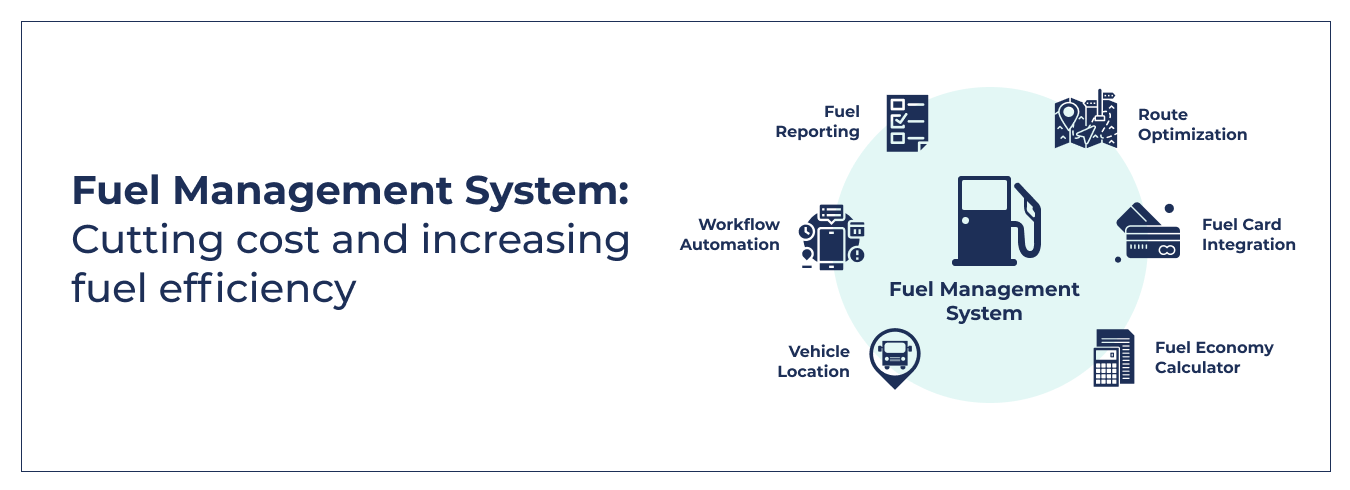
Businesses across industries today require logistics and transportation services to run their business efficiently. Whether it is a goods-producing company or service provider, they need a fleet of vehicles, large or small, depending on the scale of the business. As a result, logistics and transportation account for almost 40-50% of operating expenses for most companies. Fuel is the most significant logistics and transport operation component, accounting for 30-50% of the cost, depending on the industry. The rising cost of fuel has been hurting businesses for years and has become a significant pain point. Hence, it is the need of the hour for businesses to manage their fuel efficiency to bring down their operational expenses. This can be achieved using efficient fuel management systems and better fleet management.
What is a fuel management system?
As the name suggests, fuel management systems software is a technology-driven solution for private and commercial use. A fuel management system aims to manage and monitor fuel consumption for a vehicle or the entire fleet of vehicles. The Fleet fuel management system is part of the more comprehensive fleet management solution that is technology-driven software for efficient fleet management.
Fuel management systems are typically used by industries or companies operating a large fleet of vehicles for commercial transportation, including railways, airways, waterways, and roadways. Basically, any mode of transport requires fuel to run. Fleet fuel management system collects fuel-related data like fuel consumption, inventory, and purchase from all vehicles in the fleet. Then, using telematics and analytics-based tools, it processes that information and transmits it to the central server. Computerized software then converts this data into meaningful insights, which can be used for better fuel management and improving fuel efficiency for the entire fleet.
Fuel Efficiency and fuel management systems India
Fleet and fuel management systems are used extensively by the transportation industry, primarily to improve fuel efficiency. However, fuel efficiency is a very vague term that can be interpreted in various ways. In the context of transportation, fuel efficiency can be defined as how much distance a vehicle covers in one unit of fuel. In India, the most common fuel used for commercial vehicles like trucks is diesel, followed by petrol and CNG.
The unit of fuel efficiency in India is calculated as kilometers per liter(kmpl). The goal is to maximize fuel efficiency by maximizing the distance a vehicle could cover per liter of diesel or minimizing fuel consumption for the distance covered. In addition to this, the Bureau of Energy Efficiency, India, in 2017, has set fuel efficiency norms for commercial vehicles (CV) based on Gross Vehicle Weight (GVW) of 12 tonnes or higher. Hence, it has become necessary for manufacturers and transporters to improve vehicle fuel management for compliance with regulatory requirements.
In a nutshell, to briefly touch upon the need for a fuel management system for trucks and other vehicles, we can say,
- An electronic fuel management system can assist companies and transporters in improving fuel efficiency for their fleets to reduce operational costs.
- Fuel Management systems can be a tool for better compliance with regulatory requirements set by the government.
- Engine fuel management systems can provide insights into fuel consumption and usage to reduce fuel wastage.
- A smart fuel management system can help increase overall efficiency by assisting companies in optimizing driver behavior for better fuel management.
Understandably, not all aspects of fuel economy can be controlled. Transport is a fuel-reliant operation, and hence, consumption cannot be considerably reduced. However, better insights, monitoring, and management are made possible by fleet fuel management for trucks and fleet fuel management for cars. Companies can prevent fuel wastages by better managing issues like,
- engine idling
- fuel theft
- over-speeding
- fuel cost
- poor fuel reporting
- poor routing and navigation
- Improper vehicle maintenance, among others.
Fleet fuel management systems using technology and data helps companies manage such issues better and execute effective fuel management strategies. Let's look at some of how engine management systems can improve fuel efficiency for transport.
What issues do fuel management systems resolve & what are their benefits?
Earlier in this article, we understood how fuel management systems work and briefly had a look at a few uses cases for the same. Now, let's immerse into these use cases a bit more to understand how it can benefit companies looking for particular features in a fuel management system.
Get better fuel usage insights.
A fuel management system for fleet lets you see fuel data for the entire fleet at once to spot any problem or irregularities. Fuel usage insights offered by advanced fuel management system software like fleetx provides corresponding map location & time along with fuel insights for more transparent and complete analytics. Fleet managers can generate rich analytical reports on fuel transactions by fuel type, distance covered, efficiency, amount, and cost.
Reduce the risk of fuel theft & pilferage.
Some of the best fuel management systems help companies considerably reduce the risk of fuel theft, a common problem rampant across the industry. They collect and provide detailed historical fuel filling and theft records to users. It allows them to analyze fuel usage data minute-by-minute for all fuel usage points for each vehicle in the fleet. Such data will enable them to assess the amount of fuel stolen with the exact location, time, and other details of the fuel theft to support the claim. This can further help them improve operations by eliminating malpractices in their operational process.
Get real-time alarms and notifications.
The best fuel management system utilizes technology to offer real-time alarms and notifications if there is any deviation from normal fuel usage. For example, a sudden drop in fuel capacity or levels can be flagged, and fleet managers and drivers are notified. This helps them detect fuel thefts or poor engine performance, which can further be fixed before commencing a trip and avoiding unwanted breakdowns.
Detect early fuel wastage.
The combination of a Fuel management system and fleet tracking can better predict fuel wastage to improve fuel efficiency. Some of the best fuel management systems like fleetx equip their offering with advanced sensors and intelligent analytics to offer the vehicle's most accurate mileage and fuel consumption. It detects fuel wastage based on parameters such as engine idling, hard acceleration, and deacceleration, which, when detected and prevented, can save substantial fuel costs.
Easily track and manage fuel transactions.
Fuel management systems offer the service of tracking and managing fuel purchases efficiently for on-route vehicles. Drivers can easily log in all their fuel purchases and upload transactions to save the hassle of maintaining paper receipts that are perishable in nature.
How does automation promote more efficient fleet and fuel management?
The transportation industry has operated without transparency for decades, resulting in various operational inefficiencies and malpractices. Truck or car fuel management system software and fleet management brought much-needed transparency to the entire transport management system. In addition to that, automation has been a critical USP for fleet and fuel management software in the market today.
Automation plays a much more critical role when it comes to fleet management. Besides fuel management and monitoring, it has various other use-cases through which better fuel and fleet efficiency could be achieved. Let us look at automation applications for fuel and fleet management and how companies can benefit from them.
Automating fuel transactions and fuel reporting using a fuel management system
The purchase of fuel is one of the most significant expenses when it comes to transportation. When vehicles are on the route, drivers are often required to refuel several times.
Fuel cards and payment
Traditionally, drivers collect receipts for each refueling. At the end of the trip, fleet managers calculate and report the fuel expenses through receipts. Fuel cards like Indian Oil's XTRAPOWER Fleet Card are alternatives to cash receipt and payment, making it easier to transact.
Manual entry for fuel reporting
However, such a manual process to keep a tally of details required for better reporting like,
- date, time, & location of transactions
- purchase price of fuel per liter
- quantity purchased
- odometer readings before and after refueling
- level of fuel before and after refueling
Makes the process averse to malpractice which is a common practice in transportation due to lack of transparency.
Automated fuel management systems
Fuel management systems for the fleet automates all the processes above. For example, fleetx's fuel management system provides the driver with the option to log fuel data for each fuel purchase through fleetx's Driver app. Thus, it eliminates the risk of losing receipts. In addition to that, fuel data can also be uploaded for better analytics and reporting through fuel forms, manual importing from sheets, or integrating fuel cards with the fleet management system.
Using telematics data for fuel management
Data collected through the telematics system using the black box can also collect the data mentioned above and integrate it with the fleetx's fleet and fuel management system. In addition, the fuel management system also provides access to fuel level history reports with their corresponding locations & time. Such data can be analyzed to curb fuel theft and other refueling-related malpractices, thus, decreasing the fuel costs tremendously. In addition, various analytical reports such as Fuel usage over the trip with Fuel refill/theft data points help decide the fuel expenses per vehicle over different routes.
Monitoring driver behavior using fleet and fuel management system
Several factors define fuel efficiency for the fleet. The two most important factors responsible for better or worse fuel efficiency are driver behavior and vehicle maintenance. Let's look at how fleet and fuel management systems can collectively help monitor and improve these two aspects to improve fleet efficiency.
Driver behavior solutions are proven to cut fuel expenses by up to 10%. In addition, every vehicle can be optimized to provide maximum fuel efficiency. However, the way a driver drives the vehicle plays a significant role. Using driver behavior and analytics tools for fleet management, fleet managers can be notified about instances like,
- overspeeding and rash driving by drivers
- exhausted and overworked drivers
- poor driving performance
- unwanted stoppages
- hard acceleration and deceleration
- change in safety culture and compliance, among others
- engine idling
Prevents harsh events and engine idling
Such instances, especially engine idling, resulting in much higher fuel consumption, leading to poor fuel efficiency and higher operating costs. However, they can be prevented by employing driver behavior solutions and a fuel management system for better fleet management and maximizing ROI.
Predictive maintenance of vehicles could maximize fuel efficiency
Maintenance is another crucial factor that is often looked at when we talk about fuel efficiency. A poorly maintained vehicle will offer a much lower mileage and performance, affecting fuel its fuel efficiency. Hence, time maintenance of vehicles must be conducted to increase their life and operating efficiency, maximizing ROI.
However, keeping track of vehicle maintenance for such large fleets is can be challenging. Hence, fleet maintenance solutions can help fleet managers access real-time vehicle diagnostics and automate servicing and maintenance reminders. Moreover, real-time reminders can improve vehicular performance, ergo, improving fuel efficiency substantially.
How to go about fuel management integration for your fleet?
So far, we have established that fuel management systems and fleet management solutions are definitely beneficial for companies and transporters. However, how does a company integrate the available fuel management systems in the market? What is the fuel management system price, and how to choose the right one?
Let us look at the considerations a company has to make to choose the right fuel management system for their operation.
A fuel management system should offer simplified UI and process for logging and reporting fuel
Various technology-driven companies offer a variety of fleet management solutions, including fuel management. However, utilizing these needs to be simplified for drivers and fleet managers, which many companies fail to deliver. Popular fleet management solution from fleetx offers simplified UI and easily accessible fuel management system with ease of accessibility. It offers easy integration, management, and import of data, including receipts, fuel cards, and fuel forms for more user-friendly use.
A fuel management system should have a telematics-based ELD & sensors for better driver and vehicle management.
Although there are no restrictions on the number of hours truck drivers can drive in India, unlike the US, it is crucial to prevent overworking of drivers. Hence, telematics-based ELD and driver management tools sensors can help improve fleet productivity by making sure drivers are not overworked and exhausted. It reduces instances of poor driving, which increases fuel consumption. Hence, it is always a good idea to opt for fuel management systems that offer such features.
Key Performance Indicators (KPIs) That Every Fuel Management System Should Track
A fuel management system is only as effective as the metrics it measures. While many businesses focus solely on total fuel expenditure, modern fleet operations require a broader set of fuel performance indicators to understand where fuel is being consumed, where inefficiencies exist, and how operational improvements can be achieved. Tracking the right Key Performance Indicators (KPIs) allows organizations to move beyond basic fuel monitoring and develop a data-driven fuel optimization strategy.
One of the most important KPIs is fuel efficiency, typically measured as kilometers per litre (kmpl) in India. This metric provides a direct indication of how efficiently a vehicle converts fuel into distance travelled. However, fuel efficiency should not be evaluated in isolation. Variables such as route conditions, traffic congestion, cargo load, vehicle age, and driver behavior significantly influence performance.
Another critical KPI is fuel consumption per trip. Monitoring trip-level fuel usage enables fleet managers to compare routes, identify recurring inefficiencies, and determine which journeys generate the highest operating costs. For logistics companies managing deliveries across Delhi NCR, Gurgaon, Mumbai, Bengaluru, Pune, Chennai, and Hyderabad, route-level fuel visibility can reveal optimization opportunities that would otherwise remain hidden.
Fuel cost per kilometre is increasingly used as a profitability metric. Rather than focusing solely on litres consumed, businesses assess how fuel expenses impact transportation economics. This KPI becomes especially important when fuel prices fluctuate significantly, as it provides a more accurate picture of operational efficiency.
Fleet operators should also track engine idle time. Excessive idling contributes directly to fuel wastage without generating productive movement. In urban logistics environments such as Mumbai and Bengaluru, where traffic congestion can be severe, monitoring idle time helps organizations identify opportunities to improve route planning and reduce unnecessary fuel burn.
Another valuable metric is fuel refill accuracy. Discrepancies between recorded fuel purchases and actual fuel additions can indicate operational issues, reporting errors, or potential fuel pilferage. Fuel management software can automatically compare fuel transactions with sensor-based fuel readings to improve accountability.
Driver performance metrics also play a major role in fuel efficiency. Harsh acceleration, sudden braking, excessive speeding, and prolonged engine idling all contribute to higher fuel consumption. Modern fuel management systems use telematics and driver analytics to measure these behaviors and provide coaching recommendations.
Maintenance-related KPIs are equally important. Poor tyre pressure, clogged filters, engine inefficiencies, and delayed servicing can negatively impact fuel economy. By monitoring maintenance performance alongside fuel metrics, businesses gain a more comprehensive understanding of vehicle efficiency.
Fuel Management KPIs and Their Business Impact
| KPI | What It Measures | Business Benefit |
|---|---|---|
| Fuel Efficiency (KMPL) | Distance travelled per litre | Improved fleet productivity |
| Fuel Cost per KM | Fuel expense per kilometre | Better profitability analysis |
| Trip Fuel Consumption | Fuel used per trip | Route optimization |
| Idle Time | Engine running without movement | Reduced fuel wastage |
| Fuel Refill Accuracy | Verification of fuel purchases | Theft prevention |
| Driver Fuel Score | Driving efficiency | Lower fuel consumption |
| Fuel Theft Events | Unauthorized fuel loss | Improved accountability |
| Maintenance Compliance | Vehicle servicing performance | Better mileage |
| Route Efficiency | Fuel usage by route | Reduced operating costs |
| Fleet Average Consumption | Overall fuel performance | Strategic decision-making |
Organizations that consistently monitor these KPIs gain deeper visibility into fleet operations and are better positioned to reduce fuel expenses, improve efficiency, and enhance long-term transportation performance.
How Fuel Management Systems Support Supply Chain Efficiency Beyond Fuel Savings
Many organizations initially invest in fuel management software to reduce fuel expenses. While cost reduction remains one of the primary benefits, the impact of fuel management extends far beyond fuel savings. Modern fuel management systems contribute to broader supply chain efficiency by improving visibility, reliability, planning accuracy, and operational control across transportation networks.
Transportation is one of the most critical links within the supply chain. Delays, route inefficiencies, vehicle breakdowns, and poor fuel visibility can disrupt inventory movement, affect delivery schedules, and increase logistics costs. Fuel management technology helps address these challenges by providing real-time operational insights that support better decision-making.
One of the biggest advantages is improved route planning. When fuel consumption data is analyzed alongside route performance, businesses can identify transportation corridors that consistently generate higher operating costs. This enables logistics managers to redesign routes, improve scheduling practices, and reduce unnecessary travel distances. Over time, route optimization contributes not only to fuel savings but also to faster deliveries and improved customer satisfaction.
Fuel management systems also enhance fleet reliability. Unexpected vehicle breakdowns often result in shipment delays, missed delivery windows, and increased operating expenses. By integrating fuel analytics with vehicle diagnostics and maintenance systems, organizations can identify potential mechanical issues before they become critical failures. Predictive maintenance improves vehicle uptime while reducing disruption across the supply chain.
Another important benefit is operational transparency. Supply chain stakeholders increasingly expect real-time visibility into transportation performance. Fuel management platforms provide detailed reporting that supports accountability, compliance, and performance measurement across the logistics network.
For organizations operating large distribution networks across India, including Delhi NCR, Mumbai, Pune, Bengaluru, Ahmedabad, Kolkata, and Chennai, fuel management systems contribute to more predictable logistics operations. Better visibility into transportation performance allows businesses to improve inventory planning, reduce delays, and strengthen service levels.
As supply chains become more complex and customer expectations continue to rise, transportation efficiency becomes a competitive differentiator. Fuel management systems help organizations build more agile, responsive, and cost-effective logistics networks capable of supporting long-term business growth.
Fuel Management and Sustainability: Why Efficient Fuel Usage Matters for Modern Logistics
Sustainability has become a major priority for businesses across industries, and the transportation sector is under increasing pressure to reduce fuel consumption and minimize environmental impact. Fuel management systems play an important role in helping organizations achieve sustainability goals while simultaneously improving operational efficiency and profitability.
Fuel consumption is directly linked to greenhouse gas emissions. Every litre of diesel or petrol consumed contributes to carbon emissions, making transportation one of the most significant environmental contributors within the supply chain. As governments, investors, and customers place greater emphasis on environmental responsibility, businesses are looking for practical ways to improve fuel efficiency and reduce their carbon footprint.
A fuel management system supports sustainability by providing detailed visibility into how fuel is used across the fleet. Organizations can identify inefficient routes, excessive idling, aggressive driving behaviors, and poorly performing vehicles that contribute to unnecessary fuel consumption. Addressing these issues results in lower fuel usage and reduced emissions.
Driver behavior management is one of the most effective sustainability applications. Studies consistently show that driving style has a major impact on fuel economy. Fuel management software enables businesses to monitor speeding, harsh braking, rapid acceleration, and idle time while encouraging more fuel-efficient driving practices. Even modest improvements in driver performance can create substantial environmental benefits across large fleets.
Route optimization also contributes significantly to sustainability initiatives. By selecting more efficient transportation routes and reducing unnecessary travel distances, companies can lower fuel consumption without affecting service quality. This is particularly relevant for urban logistics operations in highly congested regions such as Delhi NCR, Mumbai, Bengaluru, and Pune.
Another emerging trend is the integration of fuel management platforms with sustainability reporting frameworks. Businesses increasingly track metrics such as fuel efficiency improvements, emission reductions, and energy consumption as part of their environmental, social, and governance (ESG) programs. Fuel management systems provide the data required to measure and report these outcomes accurately.
As the logistics industry moves toward greener operations, fuel efficiency will remain one of the fastest and most practical ways to improve sustainability performance. Companies that adopt advanced fuel management practices not only reduce operating costs but also strengthen their environmental credentials, improve stakeholder confidence, and prepare for future regulatory requirements.
Fuel Management in 2025–2026: Industry Trends and Market Statistics
Fuel management is no longer viewed as a standalone operational activity. Across the logistics and transportation industry, it has become a strategic business function because fuel remains one of the largest controllable operating expenses. Rising transportation demand, growing e-commerce activity, fluctuating diesel prices, and increasing pressure to improve profitability are driving organizations to invest in fuel management technology.
Recent industry data indicates that transportation costs account for approximately 50–60% of overall logistics expenditure in many road-based supply chains, with fuel remaining one of the largest contributors to those costs. Industry studies also show that fuel inefficiencies caused by idling, route deviations, unauthorized fuel usage, and poor vehicle utilization can increase fleet operating costs by 10–20%.
The rapid adoption of telematics, AI-powered fleet analytics, and connected transportation platforms is transforming how organizations manage fuel consumption. Modern logistics operators increasingly rely on real-time visibility rather than manual reporting. As a result, fleet managers can make faster decisions regarding route planning, vehicle utilization, fuel procurement, and operational efficiency.
India's logistics sector is also undergoing significant digital transformation. Government initiatives focused on infrastructure modernization, multimodal logistics, and supply chain efficiency are encouraging transportation companies to adopt technology-driven fleet operations. Organizations managing freight movement across Delhi NCR, Mumbai, Bengaluru, Pune, Chennai, Hyderabad, Ahmedabad, and Kolkata are increasingly investing in fuel monitoring, fleet telematics, transportation management systems, and predictive analytics.
Key Fuel Management and Logistics Trends for 2025–2026
| Industry Trend | Impact on Fleet Operations |
|---|---|
| AI-Powered Fleet Analytics | Better fuel optimization decisions |
| Real-Time Telematics | Continuous fuel visibility |
| Predictive Maintenance | Lower fuel wastage from vehicle issues |
| Route Intelligence | Reduced travel distance and fuel costs |
| Fuel Theft Monitoring | Improved operational transparency |
| Digital Fuel Records | Faster reporting and auditing |
| Sustainability Reporting | Better emissions monitoring |
| Connected Fleet Platforms | Centralized operational visibility |
As transportation networks become increasingly data-driven, fuel management systems are evolving from reporting tools into strategic platforms that influence profitability, sustainability, and long-term business growth.
Fuel Management Technology Ecosystem: Understanding the Tools Behind Modern Fleet Operations
A modern fuel management system does not operate in isolation. It is part of a larger transportation technology ecosystem that combines multiple digital tools to improve visibility, operational efficiency, and fuel performance. Understanding how these technologies work together helps organizations maximize the value of their fuel management investments.
One of the most important technologies is telematics. Telematics systems combine GPS tracking, vehicle diagnostics, fuel monitoring, and driver behavior analytics into a centralized platform. By connecting vehicle-generated data with operational workflows, telematics enables real-time decision-making and improved fleet visibility.
Fuel cards are another important component of modern fuel management. Large transportation businesses often use fuel card programs to streamline fuel purchases, improve transaction visibility, and simplify expense management. When integrated with fuel management software, fuel card data can be automatically reconciled with actual vehicle fuel consumption records, reducing reporting errors and improving accountability.
Transportation Management Systems (TMS) also play a critical role. A TMS helps organizations plan routes, manage shipments, optimize vehicle utilization, and monitor transportation performance. Integrating fuel management systems with transportation management software provides a more complete picture of logistics operations and enables better cost control.
Vehicle sensors and IoT devices further strengthen fuel management capabilities. These devices collect detailed operational information including fuel levels, engine performance, vehicle utilization, idle time, and maintenance indicators. This data supports more accurate reporting and predictive decision-making.
Transportation Technologies That Complement Fuel Management
| Technology | Primary Function | Benefit to Fuel Management |
|---|---|---|
| GPS Tracking | Vehicle location visibility | Route optimization |
| Telematics Systems | Vehicle performance monitoring | Better fuel analytics |
| Fuel Cards | Fuel purchase management | Improved transaction control |
| Transportation Management Systems | Shipment planning | Lower transportation costs |
| IoT Fuel Sensors | Fuel level monitoring | Fuel theft detection |
| Driver Analytics | Driver performance monitoring | Improved fuel efficiency |
| Maintenance Platforms | Vehicle servicing management | Better mileage performance |
| Fleet Dashboards | Operational reporting | Faster decision-making |
For logistics operators in India, integrating these technologies creates a connected transportation ecosystem that improves fuel efficiency, operational transparency, and fleet productivity across regional and national distribution networks.
Regional Fuel Management Challenges Across India's Major Logistics Hubs
Fuel management strategies are not identical across all regions. Transportation companies operating in different Indian cities face unique operational challenges that directly influence fuel consumption, fleet productivity, and logistics costs. Understanding these regional differences helps businesses develop more effective fuel management strategies.
Delhi NCR and Gurgaon
Delhi NCR is one of India's largest logistics and warehousing clusters. High traffic density, urban congestion, frequent stop-and-go driving conditions, and large-scale last-mile delivery operations can significantly increase fuel consumption. Fuel management systems help operators identify inefficient routes, excessive idle time, and delivery bottlenecks that contribute to higher operating costs.
Mumbai Metropolitan Region
Mumbai presents a different challenge. The combination of port-based transportation activity, dense urban traffic, and limited road capacity often leads to extended journey times. Fleet operators frequently use fuel analytics to evaluate route performance, improve delivery scheduling, and reduce fuel wastage caused by congestion.
Bengaluru
Bengaluru's growing technology and e-commerce sectors have created substantial demand for transportation services. Fleet operators often focus on route optimization and driver behavior management because urban traffic conditions can heavily influence fuel efficiency. Real-time route intelligence and fuel monitoring help businesses maintain service levels while controlling transportation costs.
Pune
Pune has emerged as an important manufacturing and industrial hub. Transportation networks supporting automotive, engineering, and industrial supply chains frequently rely on long-distance freight movement. Fuel management systems help operators monitor vehicle performance across extended routes while improving fleet utilization.
Chennai
As a major port city and manufacturing center, Chennai handles significant freight movement related to exports, imports, and industrial logistics. Fuel management solutions assist transportation providers in improving route visibility, reducing idle time, and enhancing operational planning across regional transportation corridors.
Hyderabad and Ahmedabad
Both Hyderabad and Ahmedabad are experiencing rapid logistics growth due to manufacturing expansion, retail development, and e-commerce penetration. Fuel management technology enables businesses to scale transportation operations while maintaining control over fuel costs and fleet performance.
For companies operating nationwide, fuel management systems provide a centralized platform that accommodates regional operating conditions while maintaining consistent visibility into fleet performance. This combination of local optimization and centralized control is becoming increasingly important as transportation networks grow in complexity across India.
Conclusion
As the logistics industry becomes increasingly data-driven, fuel management is evolving from a cost-control initiative into a strategic business function. Organizations that leverage fuel management systems gain deeper visibility into fleet operations, enabling them to make informed decisions based on real-time data rather than assumptions. Beyond reducing fuel expenses, these systems contribute to better route planning, improved vehicle utilization, stronger compliance, enhanced driver accountability, and more accurate operational forecasting. For businesses operating across India's major logistics hubs, effective fuel management can create a significant competitive advantage in an industry where margins are often under pressure.
The future of transportation will be shaped by connected fleets, telematics, artificial intelligence, predictive analytics, and sustainability-focused operations. Fuel management systems serve as the foundation for this transformation by helping organizations optimize resources, improve service reliability, and support long-term growth. Whether managing a small fleet or a large transportation network, investing in fuel management technology enables businesses to build more resilient, efficient, and profitable logistics operations while preparing for the evolving demands of modern supply chains.
Companies that adopt a proactive approach to fuel monitoring and optimization today will be better positioned to reduce operational risks, improve profitability, meet sustainability goals, and maintain a strong competitive edge in the rapidly changing transportation and logistics landscape.
An efficient Fuel-management system is the need of the hour for companies and transporters. With fuel prices touching new heights, companies are forced to rethink their operations strategy to minimize consumption and maximize efficiency. Fuel management systems can be a great tool to manage fuel efficiency.
Further Readings
EVs are gaining pace in India with several initiatives and investments from both government and private sectors. Read about developments in the EV industry and how can they be a groundbreaking alternative to the fossil-fuel-driven transport industry in The state of the commercial EV industry in 2021 (fleetx.io), and What does the future of EV Fleet Management hold? (fleetx.io).
What is a fuel automation system?
Robotic or automated fueling involves using automation to eliminate manual work from the fueling process. A robotic arm fills the tank by opening the car's flap, removing the cap, picking up the fuel nozzle, and inserting it into the tank's aperture.
What is the best fuel management?
Best Practices for Fuel Management
*Put a tank monitoring system to use.
*Use a monitoring system for pumps.
*Educating Your Staff on the Latest Law.
*Recognize the Information Given and Take Action.
Frequently Asked Questions
What is a fuel management system and how does it help fleet operators reduce fuel costs? ▼
A fuel management system is a technology platform that helps businesses monitor, track, analyze, and optimize fuel consumption across their fleet. It combines telematics, fuel sensors, GPS tracking, driver behavior analytics, and reporting tools to provide complete visibility into fuel usage. Since fuel can account for 30–50% of transportation operating costs, even small efficiency improvements can result in significant savings.
The best fuel management systems identify fuel theft, unauthorized fuel withdrawals, excessive idling, route deviations, harsh acceleration, overspeeding, and poor vehicle utilization. Fleet managers can receive real-time alerts and detailed reports that help them take corrective action quickly. Modern solutions also integrate with transportation management systems, fleet management software, and fuel cards to automate fuel reporting.
For Indian logistics companies operating across Delhi NCR, Gurgaon, Mumbai, Bengaluru, Pune, and other transportation hubs, fuel management systems help reduce operational costs while improving compliance and transparency. Businesses managing trucks, tankers, delivery fleets, construction vehicles, and commercial transport can use these systems to increase mileage, lower fuel expenses, and improve overall fleet productivity.
How does fuel management software improve fuel efficiency for logistics companies in India? ▼
Fuel management software improves fuel efficiency by helping organizations understand exactly where fuel is being consumed, wasted, or lost. The software continuously tracks fuel levels, vehicle movement, driver behavior, trip performance, and maintenance records to identify efficiency gaps.
Many Indian transport businesses struggle with fuel losses caused by idling, route inefficiencies, fuel pilferage, unauthorized vehicle use, and poor maintenance practices. A modern fuel management platform helps address these issues through automated monitoring and analytics. Fleet managers can compare vehicle performance, identify low-mileage assets, and optimize routes for better fuel utilization.
For logistics companies operating in Delhi NCR, Mumbai, Bengaluru, Pune, and Gurgaon, where traffic congestion can significantly impact fuel consumption, fuel management software provides actionable insights that reduce unnecessary fuel burn. Real-time alerts help managers respond quickly to unusual fuel events, while driver coaching programs improve driving habits that affect fuel economy.
By combining telematics, predictive analytics, and automated reporting, fuel management software enables businesses to improve fleet efficiency, reduce fuel costs, and increase profitability without compromising delivery performance.
What are the benefits of using the best fuel management software for commercial fleets? ▼
The best fuel management software offers much more than fuel tracking. It provides end-to-end visibility into fleet operations and helps businesses make data-driven decisions that improve profitability. Key benefits include reduced fuel theft, lower fuel consumption, better route planning, improved driver performance, and accurate fuel reporting.
Advanced platforms can generate automated reports showing fuel efficiency trends, fuel refill events, mileage performance, vehicle-wise fuel consumption, and operating costs. Fleet managers gain access to detailed analytics that support long-term optimization strategies.
Organizations operating across India's logistics corridors often manage hundreds of vehicles simultaneously. Fuel management systems allow centralized monitoring of these assets from a single dashboard. This improves operational transparency while reducing administrative effort.
Many top fuel management solutions also integrate with GPS tracking, transportation management systems, maintenance management software, and ERP platforms. This creates a connected ecosystem that improves decision-making across the entire supply chain. As fuel prices fluctuate, businesses that leverage modern fuel management software gain a competitive advantage through lower operating expenses and higher fleet efficiency.
What is the cost of fuel management software in India? ▼
The cost of fuel management software in India depends on fleet size, required features, hardware installation needs, sensor integrations, and deployment scale. Small fleets may spend approximately ₹300 to ₹1,000 per vehicle per month for basic fuel monitoring and GPS tracking capabilities.
Mid-sized logistics businesses often invest between ₹1,000 and ₹3,500 per vehicle monthly for advanced analytics, fuel sensors, automated reporting, driver behavior monitoring, and integration capabilities. Enterprise-level deployments involving hundreds or thousands of vehicles can have customized pricing structures.
Additional costs may include fuel level sensors, telematics devices, installation services, training, customization, and integration with existing fleet management software. Businesses should evaluate total return on investment rather than focusing only on subscription fees.
Many companies in Delhi, Gurgaon, Mumbai, Bengaluru, and Pune recover their investment quickly by reducing fuel theft, improving mileage, minimizing idle time, and optimizing routes. A properly implemented fuel management system can often generate fuel savings that exceed software costs, making it a high-value investment for transportation and logistics operations.
Which industries benefit the most from fuel management systems? ▼
Fuel management systems are valuable for any industry that relies on vehicle operations, transportation, or heavy equipment. Logistics companies, freight transporters, supply chain operators, construction firms, mining businesses, e-commerce delivery networks, public transportation providers, and manufacturing companies often see substantial benefits.
In India, logistics-intensive industries face rising fuel costs and increasing pressure to improve efficiency. Fuel management software helps these organizations gain better visibility into operational expenses while improving asset utilization.
Construction and mining companies frequently use fuel monitoring systems to track fuel consumption across machinery and equipment operating in remote locations. Fleet operators managing long-haul trucking networks use fuel analytics to optimize routes and reduce wastage.
E-commerce companies serving major markets such as Delhi NCR, Mumbai, Bengaluru, Pune, and Gurgaon increasingly rely on fuel management technology to improve last-mile delivery economics. Public transportation providers and municipal fleets also use fuel monitoring solutions to enhance accountability and control costs. Any organization seeking operational efficiency and better fuel accountability can benefit from implementing a robust fuel management system.
How do fuel management systems help prevent fuel theft and fuel pilferage? ▼
Fuel theft remains one of the biggest challenges for fleet operators. Fuel management systems help prevent theft through continuous monitoring of fuel levels, refill activities, consumption patterns, and vehicle movement. Advanced fuel sensors detect sudden drops in fuel levels and generate instant alerts when suspicious activity occurs.
Fleet managers can view the exact location, date, time, and quantity associated with every fuel event. This visibility makes it easier to investigate discrepancies and reduce opportunities for fuel pilferage. Historical records also support audits and operational reviews.
Modern systems integrate fuel transactions with GPS tracking data, helping businesses verify whether refueling events occurred at authorized locations. Automated reporting eliminates manual errors and improves transparency throughout the organization.
Large transportation companies operating across India often manage vehicles over long distances where direct supervision is difficult. Fuel management software creates accountability and provides real-time visibility regardless of vehicle location. By reducing fuel theft and unauthorized usage, organizations can significantly lower fuel expenses while improving operational discipline and profitability.
What should businesses look for when selecting a top fuel management software solution? ▼
Choosing the right fuel management software requires evaluating both current operational requirements and future scalability. Businesses should prioritize solutions that provide real-time fuel monitoring, fuel theft detection, driver behavior analytics, GPS tracking, route optimization, and automated reporting capabilities.
Integration support is another important consideration. The software should work seamlessly with fleet management systems, transportation management platforms, ERP software, fuel cards, and accounting tools. Mobile accessibility and intuitive dashboards also improve adoption among drivers and fleet managers.
Organizations operating in Delhi NCR, Gurgaon, Mumbai, Bengaluru, and Pune should assess whether the provider offers local implementation support, training, and customer service. Industry-specific functionality may also be important depending on whether the fleet operates in logistics, construction, mining, manufacturing, or distribution.
The best fuel management software should provide measurable ROI through reduced fuel costs, better reporting accuracy, improved fleet productivity, and stronger operational visibility. Decision-makers should compare features, scalability, support quality, security standards, and long-term value before selecting a solution.
How can logistics companies in Delhi NCR and Gurgaon improve fuel efficiency using technology? ▼
Logistics companies operating in Delhi NCR and Gurgaon face unique challenges including traffic congestion, delivery delays, route complexity, and rising transportation costs. Fuel management technology helps address these issues through data-driven optimization.
Fleet operators can use GPS tracking and route optimization tools to reduce unnecessary travel distances and avoid traffic-heavy routes. Fuel monitoring systems identify excessive idling and inefficient driving behaviors that increase fuel consumption. Driver coaching programs supported by telematics data can improve fuel economy significantly over time.
Real-time visibility into vehicle performance allows managers to compare routes, monitor fuel efficiency, and identify vehicles requiring maintenance. Predictive maintenance programs also improve fuel economy by ensuring vehicles operate at optimal performance levels.
As Delhi NCR continues to expand as a major logistics hub, transportation businesses increasingly rely on technology to remain competitive. Combining fuel management systems with transportation management software creates a connected ecosystem that improves productivity, reduces fuel expenses, and enhances service quality across regional distribution networks.
Why are fuel management systems becoming important for transport businesses in Mumbai, Bengaluru, and Pune? ▼
Mumbai, Bengaluru, and Pune are among India's fastest-growing commercial and logistics markets. Increasing transportation demand, urban congestion, and rising fuel prices have created strong demand for fuel management technology in these cities.
Transport businesses operating in these regions often face challenges related to route delays, idle time, driver productivity, and fuel cost control. Fuel management systems provide visibility into fleet performance and help organizations identify opportunities for improvement.
Businesses can monitor fuel consumption trends across different routes, vehicles, and driver groups. Real-time alerts help detect abnormal fuel events while automated reports support strategic planning and budgeting. Fleet managers can make informed decisions based on accurate operational data rather than assumptions.
As logistics networks expand throughout western and southern India, transportation companies require scalable technology platforms that support operational growth. Fuel management systems improve transparency, reduce waste, and support sustainable fleet operations. For companies seeking long-term efficiency and profitability, fuel management technology is becoming an essential part of modern transportation management strategies.
Can fuel management software integrate with transportation management systems and fleet management platforms? ▼
Yes. Most modern fuel management software platforms are designed to integrate with transportation management systems (TMS), fleet management software, GPS tracking systems, maintenance platforms, ERP applications, and fuel card programs. These integrations help businesses create a unified operational ecosystem.
Instead of managing fuel information separately, organizations can combine fuel analytics with route planning, shipment tracking, driver management, maintenance schedules, and financial reporting. This improves visibility and reduces administrative workload.
Integrated platforms provide a comprehensive view of transportation operations, allowing decision-makers to understand how fuel consumption impacts profitability, vehicle utilization, and service performance. Automated data synchronization eliminates manual entry errors and improves reporting accuracy.
For growing logistics companies in India, integration capabilities are increasingly important because operational complexity increases with fleet size. Businesses operating across Delhi, Gurgaon, Mumbai, Bengaluru, Pune, and other regional hubs benefit from centralized visibility and streamlined workflows. The ability to connect fuel management software with broader transportation systems enhances efficiency and supports better long-term operational planning.
What ROI can companies expect from implementing a fuel management system? ▼
The return on investment from a fuel management system varies depending on fleet size, existing operational inefficiencies, and implementation quality. However, many organizations report measurable reductions in fuel consumption, fuel theft, idle time, and maintenance-related expenses after deployment.
Businesses often achieve ROI through multiple improvement areas rather than a single source of savings. Better route planning reduces unnecessary travel. Driver behavior monitoring lowers fuel wastage. Fuel theft detection prevents financial losses. Predictive maintenance improves mileage and vehicle reliability.
For fleets operating across India, where fuel costs represent a significant portion of transportation expenses, even small percentage improvements can translate into substantial annual savings. Large fleets typically experience greater financial impact because optimization opportunities exist across hundreds of vehicles and thousands of trips.
Organizations evaluating fuel management software should consider both direct savings and indirect benefits such as improved visibility, stronger compliance, enhanced accountability, and better customer service. When implemented correctly, a fuel management system can become a strategic investment that improves profitability, operational efficiency, and long-term business performance.