
In any logistics operation, efficiency and safety are top priorities. With so many trucks and delivery vehicles on the road, ensuring smooth operations while reducing risks is a challenge that keeps fleet managers on their toes. Over-the-road (OTR) carriers face frequent issues such as accidents, theft, and driver fatigue, which can lead to financial losses and operational disruptions.
To address these concerns, AI-powered dash cams are essentials. These smart devices use artificial intelligence to proactively monitor road conditions, driver behavior, and vehicle surroundings. This, in turn, helps logistics companies enhance safety, reduce costs, and optimize fleet operations.
Fleetx is a pioneer in integrating AI with fleet management systems to make the supply chain smarter and more efficient. This article will identify the challenges faced by OTR carriers, and discuss how integrated AI-powered dashcams can change the way the game is played.
The Problem: Challenges Faced by Over-the-Road Carriers
Traditional fleet monitoring methods rely on GPS tracking and manual reporting. While these tools provide location data, they do not offer real-time insights into on-road activities. As a result, OTR carriers struggle with:
- Driver Fatigue and Distraction: Long hours behind the wheel can lead to fatigue, increasing the risk of accidents. Distracted driving, such as using mobile phones, further heightens safety concerns.
- Accidents and Liability Issues: Road accidents are costly and can result in legal disputes. Without concrete evidence, it is difficult for fleet managers to determine the cause of an incident.
- Cargo Theft and Security Risks: Trucks carrying valuable goods are often targeted for theft. Without a real-time monitoring system, responding to such incidents becomes challenging.
- Inefficient Driving and Fuel Wastage: Harsh braking, rapid acceleration, and excessive idling contribute to higher fuel consumption and maintenance costs.
In isolation and as one-off incidents, these challenges are not given too much thought. But they add up and cause real damage to the organization. A pattern of repeated offenses highlights the need for an advanced monitoring system that can provide real-time insights, and facilitate proactive measures.
The Solution: AI Dashcam Integration for Smarter Fleet Management
AI dashcams go beyond traditional video recording by analyzing data in real-time and providing actionable insights. Here’s how they help OTR carriers improve efficiency and safety:
1. Real-Time Driver Monitoring and Alerts
AI-powered dash cams continuously assess driver behavior and detect signs of fatigue, distraction, or risky driving. If a driver shows signs of drowsiness, the system issues an alert, prompting them to take a break. Similarly, the dashcam detects behaviors such as phone usage, smoking, or aggressive driving and notifies both the driver and fleet managers.
2. Accident Prevention and Incident Documentation
Equipped with advanced sensors and machine learning capabilities, AI dashcams can predict potential collisions and warn drivers in real-time. In case of an accident, the system records video evidence, helping fleet operators understand what happened and resolve insurance claims or legal disputes efficiently.
3. Enhanced Security Against Theft
With AI dashcams, fleet managers receive alerts for unauthorized vehicle access, cargo tampering, or unusual route deviations. Some models even have night vision and facial recognition to detect suspicious activity around parked vehicles, improving overall security.
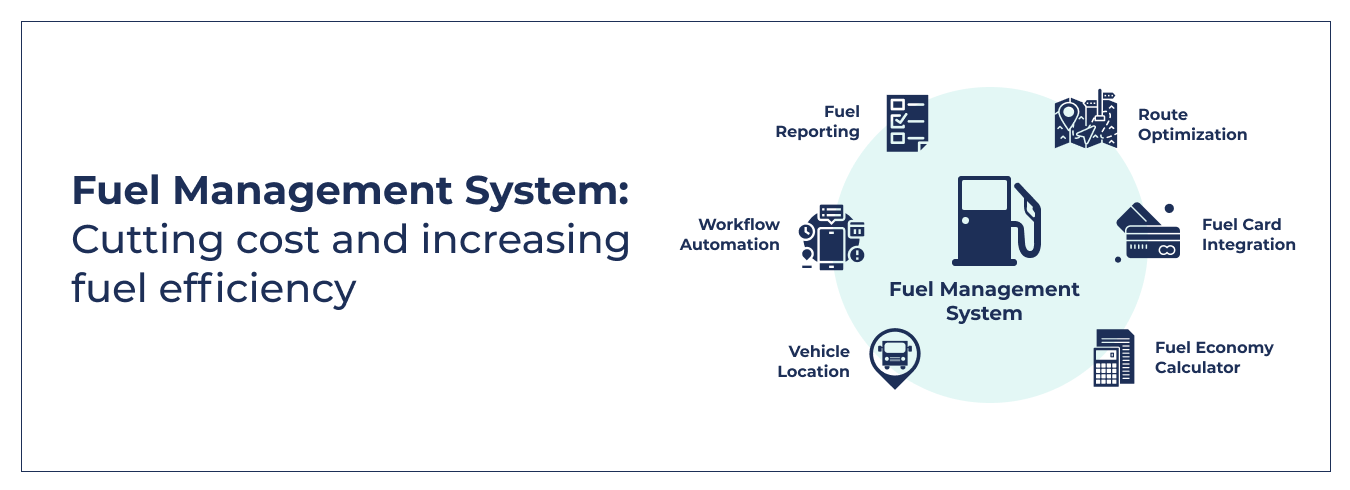
4. Fuel Optimization and Preventative Maintenance
AI dashcams help track driving habits that impact fuel efficiency. By analyzing patterns such as harsh braking or unnecessary idling, fleet managers can provide targeted driver training to reduce fuel consumption and extend vehicle lifespan.
5. Seamless Integration with Fleet Management Systems
AI dashcams work best when integrated with comprehensive fleet management platforms like Fleetx. These platforms collect and analyze data from multiple sources, offering fleet managers a centralized dashboard to monitor performance, plan maintenance, and improve decision-making.
Why AI Dashcams Deliver Better ROI Than Traditional Dashcams for Commercial Fleets
While conventional dashcams primarily serve as recording devices, AI-powered dashcams act as intelligent fleet safety assistants. They continuously analyse driving behaviour, identify potential risks, and provide actionable insights that help fleet operators reduce accidents, improve driver performance, and optimise operating costs. For transport companies managing long-haul or regional fleets, the difference extends beyond safety—it directly impacts profitability, compliance, and customer satisfaction.
AI Dashcam vs Traditional Dashcam Comparison
| Feature | Traditional Dashcam | AI-Powered Dashcam |
|---|---|---|
| Video Recording | Records footage only | Records and analyses footage in real time |
| Driver Fatigue Detection | Not available | Detects fatigue and drowsiness instantly |
| Mobile Phone Detection | No | Yes |
| Collision Warning | No | Yes, with AI-powered alerts |
| Driver Behaviour Monitoring | Limited | Tracks harsh braking, acceleration, distraction, overspeeding and more |
| Fleet Management Integration | Usually unavailable | Fully integrates with fleet management platforms |
| Incident Alerts | After the event | Real-time notifications |
| Coaching Support | Manual video review | Automated driver scorecards and coaching insights |
| Insurance & Claims | Limited evidence | AI-tagged incident footage for faster claim resolution |
| Business Value | Basic compliance | Improves safety, efficiency and operational visibility |
Business Benefits of Upgrading to AI Dashcams
Organisations that integrate AI-powered dashcams into their fleet management ecosystem can achieve measurable operational improvements, including:
- Faster identification of unsafe driving patterns before accidents occur.
- Reduced accident-related downtime through proactive monitoring.
- Better driver accountability using AI-generated event reports.
- Improved insurance documentation with timestamped video evidence.
- Enhanced customer confidence through safer transportation practices.
- Greater visibility across multi-location and long-distance fleet operations.
For fleet operators managing commercial vehicles across India, AI dashcams create a connected safety ecosystem where every trip contributes valuable operational intelligence rather than simply producing recorded footage.
Key Performance Indicators (KPIs) Fleet Managers Should Track After AI Dashcam Deployment
Installing AI dashcams is only the first step. To maximise return on investment, fleet managers should continuously measure operational performance using well-defined KPIs. Monitoring these metrics helps determine whether driver coaching, safety initiatives, and fleet optimisation strategies are producing measurable improvements.
Essential Fleet Safety KPIs
| KPI | Why It Matters | Expected Business Impact |
|---|---|---|
| Driver Distraction Events | Measures unsafe driving habits | Fewer accidents and violations |
| Fatigue Alerts | Identifies drowsy driving incidents | Improved highway safety |
| Harsh Braking Frequency | Indicates aggressive driving | Lower maintenance costs |
| Overspeeding Incidents | Tracks speeding behaviour | Better compliance and fuel efficiency |
| Collision Warning Events | Predicts near-miss situations | Reduced accident probability |
| Driver Safety Score | Measures overall driving quality | Better coaching decisions |
| Video-Based Incident Resolution Time | Tracks investigation efficiency | Faster insurance settlements |
| Repeat Safety Violations | Highlights recurring driver risks | Targeted driver training |
Best Practices for Fleet Managers
To maximise the value of AI dashcams, organisations should:
- Review safety reports on a weekly basis instead of waiting for incidents.
- Conduct monthly driver coaching sessions using AI-generated video clips.
- Integrate dashcam data with GPS tracking and trip management systems.
- Reward consistently safe drivers through performance-based recognition programmes.
- Use historical safety trends to improve route planning and operational decisions.
- Monitor recurring events to identify whether additional driver training is required.
Rather than treating AI dashcams as standalone hardware, fleet operators should view them as a continuous source of operational intelligence that supports long-term fleet optimisation.
To Conclude
AI dashcams are transforming the way OTR carriers operate by providing real-time insights, improving driver safety, reducing operational costs, and enhancing security. By integrating AI-powered monitoring with a smart fleet management system like Fleetx, logistics companies can proactively tackle challenges and boost efficiency in India's booming transportation industry.
For businesses looking to enhance safety, optimize costs, and improve overall fleet performance, investing in AI dashcams is a step toward smarter, and safer logistics operations. Explore Fleetx’s AI-powered solutions today to secure your organization’s future!
FAQs on AI Dashcam Integration for Fleet Safety and OTR Carriers
What is AI dashcam integration in fleet management? ▼
AI dashcam integration in fleet management means connecting smart dashboard cameras with a fleet monitoring platform so that video, driver behaviour data, GPS location, alerts, and incident records can be viewed from one system. Unlike a basic dashcam that only records footage, an AI dashcam uses computer vision and artificial intelligence to detect risky driving events such as distraction, drowsiness, lane deviation, harsh braking, tailgating, smoking, mobile phone use, and possible collision risks.
For over-the-road carriers in India, this is useful because vehicles often travel across highways, state borders, industrial routes, toll roads, and remote areas where manual supervision is difficult. AI dashcam integration helps fleet managers identify unsafe driving patterns before they turn into accidents or claims.
- It improves real-time driver monitoring.
- It supports faster incident investigation with video proof.
- It helps reduce fuel wastage caused by poor driving habits.
- It strengthens cargo security during long-haul movement.
For logistics companies operating in Delhi NCR, Gurgaon, Mumbai, Bengaluru, Pune, and other high-density transport corridors, AI dashcams can become an important part of a proactive fleet safety strategy.
How do AI dashcams help over-the-road carriers improve driver safety? ▼
AI dashcams help over-the-road carriers improve driver safety by detecting risky behaviour in real time and sending alerts before the situation becomes serious. Long-haul drivers often face fatigue, distraction, night driving challenges, traffic congestion, and pressure to meet delivery timelines. These factors can increase the risk of accidents, especially on highways and busy logistics routes.
An AI-powered dashcam can monitor both the road and the driver cabin. Road-facing cameras identify potential collision risks, sudden braking, unsafe lane changes, and close following distance. Driver-facing cameras can detect signs of drowsiness, phone usage, distraction, smoking, or not wearing a seat belt.
For fleet managers, this creates a proactive safety system rather than a reactive one. Instead of reviewing footage only after an accident, managers can receive alerts, identify repeat behaviour, and coach drivers based on real evidence.
- Drivers receive instant alerts for fatigue or distraction.
- Fleet teams can track repeated unsafe driving patterns.
- Video evidence supports fair driver coaching.
- Incident response becomes faster and more accurate.
This is especially valuable for OTR carriers operating across India’s long highway routes where direct supervision is limited.
What is the cost of AI dashcam installation for trucks in India? ▼
The cost of AI dashcam installation for trucks in India usually depends on the camera type, number of channels, AI features, cloud storage, GPS integration, installation support, and fleet management platform subscription. A basic commercial dashcam may cost less, but AI dashcams with real-time alerts, driver monitoring, cloud video access, and fleet dashboard integration are priced higher because they offer safety intelligence rather than simple video recording.
As a general market range, AI dashcam hardware for commercial vehicles may start from around ₹8,000 to ₹15,000 per vehicle for entry-level setups. Advanced dual-facing or multi-camera systems with AI alerts, driver monitoring, night vision, and cloud connectivity may range from ₹18,000 to ₹45,000 or more per vehicle, depending on configuration. Monthly software or platform charges may also apply for video storage, analytics, alerts, and reporting.
Fleet operators should not evaluate the cost only as a device purchase. The better approach is to compare it with savings from reduced accidents, faster insurance claims, lower fuel wastage, fewer theft incidents, and improved driver accountability.
- Basic dashcam: lower upfront cost but limited intelligence.
- AI dashcam: higher cost but stronger safety and analytics.
- Integrated solution: best for fleets needing real-time visibility.
Which is the best AI dashcam solution for logistics fleets in Delhi NCR and Gurgaon? ▼
The best AI dashcam solution for logistics fleets in Delhi NCR and Gurgaon is one that combines real-time video monitoring, driver behaviour alerts, GPS tracking, route visibility, incident reporting, and integration with a fleet management system. Gurgaon and Delhi NCR have a high concentration of logistics hubs, warehouses, expressways, last-mile delivery routes, and corporate transport operations, making proactive monitoring important for both safety and operational control.
Fleet operators in this region should look for AI dashcams that can detect fatigue, distraction, harsh braking, overspeeding, sudden lane changes, and possible collision risks. Since many trucks and commercial vehicles move through routes such as NH48, Delhi-Jaipur highway, Kundli-Manesar-Palwal corridor, Noida-Greater Noida routes, and industrial zones, the system should also support reliable connectivity and cloud-based access.
A top AI dashcam solution should include:
- Driver-facing and road-facing camera options.
- Real-time alerts for risky driving behaviour.
- Video evidence for accidents and disputes.
- Central dashboard for fleet managers.
- Integration with GPS, maintenance, fuel, and trip data.
For Delhi NCR and Gurgaon fleets, the most effective solution is not just the camera, but a complete video telematics platform that helps reduce risk, improve accountability, and support safer fleet operations.
How can AI dashcams reduce accident claims and liability for Indian fleet operators? ▼
AI dashcams can reduce accident claims and liability for Indian fleet operators by providing objective video evidence and real-time event data. In many road incidents, it can be difficult to determine whether the driver, another vehicle, road conditions, or external factors caused the accident. Without proof, fleet operators may face higher claim costs, legal disputes, vehicle downtime, and reputational damage.
An AI dashcam records critical moments before, during, and after an incident. This helps fleet managers review what actually happened and respond with accurate information. If the driver was not at fault, the footage can support insurance claims and protect the company from false allegations. If unsafe driving was involved, the operator can use the data for driver coaching and corrective action.
AI dashcams also help prevent incidents before they happen. Alerts for tailgating, distraction, drowsiness, overspeeding, and harsh braking allow drivers and managers to act early.
- Video proof supports faster incident investigation.
- False claims can be challenged with evidence.
- Driver coaching becomes more data-driven.
- Repeat unsafe behaviour can be identified and reduced.
For Indian logistics companies running trucks, buses, and commercial fleets across high-risk corridors, AI dashcams can improve safety compliance and reduce financial exposure.
Are AI dashcams useful for fleet operations in Mumbai, Pune, and Bengaluru? ▼
Yes, AI dashcams are highly useful for fleet operations in Mumbai, Pune, and Bengaluru because these cities have dense traffic, high delivery volumes, industrial corridors, and complex urban logistics routes. Fleet vehicles in these locations often deal with congestion, sudden braking, two-wheeler traffic, narrow roads, night movement, loading delays, and higher accident risks.
In Mumbai, AI dashcams can help fleets moving through port areas, warehouses, city routes, and surrounding logistics corridors. In Pune, they are useful for industrial and manufacturing supply chains, especially vehicles moving between factories, warehouses, and highways. In Bengaluru, where traffic congestion and last-mile delivery pressure are common, AI dashcams help monitor driver behaviour and improve route safety.
For commercial fleets, the biggest advantage is visibility. Fleet managers can track risky driving, review video clips, identify fatigue or distraction, and respond quickly to incidents. This helps improve safety while also reducing vehicle downtime and operational uncertainty.
- Mumbai fleets benefit from cargo security and incident evidence.
- Pune fleets benefit from industrial route monitoring.
- Bengaluru fleets benefit from urban driving behaviour insights.
- All three cities benefit from real-time video telematics.
For companies seeking the best safety technology for urban and highway fleets, AI dashcam integration is a strong upgrade.
What features should a top AI dashcam for trucks include? ▼
A top AI dashcam for trucks should include more than video recording. It should provide real-time safety intelligence, driver behaviour monitoring, cloud access, and integration with fleet management software. For over-the-road carriers, the dashcam must work reliably during long trips, highway movement, night driving, and remote route operations.
The most important feature is AI-based event detection. This allows the system to identify risky events such as drowsiness, distraction, smoking, mobile phone usage, harsh braking, sudden acceleration, tailgating, lane departure, and possible collision risk. The camera should also support high-quality video recording, night vision, GPS tagging, and event-based video clips.
Fleet managers should also check whether the system offers a centralized dashboard, driver scorecards, real-time alerts, trip history, and video retrieval. These features help turn raw footage into useful operational insights.
- Road-facing and driver-facing camera support.
- AI alerts for fatigue, distraction, and unsafe driving.
- Cloud-based video storage and event playback.
- GPS and route data integration.
- Driver coaching reports and safety analytics.
- Compatibility with fleet management platforms.
For Indian fleets, the best AI dashcam should be durable, scalable, easy to install, and suitable for trucks, buses, trailers, and commercial vehicles.
Can AI dashcam integration help reduce fuel and maintenance costs? ▼
Yes, AI dashcam integration can help reduce fuel and maintenance costs by identifying driving behaviour that causes unnecessary vehicle stress and fuel wastage. Many fleet expenses are linked to how vehicles are driven. Harsh braking, rapid acceleration, overspeeding, sharp cornering, excessive idling, and aggressive driving can increase fuel consumption, tyre wear, brake wear, and maintenance frequency.
When AI dashcams are connected with a fleet management system, managers can identify these patterns using event alerts and driver reports. Instead of relying only on fuel bills or maintenance records after the cost has already occurred, fleet teams can take preventive action. Drivers can be coached to follow safer and more fuel-efficient driving practices.
This is especially useful for long-haul carriers in India, where vehicles may cover thousands of kilometres across highways, industrial corridors, and city routes. Small improvements in driving behaviour can create noticeable savings when applied across a large fleet.
- Reduced harsh braking can lower brake wear.
- Lower idling can reduce fuel wastage.
- Smoother acceleration can improve mileage.
- Safer driving can reduce accident-related repair costs.
For logistics companies, AI dashcam integration supports both safety and cost optimisation, making it valuable for fleet performance improvement.
Is AI dashcam integration suitable for small and mid-sized fleets in India? ▼
AI dashcam integration is suitable for small and mid-sized fleets in India when the business needs better safety control, driver accountability, cargo protection, and incident visibility. While large logistics companies often adopt video telematics first, smaller fleets can also benefit because even one major accident, theft case, or false claim can create a significant financial impact.
For a small fleet, AI dashcams help owners monitor vehicles without being physically present. They can receive alerts for unsafe driving, review trip footage, check route events, and use video evidence when disputes occur. For mid-sized fleets, the technology becomes even more useful because managers need a scalable way to monitor multiple drivers and vehicles across different routes.
The cost can vary depending on whether the fleet chooses a basic camera setup or a more advanced AI-powered video telematics system. Many businesses start with high-risk vehicles or long-haul routes first and then expand gradually.
- Small fleets benefit from theft prevention and driver visibility.
- Mid-sized fleets benefit from safety analytics and reports.
- Growing fleets benefit from scalable fleet management integration.
- High-risk routes can be prioritised for faster ROI.
For Indian transporters, AI dashcams are not only for large enterprises; they can also support safer and more controlled operations for smaller fleet owners.
How should fleet managers choose the best AI dashcam vendor in India? ▼
Fleet managers should choose the best AI dashcam vendor in India by evaluating the complete solution, not just the camera hardware. A good vendor should offer reliable devices, AI-based safety alerts, cloud video access, dashboard reporting, installation support, and integration with fleet management systems. The goal is to improve operational visibility, not simply record videos.
Before selecting a vendor, fleet operators should identify their use case. A highway trucking company may need fatigue alerts, collision warnings, and driver behaviour reports. A city delivery fleet may need harsh braking, route monitoring, and incident clips. A cargo fleet may prioritise theft alerts, cabin monitoring, and night visibility.
Important evaluation points include:
- AI accuracy for driver and road event detection.
- Quality of video in day and night conditions.
- Ease of retrieving incident footage.
- Integration with GPS, fuel, maintenance, and trip data.
- Local support in India, Delhi NCR, Gurgaon, Mumbai, Bengaluru, Pune, and other operating regions.
- Transparent pricing for hardware, installation, and software subscriptions.
The top AI dashcam vendor should help fleet managers reduce accidents, improve driver coaching, support claims, and optimise fleet performance through actionable video telematics insights.