
Understanding the global supply of gold and silver
Gold and silver are extremely valuable commodities and thus require a robust supply chain management as well. The supply chain of gold and silver is not only limited to the finished goods made out of them but their raw transportation from the place of origin to destination among other trade flows are also important.
Let’s look at the silver supply chain first due to its application across various industries like renewables, electronics, jewellery, among others. A major chunk of global silver production takes place in Latin American countries which also witness the highest number of mining conflicts. Thus, it is a source for frequent disruptions in the supply chain of silver. Covid-19 related disruptions also led to closure of several silver mines, thus reducing the global silver production by 46 million ounces or 1.3 million kgs in 2020 as compared to 2019. Moreover, several older silver mines across the world have also been ageing and strain the supply of silver across the world. On the other hand, gold supply chains are not free from disruptions. According to a S&P Global, gold production in 2020 fell below 100 million ounces or 2.8 million kgs.
It is quite clear that the global supply of gold and silver from their primary sources face substantial risk of volatility due to various reasons and can be often disrupted leading to sharp rise in cost of production. Thus, businesses in this sector need to strengthen their supply chain management in order to factor the risk of disruption in their decision-making.

How is the gold and silver supply chain managed?
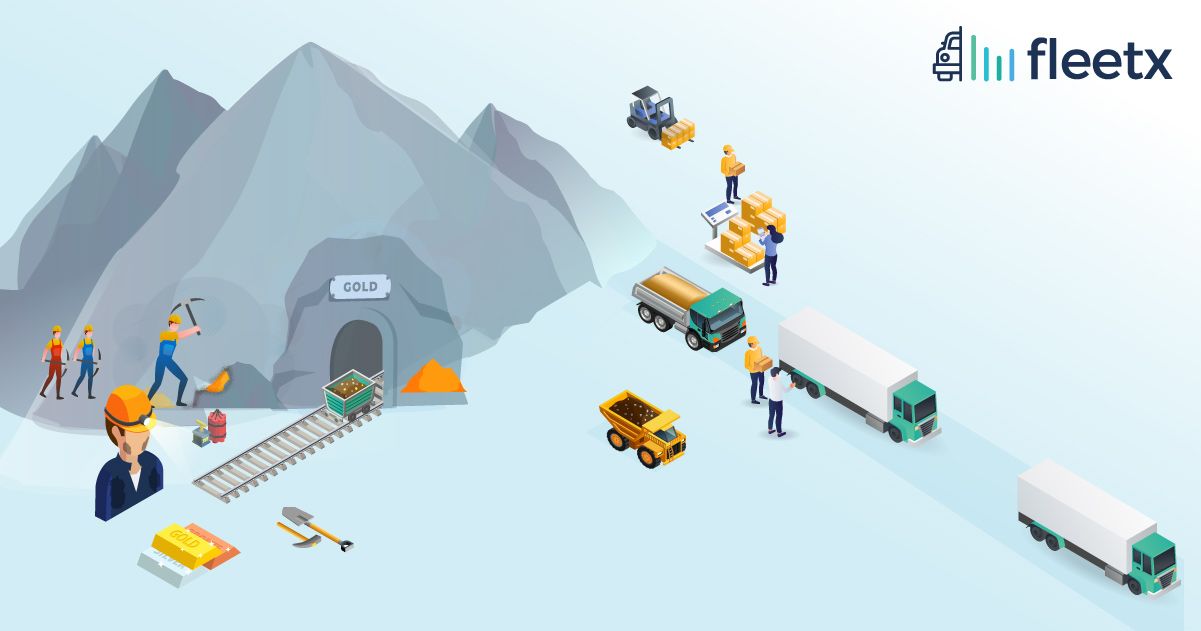
The above figure from Vaulted roughly describes how the supply chain of precious metals works that includes the gold and silver supply chain.
The supply chain of gold and silver entails transportation across countries and continents through ships, trains, planes and armoured trucks. Several different types of businesses need to manage the supply chain of gold and silver to carry out their business operations. They include,
- Jewellery-related businesses such as Titan, Kalyan Jewellers, and PC Jewellers, among others.
- Commercial banks or gold banks and financial institutions like Muthoot Finance, State Bank of India, HDFC Bank, etc.
- Chip manufacturers for industries like aviation, renewables, electronics, etc.
Several other industries and businesses require gold or silver as a raw material to produce their goods, thus, they require a disruption-free inflow of them to effectively carry out their business operations.
Regulatory requirements
As gold and silver are both precious minerals, they are bound to have a lot of paperwork and regulatory requirements for transportation between states. For example, transportation of goods in India requires the generation of E-way bill and recently E-way bill has become mandatory for gold as well. Based on the outcomes of the GST Council meeting in 2022, validity of e-way bill for gold transportation is calculated on pin-to-pin distance and all items listed in the e-way bill need to fall under the HSN chapter 71. Moreover, state governments are at liberty to fix threshold limits for the purpose of transportation of precious minerals. Taxpayers are also not required to update e-way bills with vehicle/transport details under Part-B on grounds of safety. Lastly, other changes include,
- No update on the transporter is allowed
- There is no option to generate a consolidated e-way bill
- Extension of validity of e-way bill is permitted without the need to revise the Part-B
- There is no option of multi-vehicle
Insurance requirements
Transportation is a risky business particularly in the cases of precious metals like gold and silver with high tangible value. Thus, covering gold and silver during transit is one of the most logical requirements for businesses. Precious metals like gold and silver are usually covered under block insurance policies that are specially designed for jewelleries to protect businesses and traders from loss or damages. It provides a wide range of cover for businesses dealing with precious metals like gold and silver jewelleries that includes, any damages or loss incurred on premises and during transit. Jeweller’s block policy period ranges for 1 year and is only applicable to jewellers who are retailers or wholesalers.
Vaulting
Gold Monetization Scheme was notified in 2015 by the Indian Government to reduce the import of gold to meet domestic demand. The scheme also aimed at improving and supporting the gold and jewellery sector by providing gold loans from banks. To protect the depositors the scheme also included provision for providing depositors a certificate mentioning the gold quantity and purity, thus, improving transparency. Under the scheme, gold can be deposited or redeemed at various branches of the banks across the country. As a result, banks need to transport gold across their branches for the purpose of vaulting the deposits to ensure availability in case of redemption. Thus, strengthening the gold supply chain is critical for properly implementing the scheme and safe and efficient transportation of gold across state lines becomes critical.
Transportation
Transportation is at the centre of gold and silver supply chain management and inherently deals with two aspects: transportation within the country and transportation across international borders. Moreover, transportation of gold and silver is done either Business-to-Business (B2B), where producers directly provide refined gold to businesses like jewellery makers or Business-to-Consumer (B2C), where businesses need to provide goods directly to the retail customers. Jewellers usually rely on courier partners for both domestic and international shipping. The delivery time for shipping is usually between 5-7 business days for domestic shipping and 15-21 days for international shipping as the shipment is subject to several other regulatory checks such as custom clearances.
Several logistics solution providers have adopted technology to provide businesses a more safe, reliable and efficient supply chain management solutions for gold and silver among other precious metals. For transport purposes, accreditation from organisations like International Air Transport Association (IATA) makes them more reliable. Since such accreditations come from regular audits of transporters operation procedures on grounds of safety, reliability, standards and best practices.
Logistics service providers that deal with supply chain management of precious metals like gold and silver usually provide other services including vaulting and warehousing in addition to transport services. Lastly, commercial transportation of gold and silver through road transportation is usually carried out in armoured vehicles with ample security to avoid any mishaps during transportation.
Challenges faced during gold and silver supply chain management
Like all cargo, transportation of precious metals like gold and silver are faced with similar challenges encountered during transportation of other goods. The differentiating factor is usually the value of cargo. Thus, the margin of error is substantially less as businesses and transporters cannot afford to have lapses such as cargo theft in case of coal or metal transportation.
Transporters and businesses need to pay more attention to the challenges pertaining to the supply chain visibility for both B2B and B2C transactions. However, the jewellery business is one of the most traditional businesses and over-reliant on direct interaction between stakeholders, particularly small and medium sized businesses.. It is even more apparent in cases of jewellery retailers and wholesalers as they have more or less been slow in adoption of technology-backed fleet management solutions that can improve supply chain visibility as well as efficiency of operations. Supply chain Due Diligence is an important aspect for businesses and transporters in the industry to adopt. The gold industry very recently has acknowledged the need for supply chain due diligence for the purposes of risk management. One of the key reasons given by businesses engaged in gold and silver products for the lack of transparency is safety and confidentiality. However, in today’s world when most businesses, several engaged in high-value cargo supply chains, have adopted technology-based solutions to improve transparency and efficiency, such arguments don’t stand.
Final Thoughts
Supply chains of businesses across industries have unanimously benefited from the inclusion of technology-based supply chain solutions in their operations and gold and silver supply chains would be no exception. Thus, businesses and supply chain solutions providers need to actively work to co-create solutions that are custom suited for businesses dealing with gold and silver, among other precious metals to make the process efficient, transparent and cost-effective.
Frequently Asked Questions About Gold and Silver Supply Chain Management
1. What is gold and silver supply chain management?
Gold and silver supply chain management is the coordinated process of sourcing, refining, storing, transporting, documenting and delivering precious metals from mines or recycled sources to manufacturers, banks, jewellers and consumers. The chain may include miners, refiners, assaying centres, bullion dealers, banks, secure logistics companies, vault operators, jewellery manufacturers, wholesalers and retailers. Because gold and silver have high monetary value, a small operational failure can create a significant financial, security or reputational loss.
In India, the process must account for taxation, invoices, applicable e-way bill rules, insurance, purity verification and state-level transportation requirements. A domestic movement could begin at an authorised refinery, pass through a secure vault and end at a jewellery manufacturing cluster in Mumbai, Delhi, Gurgaon, Bengaluru or another city. International shipments may also require customs documentation, declared valuation, tamper-resistant packaging and an approved secure carrier.
An effective precious metal supply chain typically includes:
- Verified sourcing and supplier due diligence;
- Assaying, hallmarking and accurate weight records;
- Restricted access, surveillance and secure vaulting;
- Insured transport with controlled route visibility;
- Digital proof of custody and exception alerts; and
- Regulatory, tax and customs documentation.
The objective is not simply to move gold or silver quickly. It is to maintain traceability, security, purity and documented custody at every stage. Businesses should design controls according to shipment value, route risk, metal form and applicable regulations rather than applying a standard freight process to high-value cargo.
2. How does the gold and silver supply chain work in India?
The gold and silver supply chain in India connects imports, domestic mines, recycling networks, authorised refiners, bullion dealers, banks, jewellery manufacturers and retail markets. Imported precious metals generally enter through approved ports or airports and pass through customs assessment before being transferred to secure warehouses, vaults or refineries. Recycled jewellery and industrial scrap form another important supply stream and must be tested for purity before entering production again.
After refining, bars, coins, granules or other metal forms are supplied to jewellery manufacturers and industrial users. Gold may move to manufacturing and trading centres such as Mumbai, Delhi NCR, Jaipur, Ahmedabad, Bengaluru and Chennai. Silver also serves electronics, solar energy, medical and other industrial applications, so its supply chain extends beyond jewellery businesses.
Common controls in an Indian precious metal movement include:
- A tax invoice and applicable GST documentation;
- An e-way bill where the relevant legal conditions apply;
- Verified weight, purity, seal and package identification;
- Jeweller’s block, transit or another suitable insurance policy;
- Secure vehicles, trained personnel and restricted route access; and
- Proof of pickup, custody transfer and delivery.
The exact requirements can vary with consignment value, origin, destination, mode of transport and current central or state rules. Companies should verify requirements with qualified tax, customs, insurance and security professionals before dispatch. Digitising documents and custody events helps businesses reconcile inventory faster and investigate delays or discrepancies without exposing sensitive shipment details unnecessarily.
3. What are the biggest risks in transporting gold and silver?
The biggest risks in gold and silver transportation are theft, unauthorised access, route deviation, documentation errors, tampering, internal fraud and loss of visibility during custody transfers. Precious metals have a high value relative to their size, making even a compact shipment attractive to organised criminals. Risk can also arise from traffic disruption, vehicle breakdown, severe weather, inadequate packaging and inaccurate declarations.
Businesses should treat security as a layered system rather than relying on a single GPS device or guard. A strong risk-control framework can include:
- Background-verified drivers and authorised handling personnel;
- Route risk assessments and controlled dispatch windows;
- Live location monitoring with geofence and route-deviation alerts;
- Tamper-evident seals and package-level identification;
- Dual authorisation for pickup, access and delivery;
- Secure communication and limited disclosure of cargo details;
- Documented chain of custody at every handover; and
- Insurance aligned with the consignment’s declared value and route.
Urban routes in Delhi NCR, Gurgaon and Mumbai require additional planning because congestion can create unpredictable stoppages. Longer dwell time can increase exposure, although the risk depends on the actual route and security measures. Businesses should configure alerts for unplanned halts, door opening, device disconnection and late arrival.
No system can eliminate every risk. The best approach combines physical security, trained teams, digital monitoring, adequate insurance and tested incident-response procedures. Shipment data should be available only to authorised users because excessive visibility can itself become a security vulnerability.
4. What compliance documents are required for transporting gold and silver in India?
Documents for transporting gold and silver in India depend on the transaction, consignment value, route, ownership and whether the movement is domestic or international. A tax invoice or another legally valid movement document is normally fundamental. An e-way bill may also be required when the transaction meets applicable legal conditions. Precious metals and jewellery generally fall within Chapter 71 of the Harmonised System of Nomenclature, but businesses must select the correct classification for the actual goods.
A compliant shipment file may include:
- Tax invoice, delivery challan or other applicable document;
- E-way bill, where required under current GST rules;
- Correct HSN classification and declared quantity or weight;
- Assay, purity, hallmarking or refinery documentation where relevant;
- Insurance certificate and consignment declaration;
- Transporter authorisation and secure custody records;
- Pickup, seal, vehicle and delivery confirmation; and
- Customs, import or export documents for cross-border movements.
Businesses should not rely on an old checklist because GST, e-way bill, customs and state-level procedures can change. The correct process may also differ for bullion, jewellery, coins, industrial silver and scrap. Before dispatch, the tax or compliance team should validate the latest requirements through official portals and qualified advisers.
Digital document management can reduce mismatches between invoices, shipment records and inventory. However, technology does not replace legal review. Companies should retain an auditable chain of approvals while restricting access to sensitive information such as cargo value, vehicle identity and route details.
5. How much does secure gold and silver transportation cost in India?
Secure gold and silver transportation costs in India do not follow a single published rate because pricing is risk-based. The final price depends on the declared value, distance, shipment frequency, vehicle type, number of guards, insurance, vaulting time, packaging, pickup conditions and delivery service level. A dedicated armoured movement between cities will generally cost more than a scheduled, consolidated service within one metropolitan area.
For budgeting only, a local secure movement may range from approximately ₹5,000 to ₹25,000 or more, while an intercity dedicated movement can range from roughly ₹25,000 to ₹1,50,000 or higher. High-value consignments requiring additional guards, air transport, overnight vaulting or specialised insurance may exceed these indicative ranges. Some providers quote a base logistics charge plus a risk or valuation-based component.
Businesses should request an itemised quotation covering:
- Secure pickup and delivery charges;
- Dedicated versus consolidated transportation;
- Insurance limits, deductibles and exclusions;
- Guarding, armoured vehicle and escort requirements;
- Vaulting, waiting time and failed-delivery charges;
- Technology, tracking and proof-of-delivery fees; and
- Taxes and route-specific surcharges.
These ranges are indicative estimates, not market-standard prices. Quotes can differ substantially between Delhi, Gurgaon, Mumbai, Bengaluru and Pune and according to confidential risk assessments. The cheapest quote may not provide the best protection. Buyers should compare security protocols, insurance wording, chain-of-custody controls, incident history and service coverage before selecting a provider.
6. How can jewellers choose the best gold and silver logistics provider in Delhi NCR and Gurgaon?
Jewellers choosing the best gold and silver logistics provider in Delhi NCR or Gurgaon should evaluate security capability, regulatory readiness, insurance, service coverage and chain-of-custody controls. The provider should understand movements between trading areas, manufacturing units, airports, vaults, banks and retail stores across Delhi, Gurugram, Noida, Faridabad and Ghaziabad. Familiarity with local congestion and access restrictions is useful, but providers should not disclose sensitive route details publicly.
A practical vendor assessment should examine:
- Experience with bullion, jewellery or other high-value cargo;
- Armoured vehicles, vetted personnel and access-control procedures;
- Live monitoring, geofencing and tamper or door alerts;
- Documented pickup, seal and delivery verification;
- Insurance limits, exclusions and claim-support procedures;
- Emergency response and escalation timelines;
- Secure vaulting or approved partner facilities; and
- Audit reports, client references and staff training records.
Businesses should conduct a pilot shipment before signing a long-term contract. The test can measure pickup punctuality, communication, alert accuracy, proof of delivery and reconciliation time. Commercial proposals should clearly distinguish dedicated transport from consolidated movement and specify charges for waiting, additional guards, vaulting and failed delivery.
The top provider is not necessarily the one with the lowest rate or the most tracking features. It is the provider whose physical security, operating procedures, liability protection and digital controls match the shipment’s actual risk. Contracts should also define confidentiality, data retention, subcontracting and incident-reporting responsibilities.
7. What is the best way to manage precious metal logistics in Mumbai and Pune?
The best way to manage precious metal logistics in Mumbai and Pune is to combine secure handling, controlled route planning, real-time exception management and accurate custody documentation. Mumbai is a major bullion, jewellery, banking, port and air-cargo centre, while Pune has manufacturing, technology and industrial demand. Shipments may therefore connect airports, customs facilities, refineries, vaults, jewellery markets, factories and retail locations.
A suitable operating plan should include:
- Risk assessment for each origin, destination and transfer point;
- Pre-approved dispatch windows that consider congestion;
- Restricted access to vehicle, cargo and route information;
- Geofence, stoppage, tamper and delayed-arrival alerts;
- Verified seals, weights and package identifiers;
- Contingency arrangements for breakdowns or delivery rejection;
- Secure temporary vaulting where same-day delivery is impossible; and
- Digital confirmation for every custody transfer.
Cost depends on consignment value and service design. A scheduled metropolitan pickup may cost several thousand rupees, whereas a dedicated Mumbai–Pune armoured trip with guards and insurance could run into tens of thousands of rupees or more. Providers must issue a shipment-specific quotation because public flat rates rarely reflect the true risk.
Companies should also avoid sharing live routes through unsecured messaging groups. A central monitoring team should receive alerts and follow a written escalation procedure. Regular audits can identify repeated stoppages, delayed handovers and documentation gaps, enabling the business to improve security without unnecessarily increasing operating cost.
8. How can technology improve gold and silver supply chain visibility?
Technology improves gold and silver supply chain visibility by creating controlled, time-stamped records of location, custody, condition and delivery. GPS and telematics platforms can identify unplanned stops, route deviations, delayed arrivals or device disconnection. Electronic seals, barcode or RFID identifiers and digital proof of delivery can link a physical package to an authorised shipment record.
Useful technology capabilities include:
- Live vehicle location with role-based access;
- Geofences around approved pickup, vault and delivery points;
- Alerts for route deviation, excessive stoppage and late arrival;
- Door, lock, seal or tamper-event monitoring where appropriate;
- Digital invoices and chain-of-custody acknowledgements;
- Multi-factor authentication for sensitive shipment data;
- Automated reconciliation of dispatch and delivery weights; and
- Dashboards for incidents, turnaround time and compliance exceptions.
Implementation costs vary. Basic fleet tracking may cost approximately ₹500 to ₹2,000 per vehicle per month, while hardware installation can range from a few thousand rupees upward. Advanced sensors, control-room monitoring, integrations and enterprise security can raise the total substantially. These figures are broad planning estimates and should be confirmed with vendors.
Visibility must be balanced with confidentiality. A platform should not expose high-value cargo movements to every employee or external party. The top solution uses encryption, access logs, alert escalation and limited data sharing. Technology supports decision-making, but it must operate alongside secure vehicles, vetted personnel, insurance and documented physical procedures.
9. How should businesses manage gold and silver supply chains in Bengaluru and other technology hubs?
Businesses in Bengaluru and other technology hubs should manage gold and silver supply chains according to both jewellery demand and industrial use. Silver is used in electronics, electrical components, solar technologies and specialised manufacturing, while gold is used in jewellery, investment products and selected electronic applications. This creates different shipment profiles: finished jewellery needs retail-ready security, whereas industrial metals may require batch traceability, quality documentation and production-linked delivery schedules.
A Bengaluru-focused control framework can include:
- Separate risk classifications for bullion, jewellery and industrial material;
- Approved suppliers with documented sourcing and purity controls;
- Secure inbound scheduling for factories and jewellery outlets;
- Digital matching of purchase orders, weights and assay certificates;
- Geofenced transport with unplanned-stop alerts;
- Restricted access to cargo value and route information;
- Verified returns and scrap-recovery workflows; and
- Periodic reconciliation between physical stock and digital records.
Businesses should evaluate total supply chain cost rather than transport price alone. A lower logistics charge can be offset by production delays, manual reconciliation, poor claims support or insufficient insurance. Technology integrations may involve setup fees and monthly subscriptions, while secure transport and vaulting are normally priced by risk, distance and service frequency.
The best system provides enough visibility for operations without weakening confidentiality. Manufacturers, jewellers and logistics partners should agree on data ownership, incident reporting, retention periods and authorised users. Regular simulations of delays, tampering or delivery rejection can reveal procedural gaps before a real high-value shipment is affected.
10. How can companies build a secure, ethical and resilient gold and silver supply chain?
Companies can build a secure, ethical and resilient gold and silver supply chain by combining responsible sourcing, supplier due diligence, documented custody, physical protection and business-continuity planning. Resilience means the company can maintain safe operations when a mine closes, an import is delayed, a route becomes unavailable or a logistics partner fails. Ethical sourcing adds checks for origin, legal mining, labour practices, conflict exposure and environmental risk.
A structured improvement plan should include:
- Mapping mines, recyclers, refiners, traders, vaults and carriers;
- Risk-based supplier screening and periodic verification;
- Purity, weight and source documentation for incoming metal;
- Alternative suppliers and secure transport partners;
- Appropriate insurance and tested emergency procedures;
- Digital custody records with controlled user access;
- Audits of subcontractors and high-risk handover points; and
- Measurable targets for traceability, incidents and recovery time.
Businesses operating across India, including Delhi NCR, Gurgaon, Mumbai, Bengaluru and Pune, should adapt the framework to local routes, facilities and regulatory requirements. They should also confirm whether domestic, recycled and imported materials require different documentation or verification.
Resilience should not be measured only by delivery speed. Strong indicators include the percentage of verified suppliers, custody-record completion, alert-response time, inventory variance, claims resolution and recovery after disruption. The best supply chain is one that protects people and assets, maintains verifiable records and supports continuity without revealing sensitive operational details. Independent legal, tax, insurance and responsible-sourcing advice remains important for high-value or cross-border movements.