
“Galti to badi gaadi ki he maani jaati hai”
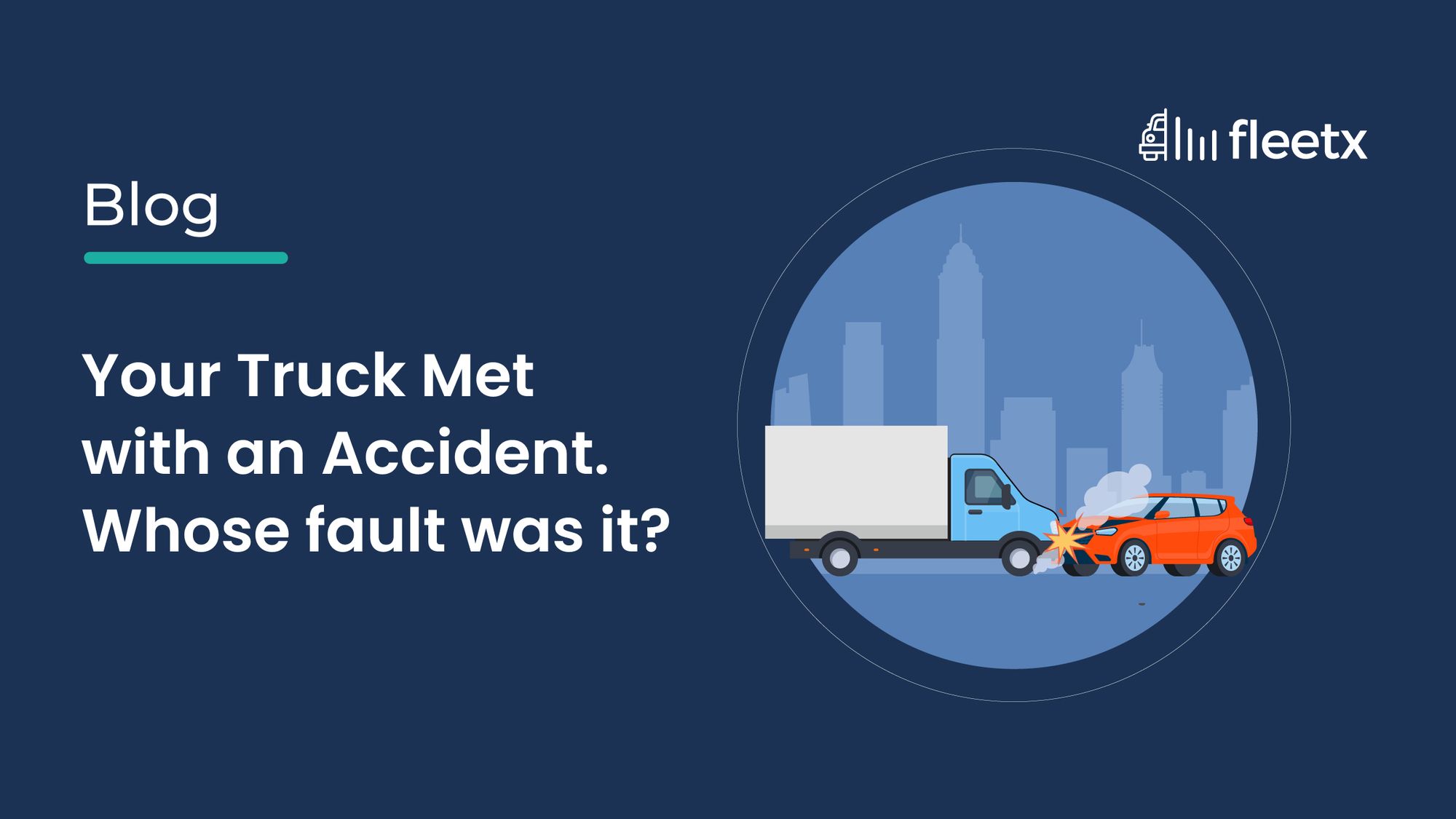
How many times have you heard this? Unfortunately, this perception becomes the final judgment in road accidents. And this logic/perception is usually never favourable for truck drivers and truck owners.
Let’s deep dive into this strange phenomenon.
The Misunderstood Truck Drivers: Changing Perceptions with Technology
“Truck wale to bhut he gandi gaadi chlaate hai!”
In India, truck accidents often lead to immediate blame on the truck and its driver. There is a widespread belief that truck drivers drive unsafely, which creates major challenges for truck owners. When an accident occurs, proving the driver’s innocence and claiming insurance can be an impossible task.
Ironically the Transporter that we are so quick to blame, knows that if the shipment that he is delivering is damaged even slightly, it would be an impossible task for him to get payment for it.
The Blame Game: A Common Scenario
From where did this perception originate?
This automatic blame has originated from several factors:
- Speed & Size: Many people believe truck drivers are reckless due to the sheer size and speed of their vehicles.
- Media Influence: News reports often highlight truck accidents, reinforcing the stereotype of dangerous truck drivers.
- Legal and Insurance Hurdles: Insurance companies and authorities might also lean towards blaming the truck driver, making the process of claiming insurance or avoiding fines more complicated.
The Impact on Truck Owners
For truck owners, this automatic blame is more than just a matter of reputation—it has tangible financial and legal consequences:
- Difficulty in Claiming Insurance: Insurance companies may refuse or delay claims, assuming the truck driver’s fault without thorough investigation.
- Legal Challenges: Proving the truck driver’s innocence in court can be an uphill battle, often requiring substantial evidence.
What is the Role of Video Telematics and Driver Behaviour Monitoring?
Fortunately, technological advancements are providing solutions that can help change this narrative. Two key technologies are making a significant impact: video telematics and driver behaviour monitoring.
Video Telematics:
Video telematics involves using cameras installed in and around the truck to record video footage. This footage can be invaluable in the event of an accident:
- Accident Reconstruction: Video footage can provide a clear, unbiased account of the accident, helping to reconstruct the events leading up to it.
- Evidence of Innocence: If the truck driver is not at fault, the footage can serve as concrete evidence to prove their innocence.
Driver Behaviour Monitoring:
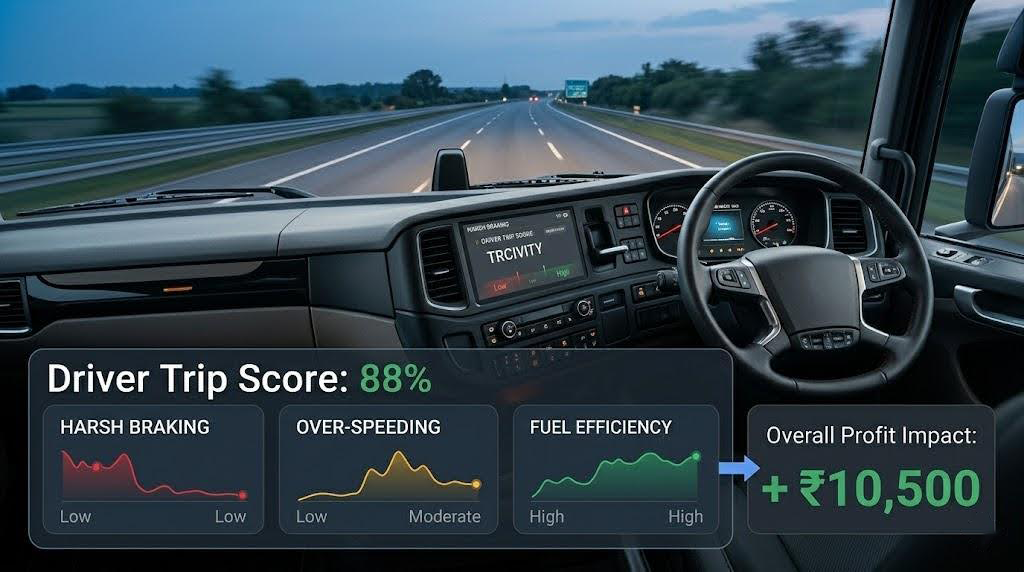
Driver behaviour monitoring systems track various aspects of the driver’s performance, such as speed, braking patterns, and adherence to traffic rules:
- Performance Data: This data helps build a profile of the driver’s behaviour, showing whether they are generally safe and cautious or prone to risky driving.
- In-Depth Analysis: In case of an accident, this data can be analyzed to demonstrate that the driver was adhering to safe driving practices.
What are the Benefits for Truck Owners and Drivers?
By leveraging these technologies, truck owners and drivers can experience several benefits:
- Easier Insurance Claims: With clear evidence from video footage and driver behaviour data, insurance companies are more likely to approve claims.
- Reduced Fines: Proving the driver’s innocence can help avoid fines and legal penalties.
- Improved Driver Training: Monitoring systems can also be used to improve driver training and ensure safer driving practices in the future.
Fleet Risk Management: Moving Beyond Accident Response to Accident Prevention
Many fleet operators focus on what happens after a road accident—filing insurance claims, repairing vehicles, and resolving liability disputes. However, the most successful logistics companies have shifted their attention towards fleet risk management, a proactive approach that identifies potential risks before they result in accidents. Instead of treating every incident as an isolated event, fleet risk management analyses patterns across vehicles, drivers, routes, and operating conditions to reduce the likelihood of future accidents while improving overall operational efficiency.
Fleet risk management is the systematic process of identifying, assessing, monitoring, and reducing factors that can negatively affect fleet operations. These factors include unsafe driving behaviour, driver fatigue, speeding, harsh braking, poor vehicle maintenance, route-specific hazards, adverse weather conditions, cargo-related risks, and regulatory non-compliance. By combining operational policies with real-time fleet data, organisations can create a safer transportation environment while protecting drivers, vehicles, cargo, and business reputation.
Modern fleet management platforms continuously collect operational data from connected vehicles, enabling fleet managers to detect risks before they escalate into costly incidents. Rather than relying solely on manual supervision or periodic inspections, businesses can make informed decisions using live operational insights. This shift from reactive management to predictive risk management helps organisations minimise downtime, reduce accident frequency, and improve long-term fleet performance.
An effective fleet risk management strategy generally focuses on several key areas:
- Driver risk assessment, including monitoring speeding, harsh acceleration, harsh braking, distraction, fatigue, mobile phone usage, and repeated traffic violations.
- Vehicle health monitoring, ensuring that maintenance schedules, tyre conditions, braking systems, engine diagnostics, and other critical components remain in optimal condition.
- Route risk evaluation, identifying accident-prone highways, congestion hotspots, construction zones, steep gradients, and areas with frequent weather-related disruptions.
- Operational compliance, ensuring adherence to transportation regulations, working-hour requirements, vehicle inspection schedules, and company safety policies.
- Continuous performance improvement, where historical fleet data is analysed to identify recurring risks and implement corrective actions through driver coaching, updated safety procedures, and operational planning.
Unlike traditional safety management, which often relies on incident reports after an accident has occurred, modern fleet risk management emphasises continuous monitoring and preventive action. Fleet managers can identify high-risk trends across the organisation, prioritise corrective measures, and build a long-term culture of safety rather than simply responding to emergencies.
Conclusion
The perception that truck drivers are inherently unsafe can be challenging for truck owners, especially in the wake of an accident. However, with the help of video telematics and driver behaviour monitoring, it’s becoming easier to prove the innocence of truck drivers and streamline the insurance claim process. These technologies are not only changing perceptions but also contributing to safer roads and more reliable transportation in India. A lot of companies like HUL, Nestle, Castrol, Shell and many other top companies have deemed it necessary to have video telematics to work with them. By embracing these solutions, the trucking industry can move towards a fairer and more just system for all.
Frequently Asked Questions
What is video telematics and how does it help determine who is at fault in a truck accident?
Video telematics is an advanced fleet safety technology that combines AI-enabled cameras, GPS tracking, vehicle telematics, and driver behaviour analytics to provide an objective record of events before, during, and after a road accident. Unlike eyewitness statements that can vary from person to person, video telematics captures visual evidence alongside speed, braking, location, acceleration, and other operational data, helping investigators accurately reconstruct an incident.
For commercial fleets operating across India, especially in busy logistics corridors around Delhi NCR, Gurgaon, Mumbai, Bengaluru, and Pune, determining liability after an accident can be challenging because heavy commercial vehicles are often blamed first. Video telematics provides unbiased evidence that can demonstrate whether the truck driver maintained safe speed, followed traffic rules, applied emergency braking, or reacted appropriately to unexpected road conditions.
Fleet operators also benefit because the recorded footage supports insurance investigations, reduces fraudulent claims, speeds up dispute resolution, and improves legal documentation. Modern AI-powered systems can automatically detect risky events such as harsh braking, distracted driving, lane departures, collision warnings, and unsafe following distance, allowing businesses to address safety concerns before serious incidents occur.
Beyond accident investigation, video telematics strengthens driver coaching, regulatory compliance, customer confidence, and overall fleet safety. For companies managing large transportation operations, it has evolved from a monitoring tool into an important risk management solution that improves operational transparency while protecting both drivers and fleet owners from unfair liability.
How does driver behaviour monitoring reduce commercial vehicle accidents in India?
Driver behaviour monitoring is the continuous evaluation of how commercial vehicle drivers operate their vehicles using telematics sensors, GPS tracking, AI algorithms, and onboard cameras. Rather than focusing only on accidents after they occur, these systems identify unsafe driving patterns early so fleet managers can intervene before a serious incident happens.
Modern fleet management platforms monitor several behavioural indicators, including speeding, harsh acceleration, sudden braking, aggressive cornering, prolonged idling, distracted driving, seatbelt compliance, and signs of fatigue. Every trip generates performance data that helps organisations understand individual driving habits as well as trends across the entire fleet.
This approach is particularly valuable in India's diverse road conditions, where commercial vehicles frequently travel through congested city roads in Delhi, Gurgaon, Mumbai, and Bengaluru before moving onto highways and rural routes. Driver behaviour monitoring enables fleet operators to identify location-specific risks, coach drivers based on real performance data, and establish measurable safety standards.
Instead of relying solely on disciplinary action, many logistics companies use these insights to reward safe driving, improve driver training programmes, reduce fuel consumption, lower vehicle wear and tear, and minimise accident frequency. Over time, organisations create a stronger safety culture while improving operational efficiency and reducing insurance-related disputes. When combined with video telematics, driver behaviour monitoring offers a comprehensive view of both driver performance and accident circumstances, making fleet operations safer and more transparent.
What are the benefits of using the best video telematics software for fleet accident management?
The best video telematics software does much more than record accident footage. It combines AI-powered cameras, GPS tracking, cloud-based analytics, driver behaviour monitoring, and automated event detection into a single platform that helps fleet operators improve both safety and operational performance.
Following a commercial vehicle accident, the software automatically stores video clips, vehicle location, speed history, braking events, and route information. This evidence simplifies insurance investigations and helps determine whether the driver followed safe operating practices. Instead of relying on assumptions or conflicting eyewitness accounts, investigators receive objective digital evidence that supports faster decision-making.
For businesses managing transportation fleets in India—including logistics companies operating across Delhi NCR, Gurgaon, Mumbai, Pune, Chennai, Hyderabad, and Bengaluru—the best fleet video telematics software also improves regulatory compliance, reduces fraudulent insurance claims, supports legal documentation, and provides actionable safety insights.
Advanced solutions typically include AI-based collision detection, distracted driving alerts, fatigue monitoring, driver scorecards, real-time notifications, cloud storage, route replay, emergency video retrieval, and integration with transportation management systems or fleet management software. These capabilities help organisations reduce accident frequency while improving customer confidence and operational reliability.
When selecting a solution, businesses should prioritise scalability, AI capabilities, integration options, reporting features, after-sales support, and long-term return on investment rather than choosing software solely based on price. The right platform becomes a strategic safety investment that protects drivers, cargo, vehicles, and business reputation simultaneously.
How much does video telematics software cost in India for commercial fleets?
The cost of video telematics software in India depends on factors such as fleet size, camera configuration, AI capabilities, cloud storage requirements, software integrations, and the level of customer support provided by the vendor. There is no universal pricing because every logistics business has different operational requirements, whether it manages 20 trucks or a nationwide fleet of several thousand vehicles.
For small and medium-sized fleets, businesses generally evaluate solutions based on hardware costs, monthly software subscriptions, cloud storage, installation charges, and ongoing maintenance. Basic dual-camera systems with telematics capabilities typically involve a lower investment, while advanced AI-powered platforms offering driver fatigue detection, distracted driving alerts, collision detection, live streaming, route replay, and predictive analytics require a higher budget. Implementation costs may also vary depending on the number of vehicles, installation complexity, and integration with existing fleet management or transportation management software.
Across India—including Delhi, Gurgaon, Mumbai, Bengaluru, Pune, Hyderabad, and Chennai—many vendors provide customised pricing after understanding fleet requirements. Businesses should compare total cost of ownership instead of focusing only on the initial hardware investment. Factors such as software updates, cloud storage limits, AI features, warranty, customer support, and future scalability have a significant impact on long-term value.
For many transport companies, the return on investment often outweighs the implementation cost. Reduced accident frequency, lower insurance disputes, improved driver behaviour, fewer fraudulent claims, reduced vehicle downtime, and better operational visibility contribute to measurable financial savings over time. Rather than viewing video telematics as an expense, many fleet operators now consider it a strategic investment that improves safety, compliance, and profitability simultaneously.
Which industries benefit the most from video telematics and fleet safety solutions?
Although video telematics is commonly associated with trucking companies, its applications extend across almost every industry that operates commercial vehicles. Any organisation responsible for transporting goods, passengers, equipment, or high-value assets can improve safety, reduce operational risks, and strengthen accident investigations through connected fleet technologies.
Industries that benefit significantly include logistics and transportation, eCommerce delivery, FMCG distribution, manufacturing, construction, mining, oil and gas, pharmaceuticals, cold chain logistics, passenger transportation, municipal services, and utility companies. Businesses transporting hazardous materials or expensive cargo often adopt video telematics because even a single accident can result in substantial financial losses and legal complications.
In major logistics hubs such as Delhi NCR, Gurgaon, Mumbai, Pune, Bengaluru, Ahmedabad, and Chennai, fleet operators increasingly use AI-enabled cameras to monitor urban deliveries, highway transportation, warehouse movements, and intercity freight operations. The technology provides valuable visibility into driver behaviour, traffic conditions, cargo handling, and route compliance while helping organisations maintain regulatory standards.
Beyond accident investigations, video telematics supports operational excellence by improving fuel efficiency, identifying unsafe driving trends, reducing maintenance costs, preventing cargo theft, and enhancing customer confidence through greater transparency. Organisations can also use historical fleet data to optimise driver training programmes and continuously improve safety performance across the fleet.
As commercial transportation becomes increasingly data-driven, video telematics is evolving from a niche safety tool into an essential technology that supports business continuity, compliance, operational efficiency, and long-term fleet risk management across multiple industries.
Why are logistics companies in Delhi NCR, Gurgaon and Mumbai adopting AI-powered fleet safety technology?
Logistics companies operating in Delhi NCR, Gurgaon, and Mumbai face some of India's most demanding transportation environments. High traffic density, mixed vehicle movement, frequent congestion, long operating hours, and increasing customer delivery expectations create significant operational challenges for fleet managers. These conditions also increase the likelihood of accidents, insurance disputes, delayed deliveries, and rising operating costs.
To address these challenges, many fleet operators are investing in AI-powered fleet safety technologies such as video telematics, driver behaviour monitoring, GPS tracking, route optimisation, and predictive analytics. These technologies provide real-time visibility into vehicle operations while helping businesses identify unsafe driving patterns before they lead to accidents.
For companies managing regional distribution centres in Gurgaon or serving high-volume urban delivery networks across Delhi NCR and Mumbai, digital evidence generated by connected fleet systems simplifies accident investigations and supports faster insurance claims. Fleet managers can access vehicle location, driving behaviour, recorded video, and event timelines almost immediately after an incident, improving response times and reducing operational disruptions.
AI-powered safety platforms also help organisations improve compliance, optimise driver coaching, monitor vehicle utilisation, reduce fuel wastage, and enhance customer service through better delivery reliability. As commercial transportation continues to become more technology-driven, businesses that invest in intelligent fleet safety solutions are often better positioned to improve operational resilience, reduce financial risk, and maintain a competitive advantage in India's rapidly growing logistics sector.
How can fleet operators improve accident investigations and insurance claims using digital evidence?
Digital evidence has transformed how commercial vehicle accidents are investigated. Instead of relying solely on eyewitness accounts or manual inspection reports, fleet operators can now access objective information generated by connected fleet technologies. This evidence includes video recordings, GPS location history, vehicle speed, harsh braking events, acceleration patterns, driver behaviour reports, and timestamped telematics data. Together, these records create a comprehensive timeline of events that helps determine what actually happened before, during, and after an accident.
For logistics companies operating across India, particularly in high-traffic regions such as Delhi, Gurgaon, Mumbai, Bengaluru, and Pune, digital evidence significantly improves the insurance claims process. Insurance providers increasingly value authenticated telematics data because it reduces uncertainty, shortens investigation timelines, and minimises fraudulent claims. Fleet managers can also use recorded evidence to demonstrate compliance with company safety policies, vehicle maintenance schedules, and driver training programmes.
Another major advantage is transparency. Drivers who are wrongly blamed for accidents can be protected with factual evidence rather than assumptions. At the same time, organisations can analyse recurring accident trends to improve route planning, driver coaching, maintenance scheduling, and operational policies. This continuous improvement approach helps reduce future accidents while strengthening overall fleet safety.
By integrating video telematics, AI-powered analytics, and fleet management software, businesses create a reliable digital record that supports legal proceedings, insurance documentation, operational decision-making, and long-term risk management. As transportation becomes increasingly data-driven, digital evidence is becoming an essential component of modern commercial fleet operations.
What should businesses look for when choosing the best fleet safety and video telematics solution?
Selecting the best fleet safety solution involves evaluating far more than cameras or GPS tracking alone. Businesses should choose a platform that combines video telematics, driver behaviour monitoring, AI-powered analytics, fleet management capabilities, and reporting tools within a single integrated system. This allows fleet managers to monitor vehicle safety, improve operational efficiency, and simplify accident investigations from one dashboard.
Important features include high-definition forward and driver-facing cameras, AI event detection, distracted driving alerts, fatigue monitoring, harsh braking notifications, GPS route history, cloud storage, driver scorecards, maintenance integration, mobile access, and automated incident reporting. The software should also scale easily as the fleet grows and integrate with transportation management systems, ERP platforms, or logistics software already used by the organisation.
Businesses operating across Delhi NCR, Gurgaon, Mumbai, Bengaluru, Pune, Hyderabad, and other logistics hubs should also evaluate customer support, installation services, implementation timelines, software updates, data security, and regulatory compliance. Vendors with experience in commercial transportation often provide better onboarding and long-term technical assistance.
Instead of selecting software solely based on the lowest price, organisations should assess total value over several years. A robust fleet safety platform can reduce accident frequency, improve insurance documentation, strengthen compliance, increase driver accountability, lower maintenance costs, and enhance customer confidence. Choosing a solution that aligns with operational requirements and future growth plans ensures businesses achieve measurable improvements in safety, productivity, and fleet performance while maximising return on investment.
Why is proactive fleet risk management becoming essential for modern logistics companies in India?
Proactive fleet risk management focuses on preventing accidents instead of simply responding to them after they occur. As India's logistics sector continues to expand, fleet operators are managing larger vehicle networks, longer transportation routes, stricter compliance requirements, and increasing customer expectations. These factors make traditional reactive safety approaches insufficient for modern commercial transportation.
Proactive fleet risk management combines AI-powered video telematics, GPS tracking, predictive maintenance, driver behaviour monitoring, route analysis, and operational analytics to identify potential risks before they develop into serious incidents. Fleet managers receive real-time alerts for speeding, distracted driving, harsh braking, fatigue, vehicle health issues, and unsafe driving patterns, allowing immediate corrective action through coaching or operational adjustments.
This approach is especially valuable for logistics companies operating across major freight corridors connecting Delhi NCR, Gurgaon, Mumbai, Pune, Bengaluru, Ahmedabad, Chennai, and other commercial centres. Businesses can reduce accident frequency, improve regulatory compliance, optimise maintenance planning, enhance fuel efficiency, and improve driver performance while maintaining higher service reliability.
From a business perspective, proactive risk management also strengthens relationships with insurance providers, customers, and regulatory authorities by demonstrating a commitment to safety and operational excellence. Instead of viewing accidents as unavoidable operational costs, organisations increasingly use connected fleet technologies to build long-term safety strategies supported by measurable data. As digital transformation accelerates across the transportation industry, proactive fleet risk management is becoming a competitive advantage that helps businesses protect drivers, reduce operational risk, and deliver more reliable logistics services.