
Knowing where your fleet is and how your drivers are performing their duties is a critical and essential part of a fleet business. You need more than just GPS tracking to maintain an efficient fleet, you need real-time data, live dashboard, and various performance graphs to get the better understandings of your fleet business.
Here are 7 ways that Real-time GPS tracking and live dashboard helps you to improve your fleet productivity.
1. Real-time alerts improve driver's activity2. Theft recovery with geofencing
3. Live Dashboard gives a broader picture of fleet performance
4. Live vehicle speed monitoring
5. Improve vehicle life and reduce maintenance downtime
6. Share live location with clients
7. Manage drivers availability
1.Real-time alerts improve driver's activity
It is always important to keep track of every event that happened in real-time, this is achieved by real-time alerts in the form of SMS/email/push notifications. With real-time alerts, you would always be in touch with your fleet at every point of time. Real-time alerts help you to monitor your driver's activities and control harsh driving whenever drivers violate any preset limits i.e sharp turn, hard acceleration, quick lane change, and vehicle idling for a long duration, etc. Controlling these activities of drivers would help in improving their driving behavior and hence productivity of fleet would automatically be improved.
2. Theft recovery with geofencing
Vehicle theft is always a worry to fleet owners, but not anymore. With Fleetx, you can set up geofences, with which you would automatically be alerted whenever your vehicle moves outside your yard's perimeter or any other geofence area set up by fleet owners. This would be instrumental in preventing vehicle theft from your yard or warehouse.
You can also keep an eye on your entire fleet in real-time and even track their unauthorized movements. If anyhow, your vehicle has been stolen, you can track where your vehicle currently is. Apart from tracking, you can also share live vehicle tracking with police authorities to help them in recovering your vehicle faster.
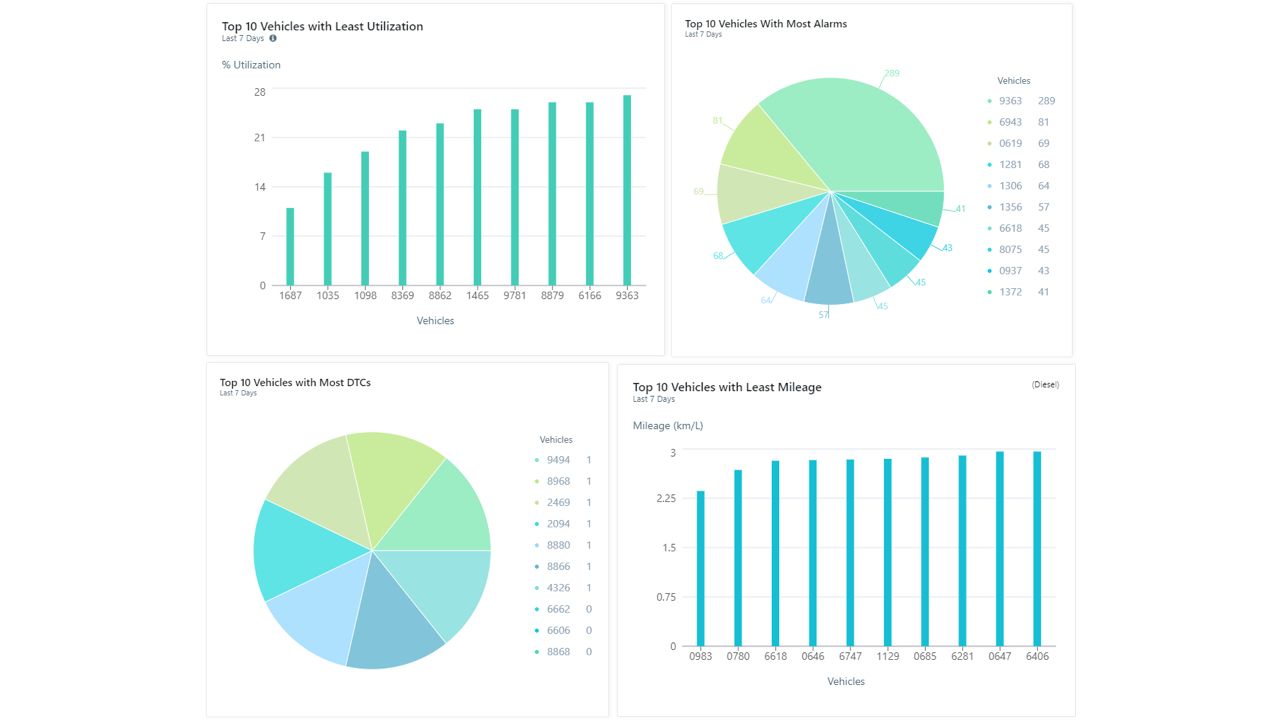
3. Live Dashboard gives a broader picture of fleet performance
The most simple way to view fleet performance is through a live dashboard depicting graphs on various performance metrics. It gives you both the big picture and the complete details in a single view. Live dashboard and graph display a snapshot of the trends that gives you a complete picture, and a few clicks on it takes you deeper with complete data that shows how your vehicle performance is and what action needs to be taken to improve fleet productivity and performance.
4. Live vehicle speed monitoring
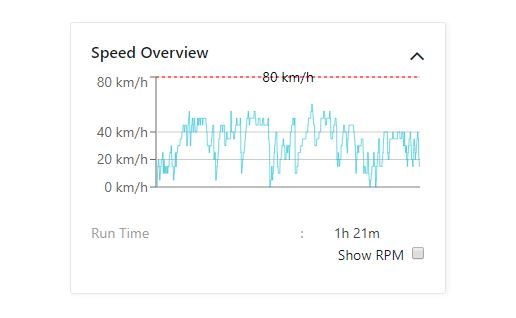
Vehicle live speed monitoring is always necessary and crucial for vehicle safety and fuel economy. With fleetx, you will get an instant alert whenever the driver violates the speed limit for a certain time. You can set these alerts on the driver's number itself, so that whenever he drives faster, he gets notified of the violations instantly. This not only ensures the vehicle safety but also maintains fuel economy to an optimum level, leading to better revenue for fleet owners.
5. Improve vehicle life and reduce maintenance downtime
Fleetx uses advance tracking device OBD II, with which you can get real-time DTCs (diagnostic trouble codes) whenever any problem occurs in the vehicle engine. With the real-time diagnostic trouble codes, you can proactively plan your vehicle maintenance and get the vehicle engine fixed as soon as possible. Timely maintenance of vehicle improves vehicle life, maximize its utilization and reduces downtime.
6. Share live location with clients
Calling back-and-forth between your drivers and the client is not a good practice, especially from the client’s point of view. Clients usually get frustrated if they are unaware of when to expect delivery and need to call the driver for an update on it. With fleetx's live location sharing feature, you can share GPS location updates directly with your client. With this, your client can track the vehicle in real-time and know exactly when to expect delivery. Providing clients with accurate ETAs can increase their trust in your company, and they are happy to continue using your services.
7. Manage drivers availability
It is very critical for fleet owners to manage the driver’s availability and their duty assignment. But with Fleetx's real-time location tracking of drivers, you can monitor each driver and their availability. Once, you have the information on every driver's location, their working hours, and their availability, you can instantly change, assign, and update drivers with respect to their working hours.
Take advantage of Real-time Vehicle tracking, real-time data, live dashboard and graphs to improve your fleet efficiency, safety, and health of your entire fleet which improves the overall productivity of your fleet.
Turning Fleet Data into Actionable Business Intelligence
Installing a GPS tracking system is only the first step toward improving fleet productivity. The real competitive advantage comes from understanding the operational data generated by every trip and using it to make smarter business decisions. Modern fleet operations generate valuable insights every day, including vehicle utilization, route performance, asset availability, trip completion rates, and operational trends. When these insights are analyzed consistently, businesses can identify opportunities to improve efficiency, reduce waste, and support long-term growth.
Rather than making decisions based on assumptions, fleet managers can rely on measurable performance indicators that highlight exactly where operational improvements are needed. This data-driven approach enables organizations to optimize resources, standardize fleet operations, and continuously improve overall business performance.
Operational KPIs That Reflect Fleet Productivity
Monitoring the right key performance indicators (KPIs) helps businesses evaluate fleet performance objectively instead of relying on isolated incidents or manual reporting. These metrics provide a complete picture of operational efficiency and support better planning across departments.
Some of the most valuable fleet productivity metrics include:
- Fleet utilization percentage
- Average vehicle utilization per day
- Trip completion rate
- Asset availability
- Average loading and unloading turnaround time
- Route adherence percentage
- Vehicle downtime ratio
- Average delivery cycle time
- Empty trip percentage
- Fleet capacity utilization
- Dispatch efficiency
- Cost per completed trip
Tracking these KPIs regularly helps organizations benchmark operational performance and identify opportunities for continuous improvement without increasing fleet size.
Traditional Fleet Reporting vs Data-Driven Fleet Intelligence
| Operational Area | Traditional Fleet Reporting | Data-Driven Fleet Intelligence |
|---|---|---|
| Decision Making | Based on historical observations | Based on real-time and historical operational insights |
| Performance Evaluation | Manual reports prepared periodically | Continuous KPI monitoring through centralized dashboards |
| Resource Planning | Reactive allocation of vehicles | Predictive planning based on utilization trends |
| Operational Visibility | Department-specific information | Unified visibility across the entire fleet |
| Productivity Measurement | Limited operational benchmarking | Standardized performance metrics across vehicles and routes |
| Business Planning | Short-term operational focus | Long-term planning supported by fleet analytics |
| Scalability | Difficult as fleet size increases | Easily supports expanding fleet operations with centralized reporting |
This shift from static reporting to operational intelligence allows fleet managers to make faster, more informed decisions while maintaining consistency across the organization.
Building a Performance-Driven Fleet Management Strategy
Organizations that consistently analyze fleet performance data are better equipped to improve operational efficiency over time. Instead of reviewing reports only when problems occur, successful businesses establish regular performance reviews to identify patterns, compare trends, and measure progress against operational goals.
A structured fleet performance strategy typically includes:
- Establishing measurable operational benchmarks for every vehicle category.
- Reviewing utilization trends across different routes and business locations.
- Comparing monthly productivity against predefined operational targets.
- Identifying underutilized fleet assets for better resource allocation.
- Monitoring long-term performance trends to support capacity planning.
- Standardizing operational reporting across teams and departments.
- Using performance data to support budgeting and future fleet expansion decisions.
This structured approach creates consistency across fleet operations while helping businesses improve productivity through continuous measurement and optimization.
Why Performance Benchmarking Matters for Growing Fleets
As fleet operations expand, maintaining consistent performance across vehicles, drivers, and operational locations becomes increasingly challenging. Performance benchmarking enables businesses to compare operational metrics across different regions, branches, vehicle categories, or business units using standardized KPIs.
Benchmarking helps organizations answer important business questions such as:
- Which vehicles deliver the highest operational efficiency?
- Which routes consistently achieve better utilization?
- Where are operational bottlenecks affecting productivity?
- Which assets remain underutilized over extended periods?
- How does current fleet performance compare with previous months or quarters?
Answering these questions enables fleet managers to make informed strategic decisions that improve productivity without relying on guesswork.
From Operational Data to Long-Term Business Growth
The value of GPS tracking extends far beyond monitoring vehicle movement. When operational data is transformed into meaningful business intelligence, organizations gain the ability to improve planning, optimize resource utilization, and make evidence-based decisions that support sustainable growth.
A data-driven fleet management approach helps businesses:
- Improve fleet utilization through informed operational planning.
- Increase visibility into overall fleet performance.
- Standardize productivity measurement across the organization.
- Support strategic decision-making using measurable operational insights.
- Allocate resources more efficiently as business requirements evolve.
- Build scalable processes capable of supporting future fleet expansion.
As fleet operations become increasingly complex, organizations that leverage operational analytics alongside GPS tracking are better positioned to improve productivity, enhance decision-making, and create a more efficient, scalable transportation operation.
Frequently Asked Questions
What is real-time GPS fleet tracking and how does it improve fleet productivity? ▼
Real-time GPS fleet tracking is a technology that continuously monitors the live location, movement, trip status and operational performance of commercial vehicles through GPS devices connected to cloud-based fleet management software. Unlike traditional vehicle tracking that simply displays a vehicle's position, modern GPS tracking systems combine live dashboards, telematics, route intelligence and analytics to help businesses improve overall fleet productivity.
For logistics companies, transporters, manufacturers, distributors and e-commerce businesses across India, real-time GPS tracking helps reduce manual monitoring while giving operations teams instant visibility into every vehicle on the road. Fleet managers can monitor fleet utilization, identify operational bottlenecks, analyse historical trip data and make faster decisions based on live information instead of waiting for manual updates.
Businesses operating in Delhi, Delhi NCR, Gurgaon, Mumbai, Bengaluru and Pune particularly benefit because these cities experience heavy traffic congestion, multiple delivery zones and complex transport networks. Live GPS tracking allows dispatchers to monitor fleet movement throughout the day and quickly respond whenever operational disruptions occur.
Some of the biggest productivity advantages include:
- Improved visibility across the entire fleet from a single dashboard.
- Better vehicle utilization and trip planning.
- Reduced administrative workload through automated reporting.
- Higher dispatch efficiency for growing fleets.
- Data-driven operational planning using historical analytics.
- Improved communication between fleet managers and field operations.
- Greater control over commercial transportation activities across multiple locations.
For organizations managing anywhere from a handful of vehicles to several thousand, real-time GPS tracking has become an essential technology for improving fleet productivity while supporting scalable fleet management operations.
How does a live fleet dashboard help transport businesses make better operational decisions? ▼
A live fleet dashboard acts as the operational command center for modern fleet management. Instead of reviewing spreadsheets or waiting for end-of-day reports, fleet managers receive continuously updated operational information that enables faster and more informed decision-making.
A centralized dashboard consolidates information such as vehicle locations, trip progress, utilization trends, operational KPIs, driver activity, route history and business performance into one interface. This makes it easier to identify trends that would otherwise remain unnoticed when information is spread across multiple systems.
Large transport businesses in cities such as Mumbai, Delhi NCR, Bengaluru and Pune often manage hundreds of simultaneous deliveries every day. A live dashboard enables operations teams to prioritize resources based on actual business conditions rather than assumptions.
Key business insights commonly available through advanced dashboards include:
- Fleet utilization across different business units.
- Trip completion percentages.
- Vehicle availability for future dispatches.
- Operational efficiency trends over time.
- Route performance comparisons.
- Asset utilization across locations.
- Executive reports for management reviews.
Beyond improving daily operations, dashboards support long-term planning by identifying recurring operational patterns and highlighting opportunities for continuous improvement. Businesses can compare monthly performance, evaluate operational benchmarks and allocate resources more effectively. This combination of real-time visibility and historical analytics helps companies improve productivity while making more confident strategic decisions.
Which industries in India benefit the most from GPS tracking and live fleet management solutions? ▼
Almost every business operating commercial vehicles can benefit from GPS tracking, but the return on investment is particularly significant for industries that depend on timely transportation, asset visibility and operational efficiency. As digital transformation accelerates across India, organizations increasingly rely on GPS fleet tracking to improve productivity, streamline operations and gain better visibility into vehicle movement.
Businesses across Delhi, Gurgaon, Mumbai, Bengaluru and Pune use fleet management technology to support both regional and nationwide operations. Whether the fleet consists of trucks, vans, buses or service vehicles, centralized fleet visibility helps organizations improve operational control.
Industries that commonly deploy GPS tracking include:
- Logistics and transportation companies.
- E-commerce delivery networks.
- Third-party logistics (3PL) providers.
- FMCG distribution businesses.
- Construction and infrastructure companies.
- Mining operations.
- Manufacturing supply chains.
- Cold chain logistics providers.
- Pharmaceutical transportation.
- Oil, gas and energy companies.
- Passenger transportation operators.
- Field service and utility organizations.
Growing businesses often begin with GPS tracking to improve visibility but later expand into complete fleet management platforms that integrate reporting, analytics and operational dashboards. As fleets increase in size, having centralized operational intelligence becomes increasingly valuable for improving planning, resource utilization and overall business productivity. This makes GPS fleet management an important investment for organizations looking to scale transportation operations efficiently across India.
What is the cost of implementing a GPS fleet tracking system in India? ▼
The cost of implementing a GPS fleet tracking system in India depends on several factors, including the number of vehicles, the type of GPS hardware, software features, cloud subscription plans, integrations, and reporting requirements. Small businesses usually require basic GPS tracking and live vehicle visibility, whereas medium and enterprise fleets often invest in advanced telematics, AI-powered analytics, predictive reporting, and fleet dashboards.
As a general guideline, businesses can expect:
- Basic GPS tracking solution: ₹800–₹2,500 per vehicle for hardware.
- Monthly software subscription: ₹300–₹1,500 per vehicle, depending on features.
- Enterprise fleet management implementation: ₹50,000 to several lakhs depending on fleet size, integrations, training and deployment.
- Custom API integrations or ERP connectivity may involve additional implementation costs.
Businesses operating in Delhi, Gurgaon, Mumbai, Bengaluru and Pune often choose cloud-based Software-as-a-Service (SaaS) platforms because they reduce infrastructure costs while allowing organizations to scale as fleets grow. Companies should evaluate overall value rather than selecting software based only on the lowest price. Features such as live dashboards, historical analytics, fleet utilization reports, automated alerts, operational KPIs and centralized reporting generally provide a higher return on investment by improving productivity and reducing manual operational effort.
Before implementation, organizations should request a detailed demonstration, understand licensing costs, compare subscription plans and estimate the total cost of ownership over three to five years instead of focusing only on initial deployment expenses.
Which are the best GPS fleet tracking software solutions in India for improving fleet productivity? ▼
The best GPS fleet tracking software is one that aligns with a company's fleet size, operational complexity and business objectives. Modern fleet management platforms provide much more than vehicle tracking by combining live dashboards, telematics, analytics, reporting, operational KPIs and business intelligence into a single platform.
Transport companies across India—including businesses operating in Delhi NCR, Gurgaon, Mumbai, Bengaluru and Pune—typically evaluate software based on operational efficiency, scalability, reporting capabilities and ease of implementation rather than GPS tracking alone.
When comparing the best fleet tracking software, businesses should look for:
- Real-time GPS vehicle tracking.
- Centralized live dashboards.
- Historical trip analytics.
- Fleet utilization reporting.
- Vehicle performance analytics.
- Cloud accessibility across multiple locations.
- Automated operational reports.
- Scalable architecture for growing fleets.
- Mobile applications for field teams.
- API integrations with ERP, TMS or logistics software.
The top fleet management platforms focus on improving operational visibility rather than simply displaying vehicle locations. Organizations managing regional or nationwide transportation networks should evaluate implementation support, product roadmap, customer service, analytics capabilities and long-term scalability before making a purchasing decision. Requesting product demonstrations and pilot deployments can help businesses compare solutions using their own operational data before committing to enterprise-wide implementation.
How can logistics companies in Delhi, Gurgaon and Delhi NCR improve fleet productivity using GPS tracking? ▼
Fleet operations in Delhi, Gurgaon and the wider Delhi NCR region face unique operational challenges, including dense traffic, multiple industrial hubs, strict delivery schedules and complex urban transportation routes. These conditions make real-time fleet visibility particularly valuable for logistics providers, manufacturers, distributors and third-party logistics companies.
GPS fleet tracking enables operations teams to maintain centralized visibility across vehicles operating throughout the region while supporting faster operational decisions. Instead of relying on manual communication, dispatch teams can monitor fleet movement, compare utilization trends and coordinate deliveries more efficiently.
Businesses operating in Delhi NCR commonly use fleet tracking to:
- Improve vehicle utilization across multiple delivery zones.
- Coordinate dispatches between warehouses and customers.
- Monitor operational performance through centralized dashboards.
- Reduce delays caused by inefficient planning.
- Improve scheduling during peak traffic hours.
- Track historical route performance for future planning.
- Support expanding regional logistics operations.
As industrial development continues across Gurgaon, Noida, Faridabad and Ghaziabad, organizations increasingly require scalable fleet management platforms capable of supporting multiple branches and larger vehicle fleets. Combining GPS tracking with operational analytics allows businesses to standardize reporting, improve planning accuracy and create more efficient transportation operations across the Delhi NCR region while supporting long-term business growth.
How can transport companies in Mumbai, Bengaluru and Pune improve fleet productivity with real-time GPS tracking? ▼
Mumbai, Bengaluru and Pune are among India's fastest-growing logistics and commercial hubs. Businesses operating in these cities face unique transportation challenges such as traffic congestion, multiple warehouse locations, industrial corridors, urban delivery restrictions and increasing customer expectations for faster deliveries. A modern GPS fleet tracking solution helps organizations overcome these operational challenges by providing complete visibility into fleet performance through live dashboards and centralized analytics.
Rather than relying on manual updates from drivers, fleet managers can monitor operational performance across all vehicles from a single platform. This allows transport businesses to allocate resources more efficiently, improve planning and make data-driven decisions throughout the day.
Companies operating across Maharashtra and Karnataka often use GPS tracking systems to:
- Improve vehicle utilization across multiple delivery routes.
- Coordinate dispatch operations between warehouses.
- Monitor fleet-wide operational performance from a centralized dashboard.
- Compare route efficiency across different business locations.
- Support intercity transportation between Mumbai, Pune and nearby industrial zones.
- Generate automated reports for operational reviews.
- Scale transportation operations without increasing administrative workload.
As businesses expand across western and southern India, centralized fleet visibility enables better coordination between branches while improving productivity, operational consistency and long-term transportation planning.
How do businesses calculate the return on investment (ROI) of GPS fleet tracking software? ▼
Calculating the return on investment (ROI) of a GPS fleet tracking system involves comparing the total implementation cost with the measurable operational improvements achieved over time. While the initial investment includes GPS hardware, software subscriptions, installation and employee training, the long-term business value is typically generated through improved operational efficiency, better fleet utilization and streamlined decision-making.
Organizations should evaluate ROI using multiple performance indicators rather than focusing on a single cost-saving metric. A structured approach provides a clearer understanding of how GPS tracking contributes to overall business growth.
Common ROI measurements include:
- Improvement in fleet utilization percentage.
- Reduction in administrative effort through automation.
- Increase in completed trips per vehicle.
- Improved dispatch efficiency.
- Reduction in operational delays.
- Higher asset utilization.
- Better productivity per vehicle.
- Reduced manual reporting time.
- Improved planning accuracy using historical analytics.
- Enhanced visibility across multiple operating locations.
Many organizations across India review these KPIs monthly or quarterly to compare operational performance before and after implementation. Over time, the accumulated efficiency improvements often justify the investment while supporting scalable fleet growth and better business planning.
How should businesses choose the right GPS fleet management solution for long-term growth? ▼
Selecting a GPS fleet management platform is a long-term business decision that should support both current operational requirements and future expansion. While many solutions offer similar tracking capabilities, the best platforms distinguish themselves through scalability, reporting, analytics, ease of implementation and customer support.
Businesses should first evaluate their operational objectives, fleet size, reporting requirements and expected growth over the next several years. Companies operating across Delhi, Gurgaon, Mumbai, Bengaluru, Pune and other major logistics hubs often require cloud-based platforms capable of managing vehicles across multiple cities through a single centralized dashboard.
Before making a final decision, businesses should compare:
- Real-time GPS tracking capabilities.
- Live operational dashboards.
- Fleet productivity reporting.
- Historical analytics and trend analysis.
- Scalability for larger fleets.
- Mobile accessibility for field teams.
- Cloud deployment and data security.
- Customer onboarding and implementation support.
- API integration with ERP, TMS and logistics software.
- Total cost of ownership over several years.
The top GPS fleet management software should not only improve day-to-day operations but also provide the operational intelligence needed to support future business growth. Choosing a solution based on long-term value rather than short-term pricing helps organizations maximize productivity and adapt more effectively as transportation requirements evolve.