Our previous articles have extensively discussed the benefits of integrating technology in transportation for the commercial sector. In this article, we shift our focus towards passenger transportation and explain the role of Passenger Transit Management Software in aiding the promotion of Mobility as a Service or MaaS.
MaaS is a service that enables the digitalization of accessing multiple mobility services, either public, private or both, through a single channel. It is a shift away from individual transportation and promotes Mobility as a service. It integrates different aspects of transportation such as payment, booking, and planning, providing an all-in-one platform for users. The idea behind MaaS is to make transportation user-friendly, sustainable, and efficient.
What exactly is a Passenger Transit Management System?
As the name suggests, a Passenger Transit Management System is a platform or software solution that helps transit planners or administrators leverage technology for more efficient planning, scheduling, tracking, and optimization of passenger transport.
Let’s understand the concept better with the example of The Indian Railways, which manages transit of over ten thousand passenger trains across the country. Their objective is to facilitate the movement of both passenger and freight trains across railway lines in a timely manner. They implement their transit management system for planning, scheduling, tracking, and managing routes for each train. However, a great deal of manual intervention is required, which makes the system prone to errors, delays, complacency, and inefficient to a certain extent. Another critical component is the tracking system embedded into their Passenger Transit Management System and made available to the public called National Train Enquiry System (NTES). It improves transparency by providing live location, ETAs, delays, routes, among others, in real-time to all passengers.
Similarly, Uber is an excellent example of leveraging more advanced Passenger Transit Management software to provide Mobility as a service. In India, it now allows users to plan, book, and pay for multiple modes of transport, including private, public, and ride-hailing options.
How does Passenger Transit Management Software work?
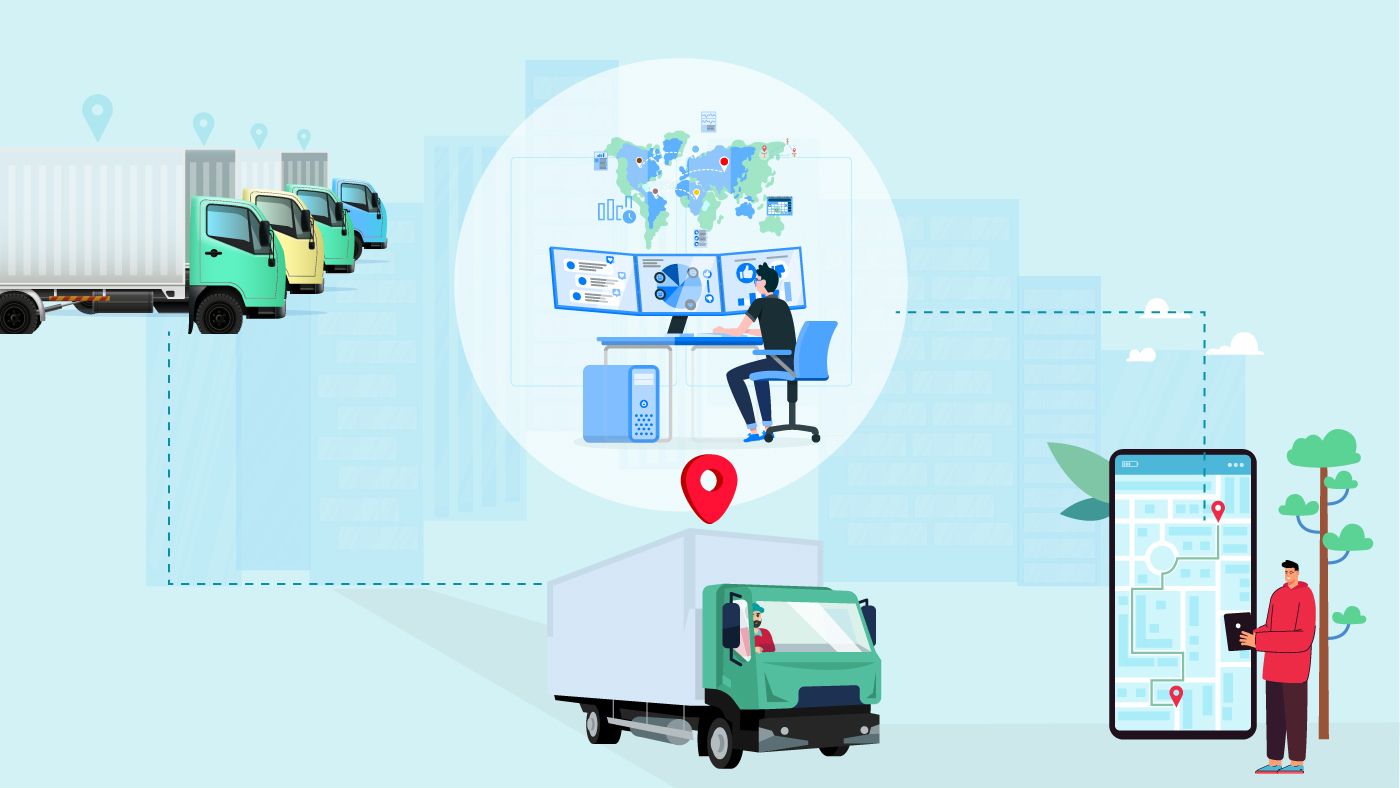
A passenger Transport Management System similar to the one in the commercial sector uses hardware technology like a black box integrated with a GPS tracking system to collect vehicle data for a vehicle or the entire fleet and transmit it to a central server. This data is processed and provided to a transit planner through software, who then analyses it to make more informed decisions.
Transit Management Softwares today use modern technology like Big Data, Artificial Intelligence, Automation Technology, Cloud Computing, Blockchain, IoT-enabled technology, among others, to improve their operations. The operations that can be made more efficient, transparent, and accurate using Passenger Transit Management Software are
Benefits of TMS for Transit Planners
To understand how Passenger Transit Management Software benefits transit planners, we first need to understand their role in passenger transportation. Transit planners are responsible for developing routes or designing the entire transport network for a city or company. Moreover, as the demand for sustainability and convenience increases, polluting and resource-heavy sectors like transportation have come under heavy scrutiny.
Governments are making policies sanctioning surveys to make cities and towns more organised, connected, and sustainable. Moreover, businesses are continuously adapting to this shift towards a more interconnected and efficient transport network, resulting in the role of transit planners being much more than planning and scheduling routes. Transit Planners today are expected to factor in all aspects such as sustainable mobility, transparency in operation, tech-enabled, user-friendly, and multi-modal network in their transit planning and execution activities.
To achieve that, transit planners have increasingly adopted advanced Passenger Transit Management Software to improve transit route planning, live tracking, passenger information system, and overall transport management. An example of this is Transport For London (TfL) which manages public transportation in London. Using an internet-based Transit Management System has made services digitally accessible, trackable, user-friendly, and ultra-efficient. A well-integrated Passenger Transit Management System can manage everything from booking/payment system, public information system, route planning, and execution.
Passenger Transit Management System is shaping the future of passenger transport
In India, ride-sharing cabs like Uber and Ola were the first to show us the capabilities of an internet-based and user-friendly transit management system. It was a stark contrast to those used in metros and railways by Indian Railways (NTES) and Delhi Metro Rail Corporation (DMRC), which made transparency and operations better but were not user-friendly. As a result, state and central governments continuously bring policies and sanction surveys to make passenger transport more interconnected, user-friendly, and efficient.
The most recent example is the partnership of Chalo, a bus transport technology company, with Brihanmumbai Electricity Supply and Transport (BEST), to digitize its fleet of over 3500 buses and offer passengers services like ticket booking, live-tracking, route planning, etc. through a mobile application. As a result, it has exponentially improved accessibility to public buses for passengers and makes transportation services go cashless.
The uptake in implementation of the Passenger Transit Management System has still a long way to go in India, particularly in rural and semi-urban areas. The good news is the rate of internet accessibility is leapfrogging, and more and more users switch to internet-based systems for transit. It will undoubtedly push the demand and implementation of Passenger Transport Management Systems by businesses and governments, a win-win situation for the consumers. In the future, certain areas that will significantly benefit from it includes,
Passenger Information System
It will make the passenger information system more efficient as people in transit will be able to check schedules, delays, information broadcast, book tickets, and accessible transportation services through their mobile phones. In addition, internet-enabled Passenger Transport Softwares will make it possible for governments and businesses to offer more user-friendly services to their people and make transport more accessible.
Live-tracking and Navigation
A robust GPS tracking System which is the foundation of any Passenger Transit Management Software, will allow passengers and businesses to track their fleet of vehicles in real-time. It will enable businesses to constantly improve their routes and passengers to track and plan their transit more accurately and efficiently, saving time. Integration of the same with widely accessible Google Maps will completely disrupt the way we travel, allowing users to access the benefits of Transit Management Systems to widely used navigation applications.
Safety and Compliance
Increased transparency in operation will automatically improve safety for passengers and compliance for businesses. For example, rash driving, disruptions, and accidents can be quickly reported, allowing businesses to take appropriate actions. On the passenger side, it will improve safety standards as transport routes and vehicle locations can be tracked at all times by them and their loved ones.
Conclusion
There is no doubt that MaaS or Mobility As a Service is the future of passenger transportation, and it will make transit more sustainable, resource-efficient, and user-friendly. Furthermore, as consumers become more tech-savvy, the demand for multi-modal transit service platforms will increase, forcing governments and businesses to shift their operations accordingly. Thus, to facilitate and promote Mobility as a service, there is a need for rapid adoption of Passenger Transit Management software solutions in transit operations which builds the foundation of the modern mobility solutions emerging across the world as the next generation of transportation.
Frequently Asked Questions
What is Passenger Transit Management Software?
▼
Passenger Transit Management Software (PTMS) is a digital platform designed to help public transport authorities, private bus operators, metro agencies, employee transport providers, and institutional fleet operators plan, monitor, and optimize passenger transportation. Unlike a traditional scheduling system, modern Passenger Transit Management Software combines GPS tracking, route planning, dispatch management, driver monitoring, ETA prediction, reporting, passenger information systems, and analytics within a single platform. It enables transit planners to make data-driven decisions while improving operational efficiency and passenger satisfaction.
Across India, cities such as Delhi, Mumbai, Bengaluru, Pune, and Gurgaon are increasingly adopting intelligent transport technologies to improve urban mobility. Whether managing city buses, airport shuttles, employee transportation, school buses, or intercity services, Passenger Transit Management Software helps reduce delays, optimize routes, improve fleet utilization, and provide passengers with accurate arrival information through mobile applications. Many systems also integrate with digital ticketing, IoT devices, fuel monitoring, and cloud-based analytics.
For organizations embracing Mobility as a Service (MaaS), Passenger Transit Management Software acts as the foundation that connects planning, operations, and customer experience. By automating repetitive processes and providing real-time visibility, transit operators can lower operating costs, improve safety, and deliver reliable transportation services. As Indian cities continue investing in smart mobility initiatives, adopting a modern Passenger Transit Management System is becoming a strategic requirement rather than simply a technology upgrade.
How does Passenger Transit Management Software improve public transportation?
▼
Passenger Transit Management Software improves public transportation by replacing manual planning with intelligent automation and real-time operational visibility. Transit planners can monitor vehicle movement, identify delays, optimize schedules, assign drivers, analyze route performance, and communicate instantly with passengers using a centralized dashboard. Instead of relying solely on static schedules, operators receive continuous updates that enable quicker responses to congestion, breakdowns, or unexpected route disruptions.
For rapidly growing urban regions like Delhi NCR, Mumbai, Bengaluru, Pune, and Gurgaon, where traffic congestion significantly affects transit reliability, real-time route optimization and GPS-based monitoring become critical. Transit authorities can minimize waiting times, improve fleet utilization, reduce idle hours, and increase on-time performance while providing passengers with accurate estimated arrival times.
Passenger Transit Management Software also supports operational transparency through live tracking, digital reporting, automated alerts, maintenance scheduling, fuel monitoring, and driver behavior analysis. These capabilities improve safety, compliance, and resource utilization while lowering operating expenses. Many solutions integrate with ticketing systems, payment gateways, mobile applications, and passenger information systems to create a seamless travel experience.
From government transport corporations to private employee shuttle operators and educational institutions, organizations benefit from higher operational efficiency and better customer satisfaction. As Indian cities continue investing in smart mobility and sustainable transportation, Passenger Transit Management Software plays an essential role in creating connected, efficient, and passenger-centric transport ecosystems capable of supporting future urban mobility demands.
What is GPS bus tracking?
▼
GPS tracking for the bus fleet enables operators to monitor vehicle positions, movement, routes, and schedules in real time using satellite positioning technology. Every vehicle is equipped with a GPS tracking device that continuously transmits location data to a cloud-based Passenger Transit Management System. Transit planners, dispatch teams, and passengers can then view accurate vehicle locations through web dashboards or mobile applications.
GPS bus tracking significantly improves operational efficiency by helping operators monitor delays, optimize routes, identify traffic congestion, reduce unauthorized vehicle usage, and improve fuel efficiency. For passengers, live bus tracking reduces uncertainty by providing accurate arrival times, route visibility, and service notifications. This improves passenger confidence while reducing waiting times at bus stops.
In Indian cities such as Delhi, Mumbai, Pune, Bengaluru, and Gurgaon, GPS bus tracking has become increasingly important for public transport agencies, employee transportation providers, educational institutions, airport shuttle services, and corporate mobility programs. Integration with Passenger Transit Management Software further enhances scheduling, dispatch planning, fleet analytics, maintenance management, and passenger communication.
Modern GPS bus tracking solutions also include geofencing, speed monitoring, driver behavior analytics, route deviation alerts, emergency notifications, and historical trip reporting. These features improve safety, compliance, and operational visibility while helping transit agencies deliver more reliable and efficient transportation services. As smart city initiatives continue expanding across India, GPS-enabled fleet visibility has become one of the most valuable technologies for passenger transportation management.
How do buses get tracked?
▼
Modern buses are tracked using GPS-enabled telematics devices installed inside each vehicle. These devices communicate continuously with satellites to determine precise vehicle locations and transmit the information through mobile networks to cloud-based Passenger Transit Management Software. Transit operators can then monitor buses in real time using centralized dashboards while passengers access live arrival information through mobile applications or public information displays.
Beyond simple location tracking, modern tracking systems capture additional operational data including speed, route adherence, stoppage duration, driver behavior, engine status, fuel usage, and maintenance indicators. This allows transit planners to improve scheduling, reduce delays, optimize fleet utilization, and respond quickly to operational disruptions.
Cities such as Delhi, Mumbai, Bengaluru, Gurgaon, and Pune increasingly rely on GPS-enabled passenger transport systems to improve public transportation reliability and commuter satisfaction. Educational institutions, corporate employee transport providers, airport shuttle operators, and government transport agencies also use these technologies to improve safety, transparency, and service quality.
Advanced Passenger Transit Management Software combines GPS tracking with AI-powered route optimization, ETA prediction, geofencing, automated alerts, digital ticketing integration, and analytics. This enables operators to make informed decisions while passengers receive accurate travel information. As mobility services continue evolving in India, GPS-based bus tracking has become an essential component of modern passenger transportation infrastructure.
What is the cost of implementing Passenger Transit Management Software in India?
▼
The implementation cost of Passenger Transit Management Software in India depends on fleet size, deployment model, hardware requirements, software features, integrations, and ongoing support requirements. Small operators managing employee transportation or school buses may spend approximately ₹1 lakh to ₹8 lakh for initial deployment, while medium-sized organizations typically invest between ₹10 lakh and ₹50 lakh depending on fleet size and required modules. Enterprise-level deployments for city transport authorities, large corporations, or multi-city transit operators can exceed several crores when advanced analytics, AI-powered optimization, ticketing integration, passenger information systems, and IoT infrastructure are included.
Cloud-based Software-as-a-Service (SaaS) solutions generally require lower upfront investments because operators pay subscription fees based on vehicles or users. Additional implementation costs may include GPS devices, driver mobile applications, training, API integrations, maintenance contracts, cloud hosting, and customization.
Organizations in Delhi NCR, Mumbai, Bengaluru, Gurgaon, and Pune often prioritize scalable cloud deployments because they support expansion without major infrastructure investments. When evaluating implementation costs, decision-makers should also consider long-term savings from improved fuel efficiency, reduced idle time, optimized routing, lower maintenance expenses, better asset utilization, and improved passenger satisfaction.
Selecting the right Passenger Transit Management Software should involve evaluating total cost of ownership, future scalability, customer support quality, cybersecurity, integration capabilities, reporting features, and operational return on investment rather than comparing software prices alone.
Which is the best Passenger Transit Management Software for public transport in India?
▼
The best Passenger Transit Management Software depends on fleet size, operational complexity, deployment requirements, and long-term business objectives rather than a single universal solution. Transit authorities and private operators typically evaluate software based on GPS tracking accuracy, route optimization, scheduling capabilities, dispatch management, passenger information systems, reporting, mobile accessibility, API integrations, scalability, cybersecurity, and customer support.
For organizations operating in Delhi, Mumbai, Bengaluru, Gurgaon, Pune, and other large Indian cities, top Passenger Transit Management Software platforms generally offer AI-powered route optimization, predictive ETAs, live passenger information, maintenance planning, driver monitoring, geofencing, digital ticketing integration, fuel management, analytics dashboards, and cloud-based deployment. Many enterprises also prioritize compatibility with Mobility as a Service (MaaS) initiatives and intelligent transportation systems.
The ideal solution should support future expansion while reducing operational costs and improving service reliability. Public transport corporations may require enterprise-scale integrations, whereas employee transportation providers, educational institutions, airport shuttle operators, and private bus companies often benefit from modular platforms that can be expanded over time.
When comparing the best Passenger Transit Management Software, decision-makers should evaluate implementation experience, industry expertise, product roadmap, customer success stories, uptime guarantees, reporting capabilities, ease of use, regulatory compliance, and total cost of ownership instead of selecting software based solely on feature count or pricing.
How are Passenger Transit Management Systems transforming transportation in Delhi, Gurgaon and Mumbai?
▼
Passenger Transit Management Systems are helping rapidly growing metropolitan regions manage increasing passenger demand while improving reliability, safety, and operational efficiency. Cities including Delhi, Gurgaon, Mumbai, Bengaluru, and Pune experience heavy congestion, variable travel times, and complex multimodal transportation networks. Transit Management Software enables operators to respond dynamically using real-time fleet monitoring, AI-assisted route optimization, predictive arrival estimates, automated scheduling, and centralized operational control.
In Delhi and Delhi NCR, public transport agencies, employee transportation providers, educational institutions, and airport shuttle services use GPS-enabled systems to improve punctuality and provide passengers with accurate travel information. Gurgaon has witnessed rapid adoption of employee transport management platforms supporting large corporate campuses, IT companies, and business parks where workforce mobility directly impacts productivity.
Mumbai's extensive public transport network benefits from real-time tracking, digital passenger information, route planning, and integrated mobility solutions that improve commuter convenience across buses and multimodal transport systems. Similar adoption trends are emerging in Bengaluru and Pune, where growing urban populations require smarter transportation infrastructure.
Beyond operational efficiency, these systems improve passenger safety through emergency alerts, driver monitoring, geofencing, and compliance reporting. They also support sustainability goals by optimizing routes, reducing unnecessary mileage, lowering fuel consumption, and improving vehicle utilization. As Indian smart city initiatives continue expanding, Passenger Transit Management Systems will remain central to building efficient, connected, and future-ready urban transportation networks.