
Training your employees is quite honestly, a no-brainer! You unlock multiple benefits when you invest in your personnel. The most obvious advantage is increased level of productivity and performance. Training provides your employees with the tools and expertise they need to execute their roles properly. It helps them understand their responsibilities in the organisation better. It also allows for increased engagement, and empowers them to feel like a valued part of the organisation. When they feel valued, (and can observe the investments being made through training programs) chances are that they will stay (and grow) with your organisation!
How Will Training Programs Add Value To Your Business?
Fleetx is committed to helping your business grow, and your personnel are one of its cornerstones. Hiring and onboarding, especially in the logistics industry, can be an expensive and time consuming process. By investing in training and working on the skills of your existing employees, you can improve employee retention. You can also redirect resources that would normally be spent on new recruits into training your personnel.
A well-trained team will increase your chances of growing the business and improve the overall efficiency of your operations. They will also be more confident in their abilities and more motivated to contribute to your company’s growth. Higher levels of job satisfaction and morale- another benefit of training- can only have a positive impact on your growth.
Benefits of Training Programs:
Well-trained employees reduce dependence on a supervisor to address trivial concerns, allowing them to do their jobs more effectively and focus their energies better. They are also better tuned to the functioning of the company, and are able to recognise challenges and offer solutions before they become problems.
Training programs can create an environment for knowledge-sharing and pool resources to help employees learn from each other's wins, as well as their mistakes. And lastly, investing in your employees means investing in your growth. When your personnel are more productive, better engaged and feel valued, they can serve your customers better. And when your customer retention increases, your business will grow!
And growing your business is going to depend on your team of fleet managers; they are the strong foundation you will need. This article will explore the kind of skills and training that your fleet managers require to effectively manage your fleet!
Essential Skills For A Fleet Manager:
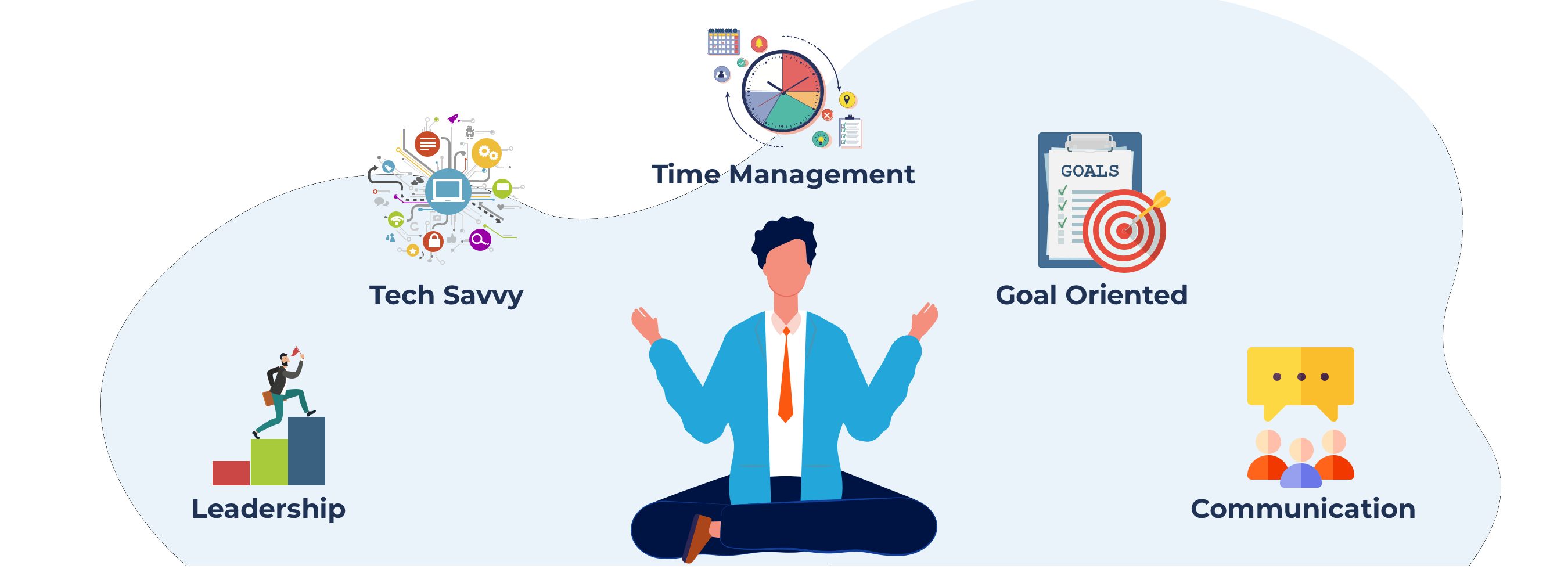
A fleet manager has to make sure that he is aware of all the different moving parts. And in the logistics industry, there are a lot of them! Fleetx’s technology solutions are geared towards improving efficiency in the industry, but we don’t forget about the people behind the machines. Technology alone cannot solve your management woes; you have to train your managers to do that. These are some of the skills that your fleet managers can be trained on:

1.Time Management
Expert fleet management involves a strong sense of time management. Fleet managers deal with a wide variety of people - from upper management to the drivers out on the roads. In order to operate effectively, fleet managers have to ensure that deadlines are met while also making sure the (multiple) drivers are doing their jobs properly. This is the only way to make sure the fleet keeps moving!
In the logistics industry, good time management skills are about being able to focus on the important without being distracted by the unexpected. Look into training programs and activities that engage your fleet managers and help them improve this skill set. This can be done through resources available on the internet or by hiring an organisation that specialises in personnel development.

2. Being Tech Savvy:
The fleet management industry is being transformed by technology. No matter the size- from large to small- fleets are improving the management of their vehicles and drivers through technology. Good fleet managers should be able to apply these new solutions and train other people to use them. A majority of Indian fleet companies still rely on their managers to run operations with a pen and paper, and Fleetx sees this as an opportunity to introduce new ways of working.
Training your fleet managers to be comfortable with technology will change your operations for the better. Reach out to us if you’re looking for fleet management software that you can introduce your managers to!

3. Leadership:
Being a fleet manager means being responsible for a lot of people. Good fleet managers should be able to teach on the job and lead by example. They are the point of contact between the drivers and management, and have to ensure that they take care of all interests involved. Fleet managers should be willing to get their hands dirty and juggle various responsibilities. When you are a leader, this can be tough to do; drivers, suppliers, and management each have their own needs that sometimes come into conflict. A good fleet manager should be able to manage this conflict and take care of everyone on his team.
Great fleet managers can inspire their team toward shared goals, and improve job satisfaction in your drivers. Managers should be able to receive feedback from team members, value ideas, and create an atmosphere that contributes to learning and growth. Training your fleet managers to be better leaders will help you maximise your efficiency and reach your organisational goals.
Leaders can make or break businesses, so it’s worth the investment to make sure that they are equipped with the tools that they need. Here are a few of the leadership skills that managers can be trained to develop: critical thinking and self-awareness, taking initiative, ability to delegate, ability to motivate, managing conflict and effective listening.

4. Communication:
Strong communication skills are non-negotiable in this role. Good fleet managers should be able to communicate effectively with all the levels in the organisation; whether it is presentations to senior management or a memo to the drivers, they should be able to do it with the same ease.
Good communication skills are essential to efficiency. Managers must be able to deliver large amounts of information simply and effectively, even if he/she is busy. An important, and often ignored, aspect of good communication is being a good listener. As a fleet manager, you are in a position of power to help your drivers out. Good communication skills will also be an asset while dealing with customers, who (let’s be honest) are not always the easiest people to communicate with.
Your managers will benefit from training their non-verbal communication skills as well. Body language is an important aspect of communication; good managers not only make a good impression, but are more likely to be remembered by both your employees, as well as your customers, for future interactions. A good manager can inspire trust and confidence. Too often this aspect of communication is ignored, but they can greatly enhance your fleet managers performance.
How to Measure the Success of Fleet Manager Training: Key Performance Indicators (KPIs) That Matter
Training fleet managers is only the first step. To understand whether the investment is delivering business value, organizations should measure performance using well-defined Key Performance Indicators (KPIs). These metrics provide objective insights into operational improvements and help businesses identify where additional coaching, technology adoption, or process improvements are required.
For logistics companies operating in India—including Delhi NCR, Gurgaon, Mumbai, Bengaluru, and Pune—tracking fleet management KPIs has become increasingly important as transportation operations become more data-driven. Modern fleet management software and transport management systems make it easier to monitor these indicators in real time, enabling managers to make faster and more informed decisions.
Essential KPIs Every Fleet Manager Should Monitor
Rather than evaluating performance solely on deliveries completed, organizations should track multiple operational and financial metrics.
Fleet Utilization Rate
Fleet utilization measures how effectively vehicles are being used compared to their available capacity. Low utilization often indicates inefficient scheduling, unnecessary idle time, or poor route planning.
A trained fleet manager regularly reviews utilization reports to ensure vehicles generate maximum business value while minimizing unnecessary operating costs.
Vehicle Downtime
Vehicle downtime directly impacts productivity and customer satisfaction. Every hour a commercial vehicle remains unavailable can delay deliveries and increase operating expenses.
Fleet managers should monitor:
- Planned maintenance downtime
- Unexpected breakdowns
- Average repair duration
- Vehicle availability percentage
Preventive maintenance planning significantly reduces costly unplanned downtime.
Fuel Efficiency
Fuel represents one of the largest operating expenses for most transportation companies.
Monitoring fuel efficiency helps managers identify:
- Excessive idling
- Aggressive driving behaviour
- Route inefficiencies
- Fuel theft risks
- Vehicle maintenance issues affecting mileage
Even small improvements in fuel efficiency can produce substantial annual savings across large fleets.
On-Time Delivery Performance
Customers increasingly expect accurate delivery timelines and real-time shipment visibility.
Important metrics include:
- Percentage of on-time deliveries
- Average delivery delay
- Delivery exception rates
- Missed customer appointments
These indicators help fleet managers improve customer satisfaction while identifying operational bottlenecks.
Driver Safety Performance
Drivers play a central role in fleet operations, making safety an essential performance metric.
Organizations should regularly review:
- Harsh braking incidents
- Overspeeding events
- Accident frequency
- Driver compliance scores
- Safety training completion rates
A strong safety culture reduces insurance costs while improving operational reliability.
Traditional Fleet Monitoring vs KPI-Driven Fleet Management
| Performance Area | Traditional Monitoring | KPI-Driven Fleet Management |
|---|---|---|
| Vehicle Usage | Estimated manually | Real-time utilization tracking |
| Maintenance | Reactive repairs | Preventive and predictive scheduling |
| Fuel Monitoring | Monthly fuel reports | Continuous fuel analytics |
| Driver Evaluation | Supervisor observations | Data-backed performance scoring |
| Delivery Tracking | End-of-day reporting | Live shipment monitoring |
| Business Decisions | Experience-based | KPI and analytics-driven |
| Operational Reviews | Periodic | Continuous improvement cycle |
| Customer Visibility | Limited | Real-time delivery updates |
Best Practices for Reviewing Fleet Performance
Monitoring KPIs is most effective when reviewed consistently rather than only during annual performance evaluations.
Fleet managers should establish regular review cycles such as:
- Daily operational dashboards
- Weekly vehicle health reports
- Monthly fuel and maintenance reviews
- Quarterly driver performance assessments
- Annual fleet optimization planning
Combining these reviews with regular training helps organizations identify skill gaps early and ensures managers continuously improve alongside changing business requirements.
Why KPI-Based Fleet Management Supports Long-Term Growth
As logistics businesses expand, operational complexity also increases. Companies that rely solely on experience-based decision-making often struggle to maintain efficiency across larger fleets. KPI-driven management creates a standardized framework for measuring performance, improving accountability, and identifying opportunities for optimization.
Modern fleet management software further strengthens this approach by automatically collecting operational data, generating performance dashboards, and highlighting trends that may otherwise go unnoticed. For businesses across India, from Delhi NCR and Gurgaon to Mumbai, Bengaluru, and Pune, combining continuous manager training with KPI-driven decision-making creates a scalable foundation for improving productivity, reducing operational costs, enhancing customer satisfaction, and supporting sustainable business growth in an increasingly competitive logistics industry.
In Conclusion
These are just a few of the essential skills that fleet managers should be trained on, the list can be much longer! But it’s a good place to start, and depending on the requirements of your organisation, you can curate a suitable training program. They might be expensive, and you might be hesitant, but trust us when we say that it will pay off in the long run!
Happy training!
Frequently Asked Questions
What is fleet manager training and why is it important for modern logistics businesses? ▼
Fleet manager training is the structured process of developing the operational, technical, leadership, financial, and communication skills required to efficiently manage commercial vehicles, drivers, and transportation operations. Modern fleet managers are expected to do much more than allocate vehicles—they oversee route planning, preventive maintenance, fuel efficiency, driver safety, compliance, customer service, cost control, and increasingly, digital fleet technologies such as GPS tracking, telematics, AI-powered analytics, and transport management systems.
As logistics operations become more technology-driven, businesses across India are investing heavily in upskilling their fleet managers. Companies operating in Delhi NCR, Gurgaon, Mumbai, Bengaluru, and Pune face challenges such as traffic congestion, increasing fuel prices, interstate regulations, and higher customer expectations for real-time delivery visibility. Proper training equips managers to respond proactively instead of relying on reactive decision-making.
Well-trained fleet managers improve vehicle utilization, reduce downtime, increase driver productivity, strengthen compliance, and enhance customer satisfaction. They are also better equipped to implement new technologies, analyze operational data, and identify opportunities to reduce transportation costs. Whether a business operates a fleet of 20 vehicles or several thousand, investing in continuous learning creates long-term operational efficiency and prepares organizations for future logistics trends, including automation, connected fleets, AI, and electric vehicle adoption.
What skills should every fleet manager develop to improve logistics performance? ▼
The most successful fleet managers combine technical knowledge with leadership and strategic decision-making. While operational experience remains valuable, today's logistics industry increasingly requires professionals who understand fleet technology, business analytics, compliance regulations, customer service, and workforce management. Effective training programs therefore focus on both technical and interpersonal development.
Core technical skills include fleet scheduling, preventive maintenance planning, route optimization, fuel management, transport compliance, driver performance monitoring, risk management, cost analysis, inventory coordination, and emergency response planning. Digital literacy is equally important, with fleet managers expected to understand GPS vehicle tracking, telematics platforms, AI-powered reporting, transport management systems (TMS), electronic proof of delivery, and maintenance automation.
Soft skills also play a significant role. Strong communication improves collaboration with drivers, warehouse teams, customers, and senior leadership. Leadership helps motivate employees, reduce staff turnover, and improve workplace culture. Critical thinking enables managers to solve operational issues quickly while balancing customer expectations and profitability.
Companies throughout Delhi, Gurgaon, Mumbai, Bengaluru, and Pune increasingly prioritize managers who possess these capabilities because efficient fleet management directly impacts delivery performance, operational costs, customer satisfaction, and overall business competitiveness in India's growing logistics sector.
How does continuous training improve fleet management efficiency and business profitability? ▼
Continuous learning allows fleet managers to adapt to changing technologies, regulations, customer expectations, and operational challenges. Rather than treating training as a one-time activity, successful logistics organizations invest in regular upskilling programs that help managers improve their technical knowledge, leadership abilities, and analytical skills throughout their careers.
Well-trained managers make better decisions using operational data instead of assumptions. They optimize routes, monitor driver behaviour, reduce unnecessary fuel consumption, schedule preventive maintenance before costly breakdowns occur, and improve asset utilization. These improvements collectively lower operating expenses while increasing delivery reliability and customer satisfaction.
Training also helps managers understand compliance requirements, workplace safety, documentation standards, and environmental regulations, reducing the likelihood of penalties and operational disruptions. As businesses adopt AI-enabled fleet management software, telematics, predictive maintenance, and digital reporting platforms, knowledgeable managers ensure these investments deliver measurable returns.
Across India's major logistics hubs—including Delhi NCR, Mumbai, Bengaluru, Pune, and Gurgaon—companies that continuously invest in employee development generally experience lower fleet downtime, higher driver retention, stronger customer relationships, and better long-term profitability. Upskilling should therefore be viewed as a strategic investment rather than simply a training expense.
How much does fleet manager training cost in India? ▼
The cost of fleet manager training in India depends on the course format, duration, specialization, and whether businesses choose individual certification programs or customized corporate training. Entry-level online certification courses generally cost between ₹5,000 and ₹20,000 per participant. Advanced leadership, compliance, analytics, and fleet technology programs typically range from ₹25,000 to ₹75,000. Large organizations that require customized corporate workshops or enterprise-wide learning programs may invest anywhere from ₹1 lakh to ₹10 lakh depending on the number of participants and training objectives.
Implementation costs may also include instructor fees, travel expenses, learning management systems, software onboarding, certification assessments, and post-training evaluations. If a business simultaneously implements fleet management software or a transport management system, employee onboarding and software training should also be included within the overall budget.
Many logistics companies operating in Delhi NCR, Gurgaon, Mumbai, Bengaluru, and Pune consider training a high-return investment because skilled fleet managers help reduce fuel costs, maintenance expenses, vehicle downtime, compliance risks, and driver turnover. Before selecting any program, businesses should compare curriculum quality, instructor expertise, industry relevance, certification value, and post-training support instead of focusing solely on course pricing.
What is the best fleet management software to support trained fleet managers? ▼
The best fleet management software is one that supports both operational efficiency and informed decision-making. Modern platforms typically include GPS vehicle tracking, AI-powered analytics, preventive maintenance scheduling, driver behaviour monitoring, route optimization, fuel management, work order management, compliance reporting, and customizable dashboards. These features help trained fleet managers translate operational data into measurable business improvements.
When evaluating fleet management software, businesses should consider ease of implementation, scalability, mobile accessibility, integration with ERP and transport management systems, reporting capabilities, customer support, and overall return on investment. The ideal solution should simplify daily operations while providing real-time visibility across vehicles, drivers, maintenance activities, and delivery performance.
For logistics companies operating in Delhi NCR, Gurgaon, Mumbai, Bengaluru, Pune, and other growing transportation hubs, cloud-based software often provides greater flexibility than traditional manual processes. However, software alone cannot transform operations. Organizations achieve the greatest benefits when experienced fleet managers receive proper onboarding and continuous training that enables them to interpret analytics, optimize resources, reduce operational costs, and improve customer service using digital tools effectively.
What are the top fleet management software features that trained fleet managers should look for? ▼
Choosing the right fleet management software is just as important as investing in employee training. While every business has unique operational needs, the top fleet management software platforms generally offer a combination of GPS tracking, route optimization, AI-powered analytics, preventive maintenance scheduling, fuel monitoring, driver behaviour analysis, electronic proof of delivery, geofencing, vehicle diagnostics, and compliance reporting. These features provide fleet managers with real-time operational visibility and help them make faster, data-driven decisions.
Businesses should also evaluate whether the software integrates with transport management systems (TMS), ERP platforms, warehouse management systems, accounting software, and mobile applications. Cloud-based deployment, role-based access, customizable dashboards, automated alerts, and strong customer support are additional features that improve long-term usability.
For companies operating across India—including Delhi NCR, Gurgaon, Mumbai, Bengaluru, and Pune—software scalability is essential because fleets often expand across multiple cities and states. A trained fleet manager can maximize the value of these features by interpreting operational data, identifying inefficiencies, improving vehicle utilization, and reducing transportation costs. Instead of choosing software based only on price or popularity, organizations should compare implementation support, security standards, reporting capabilities, ease of adoption, and expected return on investment before making a purchasing decision.
How can logistics companies in Delhi NCR and Gurgaon improve fleet manager performance? ▼
Delhi NCR and Gurgaon are among India's busiest logistics corridors, serving manufacturing, retail, e-commerce, FMCG, construction, and distribution businesses. Fleet managers operating in these regions face daily challenges such as traffic congestion, interstate compliance, delivery deadlines, fuel optimization, and customer expectations for real-time shipment visibility. Improving fleet manager performance therefore requires a combination of structured training, technology adoption, and continuous performance measurement.
Organizations should establish regular learning programs covering leadership, communication, transport regulations, fleet planning, AI-powered analytics, preventive maintenance, driver management, emergency response, and customer service. Practical exposure to fleet management software, telematics platforms, GPS tracking, and transport management systems further strengthens operational capabilities.
Performance should be monitored through measurable KPIs such as fuel efficiency, fleet utilization, maintenance costs, on-time deliveries, vehicle downtime, driver retention, safety incidents, and customer satisfaction. Regular coaching sessions, cross-functional collaboration, and quarterly skill assessments encourage continuous improvement.
As logistics infrastructure continues expanding throughout Delhi NCR and Gurgaon, companies that invest in both technology and employee development are better positioned to improve operational efficiency, reduce costs, strengthen compliance, and deliver consistently high customer service.
Why are Mumbai, Bengaluru, and Pune becoming important hubs for skilled fleet managers? ▼
Mumbai, Bengaluru, and Pune have become major logistics and supply chain centres due to rapid industrialization, manufacturing growth, e-commerce expansion, technology adoption, and increasing demand for fast deliveries. Fleet managers working in these cities are expected to coordinate complex transportation networks while maintaining operational efficiency, customer satisfaction, and regulatory compliance.
Businesses operating in these regions increasingly invest in upskilling because trained managers are better equipped to optimize routes, improve fleet utilization, reduce fuel consumption, monitor driver performance, schedule preventive maintenance, and implement AI-enabled fleet management software. These capabilities become particularly valuable when managing high vehicle volumes across urban traffic conditions.
Professional development also strengthens leadership, communication, financial planning, and risk management skills, allowing fleet managers to build stronger teams while improving operational resilience. Organizations benefit through reduced operating costs, higher vehicle uptime, improved delivery performance, stronger customer retention, and better long-term profitability.
Whether serving manufacturing clusters in Pune, technology companies in Bengaluru, or distribution centres in Mumbai, businesses increasingly recognize that highly skilled fleet managers are a competitive advantage that supports digital transformation and sustainable logistics growth across India.
Is investing in fleet manager training worth the cost for logistics businesses? ▼
For most logistics businesses, investing in fleet manager training delivers measurable long-term returns that significantly outweigh the initial costs. Although organizations spend money on training programs, certifications, software onboarding, workshops, and employee development, the financial benefits often become visible through lower operating expenses and improved business performance.
Well-trained fleet managers reduce fuel wastage, improve route planning, strengthen preventive maintenance schedules, increase vehicle utilization, minimize breakdowns, improve driver productivity, and reduce compliance risks. These improvements directly lower transportation costs while enhancing customer satisfaction through more reliable deliveries and better communication.
Companies adopting fleet management software also achieve higher returns when managers understand how to interpret operational analytics and use technology to optimize decision-making. Businesses in Delhi, Gurgaon, Mumbai, Bengaluru, Pune, and other major logistics markets increasingly combine technology investments with structured employee development because software alone cannot transform operations without skilled professionals managing it effectively.
Ultimately, fleet manager training should not be viewed as an operational expense but as a strategic investment that improves productivity, strengthens competitive advantage, supports digital transformation, and prepares organizations for future logistics challenges, including AI-driven operations and electric vehicle fleet management.
How should companies choose the right fleet manager training program? ▼
Selecting the right fleet manager training program requires evaluating both current operational challenges and future business objectives. Rather than choosing the lowest-cost course, organizations should identify training that combines practical logistics knowledge with leadership development, technology adoption, compliance education, and analytical decision-making. The curriculum should cover fleet planning, maintenance management, fuel optimization, transport regulations, driver safety, communication, AI-powered fleet analytics, GPS tracking, and transport management software.
Businesses should also assess trainer experience, industry relevance, certification credibility, case studies, hands-on software demonstrations, and post-training support. Programs that include practical exercises and real-world logistics scenarios generally provide better long-term learning outcomes than theory-only courses.
For organizations operating across Delhi NCR, Gurgaon, Mumbai, Bengaluru, Pune, and other logistics-intensive regions, scalable corporate training programs can help standardize operational processes across multiple branches while improving collaboration between fleet managers, warehouse teams, finance departments, and customer service teams.
By selecting training aligned with business goals and digital transformation initiatives, companies create stronger leadership pipelines, improve operational efficiency, maximize technology investments, and ensure their fleet managers remain prepared for the evolving logistics industry.