
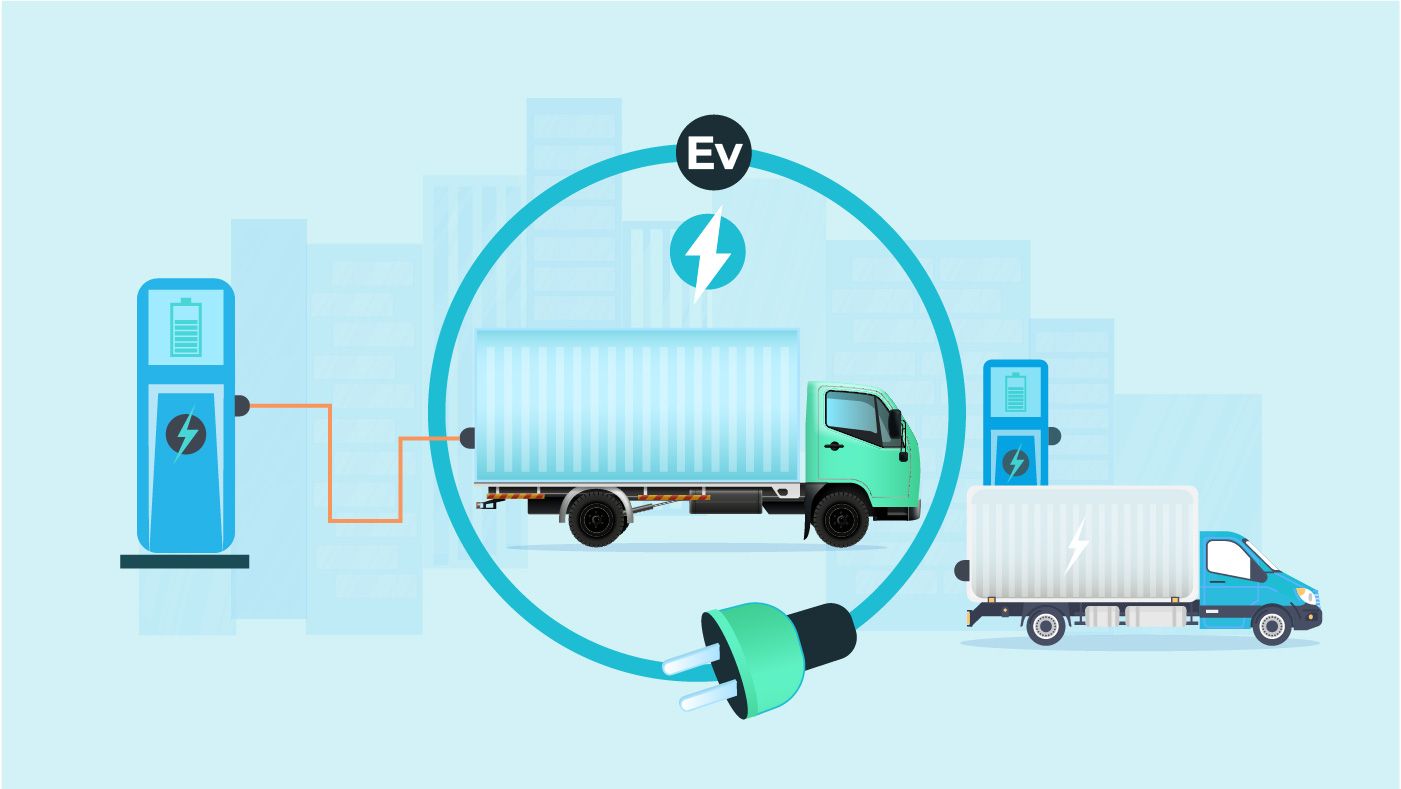
Electric Vehicles (EV) are one of the most talked-about developments in the past few years. The EV industry has existed for a while but saw a massive uptick in demand and popularity in the last five years. Although, most of the credit can be attributed to the popularity of Elon Musk’s Tesla which revolutionized the EV segment with the introduction of electric vehicles that are functional, stylish, and makes economic sense. Automobile manufacturers across all segments have since then joined the EV bandwagon with legacy players like Tata Motors, General Motors, Ashok Leyland, Mahindra, and many more going into production of EVs ranging across personal and commerical segments. According to the International Energy Agency’s (IEA) Global EV Outlook 2021, the size of the EV market is set to increase from $ 171 billion dollars in 2020 to $ 725 billion in 2026.
Why is everyone jumping on the EV bandwagon?
But the real question remains, why is there a sudden spike of interest in the uptake of EVs across segments? Well, the increase in awareness and mainstreaming of climate change as a threat to our ‘business as usual’ model has been a very strong motivator. With the year-on-year rise in CO2 emissions with the fossil fuel industry being one of the major polluters has resulted in a tremendous uproar to cut down emissions. As a result, governments across the world are making ways for a more sustainable and cleaner future with a shift towards greener and emission free mode of transportation and doing business. They are doing so by introducing several policies and incentive schemes to improve the infrastructure, production, and consumption of EVs across sectors.
“The business industry largely sees a two-way incentive in making the shift to EVs, the first one being the lucrative incentives and tax-breaks offered by the government for production and procurement of EVs, while the other one being able to reduce their emissions and carbon footprint, in-line with the global ESG standards as well as their own initiative to reducing emissions to make the world a more greener place.”
Adoption of EVs in personal and commercial logistics & transport sector
Mass-scale adoption of EVs as a substitute to fossil fuel-based traditional vehicles is a relatively new phenomenon seeing exponential growth in both the personal and commercial market. Major credit for that is the phenomenal research and development in the battery technology used to power them. In addition, an increase in mileage offered by these vehicles coupled with the expansion of charging infrastructure for EVs has made functioning more convenient, thus promoting the adoption of EVs in both personal and commercial transport segments.
EVs in personal vehicle transport in India
Looking at India’s case, all major car manufacturers bring their EV cars and bikes to market at a record rate. Tata Motors has been one of the front runners in offering EVs across their most popular segments, including launching affordable EV cars such as Tigor EV, Nexon EV, Altroz EV. In contrast, other large-scale manufacturers like Maruti Suzuki, MG Hector, Hyundai, Renault, Mahindra have launched EV variants of their popular offerings like Wagon R Electric, XUV300 Electric, Kona Electric, among several others. Even in the two-wheeler segment, we saw a resurgence in the popularity of EV bikes after the initial entries from LML and Yo Bikes almost a decade ago. New players like Ather Energy E-taxi giant Ola have already taken over the market by storm with their stylish and long-range EV bikes, while traditional manufacturers like Bajaj, Hero, Honda, TVS are already pushing new lines of affordable EV bikes while developing newer ones.
EVs in commercial vehicle transport in India
The commercial EV section has always been a tricky one. You see, the possible adoption of EVs in commercial and business sectors is spread over a wide variety of use-cases and industries, each faced with its own set of challenges. In addition to that, when we think of commercial EVs, we always need to factor in not just a few vehicles but an entire fleet of vehicles which needs to improve the efficiency of operation and bring down the cost by replacing the existing fuel-driven traditional fleets. The right blend of policies, incentives, and innovation has the potential to do the needful and make the adoption in the commercial sector a tremendous success. And we do have success stories of companies implementing large-scale EV fleets, improving operations, and reducing emissions at the same time. Most of such stories come from state-government-run public transport bus corporations that continue to induct thousands of EV buses in their fleet across metro cities, including Mumbai, Delhi, Chennai, and Bengaluru. Most of these buses are manufactured by legacy automobile giants like Tata Motors, Ashok Leyland, Olectra Greentech, that are expanding their range of EVs across all use-cases
BEST electric bus charging at one of their charging stations in Mumbai | Source: Autocars India
While in the private sector, companies like BLU Smart Mobility, Zypp Electric, Etrio, among others, are expanding their operation in e-taxi services and last-mile delivery operations by offering services relevant to the logistics & transport industry.
Electric three-wheeler vehicle by Altigreen for last mile delivery | Source: ET Auto
Challenges associated with adoption of EVs in commercial sector
Changing the status quo when it comes to how industries operate is no easy task. Even if we remove the high cost of inventory or acquisition, changing how the commercial logistics & transportation sector operates is filled with complexity and challenges. The primary reason for that is pretty straightforward; considering how intertwined operations can get in the logistics & transportation industry, any changes brought concerning operation will affect multiple stakeholders, from clients to the workforce to process; everything needs to adapt to such changes. Apart from that, several fundamental challenges exist when we talk about replacing conventional fleets with EV fleets. Some of these fundamental challenges are listed below:
Lack of available charging infrastructure across regions
When it comes to distance and frequency of use, vehicles, particularly in the logistics industry, cover large distances across states, and their frequency of use is much higher than personal-use vehicles. And the availability of refueling or charging infrastructure is not spread accordingly to cater to mid-route charging, particularly across regions further away from urban centers. At the same time, petrol or diesel refueling stations are available across states and even in remote areas. Now, intra-city services like last-mile delivery, city transport, etc., have their charging infrastructure in place either at charging stations across urban hubs or their facilities but the same convenience is not available for inter-state transport carriers, making it difficult to replace existing vehicles with EVs.
Low mileage continues to make long-haul logistics providers reluctant
To be fair, there has been a significant improvement in the mileage offered by EVs, particularly in the heavy-duty truck segment. New battery and charging technologies continue to revolutionize the efficiency of vehicles, for example, Tata Ultra T.7, which offers up to 100 km range on a single charge. However, it still falls short when we factor in the truckload and distance vehicles in the logistics & transport sector. That, coupled with a lack of available charging infrastructure across regions, makes it unviable for logistics industry adoption.
Reskilling workforce and availability of maintenance professionals
Vehicles in the logistics & transport industry go through a lot of wear and tear. In India, the challenges become multi-fold when we consider the state of Indian roads and the issue of overloading. In addition, vehicles require frequent maintenance and often face mid-route breakdowns. Although non-availability of garages and service centers, local mechanics and even drivers can sometimes resolve the issue as they have been dealing with combustion engine-run trucks for years. However, the introduction of EVs would require reskilling to fix and understand the functions of electric truck engines. At the same time, drivers would need to be reskilled in the operation of such machines. In addition, the onus of bearing costs will fall on the transporters and logistics companies.
High Inventory Cost and ROI concerns
Another roadblock in adopting EVs in the logistics & transport industry is the upfront cost of investment and the ROI. Data shows that the overall ROI would be significantly better than fossil fuel-run vehicles in the long run. However, we must consider that the logistics & transport industry operates on smaller margins and the upfront cost of investment required for procurement of vehicles and setting up the necessary infrastructure. The higher cost of EVs does not help the situation either.
Improving adoption of EVs in the logistics & industry
From a macro perspective, the only stakeholder that can significantly boost India’s commercial EV adoption is the government, and that too for obvious reasons.
Why is the government doubling down on EV adoption?
To understand why the Indian government has been pushing for EV adoption or alternatives to fossil-fuel-driven transportation, one needs to look at India's imports. Take a guess which product cost the government the most in import bills. The answer has been all over the news last year, its Fossil Fuels imports, particularly crude oil. According to government figures, India's import and export bills for FY 2020-21 stood at $ 394.43 billion and $ 291.80 billion, respectively, so an import deficit of over 100 billion dollars. Now since it was during the first wave of the coronavirus pandemic, we'll take into account the halt in economic activity and fall in global demand and price of oil; crude oil import still cost India 62.7 billion dollars in FY 2020-21. That's not bad, right? Well, it's almost a fifth of total imports. The government paid 112 billion dollars in FY 2018-19, 101 billion dollars in FY 2019-20, and in FY 2021-22, only in a period of nine months from April 2021 to December 2021, India has paid 82.4 billion dollars for crude oil imports. Now, here is when things get more interesting, for the current financial year, crude oil has been trading at sub 70 dollars a barrel. As the global economy opens up again, crude oil prices are at an all-time high, since the crash in 2014. Currently, oil has been trading at 88 dollars a barrel and is now in an upward trend, thus, resulting in a higher cost of fuel, similar to the fuel price hike in India seen towards mid-2021. Cutting down crude oil imports and expanding domestic renewable energy production would significantly reduce the import deficit. In addition, a booming EV industry would reduce the amount of CO2 emissions significantly while at the same time creating jobs, wealth, and prosperity.
Policies and measures introduced in India to boost adoption of EVs
State and central governments have taken measures that have kick-started India’s EV adoption and ambition. It has further encouraged and incentivized the commercial sector to be receptive to the adoption of EVs, particularly in the logistics & transport sector. In addition, developing new and improving existing infrastructure such as roads, charging stations, national highways & expressways has strengthened the existing space to make way for an efficient transportation industry. Let’s look at some of the significant policy measures and incentives brought by both state and central governments to improve the adoption of EVs.
FAME I & II Scheme
Faster Adoption and Manufacturing of (Hybrid &) Electric Vehicles scheme under the National Electric Mobility Mission Plan (NEMMP) 2020 has been introduced in two phases; FAME I started in 2015 and extended to 2018, while FAME II began in 2019 and has been extended to 2024. Through this scheme, the government provides subsidies on the purchase of electric vehicles in India to incentivize and improve the adoption of private and shared EVs. It has helped boost the consumption and production of EVs across sectors through government spending. Several private manufacturers and service providers also entered the market, becoming more competitive and efficient.
Incentives and subsidies introduced by several state governments
Several state governments have brought in measures and introduced policies offering incentives such as subsidies on purchases for individuals and businesses, mass procurement of EVs, and subsidies in the form of tax breaks and waivers to manufacturers. Apart from that, states like Maharashtra, Andhra Pradesh, Karnataka are ramping up their EV charging infrastructure to make it easier to operate EVs and improve sales on the same by individuals and businesses. In addition, several schemes also target the adoption of renewable energy on a large scale, promoting a clean energy-driven EV sector.
Improving technology through Production Linked Incentives or PLI scheme
Under this scheme, the government incentivized manufacturers to produce more EVs across segments. It included tax breaks, performance-based incentives, Foreign Investments in the EV sector, and funding for research for lowering the cost of batteries and new developments in the technology to make them more efficient. It strengthened the industries on the supply side, which got more incentives to produce EVs. Coupled with incentives on the demand side has helped exponentially promote the adoption of EVs in the commercial sector.
Lastly, it is essential to note that several other policies have been brought in to promote the EV ecosystem in India. The affirmative policies and incentives have been well received. As a result, the adoption of EVs in India, particularly in the logistics & transport industry, has seen a major uptick. The continuous development in technology and infrastructure to strengthen India's EV ecosystem offers businesses an opportunity to cut their cost of operations while making their business future-proof and free from turbulence in the crude oil market.
Frequently Asked Questions on EV Adoption in India’s Logistics and Transport Industry
What is an electric vehicle? ▼
A vehicle that uses one or more electric motors for propulsion is referred to as an electric vehicle (EV). Unlike conventional vehicles powered by petrol or diesel engines, EVs run either fully on electricity stored in batteries or through hybrid power systems. Electric vehicles are becoming increasingly popular across India because they help reduce fuel costs, lower carbon emissions and support sustainable transportation.
How long does a battery powered GPS tracker last? ▼
Typically, batteries in standalone GPS trackers last between 6 and 7 years, depending on battery quality, reporting frequency, operating conditions and maintenance. Some GPS trackers use rechargeable batteries, while others are hardwired directly to the vehicle's electrical system, allowing continuous operation without relying solely on battery capacity.
What is EV adoption in logistics and transport? ▼
EV adoption in logistics and transport means using electric vehicles instead of diesel or petrol vehicles for business mobility, goods movement, last-mile delivery, public transport, employee transport and fleet operations. In India, this includes electric two-wheelers, three-wheelers, vans, buses, light commercial vehicles and, gradually, electric trucks. For logistics companies, EV adoption is not only about buying electric vehicles; it also includes route planning, charging infrastructure, driver training, battery monitoring, maintenance planning and fleet management software.
The best use cases today are city-based delivery, e-commerce logistics, grocery delivery, courier movement, employee shuttles and intra-city cargo operations. Cities like Delhi, Gurgaon, Mumbai, Bengaluru and Pune are seeing stronger EV adoption because they have higher delivery density, better charging access and more pressure to reduce fuel costs and emissions. For long-haul logistics, adoption is slower because charging infrastructure and vehicle range still need improvement.
Why is India’s logistics industry moving towards electric vehicles? ▼
India’s logistics industry is moving towards electric vehicles because fleet operators are under pressure to reduce fuel expenses, improve operating margins and meet sustainability goals. Diesel and petrol costs directly affect transport profitability, especially for companies running high-utilisation fleets. EVs can reduce running costs in urban logistics because electricity cost per kilometre is usually lower than diesel or petrol cost per kilometre.
Another major reason is regulatory and customer pressure. Large brands, e-commerce companies and 3PL providers increasingly prefer cleaner delivery networks to support ESG targets. In cities like Delhi NCR and Mumbai, pollution concerns also make electric commercial mobility more relevant. EVs are especially useful for predictable routes where vehicles return to a hub for charging. With fleet management platforms, businesses can track battery health, charging behaviour, route efficiency and vehicle utilisation, making EV operations more measurable and scalable.
What are the top benefits of electric vehicles for fleet management in India? ▼
The top benefits of electric vehicles for fleet management in India include lower running cost, reduced emissions, better suitability for fixed routes and improved long-term operational visibility. EVs have fewer moving parts compared to internal combustion engine vehicles, which can reduce some maintenance requirements. For logistics companies operating in high-density urban routes, this can improve total cost of ownership over time.
For fleet managers, EVs also make data-driven operations more important. Businesses can monitor battery percentage, range, charging time, vehicle idle time, route deviation, driver behaviour and energy consumption. This is useful in Delhi, Gurgaon, Bengaluru, Pune and Mumbai where traffic congestion can directly affect vehicle range and delivery timelines. EVs also help companies position themselves as sustainable logistics partners, which can improve brand value and enterprise customer trust. The best results usually come when EV adoption is combined with route optimisation, telematics and structured charging schedules.
How much does it cost to adopt EVs for logistics fleets in India? ▼
The cost of adopting EVs for logistics fleets in India depends on vehicle type, battery capacity, route requirements, charging setup and fleet size. Electric two-wheelers used for delivery may cost around ₹80,000 to ₹1.6 lakh per vehicle, while electric three-wheelers may range from ₹2.5 lakh to ₹5 lakh. Electric cargo vans and light commercial EVs can cost significantly more, often starting from ₹8 lakh and going higher depending on payload and range.
Charging infrastructure is another key cost. A basic slow-charging setup at a depot may cost less than a commercial fast-charging setup, which can require higher investment in electrical load, installation and maintenance. Fleet software, GPS tracking, battery monitoring and route optimisation tools may add monthly or annual costs, but they help reduce operational waste. In Delhi NCR, Gurgaon, Mumbai, Bengaluru and Pune, businesses should calculate total cost of ownership, not just purchase price, because savings usually come from lower fuel cost, planned charging and better vehicle utilisation.
Are EV fleets suitable for Delhi, Gurgaon and Delhi NCR logistics operations? ▼
EV fleets are suitable for many logistics operations in Delhi, Gurgaon and Delhi NCR, especially for intra-city deliveries, warehouse-to-store movement, e-commerce delivery, grocery delivery, pharma logistics and employee transportation. These regions have high delivery density, frequent short routes and growing charging infrastructure, which makes electric vehicles practical for daily commercial use.
However, businesses should plan EV adoption carefully. Delhi NCR has traffic congestion, seasonal pollution restrictions and varying route conditions, so fleet managers need accurate range planning. A vehicle that performs well on short planned routes may not be suitable for long or unpredictable routes without charging backup. The best approach is to start with predictable routes where vehicles return to a hub or depot at fixed intervals. Using fleet management software can help operators monitor energy consumption, charging behaviour, trip completion, driver performance and route efficiency across Delhi, Gurgaon, Noida and surrounding NCR areas.
How practical are electric vehicles for logistics fleets in Mumbai, Bengaluru and Pune? ▼
Electric vehicles are practical for several logistics use cases in Mumbai, Bengaluru and Pune, especially where delivery routes are local, repetitive and high-frequency. Mumbai has dense urban delivery routes, Bengaluru has strong e-commerce and technology-led logistics demand, and Pune has a growing industrial and commercial transport ecosystem. These conditions make EVs useful for last-mile delivery, intra-city cargo, food delivery, retail distribution and employee commute fleets.
The main challenge is operational planning. Mumbai traffic, Bengaluru congestion and Pune’s mixed urban-industrial routes can affect EV range and trip timing. Businesses should map charging points, identify depot charging opportunities and analyse daily kilometre requirements before replacing diesel or petrol vehicles. Cost savings are strongest when vehicles run enough kilometres daily to offset the higher upfront purchase price. Fleet tracking and route optimisation tools can help companies select the best EV routes, avoid unnecessary idle time and improve charging discipline across city-based operations.
What are the biggest challenges of EV adoption in commercial logistics? ▼
The biggest challenges of EV adoption in commercial logistics are charging availability, vehicle range, upfront cost, payload limitations, maintenance readiness and operational change management. For long-haul transport, charging infrastructure is still not as accessible as diesel refuelling, which makes EV trucks difficult to scale across inter-state routes. For intra-city logistics, the challenge is easier to manage but still requires structured charging and route planning.
Fleet operators also need to consider driver training, battery care, charging downtime and service support. EVs can deliver strong savings, but only when they are used on the right routes. Poor route allocation can lead to range anxiety, delayed deliveries and vehicle underutilisation. In India, the best EV fleet strategy usually starts with pilot routes in cities like Delhi, Gurgaon, Mumbai, Bengaluru or Pune, followed by expansion based on real performance data. Telematics, battery analytics and vehicle tracking are important because they help identify which routes, drivers and vehicles are delivering the best ROI.
What is the best way for logistics companies to start EV fleet adoption? ▼
The best way for logistics companies to start EV fleet adoption is to begin with a route-level feasibility study. Businesses should review daily kilometres, delivery windows, payload requirements, charging time, vehicle downtime and depot availability. EVs work best when routes are predictable and vehicles can return to a charging point after completing trips. This makes last-mile delivery, urban retail distribution and employee transport strong starting points.
A phased approach is more practical than replacing the entire fleet at once. Companies can start with a small pilot in Delhi NCR, Gurgaon, Mumbai, Bengaluru or Pune, compare EV performance against diesel or petrol vehicles and then expand based on cost savings. Important metrics include cost per kilometre, charging cost, battery health, route completion rate, downtime and maintenance cost. Fleet management software can make this transition easier by showing real-time vehicle location, charging behaviour, driver performance and utilisation trends. This helps operators make faster, data-backed decisions.
Do EV fleets reduce logistics costs compared to diesel vehicles? ▼
EV fleets can reduce logistics costs compared to diesel vehicles, especially in high-utilisation city routes where vehicles travel daily and charging is well managed. The biggest saving usually comes from lower energy cost per kilometre. Electricity is generally cheaper than diesel on a running-cost basis, and EVs may also have lower maintenance needs because they have fewer mechanical components.
However, the overall savings depend on total cost of ownership. Fleet managers must consider vehicle purchase price, battery life, charging setup, financing, insurance, maintenance and resale value. For example, an electric delivery vehicle may have a higher upfront cost than a fuel vehicle, but it can become more economical if used regularly on planned routes. In cities like Delhi, Gurgaon, Mumbai, Bengaluru and Pune, businesses with daily urban deliveries often have better chances of achieving ROI. The best way to estimate savings is to compare cost per kilometre, monthly utilisation, charging cost and expected vehicle life before making a fleet-wide decision.
How can fleet management software support EV adoption in India? ▼
Fleet management software supports EV adoption by helping businesses track vehicle location, battery status, route efficiency, charging schedules, driver behaviour and vehicle utilisation in one place. For electric fleets, visibility is critical because range, charging time and route planning directly affect delivery performance. Without proper monitoring, EVs can face avoidable downtime or inefficient deployment.
In India, where traffic, weather, road conditions and charging access vary by city, software-led planning becomes even more important. A logistics company operating in Delhi NCR, Mumbai, Bengaluru or Pune can use fleet analytics to identify the best routes for EVs, monitor energy consumption and compare EV performance with diesel vehicles. It can also help businesses plan preventive maintenance, reduce idle time and improve delivery reliability. For commercial fleets, the combination of EVs and digital fleet management can improve cost control, sustainability reporting and operational efficiency, making EV adoption easier to scale across multiple locations.