There is no doubt that time is money for any business, and when coupled with cost and resource savings, it becomes the ultimate holy grail that every business aims to achieve. So far, we have learned how a transportation management system (TMS) can deliver on all fronts of saving time, cost, and resources for pharmaceutical companies, specifically in terms of dispatch planning and management. However, despite the benefits it offers, the acceptance rate of TMS in pharma transport operations has been nearly absent.
In contrast, the fast-moving consumer goods (FMCG) industry, which also serves as a last-mile delivery partner to pharma manufacturers, has been at the forefront of TMS adoption in India.
Naturally, one might ask why businesses are reluctant to adopt TMS if it is such a good system. In this regard, it is important to note that India has historically been slow to adopt new technologies, preferring manual methods instead. Thus, it is natural for this reluctance to spill over into business decisions.
However, the winds have been changing due to several technology-driven startups that have disrupted the transport and logistics sector. Their success stories have provided enough case studies and reference cases for more traditional businesses to adopt technologies like TMS. This revolution has spawned several fleet management companies that serve as intermediaries, helping businesses across industries adopt technology solutions like TMS into their operations.
Another important topic that is often overlooked is the streamlining of business processes and operations. For example, if you do not know the quantity of dispatch, how can you plan the quantity of raw material that your manufacturing plant or business needs to procure? Delays in dispatching on-time or in-full can lead to warehousing or stocking issues at the central warehouse level or manufacturing plant level.
Storage issues at your warehouse or plant can affect raw material supplies due to limited availability of space, especially in cases where raw materials and packaging materials are being lifted from suppliers ex-work rather than on a landing cost basis. Therefore, it is important to ensure that both the inflow and outflow of raw materials are in sync, and a TMS can effectively help you achieve synchronisation between inbound logistics and outbound logistics.
Certain processes that may seem marginally small or redundant on paper can create issues when everything needs to be done digitally. Therefore, it is essential for businesses to properly map out, streamline, and implement their logistics and transport operations in a TMS. Lastly, as we have discussed over the last two articles, the adoption of TMS remains a challenge, and companies across the industry are currently in the transition phase, implementing TMS in their transport operations in a phased manner.
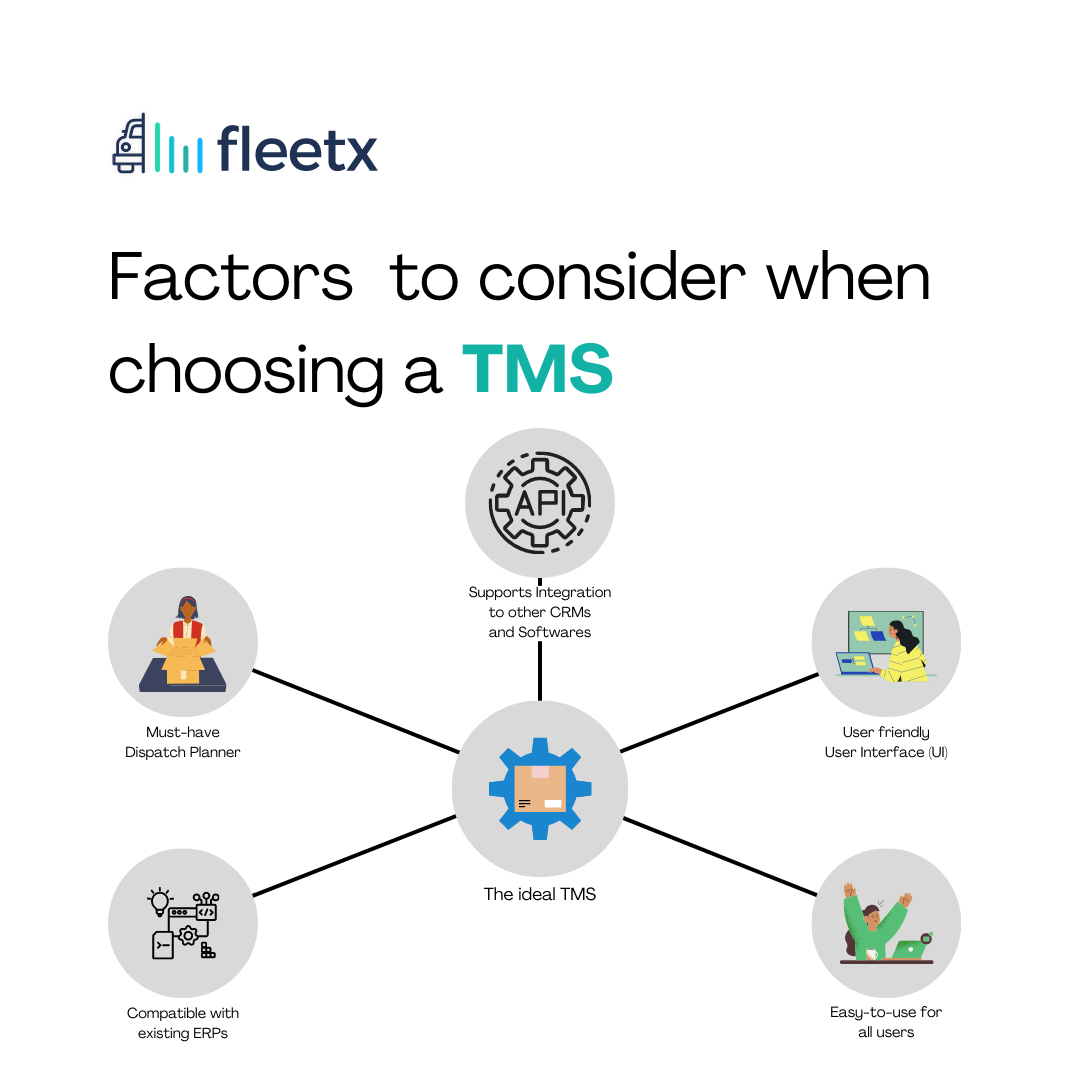
Training the workforce on TMS is an important factor that determines the willingness to adopt a new technology or process. Therefore, your company needs to be deeply involved in the transition process. However, the TMS offering also needs to be easy-to-use and provide seamless integration with existing ERP systems used by companies to input data into the TMS software. Compatibility with a wide range of ERPs or CRMs and ease-of-access are also some of the most critical criteria businesses need to consider when choosing a TMS software. Other criteria include a customer-friendly user interface, easy integration with other software, a good dispatch planner, and more.
Several companies and organisations across the country offer technology-based solutions for businesses and enterprises. One of the most popular tech-based solutions today is the Transport Management System or TMS. The pharma industry has its own unique set of challenges and ways of managing transport that may differ significantly from other industries.
As a pharma company, you need a detailed and precise understanding of every aspect of your company’s transport and logistics operations before purchasing a TMS software. In this article, we discussed the general hallmarks of a good TMS. However, after choosing the best software, it requires fine-tuning and tailoring to suit business needs that can vary significantly from other businesses in the industry.
Frequently Asked Questions
What is a Transport Management System (TMS) for pharmaceutical logistics?
A Transport Management System (TMS) is software that helps pharmaceutical manufacturers, distributors, and logistics providers plan, execute, monitor, and optimize transportation operations from dispatch to final delivery. Unlike general fleet management software, a pharma-focused TMS supports route planning, shipment allocation, transporter management, proof of delivery, temperature-sensitive transportation visibility, compliance tracking, and real-time monitoring. Since pharmaceutical products often have strict regulatory and quality requirements, businesses need complete visibility into every shipment. A TMS helps reduce manual paperwork, improve dispatch planning, shorten turnaround times, and provide accurate delivery ETAs. It also integrates with ERP and warehouse management systems, creating a unified logistics workflow. In India, pharmaceutical companies operating across Delhi NCR, Mumbai, Bengaluru, Pune, Hyderabad, and Gurgaon increasingly rely on TMS platforms to improve service levels while controlling transportation costs. Modern cloud-based TMS solutions also include GPS tracking, AI-powered route optimization, automated transporter allocation, freight analytics, and digital documentation, making them an essential technology investment for pharmaceutical logistics companies looking to improve operational efficiency and customer satisfaction.
Why should pharmaceutical companies invest in a Transport Management System?
Pharmaceutical companies deal with strict delivery schedules, product traceability, inventory synchronization, and regulatory compliance. A Transport Management System helps address these challenges by providing centralized control over transportation planning, shipment visibility, and carrier performance. Instead of relying on spreadsheets or manual coordination, businesses can automate dispatch planning, optimize transporter selection, monitor deliveries in real time, and reduce delays. The software also improves communication between warehouses, transporters, and customers while generating detailed logistics reports for better decision-making. Companies operating across India often transport products between manufacturing plants, distribution centers, and hospitals spread across Delhi NCR, Mumbai, Bengaluru, Pune, and other major cities. Managing these complex logistics operations manually becomes increasingly difficult as shipment volumes grow. A modern TMS helps reduce freight costs, improve on-time deliveries, minimize paperwork, and provide complete visibility across the supply chain. These benefits ultimately improve customer experience, increase operational efficiency, and support business growth while ensuring pharmaceutical products reach their destination safely and on schedule.
What is the cost of implementing a Transport Management System in India?
The cost of implementing a Transport Management System in India depends on company size, shipment volume, integration requirements, deployment model, and customization needs. Small and medium-sized businesses may spend anywhere between ₹1 lakh and ₹5 lakh for implementation, while enterprise pharmaceutical organizations with multiple warehouses, ERP integration, GPS connectivity, transporter portals, and analytics dashboards may invest ₹10 lakh to ₹50 lakh or more. Subscription-based cloud TMS platforms generally charge monthly or annual licensing fees based on the number of users, vehicles, or shipments managed. Additional costs may include ERP integration, user training, data migration, API development, and implementation consulting. Businesses operating across Delhi, Gurgaon, Mumbai, Bengaluru, or Pune should evaluate the total cost of ownership rather than focusing solely on software pricing. The right TMS often delivers measurable ROI through reduced freight expenses, better route optimization, lower administrative effort, improved transporter utilization, fewer shipment delays, and enhanced customer satisfaction, making it a worthwhile long-term investment for pharmaceutical logistics.
Which are the best Transport Management Systems for pharmaceutical companies in India?
The best Transport Management System depends on the operational requirements of each pharmaceutical business. Companies typically evaluate software based on dispatch planning capabilities, transporter management, GPS tracking, ERP integration, analytics, compliance support, proof of delivery, scalability, and customer support. Leading TMS platforms generally provide cloud deployment, mobile applications, AI-driven route optimization, freight visibility, automated transporter allocation, and comprehensive reporting. Businesses operating across Delhi NCR, Gurgaon, Mumbai, Bengaluru, Pune, and other pharmaceutical hubs often prefer solutions that can integrate seamlessly with warehouse management systems and ERP platforms while handling high shipment volumes. Before selecting a TMS, organizations should conduct pilot testing, evaluate ease of implementation, verify customer references, and assess future scalability. Choosing the right software involves balancing implementation cost, functionality, vendor expertise, and long-term operational benefits. Rather than selecting the cheapest solution, pharmaceutical companies should prioritize reliability, automation capabilities, integration flexibility, and continuous product innovation to maximize logistics efficiency.
How are pharmaceutical companies in Delhi NCR and Gurgaon using TMS software?
Delhi NCR and Gurgaon are among India's largest pharmaceutical distribution and logistics hubs. Companies in these regions manage large shipment volumes to hospitals, distributors, retailers, and healthcare institutions across North India. A Transport Management System helps businesses streamline dispatch operations, improve transporter allocation, optimize delivery routes, and monitor shipments in real time. Since traffic congestion, delivery time windows, and regulatory compliance are common challenges in these cities, TMS software enables businesses to respond proactively through GPS tracking, automated alerts, digital documentation, and AI-powered route planning. Organizations can also monitor transporter performance, reduce detention time, improve warehouse coordination, and enhance customer communication. As pharmaceutical supply chains become increasingly digital, businesses across Delhi NCR and Gurgaon are adopting cloud-based TMS solutions to improve operational visibility while reducing transportation costs and delivery delays. These improvements contribute to better inventory planning, stronger service levels, and improved overall supply chain performance.
How does a Transport Management System improve pharmaceutical logistics in Mumbai, Bengaluru, and Pune?
Mumbai, Bengaluru, and Pune serve as major pharmaceutical manufacturing, research, and distribution centers. Companies operating in these cities often manage complex transportation networks involving manufacturing plants, warehouses, airports, ports, and regional distribution centers. A Transport Management System improves logistics by automating shipment planning, optimizing delivery routes, monitoring vehicle movement, and providing complete shipment visibility. Real-time tracking allows businesses to monitor critical deliveries while AI-based route optimization reduces fuel consumption and transit times. Integration with ERP systems enables better inventory synchronization and dispatch planning, while digital proof of delivery improves documentation accuracy. Companies also benefit from freight analytics, transporter scorecards, automated billing reconciliation, and centralized operational reporting. These capabilities help pharmaceutical organizations improve delivery reliability, reduce logistics costs, and maintain compliance with industry regulations. As freight volumes continue to increase across India's major industrial cities, TMS platforms are becoming essential for maintaining efficient, scalable, and customer-focused pharmaceutical supply chains.
What features should businesses look for when choosing the top TMS software?
Selecting the right Transport Management System requires evaluating features that directly improve logistics efficiency and long-term scalability. Essential capabilities include dispatch planning, transporter allocation, shipment tracking, GPS integration, route optimization, freight management, proof of delivery, analytics dashboards, automated reporting, and ERP integration. Pharmaceutical businesses should also evaluate compliance management, temperature-sensitive shipment monitoring, digital documentation, carrier performance tracking, and warehouse integration. Modern cloud-based TMS platforms increasingly include AI-powered predictive analytics, automated ETA calculations, exception management, and mobile applications for drivers and transport teams. Businesses operating across India should also consider implementation support, customer service quality, system security, customization capabilities, and software scalability before making a purchasing decision. The best TMS is not necessarily the one with the largest feature list but the one that aligns closely with operational requirements, integrates smoothly with existing systems, and delivers measurable improvements in transportation efficiency, visibility, and customer satisfaction.
How long does it take to implement a Transport Management System successfully?
Implementation timelines vary depending on organizational complexity, existing IT infrastructure, and customization requirements. Small businesses can often deploy cloud-based TMS software within four to eight weeks, while large pharmaceutical enterprises with ERP integration, multiple warehouses, transporter onboarding, and extensive workflow customization may require three to six months. A successful implementation begins with mapping transportation processes, defining business objectives, cleansing operational data, and integrating existing software systems. Employee training, pilot testing, transporter onboarding, and change management also play a significant role in project success. Companies across Delhi, Gurgaon, Mumbai, Bengaluru, and Pune increasingly adopt phased implementations to minimize operational disruption while allowing employees sufficient time to adapt to new workflows. Businesses that invest in comprehensive planning, vendor collaboration, and user training typically achieve faster adoption, higher employee acceptance, and stronger long-term returns from their Transport Management System investment.