
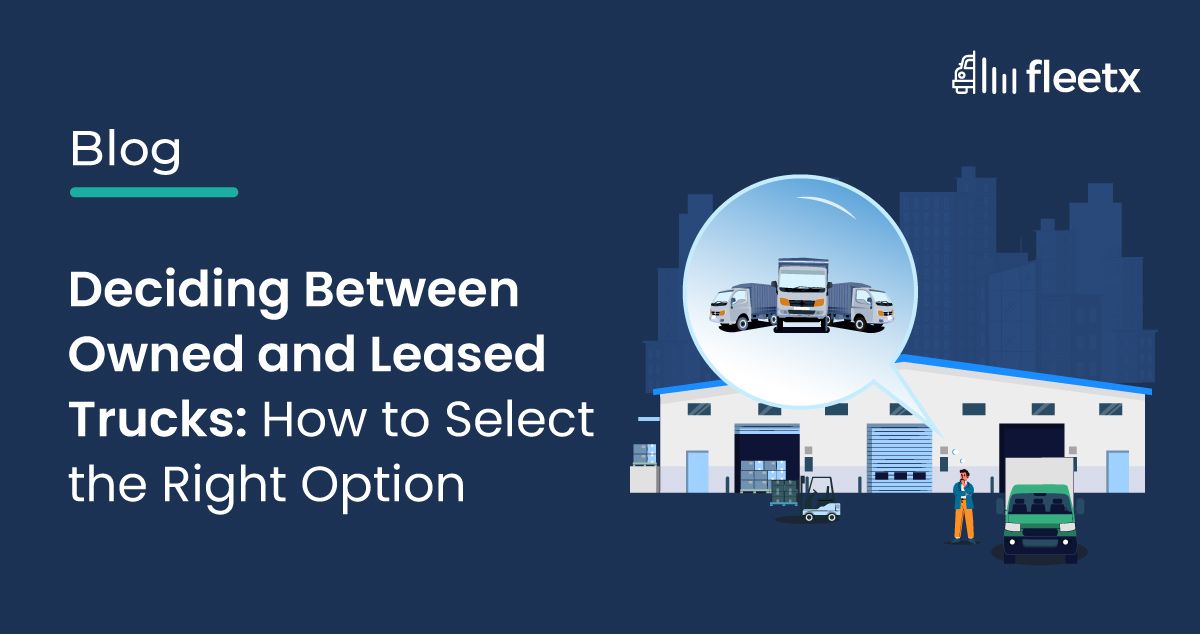
In the world of logistics and transportation, the debate between owning and leasing trucks is as relevant as ever. With businesses striving for efficiency and cost-effectiveness, choosing the right method of acquiring trucks for long haul or short haul can significantly impact operations. This post guides you into the nuances of owning versus leasing trucks, exploring the financial, operational, and strategic implications of each option.
The Case for Owning Trucks
Capital Investment and Long-Term Savings: Owning trucks requires a significant upfront investment. However, this capital expenditure can lead to long-term savings as businesses avoid recurring lease payments. Owning trucks can be cost-effective for companies with stable, long-term needs, where the vehicles can be utilized to their fullest over many years.
Depreciation and Tax Benefits: Depreciation of owned trucks can be leveraged for tax benefits. Businesses can write off the depreciation of the vehicle as a business expense, potentially lowering their taxable income. Additionally, owning trucks outright provides the opportunity to claim deductions on operational costs, such as maintenance and fuel.
Customization and Control: Owning trucks offers the flexibility to customize vehicles according to specific business needs, which is crucial for companies with specialized transportation requirements. It also provides complete control over maintenance schedules and operational usage, ensuring that the trucks are always in optimal condition and available when needed.
The Case for Leasing Trucks
Lower Initial Costs and Flexibility: Leasing trucks significantly reduces initial costs, freeing up capital for other business investments. It offers flexibility, allowing businesses to upgrade to newer models at the end of lease terms, thus benefiting from the latest technology and improved fuel efficiency without a substantial upfront investment.
Predictable Expenses and Cash Flow Management: Leasing agreements often include maintenance and repair services, making expenses predictable and easier to manage. This can improve cash flow management, as businesses can plan for fixed monthly lease payments without worrying about unexpected repair costs.
Mitigating Risk of Depreciation: Leasing trucks mitigates the risk of depreciation. Businesses can return the vehicle at the end of the lease, avoiding the loss in value that comes with owning an aging fleet. This is particularly advantageous in a rapidly evolving market where vehicle technology is constantly advancing.
Operational Considerations
Fleet Management and Scalability: Businesses need to consider their ability to manage and scale their fleet. Owning trucks may require a larger, dedicated team for maintenance and management, while leasing can often include these services, allowing businesses to scale up or down more fluidly in response to market demand.
Usage and Mileage: For companies with long-haul needs, owning may be more beneficial since leased vehicles often come with distance limits, and exceeding these limits can incur significant costs. On the other hand, businesses with variable or unpredictable vehicle usage may find leasing more advantageous due to its flexibility.
Financial Implications
Cost-Benefit Analysis: A comprehensive cost-benefit analysis is essential. This analysis should consider the total cost of ownership, including purchase price, maintenance, insurance, and resale value, against the total cost of leasing, which includes lease payments, fees, and any potential overage charges.
Access to Capital: Businesses must also consider their access to capital and financing options. While owning trucks may provide long-term savings, the initial expenditure can be substantial. Leasing, with its lower upfront costs, may be more accessible for businesses with limited capital or those looking to invest in other areas of their operations.
How Different Industries Can Decide Between Owning and Leasing Trucks
The decision to own or lease trucks varies significantly depending on the nature of the business, shipment frequency, operating region, and capital availability. Instead of following a one-size-fits-all approach, businesses should evaluate how their industry-specific requirements influence fleet investments.
Manufacturing and Industrial Businesses
Manufacturers often operate on predictable production schedules and require consistent transportation capacity. For such businesses, purchasing trucks can provide greater long-term value because vehicles remain in regular use throughout their lifecycle.
Key considerations include:
- Stable transportation demand
- Long vehicle retention periods
- Greater control over fleet availability
- Easier customization for specialized cargo
E-commerce and Retail Distribution
E-commerce businesses experience fluctuating order volumes during festive seasons, promotional campaigns, and sales events. Leasing allows them to quickly expand or reduce fleet size without making large capital investments.
Leasing may be beneficial because it offers:
- Flexible fleet expansion
- Lower upfront investment
- Faster access to newer vehicles
- Reduced financial risk during uncertain demand
Cold Chain and Pharmaceutical Logistics
Businesses transporting temperature-sensitive goods require highly specialized vehicles equipped with refrigeration units and monitoring systems. The decision depends on how frequently these vehicles are used.
Many organizations adopt a hybrid approach by:
- Owning frequently used refrigerated vehicles
- Leasing additional trucks during seasonal demand
- Upgrading vehicles as compliance requirements evolve
Construction and Infrastructure Companies
Construction projects are often temporary and location-specific. Leasing trucks for project durations helps companies avoid maintaining underutilized assets once projects are completed.
Industry-Wise Recommendation
| Industry | Ownership Recommended | Leasing Recommended | Why? |
|---|---|---|---|
| Manufacturing | Yes | Sometimes | Consistent fleet utilization and long-term operations |
| FMCG Distribution | Yes | Yes | Hybrid fleets support changing demand patterns |
| E-commerce | Sometimes | Yes | Seasonal fluctuations require flexibility |
| Construction | Sometimes | Yes | Project-based vehicle requirements |
| Mining | Yes | Rarely | Continuous heavy-duty operations |
| Cold Chain Logistics | Yes | Yes | Specialized vehicles with varying utilization |
| Third-Party Logistics (3PL) | Sometimes | Yes | Ability to rapidly scale customer operations |
Rather than focusing only on purchase costs, businesses should evaluate how fleet ownership aligns with operational objectives, industry requirements, and long-term growth plans.
Common Mistakes Businesses Make When Choosing Between Owned and Leased Trucks
Fleet acquisition decisions often influence operating costs for several years. Many businesses focus primarily on monthly payments or purchase prices while overlooking operational and financial factors that significantly impact total fleet costs.
1. Comparing Only the Initial Cost
The purchase price or lease payment represents only one part of the total investment.
Businesses should also evaluate:
- Fuel expenses
- Maintenance costs
- Insurance
- Registration fees
- Downtime costs
- Driver productivity
- Vehicle replacement timelines
A lower monthly payment does not always translate into a lower total cost of ownership.
2. Ignoring Future Business Growth
Many organizations purchase fleets based on current transportation requirements without considering future expansion.
Questions worth asking include:
- Will shipment volumes increase within the next three years?
- Are new warehouses or distribution centers planned?
- Will delivery routes expand into additional cities?
Planning for future growth helps avoid costly fleet restructuring later.
3. Underestimating Fleet Utilization
A truck that remains idle for extended periods generates little return on investment.
Businesses should monitor:
- Average daily kilometers
- Load utilization
- Empty return trips
- Vehicle idle time
- Seasonal usage patterns
Higher utilization generally strengthens the financial case for ownership, while inconsistent usage often favors leasing.
4. Overlooking Technology Integration
Modern fleets increasingly depend on connected technologies for operational efficiency.
Organizations should consider whether vehicles support:
- GPS tracking
- Route optimization
- Fuel analytics
- Driver safety monitoring
- Predictive maintenance
- Electronic proof of delivery
Technology compatibility can influence long-term fleet performance more than the financing model itself.
Avoiding these common mistakes enables businesses to make decisions based on long-term operational value rather than short-term financial comparisons.
Future Trends Shaping Truck Ownership and Leasing Decisions
The commercial transportation industry is rapidly evolving as technology, sustainability initiatives, and changing customer expectations reshape fleet operations. Businesses planning long-term fleet investments should consider how these trends may influence future ownership strategies.
Connected Fleets and Real-Time Visibility
Modern trucks increasingly generate operational data through telematics and IoT devices. Fleet managers can monitor vehicle location, fuel consumption, maintenance schedules, and driver behaviour from a centralized platform.
Benefits include:
- Improved route planning
- Higher fleet utilization
- Reduced operational costs
- Better customer visibility
- Faster incident response
Electric and Alternative Fuel Vehicles
As businesses work toward sustainability goals, electric and alternative fuel trucks are becoming more common. Since vehicle technology continues to evolve rapidly, some organizations prefer leasing to gain access to newer models without committing to long-term ownership.
Factors influencing adoption include:
- Charging infrastructure availability
- Government incentives
- Lower operating costs
- Environmental compliance
- Corporate ESG initiatives
AI-Driven Fleet Decision Making
Artificial intelligence is transforming how fleets are managed by helping businesses make proactive decisions instead of reactive ones.
AI-powered systems can assist with:
- Predictive maintenance
- Demand forecasting
- Route optimization
- Fuel efficiency analysis
- Driver performance insights
- Asset utilization forecasting
Building a Future-Ready Fleet
Regardless of whether trucks are owned or leased, businesses should develop a fleet strategy that supports long-term scalability and technological advancement.
A future-ready fleet typically prioritizes:
- Data-driven decision making
- Flexible expansion capabilities
- Operational efficiency
- Regulatory compliance
- Sustainability objectives
- Lower lifecycle costs
Organizations that evaluate ownership decisions alongside emerging technologies are better positioned to improve productivity, reduce operating expenses, and adapt to changing transportation requirements over the coming years.
Conclusion
The decision between owning and leasing trucks is multifaceted, depending on a business’s financial situation, operational needs, and strategic goals. Owning may offer long-term savings and greater control, ideal for stable companies with predictable transportation needs. Leasing, on the other hand, offers flexibility, lower initial costs, and the ability to easily upgrade fleets, suitable for businesses facing rapid growth or fluctuating demand.
Frequently Asked Questions
What is truck ownership vs truck leasing, and how do businesses decide which option is better?
Truck ownership means a business purchases commercial vehicles outright or finances them through loans, making the trucks long-term business assets. Truck leasing, on the other hand, allows companies to use vehicles for a fixed monthly payment over a predetermined period without purchasing them outright. Both options serve different operational and financial objectives, making the right choice dependent on business size, fleet utilization, capital availability, and growth strategy.
Businesses with predictable transportation requirements, stable freight volumes, and long-term fleet usage often find ownership more economical because the investment can generate value over many years. Companies experiencing seasonal demand, rapid expansion, or uncertain transportation needs frequently prefer leasing because it provides flexibility while preserving working capital.
When evaluating ownership versus leasing, businesses should compare:
- Total cost of ownership, including fuel, maintenance, insurance, depreciation, and resale value.
- Monthly lease expenses, mileage restrictions, and end-of-term conditions.
- Cash flow impact and financing requirements.
- Expected annual vehicle utilization.
- Future fleet expansion plans.
- Technology upgrades and compliance requirements.
Across India, businesses operating in Delhi NCR, Mumbai, Bengaluru, Gurgaon, Pune, and other logistics hubs often use a combination of owned and leased trucks to balance operational flexibility with long-term profitability. Rather than choosing solely based on purchase price, evaluating lifecycle costs and operational efficiency usually leads to a more sustainable fleet strategy.
How do I choose between buying and leasing trucks for my logistics or transportation business?
The best approach is to evaluate your transportation requirements over the next five to ten years instead of focusing only on immediate costs. Businesses should understand how frequently vehicles will operate, expected annual mileage, financing capacity, maintenance capabilities, and future expansion plans before making a decision.
Ownership is generally suitable when fleets operate consistently throughout the year, vehicles remain in service for several years, and businesses want complete control over customization and maintenance. Leasing may be more appropriate when transportation demand fluctuates, businesses require newer vehicle technology, or preserving capital for warehouse expansion, technology investments, or hiring is a higher priority.
Before making a decision, consider asking:
- Will transportation demand remain stable throughout the year?
- Can the business comfortably manage a large upfront investment?
- How frequently will vehicles need replacement?
- Does the company have an in-house maintenance team?
- Are newer safety and telematics technologies important?
- Will fleet size increase significantly over the next few years?
Many logistics providers across Delhi, Gurgaon, Mumbai, Pune, and Bengaluru now adopt hybrid fleet models by owning core vehicles while leasing additional trucks during seasonal peaks. This strategy offers better scalability while reducing financial risk and improving asset utilization.
What does it cost to own or lease commercial trucks in India?
The cost of owning or leasing commercial trucks in India depends on vehicle category, financing terms, operating region, and annual utilization. Light commercial vehicles generally require significantly lower investment than heavy-duty trucks, while leasing costs vary according to contract duration, mileage limits, included maintenance services, and vehicle specifications.
As a broad estimate, leasing commercial trucks may range from approximately ₹35,000 to over ₹2,00,000 per month depending on vehicle type, whereas purchasing a new commercial truck can require investments ranging from several lakhs to well over ₹50 lakh for larger vehicles. Businesses should also account for additional operating costs that continue throughout the vehicle's lifecycle.
Important cost components include:
- Loan repayments or lease rentals.
- Insurance premiums.
- Fuel expenses.
- Routine servicing and repairs.
- Tyre replacement.
- Driver salaries and benefits.
- Permits, registration, and toll charges.
- Technology solutions such as GPS tracking or fleet management software.
Fleet operators in Delhi NCR, Mumbai, Bengaluru, Pune, and Gurgaon should compare total lifecycle costs rather than monthly payments alone. Conducting a comprehensive total cost of ownership (TCO) analysis often reveals whether ownership or leasing provides stronger long-term financial value for a particular business model.
What are the biggest advantages and disadvantages of owning trucks instead of leasing them?
Owning trucks provides businesses with complete control over their fleet and can become more cost-effective over the long term, particularly when vehicles are used extensively. Since the trucks become business assets, companies can customize them for specialized operations, schedule maintenance according to operational requirements, and continue using them even after financing is completed. However, ownership also involves higher financial commitment and greater responsibility throughout the vehicle's lifecycle.
Businesses should evaluate both benefits and potential drawbacks before making an investment decision.
Advantages of owning trucks include:
- Long-term cost savings when vehicles remain in operation for many years.
- Complete ownership of valuable business assets.
- Greater flexibility for branding and vehicle customization.
- No lease mileage restrictions.
- Potential tax benefits through depreciation and eligible business deductions.
- Higher resale value if vehicles are well maintained.
Potential disadvantages include:
- Large upfront capital investment.
- Responsibility for repairs and maintenance.
- Risk of vehicle depreciation.
- Technology becoming outdated over time.
- Reduced flexibility when business demand changes rapidly.
Many transport operators across India, particularly in Delhi NCR, Mumbai, Pune, Bengaluru, and Gurgaon, evaluate ownership after calculating expected annual mileage, maintenance costs, financing expenses, and projected business growth. The right choice depends on the organization's financial strength and long-term transportation strategy rather than ownership alone.
Which industries benefit the most from leasing trucks instead of purchasing them?
Truck leasing is particularly beneficial for industries where transportation demand changes throughout the year or where businesses require flexibility without committing significant capital to fleet acquisition. Leasing enables organizations to scale vehicle capacity according to customer demand while maintaining healthier cash flow and reducing the risks associated with depreciation.
Industries that commonly benefit from leasing include:
- E-commerce and online retail businesses experiencing seasonal sales spikes.
- Third-party logistics (3PL) providers managing multiple client requirements.
- Construction companies working on project-based contracts.
- Cold chain logistics providers expanding during seasonal agricultural demand.
- Pharmaceutical distribution companies requiring specialized vehicles.
- Startups and rapidly growing transportation businesses with limited capital.
Leasing also allows organizations to upgrade to newer trucks equipped with improved fuel efficiency, enhanced driver safety systems, telematics, GPS tracking, and predictive maintenance capabilities without making another major capital investment.
Companies operating across logistics hubs such as Delhi, Gurgaon, Mumbai, Bengaluru, Chennai, Hyderabad, and Pune often use leased vehicles to quickly respond to changing customer requirements. Many businesses also adopt hybrid fleet strategies by owning frequently used trucks while leasing additional vehicles during peak operational periods, helping improve both flexibility and cost efficiency.
What are the best truck leasing and fleet management solutions for businesses in India?
The best truck leasing and fleet management solution depends on fleet size, business objectives, transportation routes, and operational complexity. Rather than selecting a provider solely based on lease pricing, businesses should evaluate the complete ecosystem that supports efficient fleet operations.
Leading fleet management platforms generally provide capabilities such as:
- Real-time GPS vehicle tracking.
- Fuel consumption monitoring.
- Preventive maintenance scheduling.
- Driver behaviour analytics.
- Route optimization and dispatch planning.
- Digital trip management.
- Vehicle health monitoring.
- Comprehensive operational dashboards and reporting.
When comparing the best truck leasing or fleet management solutions in India, businesses should consider:
- Total implementation and subscription costs.
- Availability of local support teams.
- Ease of integration with ERP or transportation management systems.
- Scalability as fleet size grows.
- Analytics, reporting, and automation capabilities.
- Customer support and implementation assistance.
Organizations operating across Delhi NCR, Gurgaon, Mumbai, Bengaluru, Pune, Ahmedabad, and other major logistics corridors increasingly combine truck leasing with intelligent fleet management software to improve vehicle utilization, reduce fuel costs, enhance compliance, and make data-driven transportation decisions. Selecting the right technology alongside the right financing model often delivers greater operational value than focusing on either aspect independently.
What are the top factors businesses should evaluate before purchasing or leasing commercial trucks?
Selecting between purchasing and leasing commercial trucks should be based on long-term business objectives rather than immediate affordability. A structured evaluation helps businesses avoid unnecessary operating expenses while ensuring that fleet investments support future growth. Whether you operate a regional fleet or a nationwide transportation network, considering operational requirements alongside financial planning leads to better decision-making.
Businesses should evaluate the following factors before making a fleet acquisition decision:
- Expected annual mileage and vehicle utilization.
- Available capital and financing options.
- Maintenance infrastructure and technical expertise.
- Business expansion plans over the next five to ten years.
- Need for vehicle customization or specialized equipment.
- Technology requirements such as telematics, GPS tracking, and predictive maintenance.
- Depreciation, taxation, and accounting implications.
- Resale value expectations and replacement timelines.
Many fleet operators in India also compare ownership and leasing using Total Cost of Ownership (TCO) instead of simply comparing monthly payments. This approach includes fuel, insurance, maintenance, downtime, financing, and lifecycle costs to determine the most economical solution.
Businesses operating in Delhi NCR, Mumbai, Pune, Gurgaon, Bengaluru, and other logistics-intensive regions increasingly rely on data-driven fleet planning to maximize vehicle utilization while reducing overall operating costs. Careful evaluation before acquisition usually delivers stronger financial returns throughout the fleet's lifecycle.
Should businesses in Delhi, Gurgaon, Mumbai, Bengaluru, or Pune own or lease trucks?
The ideal fleet strategy varies depending on the city's operating environment, delivery patterns, customer expectations, and business model. India's major logistics hubs each present unique transportation challenges, making ownership and leasing suitable for different situations.
For example, businesses in Delhi NCR and Gurgaon often experience rapidly changing delivery schedules, expanding warehouse networks, and significant seasonal demand. Leasing additional trucks during peak periods allows companies to increase transportation capacity without making large capital investments.
In Mumbai, where vehicle utilization is often high due to continuous commercial activity and port-related logistics, ownership may become financially beneficial for companies operating fixed transportation routes throughout the year.
Bengaluru's technology-driven logistics sector frequently prioritizes modern fleets equipped with telematics and fleet management software, making leasing attractive for organizations wanting access to newer vehicles and advanced technologies.
Pune's manufacturing ecosystem often benefits from hybrid fleet models that combine owned vehicles for predictable industrial transportation with leased trucks during production peaks.
Rather than applying the same strategy across every city, businesses should evaluate local operating conditions, expected utilization, infrastructure, maintenance support, financing options, and future expansion plans. A flexible ownership strategy aligned with regional transportation requirements generally delivers the highest operational efficiency and long-term profitability.
Can fleet management software improve the return on investment for owned and leased trucks?
Yes. Regardless of whether trucks are owned or leased, fleet management software significantly improves operational visibility and helps businesses maximize vehicle utilization while reducing unnecessary expenses. Modern fleet management platforms collect real-time operational data that enables managers to make informed decisions based on actual fleet performance rather than assumptions.
Fleet management software typically provides features such as:
- Live GPS vehicle tracking.
- Route optimization and dispatch planning.
- Preventive maintenance scheduling.
- Fuel consumption monitoring.
- Driver behaviour analytics.
- Idle time monitoring.
- Digital trip management.
- Vehicle health reporting and predictive maintenance alerts.
For owned fleets, these capabilities help extend vehicle lifespan, reduce breakdowns, improve fuel efficiency, and increase asset utilization. For leased fleets, businesses can better monitor mileage limits, reduce excessive wear and tear, improve driver accountability, and generate operational insights before lease renewal decisions.
Organizations across India—including Delhi, Gurgaon, Mumbai, Bengaluru, Pune, and other major logistics corridors—are increasingly integrating intelligent fleet management software with both owned and leased fleets to improve productivity, reduce operating costs, strengthen compliance, and support long-term business growth. Combining the right fleet technology with the appropriate ownership model often generates higher returns than focusing on vehicle financing alone.