
History and Overview of Western Ghats
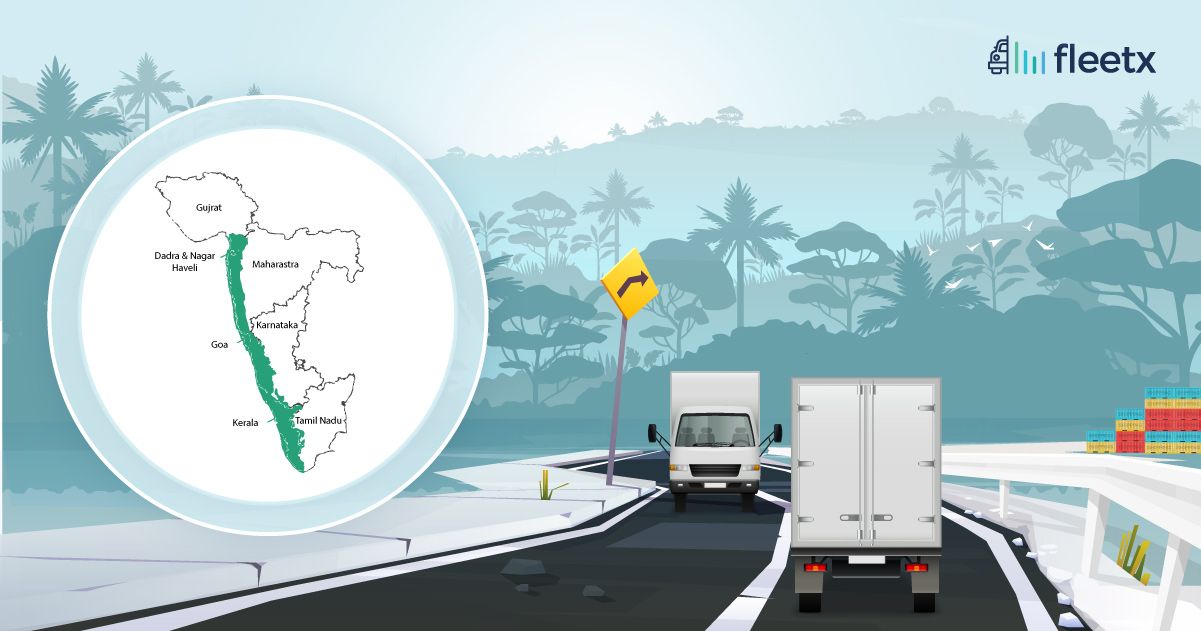
Western Ghats's geologically diverse and ecologically rich ecosystem contains more than 30% of all flora and fauna in India despite covering just 6% of the Indian sub-continent. The region runs parallel to the western coast of India, spanning the states of Gujarat, Maharashtra, Goa, Karnataka, Kerala and Tamil Nadu, covering an area of 160,000 km square and 1600 km in length. The western ghats are also one of the eight biodiversity hotspots in the world and are recognised as a UNESCO World Heritage Site. The region receives very high rainfall across different parts, particularly western parts. Western ghats also form one of the four watersheds in India, feeding several rivers in India, including Godavari, Kaveri, Krishna, Thamirabarani and Tungabhadra.
Economic Significance of Western Ghats
The western ghats also account for more than 80% of India’s hydropower generation and host more than 50 dams and several artificial lakes and reservoirs.
Ports and Shipping
Shipping is critical to the supply chain, and the western coast of India has several key ports responsible for the movement of large quantities of goods. Kandla Port, Gujarat, Jawaharlal Nehru Port, Navi Mumbai, Kochi Port, Kochi, New Mangalore Port, Mumbai Port, and Mormugao Port are some of the key ports in the Western Ghats. Ports along the western ghats witness a much higher movement of goods than the ports on the eastern ghats. Several new ports are currently being constructed along the western ghats; however, they are at crossroads with the ecosystem.
Tourism
The average climate of the region is tropical and humid. Tourism is of great economic significance to the western ghats, particularly during the monsoon. Several regions within the western ghats are ecologically very sensitive, with many biodiversity hotspots and protected areas.
Mining, quarrying and agricultural land-use
In addition to its rich biodiversity, western ghats are the source of various minerals, metals and other economic resources. Western ghats are rich in iron, manganese and bauxite ores. The forests of the Western Ghats are also an important source of timber and support many forest-produce-based industries. The region also sees the cultivation of several crops, particularly cash crops like pepper, cardamon, tea, coffee, rubber and palm oil.
Overview of the supply chain and Transport connectivity in the Western Ghats
Due to its dynamic geology and presence of several ecologically sensitive zones, transportation and supply chain remains a key challenge in the western ghats. There is no denying that infrastructure development is the need of the hour, and the government needs to take affirmative steps to improve transportation across the regions in the western ghats. However, if infrastructure development comes at the cost of deteriorating the ecosystem, there may be better decisions. Over the years, central and state governments have tried to improve the region's supply chain connectivity and transportation. Several essential national highways which witness a substantial flow of cargo and supply chain pass through the western ghats.
For example, National Highway 66 connects Panvel, Navi Mumbai, to a town in Kanyakumari and passes through Maharashtra, Goa, Karnataka, Kerala and Tamil Nadu. The NH-66 allows for the movement of goods by trucks from different states accessible through the highway to the major sea ports of India. Before Konkan Railway was established in 1998, this highway was the only source of connection between areas in the coastal districts between Mumbai and Bengaluru.
Several roads connecting different places in the states are also referred to as ghat roads. The roads connecting the hill stations across the western ghats to the nearby coastal areas were constructed during the British Raj. Today these roads are essential for the movement of people and goods between coastal and hilly regions within the western ghats. Ghat roads were further renovated and upgraded to serve higher traffic flows throughout the year. Well-maintained ghat roads have been essential to the region's economy as they witness high tourism traffic and are also needed to maintain a constant supply of goods to the region. In 2020, three ghat roads, including Sampaje Ghat, were announced to be strengthened. The development of road infrastructure within the western ghats received a boost after the launch of the Bharatmala Project in 2017.
However, at times, development work to improve road and transportation networks within the eco sensitive regions comes at the cost of destroying the sensitive ecosystem of the western ghats. The widening of NH-4A, which passes through the ghats, cutting across dense forest connecting Belagavi and Goa, received heavy scrutiny from environmentalists and the general public. According to a news report, despite the reservations of forest officials, the project that will affect the districts of Belagavi and Uttara Kannada has been officially approved by both the state and national wildlife boards, purportedly under pressure from the political-industry nexus. Similar opposition has been faced by the government for road infrastructure work for other projects such as the new Mangaluru-Bengaluru highway announced in 2020, India's third longest tunnel road project in Vavul Mala in Kerala, and the highly debated Chikkamangaluru road project, among several others. The Ministry of Environment, Forest and Climate Change (MoEFCC) has granted environment clearances (EC) to 76 projects in the Western Ghats since July 2014, according to an IndiaSpend analysis of proposed projects granted approvals or expedited from July 2014 to March 2020.
The state of supply chain in Western Ghats at state-level
Earlier this year, the central government launched the National Logistics Policy (NLP) to improve the state of logistics nationally. Several state level governments have taken the effort further by adding on to it with their state-level logistics policies. Several states have launched their own action plan on logistics in line with the NLP 2022. One of the front runners is the state of Kerala which is an ecologically sensitive state and includes a substantial portion of western ghats. Kerala sees an influx of inbound logistics as compared to outbound logistics, that too by road. Thus, there is a need to diversify and strengthen the supply chain infrastructure across different modes and promote 3PL providers to offer a wide variety of services within the state. Kerala released a draft Kerala State Logistics Action Plan in 2021 with a vision to develop the logistics sector with multi-modal connectivity and technological integration to make transportation cheaper, efficient and safer. A multi-dimensional analysis of the state's cargo sector was also conducted to prioritise cargo under the action plan.
Overview of Kerala’s logistics action plan
The state action plan puts special emphasis on infrastructure development, particularly transport infrastructure. Moreover, it lays out key initiatives along with implementing agencies and KPIs to track progress as described in the image above.
State-level supply chain challenges faced by business in Kerala
The roads in Kerala do not support large trucks with maximum tonnage permitted across the country. As a result, the cost of transportation becomes more expensive due to more trucks with lower tonnage to deliver cargo within the state. The state also lags behind in availability of essential components such as warehousing and loading docks that are essential to boost multi-modal transportation within the state. Due to the imbalance between import-export within the state the volume of cargo entering the state is exponentially more than the volume existing in the state. As a result, non-availability of return cargo increases the cost of transportation in the state. The state also lacks adequate number of facilities for cold storage and other specialised cargo transportation. Lack of digitalisation and transport management system makes the logistics sector over-reliant on manual intervention. Lack of digitalisation is also one of the key reasons for lack of supply chain visibility and related information like storage availability at warehouses. Due to its vulnerable ecosystem, Kerala is prone to disasters such as landslides and flooding every year which can completely disrupt supply chain operations and damage critical infrastructure.
The struggle between development and conservation in the western ghats
The western ghats are extremely vulnerable, and resource extraction, ill-considered infrastructure projects and increasing tourism are destroying the highly sensitive ecology of the western ghats. The direct impact of destruction is faced by locals experiencing increasing floods and landslides during monsoons destroying crops, houses, and properties. On the one hand, projects like the Hubbali-Ankola Railway Project have great advantages, such as improving the supply chain and bringing down transportation costs which remain relatively higher in India. However, it also comes at the cost of the destruction of 596 hectares of Protected Areas and over 178,000 trees in the vulnerable and dense regions of the western ghats. Such scenarios often make it difficult for policymakers and general citizens to choose between the two, considering the state of project implementation in India. The solution to the conundrum lies in developing creative ways to proceed with infrastructure without harming the ecosystem. Kasturirangan Committee was tasked with developing a holistic approach to sustainable and equitable development and ecological conservation in the Western Ghats. The committee’s report proposed declaring approximately 37% of the western ghats as eco-sensitive areas (ESAs) in addition to other measures, such as a blanket ban on mining & quarrying activities. The Karnataka government had opposed the implementation of the recommendation as close to a third of the total area for ESA falls in Karnataka. The state government also stated that implementing the draft notification will adversely impact local residents and their livelihoods and hinder regional development activities.
Final Thoughts
The International Union for Conservation (IUCN), in its World Heritage Outlook 3 in 2020, expressed concerns over the conservation outlook in the western ghats. The rising impacts of climate change are devastating lives and livelihoods around the world, and things will only change for the worse if action is not taken to prevent it. The Western Ghats are one of the key ecosystems that can help protect us against the adverse impacts of climate change and thus needs protection. While the need for developing infrastructure and transportation networks in the region cannot be neglected, they must be carried out in an ecologically sound manner and consultation with residents and experts. Several examples of infrastructure development without destroying the ecosystem are available from India and around the world. Thus policymakers need to strike a fine balance between development and conservation in the western ghats.
Frequently Asked Questions
1. What is sustainable supply chain development in the Western Ghats?
Sustainable supply chain development in the Western Ghats refers to improving transport, logistics, warehousing, ports and regional connectivity without causing disproportionate damage to one of India’s most ecologically sensitive landscapes. The Western Ghats extend across Maharashtra, Goa, Karnataka, Kerala and Tamil Nadu, with parts of Gujarat also associated with the broader mountain system. Because the region contains forests, wildlife habitats, steep terrain, high-rainfall zones and landslide-prone areas, conventional infrastructure expansion can create significant environmental risks.
From a logistics perspective, sustainable development means finding the best balance between economic connectivity and conservation. Businesses, transporters and governments may need better roads, multimodal freight corridors, warehouses and port access, but these projects should ideally be planned using environmental impact assessments, resilient engineering, technology-enabled route planning and careful land-use decisions.
Important elements of a sustainable supply chain approach include:
- Reducing unnecessary freight kilometres through route optimisation.
- Using rail, coastal shipping and multimodal transport where practical.
- Protecting eco-sensitive areas from poorly planned construction.
- Improving vehicle efficiency and reducing fuel consumption.
- Building climate-resilient roads, warehouses and logistics hubs.
For companies operating across India, including those headquartered in Mumbai, Bengaluru, Pune, Delhi NCR or Gurgaon, sustainable logistics in the Western Ghats can also mean better visibility over shipments moving through difficult terrain. Technology such as GPS tracking, transport management systems and predictive route planning can help reduce delays while supporting more efficient use of existing infrastructure.
2. What are the main supply chain challenges in the Western Ghats?
The main supply chain challenges in the Western Ghats arise from difficult terrain, environmental sensitivity, seasonal weather conditions and uneven transport infrastructure. The region contains steep mountain roads, forests, narrow corridors and areas exposed to heavy monsoon rainfall, flooding and landslides. These conditions can increase transit time, restrict truck movement and raise the cost of transporting goods between coastal areas, inland markets and major cities.
Some of the most significant logistics challenges include:
- Narrow and winding ghat roads that restrict large commercial vehicles.
- Monsoon-related road closures, landslides and unpredictable delays.
- Limited availability of return loads on some routes, increasing empty kilometres.
- Insufficient warehousing, cold storage and loading infrastructure in certain areas.
- Environmental restrictions that can delay or limit new road projects.
- Higher fuel consumption caused by elevation changes and slower vehicle speeds.
Freight moving between Mumbai, Pune, Bengaluru, Mangaluru, Kochi and other commercial centres can be particularly affected when major mountain corridors face congestion or weather disruptions. Businesses may therefore need alternate-route planning, live vehicle tracking and contingency networks rather than relying on a single transport corridor.
The commercial impact can vary widely. Depending on cargo type, vehicle size, route length, tolls and seasonal disruptions, an unplanned diversion or extended delay can increase the operating cost of a long-haul truck journey by several thousand rupees. For high-value, perishable or time-sensitive cargo, indirect costs may be much higher. This makes real-time supply chain visibility increasingly important for businesses transporting goods through the Western Ghats.
3. Why is balancing infrastructure development and conservation important in the Western Ghats?
Balancing infrastructure development and conservation is important in the Western Ghats because the region plays both an ecological and an economic role in India. Roads, railways, ports, tunnels and freight corridors can improve access to markets and reduce logistics bottlenecks, but poorly planned projects can fragment forests, increase erosion, disturb wildlife corridors and make already vulnerable slopes more unstable.
From a supply chain perspective, development is necessary. Industries in Maharashtra, Karnataka, Kerala and Goa depend on reliable connectivity between production centres, ports, cities and rural markets. Mumbai and Pune require strong access to western freight corridors, while Bengaluru-based businesses rely on efficient connections to ports and manufacturing regions. However, the top infrastructure option is not always the one with the shortest travel distance. In environmentally sensitive regions, long-term resilience can be more valuable than short-term speed.
A balanced approach may include:
- Prioritising upgrades to existing roads before creating entirely new corridors.
- Using tunnels, bridges or engineered bypasses where they reduce ecological disruption.
- Conducting detailed environmental and geological studies before construction.
- Improving rail and coastal shipping to reduce pressure on road freight.
- Using digital logistics systems to maximise the capacity of existing infrastructure.
For policymakers and businesses, the objective should therefore be efficient connectivity with lower ecological risk. A road project that repeatedly suffers landslides, closures or erosion may ultimately create greater logistics costs than a carefully planned alternative. Sustainable infrastructure planning helps protect biodiversity while also improving long-term reliability for India’s supply chains.
4. How can logistics technology improve transportation through the Western Ghats?
Logistics technology can improve transportation through the Western Ghats by helping businesses respond faster to road conditions, weather disruptions, congestion and vehicle performance issues. Because transport routes through mountain regions can change rapidly during heavy rainfall or infrastructure closures, static planning is often less effective than real-time digital monitoring.
Transport management systems, GPS vehicle tracking, route optimisation software and control towers can provide operators with live information about vehicle location, expected arrival time and route deviations. For companies managing freight between Mumbai and Bengaluru, Pune and Goa, or coastal Karnataka and inland markets, this visibility can help dispatch teams reroute vehicles before a disruption becomes a major delay.
The best technology-led strategies can include:
- Real-time GPS tracking for vehicles moving through remote corridors.
- Dynamic route planning based on road closures and congestion.
- Geofencing around high-risk or restricted areas.
- Fuel monitoring to detect inefficient driving on steep routes.
- Predictive maintenance for vehicles operating under demanding conditions.
- Digital proof of delivery and automated shipment communication.
Costs vary depending on fleet size and functionality. Basic commercial GPS tracking solutions in India may start from a few thousand rupees per vehicle, while advanced fleet or transport management platforms can involve subscription, implementation and hardware costs based on the number of vehicles and operational complexity.
For logistics teams in Delhi, Delhi NCR and Gurgaon managing nationwide fleets remotely, digital systems are especially useful because they provide central visibility over shipments without requiring teams to be physically present in each region. Technology does not remove infrastructure constraints, but it can make supply chains more resilient and predictable.
5. What is the best way for businesses in Mumbai and Pune to manage freight moving through the Western Ghats?
The best way for businesses in Mumbai and Pune to manage freight moving through the Western Ghats is to combine route diversification, real-time tracking and transport planning rather than relying entirely on one road corridor. Both cities are major manufacturing, consumption and logistics centres, and freight movement toward Goa, Karnataka and southern India often interacts with mountainous terrain or high-traffic regional highways.
Businesses should first identify which shipments are highly time-sensitive and which can be moved through more flexible transport schedules. High-value, pharmaceutical, automotive and perishable shipments may require live route monitoring and stronger contingency planning. Bulk or less time-sensitive cargo may sometimes benefit from multimodal options depending on origin, destination and available infrastructure.
Recommended practices include:
- Planning primary and alternate routes before dispatch.
- Monitoring weather forecasts during the monsoon season.
- Using GPS and ETA systems to identify unusual stoppages quickly.
- Consolidating loads to reduce unnecessary truck movements.
- Maintaining emergency vendor and transporter networks.
- Scheduling maintenance before vehicles enter demanding ghat routes.
Freight costs vary substantially by distance, truck type, tonnage, fuel prices, tolls and market demand. A long-distance commercial truck movement from western India can cost tens of thousands of rupees per trip, and unplanned delays can add detention, driver, fuel and rescheduling expenses.
Businesses in Mumbai and Pune should therefore evaluate transport performance based not only on the lowest quoted freight rate but also on delivery reliability, empty kilometres, delay frequency and route resilience. The top-performing supply chains usually optimise total logistics cost rather than focusing exclusively on the cheapest transporter.
6. How do supply chain disruptions in the Western Ghats affect businesses in Bengaluru?
Supply chain disruptions in the Western Ghats can affect businesses in Bengaluru because the city depends on road and multimodal connections with western coastal ports, industrial clusters and neighbouring states. Freight travelling between Bengaluru and destinations such as Mangaluru, Goa, Mumbai or parts of Kerala may use routes influenced by mountainous terrain, heavy rainfall and seasonal road conditions.
When important corridors experience landslides, congestion, construction work or temporary closures, businesses may face longer transit times, vehicle diversions and higher transport costs. Manufacturing companies can experience delayed raw materials, while retailers and distributors may face stock shortages. Export-oriented businesses may also encounter risks if cargo misses port cut-off times.
The most effective risk-management measures include:
- Maintaining safety stock for critical materials where commercially feasible.
- Using real-time route visibility instead of relying only on scheduled ETAs.
- Identifying alternate corridors before the monsoon season.
- Tracking port and terminal deadlines for export shipments.
- Using multiple transport partners for high-priority lanes.
The financial impact differs by industry. For a standard truckload, route diversions may add fuel, toll and driver costs, while delays can create detention charges or production downtime. In industries such as automotive, electronics and pharmaceuticals, the indirect cost of a delayed shipment may exceed the basic freight cost itself.
Bengaluru businesses can reduce these risks by integrating transport data into their planning processes. A central transport management system can help teams compare planned versus actual transit times, identify recurrent bottlenecks and make better carrier decisions over time.
7. How can businesses in Delhi, Delhi NCR and Gurgaon manage Western Ghats supply chain risks?
Businesses in Delhi, Delhi NCR and Gurgaon can manage Western Ghats supply chain risks by treating long-distance transportation as a connected network rather than managing individual truck trips in isolation. Many companies headquartered in North India operate nationwide distribution networks, source materials from western and southern states or transport goods to ports located along India’s western coast.
Even when a logistics team is based in Gurgaon or Delhi, disruptions in Maharashtra, Karnataka, Goa or Kerala can affect inventory availability, production planning and customer delivery commitments hundreds of kilometres away. Centralised visibility is therefore essential.
Top supply chain risk-management practices include:
- Creating control-tower visibility for all long-haul vehicles.
- Tracking critical lanes separately from routine shipments.
- Maintaining alternate carriers and routes for priority freight.
- Using predictive ETAs rather than relying only on driver updates.
- Reviewing seasonal disruption data before planning contracts.
- Setting escalation alerts for prolonged stoppages and route deviations.
The cost of technology depends on the scale of the operation. Small fleets may use GPS tracking and basic fleet-management subscriptions, while large enterprises may invest in comprehensive transportation management systems costing substantially more due to integrations, custom workflows and analytics requirements.
For Delhi NCR businesses, the best approach is to measure the full cost of disruption. A transporter with a slightly higher freight rate but better on-time performance may ultimately be more economical than the cheapest option if delays regularly cause production downtime or customer penalties. Data-led carrier selection and route analysis can help businesses build a more resilient national logistics network.
8. What role does multimodal transportation play in sustainable logistics in the Western Ghats?
Multimodal transportation can play an important role in sustainable logistics in the Western Ghats by reducing excessive dependence on road freight and distributing cargo across railways, ports, coastal shipping and road networks. In mountainous and ecologically sensitive regions, continually expanding highways may not always be the most sustainable or economically resilient solution.
A multimodal supply chain typically uses more than one transport mode for the same shipment. For example, cargo may move by truck from a factory to a rail terminal, travel a long distance by rail and then complete the final delivery by road. Similarly, coastal shipping can move bulk cargo between ports before road transportation handles the first and last mile.
Potential benefits include:
- Lower road congestion on heavily used freight corridors.
- Reduced fuel consumption for suitable long-distance cargo.
- Lower pressure to continuously widen roads through sensitive ecosystems.
- Greater resilience when one transport corridor is disrupted.
- Better movement of bulk and containerised freight.
However, multimodal logistics requires reliable terminals, warehouses, digital documentation and coordination between different operators. Poor first-mile and last-mile connectivity can reduce the benefits.
For companies in Mumbai, Pune and Bengaluru, multimodal options may be particularly relevant for long-distance, bulk or containerised cargo. The best mode depends on shipment value, transit-time requirements, distance and handling needs. Businesses should compare total landed logistics cost rather than freight rates alone because additional handling and terminal charges may apply. With stronger digital integration and infrastructure, multimodal transport can support both supply chain efficiency and conservation goals across the Western Ghats.
9. How much can route disruptions and inefficient logistics increase freight costs in India?
Route disruptions and inefficient logistics can increase freight costs in India through additional fuel consumption, tolls, driver expenses, detention, vehicle underutilisation and delayed deliveries. There is no single fixed percentage because the impact depends on the route, vehicle category, cargo value and duration of the disruption. However, even a relatively short diversion can become expensive for a commercial truck when it adds significant kilometres or travel time.
Common sources of additional cost include:
- Extra diesel consumed during diversions or congestion.
- Additional toll charges on alternate highways.
- Driver allowances and overnight expenses.
- Detention charges caused by late loading or unloading.
- Missed delivery slots and customer penalties.
- Empty return trips due to poor load planning.
Depending on truck size and route length, long-haul freight trips in India can cost from tens of thousands of rupees upward. A disruption that adds several hours or hundreds of kilometres may increase direct trip costs by several thousand rupees, while high-value or production-critical shipments can create much larger indirect losses.
In regions such as the Western Ghats, seasonal rainfall and difficult terrain make route planning especially important. Businesses operating from Mumbai, Pune, Bengaluru, Delhi or Gurgaon should analyse historical lane performance rather than using only average distance to estimate costs.
The best cost-control strategy combines route optimisation, load consolidation, real-time visibility and carrier performance monitoring. These measures help businesses identify recurring inefficiencies and reduce avoidable expenses without compromising delivery reliability.
10. What are the top strategies for building a resilient and sustainable supply chain across the Western Ghats?
The top strategies for building a resilient and sustainable supply chain across the Western Ghats combine environmental responsibility, infrastructure planning, technology and operational flexibility. Businesses should recognise that mountain logistics requires a different risk model from transportation across flat, highly connected industrial corridors.
A strong resilience strategy should include:
- Route diversification: Maintain practical alternate routes for priority shipments.
- Real-time visibility: Track vehicles, delays and deviations through GPS and transport management systems.
- Seasonal planning: Prepare specific monsoon contingency plans for vulnerable corridors.
- Multimodal transport: Evaluate rail and coastal shipping for suitable freight categories.
- Load optimisation: Reduce unnecessary journeys and improve vehicle utilisation.
- Preventive maintenance: Keep vehicles prepared for steep gradients and demanding operating conditions.
- Environmental assessment: Support logistics infrastructure that reduces ecological damage and long-term climate risk.
Companies in Mumbai, Pune and Bengaluru may focus more heavily on western and southern freight corridors, while logistics teams in Delhi, Delhi NCR and Gurgaon often need centralised visibility across a nationwide network. The strategy should therefore be customised according to cargo type, customer requirements and network geography.
Costs for supply chain resilience can range from relatively affordable tracking tools to larger investments in integrated transport management systems, warehousing and multimodal networks. However, these expenses should be compared with the cost of repeated delays, lost inventory, missed production schedules and inefficient fleet utilisation.
Ultimately, the best sustainable supply chain is not simply the fastest one. It is a network that remains reliable during disruptions, uses resources efficiently and supports economic growth without creating avoidable pressure on the Western Ghats' sensitive environment.