
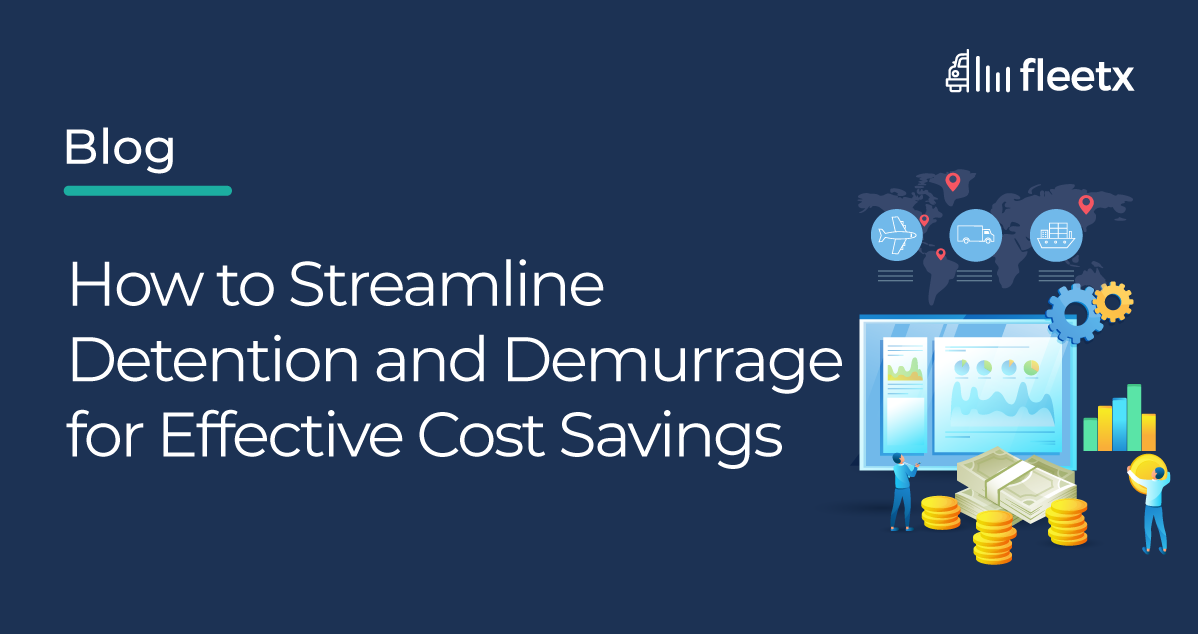
Detention and demurrage practices play a crucial role in India's logistics industry, but they often present significant challenges. These challenges include increased costs, delays, and operational inefficiencies for logistics companies, importers, and exporters. However, with the introduction of emerging technologies and smart solutions, the landscape is rapidly transforming- optimizing detention and demurrage processes, reducing costs, improving turnaround times, and enhancing overall efficiency
Detention and demurrage charges are fees imposed when containers exceed the allotted free time at ports, terminals, or shipping facilities. Businesses can reduce detention and demurrage costs through real-time tracking, automated workflows, improved communication, predictive analytics, and transportation management solutions that improve shipment visibility and operational efficiency.
Quick Insights: The Short Version of This Blog
- Detention and demurrage practices in India's logistics industry present challenges such as increased costs, delays, and inefficiencies.
- The introduction of emerging technologies and smart solutions is transforming the landscape and optimizing detention and demurrage processes.
- Detention refers to the additional time a container is kept beyond the allowed time frame, while demurrage refers to the additional time a container remains on a vessel.
- Detention and demurrage charges are imposed to encourage efficient use of containers and vessels.
- Emerging technologies like IoT, automation, data analytics, and digital platforms are improving detention and demurrage management, leading to cost reduction, improved turnaround times, and enhanced operational efficiency.
Difference Between Detention and Demurrage
Detention and demurrage are terms commonly used in the logistics and shipping industry to refer to charges or fees incurred when cargo containers are not returned or picked up within the agreed time frame.
Detention: Detention refers to the additional time that a container or cargo is kept at a terminal, port, or warehouse beyond the allowed time frame provided by the shipping line or logistics provider. This can occur when the cargo owner or consignee fails to pick up or return the container within the agreed-upon time.
Detention charges are imposed to compensate the shipping line or logistics provider for the use of their container beyond the allotted time.
Demurrage: Demurrage is specifically associated with the use of a shipping vessel. It refers to the additional time that a cargo container remains on the vessel beyond the agreed-upon time for loading or unloading.
Demurrage charges are imposed by the shipping line to cover the cost of the vessel's time and space occupied by the container beyond the allocated free time.
Detention and demurrage charges are enforced to encourage efficient use of containers and vessels and to discourage delays in cargo retrieval or delivery. The charges can vary depending on the shipping line, the port, the type of cargo, and the agreed-upon terms and conditions outlined in the shipping contract.
It's important for importers, exporters, and logistics providers to closely monitor and manage the time frames allotted for free container use and vessel occupancy to avoid incurring unnecessary detention and demurrage charges, as these fees can significantly add to overall logistics costs and impact supply chain efficiency.
Detention vs Demurrage: Key Differences
| Detention | Demurrage |
|---|---|
| Charged outside the terminal | Charged inside the terminal or port |
| Applies when containers are not returned on time | Applies when containers are not collected on time |
| Associated with container usage | Associated with terminal storage time |
| Usually occurs after pickup | Usually occurs before pickup |
| Can increase transportation costs | Can increase storage and handling costs |
Current Challenges in Detention and Demurrage Management in India
In India, detention and demurrage practices can prove to be challenging; manual entry, lack of real-time visibility, and communication gaps limit its efficiency. This has resulted in extended container or vessel occupancy, delays, disputes, and financial losses for stakeholders. However, the industry is now embracing innovative smart solutions to overcome these challenges and enhance logistics efficiency.
Emerging Technologies and Smart Solutions:
IoT and Real-Time Tracking:
The integration of Internet of Things (IoT) devices and real-time tracking systems has revolutionized detention and demurrage management. Through IoT sensors, logistics companies can monitor container movements, track cargo status, and provide real-time updates to all stakeholders involved in the supply chain. This enhanced visibility enables proactive management of detention and demurrage, allowing for prompt decision-making and reducing delays.
Automation and Digital Platforms:
Automation and digital platforms have emerged as powerful tools for streamlining detention and demurrage processes in India. Automated workflows, document management systems, and digital communication platforms have replaced manual and paper-based processes. These solutions significantly reduce paperwork, minimize manual errors, and facilitate seamless collaboration among logistics stakeholders. As a result, operational efficiency is enhanced, and the potential for delays is mitigated.
Data Analytics and Predictive Insights:
Data analytics plays a pivotal role in optimizing detention and demurrage practices. By leveraging historical data, advanced analytics tools can identify patterns, optimize resource allocation, and predict potential delays. These predictive insights empower logistics companies to make data-driven decisions, allocate resources efficiently, and proactively manage detention and demurrage scenarios. Consequently, costs are reduced, turnaround times are improved, and overall operational efficiency is enhanced.
Benefits of Using Technology to Reduce Detention and Demurrage Costs
- Cost Reduction: Smart solutions minimize detention and demurrage charges, resulting in significant cost savings for logistics companies, importers, and exporters.
- Improved Turnaround Times: Streamlined processes and real-time tracking enable prompt container release, leading to faster cargo delivery and reduced transit times.
- Enhanced Operational Efficiency: Automation and digital platforms eliminate manual processes, reducing paperwork and minimizing errors, thereby improving overall efficiency.
- Proactive Management: Predictive analytics and data insights empower logistics companies to identify potential delays in advance and take preventive measures, optimizing resource allocation.
- Strengthened Customer Satisfaction: Faster cargo delivery, reduced delays, and accurate communication contribute to improved customer satisfaction and stronger business relationships.
- Transparency and Trust: Smart solutions foster transparency and trust among logistics stakeholders through real-time visibility, accurate documentation, and secure data exchange.
- Minimized Disputes: Clear and accurate records, facilitated by digital platforms and blockchain technology, minimize disputes and disputes related to detention and demurrage charges.
- Business Growth: Efficient detention and demurrage management boost operational productivity, reduce costs, and enhance customer satisfaction, contributing to business growth and competitive advantage in the market
Conclusion
Detention and demurrage charges remain a major challenge for logistics companies, importers, exporters, and transportation providers. As supply chains become increasingly complex, businesses must adopt proactive strategies to improve shipment visibility, streamline communication, and optimize operational workflows.
Technologies such as IoT, real-time tracking, automation, predictive analytics, and transportation management systems are transforming how organizations manage detention and demurrage. By embracing these digital solutions, businesses can reduce unnecessary costs, improve turnaround times, strengthen customer relationships, and build a more resilient logistics operation.
Reduce Detention and Demurrage Costs with Fleetx
Gain real-time shipment visibility, improve transportation planning, automate workflows, and optimize logistics operations with Fleetx's transportation management solutions.
Schedule a Fleetx demo today and discover how technology can help reduce delays and improve supply chain efficiency.