

"In the world of logistics, the smallest leak can sink the largest ship. Vigilance is not just a strategy, it's a necessity."
Fuel theft in heavy machinery is a major issue in India. Particularly in industries like construction, mining & agriculture where heavy machinery is widely used. Heavy machinery consumes fuel at a much higher rate than trucks and hence have much larger fuel tanks, which in turn also increase the scope of fuel theft.
Other than theft, just the operational aspect of operating multiple heavy machines can be really complex, time consuming and error prone. Example engine left running for long durations without any work being done can result in huge losses.
How fuel theft happens.
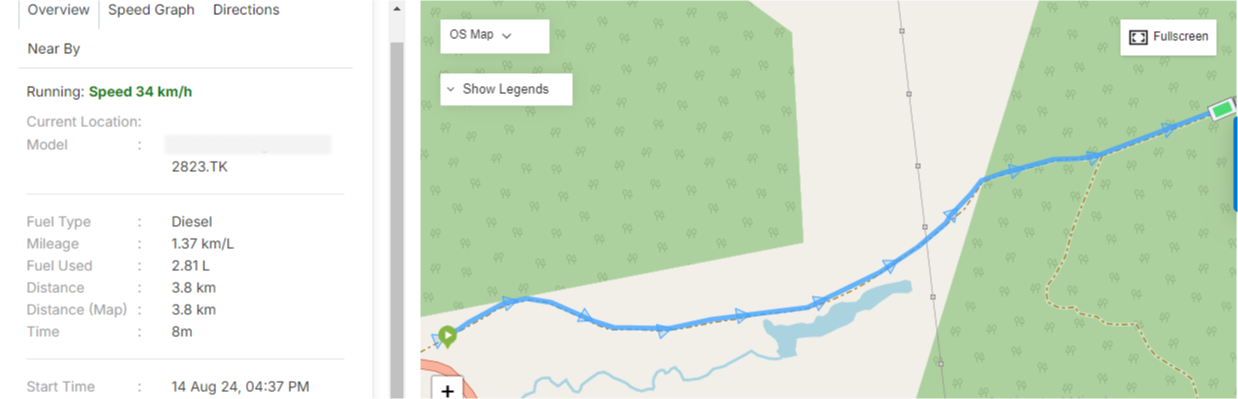
- Siphoning: This is the most common way of fuel theft. Here fuel is siphoned directly from the machine’s fuel tank using hoses or other devices to drain fuel into containers. This happens usually in non operational hours, at night, weekends or holidays.
- Tampering with Fuel Gauge: Some workers or operators tamper with the fuel gauge to show incorrect making it seem that more fuel than what has been consumed and then steal the excess.
- Collusion: In some cases, fuel theft involves collusion between operators and security operators. It can be anything like, siphoning fuel, recording false usage. And then distributing the stolen fuel or money from selling it among everyone.
Why Fuel Theft in Heavy Machinery is Rising Across India
Fuel theft has become one of the most significant operational challenges for businesses operating heavy equipment across construction, mining, infrastructure development, quarrying, agriculture, ports, and industrial projects. Unlike commercial trucks that operate on defined routes, heavy machinery often works in remote locations with limited supervision, making fuel monitoring difficult.
India's infrastructure and construction sectors rely heavily on excavators, loaders, bulldozers, graders, dumpers, cranes, pavers, and other equipment that consume large quantities of diesel every day. Even small discrepancies in fuel consumption can accumulate into substantial losses over months.
Several factors contribute to increasing fuel theft incidents:
- Remote project locations
- Night-time operations
- Large fuel tank capacities
- Multiple machine operators
- Manual fuel tracking processes
- Lack of real-time monitoring
- Inaccurate fuel reconciliation
For organizations operating dozens or hundreds of heavy machines, manually tracking fuel levels is nearly impossible. Without automated monitoring systems, businesses often discover losses only after fuel expenses have significantly increased.
The challenge is not limited to direct theft. Unauthorized fuel usage, excessive idling, fuel pilferage during refueling, inaccurate record keeping, and machine misuse can collectively increase operational costs. These hidden losses directly impact profitability and project efficiency.
Modern telematics and fuel monitoring technologies are helping enterprises shift from reactive investigations to proactive fuel management. By providing real-time visibility into fuel levels, engine hours, machine utilization, and consumption patterns, organizations can identify irregularities before they become major financial losses.
Companies that adopt digital fuel monitoring systems often experience improved accountability, enhanced operational discipline, better equipment utilization, and more accurate fuel budgeting. These benefits extend beyond theft prevention and contribute to overall operational excellence.
Other factors that waste fuel.
- Running Engine left unchecked: In heavy machines the fuel consumption is really high and an engine left running without utilization can lead to heavy fuel wastage and financial losses.
- Unutilised Machines on rent: Many times, these heavy machines are rented out on daily basis. If they are not used properly, the rent may be wasted.
Common Signs of Fuel Theft in Heavy Machinery
Fuel theft is not always obvious. In many organizations, fuel losses continue for months before management realizes there is a problem. Identifying warning signs early can prevent significant financial losses.
Some common indicators of fuel theft include:
Unexplained Fuel Consumption
When fuel consumption increases without any corresponding increase in machine activity, it may indicate unauthorized fuel removal or misuse.
Frequent Fuel Refills
Machines requiring fuel refills more frequently than expected should be investigated. Comparing historical fuel consumption patterns can help identify abnormalities.
Mismatch Between Fuel Usage and Engine Hours
If fuel consumption is significantly higher than expected for the number of engine hours recorded, it could indicate fuel theft or operational inefficiencies.
Sudden Drops in Fuel Levels
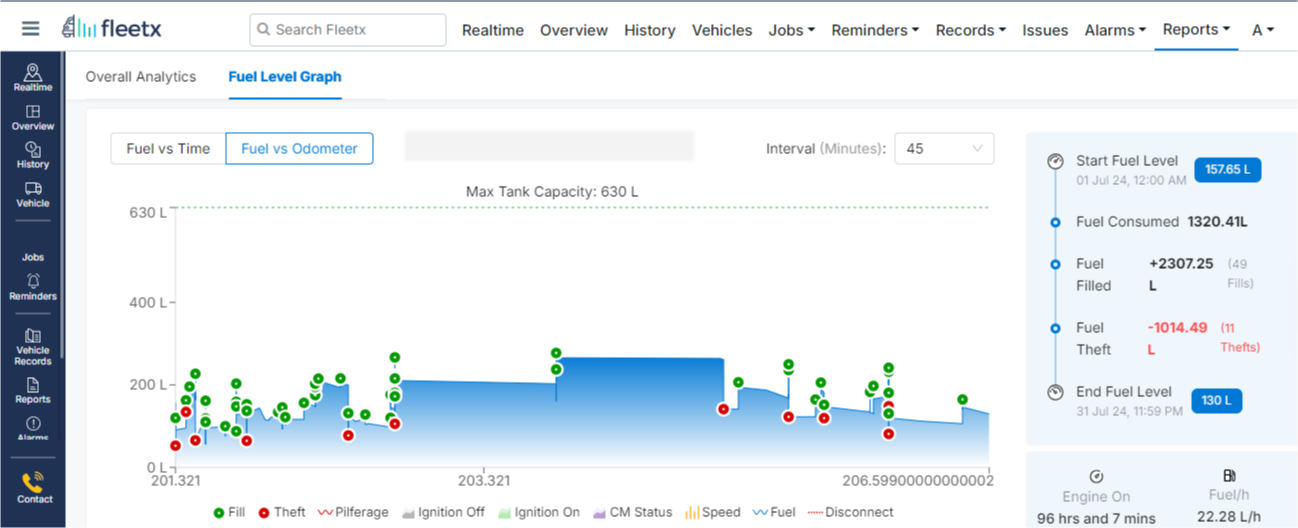
Unexpected decreases in fuel levels, especially during non-operational hours, are one of the strongest indicators of fuel siphoning.
Increased Operating Costs
Rising fuel expenses without corresponding increases in project output can signal hidden fuel losses.
Inconsistent Operator Reports
Differences between manually reported fuel usage and actual consumption data may indicate manipulation or reporting inaccuracies.
Organizations that continuously monitor these indicators can identify suspicious activities faster and take corrective action before losses escalate.
Impact
Considering that fuel can make up to 70% of operational cost for a company, fuel theft can greatly reduce the profit margins. When machinery goes out of fuel unexpectedly, it also halts the operations. This leads to operational delays and further delays in shipment, and hence even further financial losses.
How Fuel Theft Impacts Project Profitability
Fuel costs represent a substantial portion of operating expenses for heavy machinery fleets. Even minor fuel losses can significantly impact project profitability.
For example, a construction company operating multiple excavators, dumpers, and loaders may consume thousands of litres of diesel every month. Small fuel discrepancies across multiple machines can accumulate into substantial annual losses.
Fuel theft affects profitability through:
- Direct fuel replacement costs
- Reduced project margins
- Increased operational expenses
- Delayed project timelines
- Unexpected equipment downtime
- Reduced asset productivity
- Additional administrative investigations
The financial impact becomes even greater when theft remains undetected over long periods. Companies often focus on procurement and labor costs while overlooking hidden fuel losses that continuously affect project budgets.
A structured fuel monitoring strategy helps organizations improve cost visibility and maintain tighter operational control.
Best Practices to Prevent Fuel Theft in Heavy Equipment
Fuel theft prevention requires a combination of technology, operational controls, and employee accountability. Organizations that rely solely on physical inspections often struggle to identify the root cause of fuel losses.
The following best practices can significantly reduce fuel-related losses:
1. Implement Real-Time Fuel Monitoring
Continuous fuel tracking provides visibility into fuel levels and consumption patterns. Sudden drops in fuel levels can be identified immediately and investigated.
2. Monitor Engine Hours
Engine hours are one of the most reliable indicators of actual machine utilization. Comparing fuel consumption against engine hours helps identify discrepancies and unusual behavior.
3. Analyze Idle Time
Excessive idling contributes to unnecessary fuel consumption. Monitoring idle hours allows fleet managers to improve fuel efficiency and reduce wastage.
4. Automate Fuel Reconciliation
Digital fuel records eliminate dependence on manual entries and reduce the risk of inaccurate reporting.
5. Establish Refueling Controls
Organizations should create standardized fuel filling procedures with digital verification and monitoring.
6. Use Exception-Based Alerts
Instant notifications for fuel theft events, unusual fuel consumption, or abnormal machine behavior enable faster intervention.
7. Benchmark Equipment Performance
Comparing similar machines across projects helps identify underperforming assets and detect anomalies.
8. Conduct Regular Utilization Reviews
Machine utilization reports help organizations determine whether equipment is being used efficiently and whether fuel consumption aligns with operational output.
Industries Most Affected by Fuel Theft
Fuel theft impacts a wide range of industries:
- Construction Equipment
- Mining Operations
- Infrastructure Projects
- Quarrying Businesses
- Agricultural Machinery
- Cement Industry
- Road Construction Projects
- Ports and Logistics Operations
- Oil and Gas Field Equipment
- Industrial Material Handling Operations
Because these industries depend heavily on diesel-powered equipment, fuel management becomes a critical component of operational profitability.
Key Metrics Every Fleet Manager Should Track
Organizations often focus only on fuel quantity while ignoring the metrics that provide a complete picture of fuel efficiency.
Important KPIs include:
- Fuel Consumption per Hour
- Fuel Consumption per Project
- Engine Operating Hours
- Idle Time Percentage
- Fuel Fill Events
- Fuel Theft Events
- Equipment Utilization Rate
- Operating Cost per Machine
- Fuel Cost per Operating Hour
- Fuel Efficiency Trends
Monitoring these KPIs enables organizations to optimize equipment performance while reducing operating costs.
Why Traditional Fuel Management Methods Fail in Heavy Machinery Operations
Many organizations still rely on manual fuel logs, operator declarations, paper records, and periodic inspections to track fuel consumption. While these methods may appear sufficient for small operations, they often become ineffective when managing multiple heavy machines across large construction sites, mining projects, quarries, infrastructure developments, and industrial facilities.
Manual fuel tracking creates several challenges:
- Delayed theft detection
- Human error in fuel recording
- Lack of accountability
- Inaccurate utilization reporting
- Limited visibility into fuel wastage
- Difficulty auditing multiple project locations
For example, if an excavator operating at a remote mining site consumes significantly more fuel than expected, managers may not notice the anomaly until the monthly fuel reconciliation process. By then, losses may have accumulated for weeks or months.
Fuel monitoring software eliminates these blind spots by providing real-time visibility into fuel levels, fuel fills, fuel drains, engine hours, machine utilization, and idle time. Automated monitoring ensures that decision-makers receive actionable insights immediately rather than relying on retrospective reports.
As infrastructure projects across India continue to grow in scale and complexity, manual monitoring methods are becoming increasingly inadequate. Digital fuel management has evolved from an optional operational improvement to a business necessity.
Future of Fuel Management in Heavy Machinery
The future of heavy equipment fuel management is increasingly driven by connected technologies, IoT sensors, telematics platforms, predictive analytics, and artificial intelligence.
Advanced systems are now capable of:
- Predicting abnormal fuel consumption patterns
- Identifying potential theft incidents
- Monitoring machine utilization remotely
- Improving preventive maintenance planning
- Reducing fuel wastage through operational insights
- Automating reporting and compliance requirements
As infrastructure projects become larger and more complex, organizations will require greater visibility into equipment performance and fuel consumption. Intelligent fuel monitoring systems will play a central role in improving productivity, reducing costs, and increasing operational transparency.
For businesses operating excavators, loaders, dumpers, cranes, graders, and other heavy machinery, fuel management is no longer just a cost-control activity. It is a strategic initiative that directly impacts profitability, efficiency, and project success.
Industries Most Affected by Fuel Theft in India
Fuel theft impacts almost every sector that relies on diesel-powered equipment. However, certain industries experience significantly higher exposure due to equipment utilization patterns and remote operating environments.
Construction Industry
Construction projects often involve multiple excavators, backhoe loaders, graders, compactors, and cranes operating simultaneously. Large project sites and rotating shifts create opportunities for unauthorized fuel removal.
Mining Industry
Mining equipment consumes substantial amounts of diesel every day. Since mining operations frequently take place in remote locations, fuel monitoring becomes challenging without technology-enabled systems.
Infrastructure Development
Road construction, metro projects, bridges, tunnels, and industrial parks require extensive equipment deployment. Fuel losses can directly affect project profitability and completion timelines.
Quarry Operations
Heavy machinery used in quarrying often operates continuously under demanding conditions. Monitoring actual fuel utilization is essential for maintaining operational efficiency.
Agriculture
Modern agricultural enterprises increasingly use fuel-intensive machinery for irrigation, harvesting, and land preparation. Fuel monitoring helps reduce wastage and improve asset utilization.
Organizations within these industries can significantly reduce operational losses through proactive fuel management practices supported by telematics and analytics.
Heavy Machinery Types Most Vulnerable to Fuel Theft
Not all equipment faces the same level of fuel theft risk. Some machine categories are more vulnerable because of larger fuel tanks, remote operation, or extended working hours.
Excavators
Excavators often operate in isolated construction and mining sites where supervision may be limited. Their high fuel consumption makes them attractive targets for fuel theft.
Dump Trucks
Mining and construction dumpers consume large quantities of fuel daily. Monitoring both vehicle movement and operational activity becomes critical.
Wheel Loaders
Wheel loaders frequently work across large sites, making manual fuel monitoring difficult.
Bulldozers
Bulldozers often remain active for long periods and can experience substantial losses due to excessive idling or unauthorized fuel usage.
Motor Graders
Road construction projects frequently deploy graders across remote locations where fuel management challenges increase.
Cranes
Large cranes may remain operational for extended durations, increasing fuel monitoring complexity.
Agricultural Equipment
Tractors, harvesters, and other agricultural machinery often operate across dispersed locations where fuel accountability can become challenging.
Fuel Theft vs Fuel Wastage: Understanding the Difference
Many organizations focus exclusively on theft while ignoring fuel wastage. Both issues affect profitability, but their causes differ.
Fuel Theft
Fuel theft refers to unauthorized removal or misuse of fuel for personal gain. Examples include:
- Fuel siphoning
- Fuel diversion
- Unauthorized refueling
- Manipulation of fuel records
- Collusion between operators
Fuel Wastage
Fuel wastage occurs due to inefficient operational practices such as:
- Excessive idling
- Poor route planning
- Equipment misuse
- Delayed maintenance
- Inefficient machine utilization
| Parameter | Fuel Theft | Fuel Wastage |
|---|---|---|
| Cause | Unauthorized fuel removal | Inefficient operations |
| Intentional | Yes | Usually No |
| Examples | Siphoning, collusion | Excessive idling, poor planning |
| Detection | Fuel sensors and alerts | Utilization analytics |
| Impact | Direct financial loss | Increased operating costs |
| Prevention | Security and monitoring | Operational optimization |
An effective fuel management strategy should address both theft and wastage. Organizations often discover that reducing fuel wastage generates savings comparable to preventing theft.
By monitoring fuel consumption trends alongside operational metrics, businesses gain a complete picture of fuel efficiency.
Role of IoT in Fuel Theft Prevention
The Internet of Things (IoT) is transforming how organizations manage heavy machinery and fuel consumption.
IoT-enabled fuel monitoring solutions provide continuous visibility into machine performance and fuel activity.
Benefits include:
- Real-time fuel tracking
- Automated theft alerts
- Remote equipment monitoring
- Utilization analysis
- Fuel efficiency benchmarking
- Historical trend analysis
- Centralized fleet visibility
Instead of relying on manual inspections, organizations can monitor fuel activity from a single dashboard regardless of project location.
IoT technology improves accountability while helping managers make data-driven operational decisions.
As digital transformation accelerates across industries, IoT-based fuel monitoring is becoming a standard requirement for large equipment fleets.
Fleetx Fuel Monitoring System for Heavy Machinery
Fleetx has been helping trucks detect and prevent fuel theft for years & helping Enterprises who handle heavy machinery optimise their operations for years. Hence, our engineers had an idea of the impact of fuel theft and the complications that heavy machinery would pose compared to a truck.
Today, more than 110 Enterprises that operate heavy machinery use Fleetx to prevent fuel theft and optimise operations.
Key Features
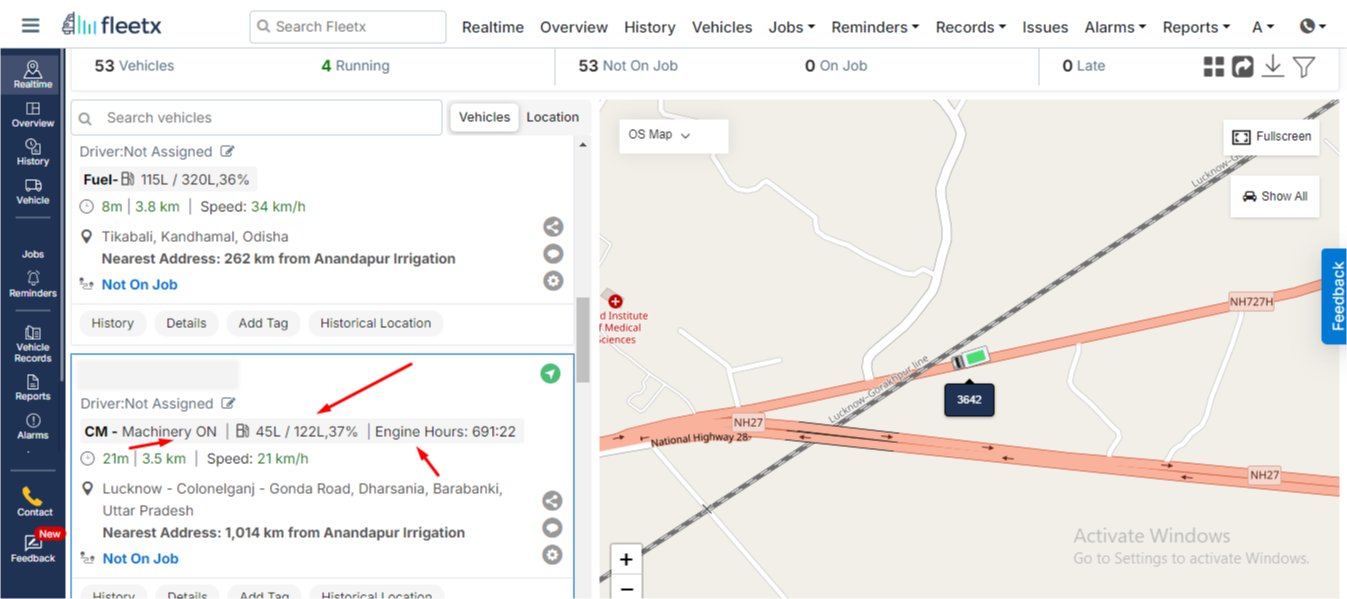
Litre per hour reading:
- In heavy machinery, fuel is consumed at a much higher rate than trucks, even when the engine is kept running.
- The litre per hour is an important metric that you can monitor in Fleetx Dashboard.
Engine on-off Status:
- Monitor and analyse the hours in which the engine was on & off. Considering the fuel consumption rate, it is important to monitor the engine on-off timings.
Primary & Secondary Mileage:
- For Heavy Machinery like dumper trucks, fuel is consumed at separate velocity when the truck is moving and when it does the mechanical/machine work (e.g., dumping).
- With Fleetx, you can check fuel consumed in both primary & secondary cases (Running time & Machine Work).
Notification for Fuel fill & Theft:
Get on time notifications when fuel is filled & theft has occurred
Get Detailed Reports:
Per Vehicle Fuel Consumption
- Primary Fuel Consumption
- Secondary Fuel Consumption
- Running Duration
- Engine Hours
Fuel theft in heavy machinery is a persistent issue in India, leading to financial losses and operational inefficiencies. By implementing robust software, we can monitor and measure the utilization of such vehicles, keep a check on suspicious behaviours, and discipline them. Leading to better profit margins, fewer downtimes and smoother operations.
Traditional Fuel Monitoring vs Fleetx Fuel Monitoring
| Parameter | Manual Monitoring | Fleetx Fuel Monitoring |
|---|---|---|
| Fuel Level Visibility | Periodic Checks | Real-Time Monitoring |
| Fuel Theft Detection | Often Delayed | Instant Alerts |
| Fuel Reconciliation | Manual Logs | Automated Reports |
| Engine Hour Tracking | Manual | Automatic |
| Machine Utilization Analysis | Limited | Comprehensive |
| Fuel Fill Detection | Difficult | Automated |
| Idle Time Monitoring | Not Available | Real-Time |
| Multi-Site Management | Complex | Centralized Dashboard |
| Historical Data Access | Limited | Detailed Reports |
| Operational Transparency | Low | High |
The transition from manual fuel tracking to intelligent fuel monitoring helps organizations improve accountability, reduce losses, and optimize machinery utilization. Real-time data enables managers to make faster decisions and identify unusual fuel consumption patterns before they affect project profitability.