Among the key operations that are quintessential for running a business, transportation perhaps takes the leading role. Without a robust transport management system, no business can effectively scale or operate. This is particularly true for businesses in sectors such as the automobile, consumer goods, etc., with complex supply chains. We call supply chain operations in such a sector complex for various reasons ranging from the number of input materials to distribution networks. For example, in the electronics industry, particularly in the production of smartphones and laptops, inputs required to make smartphones are sourced from different regions. A supply chain failure for one of the components can bring the assembly lines to a standstill, thus affecting the business. Apple works with suppliers in 43 countries and six continents to make its products, and the supply chain gets even more complex when we look at the sourcing of individual raw materials. The hustle doesn't end here; post-production of goods, transportation becomes even more critical for purposes such as distribution, shipping, and last-mile delivery.
For the consumer goods industry, particularly FMCG, efficient transportation is of even greater importance. Razor-thin margins for companies and cut-throat competition ultimately bring the battle for market share down to fast-paced and well-connected distribution and transportation networks. Companies that have leveraged data and automation by integrating technology, 3PL logistics, and AI among other advancements have been able to improve profitability, revenue, and bring down their operation cost significantly. Better distribution and transportation networks have allowed tech-driven companies to gain a substantial market share in the segment as well.
Asian Paints, which holds over 50% of the market share in the paint industry and posted an operating margin of 14.47% by the end of 2022, practically invented the direct-from-factory-to-consumer model of business by using tech-based systems for manufacturing, order processing, and supply chain, thus integrating the order-taking service into a one-stop call center. In a nutshell, Asian Paints reinvented their transport management and supply chain for its industry and modernized it using data and automation to turn into the behemoth that they are today.
A genuine case for making transport operations efficient
In India, the majority of logistics firms in India are unorganized and owned by individuals who possess only a small fleet of one or two trucks. Moreover, global logistics costs typically represent 6% of the product cost, while in India, it ranges from 13% to 15%. This inefficiency within the Indian transportation industry is responsible for roughly 4.3% of the country's GDP, and it primarily results from ineffective logistics practices and processes. NITI Aayog states that road transportation handles 71% of all of the country's freight movement, while the cost of transportation is more than 30% of what it would cost in the United States.
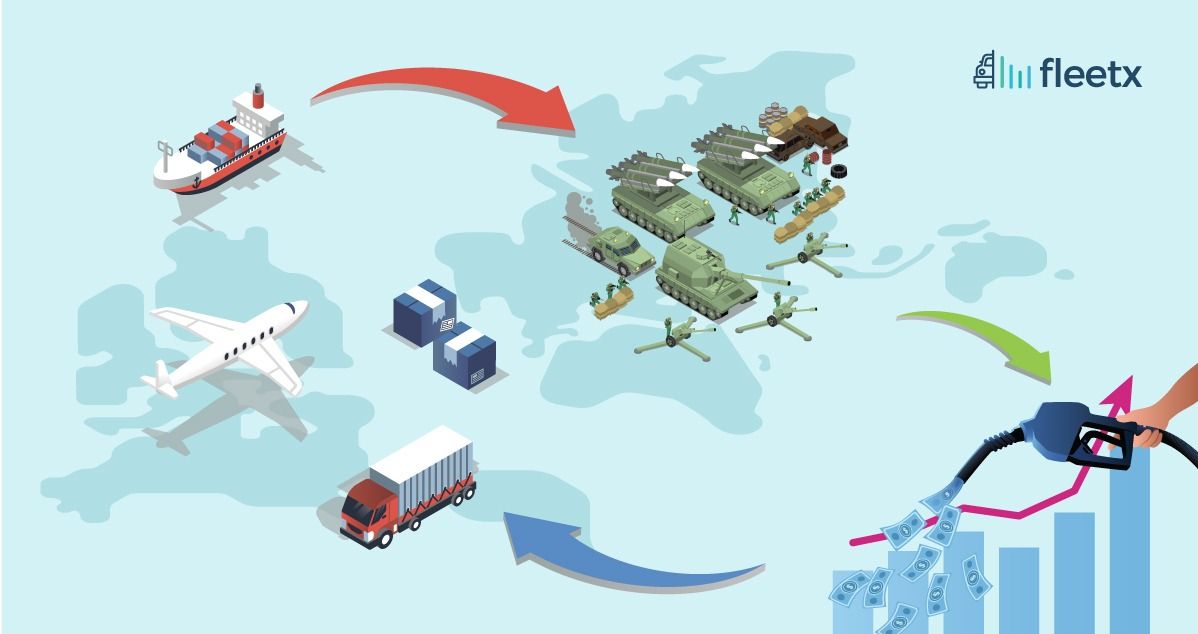
Moreover, global events that shaped 2022 were far from stable. Case in point is the Russia-Ukraine war that completely disrupted the post-pandemic recovery for almost all nations, particularly the ones in the global south. In addition to pursuing high economic growth to make up for almost two years of downturn, countries had to deal with inflation, high fiscal deficit, and disrupted supply chains that exponentially increased the cost of doing business. Inflation, in particular, has hampered the economic prospects of people and businesses alike. One of the most pressing challenges is the rampant rise in the cost of fuel and gas.
India, being a fuel-importing country, relies on major oil producers, which include Russia, for their supply of fuel. Sanctions by Western countries led to the price of fuel skyrocketing, and its direct impact was seen on businesses' balance sheets apart from the price readings at petrol pumps. From a supply chain perspective, the cost of fuel makes up anywhere between 40-50% of the entire transportation cost for businesses in India. Along with India, several other Asian and African countries saw the cost of importing fuel dramatically rise, destabilizing their economy. And if the energy crisis was not enough, due to Russia and Ukraine being major sources of food grain, countries were also hit with a shortage of food grains, with several food items becoming extremely expensive. In a nutshell, fuel and food supply chains were poorly hit.
For India, a rise in cost of transportation early in 2022 was eventually passed on to the customers, leading to inflation in the price of consumer goods. Inflation, in the end, hurts businesses as it hampers revenue growth. Inflation towards the end of the year has been relatively tamed at home and abroad due to the monetary tightening policies of central banks around the world. On the downside, monetary tightening through increasing repo rates results in a lot of liquidity being removed from the market, thus making it difficult for businesses to raise money for expansion. It particularly impacted small businesses, whether it was a transport business or an apparel company, as the move set back debt financing significantly. New-age businesses and startups make up a large portion of the e-commerce supply chain, and thus the demand for transportation services was hit as well.
Making the case for Transport Management Softwares (TMS)
A Transport Management Software (TMS) typically provides a centralised platform that allows companies to manage and track their shipments, carriers, and inventory levels in real-time. The software can automate the process of selecting the most cost-effective and efficient shipping routes, carriers, and modes of transportation. It also provides tools for managing and monitoring the performance of carriers and logistics providers. The primary objective of using a TMS is to help businesses and transporters manage their entire transport operations efficiently. In simple words, a TMS can help businesses make the process of transporting goods from one place to another more cost-effective.
In the Indian context, TMS, with all its features, can solve the problem of Supply Chain Visibility that has plagued the country’s fragmented supply chain ecosystem. As discussed, most Indian transporters have small fleets of 1-2 trucks, and for that very reason, they tend to operate their operations more traditionally, requiring manual intervention and labor. The lack of visibility in business operations makes businesses quite vulnerable to cargo theft, fuel theft, among other malpractices that are quite common in the Indian transport sector. Using a TMS, a business owner or a fleet manager will have a centralized view and access to data across different aspects of transport operations in real-time. Moreover, security checks and alert systems are part of a TMS that can alert the fleet manager in case of unwanted stops, route diversion, etc., providing businesses with more control and visibility over their transport operations.
Frequently Asked Questions
What are transportation challenges in India, and why do they matter for businesses?
▼
Transportation challenges in India refer to the operational, infrastructural, financial, and logistical issues that affect the movement of goods across the country. Businesses often deal with rising fuel prices, traffic congestion, fragmented transport networks, driver shortages, poor route planning, vehicle downtime, cargo theft, and inconsistent supply chain visibility. These challenges directly impact delivery timelines, customer satisfaction, inventory management, and overall logistics costs.
The impact is especially significant in high-growth regions such as Delhi NCR, Gurgaon, Mumbai, Bengaluru, and Pune, where businesses depend on timely transportation to serve manufacturers, distributors, retailers, and e-commerce customers. Delays in transportation can increase operational costs while reducing profitability and customer trust.
Modern transportation management strategies focus on digital tracking, automated route planning, fleet visibility, fuel monitoring, predictive maintenance, and real-time shipment updates. Businesses that adopt technology-driven transportation management are often able to reduce operational inefficiencies while improving delivery performance and compliance.
Whether a company operates a small fleet or manages nationwide logistics, addressing transportation challenges has become essential for maintaining competitiveness in India's rapidly evolving supply chain ecosystem.
What are the biggest transportation and supply chain challenges businesses face in India today?
▼
Businesses across India continue to face several transportation challenges that increase logistics costs and disrupt supply chain operations. Some of the most common issues include fluctuating fuel prices, increasing toll expenses, road congestion, vehicle breakdowns, inefficient route planning, cargo theft, poor fleet visibility, and limited coordination between transport partners.
Companies operating in Delhi, Gurgaon, Mumbai, Pune, Bengaluru, Chennai, and other industrial hubs often experience additional challenges due to urban congestion, delivery restrictions, and increasing customer expectations for same-day or next-day deliveries.
Global events such as fuel price volatility, geopolitical disruptions, and supply shortages also affect transportation planning. Businesses that rely on manual scheduling or spreadsheets may struggle to respond quickly to changing transportation conditions.
To overcome these challenges, many organizations are adopting transportation management software, fleet management systems, GPS tracking, AI-driven route optimization, and automated logistics planning. These technologies improve visibility, reduce delays, optimize fuel usage, and provide better control over transportation operations.
Building a resilient transportation strategy allows businesses to improve customer service while reducing operational risks and transportation expenses.
What is the best transportation management software for businesses in India?
▼
The best transportation management software (TMS) depends on the size of your business, fleet operations, shipment volume, and supply chain complexity. Modern TMS platforms help businesses automate dispatch planning, optimize routes, monitor vehicles in real time, manage freight operations, reduce fuel consumption, and improve delivery performance.
Companies operating across Delhi NCR, Gurgaon, Mumbai, Bengaluru, Pune, Hyderabad, and other logistics-intensive cities often require solutions that integrate GPS tracking, fleet management, proof of delivery, freight analytics, driver management, warehouse coordination, and transport billing.
An ideal transportation management software should provide centralized visibility across shipments, automated alerts, live vehicle tracking, route optimization, analytics dashboards, and seamless ERP integration. Businesses should also evaluate scalability, customer support, implementation assistance, mobile accessibility, and reporting capabilities before making a decision.
Rather than choosing software based solely on price, organizations should compare long-term operational savings, improved productivity, reduced fuel expenses, and enhanced customer satisfaction. The right transportation management solution becomes a strategic investment that supports business growth while simplifying increasingly complex logistics operations.
What are the top transportation management software features businesses should look for?
▼
Top transportation management software solutions typically combine automation, real-time visibility, analytics, and operational control within a single platform. Businesses should prioritize features that directly improve transportation efficiency while reducing costs.
Essential capabilities include live GPS tracking, automated dispatch planning, intelligent route optimization, shipment scheduling, digital proof of delivery, fuel monitoring, vehicle maintenance tracking, driver performance analysis, freight cost management, exception alerts, geofencing, inventory integration, and analytics dashboards.
Companies managing operations across Delhi, Gurgaon, Mumbai, Bengaluru, Pune, Ahmedabad, and other major commercial regions often benefit from cloud-based transportation software that supports multiple branches and integrates with warehouse management systems and ERP platforms.
Additional capabilities such as predictive maintenance, AI-powered recommendations, mobile applications for drivers, electronic documentation, customer shipment tracking, and automated reporting further improve operational efficiency.
Selecting software with these features enables businesses to reduce manual work, improve delivery accuracy, optimize fleet utilization, and strengthen supply chain visibility. The best transportation management platforms continue evolving with automation and artificial intelligence to support future logistics requirements.
How much does transportation management software cost in India?
▼
Transportation management software pricing in India varies depending on fleet size, number of users, implementation complexity, integrations, and feature requirements. Small businesses typically spend between ₹20,000 and ₹1 lakh annually for basic cloud-based transportation management solutions, while medium-sized organizations often invest between ₹2 lakh and ₹10 lakh for advanced fleet management capabilities.
Large enterprises operating across multiple cities including Delhi NCR, Mumbai, Bengaluru, Gurgaon, Pune, and Chennai may invest significantly more depending on custom integrations, AI-powered analytics, ERP connectivity, automation requirements, and enterprise support services.
Implementation costs may include software configuration, onboarding, user training, API integrations, GPS hardware installation, data migration, and ongoing maintenance. While upfront investment varies, businesses generally evaluate transportation management software based on long-term savings achieved through lower fuel consumption, reduced empty miles, improved vehicle utilization, better delivery performance, and decreased manual administrative work.
Requesting product demonstrations, implementation estimates, and total cost of ownership comparisons helps organizations select a transportation management solution that aligns with both operational requirements and budget expectations.
How can businesses in Delhi and Delhi NCR improve transportation efficiency?
▼
Businesses operating in Delhi and Delhi NCR face transportation challenges including heavy traffic congestion, delivery restrictions, rising fuel expenses, urban logistics complexity, and increasing customer expectations. Manufacturers, distributors, retailers, FMCG companies, and e-commerce businesses require efficient transportation planning to maintain service quality.
Transportation management software helps organizations improve operational efficiency through route optimization, GPS vehicle tracking, automated dispatch planning, real-time shipment visibility, electronic proof of delivery, and driver performance monitoring.
Companies serving Gurgaon, Noida, Ghaziabad, Faridabad, and Greater Noida can further improve transportation efficiency by consolidating deliveries, minimizing empty return trips, scheduling deliveries during lower traffic periods, and using analytics to monitor fleet performance.
Real-time alerts enable fleet managers to respond quickly to delays, vehicle breakdowns, route deviations, or unexpected operational issues. Predictive maintenance also reduces downtime while improving vehicle availability.
Businesses that modernize transportation operations in Delhi NCR are often better positioned to reduce logistics costs, improve delivery reliability, enhance customer satisfaction, and strengthen supply chain resilience despite urban transportation challenges.
How can businesses in Gurgaon and Mumbai reduce transportation costs while improving deliveries?
▼
Businesses operating in Gurgaon and Mumbai often manage complex transportation networks involving manufacturing facilities, warehouses, ports, distribution centers, and last-mile deliveries. Rising fuel prices, urban congestion, toll charges, and increasing shipment volumes make transportation cost optimization a business priority.
Transportation management software enables organizations to reduce transportation costs by optimizing routes, improving vehicle utilization, reducing idle time, monitoring fuel consumption, and automating dispatch operations. Businesses also gain real-time visibility into deliveries, helping managers proactively address delays before they impact customers.
Companies serving Mumbai's port ecosystem or Gurgaon’s industrial and corporate corridors benefit from centralized transportation planning that coordinates multiple vehicles, warehouses, carriers, and delivery schedules.
Advanced reporting allows logistics managers to identify inefficient routes, underutilized vehicles, excessive fuel consumption, and recurring operational bottlenecks. Over time, these insights help improve transportation planning while lowering operating expenses.
By combining technology, operational visibility, and data-driven decision making, businesses in Gurgaon, Mumbai, and other major logistics hubs can significantly improve transportation efficiency without compromising delivery quality or customer satisfaction.
Why is transportation management becoming increasingly important for modern supply chains?
▼
Transportation management has become a critical component of modern supply chains because customer expectations, business complexity, and global logistics risks continue to increase. Organizations now compete not only on product quality but also on delivery speed, shipment visibility, operational efficiency, and supply chain reliability.
Industries including manufacturing, retail, pharmaceuticals, FMCG, automotive, construction, and e-commerce increasingly rely on transportation management software to coordinate fleet operations, optimize freight movement, improve customer communication, and manage logistics costs.
Businesses operating across India—including Delhi, Mumbai, Bengaluru, Pune, Hyderabad, and Gurgaon—must handle larger shipment volumes while responding to fuel price fluctuations, infrastructure constraints, labor shortages, and evolving customer demands.
Digital transportation management improves decision-making through real-time analytics, predictive planning, automated workflows, and centralized operational visibility. These capabilities help organizations reduce costs, improve delivery performance, increase fleet utilization, strengthen compliance, and build more resilient supply chains.
As logistics becomes increasingly technology-driven, transportation management is no longer simply an operational requirement but a strategic advantage that supports long-term business growth and customer satisfaction.