
The development of several new technologies and the shift to digitalization have dramatically altered many industries, and the fleet business is now getting on board. In recent years, the auto insurance sector has experienced rapid development and increased technical advancement. This sector is expanding in new directions as a result of the introduction of numerous new concepts that are impacting all parties, including drivers, truck owners, and insurance companies.
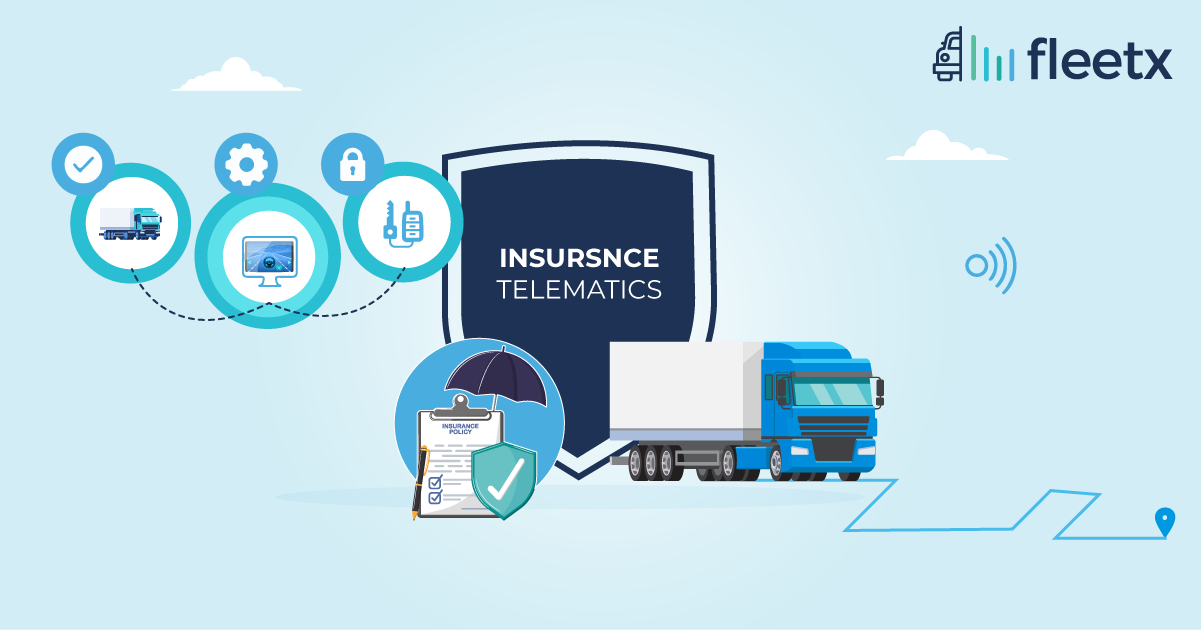
Telematics insurance is a novel idea that has the potential to transform the trucking sector’s future. In a recent suggestion, the Insurance Regulatory and Development Authority of India (IRDAI) encouraged the adoption of "Telematics for Motor Insurance." Soon, the cost of our insurance would be influenced by the way our drivers drove and how much our truck was driven.
The premium amounts for this type of auto insurance are established based on the type and behavior of the driver. Conscientious and careful drivers are rewarded by this new insurance technology, while reckless drivers are encouraged to focus on improving their driving style. This technology has the potential to solve the trucking industry's two biggest problems: driver behavior and cargo/freight safety.
What telematics insurance has to offer large truck owners and fleet owners?
Telematics insurance is a type of insurance policy that uses telematics technology to monitor and track the driving behavior of a vehicle. The information collected is used by insurance companies to determine the risk level associated with insuring a vehicle, which can help determine the insurance premium for that vehicle.
For large truck owners and fleet owners, telematics insurance offers a number of benefits, including, improved safety by providing data on key aspects of a truck’s operation, including speed, acceleration, and braking, helping to improve overall driving safety, increased efficiency by providing real-time data on location and truck status, which helps fleet owners to optimize operations and reduce costs, better risk management by providing better insight into driver behaviors, which can help identify areas where improvements are needed, such as aggressive or dangerous driving; reducing the risk of accidents; and lower insurance premium rates.
Overall, telematics insurance provides fleet owners and truck owners with valuable information about their vehicles and driving behavior, which can help improve safety, reduce costs, and manage risk more effectively.
Why is telematics based insurance better than conventional insurance?
In telematics insurance, information about the driver's driving behavior is gathered and used to determine the premium cost. This newly developed method is better than the conventional one because in telematics it evaluates the actions and behaviors of the drivers in actual scenarios and bases the premium rate on such behaviors. With this system, drivers have more influence over premium expenses because they may choose how much they wish to pay for insurance. If drivers practice safe driving, they will benefit from cheap premium prices, while those who drive recklessly must pay higher insurance premiums. This will benefit both fleet owners and drivers with clear data and less insurance rates.
Telematics insurance operates on a principle that differs significantly from traditional insurance. The primary variables that determine its cost are the driving distance, mileage, location, time, and driving style. The insurance companies figure out how much each driver will pay for their premiums after keeping track of a variety of factors, including how far the truck has traveled, how long it has been in use, the route taken while driving, hard braking, acceleration hard corners, airbag deployment, recorded braking history, acceleration pattern, and many others.
The scanning of odometers and other in-vehicle telecommunication equipment that are built into cars by default is how the insurance firms gather this data. The idea behind this strategy is useful for truck owners as it tracks driver's driving habits and base insurance pricing decisions on that information. Every driver is fairly charged under the clear policy.
Impact of telematics insurance
Insurance telematics can almost certainly have a substantial impact on large truck and fleet owners. This is due to the accuracy of the data on driving behavior, which enables more personalized and targeted insurance premium pricing. The following are the potential implications of insurance telematics for fleet businesses:
Cost- effective: Telematics insurance can assist large truck owners and fleet owners cut their insurance costs by supplying insurance companies with more accurate data on their driving habits. Drivers who follow safe driving practices are more likely to pay lower premiums, whereas those who engage in riskier activity are more likely to pay higher premiums.
Increased safety: Telematics insurance encourages safe driving by delivering feedback and rewards to drivers who follow good behaviors. This has the potential to prevent accidents and make roads safer for everyone, which is especially significant for large vehicles and fleets.
Improved management: Telematics technology may offer fleet owners with real-time data on their drivers' driving behavior, allowing them to discover areas where safety and efficiency can be improved. This can assist fleet owners in better managing their operations and lowering costs.
Improved driver behavior: Telematics insurance gives detailed data on drivers' driving patterns, allowing them to identify areas where they may improve their driving and become safer, more responsible drivers. This can help reduce accident risk and improve the overall safety of large trucks and fleets.
Conclusion
In the Indian trucking industry, shifting to telematics is still in its infancy. The idea needs time to gain widespread acceptance. The decision to accept telematics insurance will be based on three factors: the number of kilometers of truck trips, the probability of something going wrong , and the cost of insurance. Regardless of past driving records, truck owners can lower their insurance costs by implementing driver coaching. This technology will impact your driver’s on-the-road behavior and monitor it in real time for future reference. Thus, real-time tracking will promote better driving behavior, which results in fewer claims. Therefore, telematics technology has a very broad application in the trucking industry and can be utilized by truck owners to increase insurance penetration and awareness.
As AIS 140 device is compulsory in a few states, now it is time to evaluate whether usage-based insurance is beneficial to the trucking industry or not?
Frequently Asked Questions
What is telematics insurance, and how is it different from conventional vehicle insurance?
Telematics insurance is a modern form of motor insurance that determines premiums using real-time vehicle and driver data instead of relying primarily on traditional underwriting factors such as vehicle age, location, or historical claim records. A telematics device or integrated connected vehicle platform records parameters like driving speed, acceleration, harsh braking, cornering, idle time, mileage, route history, and driving hours. Insurers analyze this information to estimate the actual level of driving risk and offer usage-based insurance or pay-how-you-drive policies.
Unlike conventional insurance, where two similar commercial vehicles may pay identical premiums regardless of driving quality, telematics insurance rewards responsible driving. Fleet owners whose drivers consistently follow safe driving practices may receive lower premiums, improved claim processing, and better risk assessments over time. Poor driving behaviour, on the other hand, can increase premiums because it reflects a higher accident probability.
This model is becoming increasingly relevant across India as connected fleet technologies continue to expand. Logistics companies operating in Delhi, Delhi NCR, Gurgaon, Mumbai, Bengaluru, and Pune are adopting telematics not only to improve insurance outcomes but also to reduce fuel costs, monitor driver performance, increase vehicle utilization, and strengthen overall fleet safety. As insurers and technology providers continue introducing usage-based insurance products, telematics insurance is expected to become a preferred alternative for commercial fleet operators seeking transparent, performance-driven insurance pricing.
How does telematics insurance work for commercial fleets and transport companies?
Telematics insurance combines GPS tracking, onboard sensors, IoT devices, and fleet management software to continuously monitor how commercial vehicles are operated. Instead of evaluating only historical claims or vehicle specifications, insurers receive driving insights generated from telematics systems. These include speeding events, harsh acceleration, sudden braking, route adherence, idle time, vehicle utilisation, trip frequency, driving hours, and overall driver behaviour.
For commercial fleet operators, the process begins by installing certified telematics hardware or using vehicles with factory-installed connected technologies. Data collected during day-to-day operations is securely analysed to calculate driver risk scores. Insurers can then use these scores while pricing policies, processing renewals, or offering safe-driving incentives. Many fleet operators also use the same data internally for driver coaching, maintenance planning, accident investigation, and operational optimisation.
This approach is particularly valuable for logistics businesses handling high-value shipments across cities such as Delhi, Gurgaon, Mumbai, Bengaluru, Pune, and other industrial corridors throughout India. Companies operating large truck fleets often experience measurable improvements in road safety, compliance, fuel efficiency, and claim management after adopting telematics-enabled insurance. Since insurers rely on real operational data rather than assumptions, businesses gain a more transparent insurance model while improving overall fleet productivity and reducing preventable losses.
Why is telematics insurance becoming popular in India for logistics and transportation businesses?
The Indian logistics industry is undergoing rapid digital transformation, making telematics insurance increasingly attractive for transport companies. Rising fuel prices, stricter compliance requirements, increasing accident costs, and growing demand for real-time fleet visibility have encouraged businesses to invest in connected vehicle technologies. Insurance providers are simultaneously recognising that telematics offers far more accurate risk assessment than conventional underwriting methods.
Fleet operators can use telematics to identify unsafe driving patterns, improve driver accountability, monitor vehicle health, reduce unauthorised usage, and generate detailed operational reports. These improvements help lower accident frequency and insurance claims, creating benefits for both insurers and fleet owners. The model also supports preventive maintenance, reducing costly vehicle breakdowns that affect delivery timelines.
Across major logistics hubs including Delhi NCR, Gurgaon, Mumbai, Bengaluru, Pune, Chennai, Hyderabad, and Ahmedabad, companies are increasingly deploying GPS tracking systems, AI-powered fleet management platforms, and video telematics solutions. Businesses transporting FMCG products, pharmaceuticals, e-commerce orders, construction materials, and industrial goods particularly benefit because even small improvements in safety and operational efficiency can significantly reduce annual transportation costs. As digital logistics continues expanding across India, telematics insurance is expected to become a standard component of fleet risk management rather than an optional technology.
What are the benefits of telematics insurance for fleet owners and transport businesses?
Telematics insurance offers significant advantages beyond lowering insurance premiums. By continuously monitoring vehicle performance and driver behaviour, it helps fleet owners improve operational efficiency, enhance road safety, and make data-driven business decisions. Instead of relying on assumptions, transport companies receive objective insights into speeding, harsh braking, rapid acceleration, excessive idling, route deviations, fuel usage, and vehicle utilization. These insights help reduce accidents while improving driver accountability.
For logistics companies managing medium or large fleets, telematics insurance also contributes to lower maintenance costs through predictive maintenance alerts and timely servicing. Fewer accidents generally result in reduced vehicle downtime, faster claim settlements, and better customer satisfaction because deliveries remain on schedule. Fleet managers can identify high-risk drivers early, provide targeted coaching, and create incentive programs that encourage safer driving practices across the organization.
Businesses operating across Delhi, Delhi NCR, Gurgaon, Mumbai, Bengaluru, Pune, Hyderabad, Chennai, and other logistics hubs increasingly view telematics insurance as a strategic investment rather than merely an insurance product. Companies involved in FMCG distribution, cold chain logistics, construction materials, pharmaceuticals, mining, and e-commerce transportation often experience measurable reductions in operational risks after adopting connected fleet technologies. The combination of lower insurance claims, improved compliance, enhanced driver performance, and greater fleet visibility makes telematics insurance an important component of modern fleet risk management strategies.
How much does telematics insurance cost in India, and what factors affect pricing?
The cost of telematics insurance in India depends on several variables, including vehicle category, fleet size, annual mileage, cargo type, operating routes, driver behaviour, historical claim records, and the telematics technology used. Unlike conventional commercial vehicle insurance, where pricing primarily depends on fixed underwriting parameters, telematics insurance adjusts premiums based on actual driving performance and operational risk.
For businesses implementing telematics for the first time, there may also be expenses associated with GPS trackers, AI-enabled dash cameras, IoT sensors, fleet management software subscriptions, and installation. Depending on the technology provider and deployment scale, telematics hardware may cost approximately ₹3,000–₹15,000 per vehicle, while software subscriptions typically range between ₹300 and ₹2,000 per vehicle per month. Large enterprise fleets often negotiate customised pricing based on the number of vehicles and operational requirements.
Companies operating in Delhi, Gurgaon, Mumbai, Bengaluru, Pune, and other commercial centres should evaluate the total return on investment rather than focusing solely on implementation costs. Reduced accident frequency, lower fuel consumption, improved driver behaviour, fewer insurance claims, and enhanced fleet productivity often offset technology investments over time. Businesses comparing telematics insurance providers should review pricing transparency, analytics capabilities, customer support, integration options, reporting features, and insurer partnerships before selecting a solution.
Which are the best telematics insurance and fleet management solutions for businesses in India?
The best telematics insurance solution depends on a company's fleet size, operational complexity, insurance objectives, and digital maturity. Rather than choosing a policy solely based on premium costs, businesses should evaluate whether the telematics platform provides accurate vehicle tracking, AI-powered driver behaviour monitoring, maintenance scheduling, route optimization, fuel analytics, video telematics, compliance management, and integration with existing transportation management systems.
Large logistics operators usually prefer enterprise-grade platforms capable of managing hundreds or thousands of vehicles across multiple locations. Smaller transport businesses may benefit from cloud-based telematics platforms that offer flexible subscription models and faster deployment. Businesses should also verify whether the technology provider collaborates with insurers offering usage-based insurance or pay-how-you-drive policies because these partnerships can maximise long-term insurance savings.
Companies operating throughout India—including Delhi NCR, Gurgaon, Mumbai, Bengaluru, Pune, Ahmedabad, Chennai, and Hyderabad—should compare solution providers based on scalability, ease of implementation, customer support, reporting capabilities, mobile accessibility, cybersecurity, and overall return on investment. The best telematics insurance ecosystem combines reliable connected vehicle technology with proactive fleet management tools, enabling businesses to improve safety, optimise operational efficiency, reduce insurance costs, and build a more resilient transportation network over the long term.
Can telematics insurance reduce insurance premiums for commercial vehicle fleets?
Yes, telematics insurance has the potential to reduce insurance premiums because pricing is based on actual driving performance rather than assumptions. Insurance providers evaluate real-world data such as speeding incidents, harsh braking, rapid acceleration, idle time, vehicle usage, average trip duration, mileage, route selection, and accident history to determine the overall risk profile of a fleet. Companies that consistently demonstrate safe driving practices are often viewed as lower-risk customers, making them eligible for better premium structures during policy renewal.
Beyond premium reductions, telematics helps businesses decrease the indirect costs associated with accidents. Fewer collisions mean lower repair bills, reduced vehicle downtime, fewer cargo losses, improved customer satisfaction, and stronger driver accountability. Fleet managers can also use driver scorecards and performance reports to coach drivers before risky behaviour results in costly insurance claims.
For logistics companies operating across Delhi, Delhi NCR, Gurgaon, Mumbai, Bengaluru, Pune, and other transportation corridors in India, telematics creates long-term financial value by improving both insurance performance and fleet operations. While premium savings vary depending on insurer policies and operational risk, businesses with strong safety records generally experience better renewal negotiations and improved overall fleet profitability. This makes telematics insurance an attractive option for organisations seeking both cost optimisation and operational excellence.
How can businesses in Delhi, Gurgaon, Mumbai, Bengaluru, and Pune benefit from telematics insurance?
Businesses operating in India's major logistics hubs face challenges such as heavy traffic, unpredictable road conditions, high fuel costs, delivery delays, and increasing insurance expenses. Telematics insurance helps address these issues by providing real-time visibility into vehicle operations while encouraging safer driving practices that reduce accident risks. Fleet managers can monitor vehicle locations, optimise delivery routes, identify inefficient driving patterns, and improve dispatch planning using telematics data.
Companies based in Delhi and Delhi NCR often manage high-volume urban deliveries where congestion significantly impacts fleet productivity. Businesses in Gurgaon benefit from advanced digital logistics ecosystems that integrate telematics with transportation management platforms. Mumbai operators can reduce risks associated with dense traffic and long operating hours, while Bengaluru and Pune fleets can improve last-mile delivery efficiency, driver safety, and maintenance planning through connected fleet technologies.
Whether transporting FMCG products, pharmaceuticals, retail goods, automotive components, industrial equipment, or construction materials, telematics insurance supports better operational decision-making. Businesses gain improved compliance, more accurate insurance pricing, lower accident frequency, enhanced driver accountability, and stronger customer service. As commercial transportation continues becoming more technology-driven across India, telematics insurance offers measurable competitive advantages for businesses seeking sustainable growth.
What should businesses consider before choosing a telematics insurance provider in India?
Selecting the right telematics insurance provider requires evaluating both the insurance policy and the supporting technology platform. Businesses should first determine whether the provider offers comprehensive driver behaviour analytics, GPS vehicle tracking, AI-powered risk scoring, maintenance alerts, trip reports, fuel monitoring, video telematics integration, and real-time fleet visibility. These capabilities directly influence operational performance as well as insurance outcomes.
It is also important to understand how insurers calculate premiums using telematics data. Companies should ask whether driver scores influence renewals, how frequently premiums are reviewed, what information is collected, how data privacy is protected, and whether there are incentives for maintaining safe driving records. Flexible integrations with existing fleet management software, transportation management systems, ERP platforms, and compliance tools can significantly improve implementation success.
Businesses across India—including Delhi, Delhi NCR, Gurgaon, Mumbai, Bengaluru, Pune, Chennai, Hyderabad, and Ahmedabad—should compare providers based on implementation support, scalability, reporting capabilities, customer service, cybersecurity standards, pricing transparency, and industry expertise. Rather than selecting the lowest-cost solution, organisations should focus on long-term value creation through reduced operational risks, improved fleet efficiency, better insurance performance, and enhanced driver safety. Choosing a technology partner with proven experience in commercial fleet operations often delivers the strongest return on investment.