
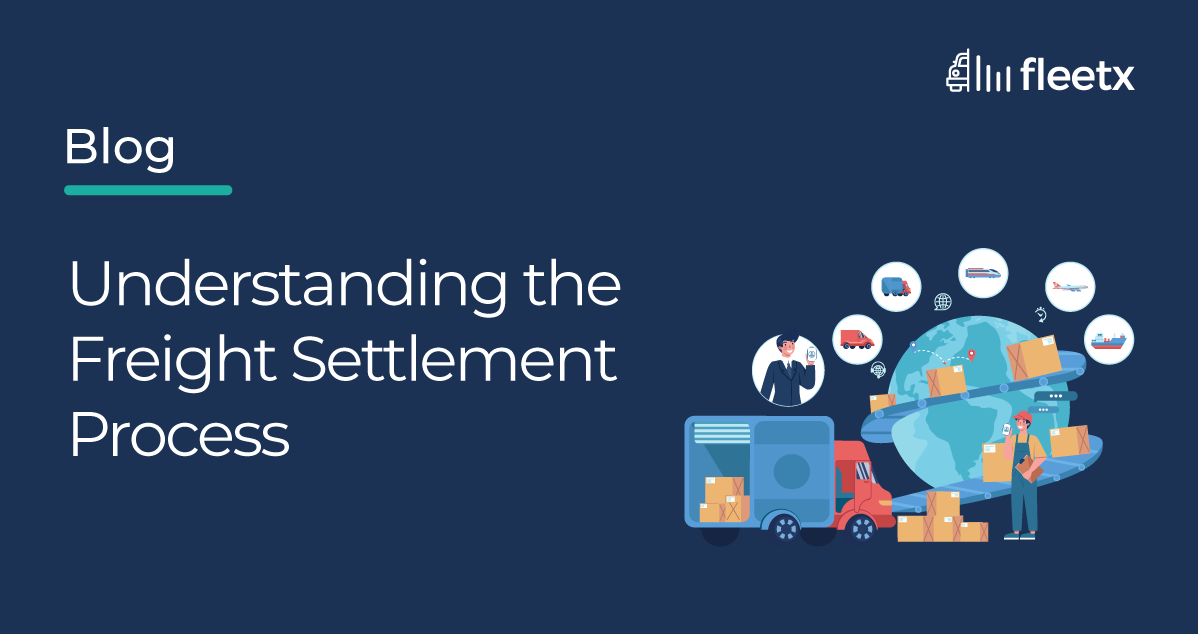
In the dynamic world of logistics, efficient management of freight operations is crucial for the success of any organisation. One integral aspect of this management process is freight settlement. It refers to the process of ensuring accurate and timely payment for transportation services provided by carriers. It involves various activities such as verifying invoices, reconciling charges, managing claims, and facilitating financial transactions between parties involved in the supply chain.
Quick Insights: The Short Version of This Blog
- In the dynamic world of logistics, efficient management of freight operations is crucial for the success of any organization.
- Freight settlement is the process of ensuring accurate and timely payment for transportation services provided by carriers.
- The primary objective of freight settlement is to establish a fair and transparent mechanism for compensating carriers while minimizing errors, disputes, and delays in payment.
- The journey of a freight bill involves freight bill generation, verification and accuracy check, carrier submission, invoice receipt and review, payment processing, and record-keeping and audit.
- Digital transformation in freight settlement includes automation and streamlining, digitization of documentation, real-time tracking and visibility, electronic proof of delivery (EPOD), and integration and collaboration among stakeholders.
Technology-driven digital transformation is revolutionizing freight settlement, bringing efficiency, accuracy, and enhanced visibility to the supply chain. Embracing these technological solutions allows logistics companies to optimize their operations and achieve a more efficient and transparent freight settlement process.
The primary objective of freight settlement is to establish a fair and transparent mechanism for compensating carriers while minimizing errors, disputes, and delays in payment.
What is the Journey of a Freight Bill
- Freight Bill Generation: The freight bill is generated by the logistics service provider or the carrier upon the completion of the transportation service. It includes details such as the shipper and consignee information, transportation charges, shipment details, and any additional charges or accessorial services.
- Verification and Accuracy Check: The freight bill undergoes a verification process to ensure accuracy. This involves reviewing the shipment documentation, rates, and any agreed-upon terms. Any discrepancies or errors are identified and rectified during this stage.
- Carrier Submission: The carrier submits the freight bill to the customer or shipper for payment. This can be done electronically or through physical documentation, depending on the agreed-upon process between the parties involved.
- Invoice Receipt and Review: The shipper receives the freight bill and reviews it for accuracy and compliance with the agreed-upon terms. They verify the services provided, rates charged, and any applicable discounts or surcharges. Any discrepancies are communicated back to the carrier for resolution.
- Payment Processing: Once the freight bill is verified and approved by the shipper, the payment process begins. This may involve the shipper issuing a payment directly to the carrier or following the agreed-upon payment terms, such as making payment within a specific timeframe.
- Record-Keeping and Audit: Both the shipper and carrier maintain records of the freight bill and associated payment transactions for accounting, auditing, and reconciliation purposes. These records serve as a reference for future inquiries, dispute resolution, and financial reporting.
The journey of a freight bill for owned vehicles follows a similar process as rented (market) vehicles, with the key difference being the involvement of the carrier as the owner of the vehicles.
What are Traditional Freight Settlement Challenges
While freight settlement plays a vital role in efficient fleet management, the traditional processes associated with it often present numerous challenges for logistics companies in India. These include:
1.Manual Paperwork:
One of the biggest challenges in traditional freight settlement is the heavy reliance on manual paperwork. This approach leads to inefficiencies, increased administrative burden, and higher chances of human errors.
2.Invoicing Errors:
Inaccurate or incomplete invoices pose significant challenges in freight settlement. Manual data entry increases the probability of errors in capturing key details, including shipment information, rates, quantities, and additional charges.
3.Delayed Payments:
Traditional freight settlement processes often suffer from delays in payments to carriers. Lengthy manual approval workflows, complex paper-based documentation, and inefficient communication channels lead to payment windows extending beyond the accepted timeframe.
4.Disputes and Resolution:
Disputes arising from discrepancies in invoicing, service quality, or contractual obligations are common in traditional freight settlement. The manual nature of processes makes it challenging to track, verify, and resolve disputes efficiently.
5.Detention and Extra Costs:
Extended detention periods impact operational efficiency, increase costs for carriers, and lead to disputes and billing inaccuracies. The lack of standardized detention policies and limited visibility further complicates the issue.
6.Limited Visibility and Transparency:
Traditional freight settlement often lacks transparency and visibility throughout the process. The inability to access real-time data, track invoices, and monitor payment statuses hampers decision-making and reduces operational control.
Digital Transformation in Freight Settlement
Digital transformation is reshaping the logistics landscape in India, and freight settlement is no exception. This section will elaborate on how technology plays a pivotal role in revolutionizing the freight settlement process and why it is essential to consider these solutions in today’s economy. It covers the adoption of smart solutions, automation, digitization, real-time tracking, and Electronic Proof of Delivery (EPOD).
1.Automation and Streamlining:
Technology enables the automation of manual tasks in freight settlement. Manual paperwork is replaced by automated systems that streamline processes, reduce errors, and enhance efficiency. Automated workflows and data capture systems simplify tasks such as invoice verification, payment processing, and document management, leading to faster settlement cycles.
2.Digitization of Documentation:
Digitization eliminates the reliance on physical paperwork, bringing numerous benefits to freight settlement. Digitized documents, such as bills of loading, invoices, and contracts, are stored electronically, reducing the risk of document loss, improving accessibility, and facilitating easier data retrieval for auditing and reporting purposes.
3.Real-Time Tracking and Visibility:
Technology empowers real-time tracking of shipments and enhanced visibility throughout the freight settlement process. With the use of GPS and IoT devices, logistics companies can track the location and status of shipments, providing accurate and up-to-date information to all stakeholders. Real-time tracking improves operational control, enables proactive decision-making, and enhances customer satisfaction.
4.Electronic Proof of Delivery (EPOD):
EPOD is a digital solution that replaces traditional paper-based proof of delivery processes. With EPOD, delivery confirmation, recipient signatures, and other relevant information are captured electronically using mobile devices or specialized handheld devices. This eliminates the need for manual paperwork, reduces errors, and enables real-time visibility into delivery status. EPOD accelerates the settlement process by providing immediate proof of successful delivery, facilitating faster invoicing and payment cycles.
5.Integration and Collaboration:
Technology facilitates seamless integration and collaboration among stakeholders in the freight settlement process. Systems can be interconnected using APIs and EDI, allowing for the smooth exchange of data between shippers, carriers, and other parties involved. Collaborative platforms enable real-time communication, document sharing, and streamlined dispute resolution, promoting transparency and strengthening business relationships.
Conclusion
Technology-driven digital transformation is revolutionizing freight settlement; automation, digitization, real-time tracking, and the adoption of smart solutions have reshaped traditional processes, bringing efficiency, accuracy, and enhanced visibility to the supply chain. The introduction of EPOD has further streamlined proof of delivery, and shortened payment cycles. Embracing these technological solutions allows logistics companies to optimize their operations, improve customer service, and achieve a more efficient and transparent freight settlement process. Part 2 of this series on freight settlement will further elaborate on the importance of, and benefits generated by a smooth freight settlement process.
Frequently Asked Questions
What is freight settlement, and why is it important for logistics businesses?
Freight settlement is the process of verifying freight invoices, validating transportation charges, resolving billing discrepancies, and ensuring timely payments between shippers, transporters, brokers, and carriers. It plays a critical role in transportation management because every shipment generates financial transactions that directly affect profitability and cash flow. A well-managed freight settlement process ensures that businesses only pay for services actually delivered while reducing duplicate payments, invoice errors, and freight disputes. For companies operating across India—including Delhi NCR, Gurgaon, Mumbai, Bengaluru, and Pune—freight settlement becomes increasingly complex as shipment volumes grow. Businesses often deal with multiple carriers, varying freight rates, toll charges, detention costs, fuel surcharges, and GST compliance. Manual verification of these transactions consumes significant time and increases the likelihood of costly mistakes. Modern freight settlement solutions automate invoice matching, contract validation, proof of delivery verification, payment approvals, and audit trails. Integration with Transportation Management Systems (TMS), ERP software, GPS tracking, and Electronic Proof of Delivery (ePOD) enables finance and logistics teams to reconcile shipments much faster while improving transparency. An efficient freight settlement process also strengthens relationships with transport partners through faster and more accurate payments. It supports compliance, improves budgeting, minimizes revenue leakage, and provides valuable analytics for freight cost optimization. As supply chains become increasingly digital, freight settlement has evolved from being an accounting function into a strategic business process that enhances operational efficiency, financial control, and customer satisfaction.
How does the freight settlement process work from shipment completion to final payment?
The freight settlement process begins once a shipment has been successfully delivered. The carrier generates a freight invoice that contains shipment details, freight rates, taxes, accessorial charges, detention fees, toll expenses, and supporting delivery documents. The shipper or logistics provider then verifies these details against transport contracts, purchase orders, dispatch records, GPS data, and proof of delivery before approving payment. A typical workflow includes shipment completion, invoice generation, document verification, freight audit, discrepancy resolution, invoice approval, payment authorization, and financial reconciliation. Businesses may also validate electronic proof of delivery (ePOD), vehicle tracking records, weighbridge receipts, fuel expenses, and loading or unloading charges before releasing payments. For companies operating in logistics hubs such as Delhi NCR, Mumbai, Bengaluru, Pune, and Gurgaon, automation significantly reduces processing time because thousands of freight bills may need verification every month. Transportation Management Systems integrated with ERP software automatically match invoices against contracted freight rates, identify duplicate billing, flag unauthorized charges, and generate approval workflows for finance teams. Once approved, payments are processed according to contractual terms while maintaining complete audit trails for GST compliance and financial reporting. Digital freight settlement platforms also generate dashboards that help businesses monitor carrier performance, payment cycles, freight spend, and recurring billing issues. A structured freight settlement process minimizes disputes, accelerates carrier payments, improves working capital management, and ensures accurate financial records, making it an essential component of efficient logistics and supply chain operations.
What are the biggest challenges businesses face with manual freight settlement?
Manual freight settlement creates operational inefficiencies that become more significant as shipment volumes increase. Businesses relying on spreadsheets, paper invoices, emails, and manual approvals often experience invoice mismatches, delayed payments, duplicate billing, missing documents, and lengthy dispute resolution cycles. These issues increase administrative workload while affecting both profitability and carrier relationships. For transport-intensive industries across India—including manufacturers in Pune, retailers in Mumbai, distributors in Delhi NCR, and logistics companies in Gurgaon—manual freight settlement often involves validating hundreds or thousands of invoices every month. Staff must manually compare freight rates, delivery documents, GST invoices, detention charges, fuel surcharges, and contractual pricing, making human error almost inevitable. Delayed invoice approvals can create cash flow problems for carriers while reducing trust between logistics partners. Inaccurate freight billing may also result in overpayments, underpayments, compliance risks, and financial leakage that remains unnoticed for months. Additionally, limited visibility into shipment status and supporting documents makes resolving disputes significantly more difficult. Digital freight settlement platforms eliminate many of these challenges through automated invoice matching, AI-driven anomaly detection, electronic proof of delivery verification, centralized document management, and workflow automation. Finance teams receive real-time visibility into pending approvals while logistics managers can monitor transportation costs more effectively. By replacing manual processes with integrated freight settlement software, organizations improve operational efficiency, strengthen financial controls, reduce administrative costs, and establish a scalable payment process that supports long-term supply chain growth.
What is the best freight settlement software for businesses in India?
The best freight settlement software is one that automates invoice verification, freight auditing, payment processing, proof of delivery validation, and carrier reconciliation while integrating seamlessly with Transportation Management Systems (TMS), ERP platforms, accounting software, and GPS tracking solutions. Instead of simply processing payments, modern freight settlement software helps organizations improve financial accuracy, reduce operational costs, and gain complete visibility into transportation spending. For businesses operating across India—including Delhi NCR, Gurgaon, Mumbai, Bengaluru, and Pune—the ideal solution should support GST compliance, automated freight calculations, electronic proof of delivery (ePOD), contract rate validation, carrier management, and customizable approval workflows. Companies with large transportation networks also benefit from AI-powered anomaly detection that identifies duplicate invoices, unauthorized charges, incorrect freight rates, and detention billing errors before payments are released. Top freight settlement software platforms often include dashboards for freight spend analytics, carrier performance monitoring, payment cycle tracking, and shipment profitability reporting. Organizations should also evaluate cloud accessibility, mobile compatibility, API integrations, customer support, scalability, and implementation timelines before making a decision. Rather than selecting software based solely on price, businesses should compare automation capabilities, integration options, reporting features, compliance support, and long-term return on investment. The best freight settlement solution ultimately depends on shipment volumes, industry requirements, supply chain complexity, and future expansion plans, making a comprehensive evaluation essential before implementation.
How much does freight settlement software cost in India, and what factors influence pricing?
The cost of freight settlement software in India varies depending on business size, shipment volume, automation requirements, deployment model, and integration complexity. Small logistics businesses or transport companies typically spend anywhere between ₹25,000 and ₹1 lakh annually for basic cloud-based solutions. Mid-sized organizations generally invest between ₹2 lakh and ₹8 lakh per year, while enterprise logistics providers operating across multiple cities such as Delhi, Mumbai, Bengaluru, Pune, and Gurgaon may spend ₹10 lakh or more annually for advanced platforms with AI-driven automation and enterprise integrations. Implementation costs also vary based on the number of users, ERP integration, data migration, workflow customization, employee training, and API connectivity. Some vendors charge one-time implementation fees, while others offer subscription-based Software-as-a-Service (SaaS) pricing that includes software updates, cloud hosting, technical support, and maintenance. When evaluating costs, businesses should consider total ownership rather than software licensing alone. Reducing invoice errors, duplicate payments, administrative effort, payment delays, and freight disputes often generates savings that significantly outweigh implementation expenses. Automation also shortens settlement cycles, improves carrier relationships, and provides better visibility into transportation spending. Before purchasing any solution, organizations should request a customized quotation based on shipment volumes, branch locations, integration requirements, and operational complexity. Comparing functionality, scalability, implementation support, and expected return on investment provides a more accurate picture than focusing solely on upfront pricing.
How can businesses in Delhi, Gurgaon, and Delhi NCR improve freight settlement efficiency?
Businesses operating across Delhi, Gurgaon, and the wider Delhi NCR region manage some of India's busiest transportation corridors, making freight settlement particularly challenging. High shipment volumes, multiple warehouses, third-party logistics providers, interstate deliveries, toll expenses, and varying freight contracts require a structured settlement process to maintain operational efficiency and financial accuracy. Improving freight settlement starts with digitizing invoice verification and integrating transportation operations with finance systems. Transportation Management Systems connected to freight settlement software automatically validate carrier invoices against agreed freight contracts, GPS tracking records, proof of delivery, and shipment milestones. This significantly reduces manual verification while improving payment accuracy. Organizations should also establish standardized carrier agreements, clearly define detention policies, automate approval workflows, and maintain centralized digital documentation for GST compliance and audit readiness. Electronic Proof of Delivery (ePOD), automated freight audits, and real-time shipment visibility help finance teams approve payments much faster while reducing billing disputes. Companies in manufacturing, retail, FMCG, pharmaceuticals, and e-commerce sectors throughout Delhi NCR can further improve settlement efficiency by implementing carrier performance dashboards, freight spend analytics, automated reconciliation, and exception management. These capabilities enable organizations to identify recurring billing issues, negotiate better freight contracts, optimize transportation costs, and strengthen relationships with logistics partners. As freight volumes continue growing across North India's logistics ecosystem, digital freight settlement is becoming an essential investment for businesses seeking operational efficiency, financial transparency, and scalable supply chain management.
How does freight settlement improve cash flow and reduce logistics costs?
Freight settlement directly impacts a company's financial performance by ensuring every freight invoice is accurate before payment is released. Without a structured settlement process, businesses often overpay carriers due to duplicate invoices, incorrect freight rates, unauthorized accessorial charges, inaccurate detention fees, or simple manual errors. Over time, these discrepancies can significantly increase transportation costs and reduce profitability. An automated freight settlement system validates invoices against agreed freight contracts, shipment records, GPS tracking data, proof of delivery, and transportation milestones. This ensures only legitimate charges are approved while identifying billing discrepancies early in the payment cycle. Faster verification also shortens payment turnaround times, strengthening relationships with transport partners and reducing disputes. For businesses operating in logistics-intensive cities like Mumbai, Bengaluru, Pune, Delhi, and Gurgaon, freight settlement also provides detailed spend analytics that reveal recurring cost patterns, inefficient routes, high-cost carriers, and operational bottlenecks. Finance teams can use these insights to negotiate better carrier contracts, optimize freight procurement strategies, and improve transportation budgeting. Automated workflows further reduce administrative effort by eliminating manual document verification, repetitive approvals, and spreadsheet-based reconciliation. Better financial visibility allows organizations to forecast transportation expenses more accurately while maintaining healthy working capital. Ultimately, freight settlement is not only about paying invoices—it is a strategic financial control process that helps businesses lower logistics costs, improve cash flow, increase operational efficiency, and make more informed supply chain decisions.
Can small and medium-sized businesses benefit from freight settlement software?
Yes. Freight settlement software is no longer limited to large enterprises. Small and medium-sized businesses (SMBs), transport companies, distributors, manufacturers, wholesalers, and e-commerce businesses can all benefit from automating freight invoice verification and payment management. As shipment volumes increase, even growing businesses struggle with manual invoice processing, delayed approvals, billing errors, and fragmented financial records. Cloud-based freight settlement platforms provide affordable access to automation without requiring significant IT infrastructure. Many vendors offer scalable subscription plans that allow businesses to start with core features and expand functionality as operations grow. This flexibility makes implementation practical for companies across India, including those operating in Delhi NCR, Mumbai, Pune, Bengaluru, and Gurgaon. Modern platforms automate invoice matching, freight audits, proof of delivery verification, GST-ready documentation, payment workflows, and carrier reconciliation. They also provide dashboards that help business owners monitor transportation expenses, payment status, carrier performance, and logistics KPIs from a single interface. For SMBs, automation reduces administrative workload, improves financial accuracy, minimizes payment delays, and enables employees to focus on customer service and business growth rather than repetitive paperwork. Better visibility into freight spending also supports smarter budgeting and procurement decisions. Choosing a scalable freight settlement solution early allows businesses to build standardized financial processes that continue supporting growth without requiring major operational changes as shipment volumes increase over time.
What future trends are shaping freight settlement and transportation finance?
Freight settlement is rapidly evolving as logistics companies adopt digital technologies that improve accuracy, transparency, and operational efficiency. Artificial Intelligence (AI), machine learning, robotic process automation (RPA), cloud computing, Internet of Things (IoT), blockchain, and predictive analytics are transforming how freight invoices are validated and payments are processed across modern supply chains. AI-powered freight settlement platforms can automatically identify invoice anomalies, detect duplicate billing, recommend dispute resolutions, and predict transportation costs based on historical shipment data. IoT-enabled vehicle tracking and Electronic Proof of Delivery (ePOD) provide real-time shipment verification, reducing manual intervention while accelerating payment approvals. Cloud-based Transportation Management Systems are also becoming more tightly integrated with ERP software, accounting platforms, warehouse management systems, and procurement solutions. This creates a connected ecosystem where shipment execution, freight billing, carrier payments, and financial reporting operate seamlessly together. In major logistics hubs such as Delhi NCR, Mumbai, Bengaluru, Gurgaon, and Pune, businesses are increasingly investing in automation to handle growing shipment volumes while improving compliance and reducing operational costs. Sustainability reporting, carbon tracking, predictive freight analytics, and AI-assisted decision-making are also becoming important evaluation criteria when selecting freight settlement solutions. Organizations that adopt these technologies early will be better positioned to reduce costs, strengthen carrier relationships, improve financial visibility, and build resilient, data-driven supply chains capable of supporting long-term business growth.