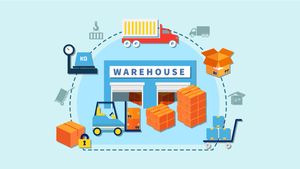

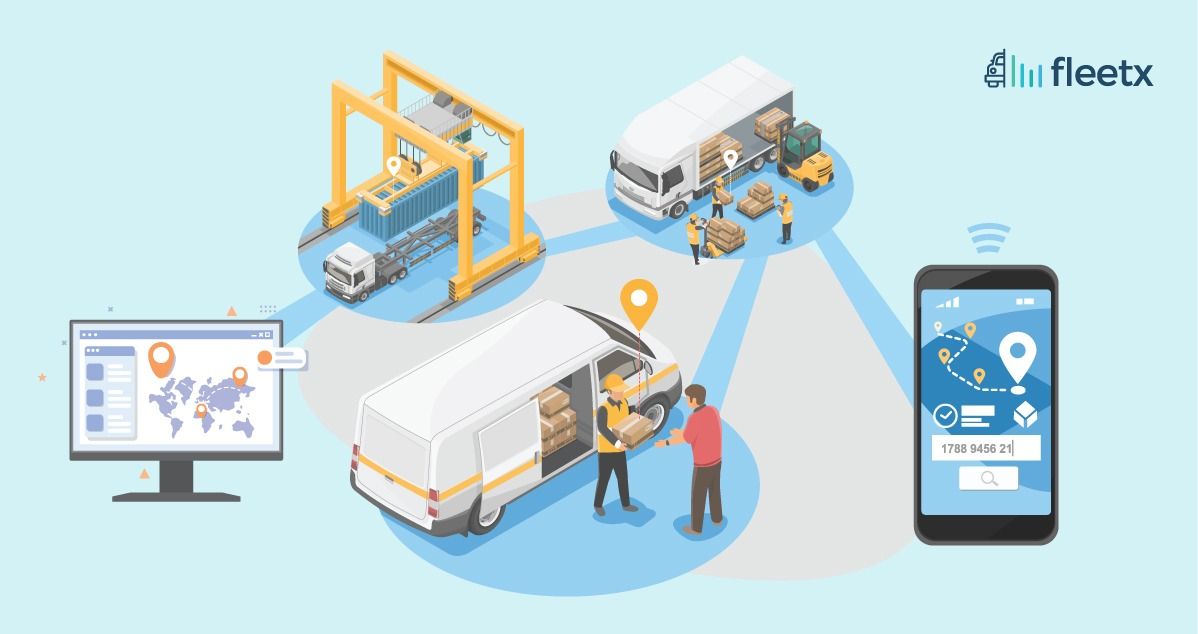
Transportation Management Software (TMS) can help businesses manage and improve their transportation operations. With TMS, companies can efficiently and affordably move their goods across different modes of transportation, such as trucks, ships, and planes. Whether it's intermodal moves or domestic and global transportation, TMS solutions can handle a wide range of freight, from small packages to large shipments of commodities. Retail, distribution, manufacturing, e-commerce, and third-party logistics companies are among those who can benefit from using a TMS, as it is crucial to keeping shipping costs in check while maintaining overall service quality.
In India, the rise of e-commerce has contributed to the growth of the parcel shipping industry. With the increasing demand for online shopping, the need for efficient and reliable transportation and logistics services has become paramount. In 2020, India's e-commerce market was estimated to be worth $38.5 billion, and this figure is projected to reach $99 billion by 2024. As a result, parcel shipments in India are expected to increase significantly over the next few years.
According to a report, parcel shipments are expected to rise by 17% to 21% annually between 2017 and 2021, and same-day delivery is projected to increase logistics costs by up to 50% by 2020. Also, as supply chains struggle to keep up with the Amazon Effect, selecting an efficient Transportation Management System (TMS) has become critical. Choosing the right TMS solution can optimize core operations and transform the way a business functions. As TMS solutions become more affordable and easier to implement, they are becoming more widely adopted throughout the industry. Bart De Muynck, Gartner's research vice president of transportation technology, notes that investments in TMS solutions increased across the entire supply chain technology spectrum in 2018.
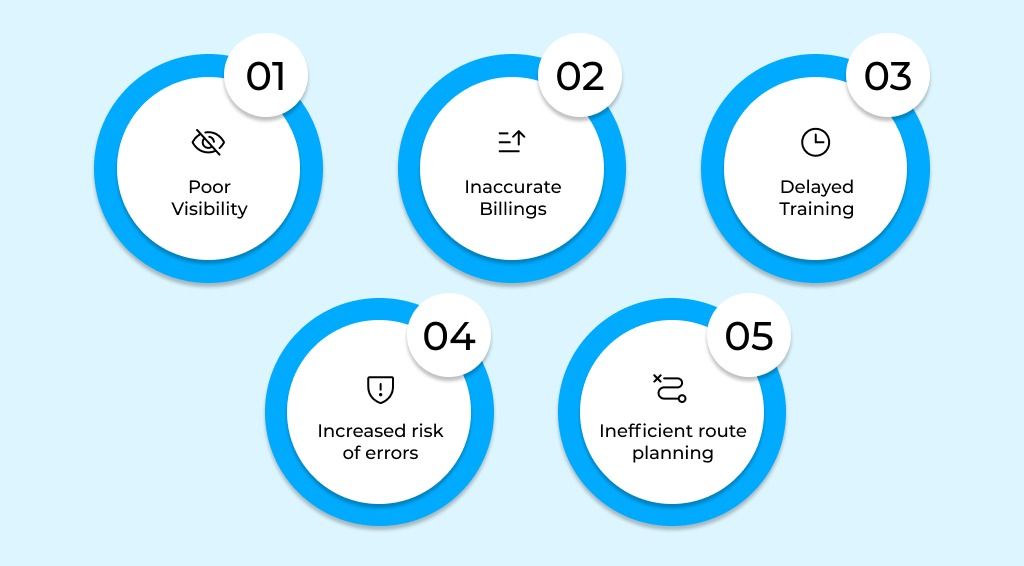
However, the lack of an efficient Transportation Management System (TMS) has been a major challenge for the logistics industry in India. The absence of a TMS can lead to inefficient routing, delays, and increased costs. Without a proper system in place, it becomes challenging to track shipments, manage inventory, and optimize delivery routes, leading to a higher probability of errors and losses. Moreover, India has a complex transportation network with a mix of highways, rural roads, and urban streets, which can make it challenging to manage logistics efficiently. A TMS can help streamline operations, reduce costs, and improve the overall supply chain management process.
Implementing a TMS can bring about numerous benefits for a company, including cost and time savings, as well as improved accuracy and visibility of data. Logistics Management's 2019 Transportation Management Systems (TMS) Market Update emphasizes the significance of TMS in modern supply chain management, stating that TMS has become an essential tool for companies facing the challenges of e-commerce and omni-channel operations. Moving beyond outdated methods such as clipboards, spreadsheets, and phone calls, TMS enables businesses to manage their transportation networks more efficiently and effectively.
Here are few reasons why your company needs a Transport management software:
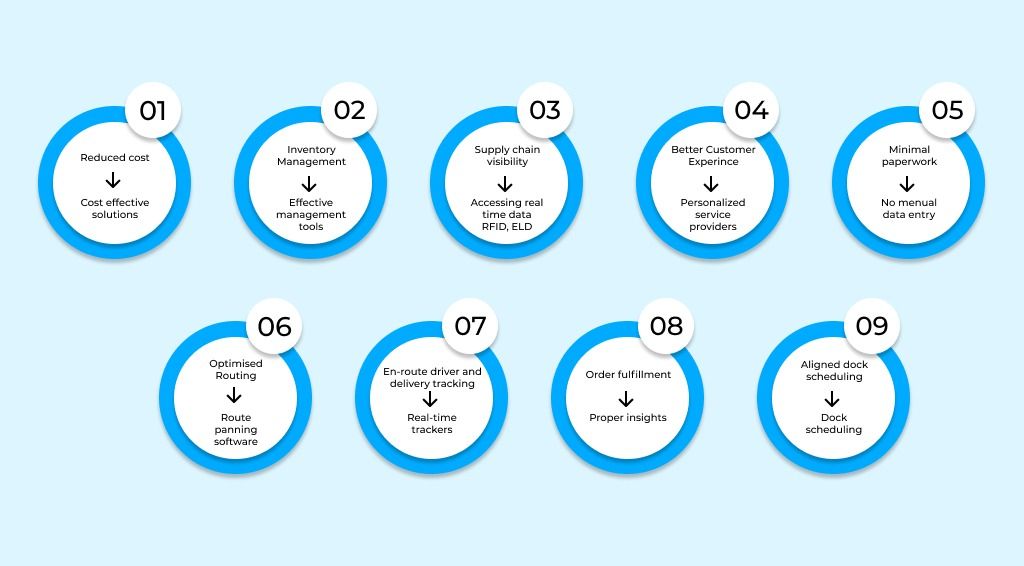
Reduced Cost: A transportation management software can help businesses reduce shipping expenses by optimizing routes and loads, and providing cost-effective solutions. This results in improved cash flow and lower overall freight costs, while also increasing carrier competition and providing more options for logistics professionals.
Inventory Management : A dependable TMS system enables businesses to track their orders and shipments in real-time, providing accurate inventory forecasts and improving supply chain transparency. TMS solutions can also integrate with inventory management tools enhancing overall efficiency and intelligence. This level of control over inventory management can benefit all supply chain activities, particularly with the growth of ecommerce freight transportation.
Supply Chain Visibility : Transportation management software offers businesses complete visibility across the entire supply chain, providing access to real-time data from all integrated systems. This allows managers to quickly and efficiently identify potential issues and opportunities, ensuring customer satisfaction is maintained without compromising performance. With real-time tracking and analytics, customers can also be given visibility to their orders through features like Dock Scheduler, RFID and ELD integrations, and Gate Check, making it easy to track the progress of each truck on the route.
Better Customer Experience: Customers today expect fast delivery, personalized service, and the ability to make last-minute changes to their orders. However, meeting these expectations can be challenging for businesses. This is where new generation TMS solutions come in to bridge the gap between order management and warehouse management systems. By consolidating customer orders and choosing the most cost-effective carrier, businesses can improve customer service while also benefiting themselves. With TMS, businesses can adapt their operations to meet customer expectations and provide a better customer experience.
Reduced paperwork and everything at one place: Transportation management systems (TMS) can offer several benefits, including reducing administrative costs and paperwork by automating accounts and reducing the need for manual data entry. With TMS, companies can manage their entire transportation operations in one place and interact with different carriers without the need to switch between different websites. Integration with ERP or ordering systems can further reduce errors and ensure that all order and route information is in one place. Overall, TMS can significantly improve efficiency and minimize billing errors, providing a win-win situation for both businesses and customers.
Optimized Routing: An effective TMS is essential for optimizing routing in today's fast-paced business environment. One such feature that is gaining popularity is pool distribution, which provides greater visibility and control over shipments while reducing costs and speeding up delivery. Using an optimizer, users can build more efficient loads and routes, specifying different parameters to suggest or build the optimal load and route. Visual mapping tools allow users to see the planned route and make changes as needed, resulting in more efficient load consolidation and routing.
En-route driver and delivery tracking: Transport Management Systems (TMS) offer tracking capabilities that allow organizations to keep an eye on their shipments and drivers. With real-time tracking, businesses can monitor the location of their cargo and receive notifications if there are any delays or service outages. The tracking data can also be used to improve route schedules and assess driver performance. Real-time tracking ensures driver safety and allows for prompt feedback and improvements.
Order Fulfillment: The use of transportation management systems ensures accurate order fulfillment by eliminating shipping mistakes and anomalies through real-time tracking and supply chain insight. This results in increased accuracy in order fulfillment, and even minor issues can be resolved without negatively impacting the customer.
Aligned Dock Scheduling: An efficient TMS can align deliveries with dock schedules to improve transportation planning and execution. This leads to a reduction in waiting times and enhances the quality of transportation from one location to another.
Conclusion
In today’s fast-paced business environment, delivering quality products to customers quickly and cost-effectively is key to success. A Transportation Management System (TMS) is a vital tool that can help companies achieve these goals. With a TMS in place, businesses can improve the timeliness and accuracy of their operations, save money on freight, and gain increased visibility and collaboration opportunities throughout their supply chain. By selecting the right TMS software for their specific needs, companies can see incremental benefits that snowball into improved business practices and increased customer satisfaction.
As Logistics Management noted, TMS solutions have become a "must-have" for companies that need to manage increasingly sophisticated transportation networks. It’s clear that the benefits of implementing a TMS are too significant to ignore. If your company doesn't have a TMS in place, now is the time to obtain one and improve your bottom line.
Frequently Asked Questions About Transportation Management Software
1. What is Transportation Management Software and how does a TMS work?
Transportation Management Software, or TMS, is a digital platform used to plan, execute, track and optimise the movement of goods. It gives transporters, manufacturers, retailers, e-commerce businesses and third-party logistics companies a central system for managing shipments instead of relying on spreadsheets, phone calls, paper records and disconnected applications.
A TMS typically begins working when an order or shipment request is imported from an enterprise resource planning, warehouse management, order management or customer system. The software evaluates information such as the origin, destination, vehicle type, shipment weight, delivery window, route restrictions, carrier rates and available capacity. It can then recommend a suitable vehicle, carrier, route and dispatch schedule.
Core TMS functions commonly include:
- Shipment planning, vehicle allocation and load consolidation.
- Carrier selection, rate management and freight procurement.
- Route optimisation and automated dispatch planning.
- GPS-based vehicle and shipment visibility.
- Electronic proof of delivery and delivery-status updates.
- Freight billing, invoice verification and cost analytics.
- Alerts for delays, route deviations, detention or failed deliveries.
For Indian logistics operations, a TMS may also support multi-branch transport workflows, toll and trip expenses, transporter contracts, regional delivery routes and communication between drivers, vendors and customers. Its purpose is not limited to tracking vehicles. A complete TMS connects transportation planning with operational execution and financial control.
Businesses obtain the greatest value when the platform is integrated with their existing systems and used consistently by dispatchers, transport vendors, drivers, finance teams and customer-service teams. This creates one reliable source of transportation data and supports faster, more informed decisions.
2. What are the main benefits of using Transportation Management Software in India?
The main benefit of Transportation Management Software in India is that it brings planning, tracking, carrier coordination, freight expenses and delivery performance into one connected platform. This is particularly useful for companies managing high shipment volumes across different states, transport vendors, warehouses, branches and customer locations.
Indian road transportation can involve changing delivery conditions, multiple vehicle categories, long-distance routes, city-entry restrictions, fragmented carrier networks and variable turnaround times. A TMS helps teams respond to these challenges using real-time operational data rather than relying only on manual follow-ups.
Important business benefits include:
- Lower transport costs: Better vehicle utilisation, route planning, load consolidation and carrier-rate comparison can reduce avoidable expenditure.
- Improved visibility: Teams can monitor shipment status, expected arrival time, delays and route deviations from a central dashboard.
- Faster dispatch: Automated planning reduces the time required to assign vehicles, vendors and routes.
- Reduced paperwork: Digital records, proof of delivery and automated reports replace many repetitive manual processes.
- Stronger customer experience: Accurate status updates and estimated arrival times help customers plan receiving operations.
- Better vendor management: Businesses can compare transporters using cost, on-time delivery, rejection, detention and service-quality data.
- Improved freight control: Contract rates and actual invoices can be checked to identify billing differences or unauthorised charges.
A TMS is valuable for manufacturers, distributors, retailers, e-commerce companies, FMCG businesses, pharmaceutical supply chains and 3PL operators. The final results depend on shipment volume, data quality, employee adoption, system integration and how effectively the company converts TMS insights into operational action.
3. How much does Transportation Management Software cost in India?
The cost of Transportation Management Software in India can range from a basic monthly subscription for a small operation to a customised enterprise contract worth several lakhs of rupees. There is no universal TMS price because vendors calculate charges using factors such as shipment volume, number of users, vehicles, branches, modules, integrations and support requirements.
As an indicative planning range, a small transporter or local distribution company may encounter entry-level software packages starting at approximately ₹10,000 to ₹40,000 per month. A growing organisation needing route planning, vendor management, tracking, reporting and multiple user roles may budget roughly ₹40,000 to ₹2,00,000 per month. Large enterprises with extensive integrations, control-tower visibility, freight procurement and customised workflows generally receive negotiated quotations that may exceed these ranges.
Potential one-time or additional costs can include:
- Platform configuration and implementation.
- ERP, WMS, accounting or API integration.
- Historical data migration and cleansing.
- GPS devices or telematics hardware, when required.
- Driver applications, customer portals or premium analytics.
- On-site training, dedicated support and custom development.
Companies should compare the total cost of ownership rather than choosing the lowest subscription price. A low-cost package may become expensive if essential modules, reports, integrations or support are charged separately.
These figures are indicative market-planning estimates, not fixed vendor quotations. Businesses in Delhi, Gurgaon, Mumbai, Bengaluru, Pune and other Indian cities should request a written proposal based on actual monthly trips, users, locations and required features.
A useful evaluation compares annual software cost with expected savings from better vehicle utilisation, reduced detention, fewer billing errors, lower manual workload and improved delivery performance.
4. Which features should the best TMS software in India include?
The best TMS software in India should support the complete transportation cycle, from shipment planning and transporter selection to delivery confirmation, freight settlement and performance analysis. The right feature set depends on whether a company operates its own fleet, works with contracted transporters or uses a combination of both.
At a minimum, businesses should look for order creation, trip planning, vehicle allocation, route optimisation, dispatch management, live tracking, estimated arrival times, delivery updates and management reports. These features create basic operational control, but larger companies usually need more advanced capabilities.
Top TMS capabilities to evaluate include:
- Transporter and contract management: Store vendor details, lane rates, vehicle types, service conditions and negotiated charges.
- Automated freight procurement: Send requirements, collect quotations and compare carrier bids using defined rules.
- Load and route optimisation: Build efficient routes and loads according to capacity, distance, time windows and delivery priorities.
- Real-time visibility: Track vehicles, identify delays and provide shareable shipment-status information.
- Control-tower dashboard: View exceptions, delayed trips, detention, vehicle availability and delivery performance centrally.
- Freight audit and settlement: Compare invoices with contracts, trips, tolls, detention and approved expenses.
- Proof of delivery: Capture digital signatures, photographs, timestamps and delivery documents.
- Integration: Connect with ERP, WMS, GPS, FASTag, accounting and customer systems where applicable.
Indian businesses should also assess mobile accessibility, multilingual usability, configurable workflows, data security, user permissions, implementation support and the vendor's ability to serve multiple branches. A product with numerous features is not automatically the best choice. The most suitable TMS is one that solves the organisation's highest-cost transportation problems and can scale without creating unnecessary operational complexity.
5. How can companies choose the best Transportation Management System in Delhi, Delhi NCR and Gurgaon?
Companies searching for the best Transportation Management System in Delhi, Delhi NCR or Gurgaon should begin by mapping their most common lanes, shipment volumes, vehicle categories, customer requirements and operational bottlenecks. The selection should be based on measurable use cases rather than vendor presentations alone.
Logistics operations in Delhi NCR may include movement between industrial and commercial areas in Delhi, Gurgaon, Noida, Greater Noida, Faridabad, Ghaziabad and nearby warehousing clusters. Businesses may also manage interstate routes, urban delivery restrictions, variable travel times and high-volume distribution. A suitable TMS should therefore provide accurate route planning, real-time exception alerts, flexible vehicle allocation and visibility across multiple facilities.
Use the following evaluation process:
- Document existing costs, delays, detention hours, manual tasks and billing errors.
- Create a list of essential features and separate them from optional features.
- Ask shortlisted vendors to demonstrate real Delhi NCR transportation scenarios.
- Verify integration with the company's ERP, WMS, GPS and accounting tools.
- Review implementation responsibilities, support hours and escalation procedures.
- Run a pilot using selected routes, users and transport partners.
- Measure improvements in planning time, cost per shipment and on-time delivery.
Gurgaon companies should also check whether the provider offers local implementation support, although software capability and service quality are more important than office location. Indicative pricing may start with smaller subscription packages and increase substantially for multi-branch enterprise deployments.
Before signing a contract, request a complete commercial proposal covering setup, licences, users, integrations, mobile applications, support, data migration, training and renewal charges. The top choice should deliver clear operational value and remain usable for dispatchers, drivers, finance teams, managers and transport vendors.
6. What should Mumbai businesses consider when selecting top TMS software for logistics?
Mumbai businesses selecting top TMS software for logistics should prioritise route visibility, delivery-slot management, transporter coordination and exception handling. Operations may extend across Mumbai, Navi Mumbai, Thane and surrounding industrial or warehousing areas, with additional long-haul movement to other regions of Maharashtra and India.
High traffic variability, scheduled customer deliveries, port-linked freight, multiple loading points and limited receiving windows can make manual planning difficult. A Transportation Management System should help planners adjust routes, track trip progress and communicate expected arrival times without relying on repeated calls to drivers and carriers.
Useful features for Mumbai transport operations include:
- Dynamic route planning based on delivery sequence and operational constraints.
- Geofencing around warehouses, customer sites, ports or distribution centres.
- Automated alerts for late departures, long stoppages and route deviations.
- Dock, gate or delivery-slot scheduling for high-volume facilities.
- Vehicle turnaround-time and detention analysis.
- Electronic proof of delivery and document management.
- Transporter performance dashboards for local and interstate carriers.
- Freight-rate, additional-charge and invoice verification workflows.
Businesses should conduct a pilot using actual Mumbai routes rather than relying entirely on a generic demonstration. During the pilot, they can measure estimated arrival-time accuracy, user adoption, tracking reliability, exception response and reduction in manual follow-ups.
TMS pricing in Mumbai is generally influenced by business scale and required functionality rather than the city alone. A company should ask for separate pricing for licences, implementation, integrations, telematics hardware and support. Manufacturers, importers, exporters, distributors, retailers and 3PL providers may each require different configurations.
The best platform will be the one that supports current workflows while providing enough flexibility for new warehouses, customers, carriers, routes and shipment volumes.
7. How can TMS software support logistics operations in Bengaluru and Pune?
TMS software can support logistics operations in Bengaluru and Pune by combining transportation planning, vehicle allocation, live tracking, delivery coordination and freight analysis in one system. Both cities serve as major business, manufacturing, technology, retail and distribution centres, creating varied requirements for local, regional and interstate transportation.
Bengaluru businesses may manage e-commerce deliveries, retail distribution, technology equipment, food products, industrial goods and movements between warehouses and surrounding districts. Pune operations may include automotive components, engineering products, pharmaceuticals, FMCG distribution and regional movement across Maharashtra. In both locations, changing traffic conditions and strict delivery schedules can affect transport performance.
A suitable TMS can help by providing:
- Automated planning for local and multi-stop deliveries.
- Vehicle-capacity and shipment-volume matching.
- Real-time estimated arrival times and delay alerts.
- Digital communication between planners, drivers and customers.
- Route-wise and customer-wise transportation cost analysis.
- Transporter comparison using delivery performance and freight cost.
- Digital proof of delivery and document storage.
- Integration with warehouse, order and enterprise systems.
Businesses evaluating TMS providers in Bengaluru or Pune should ask vendors to configure demonstrations around actual routes, order profiles and vehicle types. A software platform may perform well for full-truckload manufacturing movement but require different capabilities for high-frequency urban deliveries.
Pricing can vary according to monthly shipments, users, branches, integrations and modules. Companies should calculate value using operational metrics such as cost per trip, kilometres travelled, vehicle fill rate, planning time, delivery success, detention and invoice discrepancies.
The strongest implementation approach is to begin with a controlled group of routes or facilities, resolve data and workflow issues, train users and then expand the platform across additional business units.
8. Can TMS software reduce freight costs and improve delivery performance?
Yes. TMS software can reduce freight costs and improve delivery performance by identifying inefficiencies during planning, execution and freight settlement. However, savings are not automatic. Results depend on shipment volume, data accuracy, system configuration, staff adoption and whether managers act on the information produced by the platform.
Before dispatch, a TMS can compare available vehicles, transporter rates, shipment priorities, delivery windows and route combinations. This helps planners avoid underutilised vehicles, unnecessary trips and unsuitable carrier selection. For multi-stop distribution, route optimisation can sequence deliveries while considering capacity and time constraints.
During transportation, the system can improve performance through:
- Real-time alerts for delays, stoppages and route deviations.
- Estimated arrival times that support proactive customer communication.
- Geofence-based arrival and departure records.
- Detention monitoring at plants, warehouses and customer sites.
- Centralised visibility for multiple transporters and branches.
After delivery, freight-audit functions can compare carrier invoices against contracted rates, approved accessorial charges and completed trip records. This helps identify duplicate invoices, incorrect lane rates, unsupported detention charges and other discrepancies.
Companies should establish a baseline before implementation. Useful measurements include freight cost per tonne or shipment, cost per kilometre, vehicle fill rate, on-time pickup, on-time delivery, empty kilometres, average detention, planning hours and billing discrepancies. These metrics show whether the TMS is creating genuine value.
Organisations should avoid guaranteeing a fixed percentage of savings without analysing their operations. A company with highly manual processes may find more optimisation opportunities than one that already has disciplined planning. The most reliable business case uses a pilot to compare actual costs and service performance before and after implementation.
9. How long does it take to implement a Transportation Management System?
A basic cloud-based Transportation Management System may be configured within a few weeks, while a complex enterprise implementation can take several months. The timeline depends on the number of locations, users, transporters, integrations, workflows, reports and historical records included in the project.
A smaller company using standard shipment planning, tracking and proof-of-delivery functions may complete an initial deployment in approximately four to eight weeks. A mid-sized business integrating an ERP, multiple branches and freight workflows may require roughly two to four months. Large organisations with customised approval rules, extensive data migration and several enterprise integrations may need a longer phased rollout.
A typical implementation includes:
- Operational assessment and definition of project goals.
- Documentation of routes, vehicle types, vendors, rates and workflows.
- System configuration and user-permission setup.
- Master-data preparation, validation and migration.
- Integration with ERP, WMS, GPS, accounting or customer systems.
- User acceptance testing with real transportation scenarios.
- Training for planners, managers, finance users and transport partners.
- Pilot launch, issue resolution and phased expansion.
Poor or incomplete data is one of the main causes of implementation delays. Companies should verify addresses, customer locations, carrier contracts, vehicle information, lane rates and user responsibilities before migration.
A business should appoint an internal project owner and representatives from logistics, information technology, finance, procurement and customer service. Success should be measured using agreed key performance indicators rather than only confirming that the software is technically live.
The safest approach is often a pilot covering a limited number of facilities, routes or transporters. Once workflows and integrations are stable, the company can expand the TMS to Delhi, Gurgaon, Mumbai, Bengaluru, Pune and other operating regions.
10. Is cloud-based TMS software suitable for small businesses, manufacturers and 3PL companies?
Cloud-based TMS software can be suitable for small businesses, manufacturers and third-party logistics companies, but each organisation requires a different configuration. Because cloud software is accessed through the internet, businesses can usually deploy it without maintaining large on-site servers or installing the application separately on every device.
Small businesses may use a TMS to replace spreadsheets, organise customer orders, assign vehicles, track deliveries and store digital proof of delivery. They should avoid purchasing complex enterprise modules that their teams will not use. A scalable subscription with essential features and clear support may provide better value.
Manufacturers often need deeper capabilities, including transporter contracts, plant dispatch, vehicle reporting, gate processes, freight procurement, delivery appointments and invoice settlement. Integration with ERP and warehouse systems may be essential because transportation begins with production, sales and inventory data.
A 3PL company may require multi-customer operations, configurable workflows, customer-specific dashboards, separate billing rules, carrier management and high-volume tracking. It should verify whether the platform can protect each customer's data while providing consolidated operational visibility.
Before selecting a cloud TMS, review:
- Data security, access permissions, backups and audit records.
- System availability and support arrangements.
- Mobile access for drivers and field employees.
- Integration capabilities and API availability.
- Limits on users, orders, vehicles, branches or data storage.
- Implementation, renewal and customisation charges.
- Data export and contract-exit provisions.
Businesses should choose a platform according to current operational needs and expected growth. A pilot can confirm whether planners, transporters and drivers can use the software effectively. The best cloud TMS is not necessarily the product with the longest feature list; it is the one that improves transportation control, service quality and cost visibility without creating unnecessary complexity.