

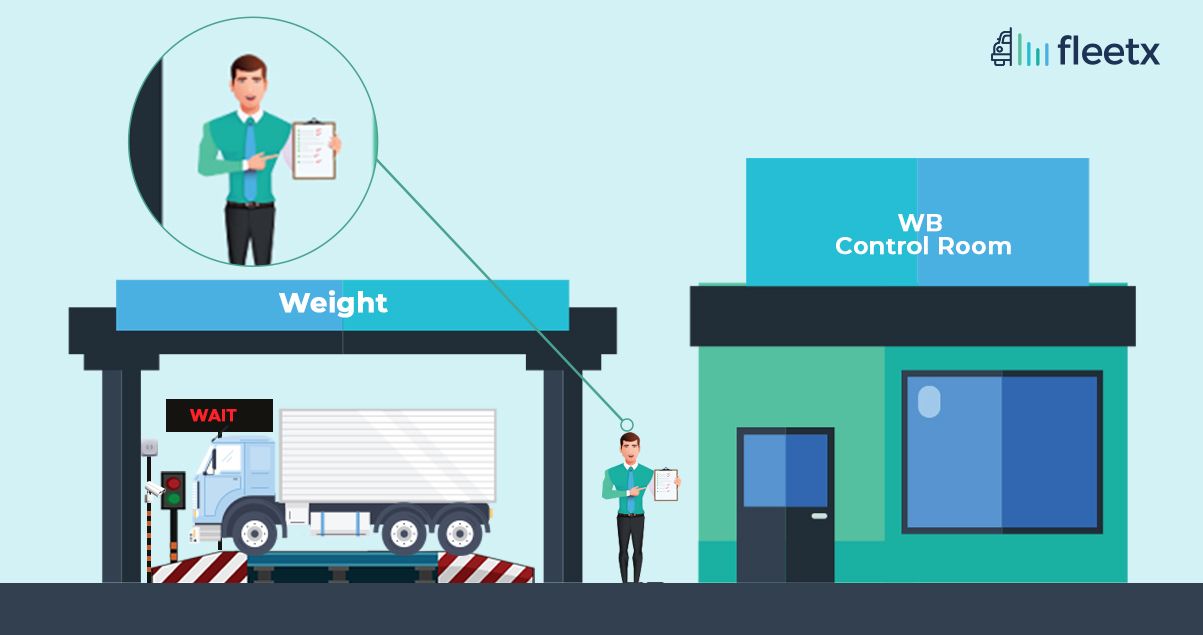
Weighbridge for manufacturers and businesses provides a very simple purpose of weighing goods. Now the requirement to weigh goods differs across businesses, with each using it to weigh the vehicles carrying goods into the facility and leaving the facility. For certain industries like mining, accurate weight measurement of trucks carrying goods is critical for their businesses. Inaccurate weight measurement can have severe consequences, including loss of revenue, return of a shipment, and audit-related issues, among others. Thus, businesses in such industries need to ensure that the system they have implemented for weighing goods entering or leaving the facility is of the highest possible accuracy.
What causes weighbridge inaccuracy?
Several factors affect the accuracy of weighbridges. A 2013 study from New Zealand focusing on the logging industry interviewed weighbridge operators, suppliers and government weights and measures staff in New Zealand and found four sources of variation that affect the accuracy of weighbridges. These sources include mechanical, environmental, truck, human and system-related variations. Although it's difficult to put a number on how various factors affect the accuracy of weighbridge measurement, in this case, all these sources combined showed that it could be as much as 4% of the total payload. However, a more general understanding of factors affecting the accuracy of weighbridges can help us classify the factors into human-related errors, mechanical errors and environmental errors.
Human-related errors
All kinds of devices that require any form of human input are vulnerable to human-related errors. In the case of weighbridge systems, these errors can include someone being inside the truck while weighing, as it can result in increasing vibrations that can affect readings. If the truck is not fully rolled onto the weighbridge scale, the weighbridge will return inaccurate readings.
Mechanical Errors
Several mechanical errors can lead to inaccuracy in weight measurement. For example, the load cell or load sensor quality, one of the most important components of weighbridges, can affect the weighbridge accuracy. Thus, businesses must install good-quality load cells for accurate weight measurement. Once the truck is loaded onto the scale, the load cell bends, converting the mechanical force of loading into an electrical signal. Moreover, the load itself can often lead to inaccuracies depending on how the load is applied to the load cell on the scale. At times, the load is not applied to each cell properly as specified by the manufacturer, and improperly applied loads, such as twisted loads, can lead to inaccurate measurements. Lastly, if the floor on which load cells are placed is not strong enough or the load rests on check-rods, bumpers, or other stabilising elements, the output can change and provide inaccurate results. According to the International Organisation of Legal Metrology (OIML R 76), the maximum permissible error for a Class IIII non-automatic weighing instrument in service is ±1.0 division at maximum capacity — for a 60-tonne weighbridge with 20 kg divisions, that is a ±20 kg tolerance."
Environmental Errors
While weighing the load, only the weight force must be transmitted to each load cell of the weighbridge. Other environmental forces, including wind loading, shock loading, vibration, large temperature changes, and pressure differentials, can produce errors in the load cell signal, thus returning inaccurate readings. When weighbridges are installed outdoors, strong crosswinds on the weigh vessel exert forces on the load cells in addition to the truckload, leading to load cells on each side experiencing a differing weight. Shock loads resulting from heavy material being dumped on the weighbridge that’s higher than the system’s rated capacity can damage the system. Vibrations from the nearby equipment can also be interpreted by load cells as an additional force leading to inaccurate readings. Lastly, dust accumulation under the scale can also lead to inaccurate weight measurement by the system.
How to fix weighbridge accuracy problems
So far, we have developed a good understanding of different sources of errors that can occur in weighbridges. Moreover, we also understood how different factors affect weight measurement. Now, let's look at how businesses can consistently ensure more accurate cargo measurements. Timely maintenance is crucial to ensure any device's or machine's longevity, and the weighbridge is no different. An industrial weighbridge in a commercial facility undergoes a lot of heavy usage, but the operator often overlooks its maintenance. Consequently, the accuracy of the weighbridge suffers over time, resulting in inaccurate readings or total breakdown. There are several other benefits of providing timely maintenance to weighbridge systems.
- It improves the longevity of the installed weighbridge system.
- It ensures weighing accuracy and reduces the chances of error.
- It prevents the weighbridge from major damage, thus preventing total breakdown.
- It drastically reduces the cost and requirement of frequent repairs.
- It improves the overall efficiency of the operation.
In essence, providing timely and consistent maintenance to weighbridges is the key to ensuring longevity and weighing accuracy. But then, how should a business go about maintaining its weighbridge systems? Is there a checklist? The answer to that question is a resounding yes. However, the exact procedure for weighbridge maintenance and operation can differ depending on the use case; a general checklist applies to most businesses and their operations.
Weighbridge maintenance checklist (daily to annual)
As suggested, a general checklist for weighbridge maintenance can be divided into four parts: Daily, Weekly, Monthly and Annually. Operators or businesses must consistently ensure timely maintenance across all four categories to ensure accurate weighing by weighbridges.
Daily weighbridge maintenance tasks
Weighbridges require proper cleaning to ensure that no dust or other material is stuck either on the scale or under it that can adversely affect the proper function of the load cells. The problem of dust and debris settling in the weighbridge system is common in the weighbridges used by businesses in the mining industry. Thus, daily inspection for the same needs to be carried out, and weighbridges should be properly cleaned through any means necessary.
Weekly maintenance: the end-middle-end test
In addition to the daily maintenance, which can be done at a more surface level, weekly maintenance needs to be more thorough to check issues with the mechanics of the weighbridge. Operators can employ the end-middle-end test, a popular test for detecting any mechanical error or obstruction in the weighbridge. To conduct this test, the operator needs to place the truckload at the weighbridge's start, middle and end and take the measurements, respectively. The readings obtained at all three positions need to be compared and ideally return the same values with minimal discrepancy. If the variation between readings is high, there is a high chance that there is an issue with the mechanics of the weighbridge and thus would require immediate attention.
Monthly weighbridge maintenance and calibration check
Monthly maintenance can be a combined and more thorough version of the daily and weekly maintenance routine. First, conduct a weekly end-middle-end test. Secondly, the platform needs to be inspected to check whether there has been any movement or tilt in its positioning since its last calibration. If needed, get a weighbridge calibration done for the weighbridge system. Inspect the entire weighbridge for visible damage to the load cells or other parts. Then, use a jet spray or air spray, depending on the suitability of the weighbridge, to get rid of any dirt or debris that can affect the accuracy. However, one needs to be careful with the jet spray or air spray not to damage any load cell or waterlog the junction box below the scale. Lastly, zero the weighbridge, conduct a final end-middle-end test, and compare the readings with the previously measured readings for any major discrepancy.
Weighbridge calibration requirements in India
In India, any weighbridge used for a commercial transaction — including truck weighing at cement plants, coal depots, mining facilities, and agri-commodity warehouses — is a legal measuring instrument under the Legal Metrology Act 2009. This Act replaced the older Standards of Weights and Measures Act 1976 and is administered by the Department of Consumer Affairs under the Ministry of Consumer Affairs, Food and Public Distribution.
The operational rules that govern weighbridge verification are laid out in the Legal Metrology (General) Rules 2011. Under Rule 24, every weighing or measuring instrument used in trade or commerce must be verified and stamped by a government-appointed Weights and Measures Inspector before first use and at every subsequent renewal period — typically every 12 months. Instruments that fail verification or are used without a valid stamp can result in penalties of up to ₹25,000 for a first offence and up to ₹1 lakh for repeat violations under Section 25 of the Act.
The technical accuracy standard that Indian weighbridges must meet is BIS IS 9281, which covers non-automatic weighing instruments and specifies accuracy classes, maximum permissible errors, and installation requirements. For most commercial truck weighbridges operating in the 30–120 tonne range, the applicable accuracy class is Class IIII, with a maximum permissible error in service of ±1.0 scale division at maximum capacity — consistent with the OIML R 76 international standard.
Each Indian state maintains its own Weights and Measures Department (also called the Legal Metrology Department) responsible for appointing inspectors and conducting annual verifications. The process involves:
- Submitting a verification application to the state department before the stamp expiry date
- An inspector visiting the facility to conduct the four-point calibration (zero, span, linearity/hysteresis, corner load)
- Payment of the prescribed verification fee, which varies by state and instrument capacity
- Receiving a stamped Certificate of Verification valid for 12 months
Businesses that operate weighbridges across multiple states — common for large logistics operators with facilities in Rajasthan, Jharkhand, Odisha, and Chhattisgarh — must comply with the verification schedule of each respective state department, as renewal dates and fees are not nationally standardised.
For operators using automated or unmanned weighbridge systems, the same legal requirements apply. The software and indicator unit must also be type-approved under the Legal Metrology (Approval of Models) Rules 2011 before the instrument can be legally verified. Using a non-type-approved indicator — even with an otherwise accurate load cell assembly — will cause the instrument to fail legal verification.
Annual calibration requirements (India and global)
In certain parts of the world, like the United Kingdom, there is a legal requirement to ensure that weighbridges meet the stated accuracy (within certain tolerances) at all times; businesses are legally required to get their weighbridges calibrated every 12 months for compliance purposes. There are typically four key tests for weighbridge calibration that includes,
- Zero point (no load): The scale is read with no vehicle present. A reading other than zero indicates drift in the load cell output or debris accumulation affecting the baseline.
- Working measuring range (span): A certified test weight is placed on the platform and the reading is compared against its known mass. The acceptable tolerance under OIML R 76 is ±0.5% of the test load for Class IIII weighbridges.
- Linearity and Hysteresis (loading and unloading): The scale is loaded incrementally then unloaded in steps to check that readings track consistently in both directions. A hysteresis error greater than 0.5 divisions typically indicates a damaged or contaminated load cell.
- Eccentric error (corner loading): The test weight is placed at each corner of the platform in turn to verify even load distribution across all load cells. Uneven corner readings above tolerance indicate a structural or mounting issue requiring immediate service.
Other considerations
- In the case of driver-operated weighbridges or Weighbridge Automation Solution (WAS), businesses need to ensure the proper functioning of all the features like traffic lights, displays, cameras, barrier gates, etc., on a particular period to avoid any disturbance in the working of the weighbridge.
- Using a feeder, specially designed loading channel or similar devices can control the material flow onto the weighbridge, thus, minimising the risk of damages due to shock loading.
Conclusion
The checklist provided in this article is general and can be used by businesses across all sectors. Following our checklist for weighbridge maintenance will ensure businesses follow a consistent schedule for timely maintenance of the weighbridge, thus improving the longevity and accuracy of their installed weighbridge system. However, it is important to know that several other factors can affect the performance and accuracy of the weighbridge. Businesses must consider their requirements and other conditions to prepare a more focused checklist for maximum impact.
Frequently Asked Questions
What is weighbridge maintenance, and why is it important for commercial businesses?
Weighbridge maintenance is the systematic inspection, cleaning, testing, calibration, and servicing of a weighbridge to ensure it continues delivering accurate and legally compliant weight measurements. A weighbridge is a critical asset for industries such as mining, cement, steel, logistics, warehousing, agriculture, ports, waste management, and manufacturing because even minor weighing inaccuracies can result in financial losses, incorrect invoicing, overloaded vehicles, compliance issues, and customer disputes. Regular maintenance helps detect problems such as damaged load cells, platform movement, dirt accumulation, electrical faults, damaged junction boxes, and calibration drift before they affect business operations.
Preventive maintenance generally includes daily cleaning, weekly inspection, monthly testing, and annual calibration in accordance with the Legal Metrology Act, 2009 and applicable state regulations in India. Businesses should also perform periodic checks after heavy rainfall, flooding, construction work, or unusually high traffic volumes because these conditions may affect weighbridge accuracy.
For businesses operating in Delhi, Delhi NCR, Gurgaon, Mumbai, Bengaluru, Pune, Hyderabad, Chennai, and other industrial regions, proper weighbridge maintenance improves operational efficiency while reducing unnecessary downtime and expensive emergency repairs. Modern digital weighbridge systems integrated with fleet management or transport management software can further simplify maintenance by providing diagnostic alerts, maintenance reminders, and performance reports. Consistent maintenance not only extends equipment life but also protects revenue, improves customer confidence, and ensures smooth compliance during inspections and audits.
How often should a weighbridge be calibrated?
A commercial weighbridge should generally undergo a complete calibration at least once every twelve months. In India, weighbridges used for trade and commercial transactions are regulated under the Legal Metrology Act, 2009 and the Legal Metrology (General) Rules, 2011. Most state Legal Metrology Departments require annual verification and stamping before the weighbridge can legally continue commercial operations. However, businesses operating in demanding environments such as mining, steel manufacturing, cement plants, logistics hubs, ports, and bulk commodity transportation may choose to calibrate more frequently if weighing accuracy directly affects revenue.
Between formal calibrations, operators should perform routine inspections that include checking zero balance, removing debris beneath the platform, inspecting load cells, verifying indicator readings, and conducting the end-middle-end test to identify mechanical issues. Any unusual readings, structural movement, flooding, accidental impacts, or replacement of load cells should trigger immediate recalibration rather than waiting for the annual schedule.
Businesses operating across Delhi, Gurgaon, Mumbai, Bengaluru, Pune, Rajasthan, Odisha, Jharkhand, and Chhattisgarh often manage multiple weighbridges across different facilities. Maintaining a documented calibration schedule reduces compliance risks, improves operational reliability, and minimises disputes during customer audits. Investing in scheduled calibration is significantly less expensive than dealing with shipment rejections, inaccurate invoicing, regulatory penalties, or prolonged equipment downtime caused by inaccurate weight measurements.
What is the end-middle-end test for weighbridges?
The end-middle-end test is one of the most widely used diagnostic procedures for identifying mechanical problems in a weighbridge. During the test, a vehicle carrying a known load or certified test weight is positioned sequentially at the beginning, centre, and end of the weighbridge platform. The weight displayed at each position is then compared. Ideally, all three readings should remain nearly identical, indicating that the platform distributes weight evenly across every load cell.
If noticeable differences appear between the readings, the weighbridge may have structural movement, damaged load cells, improper load distribution, platform obstructions, accumulated debris, foundation settlement, or calibration issues. Conducting this simple test regularly enables maintenance teams to identify problems before they become serious enough to affect commercial transactions or legal compliance.
The end-middle-end test is particularly valuable for logistics operators, mining companies, manufacturing plants, warehouses, and transport businesses across India. Facilities in Delhi NCR, Gurgaon, Mumbai, Bengaluru, and Pune that process hundreds of commercial vehicles each day often include this inspection within their weekly preventive maintenance schedule. Combined with routine cleaning, visual inspections, annual calibration, and software-based monitoring, the end-middle-end test provides an effective and low-cost method of maintaining weighing accuracy while reducing downtime, preventing revenue leakage, and ensuring long-term operational reliability.
What causes weighbridge inaccuracy?
Weighbridge inaccuracy occurs when the displayed vehicle weight differs from the actual weight because of mechanical faults, environmental conditions, human errors, or inadequate maintenance. Even a small deviation can result in revenue leakage, overloaded vehicles, compliance violations, rejected shipments, inventory discrepancies, and customer disputes. Since industries such as mining, cement, logistics, steel, construction, ports, and agriculture depend on accurate vehicle weighing, maintaining weighbridge accuracy is essential for operational efficiency and legal compliance.
The most common causes include damaged or ageing load cells, debris trapped beneath the weighbridge platform, improper foundation settlement, worn suspension components, damaged junction boxes, loose electrical connections, indicator faults, uneven load distribution, and overdue calibration. Environmental factors such as heavy rainfall, flooding, dust accumulation, extreme temperatures, nearby vibrations, and strong crosswinds can also influence weighing accuracy. Human-related issues—including vehicles not fully positioned on the platform, drivers remaining inside the cabin when procedures prohibit it, or overloading beyond the weighbridge's rated capacity—can further contribute to inaccurate readings.
Businesses operating across Delhi, Delhi NCR, Gurgaon, Mumbai, Bengaluru, Pune, mining belts in Odisha and Jharkhand, and industrial zones throughout India should implement preventive maintenance programmes that combine daily cleaning, weekly end-middle-end testing, monthly inspections, and annual calibration. Modern weighbridge software can also detect abnormal readings, maintenance requirements, and performance trends before they become expensive operational problems. Identifying these issues early significantly reduces downtime, improves compliance, and ensures consistent weighing accuracy throughout the year.
What are the four weighbridge calibration tests?
A complete weighbridge calibration consists of four essential tests that verify whether the weighing system delivers consistent and accurate measurements under different operating conditions. These tests are recognised internationally and are commonly followed by calibration engineers during verification and certification procedures. Completing all four tests ensures the weighbridge remains suitable for commercial transactions while meeting regulatory requirements.
The first is the zero point test, which confirms that the weighbridge displays zero when no vehicle is present. The second is the span or working range test, where certified test weights are placed on the platform to confirm measurement accuracy throughout the operating range. The third is the linearity and hysteresis test, which evaluates whether readings remain consistent during both loading and unloading. The fourth is the eccentric or corner load test, where weights are positioned at different corners of the platform to verify equal load distribution across every load cell.
Businesses across India—including facilities in Delhi, Gurgaon, Mumbai, Bengaluru, Pune, Chennai, Hyderabad, and Ahmedabad—should ensure these tests are performed during annual calibration or whenever major repairs are completed. Companies operating high-volume logistics hubs, mining facilities, cement plants, and manufacturing units often schedule additional calibration checks to minimise operational risks. Regular testing not only improves weighing accuracy but also reduces disputes, supports legal compliance, extends equipment life, and builds confidence in every commercial transaction.
What is the weighbridge maintenance checklist?
A comprehensive weighbridge maintenance checklist helps businesses maintain weighing accuracy, reduce unexpected breakdowns, and comply with regulatory requirements. Rather than waiting until equipment fails, preventive maintenance identifies small issues before they become expensive repairs. The checklist should include daily, weekly, monthly, and annual activities covering mechanical, electrical, structural, and calibration-related inspections.
Daily maintenance includes cleaning the platform, removing debris beneath the weighbridge, checking zero balance, inspecting indicators, and verifying that the weighing area remains unobstructed. Weekly maintenance should include the end-middle-end test, visual inspection of load cells, cables, junction boxes, drainage systems, and platform movement. Monthly inspections involve checking structural alignment, inspecting foundations, reviewing calibration history, cleaning electrical enclosures, and testing indicator performance. Annual maintenance requires complete calibration by authorised professionals along with legal verification wherever applicable under Indian regulations.
Large transport companies, mining operators, warehouses, ports, and manufacturing facilities in Delhi, Delhi NCR, Gurgaon, Mumbai, Bengaluru, Pune, and other industrial centres increasingly use digital maintenance software to automate inspection schedules and generate service reminders. Maintaining proper maintenance records also simplifies customer audits and regulatory inspections. A structured maintenance checklist ultimately improves equipment reliability, extends weighbridge lifespan, minimises operational downtime, reduces maintenance costs, and ensures every commercial transaction is supported by accurate, legally compliant weight measurements.
What is the legal requirement for weighbridge calibration in India?
In India, weighbridges used for commercial transactions are governed by the Legal Metrology Act, 2009 and the Legal Metrology (General) Rules, 2011. Every weighbridge used to buy, sell, transport, or invoice goods must be verified, calibrated, and stamped by the appropriate State Legal Metrology Department before it is placed into commercial use. Most states require this verification to be renewed every twelve months, although operators should always confirm the renewal schedule applicable in their respective state. Failure to comply may result in penalties, disputes during audits, rejection of commercial transactions, or legal action under applicable regulations.
Annual verification normally includes inspecting the weighbridge structure, checking load cells, validating the indicator, performing zero-point testing, span calibration, linearity testing, and corner-load testing. Operators should maintain calibration certificates, maintenance records, and inspection reports because these documents are frequently requested during customer audits and regulatory inspections. Businesses should also arrange immediate recalibration whenever major repairs, foundation work, or load-cell replacements are completed.
Industries operating weighbridges across Delhi, Delhi NCR, Gurgaon, Mumbai, Bengaluru, Pune, Odisha, Jharkhand, Rajasthan, Chhattisgarh, and other industrial regions should establish a compliance calendar covering every installation. Organisations managing multiple facilities often use digital maintenance software to schedule inspections and maintain documentation automatically. Following legal calibration requirements not only avoids regulatory penalties but also improves customer trust, billing accuracy, operational transparency, and long-term business credibility.
How much does weighbridge maintenance and calibration cost in India?
The cost of weighbridge maintenance in India depends on factors such as weighbridge capacity, platform size, number of load cells, equipment age, site conditions, and whether preventive maintenance or emergency repairs are required. Businesses should view maintenance as an operational investment because accurate weighing directly affects billing accuracy, regulatory compliance, inventory management, and revenue protection. Delaying maintenance often results in much higher repair costs and prolonged operational downtime.
Routine preventive maintenance contracts generally range from approximately ₹15,000 to ₹60,000 per year depending on the equipment configuration and service frequency. Annual calibration conducted by authorised service providers or government-approved agencies may cost approximately ₹10,000 to ₹40,000, while replacing damaged load cells or electronic indicators can increase overall maintenance expenses significantly. Businesses installing new digital weighbridge monitoring systems or integrating weighbridges with transport management software may incur additional implementation costs based on system complexity and integration requirements.
For logistics operators, mining companies, warehouses, manufacturing facilities, ports, and infrastructure projects across Delhi, Gurgaon, Mumbai, Bengaluru, Pune, Hyderabad, and Chennai, selecting a preventive maintenance programme usually provides a better return on investment than reactive repairs. Comparing service providers based on technical expertise, response time, calibration certification, spare-part availability, and software capabilities helps businesses minimise downtime while ensuring long-term weighing accuracy and legal compliance throughout the equipment lifecycle.
What are the best weighbridge maintenance practices and software for businesses?
The best weighbridge maintenance strategy combines preventive maintenance, regular calibration, trained operators, and digital monitoring software rather than relying solely on periodic repairs. Modern weighbridges are increasingly integrated with transport management systems (TMS), ERP platforms, fleet management software, RFID solutions, ANPR cameras, IoT sensors, and automated weighbridge software. Together, these technologies help businesses monitor equipment health, automate maintenance reminders, improve weighing accuracy, reduce manual intervention, and minimise operational downtime.
Businesses should establish a preventive maintenance schedule that includes daily cleaning, weekly end-middle-end testing, monthly inspections, annual calibration, load-cell diagnostics, indicator testing, cable inspection, drainage maintenance, and software health checks. Selecting high-quality spare parts and certified calibration providers also improves long-term reliability. Companies operating unmanned weighbridges should additionally inspect boom barriers, traffic lights, RFID readers, cameras, printers, and network connectivity to ensure uninterrupted operations.
For organisations operating across Delhi, Delhi NCR, Gurgaon, Mumbai, Bengaluru, Pune, Hyderabad, Chennai, and other industrial hubs, choosing the best weighbridge software depends on integration capabilities, reporting features, remote monitoring, preventive maintenance alerts, cloud accessibility, cybersecurity, and customer support. Businesses should prioritise scalable solutions that integrate seamlessly with logistics operations rather than purchasing standalone systems. Combining preventive maintenance with intelligent software reduces maintenance costs, improves compliance, enhances operational visibility, and maximises the return on investment throughout the weighbridge lifecycle.
How should businesses in Delhi, Gurgaon, Mumbai, Bengaluru, and Pune choose a weighbridge maintenance solution?
Selecting the right weighbridge maintenance solution requires evaluating much more than the annual service cost. Businesses should assess the provider's technical expertise, response time, availability of certified calibration engineers, preventive maintenance programmes, spare-part inventory, software integration capabilities, and experience within their specific industry. Mining companies, logistics providers, manufacturing plants, warehouses, ports, cement factories, and infrastructure businesses all have different maintenance requirements, making industry expertise an important selection criterion.
Companies should compare whether the provider offers annual maintenance contracts, emergency breakdown support, remote diagnostics, predictive maintenance, calibration certification, software updates, IoT-enabled monitoring, and integration with ERP or transport management systems. Asking about technician availability, service-level agreements, calibration documentation, warranty coverage, and long-term maintenance planning can prevent unexpected operational disruptions. Organisations managing multiple weighbridges should also evaluate whether the provider can support multiple facilities from a centralised platform.
Businesses operating across Delhi, Delhi NCR, Gurgaon, Mumbai, Bengaluru, Pune, Ahmedabad, Hyderabad, Chennai, and other commercial centres should compare providers based on long-term operational value rather than selecting the lowest quotation. A reliable maintenance partner improves weighing accuracy, reduces revenue leakage, supports Legal Metrology compliance, minimises downtime, and extends equipment life. Investing in a professional maintenance programme ultimately strengthens operational efficiency, customer confidence, regulatory compliance, and overall profitability for businesses that depend on accurate commercial vehicle weighing.